

Panela is a mild, fresh Mexican cheese that softens with heat while keeping its shape. Use it in salads, tacos and other Mexican dishes; the recipe below makes an easy acid-set queso blanco substitute, with a different texture from traditional panela.
Panela Cheese at a Glance
What is Panela Cheese

Panela cheese is a fresh, semi-soft, unaged cheese originating from Mexico. It is made from pasteurized cow’s milk and is known for its distinctive mild, milky taste and slightly crumbly yet creamy texture. Due to its subtle flavor, Panela cheese pairs well with a variety of ingredients and can be used in both sweet and savory dishes.
Queso Panela is also called queso canasta or queso de canasta (basket cheese).
Traditional panela is generally set with rennet, then drained and formed in a basket or mold. Heating milk with vinegar instead produces an acid-set fresh cheese, commonly called queso blanco. The homemade recipe below is that simpler substitute.
The curds are then pressed into molds to form the cheese, which is typically sold in round or rectangular shapes.
Queso panela generally softens when heated while retaining its shape, rather than melting into a stretchy sauce.
This makes it ideal for grilling or frying, as it retains its form and develops a delicious, slightly caramelized crust when cooked.
In Mexican cuisine, Panela cheese is often used as a topping or filling in various dishes, including salads, appetizers and main courses.
Popular Panela Cheese Dishes

Panela cheese’s mild flavor and unique texture make it a versatile ingredient in a variety of Mexican dishes, from salads and appetizers to main courses and even desserts.
Here are some popular Panela cheese dishes you can try at home:
Salads
- Ensalada de Nopales con Panela: This traditional Mexican salad combines cooked nopales (cactus paddles) with diced Panela cheese, tomatoes, onions, cilantro, and a tangy lime dressing. Nopal salads are refreshing and healthy dishes, perfect for a light lunch or as a side.
- Tomato and Queso Panela Salad: Simple yet delicious, this salad consists of ripe tomatoes, cubed Panela cheese, sliced red onions, fresh basil, and a drizzle of olive oil and balsamic vinegar. The mild cheese perfectly complements the acidity of the tomatoes and the sweetness of the balsamic.
Appetizers
- Panela Cheese Stuffed Jalapeños: In this spicy appetizer, jalapeño peppers are filled with a mixture of queso panela and spices, then baked or grilled until the cheese is softened and the peppers are tender. They’re perfect for a party or game-day snack.
- Queso Panela and Guava Skewers: For a sweet and savory appetizer, skewer cubes of Panela and guava paste, then drizzle with a honey and lime dressing. The combination of flavors is sure to delight your taste buds.
Main courses
- Tacos with Grilled Queso Panela: Take your taco game to the next level by adding grilled Panela cheese. Slice the cheese into thick slabs, grill until slightly caramelized, and serve on warm corn tortillas with your choice of toppings, such as salsa, avocado and pickled onions.
- Panela Cheese and Vegetable Enchiladas: Fill corn tortillas with a mixture of queso Panela, sautéed vegetables, and your favorite enchilada sauce, then bake until bubbly and golden. This meatless dish is both satisfying and packed with flavor.
Desserts
- Panela and Fruit Salad: For a light and refreshing dessert, toss together fresh fruit like berries, mango, and pineapple with cubes of queso panela. Drizzle with honey or agave syrup and garnish with fresh mint leaves.
- Panela Cheese-stuffed Sweet Plantains: In this unique dessert, ripe plantains are sliced lengthwise and filled with baked Panela cheese until tender and caramelized. Serve warm with a dollop of sour cream or a scoop of vanilla ice cream for a delicious treat.
How to Select and Store Panela Cheese

Choosing high-quality Panela cheese and storing it properly will ensure that you get the best flavor and texture from this delicious ingredient.
Follow these tips for selecting and storing it.
How to Choose High-Quality Panela Cheese
- Look for freshness: It is a fresh cheese, so always check the packaging for the expiration date to ensure you are purchasing the freshest product available.
- Examine the texture: Good-quality queso Panela should have a slightly crumbly yet creamy texture. It should be moist, but not wet or overly soft.
- Smell the cheese: Fresh Panela cheese will have a mild, milky aroma. If the cheese has a strong or off-putting smell, it may be past its prime.
Proper Storage Techniques to Maximize Freshness and Flavor
- Keep it wrapped: Once you’ve opened the packaging, wrap the it in plastic wrap or wax paper to prevent it from drying out. You can also use a resealable plastic container or a dedicated cheese storage container.
- Store in the refrigerator: Place the wrapped or contained queso panela in the crisper drawer or a designated cheese compartment in your refrigerator. The ideal temperature for storing is between 35°F and 40°F (1.6°C to 4.4°C).
- Avoid cross-contamination: As it has a mild flavor, it can easily absorb the flavors and odors of other foods in your refrigerator. To prevent this, store it separately from strong-smelling items like onions or garlic.
Shelf-Life and Freezing Queso Panela
- Shelf-life: For purchased panela, follow the package’s use-by date and instructions after opening. Keep it refrigerated at 40°F (4°C) or below. The homemade fresh cheese below should be used within 3–4 days.
- Freezing: If you want to extend the shelf-life of it you can freeze it for up to 2 months. Wrap the cheese tightly in plastic wrap or aluminum foil, and place it in an airtight container or resealable plastic freezer bag. Keep in mind that freezing may alter the texture of the cheese, making it more crumbly once thawed. It’s best to use thawed in cooked dishes rather than in recipes where the original texture is crucial.
Tips for Cooking with Panela Cheese

Cooking with Panela cheese is simple and rewarding, as its unique characteristics allow for a wide range of culinary applications. Here are some tips for making the most of this versatile cheese in your kitchen.
Melting and Grilling Panela Cheese
- Holds its shape: Panela softens with heat but generally does not melt into a flowing sauce. This makes it ideal for dishes where you want the cheese to hold its form.
- Grilling: To grill it, slice it into thick slabs and place them directly on a preheated grill or grill pan. Cook the cheese for 2-3 minutes per side, or until it has developed a slightly caramelized crust and is warmed through.
How to Incorporate Panela Cheese in Various Dishes
- Salads: Cube or crumble it and toss it into salads for added texture and creaminess.
- Appetizers: Use it as a filling for stuffed vegetables or as a topping for crostini or bruschetta.
- Main courses: Crumble it over cooked vegetables, pasta dishes, or grain bowls for a boost of flavor and protein. You can also incorporate it into casseroles, enchiladas, or lasagna for a delicious twist.
- Desserts: Pair it with sweet ingredients like fruit, honey, or guava paste for a delightful dessert or snack.
DIY: Making Panela Cheese at Home

This accessible milk-and-vinegar method makes queso blanco, a panela substitute, rather than rennet-set panela. It works well crumbled over salads and dishes; its texture will not exactly match purchased panela. The distinction and proportions were checked against New England Cheesemaking Supply’s panela guide and queso blanco recipe.
Ingredients
- 1 gallon (3.8 L) pasteurized whole milk, not ultra-pasteurized
- 1/4 cup (60 ml) white vinegar, 5% acidity, plus a little more only if needed
- 1 teaspoon fine salt, or to taste
Use a heavy pot, thermometer, ladle, cheesecloth, colander, bowl and a food-safe draining mold.

Instructions
- Wash and sanitize the pot, utensils, colander, mold and cheesecloth. Slowly heat the milk in a heavy pot to 185–190°F (85–88°C), stirring to prevent scorching; allow about 30 minutes.
- Remove from heat. Gently stir in the vinegar in several additions and leave undisturbed for about 15 minutes. You should see distinct curds and yellowish whey. If the whey remains milky, stir in another teaspoon of vinegar and wait a few minutes before adding more.
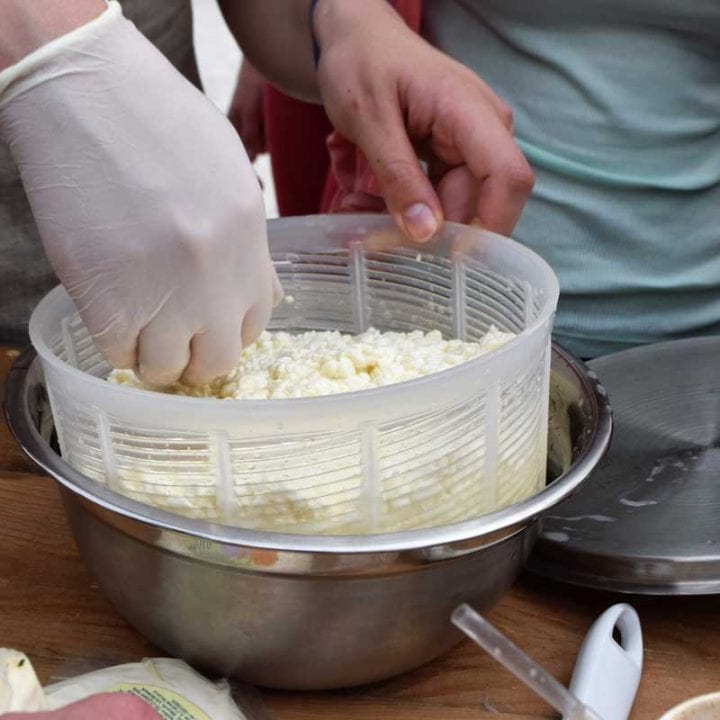
- Ladle the hot curds into a cheesecloth-lined colander over a bowl. Drain about 30 minutes, handling carefully to avoid burns. Mix in salt gently with a clean spoon.
- Transfer to a clean, food-safe draining mold lined with cloth and press gently to compact. Set the mold above a tray to catch whey, cover and refrigerate for at least 4 hours until cold and firm enough to handle. Do not leave it draining for hours at room temperature.
- Unmold and slice or crumble. The texture will be softer and more crumbly than rennet-set panela. Keep refrigerated in a clean covered container and use within 3–4 days.
This is acid-set queso blanco, a homemade alternative for some panela uses, not traditional rennet-set panela. Expected yield is about 1 lb (450 g), or 8 portions of roughly 2 oz; milk and drainage affect yield. Plan about 15 minutes prep, 30 minutes heating, 15 minutes curd setting, 30 minutes draining and at least 4 hours chilling (about 5 hours 30 minutes total). Longer cold drainage gives a drier cheese. Use 5% white vinegar for a more consistent result than fresh lemon juice. Equipment: heavy pot, thermometer, ladle, cheesecloth, colander, bowl and food-safe draining mold. No aging or room-temperature storage.
Troubleshooting
If the whey remains milky, add vinegar a teaspoon at a time rather than pouring in a large amount. Too much acid can make the cheese sour. Soft or crumbly cheese is expected with this lightly compacted version; additional refrigerated drainage firms it, but does not turn it into rennet-set panela.
Homemade Queso Blanco (Panela Substitute)
A simple acid-set fresh cheese made with milk and vinegar. Use it as a crumbly homemade substitute for panela in salads and toppings.
Ingredients
- 1 gallon (3.8 L) pasteurized whole milk, not ultra-pasteurized
- 1/4 cup (60 ml) white vinegar, 5% acidity, plus a little more only if needed
- 1 teaspoon fine salt, or to taste
Instructions
- Wash and sanitize the pot, utensils, colander, mold and cheesecloth. Slowly heat the milk in a heavy pot to 185–190°F (85–88°C), stirring to prevent scorching; allow about 30 minutes.
- Remove from heat. Gently stir in the vinegar in several additions and leave undisturbed for about 15 minutes. You should see distinct curds and yellowish whey. If the whey remains milky, stir in another teaspoon of vinegar and wait a few minutes before adding more.
- Ladle the hot curds into a cheesecloth-lined colander over a bowl. Drain about 30 minutes, handling carefully to avoid burns. Mix in salt gently with a clean spoon.
- Transfer to a clean, food-safe draining mold lined with cloth and press gently to compact. Set the mold above a tray to catch whey, cover and refrigerate for at least 4 hours until cold and firm enough to handle. Do not leave it draining for hours at room temperature.
- Unmold and slice or crumble. The texture will be softer and more crumbly than rennet-set panela. Keep refrigerated in a clean covered container and use within 3–4 days.
Notes
This is acid-set queso blanco, a homemade alternative for some panela uses, not traditional rennet-set panela. Expected yield is about 1 lb (450 g), or 8 portions of roughly 2 oz; milk and drainage affect yield. Plan about 15 minutes prep, 30 minutes heating, 15 minutes curd setting, 30 minutes draining and at least 4 hours chilling (about 5 hours 30 minutes total). Longer cold drainage gives a drier cheese. Use 5% white vinegar for a more consistent result than fresh lemon juice. Equipment: heavy pot, thermometer, ladle, cheesecloth, colander, bowl and food-safe draining mold. No aging or room-temperature storage.
Conclusion

In conclusion, Panela cheese is an incredibly versatile ingredient that can elevate your Mexican food dishes and beyond.
With its unique texture, mild flavor, and adaptability, it can be used in a variety of recipes ranging from salads and appetizers to main courses and desserts.
By selecting high-quality cheese, storing it properly, and following the tips provided for cooking with Panela cheese, you can make the most of this delicious ingredient in your culinary adventures.
Frequently Asked Questions
Panela cheese is a delicious and versatile ingredient, but you may have some questions about it. Here are answers to some frequently asked questions:
Can I use Queso Panela as a substitute for other types of cheese?
Yes, Panela can be used as a substitute for other fresh, mild cheeses, such as queso fresco, queso blanco, farmer’s cheese, or ricotta (queso requesón). However, keep in mind that the texture and melting properties of Panela cheese may differ from other types of Mexican cheese, so the end result may not be exactly the same.
Is Panela cheese suitable for vegetarians?
Panela is made with milk and generally uses rennet. For a vegetarian product, check that its enzymes or rennet are microbial or otherwise vegetarian; animal rennet is not suitable. The milk-and-vinegar substitute above uses no rennet.
Can I eat Panela cheese if I am lactose intolerant?
Panela is a fresh dairy cheese and should not be assumed to be lactose-free. Check the product label; tolerance and lactose content vary. A milk allergy is different from lactose intolerance, and this cheese and the homemade substitute both contain milk.
How can I tell if my Queso Panela has gone bad?
Panela cheese is a fresh cheese, so it has a relatively short shelf life compared to aged cheeses. Signs that your cheese has gone bad include an off smell, mold growth, or an overly soft or slimy texture. If you notice any of these signs, it’s best to discard the cheese and not consume it.
Is Panela cheese similar to mozzarella?
While both Panela and mozzarella are types of fresh cheese, they have distinct characteristics that set them apart. Panela is known for its slightly crumbly texture and mild, milky flavor, whereas mozzarella is known for its smooth texture and slightly sweet, delicate flavor.
More Mexican Foods
See all →
Jorge Garcia is the founder of AmigoFoods, where he has spent over 20 years helping readers discover authentic Latin American and Spanish cuisine. Raised in a Cuban-American household, Jorge learned to cook at the hands of his mother and grandmother, carrying forward generations of family recipes. That heritage, backed by his family’s four-generation history in the Latin food industry, inspired him to launch AmigoFoods in 2003. With more than 1,000 published articles on recipes, ingredients, and food culture, Jorge’s mission is simple: make authentic Latin cooking approachable for home cooks everywhere while honoring the traditions behind every dish.