

Quesada pasiega is a shallow, lemon-and-cinnamon curd cake from Cantabria in northern Spain. This Spanish dessert has a tender, slightly textured center and golden top; start with prepared curds for the simpler version below.
Quesada Pasiega at a Glance
What Is Quesada Pasiega?

Quesada Pasiega is a traditional Spanish dessert from Cantabria, particularly from the Pas Valley region.
Often described as a cheesecake-like pastry, it has a soft, custard-like texture and a mild sweetness enhanced by hints of cinnamon and lemon zest.
Unlike a typical cheesecake, Quesada Pasiega is made with cuajada (curdled milk) instead of cream cheese, giving it a unique consistency that falls between a flan and a baked custard.
Traditionally, it was baked in wood-fired ovens, creating a slightly golden, caramelized crust while keeping the inside moist and tender.
This traditional Spanish food is a staple in Cantabrian bakeries, often enjoyed as a snack or dessert with a cup of café con leche.
Its simple yet rich flavors make it a must-try for anyone exploring Spain’s regional sweets.
The History of Quesada Pasiega

The origins of Quesada Pasiega trace back to the Pas Valley in Cantabria, Spain, a region known for its dairy farming and rich culinary traditions.
This Spanish dessert has been a staple in Cantabrian homes for centuries, with a long tradition in the region’s dairy-farming communities.
From Rustic Beginnings to a Regional Specialty
Originally, Quesada Pasiega was a humble dish made by local dairy farmers who sought ways to use excess cuajada (curdled milk).
By combining it with butter, eggs, flour, sugar, and spices like cinnamon, they created a simple yet flavorful baked treat.
As Cantabria’s reputation for high-quality dairy products grew, so did the popularity of Quesada Pasiega.

Traditionally, it was baked in wood-fired ovens, giving it a slightly caramelized crust and a rich, custard-like interior.
Over time, it became one of Cantabria’s most famous desserts, often served during festivals, family gatherings, and celebrations.
Recognition as a Cantabrian Icon
Today, Quesada Pasiega is a celebrated traditional food of Cantabria, with recipes maintained by local households and bakeries.
It is commonly found in pastry shops and local markets throughout Santander, Torrelavega, and Vega de Pas, where bakers continue to uphold this centuries-old tradition.
From its humble farmhouse origins to its status as a beloved Spanish dessert, Quesada Pasiega remains a symbol of Cantabria’s rich culinary heritage, offering a taste of history in every bite.
Traditional Ingredients in Quesada Pasiega
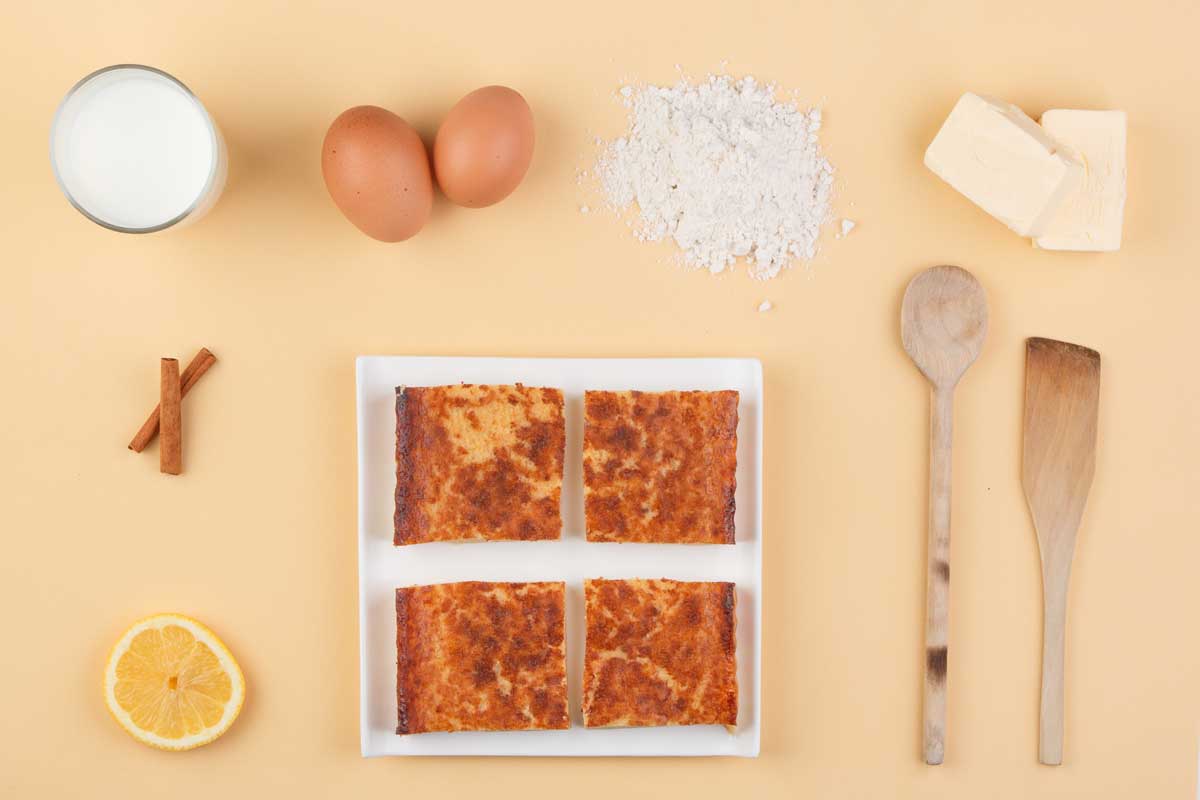
Quesada Pasiega is made with simple, natural ingredients, yet each component plays a crucial role in creating its unique texture and flavor.
This traditional Cantabrian dessert is known for its light, custard-like consistency with a hint of citrus and cinnamon, setting it apart from other Spanish sweets.
Key Ingredients:
- Cuajada (Curdled Milk): The star ingredient, giving the Spanish Cheesecake its distinctive texture. Traditionally made by curdling fresh cow’s milk with rennet, it creates a soft, creamy consistency.
- Butter: Adds richness and helps create a slightly caramelized crust during baking.
- Eggs: Essential for binding the ingredients and giving the dessert its smooth, custard-like structure.
- Sugar: Provides the sweetness that balances the subtle tang of the cuajada.
- Flour: A small amount is used to help stabilize the mixture and give the dessert a delicate firmness.
- Cinnamon: A signature spice in Quesada Pasiega, adding warmth and depth to its flavor.
- Lemon Zest: Infuses a light citrus aroma, enhancing the dessert’s overall freshness.
Optional Ingredients & Variations:
While the traditional recipe remains simple, some variations include:
- Vanilla extract for extra fragrance
- A touch of honey for added sweetness
- Nutmeg as an alternative spice
By using these authentic ingredients, Quesada Pasiega maintains its rich heritage while delivering a deliciously smooth, slightly spiced, and lightly caramelized dessert that has stood the test of time.
How to Make Quesada Pasiega at Home

With prepared curds, allow about 15 minutes prep, 50 minutes baking and 1 hour cooling. This makes 9 pieces. Homemade curdling and draining add several hours.
Ingredients
- 500 g drained fresh cow’s-milk curds (cuajada), or mild unsalted queso fresco for the shortcut version
- 250 g sugar
- 100 g unsalted butter, melted and cooled, plus butter for the pan
- 2 large eggs
- 150 g all-purpose flour
- 1 teaspoon ground cinnamon
- Finely grated zest of 1 lemon
Method
- Start with 500 g drained curds or mild unsalted fresh cheese. For homemade curds, follow the rennet manufacturer’s milk, temperature and dose instructions, then drain in a cheesecloth-lined sieve in the refrigerator. Weigh the drained curds; 1 liter of milk does not give a guaranteed yield. Allow several extra hours if making curds.
- Heat the oven to 350°F (180°C). Butter an 8-inch (20 cm) square baking dish and line the bottom with baking parchment.
- Whisk the eggs with the sugar and cooled melted butter. Mix in the flour, cinnamon and lemon zest, then fold in the curds, breaking up large pieces with a fork. Small curd pieces are normal.
- Spread the batter evenly in the dish, keeping the layer no more than about 1 1/4 inches (3 cm) deep. Bake about 45–50 minutes, until golden and the center is set rather than liquid; a skewer should emerge without wet batter.
- Cool in the dish on a rack for about 1 hour before slicing into 9 pieces. Serve slightly warm or chilled. Refrigerate within 2 hours of baking and use within 3–4 days.
With prepared drained curds: 15 minutes prep, about 50 minutes baking and 1 hour cooling, about 2 hours 5 minutes total. Homemade curdling and draining require additional time, often 2–6 hours depending on the product and milk.
Use unsweetened dairy curds, not a sweetened cuajada dessert or a liter of liquid milk. Rennet and lemon juice work differently and are not interchangeable additions at the same temperature. A mild, unsalted fresh cheese is a convenient variation; the traditional base is rennet-set cow’s-milk curd.
Equipment: 8-inch square dish, bowls, whisk or fork, kitchen scale and cooling rack; cheesecloth and sieve only if making curds. Keep the shallow shape: a deeper pan changes baking time and texture.
Serve with café con leche or Spanish hot chocolate; berries or whipped cream are optional modern accompaniments.
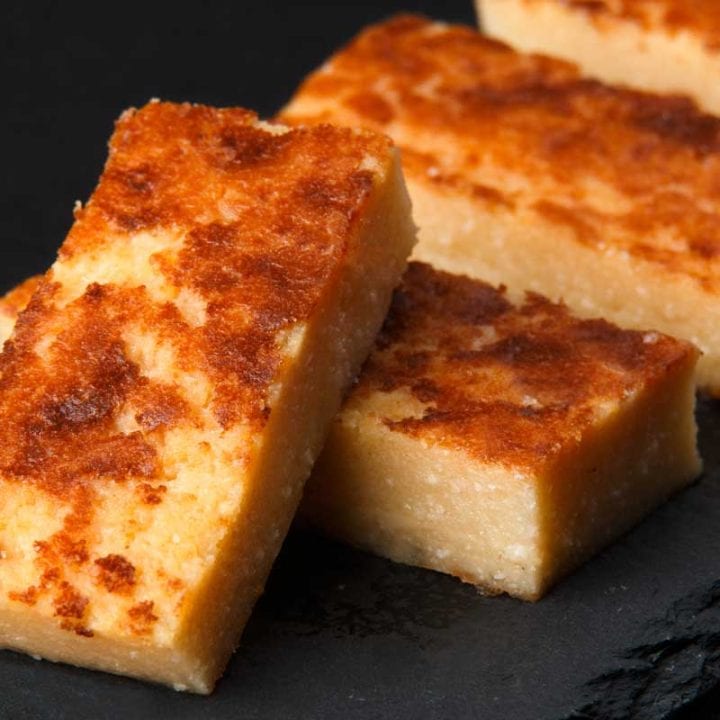
Quesada Pasiega
A shallow Cantabrian curd cake flavored with lemon and cinnamon. This recipe starts with drained curds or mild fresh cheese.
Ingredients
- 500 g drained fresh cow’s-milk curds (cuajada), or mild unsalted queso fresco for the shortcut version
- 250 g sugar
- 100 g unsalted butter, melted and cooled, plus butter for the pan
- 2 large eggs
- 150 g all-purpose flour
- 1 teaspoon ground cinnamon
- Finely grated zest of 1 lemon
Instructions
- Start with 500 g drained curds or mild unsalted fresh cheese. For homemade curds, follow the rennet manufacturer’s milk, temperature and dose instructions, then drain in a cheesecloth-lined sieve in the refrigerator. Weigh the drained curds; 1 liter of milk does not give a guaranteed yield. Allow several extra hours if making curds.
- Heat the oven to 350°F (180°C). Butter an 8-inch (20 cm) square baking dish and line the bottom with baking parchment.
- Whisk the eggs with the sugar and cooled melted butter. Mix in the flour, cinnamon and lemon zest, then fold in the curds, breaking up large pieces with a fork. Small curd pieces are normal.
- Spread the batter evenly in the dish, keeping the layer no more than about 1 1/4 inches (3 cm) deep. Bake about 45–50 minutes, until golden and the center is set rather than liquid; a skewer should emerge without wet batter.
- Cool in the dish on a rack for about 1 hour before slicing into 9 pieces. Serve slightly warm or chilled. Refrigerate within 2 hours of baking and use within 3–4 days.
Notes
With prepared drained curds: 15 minutes prep, about 50 minutes baking and 1 hour cooling, about 2 hours 5 minutes total. Homemade curdling and draining require additional time, often 2–6 hours depending on the product and milk.
Use unsweetened dairy curds, not a sweetened cuajada dessert or a liter of liquid milk. Rennet and lemon juice work differently and are not interchangeable additions at the same temperature. A mild, unsalted fresh cheese is a convenient variation; the traditional base is rennet-set cow’s-milk curd.
Equipment: 8-inch square dish, bowls, whisk or fork, kitchen scale and cooling rack; cheesecloth and sieve only if making curds. Keep the shallow shape: a deeper pan changes baking time and texture.
What Does the Spanish Cheesecake Taste Like?

Quesada Pasiega has a unique flavor and texture that sets it apart from other Spanish desserts.
Often described as a cross between a cheesecake and a flan, it is light yet creamy, with a slightly dense and custard-like consistency.
Flavor Profile:
- Mildly sweet – The sugar is balanced, allowing the natural flavors of milk and eggs to shine.
- Hints of cinnamon – The subtle warmth of cinnamon gives it a cozy, comforting taste.
- Light citrus notes – The addition of lemon zest adds a gentle freshness and aroma.
- Slightly caramelized crust – The top bakes to a golden brown, adding a delicate texture contrast.
Texture Comparison:
- Softer and lighter than a New York cheesecake
- Denser than a Spanish flan
- Similar to a baked custard but with more structure
Perfect Pairings:
- Best enjoyed at room temperature for the ideal texture.
- Pairs wonderfully with coffee or hot chocolate.
- Some enjoy it with a dusting of cinnamon or a drizzle of honey for extra sweetness.
If you love Spanish desserts, Quesada Pasiega is a must-try, offering a smooth, delicately spiced, and lightly caramelized taste experience straight from Cantabria’s rich culinary heritage.
Where to Try Quesada Pasiega in Spain

If you want to experience authentic Quesada Pasiega, there’s no better place than Cantabria, the northern Spanish region where this traditional dessert originated.
Whether you visit a local bakery, a family-run café, or a specialty shop, you’ll find freshly baked Quesada Pasiega with its signature creamy texture and delicate cinnamon aroma.
Best Places to Try Quesada Pasiega:
Pas Valley (Valles Pasiegos) – The Birthplace of Quesada Pasiega
- Vega de Pas – The heart of Quesada Pasiega’s tradition, home to bakeries that have perfected the recipe for generations.
- Selaya – A picturesque town known for its dairy products and artisanal pastries, including some of the best Quesada Pasiega.
- Liérganes – A charming village with excellent pastry shops selling authentic Cantabrian desserts.
️ Best Bakeries & Pastry Shops in Cantabria
- Casa El Macho (Vega de Pas) – One of the most famous spots for traditional Quesada Pasiega and other Cantabrian pastries.
- Horno San José (Selaya) – A bakery with a long history of making handcrafted quesada and sobaos pasiegos.
- Confitería Santos (Santander) – A well-known bakery in Cantabria’s capital, offering a rich and creamy version of the Spanish Cheesecake.
Where to Find Quesada Pasiega Outside Cantabria
- Madrid – Look for it in specialty Spanish pastry shops or gourmet markets featuring regional desserts.
- Barcelona – Some high-end bakeries and Spanish food stores carry Quesada Pasiega.
- Seville & Valencia – While less common, some Spanish dessert shops occasionally sell it, especially in stores that specialize in northern Spanish products.
For the most authentic experience, visit Cantabria, where Quesada Pasiega is still made with traditional methods and enjoyed as a staple dessert in local homes and cafés.
Quesada Pasiega vs. Other Spanish Desserts

Spain is home to a rich variety of desserts, each with its own distinct flavors, textures, and regional origins.
Quesada Pasiega, with its custard-like consistency and subtle cinnamon-citrus flavor, stands out from other famous Spanish sweets.
Here’s how it compares to some of Spain’s most popular desserts.
Comparison of Quesada Pasiega and Other Spanish Desserts
| Dessert | Texture | Key Ingredients | Region |
|---|---|---|---|
| Quesada Pasiega | Soft, custard-like, slightly dense | Cuajada, eggs, flour, cinnamon, lemon zest | Cantabria |
| Tarta de Santiago | Firm, slightly crumbly | Almonds, sugar, eggs, lemon zest | Galicia |
| Leche Frita | Crispy outside, creamy inside | Milk, sugar, flour, cinnamon | Castilla y León |
| Tarta de Queso (Basque Cheesecake) | Creamy, caramelized top | Cream cheese, eggs, sugar, heavy cream | Basque Country |
| Flan | Silky, smooth, gelatinous | Eggs, milk, sugar, caramel | Nationwide |
How Quesada Pasiega Stands Out
- Unlike Tarta de Santiago, which is dense and almond-based, Quesada Pasiega has a softer, more custard-like texture.
- Compared to Leche Frita, which is fried and crispy, Quesada Pasiega is baked and light.
- While Basque cheesecake is rich and creamy with a caramelized top, Quesada Pasiega is lighter and made with curdled milk (cuajada) instead of cream cheese.
- Unlike flan, which is smooth and jiggly, Quesada Pasiega has a firmer, cake-like consistency but still remains moist.
Why Try Quesada Pasiega?
If you love Spanish desserts, Quesada Pasiega offers a unique balance between cheesecake, custard, and cake.
Its mild sweetness, cinnamon aroma, and delicate citrus hints make it a must-try for those exploring Spain’s regional pastries.
Conclusion: Why You Should Try Quesada Pasiega
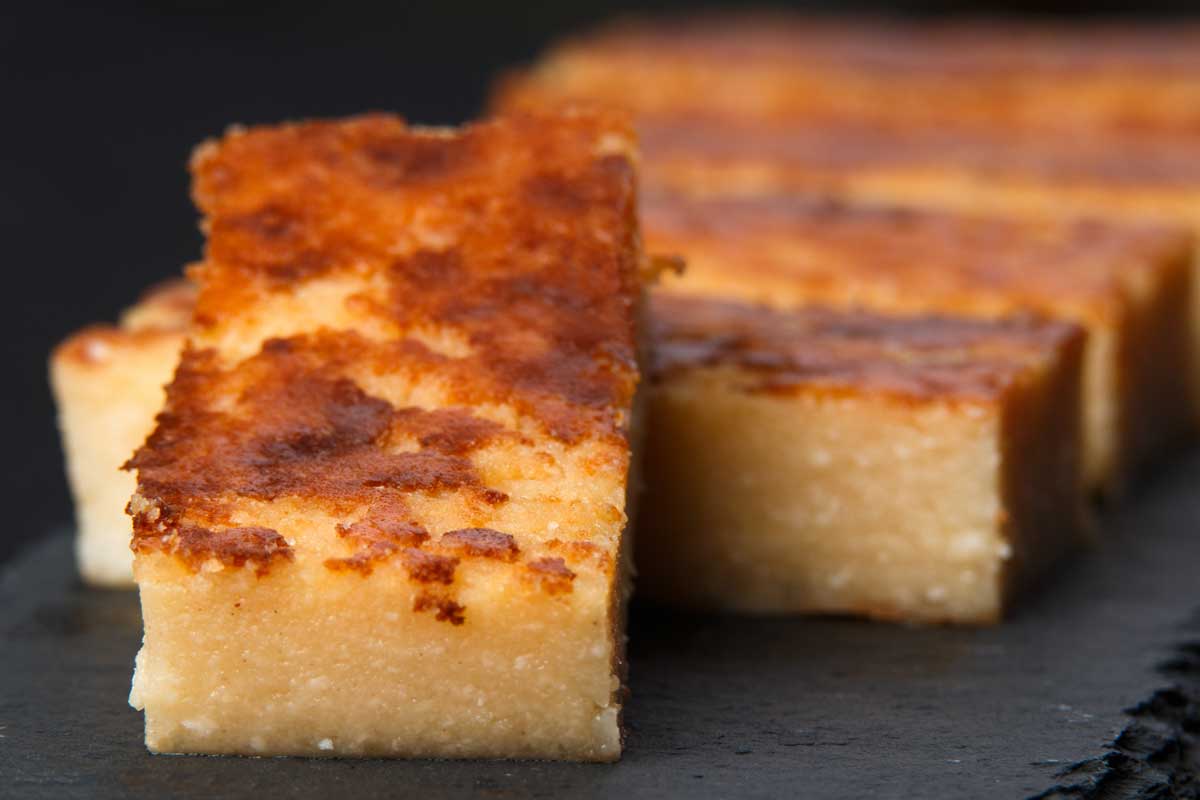
If you’re a fan of Spanish desserts, Quesada Pasiega is one you shouldn’t miss!
This Cantabrian classic offers a unique balance of creaminess and subtle sweetness, with warm notes of cinnamon and lemon zest that set it apart from other Spanish pastries.
Reasons to Try Quesada Pasiega:
✅ Authentic Taste of Cantabria – A traditional dessert with centuries of history.
✅ Unique Texture – A delightful cross between cheesecake, custard, and cake.
✅ Simple Yet Flavorful – Made with just a few natural ingredients but packed with deliciousness.
✅ Versatile Dessert – Perfect with coffee, hot chocolate, or even a drizzle of honey.
Whether you’re visiting Spain or baking it at home, Quesada Pasiega is a must-try for any food lover.
Its light yet satisfying texture and rich heritage make it a dessert worth savoring.
So, why not bring a taste of Cantabria to your kitchen today? ✨
More Spanish Foods
See all →
Jorge Garcia is the founder of AmigoFoods, where he has spent over 20 years helping readers discover authentic Latin American and Spanish cuisine. Raised in a Cuban-American household, Jorge learned to cook at the hands of his mother and grandmother, carrying forward generations of family recipes. That heritage, backed by his family’s four-generation history in the Latin food industry, inspired him to launch AmigoFoods in 2003. With more than 1,000 published articles on recipes, ingredients, and food culture, Jorge’s mission is simple: make authentic Latin cooking approachable for home cooks everywhere while honoring the traditions behind every dish.