

On this page
Bacalao al pil pil is a Basque dish of salt cod gently poached in olive oil with garlic and dried chile, then served in a thick, pale-gold sauce made from nothing but that oil and the gelatin the fish releases. There is no cream, flour or egg in it. Four ingredients, low heat and a few minutes of patient whisking turn oil into something close to a hollandaise.
Bacalao al Pil Pil at a Glance
Amigo note: we may earn a commission from qualifying Amazon purchases made through links on this page.
What Is Bacalao al Pil Pil?
Bacalao al pil pil comes from Bizkaia, the Basque province around Bilbao, and it sits alongside bacalao a la vizcaína as one of the two great salt cod dishes of Basque cuisine.
The fish is thick, skin-on bacalao (salted cod) that has been soaked back to life. It cooks slowly in garlic- and chile-scented oil, and the sauce is built from what it leaves behind in the pan.
It is traditionally cooked and served in a round clay cazuela, brought to the table with bread for mopping. In the Basque Country it is a Lenten classic and a fixture of bar menus and txokos, the members-only cooking societies.

What Is Pil Pil Sauce Made Of?
Pil pil sauce is an emulsion of olive oil and the gelatin and juices that salt cod releases as it cooks. Garlic and dried chile flavor the oil, but they are not what thickens it.
It works the same way mayonnaise does. In mayonnaise, egg yolk holds tiny droplets of oil suspended in a little water. In pil pil, the collagen-rich skin and flesh of the cod do that job. You will see it in the pan as milky white bubbles and a cloudy film on the oil. That cloudy stuff is the sauce.
Whisk or swirl it with the oil at the right temperature and it turns opaque, then thick and glossy, then pale gold.
What does “pil pil” mean?
Pil pil is generally explained as onomatopoeia: the soft popping, bubbling sound the cod makes as it cooks gently in oil. “Al pil pil” simply means cooked in that style, which is why you also see kokotxas al pil pil and other fish done the same way.
Choosing and Desalting the Cod
Pil pil lives or dies on the fish. Look for thick center-cut loins (lomos), about 1 to 1½ inches thick, with the skin on. The skin and the layer just under it carry most of the gelatin. Thin tail pieces and shredded salt cod (migas) are perfect for croquetas de bacalao but will not give you enough gelatin here.
In the US you will find salt cod at Latin, Portuguese, Spanish and Italian markets, often in wooden boxes or vacuum packs. Some stores also sell frozen loins that are already desalted, which saves you two days.

How long to desalt salt cod for pil pil
Rinse off the surface salt, then cover the cod with plenty of cold water and refrigerate. Change the water every 8 hours. Thick loins need 36 to 48 hours; thinner pieces may be ready in 24.
To check, tear off a small flake from the thickest part, poach it for a minute in simmering water and taste it. It should taste pleasantly seasoned, like well-salted fish, not salty.
Can you make pil pil with fresh cod?
You can, but expect a looser, lighter sauce. Fresh cod has less concentrated gelatin, and skinless fillets have almost none. If you try it, use thick skin-on fillets of cod or hake, salt them for 20 to 30 minutes first and rinse, and keep the heat very low. Hake is the fish behind merluza en salsa verde, the Basque green sauce that thickens on the same principle.
Ingredients for Bacalao al Pil Pil
Salt cod
4 thick skin-on loins, about 7 oz (200 g) each after desalting. Skin on is not optional.
Olive oil
About 1¼ cups (300 ml) of a mild, fruity extra-virgin olive oil. A very peppery oil can turn bitter in the sauce. See our guide to Spanish olive oil.
Garlic
6 cloves, thinly and evenly sliced so they turn golden at the same time.
Dried chile
1 dried guindilla, seeded and cut into rings. A small chile de árbol or cayenne pod is the closest swap. More options in our guide to chile peppers.
That’s the whole list. Some cooks add a few parsley stems to the oil or a sprinkle of chopped parsley at the end. Salt is rarely needed.
What to buy
How to Make Bacalao al Pil Pil
The method has two halves: poach the cod gently to draw out its gelatin, then turn that gelatin and the oil into a sauce. The full measurements and timings are in the recipe card below.
1. Desalt, dry and debone the cod
Pat the soaked loins very dry with paper towels. Run your fingers over the flesh and pull out any pin bones with tweezers. Scrape off any stray scales left on the skin.
2. Infuse the oil with garlic and chile
Put the oil, sliced garlic and chile in a wide clay cazuela or a 10 to 11 inch skillet over low heat. Let it come up slowly. When the garlic is pale gold, after 5 to 8 minutes, lift out the garlic and chile with a slotted spoon and set them aside for the garnish.
Look for: a gentle sizzle, never a fry. Dark garlic makes the whole sauce bitter.
3. Let the oil cool down
Take the pan off the heat for 5 to 10 minutes. The oil should be warm, not hot, before the fish goes in. Hot oil seizes the surface of the cod and locks the gelatin inside.
4. Poach the cod skin side up, then skin side down
Lay the cod in the oil skin side up, snugly, and return the pan to low heat. Keep the oil between about 150°F and 170°F (65–75°C). After 6 to 8 minutes, turn the pieces carefully so the skin faces down, and cook 5 to 7 minutes more, giving the pan a gentle shake now and then.
The cod is done when the flakes just begin to separate and the center reads 145°F (63°C), the USDA guideline for fish.
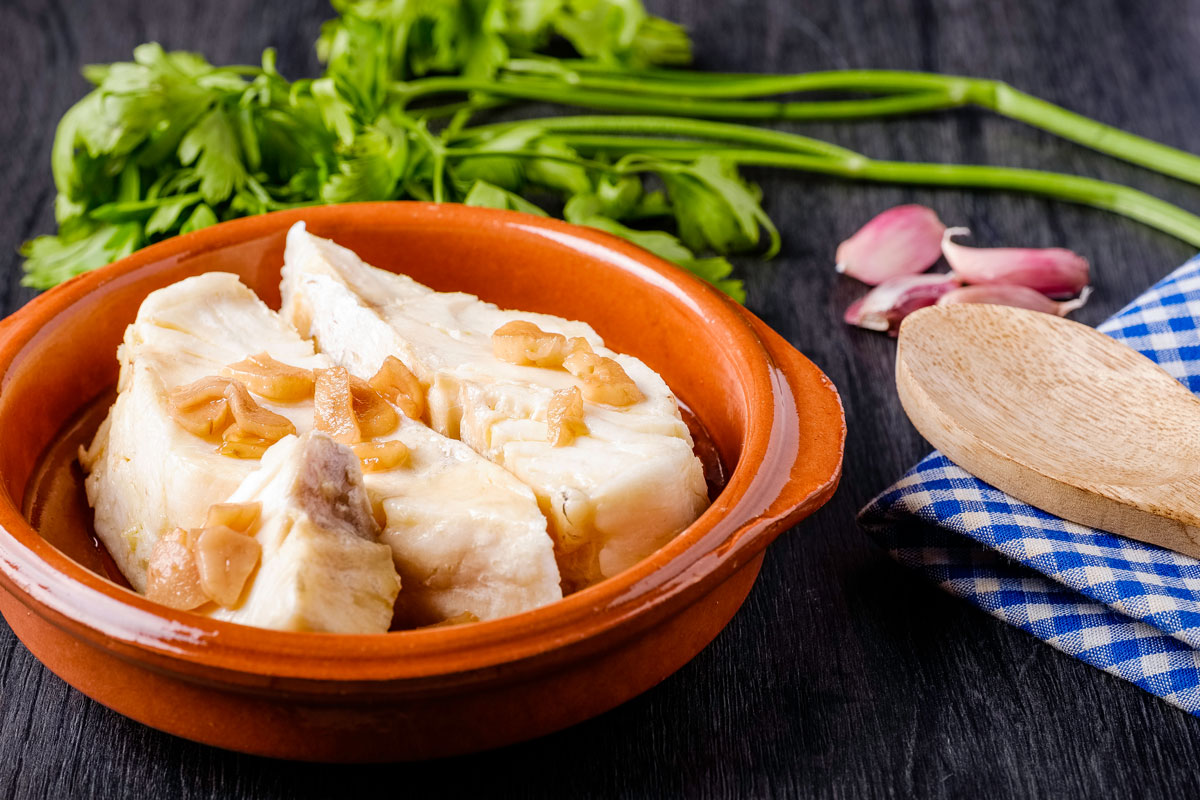
Look for: small, lazy bubbles around each piece and white, milky juices collecting in the oil. That is the gelatin.
5. Separate the oil from the gelatin
Move the cod to a plate, skin side up. Slowly pour most of the oil into a heatproof jug, leaving the cloudy white juices behind in the pan. Tip any juices from the plate back in too. Let the pan and the oil sit for about 5 minutes, until both are just warm.
6. Build the emulsion
Whisk the juices in the pan with a small mesh strainer (or a small whisk) in steady circles. Add the warm oil back a spoonful at a time at first, then in a thin stream once it starts to thicken. In 4 to 6 minutes you should have a creamy, pourable sauce about the texture of a loose hollandaise.
7. Warm through and serve
Return the cod to the sauce, skin side up, and set the pan over the lowest heat for a minute or two, swirling gently. Do not let it bubble. Spoon the sauce over the fish, scatter the garlic and chile on top and serve right away, in the pan.

Why Pil Pil Breaks (and How to Fix It)
Almost every pil pil problem comes down to temperature or not enough gelatin. Here is how to read the pan.
| What you see | Likely cause | The fix |
|---|---|---|
| Oil stays clear and won’t thicken | Oil too hot, or the cod was cooked too fast and kept its gelatin | Let everything cool for a few minutes and whisk again. Put the cod back in the warm oil on the lowest heat for 5 minutes to draw out more juices. |
| Sauce thickened, then turned oily and split | Too much oil added too quickly, or it got too hot | Whisk in 1 to 2 teaspoons of warm water. If that fails, start with a spoonful of fresh juices in a clean bowl and slowly whisk the broken sauce into it. |
| Sauce is stiff, like jelly | It has cooled too much | Warm it over the lowest heat while swirling. Gelatin loosens as it warms. |
| Fish is falling apart | Heat too high, or turned too often | Turn only once, use a thin spatula, and keep the oil below a simmer. |
| Too salty | Cod under-soaked | Serve with plain boiled potatoes and bread. Next time, taste a test flake before cooking. |
| Sauce tastes bitter | Garlic browned too far, or a very peppery oil | Pull the garlic at pale gold and use a mild, fruity oil. |
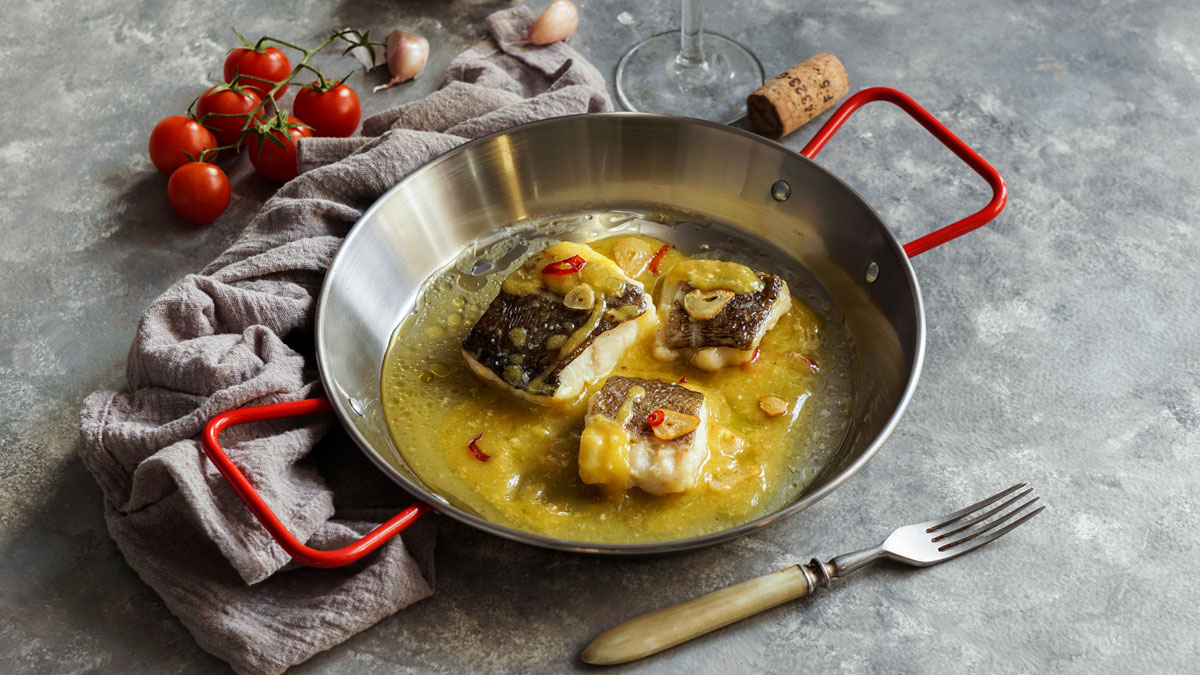
Pil Pil Beyond Salt Cod
Once you can make the emulsion, you can use it on anything gelatin-rich from the sea.
Kokotxas al pil pil
Kokotxas are the throat “cheeks” of hake or cod, a small, jiggly cut that is almost pure gelatin. Cooked al pil pil, they make the sauce nearly by themselves, which is why many Basque cooks consider them the finest version of the dish.

Bacalao al Club Ranero
A Bilbao classic that tops pil pil cod with a slow-cooked fritada of peppers, onion, tomato and choricero pepper. The story credits Alejandro Caveriviere, a French-born cook in Bilbao, who stretched a pan of pil pil for unexpected guests from the Club Ranero, a group of friends who met to play the rana (frog toss) game.
Other fish
Monkfish, hake and even fresh tuna belly are cooked al pil pil in the Basque Country. With leaner fish, keep the heat very low and expect a lighter sauce.
Bacalao al Pil Pil vs. Vizcaína vs. Club Ranero
All three come from Bilbao and all three start with the same desalted cod. The sauce is what sets them apart.
| Al pil pil | A la vizcaína | Club Ranero | |
|---|---|---|---|
| Sauce | Emulsified olive oil and cod gelatin | Choricero pepper and onion purée | Pil pil plus a pepper-tomato fritada |
| Color | Pale gold to ivory | Brick red | Gold with red vegetables |
| Vegetables | None, only garlic and chile | Onion, choricero peppers | Peppers, onion, tomato |
| The hard part | Making the emulsion hold | Slow-cooking the onions | Both |
| Recipe | Below | Bacalao a la vizcaína | Pil pil + fritada |
The History of Bacalao al Pil Pil
Basque fishermen were working the cod grounds of the North Atlantic by the 1500s, and Bilbao became one of Spain’s main ports for salt cod. With that much bacalao coming through, the city’s cooks had every reason to get creative with it.
The favorite origin story is about a Bilbao merchant, Simón Gurtubay, during the Carlist siege of the city in the 1830s. Supposedly he ordered “100 o 120” (100 or 120) cod by telegram, the “o” was read as a zero, and 1,000,120 fish arrived. Some tellings make it “20 or 22” turning into 20,022. When the siege cut off food, his warehouse fed the city and made him rich.
It is a great story, and historians consider it a legend. The telegraph detail alone doesn’t fit the date. Gurtubay was real, though, and did become one of Bilbao’s leading businessmen.
What the record does show is that recipes for cod cooked in oil and shaken in the cazuela appear in the late 1800s and early 1900s. As late as 1933, the influential cookbook author the Marquesa de Parabere was warning readers not to confuse bacalao al pil pil with bacalao ligado, the bound, emulsified version. Today the two names have merged, and “pil pil” means the emulsified sauce.
What to Serve with Bacalao al Pil Pil
- Crusty bread. The one non-negotiable. The sauce is the best part.
- Boiled potatoes or a few small roasted ones to soak up the oil.
- Something green or sharp: a simple lettuce and onion salad, roasted piquillo peppers or blistered pimientos de Padrón.
- A Basque starter: gildas as a pintxo before, or a bowl of porrusalda, the leek and potato soup that often shares the table with bacalao.
- To drink: crisp Basque txakoli, dry Basque cider (sidra) or an Albariño. You want acidity to cut the oil.
Make Ahead, Storing and Reheating
Pil pil is at its best the moment it’s made. You can desalt the cod days ahead and keep it in the fridge, and you can infuse the oil a few hours early.
Leftovers keep in a covered container in the fridge for up to 2 days. The sauce will set like jelly; that’s the gelatin, and it’s a good sign. Reheat slowly in a pan over the lowest heat, swirling and adding a teaspoon of warm water if it looks oily. Avoid the microwave on full power, which splits the sauce.
Bacalao al Pil Pil FAQ
What is bacalao al pil pil in English?
Salt cod in pil pil sauce: desalted cod poached in olive oil with garlic and chile, served in an emulsified sauce made from the oil and the cod’s own gelatin.
What kind of fish is bacalao?
Bacalao is Atlantic cod that has been salted and dried. It has to be soaked before cooking. Our guide to bacalao, the salted codfish covers the fish itself and the many ways it is cooked.
Is bacalao al pil pil spicy?
Not really. One dried guindilla perfumes the oil with a gentle warmth. Add a second chile if you like heat, or leave the seeds in.
Why didn’t my pil pil sauce thicken?
Usually the oil was too hot when you started whisking, or the cod cooked too fast to release its gelatin. Let it cool to warm and whisk again; see the troubleshooting table above.
Why does the cod need to keep its skin?
The skin and the layer underneath it hold most of the collagen. Without it, there’s very little gelatin to bind the oil, and the sauce won’t form.
Can I use a blender to make pil pil?
Yes. An immersion blender in a tall container with the cod juices, with the warm oil added slowly, makes a stable sauce in a minute. It is also the easiest way to rescue a broken one.
Is bacalao al pil pil gluten-free and dairy-free?
Yes. The dish is just cod, olive oil, garlic and chile. Serve it with gluten-free bread if needed.
What’s the difference between pil pil and al ajillo?
Al ajillo means cooked in sizzling garlic oil, served hot and unemulsified. Basque pil pil is a cooked-then-bound sauce, thick and opaque. Andalusian gambas al pil pil sit closer to al ajillo, with more chile.
Bacalao al Pil Pil Recipe
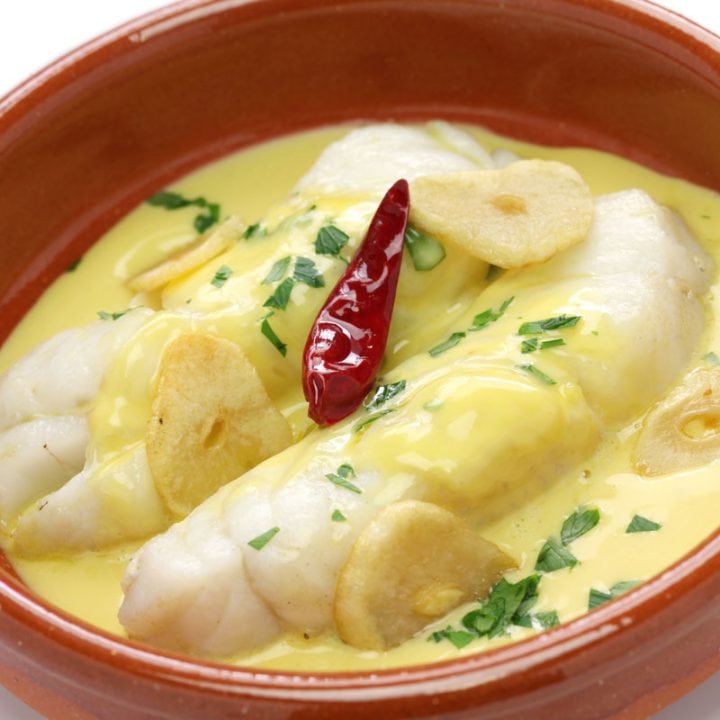
Bacalao al Pil Pil (Basque Salt Cod in Pil Pil Sauce)
Basque salt cod gently poached in garlic and chile olive oil, served in a creamy pil pil sauce made from the oil and the cod's own gelatin.
Ingredients
- 4 thick skin-on salt cod loins, about 7 oz (200 g) each after desalting
- 1 1/4 cups (300 ml) mild extra-virgin olive oil
- 6 garlic cloves, thinly sliced
- 1 dried guindilla chile (or 1 small chile de árbol), seeded and cut into rings
- 1 to 2 teaspoons warm water, only if needed to rescue the sauce
- Chopped parsley, optional, for serving
Instructions
- Desalt the cod (if using dry salt cod). Rinse off the surface salt, cover with plenty of cold water and refrigerate 36 to 48 hours, changing the water every 8 hours. Poach and taste a small flake: it should taste pleasantly seasoned, not salty. Skip this step for frozen ready-desalted cod thawed in the fridge.
- Dry and debone. Pat the loins very dry with paper towels, pull out any pin bones and scrape off stray scales.
- Infuse the oil. Put the oil, garlic and chile in the cazuela or skillet over low heat. When the garlic is pale gold, 5 to 8 minutes, lift out the garlic and chile with a slotted spoon and reserve for garnish.
- Cool the oil. Take the pan off the heat for 5 to 10 minutes, until the oil is warm rather than hot.
- Poach the cod. Lay the cod in the oil skin side up and return to low heat, keeping the oil at about 150 to 170°F (65 to 75°C), with small bubbles and no frying. Cook 6 to 8 minutes, turn carefully skin side down and cook 5 to 7 minutes more, shaking the pan gently now and then, until the flakes just separate and the center reads 145°F (63°C).
- Separate the oil. Move the cod to a plate skin side up. Pour most of the oil into a heatproof jug, leaving the cloudy white juices in the pan, and add any juices from the plate. Let the pan and oil cool about 5 minutes, until just warm.
- Emulsify. Whisk the juices in the pan with a small mesh strainer in steady circles, adding the warm oil a spoonful at a time, then in a thin stream once it thickens. After 4 to 6 minutes the sauce should be creamy and pourable, like a loose hollandaise. If it splits, whisk in 1 to 2 teaspoons warm water.
- Finish and serve. Return the cod skin side up and warm over the lowest heat for 1 to 2 minutes, swirling the pan; do not let it bubble. Top with the reserved garlic and chile and parsley if using, and serve right away with crusty bread.
Notes
- Skin on is essential. The skin holds most of the gelatin that thickens the sauce.
- Keep it warm, not hot. The sauce will not form if the oil is too hot, and it splits if it boils.
- Salt: taste before adding any; desalted cod is usually seasoned enough.
- Leftovers keep 2 days in the fridge. The sauce sets like jelly; rewarm very gently in a pan, swirling, with a teaspoon of warm water.
- Total time includes 48 hours of desalting; with ready-desalted cod it is about 55 minutes.
More Basque and Salt Cod Recipes
- Bacalao a la Vizcaína
- Croquetas de Bacalao
- Merluza en Salsa Verde
- Marmitako (Basque Tuna Stew)
- 10 Basque Dishes to Try
- Top Spanish Seafood Dishes
Sources: Gastronosfera, “Los secretos del pilpil” (on the Marquesa de Parabere and early recipes); Muy Interesante on the Gurtubay legend; Bacalalo on bacalao Club Ranero; FoodSafety.gov safe minimum internal temperatures.
More Spanish Foods
See all →
Jorge Garcia is the founder of AmigoFoods, where he has spent over 20 years helping readers discover authentic Latin American and Spanish cuisine. Raised in a Cuban-American household, Jorge learned to cook at the hands of his mother and grandmother, carrying forward generations of family recipes. That heritage, backed by his family’s four-generation history in the Latin food industry, inspired him to launch AmigoFoods in 2003. With more than 1,000 published articles on recipes, ingredients, and food culture, Jorge’s mission is simple: make authentic Latin cooking approachable for home cooks everywhere while honoring the traditions behind every dish.