
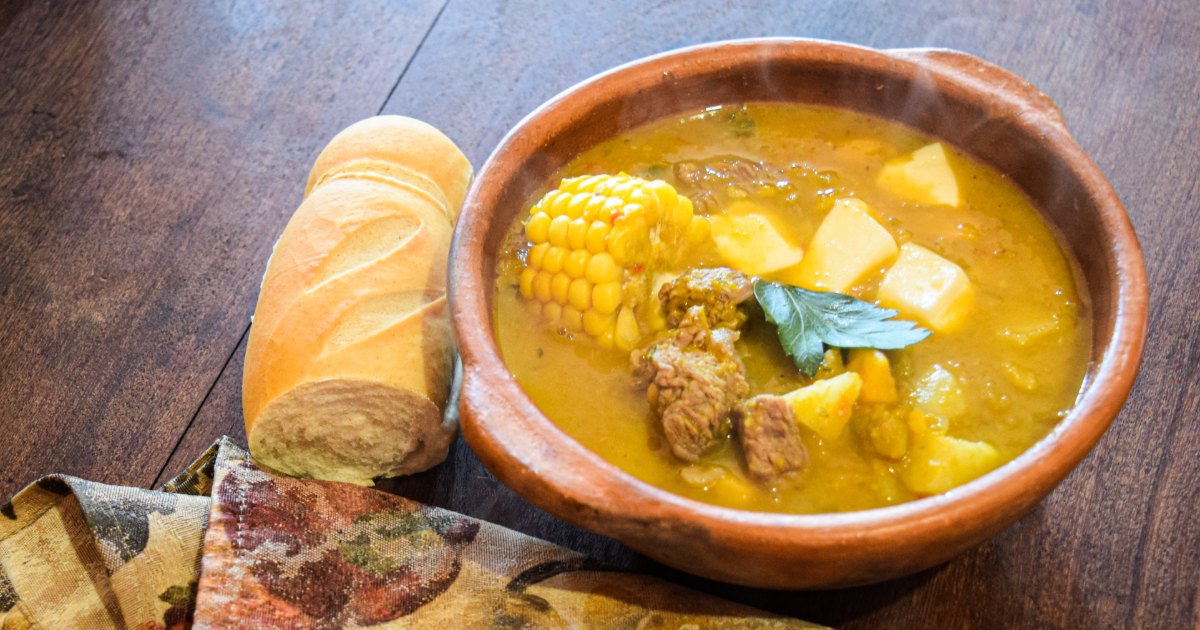
Carbonada criolla is Argentina’s sweet and savory beef stew. Chunks of beef braise with squash, sweet potato, potatoes and corn on the cob, and the pot is finished with peaches and dried apricots. For a special occasion, it is ladled into a whole baked pumpkin and carried to the table.
Carbonada Criolla at a Glance
AmigoFoods may earn a commission from qualifying Amazon purchases made through links on this page.
What is carbonada criolla?
Carbonada criolla is a thick beef and vegetable stew from Argentina. What sets it apart from other beef stews is fruit. Peaches, pears, dried apricots or raisins go into the pot, so every spoonful balances savory beef and sweet fruit.
The vegetables are just as important. Squash and sweet potato melt into the sauce and thicken it. Potatoes hold their shape. Rounds of corn on the cob (choclo) add crunch and are eaten with your fingers.
It is a homestyle dish. There is no single official recipe, and every Argentine family adds or skips something. Some cooks stir in a handful of rice. Others add white wine, ají molido for gentle heat, or green beans.
What does the name mean?
In old Spanish, carbonada meant meat cooked over hot coals (carbón). In South America the word came to mean a hearty stew of meat, corn, squash and potatoes. Criolla means “creole” or homegrown, the local, country-style version of the dish.
Why is there fruit in it?
Argentina grows a lot of stone fruit, especially peaches in Mendoza. Cooks add fresh peaches or pears in season and dried apricots or raisins the rest of the year. The fruit is not dessert-sweet. It softens the tomato and pimentón and makes the stew taste rounder.
When do Argentines eat carbonada?
Carbonada is cold-weather food. In Argentina that means June through August, when the Southern Hemisphere winter sets in.
It is also a patriotic dish. On the 25 de Mayo and 9 de Julio holidays, families gather around big pots of carbonada and locro, often with empanadas to start.
Serve it with crusty bread to mop up the sauce and a glass of Malbec. For dessert, keep it Argentine with something made with dulce de leche.
Carbonada criolla ingredients
The full amounts are in the recipe card below. Here is what each ingredient does and what to buy.
- Beef chuck: A well-marbled cut that turns tender after a long simmer. In Argentina cooks use cuts like roast beef or paleta. Avoid lean cuts, which dry out. Curious why Argentine beef has its reputation? Read what makes Argentinian beef so good.
- Squash: Butternut, calabaza or kabocha. Argentines use zapallo anco (butternut) or zapallo criollo. Part of it breaks down and thickens the stew.
- Sweet potato and potatoes: Sweet potato (batata) adds sweetness. Yukon Gold potatoes stay in neat cubes.
- Corn on the cob: Cut into 1-inch rounds with a heavy knife. Frozen kernels work if you cannot find fresh corn.
- Peaches and dried apricots: Use ripe but firm peaches, or pears. Canned peaches in juice are a fine backup. Dried apricots add deeper sweetness and a little chew.
- The sofrito: Onion, red bell pepper, garlic and tomato, the base of most Argentine stews.
- Seasoning: Sweet pimentón (paprika), dried oregano and bay leaves. A pinch of ají molido, Argentina’s crushed dried red pepper, adds mild warmth.
Specialty items like ají molido are easiest to find online. Browse our Argentine pantry list on Amazon for the staples we use.
How to make carbonada criolla
The method is a classic braise in three stages: beef first, then the long-cooking vegetables, then the quick-cooking corn and fruit. Adding them in that order keeps the potatoes intact and the peaches from turning to mush.

- Season and sear the beef. Pat it dry, season with salt and pepper, and brown it in batches in a hot Dutch oven. Crowding the pot steams the meat instead of browning it.
- Cook the sofrito. Soften the onion and bell pepper, then add garlic, pimentón and oregano. Stir in tomato paste and fresh tomato and cook until jammy.
- Braise the beef. Deglaze with white wine, return the beef, add broth and bay leaves, and simmer covered for an hour.
- Add the potatoes, sweet potato and squash. Simmer 20 to 25 minutes until tender. Some of the squash will collapse and thicken the stew, which is what you want.
- Finish with corn and fruit. Add the corn rounds and dried apricots for 10 minutes, then fold in the peach wedges for the last few minutes.
- Serve. Scatter parsley on top and serve in bowls, or ladle it into a baked pumpkin.
A heavy pot that holds a steady, gentle simmer makes all the difference here. We like an enameled cast iron Dutch oven such as the Lodge 6-quart enameled Dutch oven, which also goes straight to the table.
Carbonada en zapallo: how to serve it in a pumpkin
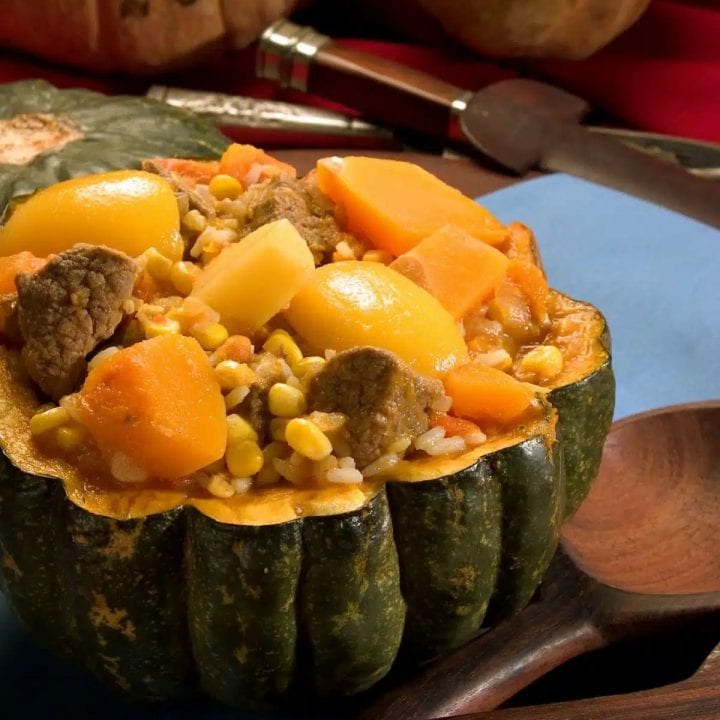
Carbonada served inside a whole baked squash, carbonada en zapallo, is the version people remember. It looks festive, and every serving comes with a scoop of soft, roasted pumpkin.

Pick a 4 to 5 pound kabocha, calabaza or round orange pumpkin that sits flat. Cut a wide lid around the stem and scoop out the seeds. Rub the inside with oil and salt, put the lid back on and bake it on a sheet pan at 375°F (190°C) for 50 to 60 minutes. It is ready when a knife slides into the flesh but the walls still stand firm. Ladle in the hot stew and serve right away.
The pumpkin bakes while the beef simmers, so it adds almost no time. Do not bake it until it is completely soft, or the walls can split when you fill it. If you are nervous, serve the stew in bowls and the roasted pumpkin wedges on the side.
Argentine vs. Chilean carbonada
Search for “carbonada” and you will find two different dishes. Chile has its own carbonada, and it is a different dish from Argentina’s.
| Argentine carbonada criolla | Chilean carbonada | |
|---|---|---|
| Style | Thick stew | Brothy soup or loose stew |
| Beef | Large cubes of chuck | Small dice or minced steak |
| Fruit | Peaches, pears, dried apricots or raisins | None |
| Vegetables | Squash, sweet potato, potato, corn on the cob | Potato, carrot, squash, peas, green beans |
| Rice | Optional | Usually included |
| Serving | In bowls or a baked pumpkin | In soup bowls |
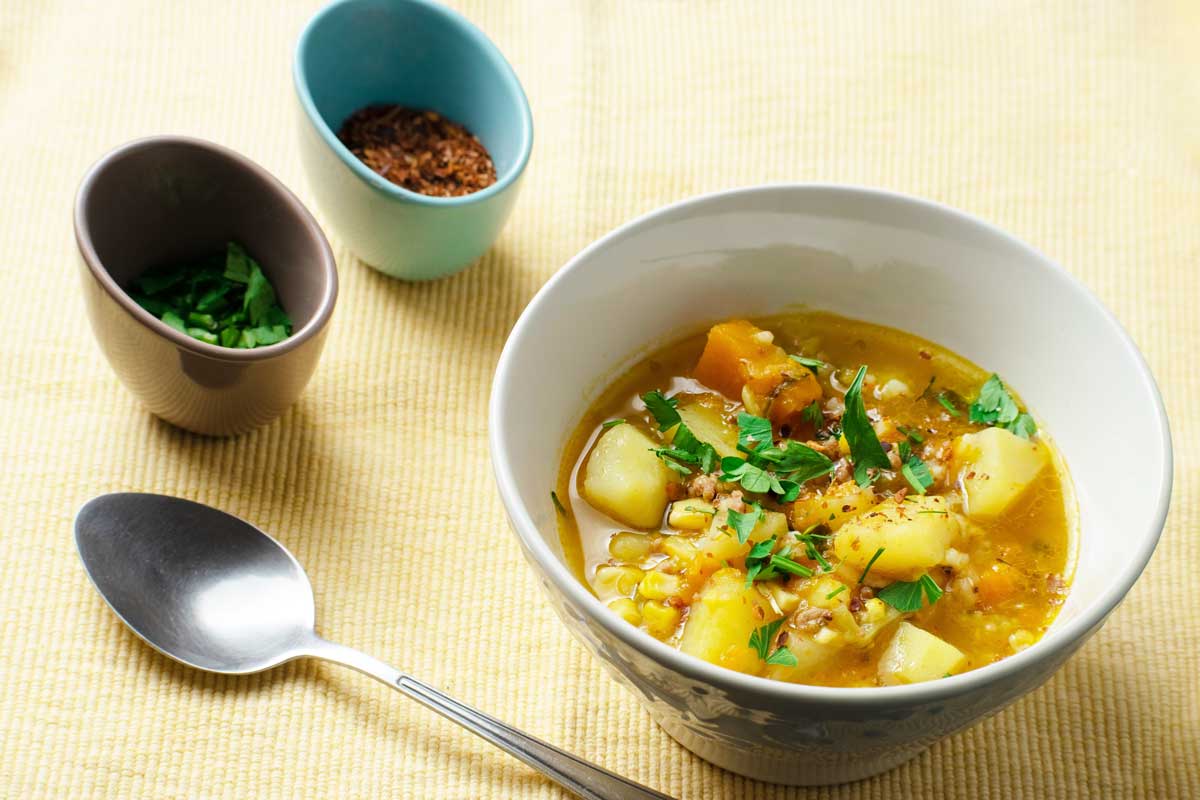
Chilean carbonada is closer to a hearty weeknight soup. You will find it alongside other classics in our guide to Chilean stews, including charquicán.
Carbonada vs. other stews
- Carbonada vs. locro: Both are Argentine patriotic stews, but locro is built on hominy corn, white beans and several pork cuts, and cooks down to a porridge-thick consistency. Carbonada is beef-based, chunkier and sweeter.
- Carbonada vs. Belgian carbonnade: The names share a root, but Belgium’s carbonnade flamande is beef braised in beer with onions. It has no fruit, squash or corn.
- Carbonada vs. carbonara: Despite the similar spelling, they are unrelated. Carbonara is an Italian pasta made with eggs, cheese and cured pork.
- Carbonada vs. American beef stew: Same braising method, very different flavor. Carbonada swaps carrots and peas for squash, sweet potato and corn, and adds fruit.
Tips for the best carbonada
- Brown the beef well. The browned bits on the bottom of the pot are where the flavor comes from.
- Cut the vegetables the same size. One-inch cubes cook evenly and look neat in the bowl.
- Add the fruit last. Peaches need only a few minutes. Cooked longer, they fall apart and make the stew too sweet.
- Keep it thick. Carbonada should be spoonable, not soupy. Simmer uncovered or mash a few squash cubes to thicken it.
- Taste at the end. The fruit sweetens the sauce, so check the salt after it goes in.
Slow cooker and Instant Pot carbonada
Slow cooker: Sear the beef and cook the sofrito on the stove first. Move everything to the slow cooker with the broth, potatoes, sweet potato and squash and cook on LOW for 7 to 8 hours. Add the corn and dried fruit for the last 45 minutes and the peaches for the last 15.
Instant Pot: Sear and build the sofrito on Sauté. Add the beef and broth and cook at high pressure for 20 minutes, then let the pressure release naturally for 10. Add the vegetables, cook at high pressure for 3 minutes with a quick release, and finish the corn and fruit on Sauté.
Storing and reheating carbonada
- Fridge: Up to 4 days in an airtight container.
- Freezer: Up to 3 months. The potatoes soften a little after thawing.
- Reheating: Warm it gently on the stove with a splash of broth. Add fresh peaches when reheating if you held them back.
More Argentine comfort food
If you like carbonada, explore more Argentinian soups and stews, the beef classics in our list of Argentine beef dishes, and the wider tour of Argentine food. Grilling instead? Start with homemade chimichurri and provoleta, or browse every recipe on our Argentine food hub.
Carbonada criolla FAQ
What is carbonada?
Carbonada is a hearty South American meat stew. In Argentina it is a thick beef stew with squash, sweet potato, corn and fruit, called carbonada criolla. In Chile it is a brothier beef and vegetable soup with rice.
What is beef carbonada?
Beef carbonada is another name for carbonada criolla: cubes of beef braised with vegetables and sweetened with peaches, pears or dried fruit.
Is carbonada popular in South America?
Yes. It is a winter staple in Argentina and a patriotic holiday dish there, and Chile has its own everyday carbonada soup.
What cut of beef is best for carbonada?
Beef chuck is the best choice. Its fat and connective tissue break down during the long simmer and leave the meat tender and juicy. Brisket or bottom round also work.
Can I make carbonada without fruit?
You can, and some families do. Without fruit it tastes like a hearty vegetable beef stew. Keep the sweet potato and squash so it still has that gentle sweetness.
Is carbonada a soup or a stew?
Argentine carbonada criolla is a stew, thick enough to eat with a fork and spoon. Chilean carbonada is closer to a soup.
What is the difference between carbonara and carbonada?
They are unrelated dishes. Carbonara is an Italian pasta with eggs, cheese and cured pork. Carbonada is a South American beef stew.
Can you freeze carbonada?
Yes, for up to 3 months. Freeze it without the peaches if you can, and add fresh fruit when you reheat it.
Carbonada Criolla Recipe
Carbonada Criolla (Argentine Beef Stew)
Carbonada criolla is Argentina's sweet and savory beef stew: tender beef braised with squash, sweet potato, potatoes and corn, finished with peaches and dried apricots. Serve it in bowls or, for a special occasion, inside a baked pumpkin.
Ingredients
- 2 pounds (900 g) boneless beef chuck, cut into 1½-inch cubes
- 1½ teaspoons kosher salt, divided, plus more to taste
- ½ teaspoon freshly ground black pepper
- 3 tablespoons olive or vegetable oil, divided
- 1 large yellow onion, chopped
- 1 red bell pepper, chopped
- 3 garlic cloves, minced
- 2 teaspoons sweet pimentón (paprika)
- 1 teaspoon dried oregano
- ½ teaspoon ají molido or red pepper flakes (optional)
- 1 tablespoon tomato paste
- 2 ripe tomatoes, grated or finely chopped (or one 14.5-ounce can diced tomatoes)
- ½ cup dry white wine (optional)
- 3 cups (720 ml) beef broth
- 2 bay leaves
- 2 medium Yukon Gold potatoes (about 12 ounces), cut into 1-inch cubes
- 1 medium sweet potato (about 12 ounces), peeled and cut into 1-inch cubes
- 1 pound (450 g) butternut squash or calabaza, peeled and cut into 1-inch cubes (about 3 cups)
- ⅓ cup long-grain white rice (optional)
- 2 ears corn, cut into 1-inch rounds (or 1½ cups kernels)
- ½ cup (3 ounces) dried apricots, halved
- 2 tablespoons raisins (optional)
- 2 ripe peaches or pears, peeled and cut into wedges
- 2 tablespoons chopped fresh parsley
- 1 small pumpkin (4 to 5 pounds), such as kabocha or calabaza, for serving (optional)
Instructions
- Season the beef. Pat the beef dry and toss it with 1 teaspoon of the salt and the black pepper.
- Sear in batches. Heat 2 tablespoons of the oil in a large Dutch oven over medium-high heat. Brown the beef in two or three batches, 4 to 5 minutes per batch, turning once. Move it to a plate.
- Build the sofrito. Lower the heat to medium and add the remaining oil, the onion and the bell pepper. Cook, stirring, until soft and golden, 6 to 8 minutes. Add the garlic, pimentón, oregano and ají molido and cook for 1 minute. Stir in the tomato paste and tomatoes and cook until thick and jammy, 3 to 4 minutes.
- Braise the beef. Pour in the wine (if using) and scrape up the browned bits. Return the beef and its juices, add the broth and bay leaves, and bring to a boil. Cover, turn the heat to low and simmer for 1 hour, until the beef is almost tender.
- Bake the pumpkin (optional). While the beef simmers, heat the oven to 375°F (190°C). Cut a lid from the pumpkin, scoop out the seeds, rub the inside with oil and salt, and bake it with its lid on a sheet pan for 50 to 60 minutes, until the flesh is tender but the shell still holds its shape.
- Add the vegetables. Stir in the potatoes, sweet potato, squash, rice (if using) and the remaining ½ teaspoon salt. Add a splash of water if the vegetables are not just covered. Cover and simmer until the vegetables are tender, 20 to 25 minutes.
- Finish with corn and fruit. Add the corn rounds, dried apricots and raisins and simmer uncovered for 10 minutes. Gently fold in the peach wedges and cook 3 to 5 minutes more, just until warmed through. Remove the bay leaves and adjust the salt. The stew should be thick; mash a few squash cubes against the pot to thicken it if needed.
- Serve. Sprinkle with parsley and serve in bowls, or ladle the stew into the baked pumpkin, bring it to the table and scoop some of the soft pumpkin flesh into each bowl.
Notes
Fruit: Ripe fresh peaches are traditional in summer and fall. Out of season, use pears, or canned peaches in juice (drained), added only at the end so they hold their shape.
Squash: Butternut, calabaza or kabocha all work. In Argentina the usual choices are zapallo anco (butternut) or zapallo criollo.
Slow cooker: Follow steps 1 to 4 on the stove, then move everything to a slow cooker with the potatoes, sweet potato and squash. Cook on LOW for 7 to 8 hours. Add the corn and dried fruit for the last 45 minutes and the peaches for the last 15.
Instant Pot: Sear and build the sofrito on Sauté, add the beef and broth, and cook at high pressure for 20 minutes with a 10-minute natural release. Add the vegetables and cook at high pressure for 3 minutes, quick release, then finish the corn and fruit on Sauté.
Storage: Keeps 4 days in the fridge and 3 months in the freezer (the potatoes soften a little after freezing). Reheat gently with a splash of broth.
More Argentine Foods
See all →
Jorge Garcia is the founder of AmigoFoods, where he has spent over 20 years helping readers discover authentic Latin American and Spanish cuisine. Raised in a Cuban-American household, Jorge learned to cook at the hands of his mother and grandmother, carrying forward generations of family recipes. That heritage, backed by his family’s four-generation history in the Latin food industry, inspired him to launch AmigoFoods in 2003. With more than 1,000 published articles on recipes, ingredients, and food culture, Jorge’s mission is simple: make authentic Latin cooking approachable for home cooks everywhere while honoring the traditions behind every dish.