

Palmeritas are crisp, caramelized puff pastry cookies popular in Spain and Latin America. This two-ingredient version uses ready-made pastry and sugar, with optional cinnamon or a chocolate coating—an easy treat to serve with coffee or tea.
Palmeritas at a Glance
What Are Palmeritas

Palmeritas are sweets made of sugar-coated puff pastry, rolled and baked. They include only two main ingredients like puff pastry and sugar. You can add chocolate, cinnamon, lemon zest, or many other ingredients to your liking to give your Palmeritas a personal touch.

These cute pastry like cookies come out perfect even if you are not a proficient baker. The secret ingredient is the puff pastry, made from a laminated dough without using yeast.
Palmeritas are now universal treats that are enjoyed in many countries around the globe.
However, they are popular in France, especially in Spain, where they are found in almost every bakery.
On the other hand, Latin American countries have adopted and given a local twist to this delicious recipe.
Palmeritas are sometimes referred to as some of the best Argentinian desserts.
History of Palmeritas

Depending on the country, Palmeritas are also known as ‘Palmiers,’ ‘Palm Leaves’, ‘Hearts’ or ‘Elephant Ears’. Even though it is now a universal recipe, it was invented in France.
Palmeritas originated in the French pastry shops at the beginning of the 20th century. However, they have become more popular in Spain, where they are called ‘Palmeritas’ due to their resemblance to palm trees. This recipe has now become a tradition in Latin American countries as well.
These flaky, buttery, and delicate sweets are usually consumed with coffee or tea.
The recipe has been enriched in Spain and Latin American countries with new ingredients, like cinnamon, chocolate, or other fillings.
Palmeritas are now considered a common street food in these countries.
How To Make Palmeritas

To make Palmeritas, you need to use puff pastry, sprinkle sugar, roll the pastry and cut it into smaller segments. They need to be baked at higher temperatures until golden brown. You can add cinnamon or dried fruits to the sugar or dip the baked, cooled pastries in melted chocolate.
Here’s a simple and delicious recipe for how to make the classic Palmeritas:
Main Ingredients
- 1 puff pastry sheet, about 9 oz (255 g), thawed but cold
- 5 oz (140 g) sugar, preferably a mix of granulated and coarse sugar
- Optional: 2 teaspoons ground cinnamon
- Optional: 3.5 oz (100 g) chocolate, melted, for dipping cooled pastries
Directions
- Thaw the pastry according to its package directions; refrigerator thawing is a reliable option. It should unfold easily while staying cold. Thawing time is not included below.
- Scatter half the sugar on the work surface and place the pastry on it. Sprinkle the remaining sugar over the top, adding the cinnamon if using. Press lightly with a rolling pin to coat both sides; do not flatten the layers heavily.
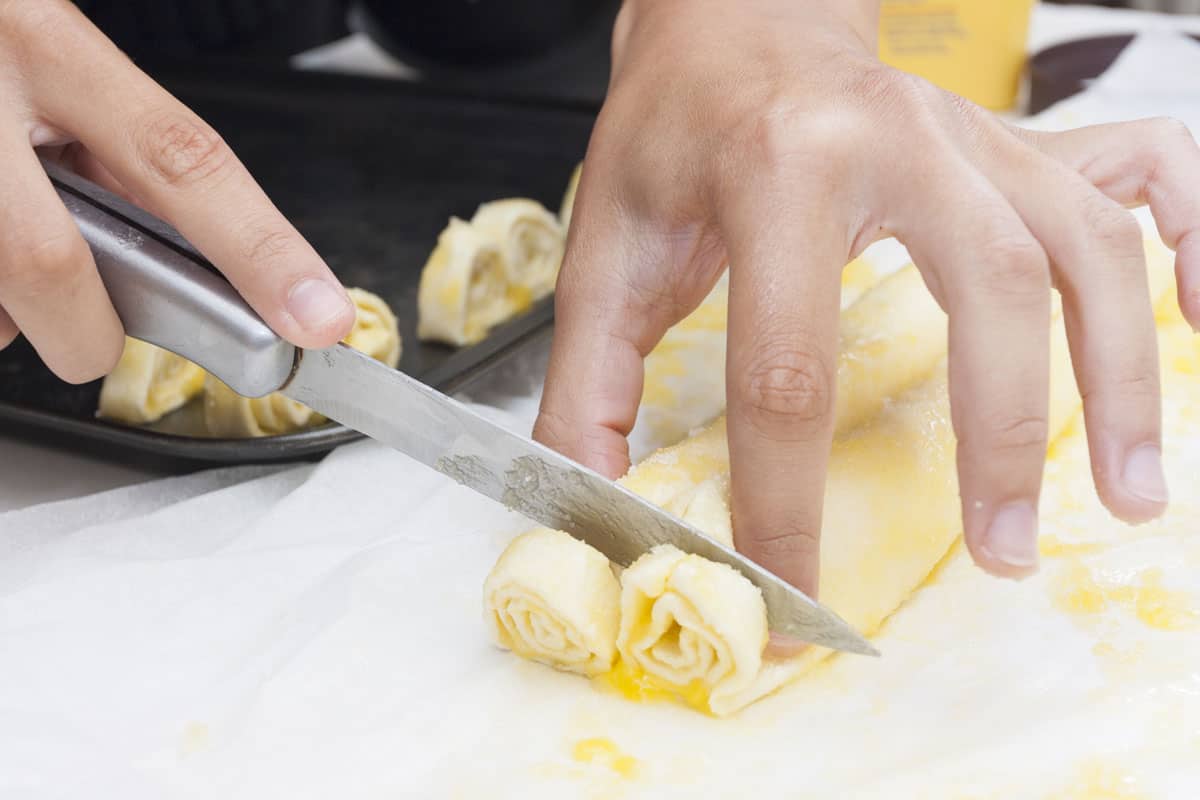
- Roll the two opposite edges toward the center until they meet. Refrigerate the log for about 30 minutes, until firm enough to slice cleanly. Meanwhile, heat the oven to 450°F (230°C). Line a rimmed baking sheet with parchment rated for this temperature or a suitable silicone baking mat.
- Cut the log into 1/2-inch slices, making about 20 small palmeritas depending on sheet dimensions. Arrange cut-side down with about 2 inches between pieces; use two trays if necessary.
- Bake for 5–7 minutes, until the undersides caramelize. Carefully turn with a spatula and bake 5–7 minutes more, until both sides are golden brown and the centers are baked through. Watch closely: sugar can quickly burn, and pastry brands vary.
- Transfer to a rack and cool before eating. If using chocolate, dip the cooled pastries and let the coating set.
Makes about 20 small pastries; yield depends on sheet dimensions and slice thickness. Allow 15 minutes prep, 30 minutes chilling, and about 14 minutes baking (59 minutes total), plus pastry thawing and cooling. Best the day baked; keep plain, completely cooled pastries airtight for 1–2 days. Chocolate is a coating after baking, not a direct replacement for the sugar in this recipe.
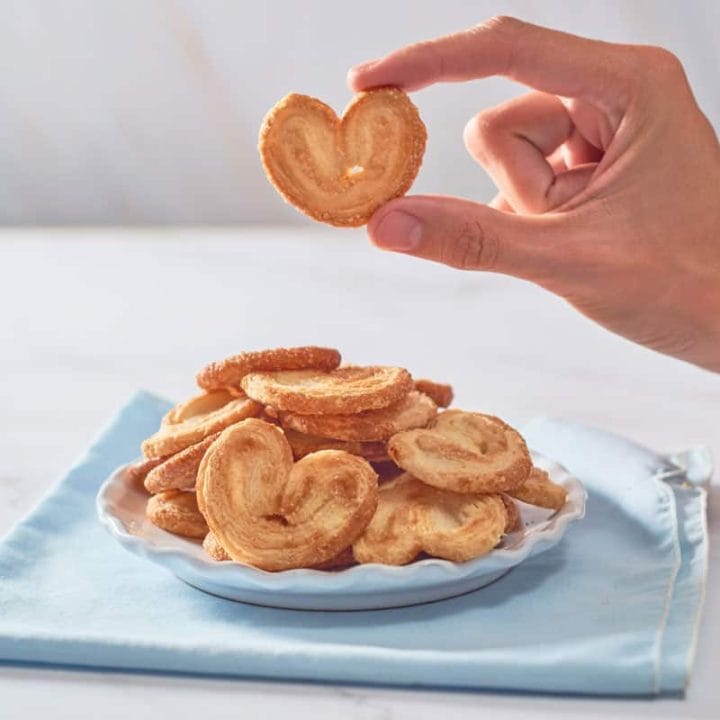
Palmeritas
Crisp, caramelized puff pastry cookies made with sugar, with optional cinnamon or a chocolate coating.
Ingredients
- 1 puff pastry sheet, about 9 oz (255 g), thawed but cold
- 5 oz (140 g) sugar, preferably a mix of granulated and coarse sugar
- Optional: 2 teaspoons ground cinnamon
- Optional: 3.5 oz (100 g) chocolate, melted, for dipping cooled pastries
Instructions
- Thaw the pastry according to its package directions; refrigerator thawing is a reliable option. It should unfold easily while staying cold. Thawing time is not included below.
- Scatter half the sugar on the work surface and place the pastry on it. Sprinkle the remaining sugar over the top, adding the cinnamon if using. Press lightly with a rolling pin to coat both sides; do not flatten the layers heavily.
- Roll the two opposite edges toward the center until they meet. Refrigerate the log for about 30 minutes, until firm enough to slice cleanly. Meanwhile, heat the oven to 450°F (230°C). Line a rimmed baking sheet with parchment rated for this temperature or a suitable silicone baking mat.
- Cut the log into 1/2-inch slices, making about 20 small palmeritas depending on sheet dimensions. Arrange cut-side down with about 2 inches between pieces; use two trays if necessary.
- Bake for 5–7 minutes, until the undersides caramelize. Carefully turn with a spatula and bake 5–7 minutes more, until both sides are golden brown and the centers are baked through. Watch closely: sugar can quickly burn, and pastry brands vary.
- Transfer to a rack and cool before eating. If using chocolate, dip the cooled pastries and let the coating set.
Notes
Makes about 20 small pastries; yield depends on sheet dimensions and slice thickness. Allow 15 minutes prep, 30 minutes chilling, and about 14 minutes baking (59 minutes total), plus pastry thawing and cooling. Best the day baked; keep plain, completely cooled pastries airtight for 1–2 days. Chocolate is a coating after baking, not a direct replacement for the sugar in this recipe.
If you are a more experienced baker, you can make your own pastry sheet, like how Patisserie did it in their YouTube video below:
https://www.youtube.com/watch?v=nkyo0qyAFa8
Savory Palmeritas
Even though the classic Palmeritas are crunchy sweets, people have been experimenting with new flavors.
You can use the above recipe to make savory Palmeritas, which can be great appetizers.
Instead of sprinkling the pastry with sugar, you can spread basil pesto or cream cheese combined with freshly ground pepper, dry tomatoes, garlic, etc.
Keep the same basic shaping method for savory palmeritas, but follow a recipe designed for your chosen filling; moisture and cheese can change baking time.
Final Thoughts

The delicious, flaky, buttery sweets like Palmeritas are created to be everyone’s favorite. They come from France, but now are more popular in Spain and Latin America.
Palmeritas go perfectly with coffee and tea or are even consumed alone as snacks. You will only need two main ingredients to make classic palmeritas: puff pastry and sugar.
You can personalize the Palmeritas recipe by adding other ingredients to your liking.
For instance, you can add cinnamon and dried fruits to the sugar or dip the baked, cooled pastries in melted chocolate.
Some variations of palmeritas may also include fillings such as chocolate or dulce de leche (a caramel-like sauce).
You can also try the savory palmeritas, served as tasty appetizers.
Sources
- Amigo Foods: 16 Argentinian Desserts No One Can Turn Down
- Mommy’s Home Cooking: Easy Palmiers Recipe (Elephant Ear Cookies or Palmeritas) (Video)
- The Foodies Larder: Mini Chocolate Coffee Palmeras
- Auguste Escoffier School of Culinary Arts: What is a Palmier?
- Simple Spanish Food: Easy Spanish Palm Pastries–palmeras y palmeritas
- Sweet Tooth Design Company: Palmier France 20th Century
- Delighted Cooking: What is a Palmier?
- Momsdish: Classic French Palmiers Recipe
- My Delicious Sweets: What Pastries Were Invented in France?
More Argentine Foods
See all →
Jorge Garcia is the founder of AmigoFoods, where he has spent over 20 years helping readers discover authentic Latin American and Spanish cuisine. Raised in a Cuban-American household, Jorge learned to cook at the hands of his mother and grandmother, carrying forward generations of family recipes. That heritage, backed by his family’s four-generation history in the Latin food industry, inspired him to launch AmigoFoods in 2003. With more than 1,000 published articles on recipes, ingredients, and food culture, Jorge’s mission is simple: make authentic Latin cooking approachable for home cooks everywhere while honoring the traditions behind every dish.