

Sandwiches de miga are thin, crustless sandwiches and a classic Argentine food. This triple-layer version combines ham and cheese with egg and tomato, making a generous batch for lunch, merienda or a party tray.
Sandwiches de Miga at a Glance
What Is a Sandwich de Miga?

A sandwich de miga is a thin, crustless sandwich, often made as a double-decker that’s famous in Argentina and the neighboring countries of Paraguay and Chile. It comes with cold-cut meats (such as ham, salami, etc.), tomatoes, cheese, hard-boiled eggs, lettuce, and peppers. It can either be toasted or untoasted.
There are various theories about the origin of these scrumptious crustless sandwiches.
Some people claim that Italian immigrants brought it to Argentina, while another theory claims that the sandwich was created by local bakers working in the Confitería Ideal, a cafe in Buenos Aires around the 1900s.
Regardless of this sandwich’s origins, it’s a cult classic and never disappoints, especially when you want snack on something or need to grab and go.
Many similar South American sandwiches are eaten across the region, and you can learn more about them in my article entitled “16 Best Latin Sandwiches You Need To Try Right Now.”
Sándwiches de miga turn up at breakfast and merienda alike — see where they fit in our guide to Argentine breakfast foods.
How To Make a Sandwich de Miga

This party-size batch makes 12 triple sandwiches, cut into 24 halves. Start with thin bread and eggs that have already been boiled and cooled.
Ingredients
- 36 thin slices white sandwich bread, crusts removed, or equivalent sandwich-size pieces of pan de miga
- 200 g (7 oz) unsalted butter, softened
- 2 teaspoons (10 ml) sunflower or other neutral oil
- 50 ml water (3 tablespoons plus 1 teaspoon), added gradually as needed
- 12 thin slices cooked ham
- 12 thin slices mild sandwich cheese
- 2 medium tomatoes, very thinly sliced and patted dry
- 5 medium eggs, hard-boiled, cooled, peeled and finely chopped
- Salt and pepper, to taste
- Optional filling swaps: sliced olives, dry arugula leaves, or crumbled Roquefort
Directions
- Beat the softened butter until creamy. Gradually beat in the oil, then enough of the water to make a soft spread. Season lightly with salt and pepper. Stop adding water if the mixture loosens sufficiently; do not use melted butter.
- Use thin, soft bread slices or pan de miga sheets cut to matching sandwich-size pieces. Trim the crusts. Do not try to split already-thin slices horizontally; they tear easily. Keep the bread covered while working.
- Lay out 12 bottom slices and spread a thin layer of butter mixture on each. Divide the ham and cheese among them, trimming or folding the slices to fit.
- Butter both sides of 12 middle slices and place them on top. Divide the chopped eggs and dry tomato slices evenly over this second layer. Keep the filling thin so the sandwiches hold together.
- Butter one side of the remaining 12 bread slices and place them buttered-side down on top. Press lightly, cover well, and refrigerate for about 30 minutes to firm up.
- Cut each sandwich into two rectangles or triangles with a sharp serrated knife. Serve cold. Keep refrigerated until serving; for a toasted variation, heat gently in a sandwich press until the bread colors and filling is warmed. Toasting time is additional.
Makes 12 triple-layer sandwiches, or 24 halves. Allow about 30 minutes assembly and 30 minutes chilling (1 hour total), using eggs that are already hard-boiled and cooled. Egg cooking/cooling and optional toasting are not included. Butter spread amounts depend on bread size; use thin coats and refrigerate any unused spread. Optional olives, arugula or Roquefort replace part of the egg-and-tomato filling rather than adding a thick extra layer. Keep covered and refrigerated; best eaten the day made. For serving or transport, keep cold and do not leave out for more than 2 hours (1 hour above 90°F/32°C).
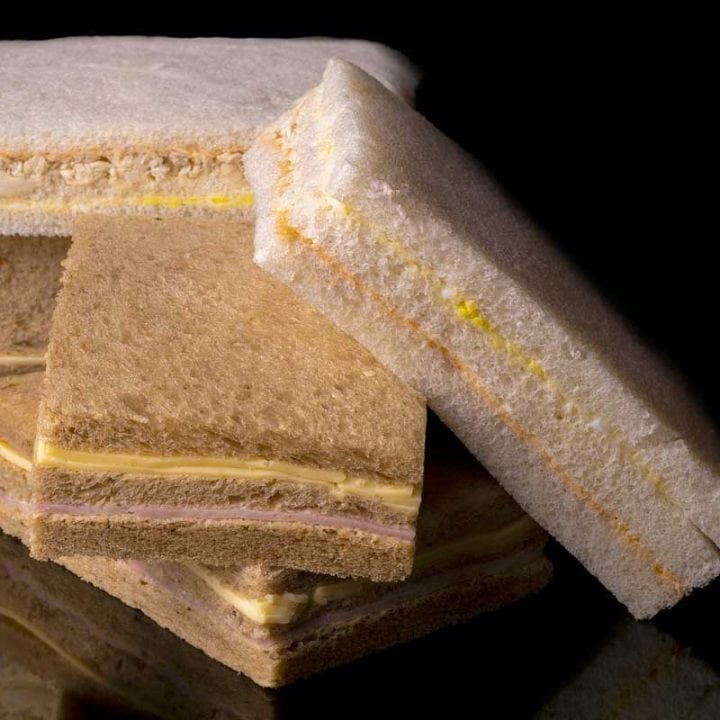
Sandwiches de Miga
Thin, crustless Argentine triple sandwiches with ham, cheese, egg and tomato.
Ingredients
- 36 thin slices white sandwich bread, crusts removed, or equivalent sandwich-size pieces of pan de miga
- 200 g (7 oz) unsalted butter, softened
- 2 teaspoons (10 ml) sunflower or other neutral oil
- 50 ml water (3 tablespoons plus 1 teaspoon), added gradually as needed
- 12 thin slices cooked ham
- 12 thin slices mild sandwich cheese
- 2 medium tomatoes, very thinly sliced and patted dry
- 5 medium eggs, hard-boiled, cooled, peeled and finely chopped
- Salt and pepper, to taste
- Optional filling swaps: sliced olives, dry arugula leaves, or crumbled Roquefort
Instructions
- Beat the softened butter until creamy. Gradually beat in the oil, then enough of the water to make a soft spread. Season lightly with salt and pepper. Stop adding water if the mixture loosens sufficiently; do not use melted butter.
- Use thin, soft bread slices or pan de miga sheets cut to matching sandwich-size pieces. Trim the crusts. Do not try to split already-thin slices horizontally; they tear easily. Keep the bread covered while working.
- Lay out 12 bottom slices and spread a thin layer of butter mixture on each. Divide the ham and cheese among them, trimming or folding the slices to fit.
- Butter both sides of 12 middle slices and place them on top. Divide the chopped eggs and dry tomato slices evenly over this second layer. Keep the filling thin so the sandwiches hold together.
- Butter one side of the remaining 12 bread slices and place them buttered-side down on top. Press lightly, cover well, and refrigerate for about 30 minutes to firm up.
- Cut each sandwich into two rectangles or triangles with a sharp serrated knife. Serve cold. Keep refrigerated until serving; for a toasted variation, heat gently in a sandwich press until the bread colors and filling is warmed. Toasting time is additional.
Notes
Makes 12 triple-layer sandwiches, or 24 halves. Allow about 30 minutes assembly and 30 minutes chilling (1 hour total), using eggs that are already hard-boiled and cooled. Egg cooking/cooling and optional toasting are not included. Butter spread amounts depend on bread size; use thin coats and refrigerate any unused spread. Optional olives, arugula or Roquefort replace part of the egg-and-tomato filling rather than adding a thick extra layer. Keep covered and refrigerated; best eaten the day made. For serving or transport, keep cold and do not leave out for more than 2 hours (1 hour above 90°F/32°C).
Where to Buy Pan de Miga
If you’d rather skip making your own sandwich de miga bread (pan de miga), you can always try to purchase it locally or online.
Online merchants such as Amazon sell pan de miga on their websites.
Various Filling Ideas for Sandwiches de Miga

The most common sandwich de miga is a combination of ham, cheese and mayonnaise.
However, there are many ways to enjoy sandwiches de miga, here are a few;
- Hard boiled eggs
- Egg Salad
- Tuna Salad
- Prosciutto
- Jamon Serrano
- Turkey
- Chicken
- Salami
- Asparagus
- Tomato
- Lettuce
- Mushrooms
- Peppers
Final Thoughts

Sandwich de miga is simple and delicious. An ideal option to serve as an appetizer or canapé.
It deserves more recognition, especially since it allows everyone to adjust it to taste.
You can even go crazy and try unusual flavor combinations.
However, there are 3 Golden Rules when it comes to serving a sandwich de miga;
- The bread must be sliced thinly. Similar to pullman bread.
- No crust! A true sandwich de miga is crustless.
- This recipe makes triples, with three bread slices and two filling layers. Simples, with two bread slices and one filling layer, are also part of the sandwich de miga tradition.
Whether you stick to traditional fillings or become more adventurous, sandwiches de miga deserve a try and will be hit at family gatherings.
Sources
- Wikipedia: Sandwiches de miga
- Delighted Cooking: What Are Sandwiches De Miga?
- Taste Atlas: Sandwiches de miga
- YouTube: Tenedor Libre – Cómo Hacer Sandwiches de Miga Caseros ¡3 Sabores!
- YouTube: Matias Chavero – SANDWICH DE MIGA
- Amigo Foods: 16 Best Latin Sandwiches You Need To Try Right Now
More Argentine Foods
See all →
Jorge Garcia is the founder of AmigoFoods, where he has spent over 20 years helping readers discover authentic Latin American and Spanish cuisine. Raised in a Cuban-American household, Jorge learned to cook at the hands of his mother and grandmother, carrying forward generations of family recipes. That heritage, backed by his family’s four-generation history in the Latin food industry, inspired him to launch AmigoFoods in 2003. With more than 1,000 published articles on recipes, ingredients, and food culture, Jorge’s mission is simple: make authentic Latin cooking approachable for home cooks everywhere while honoring the traditions behind every dish.