

Bauducco panettone is the soft, sweet Christmas bread in the yellow box: a Milan-style panettone made with an Italian family recipe by a Brazilian company. Turin-born baker Carlo Bauducco started it in São Paulo in 1952, and today Bauducco is the largest panettone maker in the world and the brand behind 86% of U.S. panettone sales by value.
Below is everything you need to buy the right one: where it is made, every flavor sold in the U.S., how it compares with Italian and Peruvian panettone, how long it keeps, the best ways to serve it, and a panettone bread pudding that turns a leftover loaf into dessert.
As an Amazon Associate, AmigoFoods earns from qualifying purchases. Prices change often, so check the current price before you buy.
Bauducco Panettone at a Glance
Is Bauducco Panettone Italian or Brazilian?
Both, and that is the whole story of the brand. The recipe and the method are Italian; the company, the factories and the Christmas tradition it built are Brazilian.
Carlo Bauducco, a coffee merchant and baker from Turin, came to São Paulo in 1948 to collect a debt over a bread-shaping machine he had sold. He recovered only part of the money, but he noticed something more valuable: São Paulo had nearly as many Italians as Turin, and almost no one was baking panettone for them. He went home, sold what he had, and came back in 1950 with a pastry chef and a piece of mother dough wrapped in a damp cloth. Every Bauducco panettone is still started from that dough.

- 1948Carlo Bauducco arrives in São Paulo from Turin.
- 1950He returns from Italy with the mother dough the company still uses.
- 1952The Doceria Bauducco opens as a small pastry shop in the Brás neighborhood.
- 1962Production moves to a factory in Guarulhos, outside São Paulo, and panettone becomes a national Christmas product.
- Late 1970sBauducco starts selling in the United States through Miami.
- 1980s–2000Wafers, cookies and toasts join the line; a second large plant opens in Extrema, Minas Gerais, in 2000.
- 2026Bauducco opens its largest U.S. plant in Zephyrhills, Florida.
Bauducco is still a family company, and it now calls itself the world’s largest panettone producer, exporting to more than 50 countries. For the rest of Brazil’s Christmas table, see our Brazilian Christmas food guide.
Where Is Bauducco Panettone Made?
The panettone sold in U.S. stores is baked in Brazil: the box says “Made in Brazil,” and the company’s big panettone plants are in Guarulhos (São Paulo state) and Extrema (Minas Gerais), with another factory in Maceió, Alagoas.
That may start to change. In June 2026 Bauducco opened a 160,000-square-foot plant in Zephyrhills, Florida, near Tampa, which doubles its U.S. production capacity. It makes wafers first, and the company says it will let it bake more of its range in the U.S., panettone included. Until then, check the side of the box if you want to know where your loaf came from. The U.S. headquarters is in Miami.
Every Bauducco Panettone Flavor Sold in the U.S.
The U.S. lineup is smaller than Brazil’s, and it changed in 2025, when the chocolate chip panettone was relaunched under the Chocottone name. Here is what you will find on American shelves.
Classic Panettone
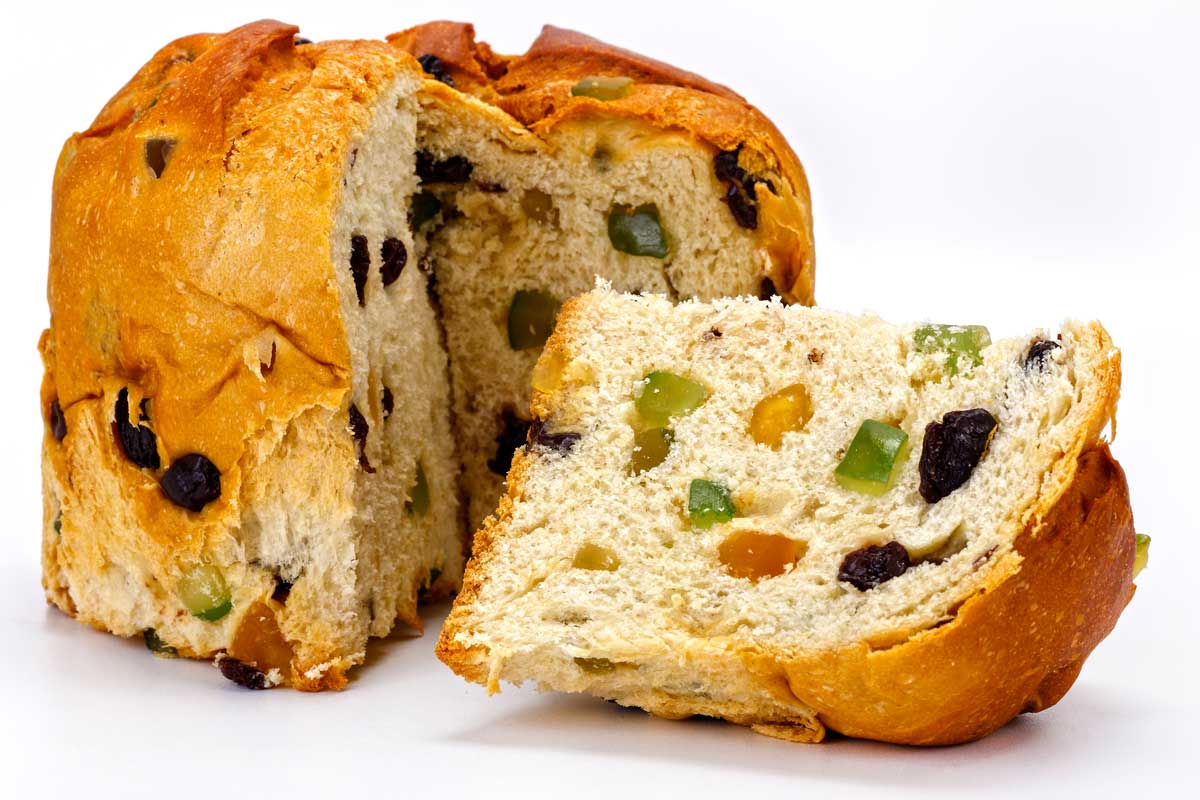
Raisins and candied fruit in a vanilla-scented crumb. Sold in 24 oz and 26.2 oz boxes. This is the one to buy if you have never tried panettone.
Chocottone
Bauducco’s chocolate panettone: chocolate chips and a fudge coating, no fruit. Launched in the U.S. in late 2025 in Chocolate Chips, Peanut Butter and Hazelnut Cream; 2026 adds a Skippy Peanut Butter version and Pistachio.
Mini Panettone
Single-serving panettones of about 2.8 to 3.5 oz in classic and chocolate chip. Good for stocking stuffers, office gifts and kids who will not finish a slice.
All Butter Panettone & Pandoro
The All Butter Panettone comes in a 26.5 oz gift box at warehouse clubs. Bauducco also sells a 17.5 oz Pandoro, the star-shaped golden cake from Verona with no fruit at all.

What Does Bauducco Panettone Taste Like?
Bauducco is softer and sweeter than most Italian panettone. The crumb is light and cottony, pulls apart in feathery strands, and smells of vanilla and citrus. The Classic carries raisins and small cubes of candied fruit; the flavor is closer to a sweet brioche than to a fruitcake, with none of the heavy, boozy density Americans sometimes expect.
Next to a high-end Italian panettone, it is less buttery and less tangy: artisan loaves made with lievito madre often ferment for three or four days and use far more butter and egg yolk. Next to Peru’s Panetón D’Onofrio, it is lighter and less packed with fruit.
| Bauducco (Brazil) | Italian artisan | D’Onofrio (Peru) | |
|---|---|---|---|
| Texture | Very soft, cottony, even crumb | Tall, airy, long irregular strands | Denser and more compact |
| Flavor | Sweet, vanilla and citrus | Rich butter and egg yolk, light sourdough tang | Sweet, heavy on raisins and candied fruit |
| Fermentation | Mother dough, 52-hour process | Lievito madre, often 3–4 days | Not published |
| Typical price | About $11 for 24 oz | $30–$50 for 1 kg (35 oz) | About $17 for 31.7 oz |
| Best for | Breakfast, gifting in bulk, French toast and bread pudding | A special-occasion dessert | Peruvian Christmas with hot chocolate |
For the price, yes. It is the easiest good panettone to find in America, and its soft, sweet crumb is what most Brazilian, Peruvian and Central American families grew up with. Shoppers agree: the 24 oz Classic averages about 4.3 out of 5 stars across more than 2,000 Amazon ratings.
It will not beat a $40 Milanese loaf on butter or aroma, and a box that has sat on the shelf too long can be dry, so check the best-by date. If dry does happen, it is still perfect for the bread pudding below.
Want to bake your own? Our homemade panetón recipe walks through the Peruvian version step by step.
Panettone in Brazil: Why Bauducco Means Christmas
In Brazil, panetone (with one t) is not an import; it is part of Natal. Supermarkets build towers of boxes in November, companies hand out panettones in employee Christmas baskets, and a slice with coffee is how many families start Christmas morning. Brazil now produces more panettone than Italy, and Bauducco is the brand most Brazilians picture.
The chocolate version, called chocotone in Brazil, is just as common, especially with kids. On the Christmas table, panettone sits next to rabanada (Brazilian Christmas French toast), pavê and pudim; for more Brazilian sweets, see our guide to Brazilian desserts.

How to Serve Bauducco Panettone
Bauducco panettone is ready to eat straight from the box, but a few small steps make it noticeably better.
- Open it from the bottom. The box tells you to, and the dome stays intact. Peel the paper mold away only from the part you are cutting.
- Warm it briefly. Five to ten minutes in a 300°F oven (or near a warm oven) wakes up the butter and vanilla and makes the crumb even softer.
- Cut tall wedges, not slices. Cut it like a cake, from the top down, so every piece gets crust, crumb and fruit.
- Pair it right. Coffee or a Brazilian cafezinho in the morning; hot chocolate, sparkling wine or Puerto Rican coquito after dinner.
- Use the leftovers. Toast slices in butter, make French toast (dip it like rabanada), tear it into stuffing for the turkey, or bake the bread pudding below.

How Long Does Bauducco Panettone Last?
Unopened, it keeps at room temperature until the best-by date printed on the box, which is usually months away. The long natural fermentation and the sealed bag are what let it stay soft without refrigeration.
Once opened, press the inner bag closed or wrap the cut side in plastic and keep it at room temperature; it is best within about a week. Do not refrigerate it, which dries it out faster. To keep it longer, wrap slices well and freeze them for up to 2 months, then thaw at room temperature or toast from frozen.
Calories: one serving of the Classic (about 1/9 of the 24 oz box) has about 250 calories, according to the label. The chocolate versions run a little higher.
Where to Buy Bauducco Panettone
From October through December you will find Bauducco panettone at most large U.S. grocery chains and big-box stores, including Walmart, Target and Kroger, and the All Butter gift box at warehouse clubs. Latin American and Brazilian markets carry it too, often with flavors the chains skip. After the holidays it gets hard to find in stores, which is when Amazon is the easiest option.

Comparing it with Peru’s favorite? Panetón D’Onofrio is also sold on Amazon, and our D’Onofrio guide explains how it differs.
Panettone Bread Pudding with Bauducco
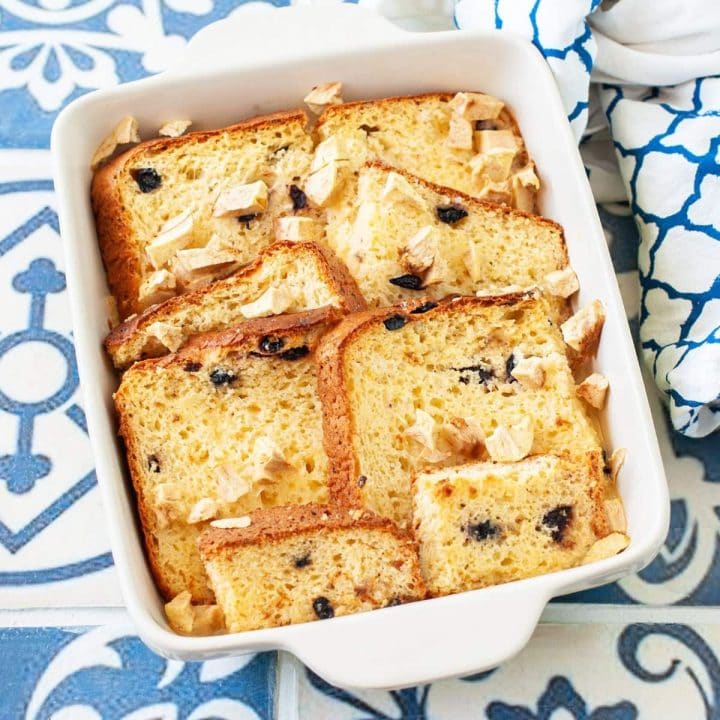
This is the best thing to do with a panettone that is a day or two past its prime. Brazilian cooks turn leftover panetone into pudim; this version keeps the cubes whole, soaks them in a custard made with sweetened condensed milk, and bakes them until puffed and golden on top and creamy underneath. The panettone’s fruit and vanilla do most of the flavoring, so there is no extra sugar.
Tips for the best bread pudding
- Dry the cubes first. Fresh Bauducco is so soft it turns mushy; a quick toast lets it drink up the custard and hold its shape.
- Any flavor works. The Classic gives a fruit-studded pudding; Chocottone makes a chocolate one.
- Do not skip the soak. Twenty minutes, pressing the cubes down halfway, is what keeps the center from turning dry.
- Serve it warm with powdered sugar or a spoonful of warm dulce de leche.
Panettone Bread Pudding (Made with Bauducco)
Cubes of Bauducco panettone soaked in a sweetened condensed milk custard and baked until puffed and golden: the Brazilian way to turn a leftover Christmas panettone into dessert.
Ingredients
- 1 Bauducco Classic Panettone (24 oz), paper removed, cut into 1-inch cubes (about 14 cups)
- 1 tablespoon unsalted butter, softened, for the dish
- 5 large eggs
- 1 can (14 oz) sweetened condensed milk
- 2 cups whole milk
- 1 cup heavy cream
- 2 teaspoons vanilla extract
- 1/2 teaspoon ground cinnamon
- 1/4 teaspoon fine salt
- Finely grated zest of 1 orange (optional)
- Powdered sugar or warm dulce de leche, for serving
Instructions
- Dry the panettone. Heat the oven to 325°F. Cut the panettone (paper removed) into 1-inch cubes and spread them on 2 rimmed sheet pans. Toast for 10 to 12 minutes, until dry on the outside but still soft inside. Let cool slightly. If your panettone is already a day or two old, you can skip the toasting and simply leave the cubes out for a few hours.
- Make the custard. In a large bowl, whisk the eggs until smooth. Whisk in the sweetened condensed milk, whole milk, heavy cream, vanilla, cinnamon, salt and orange zest, if using.
- Soak. Butter a 9x13-inch (3-quart) baking dish and add the panettone cubes. Pour the custard evenly over the top and press the cubes down gently so every piece is wet. Let stand for 20 minutes, pressing down again halfway through. Meanwhile, raise the oven to 350°F.
- Bake. Cover the dish with foil and bake for 20 minutes. Uncover and bake for 25 to 30 minutes more, until the top is puffed and golden and the center no longer jiggles; a knife inserted in the middle should come out clean (160°F on an instant-read thermometer).
- Rest and serve. Let the pudding rest for 10 minutes. Dust with powdered sugar or drizzle with warm dulce de leche and serve warm.
Notes
Chocolate version: Use a Bauducco Chocottone instead of the Classic panettone; everything else stays the same.
Coconut twist: For a Bahian-style pudding, replace the 2 cups of whole milk with 1 can (13.5 oz) coconut milk plus 1/4 cup milk.
Slices instead of cubes: Cut the panettone into 1-inch-thick slices and shingle them in the dish (as in the photo); soak and bake the same way.
Make ahead: Assemble the pudding through step 3, cover and refrigerate for up to 12 hours. Add about 10 minutes to the uncovered baking time.
Storage: Refrigerate leftovers, covered, for up to 4 days. Rewarm individual servings in the microwave or a 300°F oven.
Beyond Panettone: Other Bauducco Favorites
Bauducco is also the leading wafer maker in the U.S. If you like the panettone, these are the two most popular year-round products.
Bauducco Wafers
Crisp wafer cookies with three layers of cream: chocolate, vanilla, strawberry, hazelnut and more. The assorted 12-pack covers the main flavors.
Choco Biscuit
Crunchy butter biscuits half-dipped in chocolate, individually wrapped. Good with coffee and easy to pack.
Bauducco Panettone FAQ
Is Bauducco an Italian company?
No. Bauducco is a Brazilian company founded in São Paulo in 1952 by Carlo Bauducco, an Italian immigrant from Turin. The panettone recipe is Italian; the company is Brazilian and still family-owned.
Where is Bauducco panettone made?
The panettone sold in the U.S. is made in Brazil, mainly at plants in Guarulhos and Extrema. Bauducco opened its largest U.S. plant in Zephyrhills, Florida, in 2026 and plans to make more of its range there.
What is the difference between panettone and Chocottone?
Chocottone is Bauducco’s chocolate panettone: the same dough with chocolate chips (and in the U.S., a fudge coating) instead of raisins and candied fruit.
Does Bauducco panettone need to be refrigerated?
No. Keep it at room temperature, sealed, until the best-by date. Once opened, wrap it and eat it within about a week, or freeze slices.
Why is Bauducco panettone cheaper than Italian panettone?
Scale and ingredients. Bauducco bakes tens of millions of panettones a year in large factories and uses less butter and egg yolk than artisan Italian loaves, which can take three or four days to make by hand.
How do you eat Bauducco panettone?
Open the box from the bottom, warm the loaf for a few minutes, cut tall wedges and serve with coffee, hot chocolate or sparkling wine. Leftovers make excellent French toast and bread pudding.
Bauducco took an Italian Christmas bread, gave it a Brazilian home and turned it into the panettone millions of Brazilian and American families grew up with. Pick up the Classic if you are new to it, Chocottone if you want chocolate, and save a loaf for the bread pudding. For more holiday baking, browse our Latin and Spanish Christmas desserts.
More Brazilian Foods
See all →
Jorge Garcia is the founder of AmigoFoods, where he has spent over 20 years helping readers discover authentic Latin American and Spanish cuisine. Raised in a Cuban-American household, Jorge learned to cook at the hands of his mother and grandmother, carrying forward generations of family recipes. That heritage, backed by his family’s four-generation history in the Latin food industry, inspired him to launch AmigoFoods in 2003. With more than 1,000 published articles on recipes, ingredients, and food culture, Jorge’s mission is simple: make authentic Latin cooking approachable for home cooks everywhere while honoring the traditions behind every dish.