

The holidays are fast approaching, and you think you might change up the menu just a bit this year.
You’ve read about the many delicious Christmas foods in the Latin or Spanish culture, and you just have to have those foods for your holiday meal this season.

While you have the main and side dishes figured out, you don’t have the desserts.
Here are the top 17 Latin & Spanish Christmas desserts:
- Turrón
- Panettones
- Polvorones
- Budin
- Rosca de Reyes
- Mexican Bunuelos
- Pastel de Elote
- Arroz con Leche
- Flan
- Tres Leches
- Roscon de Reyes
- Natilla
- Ponche
- Pan de Pascua
- Dulce de Lechoza
- Casquitos de Guayaba
- Dulce de Leche Churros
If you want the best Latin and Spanish desserts to grace your table this holiday season, keep reading.
You might even be inspired to come up with your own recipe later!
Panetón, rosca de reyes and the rest of the holiday baking appear in our guide to Latin American and Spanish cakes and pastries.
1. Turrón

Turron is a Spanish name for an almond nougat candy, and it has only three ingredients.
While there are two main types, soft and firm, the candy is traditionally manufactured in Jijona, Spain during the holiday season.
While you can buy it from several great brand name companies, the recipe is quite simple.

Just roast the almonds, then whip the egg whites to a thick meringue.
After you melt the honey, you mix together until the mixture is thick. Add the almonds and let set.
A signature Christmas must have in Spain!
The full turrón guide: every type, region and brand. More on turrón: why it belongs to Christmas in Spain, how it differs from nougat and halva, whether it is vegan or gluten-free, and the classic houses — 1880, El Almendro and Sanchis Mira.
Turrón’s smaller Christmas cousin is almendras rellenas: almond-shaped wafer shells filled with a soft toasted-almond and chocolate cream.
2. Panettones

If you’ve ever had fruitcake, then you’ve had something similar to a Panettone.
It is a circular loaf of sweet bread with raisins or other dried fruit, and it is usually served during the holidays in many countries, including:
- Canada
- United States
- Latin America
- Most of Europe, including Italy, where it originated.
- Australia
It is usually baked in a high baking dish that resembles a coffee mug and looks like a large muffin.

When served, it is cut in wedges, much like a cake.
You can either bake one or buy one online from Amazon or any other Latin store.
The two most famous brands are Bauducco Panettone from Brazil and Paneton D’Onofrio from Peru.
3. Polvorones (Mexican Wedding Cookies)

Polvorones are also known as “Mexican Wedding Cookies” and are made with walnuts and confectionary sugar.
The Spanish polvoron is made with almonds and are flatter, and don’t have any additional flavoring.
The reason is that almonds are sweet and flavorful enough on their own.

However, some home cooks prefer to put flavoring in the mix, including:
- Citrus zest
- Cinnamon
- Vanilla
- Mexican chocolate
- Colorings and other flavorings
If you prefer to buy the cookies for your holiday gathering instead, you can find them online.
Their northern Mexican cousin: hojarascas.
4. Budin

Every culture has its own bread pudding, it seems, and Puerto Rico is no exception.
Budin is simply Puerto Rican bread pudding, but it’s made with extra spices like cinnamon, nutmeg, cloves, and anise seed.
Some people prefer to add a layer of cheesecake filling and top it with a caramel sauce known as Flan.
Others, however, prefer to serve it plain with raisins.
No matter how you serve it, you can choose to make it from scratch or buy it premade at your local Latin store.
Or, if you don’t live near one, you can buy one online.
5. Rosca de Reyes

Otherwise known as “King Cake,” Rosca de Reyes is a traditional Mexican cake eaten on or around January 6, known as “Epiphany.”
This date marks the date in the Christian faith where the Wise Men showed up in Bethlehem, bringing gifts for the new Messiah.
Those who celebrate this holiday serve this cake with a plastic toy baby in one of the slices.
If someone were to get this baby, they have to serve tamales to their families on the 2nd of February.
The recipe is a very simple sweet bread, and then it’s formed into a picture-frame shape.
Once it’s baked, the home cook then decorates it however they wish.
6. Mexican Bunuelos

Mexican buñuelos, or fried fritters, are a staple in Latin American cuisine and the Southwestern United States.
They are flat disks that are a cross between a doughnut and a pancake and are crispy like churros.
Once they are fried, they are sprinkled with cinnamon and sugar.
The dough is rolled out like a tortilla, but it has more baking powder than tortilla dough so that it puffs up slightly.
If you want to make it from scratch, the recipe is linked above.
However, you can buy a mix online that makes it much easier for you while juggling all the other responsibilities you have during the holiday season.
7. Pastel de Elote

Don’t confuse this classic Christmas dessert with the popular Mexican street food, Elote.
Sweet corn cake, or Pastel de Elote, is a traditional Mexican dessert that is cross between cornbread and bread pudding.
It also has custard-like qualities that make this the perfect dessert for a Latin-themed holiday feast.
While much of the recipe is made like American cornbread, several differences make this stand out.
For one, evaporated milk and sweetened condensed milk are both used in the batter, which makes this a type of custard.
Another difference is that whole corn is blended into the batter rather than cornmeal. This makes the cake/bread a moist cake.
Most people serve it with a little bit of sweetened condensed milk or powdered sugar sprinkled on top.
8. Arroz con Leche

Arroz con Leche, or rice with milk pudding, is a famous dish throughout Latin America.
It is made with rice, milk, sugar, and other ingredients like raisins and spices. This is a hearty dessert that plays nice with other holiday dishes.
One unique aspect of this dish is that you soak a cinnamon stick in milk while you’re cooking the rice.
When the rice is closed to finished, you cook the rice in the cinnamon milk for better flavor.
If you don’t want to make your own at home, you can buy it either in the grocery store or online.
9. Flan

Flan is a Latin dessert that is very similar to Panna Cotta or Creme Brulee.
You might associate it with an upside-down cheesecake with a caramel topping.
It is made very similar to cheesecake, except that the caramel topping is placed at the bottom of the cake pan before the cheesecake filling is added.

Once it is baked and chilled, you turn it over on a plate to allow the caramel topping to flow over the cake and down the sides.
This dessert is reserved for special occasions and holidays, as it’s very high in calories.
It also takes quite a bit of time to make, so if you plan on having this dessert your Christmas dinner, you may want to make this a day or two ahead of time.
Of course, you can buy it online or in your local supermarket in the Latin American section.
10. Tres Leches

Tres Leches cake is the ultimate in a celebration cake. It is made with three types of milk:
- Evaporated milk
- Sweetened condensed milk
- Heavy cream
Many people in the Latin culture use this as their celebration cake for weddings, birthdays, special celebrations of certain ages, anniversaries, and holidays.
It is a light sponge cake that, after it finishes baking, is poked with holes.
The three types of milk are then poured over the cake, and the holes allow the milk to permeate every part of the cake.
It is then left to chill and set for at least 2 hours to overnight. This is to allow the cake to absorb as much milk as possible.
Then it is topped with homemade whipped cream.
Duncan Hines makes a Tres Leches cake mix that you can buy online.
11. Roscon de Reyes

This dessert is very similar to the earlier mentioned, Rosca de Reyes.
Every year on Christmas, most kids around the world look forward to waking up and unwrapping presents from Santa Claus.
But for most kids from Spain, the start of January brings gifts and a delicious treat. And we are not talking about turrón.
Roscón de Reyes roughly translates to “Crown of the King,” which is understandable considering that the cake resembles a crown.

The cake is usually topped with fruit, which resembles jewels on the crown.
The inside of this cake can vary. The most common version includes a sweet cream, but another version swaps out the cream for a simple, spongy inside.
Why? Well, in addition, a 1-inch (2.54-cm) doll is placed inside the cake. This doll is meant to represent baby Jesus.
Whoever receives the slice with the doll has to make or pay for the cake the following year.
Spain’s other Christmas loaf: pan de Cádiz, marzipan filled with candied fruit.
12. Natilla

In Colombia, natilla is traditionally eaten during the Christmas season, along with manjar blanco and buñuelos (deep-fried cheese balls).
But those with a sweet tooth can eat this traditional Colombian dessert any day during the year.
Colombian natilla is similar to dulce de leche consistency-wise but is thickened with cornstarch and flavored with panela, a by-product of sugarcane processing.
This natilla is served in a creamy pudding form or firm and sliceable.
One well-known Colombian Christmas tradition is to make natilla on top of an improvised campfire in the streets or patios of homes in Colombia.
13. Ponche

While not necessarily a dessert, Ponche or eggnog is a quintessential Christmas treat for the Dominicans.
Without ponche, many people will tell you that the celebration will be incomplete. The most common form of this delicious winter drink is the ponche de ron or rum eggnog.
Some spices also work for this delicious Dominican Christmas recipe, including cinnamon and nutmeg.
Venezuelans serve a very similar drink called Ponche Crema.
What goes in it and what goes beside it: dulce de tejocote and rompope.
14. Pan de Pascua

Pan de Pascua is a type of spiced fruit cake that people traditionally enjoy during the Christmas season in the South American country of Chile.
The words “Pan de Pascua” means Easter bread, which can be attributed to the fact that when people made and ate it during Easter feasts when the dessert was first introduced.
Although “Pascua” means Easter, it also may refer to Christmas and epiphany. In Chile, both Navidad and Pascua are used when talking about Christmas.
This cake is customarily eaten at Christmastime when Chileans enjoy a slice or two along with the local drink “cola de mono”.
Cola de mono literally translates into “monkey’s tail” and you can think of it as the Chilean equivalent to eggnog in the United States.
15. Dulce de Lechoza

Dominicans, Venezuelans and a few other South American countries absolutely love this festive green papaya dessert.
Dulce de Lechoza or (lechosa) is a traditional sweet treat prepared for Christmas.
The papaya is peeled, cut into thin strips and cooked while still green.
The papaya slices are then slow cooked in a sweet syrup of cinnamon, vanilla and cloves.
It is a simple dessert to make and even simpler to preserve.
You can keep your dulce de lechosa fresh by storing in glass jars to enjoy till the New Year and beyond.
16. Casquitos de Guayaba
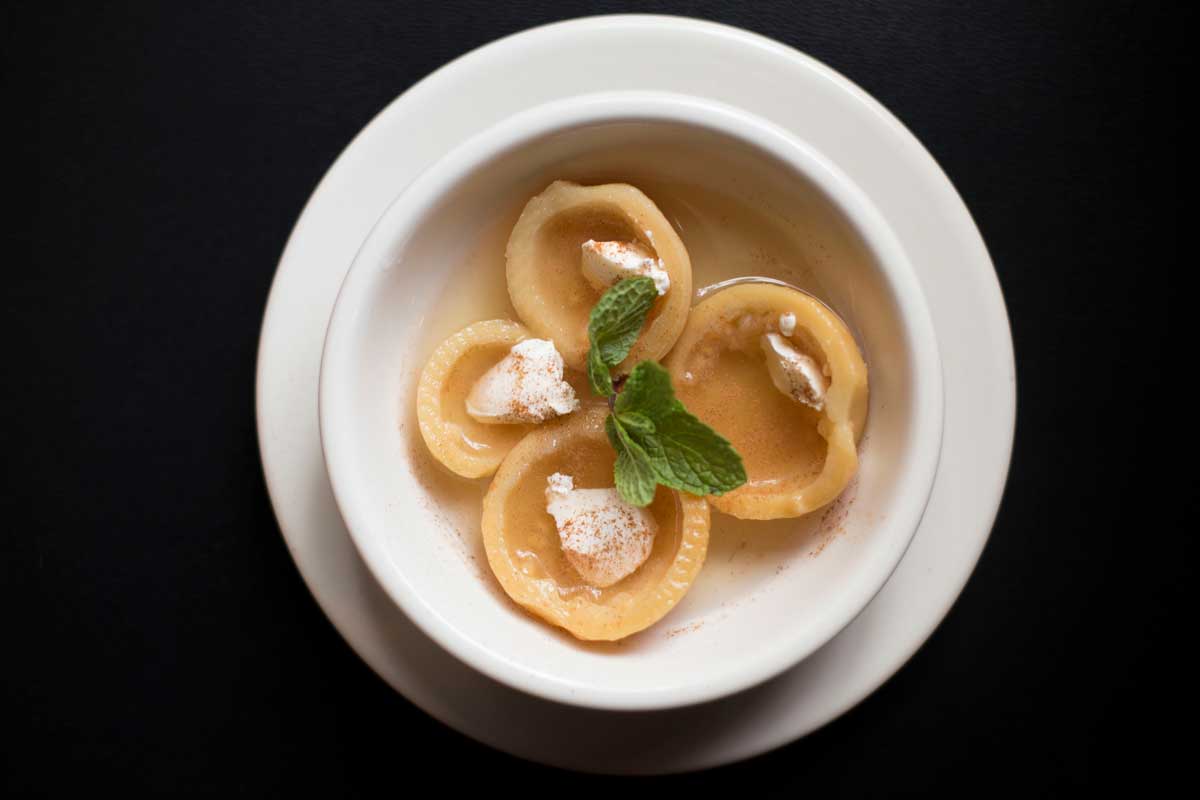
Casquitos de Guayaba, a beloved dessert in both Cuban and Puerto Rican holiday traditions, is a simple yet flavorful treat that highlights the tropical sweetness of guava.
The dessert consists of tender guava shells that are poached in syrup and paired with a generous serving of rich cream cheese, creating a perfect balance of sweet and creamy flavors.
This festive dish is often enjoyed during Christmas gatherings, offering a delightful contrast of textures and a vibrant burst of fruity goodness.
Its simplicity and elegance make it a favorite among Latin American Christmas desserts, cherished for its nostalgic flavors and cultural significance.
17. Dulce de Leche Churros

Dulce de Leche Churros are a mouthwatering holiday dessert enjoyed in various Latin American countries, combining the irresistible crunch of fried dough with the rich, caramel-like flavor of dulce de leche.
These churros are either filled with or generously drizzled with the velvety dulce de leche, creating a perfect harmony of crispy exterior and creamy sweetness.
Popular during Christmas celebrations, they are often served warm, making them an indulgent and comforting treat.
Whether enjoyed with a dusting of sugar or alongside a cup of hot chocolate, Dulce de Leche Churros are a festive favorite that captures the joy and richness of Latin holiday traditions.

Sources
- Nourished Kitchen: Turron de Navidad
- Amigo Foods: 7 Best Spanish Turron Brands
- Wikipedia: Panettone
- Food Network: Polvorones (Mexican Wedding Cookies) Recipe
- The Spruce Eats: Spanish Polvorones Recipe
- Delishably: Puerto Rican Bread Pudding Recipe
- KSAT: What Is Rosca de Reyes and Why Is It Eaten On January 6?
- My Latina Table: Rosca de Reyes (King’s Day Bread) Recipe
- House Of Yumm: Bunuelos
- Hispanic Kitchen: Pan de Elote (Sweet Corn Cake)
- Mama Maggie’s Kitchen: Pan de Elote, Or Mexican Sweet Corn Cake
- Mexican Food Journal: Arroz Con Leche
- Cooking Classy: Flan Recipe
- Isabel Eats: Tres Leche Cake Recipe
More Latin Favorites
See all →
Jorge Garcia is the founder of AmigoFoods, where he has spent over 20 years helping readers discover authentic Latin American and Spanish cuisine. Raised in a Cuban-American household, Jorge learned to cook at the hands of his mother and grandmother, carrying forward generations of family recipes. That heritage, backed by his family’s four-generation history in the Latin food industry, inspired him to launch AmigoFoods in 2003. With more than 1,000 published articles on recipes, ingredients, and food culture, Jorge’s mission is simple: make authentic Latin cooking approachable for home cooks everywhere while honoring the traditions behind every dish.