
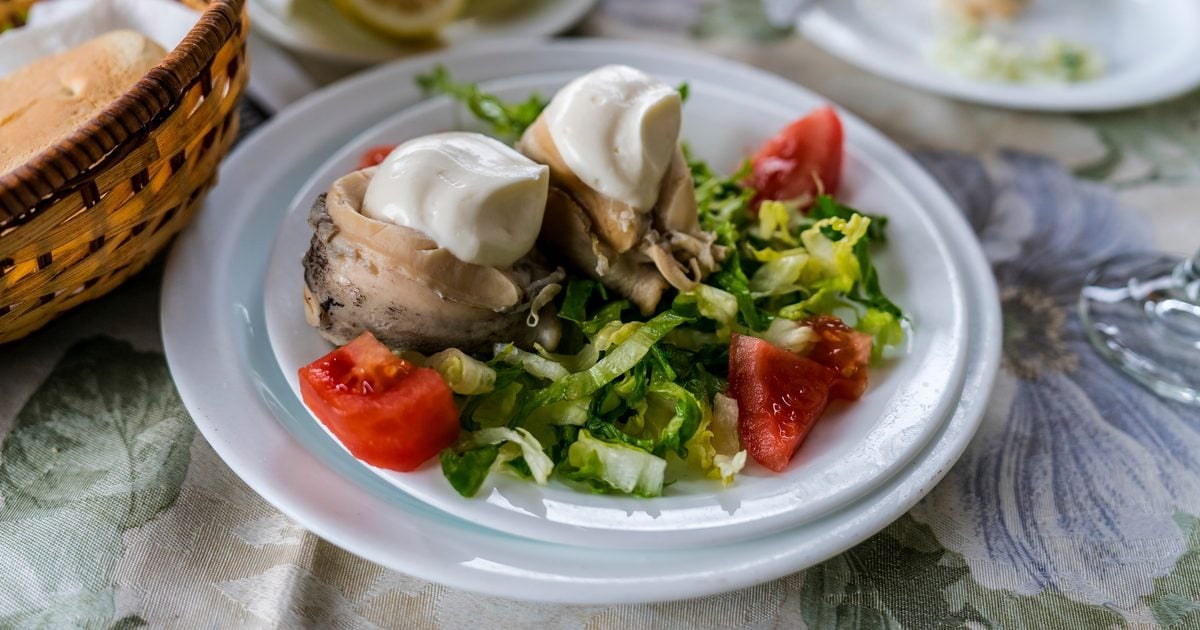
Locos con mayonesa is Chile’s most celebrated seafood starter: tender, chilled locos (the sea snail sold abroad as “Chilean abalone”) served over lettuce with a generous spoonful of mayonnaise and a squeeze of lemon. With canned or pre-cooked locos it takes about 20 minutes to put on the table. Starting from raw locos, plan on cleaning, tenderizing and 45–90 minutes of simmering first.
In Chile it goes by a shorter name, locos mayo, and it shows up wherever there’s a special occasion and a seafood restaurant nearby. This guide covers what locos actually are, which kind to buy outside Chile, how to cook raw ones without turning them into rubber, and the simple recipe itself.
Locos con Mayonesa at a Glance
What Are Locos? (Chilean Abalone Explained)
Locos are large sea snails (Concholepas concholepas) that cling to the rocks of the Pacific coast from northern Peru to Cape Horn. Only the big, muscular foot is eaten. Once cooked it turns ivory-white, dense and meaty, with a clean, mildly sweet ocean flavor that sits somewhere between scallop and conch.
The English label “Chilean abalone” is a marketing name. Locos belong to the murex family (Muricidae), not the abalone family (Haliotidae). They’re also predators that feed on mussels and barnacles, while true abalone graze on seaweed. In Peru the same animal is called chanque, tolina or pata de burro.
People along that coast have been eating locos for more than 5,000 years, and in 2023 the species was voted International Mollusc of the Year. It’s one of the treasures of the Chilean pantry, and one of the most protected.
Locos vs. True Abalone
| Locos (“Chilean abalone”) | True abalone | |
|---|---|---|
| Family | Muricidae (rock snails) | Haliotidae |
| Where it lives | Pacific coast of Peru and Chile | Cold coastal waters worldwide (California, Japan, South Africa, Australia) |
| Diet | Carnivore: mussels, barnacles | Herbivore: kelp and algae |
| Texture cooked | Dense, meaty, firm-tender | Firm, slightly springy |
| Classic dishes | Locos con mayonesa, chupe de locos, empanadas de locos | Braised abalone, sashimi, grilled steaks |
| How most people buy it | Canned in brine, ready to eat | Fresh, frozen, canned or dried |
What Is Locos con Mayonesa?
The dish is almost nothing, and that’s the point. Whole or thickly sliced locos are chilled, laid on crisp lettuce and crowned with mayonnaise, usually with lemon wedges and sometimes a little chopped parsley or cilantro. Restaurants often add tomato, avocado (palta) or a scoop of potato salad to turn it into a light lunch.

You’ll find it on the menu of nearly every Chilean seafood restaurant, from the fish-market stalls of Angelmó in Puerto Montt to the beach towns of the central coast. At home it’s a starter for Christmas, New Year’s Eve, birthdays and Fiestas Patrias, when a family wants to put something luxurious on the table without much cooking.
Because the locos themselves are so prized, Chilean cooks keep everything else simple. A good homemade mayonnaise and properly tender meat matter far more than any garnish.
Canned, Frozen or Fresh: Which Locos to Buy
Outside Chile, almost everyone makes this dish with canned locos, and that’s how many Chileans abroad eat it too. Here’s how the three options compare.

How to Cook Raw Locos (Clean, Tenderize, Simmer)
Raw locos are famously tough. Overcook or skip the tenderizing and they go rubbery; take your time and they turn tender enough to cut with a fork. Chilean families each have their own method, but the steps are the same.
- Clean. If they’re still in the shell, pry the foot free with a sturdy knife. Cut away the dark viscera and the hard, toothy edge, then scrub the foot well under cold running water. Some cooks rub them with coarse salt to remove the slime.
- Tenderize. This is the secret step. Traditionally, locos are pounded in a cloth sack against a rock or wooden board. At home, wrap each one in a kitchen towel and give it firm blows with a meat mallet until it feels noticeably softer. Many cooks also freeze raw locos before cooking to help break down the muscle.
- Simmer slowly. Put the locos in a pot of cold, lightly salted water. Add half an onion and a few slices of bell pepper if you like. Bring to a gentle simmer and cook until a skewer slides in easily, usually 45–90 minutes depending on size. In a pressure cooker, about 45 minutes at pressure is a common guideline.
- Cool in the broth. Turn off the heat and let the locos cool in their cooking liquid. This keeps them moist and tender. Then refrigerate until fully cold. Save the broth for a chupe de locos or a seafood soup.
How to Make Locos con Mayonesa
Once your locos are cooked and cold, the dish comes together in minutes. The full measurements are in the recipe card below. Here’s the method at a glance:
- Slice. Leave small locos whole or cut large ones into thick slices, about ½ inch. Keep them cold.
- Make a lemon-parsley dressing. Mix fresh lemon juice with a little minced garlic and chopped parsley. Season lightly with salt and pepper.
- Plate. Arrange crisp lettuce leaves on four plates and set the locos on top. Spoon over the dressing.
- Crown with mayonnaise. Add a generous spoonful of mayonnaise to each serving. Finish with lemon wedges, plus avocado and tomato if you like. Serve right away while everything is cold.

The Mayonnaise: Homemade, the Chilean Way
Chileans take their mayonnaise seriously. Many households still whisk it by hand for special dishes, and locos are about as special as it gets. A homemade mayonnaise is softer, brighter and more lemony than the jarred kind, and it makes a real difference here.
- Use a pasteurized egg yolk. Because the mayonnaise isn’t cooked, follow FDA guidance to use pasteurized eggs, or simply use a good store-bought mayonnaise.
- Go slow with the oil. Add it drop by drop while whisking until the sauce thickens, then pour in a thin stream. A neutral oil such as avocado or sunflower keeps the flavor clean. Use all olive oil and it can turn bitter.
- Finish with lemon, not just vinegar. Lemon is the classic Chilean seasoning for seafood mayonnaise. Some cooks add a few drops of pisco for an aromatic lift.
- Season with white pepper. It keeps the sauce looking pristine on the plate.
The tools and pantry items that help most:
Check price on Amazon
Check price on Amazon
Check price on Amazon
Check price on Amazon
As an Amazon Associate, AmigoFoods earns from qualifying purchases.
Popular Variations
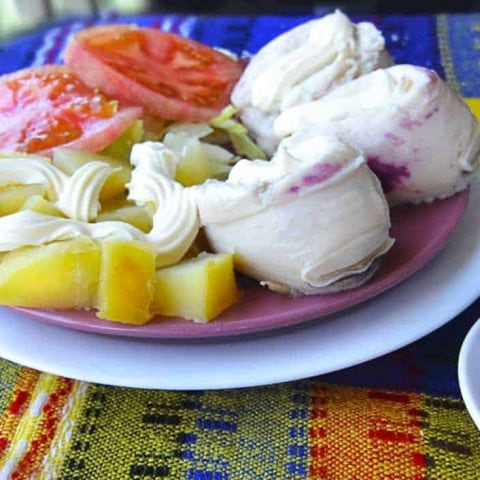
- Locos con papas mayo. The most common upgrade: serve the locos with a creamy potato salad on the side or underneath, as in the photo above. It turns a starter into a light lunch.
- Locos con salsa verde. Instead of (or alongside) mayonnaise, spoon over a Chilean salsa verde of finely chopped onion, parsley or cilantro, lemon juice and oil. It’s fresher and lighter.
- Locos with palta. Add thick slices of ripe avocado. Chileans put avocado on almost everything, and it pairs beautifully with the sweet, briny meat.
- Chupe de locos. When locos are cooked rather than served cold, the classic is chupe: a rich, cheesy gratin of chopped locos, bread and milk baked in a clay dish.
- Empanadas de locos. Chopped cooked locos with onion and a pinch of paprika make one of Chile’s most luxurious empanada fillings.
What to Serve With Locos con Mayonesa

- Chilean white wine. A chilled Sauvignon Blanc from the Casablanca or Leyda valleys is the classic match. Its acidity cuts through the mayonnaise.
- A pisco sour. The Chilean aperitif of choice. Try our pisco sour recipe.
- Fresh bread. A warm marraqueta for mopping up the last of the mayonnaise.
- Pebre. A bowl of pebre on the table adds color and a little heat.
- More seafood. For a full Chilean seafood spread, add baked machas a la parmesana as a second starter and a paila marina as the main.
Locos con Mayonesa Recipe
Locos con Mayonesa
Chile’s classic seafood starter: tender, chilled locos (Chilean abalone) on lettuce with mayonnaise and a bright lemon-parsley dressing. With canned or pre-cooked locos it’s ready in 20 minutes.
Ingredients
- 1 lb (450 g) cleaned, fully cooked and chilled locos (Chilean abalone), drained weight
- 1 cup prepared mayonnaise, or homemade mayonnaise below
- Juice of 1 lemon
- 2 garlic cloves, finely minced
- 1/4 cup finely chopped fresh parsley
- Salt and pepper, to taste
- Optional: lettuce leaves, avocado slices and tomato wedges
- For optional homemade mayonnaise: 1 pasteurized egg yolk
- For optional homemade mayonnaise: 1 teaspoon Dijon mustard
- For optional homemade mayonnaise: 1 tablespoon white vinegar
- For optional homemade mayonnaise: 1 cup neutral vegetable oil
- For optional homemade mayonnaise: salt and pepper, to taste
Instructions
- Use fully cooked, chilled locos. Drain canned locos; thaw frozen cooked locos in the refrigerator according to their label. Check that frozen locos are labeled cooked, since frozen products may also be raw.
- If making mayonnaise, whisk the pasteurized yolk with mustard and vinegar in a bowl. Add oil a few drops at a time while whisking; once it begins to thicken, add the rest in a thin stream. Season and refrigerate. This makes a little more than 1 cup; use up to 1 cup for the dish.
- Slice the cold locos or leave small ones whole. Mix lemon juice, garlic and parsley; season lightly with salt and pepper.
- Arrange the seafood on four plates, with lettuce if desired. Spoon on the lemon-parsley dressing and mayonnaise to taste. Add avocado and tomato if using.
- Serve immediately, keeping the seafood and mayonnaise cold until plating. Refrigerate leftovers promptly and use within 1–2 days.
Notes
Canned locos: drain, rinse briefly, pat dry and chill for a few hours before slicing. A 15 oz can usually holds about 3 large locos.
Raw locos: clean, tenderize with a mallet, then simmer from cold salted water until a skewer slides in easily, usually 45–90 minutes. Cool them in the broth and chill before using. These times are in addition to the 20 minutes above.
Mayonnaise: use a commercially pasteurized yolk for homemade mayonnaise, or a good store-bought mayonnaise. Lemon juice and a pinch of white pepper are the classic Chilean seasoning.
Storage: keep cooked locos and mayonnaise separately in the fridge and assemble just before serving. Eat leftovers within 1–2 days.
Storage and Make-Ahead Tips
- Cooked locos keep in a covered container in the fridge for 1–2 days. Store them plain, without mayonnaise.
- Homemade mayonnaise made with a pasteurized yolk keeps about 3–4 days refrigerated in a sealed jar.
- Assemble at the last minute. Plate the locos and add mayonnaise just before serving, and don’t leave the finished dish out at room temperature for more than 2 hours.
- Freezing: cooked locos can be frozen in their broth for a few months. Thaw overnight in the fridge. They’re best used in chupe or empanadas afterward, since the texture softens slightly.
Locos con Mayonesa FAQ
What is “locos mayo” in English?
Locos mayo is the everyday Chilean name for locos con mayonesa: Chilean abalone (sea snail) with mayonnaise. In English menus it’s usually translated as “Chilean abalone with mayonnaise.”
Are locos the same as abalone?
No. Locos (Concholepas concholepas) are carnivorous rock snails in the murex family. True abalone are herbivorous sea snails in a different family, Haliotidae. “Chilean abalone” is simply the export name.
What do locos taste like?
Cooked locos are mild, slightly sweet and briny, with a dense, meaty bite. Many people compare the texture to conch or a firm scallop. Some even say chicken.
Can I use canned locos for locos con mayonesa?
Yes, and it’s the easiest way to make it outside Chile. Canned locos are already cleaned and cooked. Drain, rinse, chill and slice them, then follow the recipe as written.
Why are locos so expensive?
Harvesting has been heavily restricted in Chile since 1989 after overfishing. Today only accredited divers in licensed management areas can take them, with size limits and closed seasons, so supply is small and demand is high.
How long do you boil raw locos?
After cleaning and tenderizing, simmer them gently from cold, salted water for about 45–90 minutes, until a skewer slides in easily. Let them cool in the broth. Timing depends on size and how well they were tenderized.
Is it legal to eat locos?
Yes, as long as they come from legal, licensed sources. Buying canned or frozen locos from a reputable brand or seafood seller is the safe choice. Harvesting them yourself in Chile is not allowed.
More Chilean Seafood to Try
More Chilean Foods
See all →
Jorge Garcia is the founder of AmigoFoods, where he has spent over 20 years helping readers discover authentic Latin American and Spanish cuisine. Raised in a Cuban-American household, Jorge learned to cook at the hands of his mother and grandmother, carrying forward generations of family recipes. That heritage, backed by his family’s four-generation history in the Latin food industry, inspired him to launch AmigoFoods in 2003. With more than 1,000 published articles on recipes, ingredients, and food culture, Jorge’s mission is simple: make authentic Latin cooking approachable for home cooks everywhere while honoring the traditions behind every dish.