

Paila marina is Chile’s classic seafood stew: clams, mussels, firm white fish and shrimp simmered in a broth of fish stock and dry white wine, colored with ají de color and finished with cilantro. It comes to the table bubbling in a clay bowl called a paila, and once the shellfish are clean it cooks in about 25 minutes.
Paila Marina at a Glance
AmigoFoods may earn a commission from qualifying Amazon purchases made through links on this page.
What Is Paila Marina?
Paila marina is a Chilean soup-stew of mixed shellfish and fish cooked in a light, brick-red broth of fish stock, white wine and sautéed aromatics. The name means, roughly, “seafood in a paila”: the paila is the wide clay bowl it is served in.
It sits somewhere between a soup and a stew. There is plenty of broth to drink with a spoon, but the bowl is crowded with seafood: clams and mussels still in their shells, chunks of fish, shrimp and, along the coast, whatever the boats brought in that morning.
There is no single fixed recipe. A paila in a Santiago market might be heavy on mussels and clams, while one in the south can include sea squirt or giant barnacle. What stays constant is the method: a sofrito of onion, garlic and pepper, a splash of white wine, good fish stock, and seafood added in order so nothing overcooks.
- Country
- Chile, along the whole Pacific coast
- Type
- Brothy seafood stew, eaten as a main course
- Served in
- A paila: a wide, heavy clay (greda) bowl
- Best with
- Lemon, crusty bread, pebre and cold white wine

What does paila marina taste like?
Briny and bright rather than heavy. The shellfish juices give the broth a clean taste of the sea, the wine adds acidity, and ají de color (Chilean sweet paprika) gives it a warm, mild pepper flavor and its orange-red color. It is not spicy unless you add merkén or fresh chile, and most people squeeze lemon over the top before eating.
Where Paila Marina Comes From
Nobody wrote down who made the first paila marina. Most Chilean accounts credit fishing families in the caletas, the small coves where boats land their catch, who cooked whatever shellfish and fish had not sold into one pot. With more than 6,000 kilometers (about 4,000 miles) of coastline, Chile has never been short of the raw material.
Today it is market food. The Mercado Central in Santiago, the caletas of Valparaíso and the seafood stalls of Angelmó in Puerto Montt all serve it from small kitchens a few steps from the fish counters. It is a weekday lunch, a Sunday family meal and, famously, a cure for the night before.
Chileans group paila marina with the levantamuertos, the “raise-the-dead” soups eaten after a long night out. On New Year’s Day the Mercado Central is one of the busiest places in Santiago: the Chilean newspaper La Nación reported that some 28,000 people were expected there on January 1, 2010. Popular belief also credits the broth with aphrodisiac powers, a reputation Chilean shellfish dishes enjoy in general.
The dish has also traveled well beyond Chile. TasteAtlas, the online food atlas, has ranked both paila marina and its cousin caldillo de congrio among the world’s best seafood dishes. For the bigger picture of the country’s coastal cooking, see our guide to traditional Chilean seafood dishes.
Why Paila Marina Is Served in a Clay Bowl
In Spanish, a paila is a wide, shallow pan or bowl. The word changes meaning by country: in Ecuador, for example, it is the big copper pan used to spin helado de paila. In Chile it usually means a heavy earthenware bowl made of greda (clay).
The clay is the point. A thick greda bowl holds heat far longer than china, so the stew keeps bubbling for the first minutes at the table and stays hot to the last spoonful. Many restaurants heat the bowls before ladling, and some bring the stew to a boil in the paila itself.
Chile has two famous pottery towns. Pomaire, southwest of Santiago, is known for its brown clay bowls and cookware. Quinchamalí, near Chillán, makes glossy black pottery with white decoration; in 2022 UNESCO added Quinchamalí and Santa Cruz de Cuca pottery to its list of intangible cultural heritage in need of urgent safeguarding.
No clay bowls? Deep, wide soup bowls work fine. Warm them in a low oven or with hot water first so the broth does not cool the moment it lands.
Paila Marina in Breaking Bad
- Breaking Bad
- Season 3, Episode 11
- “Abiquiú”
- Aired May 30, 2010
Many Americans first heard of paila marina at Gus Fring’s dinner table. In the episode “Abiquiú,” Gus, the Chilean owner of Los Pollos Hermanos, invites Walter White to his home and cooks paila marina while the two talk business.
Gus hands Walt a knife and asks for help with the garlic, then explains that the dish brings back memories of home. He adds that he rarely makes it, because his children won’t eat it.
The scene is still picked apart by fans, mostly for what it says about Gus: calm, generous on the surface and always in control. For cooks, the takeaway is simpler. It is a real, everyday Chilean dish, and the version below is the kind a Chilean home cook would make.
Paila Marina Ingredients
Think of the ingredients in two groups: the seafood, which you can vary with the market, and the broth base, which gives every paila marina its flavor. Buy the shellfish alive and cook it the day you buy it.
The seafood
Clams
almejasGoes in first
The backbone of the broth. Their juices season the whole pot as they open.
US pick: littleneck or Manila clams.
Mussels
choritos or cholgasMinute 3
Chileans use small choritos and the much larger cholgas. Both open fast.
US pick: farmed blue or PEI mussels.
Firm white fish
congrio, reineta or corvinaMinute 3
Congrio, a firm cusk-eel, is the classic. Cut it in big chunks so it holds together.
US pick: cod, halibut, monkfish or snapper.
Shrimp and squid
camarones y calamarLast 2 minutes
They need the shortest time of all. Add them at the end and turn off the heat.
US pick: large shrimp, cleaned squid rings.
Surf clams
machasOptional
A Chilean favorite, best known baked as machas a la parmesana.
US pick: more clams or canned machas.
Coastal extras
piure, picoroco, ostionesChile only
Sea squirt (piure) adds an iodine punch; giant barnacle (picoroco) tastes like crab.
US pick: bay scallops, or skip.

The broth base
- Onion, red bell pepper, carrot and garlic, finely chopped and cooked slowly in oil: the Chilean sofrito.
- Ají de color, Chile’s ground sweet paprika. It gives the broth its color and mild pepper flavor. Any sweet (not smoked) paprika works.
- Merkén (optional), the smoked chile and coriander seasoning from southern Chile, for gentle heat. Read more in our guide to Chilean ingredients.
- A ripe tomato, grated so it melts into the sofrito.
- Dry white wine. A Chilean Sauvignon Blanc is the natural choice; avoid anything sweet.
- Fish stock. Homemade is best (simmer fish heads and bones for 30 minutes), but boxed seafood stock works.
- Cilantro, the herb that finishes nearly every Chilean seafood dish. Parsley if you dislike it.
- Terracotta cazuela bowls, the closest thing to a Chilean paila outside Chile
- Merkén, Chile’s smoked chile seasoning
- Sweet paprika, to stand in for ají de color
- Seafood stock, for the days you skip homemade
- A wide enameled Dutch oven with a tight lid
How to Make Paila Marina
The whole technique comes down to timing. Build a flavorful broth first, then add the seafood in order of how long each piece takes to cook, so the clams open just as the shrimp turn pink. The full measurements are in the recipe card below.
- Purge and clean the shellfish. Soak the clams in salted water for 30 minutes, then scrub and debeard the mussels.
- Cook a slow sofrito. Onion, red pepper and carrot in oil for 7 to 8 minutes, then garlic, ají de color, oregano and grated tomato.
- Make the broth. Simmer the wine for 3 minutes to cook off its raw edge, then add the fish stock and a bay leaf.
- Add the seafood in waves. Follow the 8-minute sequence below with the lid on.
- Finish and serve. Stir in cilantro, discard any unopened shells and ladle into hot bowls.
The 8-minute seafood sequence
- 0:00ClamsInto the simmering broth. Cover.
- 3:00Mussels + fishNestle them in. Cover again.
- 6:30Shrimp + squidScatter on top for the final minutes.
- 8:30Heat offShells open, shrimp pink, fish just opaque.

Tips for the Best Paila Marina
- Salt at the end. Clams and mussels release salty liquid as they open. Season the broth lightly, then taste once the seafood is in.
- Keep it at a lively simmer, not a rolling boil. Hard boiling breaks the fish into flakes and turns shrimp and squid rubbery.
- Use a wide pot. Shellfish open faster and more evenly in a single layer than piled deep in a narrow pot.
- Cut the fish big. Two-inch (5 cm) chunks survive stirring and ladling; small pieces dissolve.
- Do not skip the wine reduction. Three minutes of simmering takes away the raw alcohol taste and leaves the acidity the broth needs.
- Treat squid like shrimp. Squid is tender after a minute or two, or after a long braise. Anything in between is chewy.
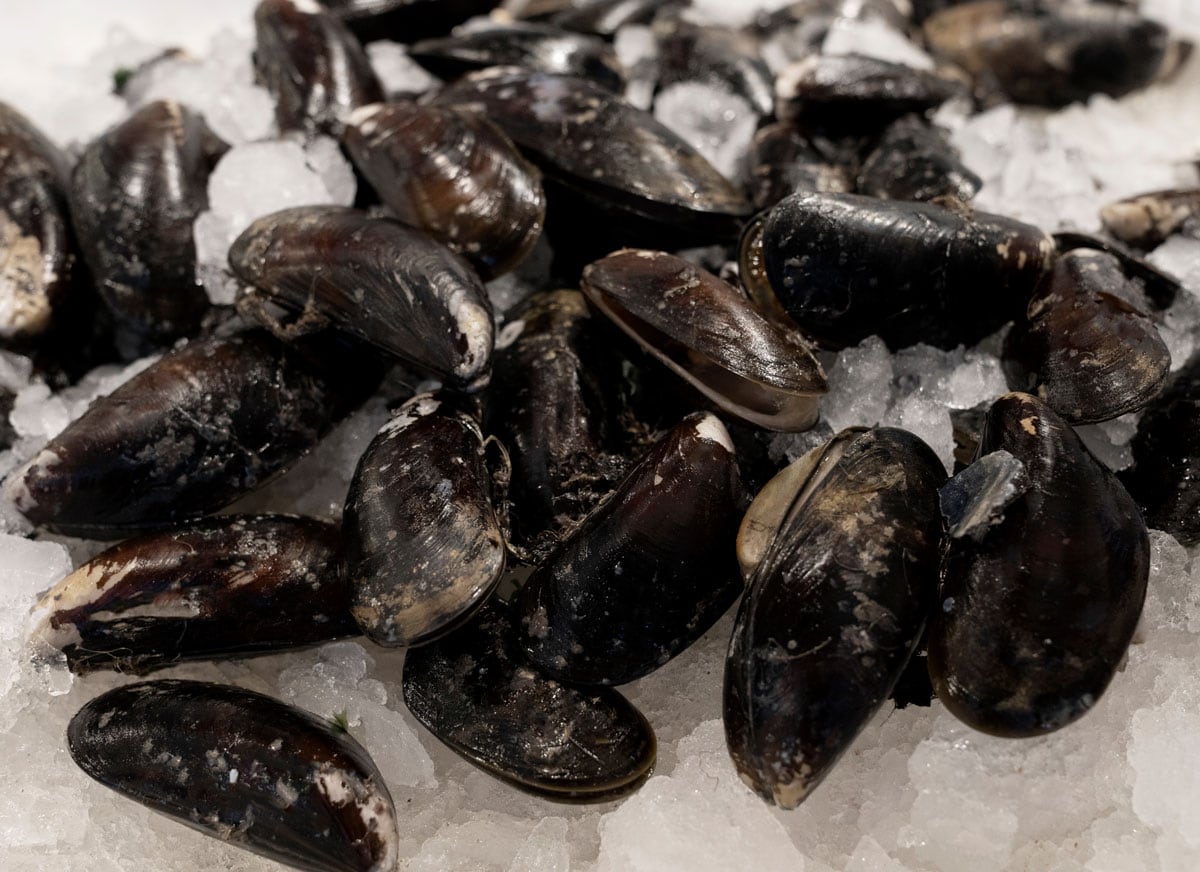
Shellfish safety: Before cooking, throw away any clam or mussel with a cracked shell, or one that stays open after a firm tap. After cooking, discard any that did not open.
Paila Marina vs. Other Seafood Stews
Chile alone has several seafood soups that get confused with paila marina, and every coastal Latin American country has its own version. Here is how they differ.
| Dish | Country | What is in it | Broth or base |
|---|---|---|---|
| Paila marina | Chile | Mixed shellfish and fish | Fish stock, white wine, ají de color |
| Caldillo de congrio | Chile | Congrio (cusk-eel) with potatoes | Fish stock and tomato, sometimes cream |
| Mariscal | Chile | Raw shellfish, onion, cilantro | Lemon juice; served cold, not cooked |
| Chupe de mariscos | Chile | Shellfish baked with soaked bread | Milk and cheese, gratinéed |
| Parihuela | Peru | Fish and shellfish | Spicy, with Peruvian ají peppers |
| Cazuela de mariscos | Colombia | Shrimp, fish, shellfish | Creamy, with coconut milk |
| Cioppino | United States | Crab, fish, shellfish | Tomato and wine |

The quickest way to tell them apart: paila marina is about variety, caldillo de congrio is about one fish, and mariscal is not cooked at all. For more Chilean soups, browse our roundup of Chilean stews and soups.
What to Serve With Paila Marina
In Chile, paila marina is a meal in itself. What goes around it is simple: bread to soak up the broth, a fresh salsa and something cold to drink.
To round out the table, add a simple ensalada chilena of sliced tomato and onion (see more Chilean side dishes), and start with a plate of locos con mayonesa if you are going all out.
Storing and Reheating Paila Marina
Paila marina is best the moment it is made. If you have leftovers, pull the seafood out of the shells, refrigerate it with the broth within 2 hours and eat it within 2 days. Reheat gently on the stove, just until hot. To cook ahead, make the broth up to two days early, then bring it back to a simmer and add the seafood right before serving.
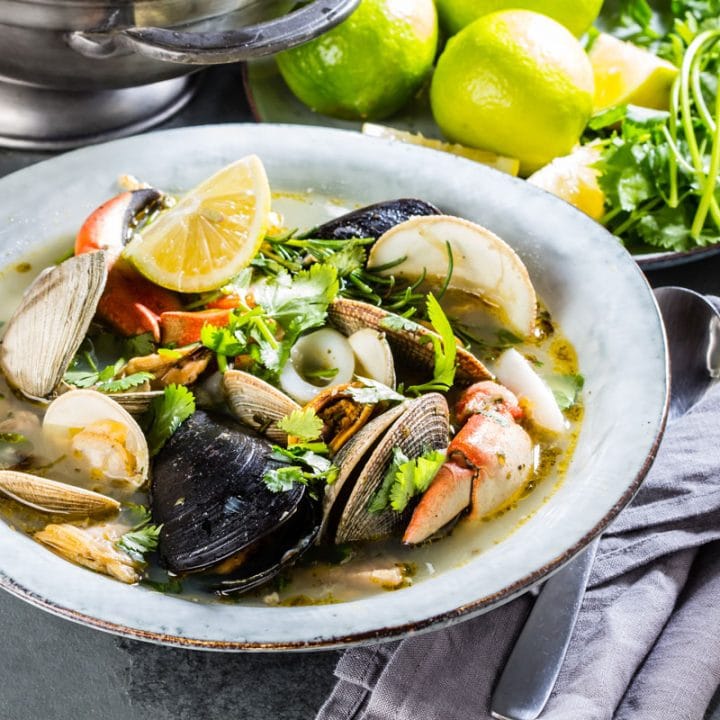
Paila Marina (Chilean Seafood Stew)
Chile’s classic seafood stew: clams, mussels, white fish and shrimp simmered in a white wine and fish stock broth with ají de color and cilantro, served bubbling in a clay bowl.
Ingredients
- 2 lb (900 g) littleneck or Manila clams (about 24)
- 2 tablespoons salt, for purging the clams
- 1 lb (450 g) mussels (about 20)
- 1 lb (450 g) firm white fish fillet, such as cod, halibut or monkfish
- 12 large shrimp (about 8 oz / 225 g), peeled and deveined
- 8 oz (225 g) cleaned squid, cut into rings (optional)
- 3 tablespoons olive oil
- 1 large yellow onion, finely chopped
- 1 small red bell pepper, finely chopped
- 1 medium carrot, finely chopped
- 4 garlic cloves, minced
- 1½ teaspoons ají de color or sweet paprika
- ½ teaspoon merkén or red pepper flakes (optional)
- ½ teaspoon dried oregano
- 1 ripe tomato, grated (skin discarded)
- 1 cup (240 ml) dry white wine, such as Chilean Sauvignon Blanc
- 4 cups (950 ml) fish or seafood stock
- 1 bay leaf
- ⅓ cup (15 g) chopped fresh cilantro or parsley
- Salt and black pepper, to taste
- Lemon wedges and crusty bread, to serve
Instructions
- Purge the clams. Scrub the clams and soak them in cold water with the 2 tablespoons of salt for 30 minutes so they spit out any sand. Lift them out of the water, leaving the grit behind. Scrub the mussels and pull off any beards. Discard any clam or mussel with a cracked shell, or one that stays open after a firm tap.
- Prep everything else. Cut the fish into 2-inch (5 cm) chunks and season lightly with salt. Peel and devein the shrimp. Finely chop the onion, bell pepper and carrot, mince the garlic and grate the tomato on a box grater, discarding the skin.
- Cook the sofrito. Heat the oil in a large, wide Dutch oven or soup pot over medium heat. Add the onion, bell pepper and carrot and cook, stirring often, for 7 to 8 minutes, until soft but not browned. Add the garlic, ají de color, merkén (if using) and oregano and cook for 1 minute. Add the tomato and cook for 3 minutes.
- Build the broth. Pour in the wine and simmer for 3 minutes. Add the fish stock and bay leaf, bring to a simmer and cook for 5 minutes. Taste and season lightly with salt and pepper; the shellfish will release more salt as they open.
- Add the clams. Add the clams, cover the pot and simmer over medium heat for 3 minutes.
- Add the mussels and fish. Nestle the mussels and fish into the broth, cover and simmer for 3 to 4 minutes, until most of the shells have opened and the fish is nearly opaque.
- Finish with the shrimp. Add the shrimp (and the squid, if using), cover and cook for about 2 minutes, just until the shrimp turn pink and curl. Turn off the heat. Remove the bay leaf and discard any shells that did not open. Stir in the cilantro and adjust the salt.
- Serve right away. Ladle into warmed clay bowls or deep soup bowls, dividing the seafood evenly and covering it with plenty of broth. Serve with lemon wedges, crusty bread and pebre on the side.
Notes
Homemade fish stock (caldo de pescado): Simmer 1½ lb (680 g) fish heads and bones (gills removed) with 1 quartered onion, 1 carrot, 1 celery rib, 1 bay leaf and 7 cups (1.65 L) cold water for 30 minutes, skimming off the foam. Strain. It makes about 6 cups; freeze the extra.
Fish swaps: In Chile the fish is usually congrio (a firm cusk-eel). Cod, halibut, monkfish, snapper or mahi-mahi all hold their shape. Avoid oily fish such as salmon or mackerel, which overpower the broth.
Frozen seafood: A frozen seafood mix works. Thaw it overnight in the fridge, drain it and add it with the shrimp in step 7.
Make ahead: The broth (through step 4) keeps for 2 days in the fridge. Bring it back to a simmer and cook the seafood just before serving.
Leftovers: Refrigerate within 2 hours and eat within 2 days. Reheat gently, just until hot; boiling makes the shellfish rubbery.
Clay bowls: Warm oven-safe clay bowls in a 200°F (95°C) oven for 10 minutes before ladling. Handle them with oven mitts and set them on a wooden board or plate, never on a cold or wet surface.
Paila Marina FAQ
What is paila marina made of?
Paila marina is made of mixed shellfish and fish, usually clams, mussels, a firm white fish and shrimp, cooked in fish stock and white wine with onion, garlic, bell pepper, ají de color and cilantro.
What does “paila” mean in Spanish?
A paila is a wide, shallow pan or bowl. In Chile the word usually refers to the heavy clay bowl that paila marina is cooked or served in, and “marina” means “of the sea.”
Is paila marina a soup or a stew?
Both. It has enough broth to eat with a spoon like a soup, but it is packed with seafood like a stew. Chilean cooks call it a soup or a light stew, and both are right.
What Chilean dish did Gus Fring make in Breaking Bad?
Gus Fring cooks paila marina for Walter White in “Abiquiú,” the eleventh episode of Breaking Bad’s third season, first aired on May 30, 2010.
What fish is best for paila marina?
In Chile, congrio (conger cusk-eel) is the classic, with reineta and corvina also common. Outside Chile, use a firm, mild white fish such as cod, halibut, monkfish or snapper. Avoid oily fish like salmon or mackerel.
Can I make paila marina with frozen seafood?
Yes. A frozen seafood mix works well. Thaw it overnight in the refrigerator, drain it and add it during the last 2 to 3 minutes of cooking so it does not toughen. Use at least some fresh clams or mussels if you can, since their juices flavor the broth.
Is paila marina spicy?
No. Ají de color is a sweet paprika, so the broth is mild. For heat, add merkén or a little fresh chile, or serve pebre on the side.
What is the difference between paila marina and caldillo de congrio?
Paila marina mixes many kinds of shellfish and fish. Caldillo de congrio is a soup of one fish, congrio, cooked with potatoes and often finished with a little cream.
Why do Chileans eat paila marina for a hangover?
A hot, salty broth full of protein is restorative after a late night, and paila marina has long been a morning-after tradition at Chile’s seafood markets, especially on New Year’s Day. It belongs to the family of soups Chileans call levantamuertos, or “raise-the-dead.”
Keep Cooking Chilean
- Chilean Seafood DishesThe full coastal roundup
- Machas a la ParmesanaBaked clams with Parmesan
- Locos con MayonesaChilean abalone, served cold
- Chilean Stews and SoupsCazuela, porotos and more
- Empanadas de PinoChile’s beef empanadas
- Traditional Chilean DishesWhere to start with Chilean food
More Chilean Foods
See all →
Jorge Garcia is the founder of AmigoFoods, where he has spent over 20 years helping readers discover authentic Latin American and Spanish cuisine. Raised in a Cuban-American household, Jorge learned to cook at the hands of his mother and grandmother, carrying forward generations of family recipes. That heritage, backed by his family’s four-generation history in the Latin food industry, inspired him to launch AmigoFoods in 2003. With more than 1,000 published articles on recipes, ingredients, and food culture, Jorge’s mission is simple: make authentic Latin cooking approachable for home cooks everywhere while honoring the traditions behind every dish.