

Papas arrugadas are small, wrinkled potatoes from the Canary Islands, boiled in salted water and dried in the pot. Serve this Spanish classic warm with garlicky Canarian mojo sauce.
Papas Arrugadas at a Glance

What Are Papas Arrugadas?

Papas arrugadas are small potatoes cooked whole in salted water, drained and briefly dried in the pot, leaving the skins wrinkled and coated in a fine layer of salt.
The name literally means “wrinkled potatoes,” and that signature look is exactly what sets them apart from any other potato dish in Spain.
What makes them special isn’t complexity — it’s restraint.
The potatoes are never peeled, never oiled, and never dressed.
Instead, they’re boiled just long enough for the skins to tighten and pucker while the inside turns fluffy and almost creamy.
After draining, the potatoes are dried in the pot, allowing the salt to cling to the skin and intensify the flavor.
Traditionally, papas arrugadas are served hot and eaten skin-on, always accompanied by mojo sauces.
The contrast is the magic: salty, earthy potatoes dipped into garlicky, acidic, sometimes spicy sauce.
Alone, they’re satisfying. With mojo, they’re unforgettable.
Traditional Ingredients for Authentic Papas Arrugadas

Authentic papas arrugadas rely on a short, deliberate ingredient list.
No extras, no substitutions meant to “improve” the Spanish dish.
Every component has a purpose, and changing one alters the final result.
-
Small potatoes
Traditionally, Canary Islanders use local potato varieties (papas antiguas) that are small, waxy, and thin-skinned. Their size allows them to cook evenly, while the skin wrinkles instead of splitting. Outside the islands, baby potatoes or new potatoes are the closest substitute. -
Coarse sea salt
Salt is not just seasoning — it’s structural. Coarse sea salt helps create the dry, powdery coating that defines papas arrugadas. Fine salt also dissolves in the water, but measuring it by volume changes the quantity because of its smaller crystals. -
Water (or seawater, traditionally)
Historically, papas arrugadas were cooked in seawater, which naturally provided the correct salinity. Today, heavily salted fresh water is used to replicate that effect. The goal isn’t subtle seasoning — it’s controlled salinity that transforms the skin.
That’s it. No oil. No herbs. No butter.
The richness comes later, when the potatoes meet mojo sauce.
Papas arrugadas themselves are meant to be pure, direct, and unapologetically simple — a foundation, not a distraction.
How to Make Papas Arrugadas the Traditional Way
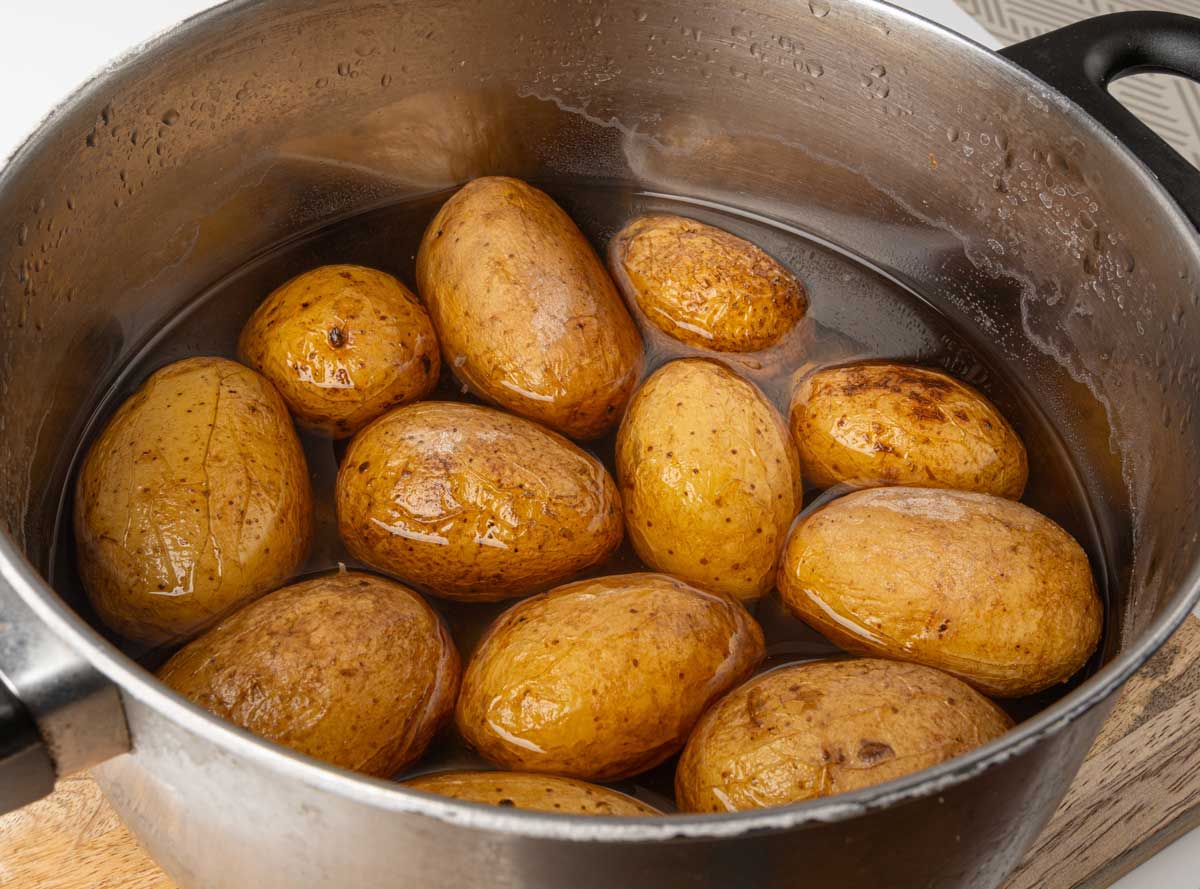
For four side servings, use 1½ pounds small potatoes, 3 tablespoons coarse sea salt and about 4 cups water, just enough to barely cover.
- Scrub the potatoes and leave them whole and unpeeled. Choose similarly sized small potatoes so they cook evenly.
- Place in a saucepan with about 4 cups water, or just enough to barely cover, and add the coarse sea salt. Bring to a boil, then simmer uncovered until a knife slides in easily, about 20–25 minutes. Add a little water if necessary to prevent the pot drying before the potatoes are tender.
- Drain the cooking water completely without rinsing the potatoes. Return the pot to low heat for 2–3 minutes, shaking gently, until the remaining surface moisture evaporates and the skins develop a light salt coating.
- Serve warm with red or green Canarian mojo sauce, either alongside or spooned over to taste.
This home version uses 3 tablespoons coarse sea salt for 1½ pounds potatoes, producing a lighter crust than heavily salted traditional versions. Much of the salt leaves with the drained water; the amount retained varies. Fine salt can work, but do not substitute volume-for-volume because crystal size changes the amount measured. The 35-minute estimate covers heating, boiling and drying; larger potatoes need longer. Sauce preparation is separate.
Serve with Canarian mojo sauces.
What Makes the Potatoes “Arrugadas”
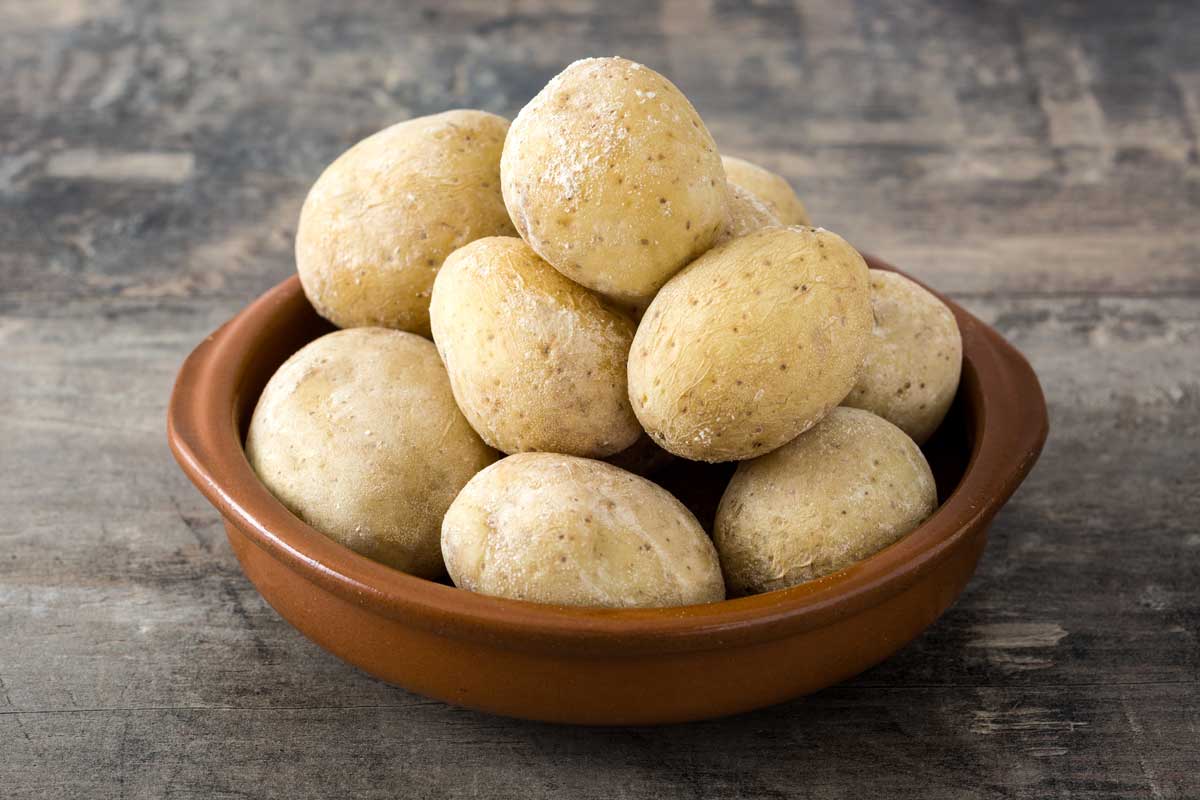
The “arrugadas” — or wrinkled — appearance isn’t accidental.
It’s the result of a precise interaction between salt, heat, and evaporation.
When small potatoes are boiled in heavily salted water, moisture inside the potato slowly moves outward through the skin.
As the water level drops near the end of cooking, the salt concentration increases, drawing even more moisture from the skin.
This process causes the outer layer to tighten and contract.
Once the potatoes are tender, drain the cooking water and briefly dry them over low heat. This final step is crucial.

The remaining surface moisture disappears, the skin puckers, and a thin, chalky salt layer forms on the outside.
The potato doesn’t crisp — it desiccates slightly, which is exactly what gives papas arrugadas their unique texture.
Inside, the contrast is dramatic. While the skin becomes dry and wrinkled, the interior stays tender, fluffy, and almost creamy.
That textural contrast is what makes the dish so satisfying and why papas arrugadas feel completely different from standard boiled or roasted potatoes.
In short, potatoes become “arrugadas” not by seasoning, but by controlled dehydration.
Mojo Sauces Explained (The Essential Pairing)
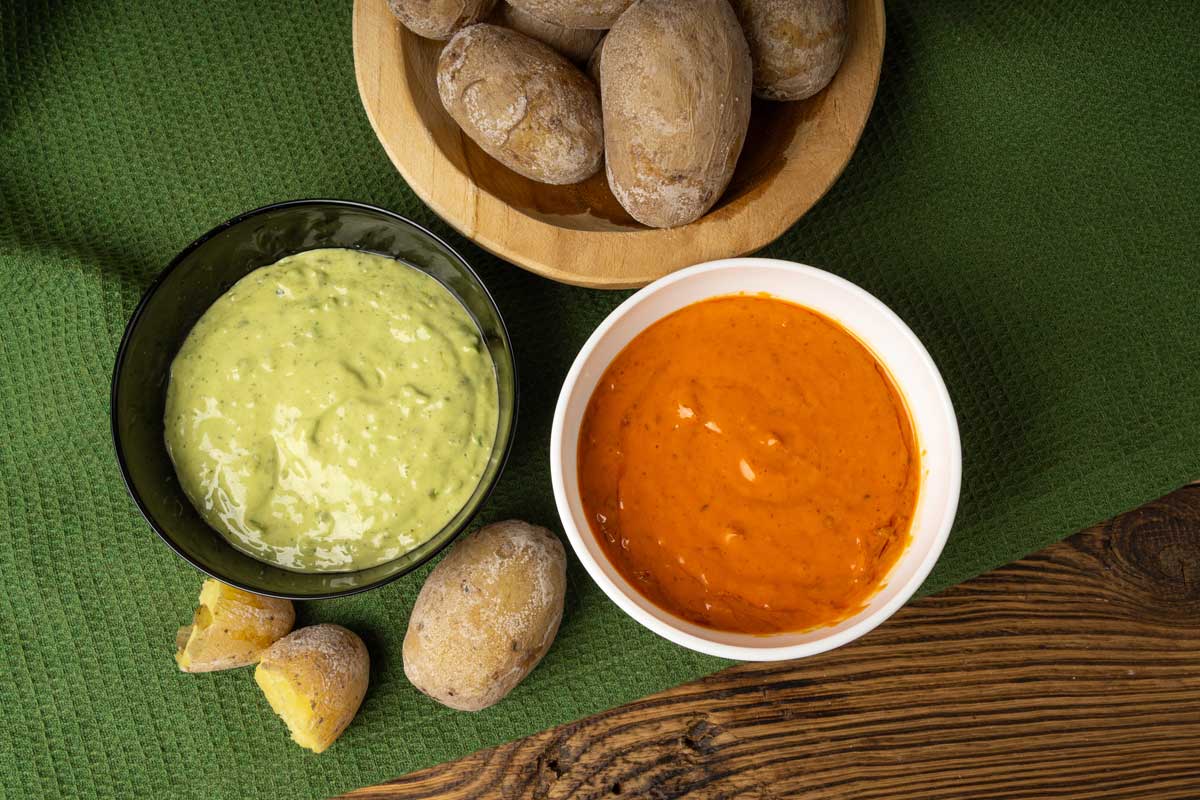
Papas arrugadas are never served alone.
Without mojo, they’re unfinished.
The potatoes provide salt, texture, and restraint — mojo brings heat, acidity, and personality.
Together, they create the balance that defines Canary Islands cuisine.
-
What is mojo sauce?
Mojo is a raw, oil-based sauce made by grinding ingredients rather than cooking them. It’s bold, aromatic, and intentionally intense, served alongside or spooned over the potatoes to taste. -
Mojo rojo (Canarian red mojo)
This version is deeper and more assertive. Made with dried red peppers or paprika, garlic, vinegar, olive oil, and cumin, mojo rojo ranges from mildly smoky to spicy, depending on the pepper used. It’s the classic choice for papas arrugadas and the most common version found across the islands. -
Mojo verde (Canarian green mojo)
Fresher and brighter, mojo verde is made with cilantro or parsley, garlic, vinegar, olive oil, and sometimes green peppers. It’s herbaceous and sharp, cutting through the saltiness of the potatoes with freshness. -
Why mojo works so well with papas arrugadas
The dry, salty skins absorb just enough sauce without becoming soggy, while the fluffy interior balances the acidity and spice. The contrast is deliberate — no butter, no cream, no fat-heavy toppings to mute the flavors. -
Homemade vs. store-bought mojo
Traditionally, mojo is made fresh using a mortar and pestle. Outside the Canary Islands, quality jarred versions can work, but they should still be raw-tasting, tangy, and unapologetically garlicky.
Canarian mojo differs from Cuban citrus mojo, which is a separate regional sauce.
Best Potatoes to Use Outside the Canary Islands
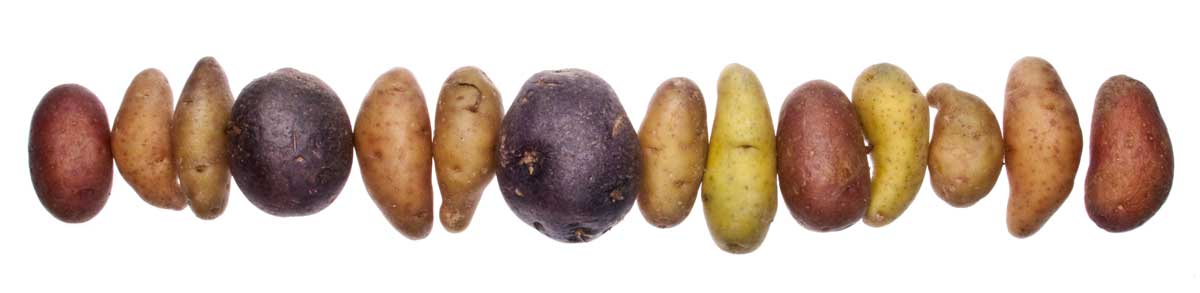
Outside the Canary Islands, finding traditional papas antiguas is nearly impossible — but you can still get excellent results by choosing the right type of potato.
The goal is to mimic their size, skin, and texture as closely as possible.
-
Baby potatoes or new potatoes
These are the best overall substitute. They’re small, thin-skinned, and naturally waxy, which helps the skin wrinkle instead of split. Their size also allows them to dry properly once the water evaporates. -
Waxy potatoes over starchy ones
Look for varieties labeled waxy or all-purpose. They hold their shape during boiling and develop the correct contrast between a firm skin and creamy interior. Avoid floury potatoes — they burst, shed their skins, and ruin the texture. -
Recommended varieties by availability
-
Yukon Gold (small size only)
-
Fingerling potatoes
-
Red potatoes (small, uniform pieces)
-
White new potatoes
-
-
What to avoid
Large potatoes, russets, or anything pre-washed with thick, waxy coatings. These either won’t wrinkle properly or will peel during cooking. -
Size matters more than variety
Uniform, bite-sized potatoes are more important than chasing a specific cultivar. If the potatoes cook evenly and have thin skins, they’ll behave correctly during the drying stage.
When chosen carefully, the right potatoes outside the Canary Islands can produce papas arrugadas that are surprisingly close to the real thing — salty, wrinkled, and perfectly built for soaking up mojo.
How Papas Arrugadas Are Served in the Canary Islands
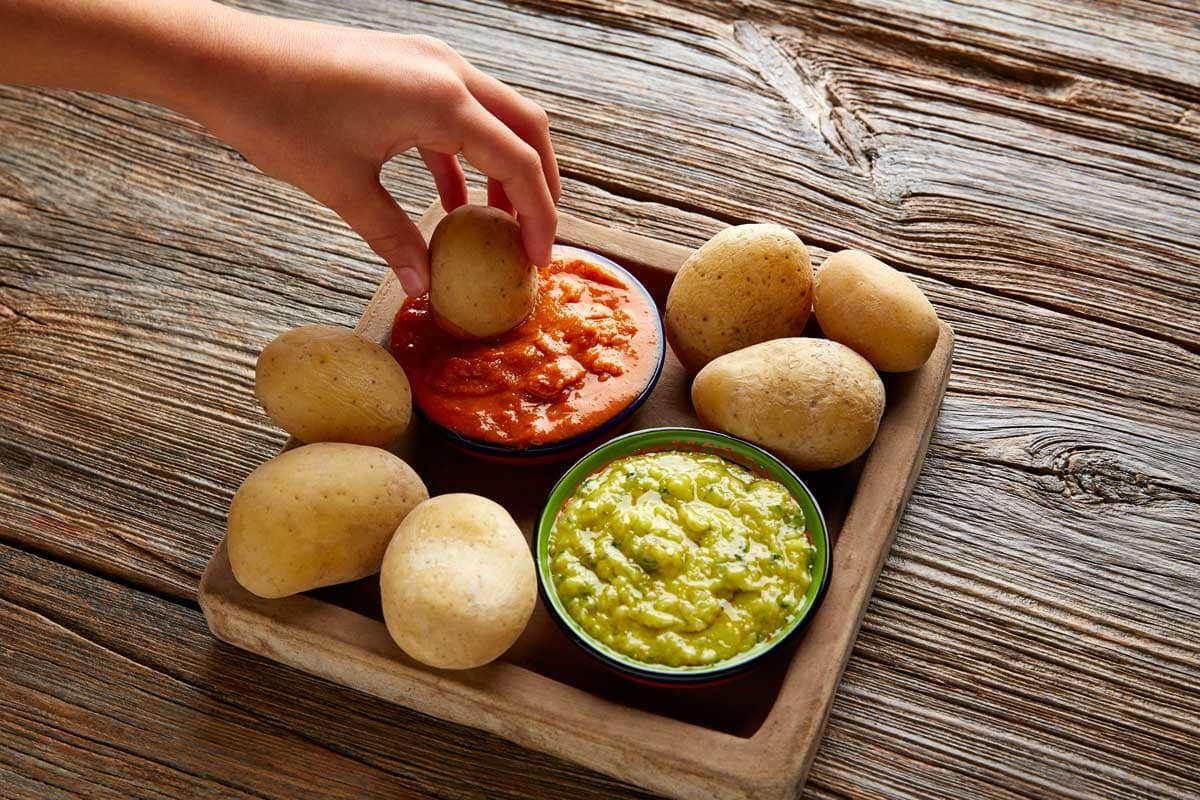
In the Canary Islands, papas arrugadas aren’t treated as a novelty or a specialty dish — they’re everyday food.
How they’re served reflects that simplicity and confidence.
-
Always served hot and whole
The potatoes arrive unpeeled, straight from the pot, still warm, with their salt-dusted skins intact. Cutting or mashing them would miss the point — they’re meant to be eaten by hand or speared with a fork. -
Mojo alongside or spooned over
Mojo rojo, mojo verde, or both may be served in small dishes or spooned over the potatoes. Diners dip each potato, choosing how much sauce they want with every bite. This keeps the skins dry and the texture intact. -
As a tapa or shared plate
Papas arrugadas are commonly ordered as a tapa to share, especially in casual bars and seaside restaurants. They’re placed in the center of the table, meant for slow, social eating. -
As a side to main dishes
They frequently accompany grilled fish, pork, goat, or other simple Canarian proteins. Even then, papas arrugadas never feel like an afterthought — they hold their own. -
Minimal presentation, maximum confidence
No garnishes, no plating tricks. At most, you’ll see the potatoes served in a clay dish or metal bowl. The message is clear: if the technique is right, nothing else is needed.
This way of serving papas arrugadas reflects Canarian cooking itself — relaxed, unpretentious, and deeply rooted in tradition.
Papas Arrugadas vs. Other Spanish Potato Dishes
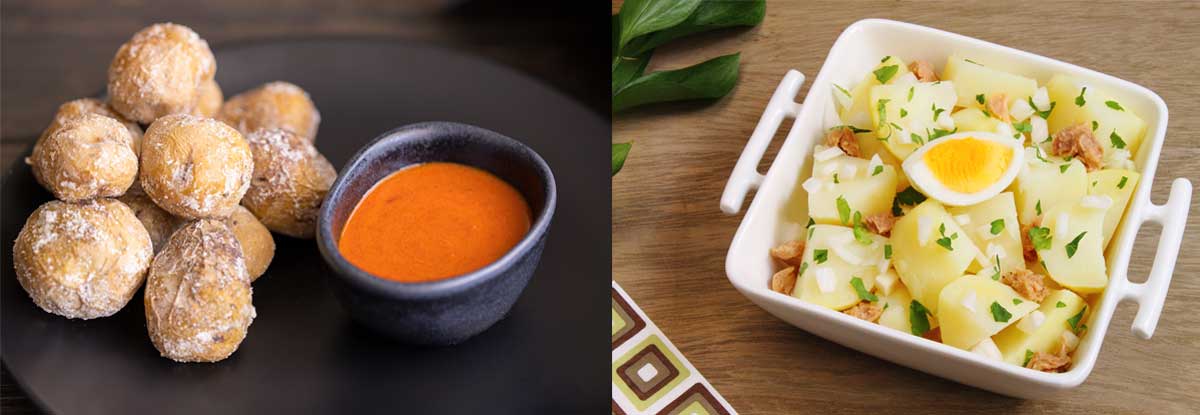
Spain has no shortage of beloved potato dishes, but papas arrugadas stand apart — not just in flavor, but in philosophy.
Where many Spanish potato preparations rely on sauces, fats, or frying, papas arrugadas are built on restraint.
-
Papas arrugadas vs. patatas bravas
Patatas bravas are fried, crisp, and bold, designed to carry thick, spicy sauces. Papas arrugadas are boiled and dried, salty rather than crunchy, and paired with mojo on the side. One is bar food built for indulgence; the other is island food built for balance. -
Papas arrugadas vs. papas aliñadas
Papas aliñadas are dressed potatoes — soft, marinated, and infused with oil, vinegar, onions, or herbs. Papas arrugadas stay undressed. Their flavor comes from salt concentration and texture, not absorption. -
Papas arrugadas vs. tortilla española
Tortilla española transforms potatoes into structure. They’re sliced, softened in oil, and bound with eggs. Papas arrugadas remain whole and intact, celebrating the potato itself rather than reshaping it. -
Frying vs. evaporation
Most Spanish potato dishes lean on oil for richness. Papas arrugadas rely on evaporation and dehydration to create contrast, making them feel lighter despite their intensity. -
Regional identity
Many Spanish potato dishes are shared across regions with variations. Papas arrugadas belong unmistakably to the Canary Islands. Their technique, pairing with mojo, and presentation make them geographically unmistakable.
In short, papas arrugadas aren’t trying to compete with Spain’s other potato classics — they exist in a category of their own, defined by salt, simplicity, and island tradition.
Why Papas Arrugadas Remain a Canary Islands Classic
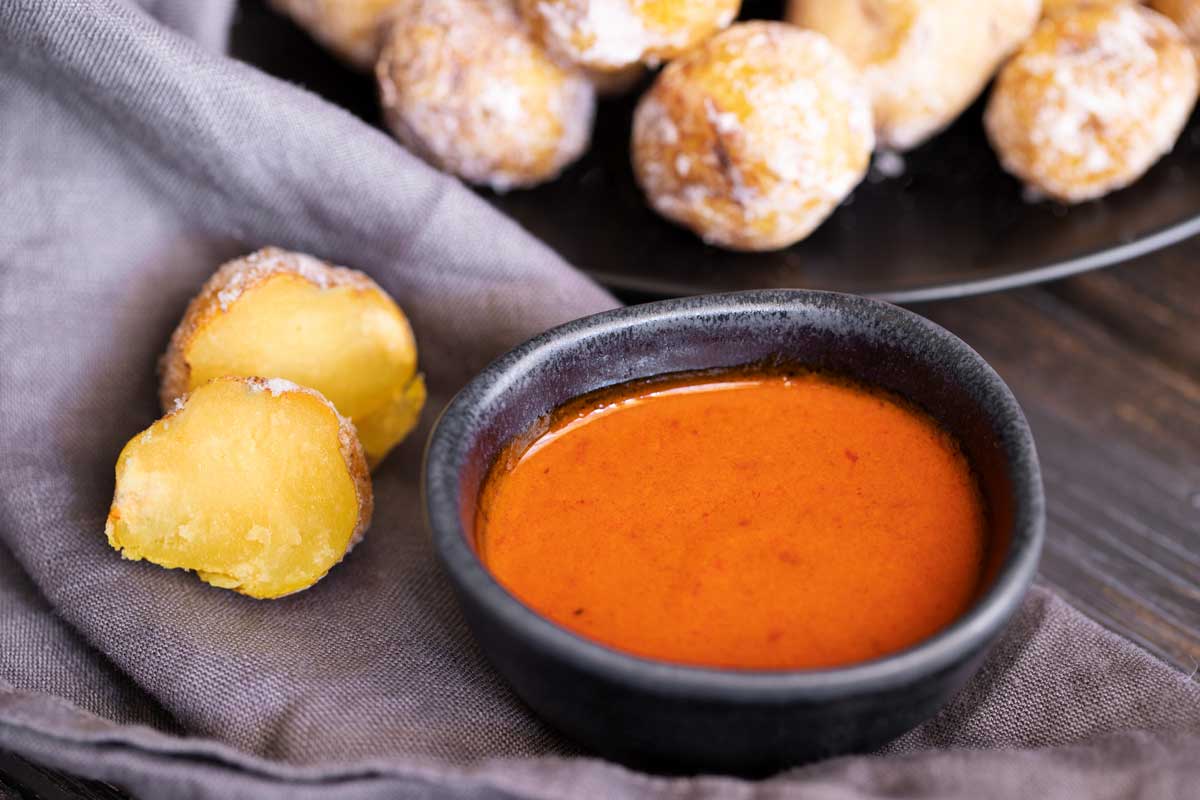
Papas arrugadas are proof that technique matters more than ingredients.
With nothing more than small potatoes, salt, and time, this Canary Islands staple delivers contrast, intensity, and character in every bite.
The wrinkled skins, fluffy centers, and bold mojo sauces aren’t accidents — they’re the result of generations of refined, intentional cooking.
What sets papas arrugadas apart from other Spanish potato dishes is their honesty.
They aren’t dressed up, fried, or softened with fat. Instead, they rely on evaporation, texture, and balance to create something unforgettable.
When paired with mojo rojo or mojo verde, they become more than a side dish — they become an expression of Canarian identity.
If you want to experience authentic Canary Islands cuisine at home, papas arrugadas are the place to start.
Master this Spanish dish, and you understand the heart of island cooking: simple ingredients, respected tradition, and flavor that speaks for itself.
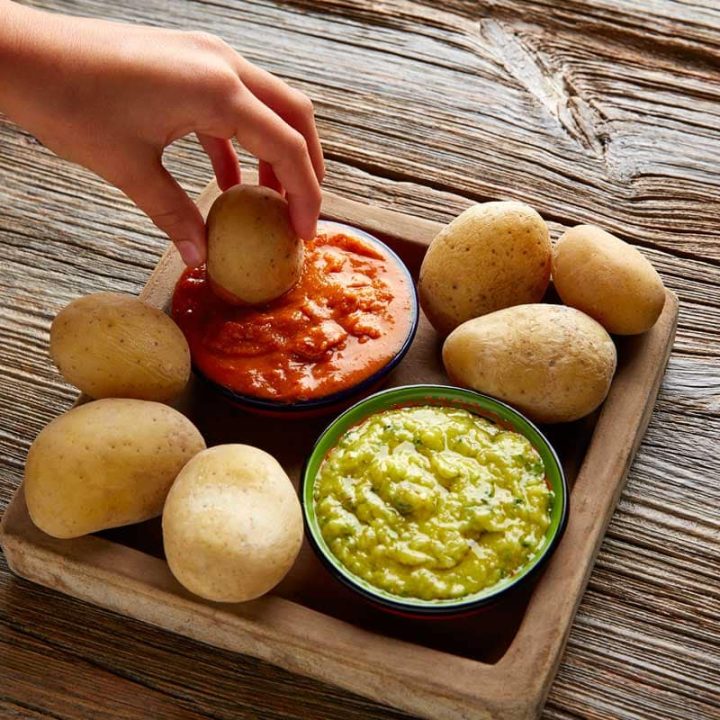
Papas Arrugadas Recipe
This authentic Papas Arrugadas recipe brings the traditional Canary Islands salt-crusted potatoes to your kitchen with just three simple ingredients. Boiled in heavily salted water until the skins wrinkle and form a delicate salty crust, these tender, creamy potatoes are traditionally served with bold red and green mojo sauces. This easy Spanish tapas dish is naturally gluten-free, incredibly flavorful, and perfect as a side or appetizer.
Ingredients
- 1 ½ pounds small waxy potatoes (baby Yukon Gold, new potatoes, or fingerlings)
- 3 tablespoons coarse sea salt
- 4 cups water (just enough to barely cover potatoes)
Optional for Serving
- Red mojo sauce
- Green mojo sauce
Instructions
- Scrub the potatoes and leave them whole and unpeeled. Choose similarly sized small potatoes so they cook evenly.
- Place in a saucepan with about 4 cups water, or just enough to barely cover, and add the coarse sea salt. Bring to a boil, then simmer uncovered until a knife slides in easily, about 20–25 minutes. Add a little water if necessary to prevent the pot drying before the potatoes are tender.
- Drain the cooking water completely without rinsing the potatoes. Return the pot to low heat for 2–3 minutes, shaking gently, until the remaining surface moisture evaporates and the skins develop a light salt coating.
- Serve warm with red or green Canarian mojo sauce, either alongside or spooned over to taste.
Notes
This home version uses 3 tablespoons coarse sea salt for 1½ pounds potatoes, producing a lighter crust than heavily salted traditional versions. Much of the salt leaves with the drained water; the amount retained varies. Fine salt can work, but do not substitute volume-for-volume because crystal size changes the amount measured. The 35-minute estimate covers heating, boiling and drying; larger potatoes need longer. Sauce preparation is separate.
Nutrition Information:
Amount Per Serving: Calories: 180Total Fat: 0gCarbohydrates: 40gFiber: 4gProtein: 4g
More Spanish Foods
See all →
Jorge Garcia is the founder of AmigoFoods, where he has spent over 20 years helping readers discover authentic Latin American and Spanish cuisine. Raised in a Cuban-American household, Jorge learned to cook at the hands of his mother and grandmother, carrying forward generations of family recipes. That heritage, backed by his family’s four-generation history in the Latin food industry, inspired him to launch AmigoFoods in 2003. With more than 1,000 published articles on recipes, ingredients, and food culture, Jorge’s mission is simple: make authentic Latin cooking approachable for home cooks everywhere while honoring the traditions behind every dish.