

Updated
Spanish food is simple cooking built on great ingredients: olive oil, garlic, tomatoes, pimentón, saffron, cured ham and seafood from two seas. It is meant to be shared, at a long family lunch or standing at the counter of a tapas bar, and it changes a lot from one region to the next.
This guide covers 50 Spanish foods, starting with the dishes people eat most, from paella and tortilla española to jamón ibérico and patatas bravas. Then come more tapas, the great stews, the seafood, regional specialties and the desserts. You will also find what each region of Spain is known for, what to drink and how to eat like a Spaniard.
AmigoFoods may earn a commission from qualifying Amazon purchases made through links on this page.
Just want the recipes? Browse our Spanish main dishes, soups and stews, street foods, breads and sides and breakfast dishes, or start with the ingredients of the Spanish kitchen.
From the tapas bar to the family table
50 Spanish dishes at a glance
Pick a category, then tap any dish to jump straight to it.
 01PaellaSaffron rice from Valencia, cooked in a wide panRice
 02Tortilla EspañolaThick potato and egg omeletTapa
 03Jamón IbéricoCured ham from black Iberian pigsCured
 04Patatas BravasFried potatoes with spicy sauceTapa
 05CroquetasCreamy fried croquettesTapa
 06GazpachoCold Andalusian tomato soupSoup
 07SalmorejoThick, creamy tomato soup from CórdobaSoup
 08Gambas al AjilloShrimp sizzling in garlic and olive oilTapa
 09Pulpo a la GallegaGalician octopus with paprika and olive oilSeafood
 10Pan con TomateToast rubbed with tomato, garlic and olive oilTapa
 11Churros con ChocolateFried dough dipped in thick hot chocolateDessert
 12Pimientos de PadrónBlistered small green peppers with sea saltTapa
 13GildasOlive, anchovy and pepper skewerTapa
 14Calamares a la RomanaFried squid rings with lemonSeafood
 15Boquerones en VinagreFresh anchovies marinated in vinegar and garlicTapa
 16Huevos RotosFried eggs broken over fries and hamTapa
 17Ensaladilla RusaPotato salad with tuna and mayonnaiseTapa
 18Champiñones al AjilloMushrooms in garlic and olive oilTapa
 19Pescaíto FritoAndalusian mixed fried fishSeafood
 20Cocido MadrileñoMadrid’s chickpea and meat stew, served in coursesStew
 21Fabada AsturianaWhite bean stew with chorizo and morcillaStew
 22Rabo de ToroOxtail braised in red wineStew
 23PistoSpanish vegetable stew, often with a fried eggStew
 24Caldo GallegoGalician greens, bean and potato soupSoup
 25Cochinillo AsadoRoast suckling pig from SegoviaMain
 26Pollo al ChilindrónChicken braised with peppers and tomatoMain
 27CachopoGiant breaded steak stuffed with ham and cheeseMain
 28FlamenquínFried roll of pork and ham from CórdobaMain
 29CarrilladaPork cheeks braised until tenderMain
 30MigasFried breadcrumbs with chorizo and peppersMain
 31Empanada GallegaGalician savory pie, often with tunaMain
 32MarmitakoBasque tuna and potato stewStew
 33FideuàSeafood noodles cooked like a paellaRice
 34Bacalao al Pil PilSalt cod in garlic and olive oil emulsionSeafood
 35Merluza en Salsa VerdeHake in green parsley sauce with clamsSeafood
 36Zarzuela de MariscosCatalan seafood stewSeafood
 37Dorada a la SalSea bream baked in a salt crustSeafood
 38Papas ArrugadasCanarian wrinkled potatoes with mojoSide
 39EscalivadaCatalan smoky roasted vegetablesSide
 40Chorizo a la SidraChorizo simmered in Asturian ciderTapa
 41Morcilla de BurgosBlood sausage with riceCured
 42SerranitoSeville’s pork, ham and pepper sandwichSandwich
 43Crema CatalanaCustard with a burnt sugar crustDessert
 44FlanCaramel custard, Spain’s favorite dessertDessert
 45TorrijasHoly Week fried bread soaked in milkDessert
 46Tarta de SantiagoGalician almond cakeDessert
 47Leche FritaFried milk custard squaresDessert
 48Arroz con LecheCreamy rice pudding with cinnamonDessert
 49TurrónAlmond nougat for ChristmasDessert
 50EnsaimadaMallorca’s spiral pastryPastry
What is Spanish food?

Spanish food is the cooking of a country shaped by many peoples. The Romans planted olive trees and vineyards. The Moors, who ruled much of Spain for nearly 800 years, brought rice, saffron, almonds, citrus, eggplant and a love of sweets made with honey. After 1492, ships brought tomatoes, potatoes, peppers and chocolate from the Americas, and today it is hard to imagine Spanish food without them.
What ties it together is respect for the ingredient. A plate of jamón, a slice of tortilla or grilled fish with olive oil and salt is not dressed up, because it does not need to be. And Spanish food is not Mexican food: it is rarely spicy, it uses olive oil rather than lard, and a Spanish tortilla is a potato omelet, not a flatbread.
The flavors behind it
- Olive oil: Spain is the world’s largest producer, and it is used for everything from frying to dressing.
- Pimentón: Spanish paprika, sweet, bittersweet or hot, and smoked in the case of pimentón de la Vera. It colors chorizo, pulpo and patatas bravas.
- Saffron: the threads that make paella golden. La Mancha saffron is among the most prized in the world.
- Garlic, tomato and peppers: the base of the sofrito that starts countless rice dishes and stews.
- Sherry vinegar and sherry: from Jerez in Andalusia, used in dressings, sauces and braises.
Cured meats and cheeses

A board of cured meats and cheese starts many Spanish meals. Beyond jamón, look for chorizo, the paprika sausage (see the difference between chorizo and other sausage), Catalan fuet, salchichón, thin chistorra and soft, spreadable sobrasada from Mallorca. For cheese, start with sheep’s milk Manchego and strong blue Cabrales from Asturias, then explore our guide to Spanish cheeses.
Spanish food by region
Spain has 17 regions, and many have their own language, ingredients and dishes. Tap a region on the map to see what it is known for and which dishes from this list to try first, or scan the full table below.
Interactive map
Spanish food, region by region
Tap a region to see what it is known for and what to eat there.
Pick a region
Spain has 17 regions, and many have their own language, ingredients and dishes. Tap a region on the map, or a name below, to see what it is known for and which dishes from this list to try first.
Andalusia
Seville, Córdoba, Málaga, Cádiz
Cold soups, fried fish, sherry and the tapas bar.
Dishes to try
Valencia and Murcia
Rice country: the home of paella and its many cousins.
Dishes to try
Catalonia
Barcelona
Mar i muntanya (sea and mountain) cooking, sauces like romesco and alioli.
Dishes to try
Basque Country and Navarre
Pintxo bars and some of the best seafood cooking in Europe.
Dishes to try
Galicia
Octopus, shellfish, rich stews and Atlantic rain.
Dishes to try
Asturias and Cantabria
Beans, cider, blue cheese and big portions.
Dishes to try
Madrid and the Castiles
Hearty stews, wood-oven roasts and the bar classics.
Dishes to try
Extremadura
Acorn-fed Iberian pigs and pimentón de la Vera.
Dishes to try
Canary Islands
Potatoes, mojo sauces and African and Latin American influence.
Dishes to try
| Region | What defines it | Dishes to try |
|---|---|---|
| Andalusia (Seville, Córdoba, Málaga, Cádiz) | Cold soups, fried fish, sherry and the tapas bar | Gazpacho, Salmorejo, Pescaíto Frito, Rabo de Toro, Flamenquín, Serranito |
| Valencia and Murcia | Rice country: the home of paella and its many cousins | Paella, Fideuà, Dorada a la Sal |
| Catalonia (Barcelona) | Mar i muntanya (sea and mountain) cooking, sauces like romesco and alioli | Pan con Tomate, Escalivada, Zarzuela de Mariscos, Crema Catalana |
| Basque Country and Navarre | Pintxo bars and some of the best seafood cooking in Europe | Gildas, Marmitako, Bacalao al Pil Pil, Merluza en Salsa Verde |
| Galicia | Octopus, shellfish, rich stews and Atlantic rain | Pulpo a la Gallega, Pimientos de Padrón, Caldo Gallego, Empanada Gallega, Tarta de Santiago |
| Asturias and Cantabria | Beans, cider, blue cheese and big portions | Fabada Asturiana, Cachopo, Chorizo a la Sidra, Arroz con Leche |
| Madrid and the Castiles | Hearty stews, wood-oven roasts and the bar classics | Cocido Madrileño, Cochinillo Asado, Patatas Bravas, Huevos Rotos, Morcilla de Burgos |
| Aragón and La Rioja | Peppers, lamb and red wine | Pollo al Chilindrón, Migas |
| Extremadura | Acorn-fed Iberian pigs and pimentón de la Vera | Jamón Ibérico, Carrillada, Migas |
| Balearic Islands (Mallorca) | Island pastries and sobrasada | Ensaimada, sobrasada |
| Canary Islands | Potatoes, mojo sauces and African and Latin American influence | Papas Arrugadas |
50 Spanish foods to try
The list starts with the dishes Spaniards eat most, then moves through more tapas, stews and main dishes, seafood, regional specialties, and desserts.
1. Paella

Paella is the most famous Spanish food in the world, and it comes from the rice fields around Valencia. The original paella valenciana is made with chicken, rabbit, flat green beans, garrofó (butter beans), saffron and short-grain rice, cooked over an open fire in a wide, shallow pan.
Other versions are just as loved: paella de marisco with shrimp, mussels and squid, and arroz negro made black with squid ink. The prize is the socarrat, the toasted rice stuck to the bottom of the pan. Spaniards eat paella at lunch, often on Sundays, never at dinner. Start with the right grain: our guide to the best rice for paella explains why bomba rice matters.
2. Tortilla Española

The tortilla española is the dish found in every Spanish home and bar. Potatoes and, in most homes, onion are cooked slowly in olive oil until soft, then mixed with beaten eggs and set into a thick, round omelet that is flipped with a plate.
It is served warm or at room temperature, cut into wedges or squares as a tapa, or tucked into a sandwich called a bocadillo de tortilla. Whether it should be runny in the middle, and whether it should have onion at all, are two of the most heated food debates in Spain.
3. Jamón Ibérico

Cured ham is the soul of the Spanish table, and jamón ibérico is its finest form. It comes from black Iberian pigs, and the best grade, de bellota, comes from pigs that roam oak forests and feed on acorns before the ham is salted and cured for two to four years.
It is sliced paper-thin by hand and eaten at room temperature, on its own or with bread. The more common jamón serrano comes from white pigs and is cured for a shorter time. Our guide to jamón ibérico vs. jamón serrano explains the labels.
4. Patatas Bravas

Patatas bravas are chunks of potato fried until crisp and topped with salsa brava, a spicy, smoky tomato and pimentón sauce, often with a drizzle of garlic alioli too.
They are one of the most ordered tapas in Spain, especially in Madrid, where every bar claims the best sauce. For more ideas, see our guide to Spanish potato dishes.
5. Croquetas

Spanish croquetas are made from a very thick, creamy béchamel mixed with chopped ham, chicken, or salt cod, rolled in breadcrumbs and fried until golden outside and almost liquid inside.
They were born as a way to use leftovers, and homemade croquetas are still a point of family pride. Order a ración in any tapas bar. Our guide to Spanish croquetas covers the classic fillings.
6. Gazpacho

Gazpacho is the cold summer soup of Andalusia. Ripe tomatoes, cucumber, green pepper, garlic, olive oil, vinegar and a little bread are blended and chilled, then served in a bowl or simply in a glass. Read more about its history.
In the south, families keep a jug of it in the fridge all summer and drink it with lunch. It is naturally vegetarian, and it is often topped with diced cucumber, pepper and croutons.
7. Salmorejo

Salmorejo is gazpacho’s richer cousin from Córdoba. It uses only tomatoes, bread, garlic, olive oil and salt, blended until thick and smooth enough to hold a spoon.
It is served cold, topped with chopped hard-boiled egg and bits of jamón. Without the toppings it is vegetarian, and it is also used as a dip or a sauce.
8. Gambas al Ajillo

Gambas al ajillo are shrimp cooked in a small clay dish of olive oil with sliced garlic and dried guindilla chile, brought to the table still sizzling.
The best part is the garlicky oil left in the dish, which you mop up with bread. It is a classic tapa in Madrid and all along the coast.
9. Pulpo a la Gallega

Pulpo a la gallega, also called pulpo á feira, is the signature dish of Galicia. Octopus is boiled in a copper pot, cut into rounds with scissors, and served on a wooden plate with coarse salt, pimentón and plenty of olive oil.
Sometimes it sits on a bed of boiled potatoes. It is sold at town fairs across Galicia and in pulperías all over Spain.
10. Pan con Tomate

Pan con tomate, or pa amb tomàquet in Catalan, is the simplest Spanish food and one of the best. Toasted bread is rubbed with garlic and a cut ripe tomato, then finished with olive oil and salt.
In Catalonia it comes with almost every meal. Across Spain it is a favorite breakfast, often topped with jamón.
11. Churros con Chocolate

Churros are ridged sticks of fried dough, crisp outside and soft inside. In Spain they are dipped into a cup of chocolate a la taza, hot chocolate so thick a spoon nearly stands up in it.
They are eaten for breakfast, as an afternoon snack and, famously, at dawn after a long night out. Thicker churros are called porras.
12. Pimientos de Padrón

Pimientos de Padrón are small green peppers from Galicia, fried in olive oil until blistered and finished with flaky salt.
Most are mild, but every so often one is hot, which is the fun of it. A Galician saying goes: unos pican y otros no (some are hot and some are not).
13. Gildas

The gilda was the first pintxo in San Sebastián: a toothpick threaded with a green olive, a salted anchovy and pickled guindilla peppers. It is salty, sour and a little spicy.
It was named after the 1946 film Gilda because, like the film’s star, it was "green, salty and a little spicy." It is the perfect bite with a glass of vermouth.
14. Calamares a la Romana

Calamares a la romana are rings of squid dipped in a light batter and fried, served with lemon.
In Madrid they are stuffed into a crusty roll to make the bocadillo de calamares, eaten around the Plaza Mayor.
15. Boquerones en Vinagre

Boquerones en vinagre are fresh anchovy fillets cured in vinegar until white and tender, then dressed with olive oil, garlic and parsley.
They are a cold tapa served everywhere, especially in Andalusia. Fried boquerones are just as popular.
16. Huevos Rotos

Huevos rotos (broken eggs) are fried eggs with runny yolks served over a pile of fried potatoes, often with jamón, chorizo or pimientos.
The eggs are broken at the table so the yolk coats the potatoes. It is a Madrid favorite and a common late dinner.
17. Ensaladilla Rusa

Ensaladilla rusa is Spain’s potato salad: boiled potatoes, carrots, peas, tuna and roasted pepper folded with mayonnaise, often topped with olives or egg.
Despite the name ("Russian salad"), it is one of the most common tapas in Spanish bars, served cold with breadsticks.
18. Champiñones al Ajillo

Champiñones al ajillo are mushrooms sautéed in olive oil with garlic, a splash of white wine, guindilla and parsley.
They are a simple, vegetarian tapa found in nearly every bar, best eaten hot with bread.
19. Pescaíto Frito

Pescaíto frito is the fried fish of Andalusia: small fish such as anchovies, plus squid and cuttlefish, dusted in flour and fried in olive oil.
In Málaga and Cádiz it is sold by the paper cone at freidurías, and it is eaten with lemon and a cold drink.
20. Cocido Madrileño

Cocido madrileño is Madrid’s great winter stew. Chickpeas simmer for hours with beef, chicken, pork belly, chorizo, morcilla, cabbage, carrots and potatoes.
It is served in courses called vuelcos: first the broth with thin noodles, then the chickpeas and vegetables, then the meats. Restaurants often serve it only on certain days of the week.
21. Fabada Asturiana

Fabada asturiana is the hearty bean stew of Asturias. Large, buttery white beans called fabes cook slowly with chorizo, morcilla and pork belly, known together as the compango.
It is a lunch for cold days, usually followed by a nap. See more from the region in our guide to Asturian food.
22. Rabo de Toro

Rabo de toro is oxtail braised for hours in red wine with onions, carrots and peppers until the meat falls off the bone.
It is a specialty of Córdoba and Andalusia, rich and dark, and it is usually served with fried potatoes.
23. Pisto

Pisto is the Spanish answer to ratatouille: zucchini, peppers, onion and tomato cooked slowly in olive oil until soft and sweet. The best known is pisto manchego from La Mancha.
It is served warm with a fried egg on top and bread, or as a side for meat and fish.
24. Caldo Gallego

Caldo gallego is the everyday soup of Galicia: turnip greens (grelos), potatoes and white beans simmered with pork for flavor.
It is simple, filling and made in big pots through the rainy Galician winter.
25. Cochinillo Asado

Cochinillo asado is a whole young pig roasted in a wood-fired oven until the skin is glassy and crisp and the meat is very tender. It is the pride of Segovia, near Madrid.
In Segovia’s traditional restaurants, the roast is cut with the edge of a plate to show how tender it is. Roast lamb (lechazo) is the other great Castilian roast.
26. Pollo al Chilindrón

Pollo al chilindrón is chicken braised with red peppers, tomato, onion, garlic and a little jamón. It comes from Aragón and the nearby regions of Navarre and La Rioja.
The sweet peppers give it a deep red sauce. It is served with bread or fried potatoes.
27. Cachopo

The cachopo is Asturias’s most famous plate: two large veal fillets stuffed with ham and cheese, breaded and fried.
It is big enough to share and usually comes with fries and roasted peppers.
28. Flamenquín

A flamenquín is a roll of thin pork loin wrapped around jamón, breaded and deep-fried. It is a specialty of Córdoba.
It is sliced and served with fries and mayonnaise, as a tapa or a main course.
29. Carrillada

Carrilladas are pork cheeks, often from Iberian pigs, braised slowly in red wine or sherry with onions and carrots until they melt.
They are a favorite in Andalusia and Extremadura, served as a tapa or a main with potatoes.
30. Migas

Migas began as a shepherd’s meal: day-old bread, crumbled and fried in olive oil with garlic, chorizo, pork belly and peppers.
Each region has its own version, especially Extremadura, La Mancha and Aragón. They are often served with a fried egg or grapes.
31. Empanada Gallega

Empanada gallega is a large, flat pie from Galicia, baked and cut into squares. The classic filling is tuna or bonito with onions and peppers; others use pork, cod or scallops.
It is eaten at room temperature, so it is the go-to food for picnics, fiestas and long trips.
32. Marmitako

Marmitako was created by Basque fishermen on their boats. Chunks of fresh bonito tuna are simmered with potatoes, onions, peppers and tomato.
It is a summer dish, made when the tuna season is at its best. See more in our guide to Basque cuisine.
33. Fideuà

Fideuà is paella’s noodle cousin from Gandia, on the Valencian coast. Short, thin noodles cook in a paella pan with fish stock, shrimp, squid and monkfish.
It is served with alioli, and the noodles curl up and turn crisp at the edges.
34. Bacalao al Pil Pil

Bacalao al pil pil is a Basque classic. Salt cod is cooked gently in olive oil with garlic and chile, and the pan is swirled until the gelatin from the fish turns the oil into a silky sauce.
The name comes from the sound the oil makes as it bubbles. Salt cod is also stewed in red pepper sauce as bacalao a la vizcaína.
35. Merluza en Salsa Verde

Merluza en salsa verde is hake cooked in a sauce of olive oil, garlic, parsley and fish stock, often with clams. It is a Basque favorite.
Hake is the most popular fish in Spain. See more dishes from the coast in our guide to Spanish seafood dishes.
36. Zarzuela de Mariscos

Zarzuela is a rich Catalan stew of mixed fish and shellfish, such as monkfish, shrimp, mussels and clams, cooked in a tomato, wine and saffron sauce.
Its name means a kind of light opera, for its mix of many "voices." It is a dish for special occasions.
37. Dorada a la Sal

For dorada a la sal, a whole sea bream is covered in a thick crust of coarse salt and baked. The crust is cracked at the table.
The salt keeps the fish moist without making it salty. It is popular in Andalusia and Murcia.
38. Papas Arrugadas

Papas arrugadas (wrinkled potatoes) are the signature food of the Canary Islands. Small potatoes are boiled in very salty water until their skins wrinkle and turn white with salt.
They are served with two sauces: red mojo rojo with chile and pimentón, and green mojo verde with cilantro.
39. Escalivada

Escalivada is a Catalan dish of eggplant, red peppers and onions roasted over embers until charred, then peeled, cut into strips and dressed with olive oil and salt.
It is served as a side, a tapa, or on toast with anchovies.
40. Chorizo a la Sidra

Chorizo a la sidra is chorizo cooked in Asturian cider until it softens and the cider turns into a sweet, smoky sauce.
It is a classic tapa in Asturian cider houses, where the cider is poured from high above the head to aerate it.
41. Morcilla de Burgos

Morcilla is Spanish blood sausage. The most famous comes from Burgos and is made with rice, onion and spices. It is sliced and fried until crisp.
It is served as a tapa, often with roasted red peppers, and it goes into stews like fabada and cocido.
42. Serranito

The serranito is Seville’s favorite sandwich: a soft roll filled with grilled pork loin, jamón serrano, a fried green pepper and sliced tomato.
It is sold in bars across Andalusia. For more, see our guide to Spanish street food.
43. Crema Catalana

Crema catalana is a custard flavored with lemon peel and cinnamon, topped with sugar that is caramelized with a hot iron until it cracks.
In Catalonia it is traditional on March 19, Saint Joseph’s Day, when it is also called crema de Sant Josep.
44. Flan

Flan is the most common dessert on Spanish menus: a baked custard of eggs, milk and sugar under a layer of caramel. Flan de huevo is the classic.
Homemade flan (flan casero) is a sign of a good restaurant.
45. Torrijas

Torrijas are slices of bread soaked in milk or wine, dipped in egg, fried and coated with sugar and cinnamon or honey.
They are the classic sweet of Semana Santa (Holy Week), when bakeries sell them by the tray.
46. Tarta de Santiago

Tarta de Santiago is an almond cake from Galicia made with ground almonds, eggs, sugar and lemon zest, with no flour.
It is dusted with powdered sugar around the stencil of the cross of Saint James, and it is the treat that greets pilgrims arriving in Santiago de Compostela.
47. Leche Frita

Leche frita (fried milk) is a firm custard of milk, sugar and flour flavored with cinnamon and lemon, cut into squares, coated and fried, then dusted with sugar.
It is crisp outside and creamy inside, and it is a traditional dessert in northern Spain.
48. Arroz con Leche

Spanish arroz con leche is rice cooked slowly in milk with lemon peel and cinnamon until very creamy.
Asturias is famous for it, where the top is often caramelized like crema catalana (requemado).
49. Turrón

Turrón is the Christmas sweet of Spain, made from almonds, honey, sugar and egg white. Turrón de Alicante is hard with whole almonds, and turrón de Jijona is soft and smooth.
Every Spanish home puts out a tray of turrón, polvorones and marzipan in December. See the full menu in our guide to Spanish Christmas foods.
50. Ensaimada

The ensaimada is a light, coiled pastry from Mallorca, made with a sweet dough and saïm (pork lard) and dusted with powdered sugar.
It comes in single sizes for breakfast and huge boxes to take home as gifts. See more in our guide to Spanish pastries.
How to eat like a Spaniard

A few habits make Spanish food easier to enjoy, whether you are in Madrid or at a Spanish restaurant at home.
Meal times
- Desayuno (breakfast): small and quick, such as Pan con Tomate, toast with olive oil, a pastry or churros with café con leche. More ideas in our guide to Spanish breakfast foods.
- Almuerzo (mid-morning): a snack around 11 am, often a bocadillo (sandwich) or a slice of tortilla.
- Comida (lunch): the main meal of the day, eaten from about 2 to 4 pm.
- Merienda: an afternoon snack around 6 pm, a coffee with something sweet.
- Cena (dinner): late and lighter, usually from 9 to 11 pm, and often a round of tapas.
Tapas, pintxos and the menú del día
Tapas are small dishes eaten with a drink, often while standing at the bar. In some cities, such as Granada and León, a free tapa still comes with each drink. Going from bar to bar for a tapa at each is called ir de tapas or tapear. In the Basque Country, the same idea is called pintxos: bites on bread lined up on the counter, often held together with a toothpick that is counted at the end. Learn more in our guides to tapas and the history of tapas.
At lunch on weekdays, look for the menú del día: a fixed-price meal with a first course, a main course, bread, a drink and dessert or coffee. It is the best value in Spain.
Words you will see on the menu
| On the menu | What it means |
|---|---|
| Tapa | A small plate, or a free bite with your drink |
| Ración / media ración | A full sharing plate / a half portion |
| Pintxo (pincho) | A bite on bread or a skewer, Basque style |
| Bocadillo | A sandwich on a crusty baguette |
| A la plancha | Cooked on a hot griddle |
| Caña | A small draft beer |
| Vermut | Vermouth, the classic pre-lunch drink |
| Sobremesa | The long, relaxed talk at the table after a meal |
Christmas in Spain
The holiday season runs from Christmas Eve (Nochebuena) to Three Kings Day on January 6. The big dinner is on Christmas Eve, with seafood, roast lamb or cochinillo, and a tray of turrón, polvorones and marzipan. On New Year’s Eve, Spaniards eat 12 grapes at midnight, one for each chime of the clock. See the full menu in our guide to Spanish Christmas foods.
What to drink

Wine is the everyday drink, from Rioja and Ribera del Duero reds to Albariño whites and Cava. Visitors love sangria, but locals more often drink tinto de verano, red wine with lemon soda. Asturias pours sidra (cider) from high above the head, and Valencia makes horchata de chufa from tiger nuts. Coffee is strong and small: order a café solo, a cortado with a splash of milk, or a café con leche. See more in our guide to Spanish drinks.
Spanish food FAQ
What is Spanish food?
Spanish food is the traditional cooking of Spain, built on olive oil, garlic, tomatoes, pimentón, saffron, cured pork and seafood. Famous dishes include paella, tortilla española, jamón ibérico, gazpacho, patatas bravas and churros, and every region has its own specialties.
What is the national dish of Spain?
Paella is the dish most often called Spain’s national dish, although it is really a Valencian specialty. Many Spaniards would name the tortilla española, which is eaten in every region, every day.
Is Spanish food spicy?
Mostly no. Spanish food is full of flavor from garlic, olive oil and pimentón, but it is rarely hot. A few dishes have a kick, like patatas bravas, gambas al ajillo and mojo picón from the Canary Islands.
Is Spanish food the same as Mexican food?
No. Mexican food is based on corn, chiles and beans, while Spanish food is based on olive oil, bread, rice, pork and seafood. The two share some names, but not the dishes: a tortilla in Spain is a potato omelet, and Spanish chorizo is a cured sausage, while Mexican chorizo is usually fresh.
What is the most popular food in Spain?
Tortilla española, paella, jamón, croquetas and patatas bravas are the dishes you will find almost everywhere. For dessert, churros con chocolate and flan.
What time do Spaniards eat dinner?
Late, usually between 9 and 11 pm, and lunch from about 2 to 4 pm. Many restaurants in Spain do not open for dinner before 8:30 pm.
What are tapas?
Tapas are small plates eaten with a drink, such as olives, croquetas, patatas bravas or a slice of tortilla. Ordering several to share is a meal in itself.
Start cooking Spanish food at home
Start with the dishes that need only a few ingredients: tortilla española, pan con tomate, gambas al ajillo and gazpacho in summer. Then try a paella on a weekend, when you have time to let the socarrat form. Pisto and lentil or bean stews are easy weeknight dinners, and crema catalana or flan make a simple dessert. Our collection of Spanish recipes has step-by-step versions of most dishes on this list, and the Spanish cooking hub has every guide in one place.
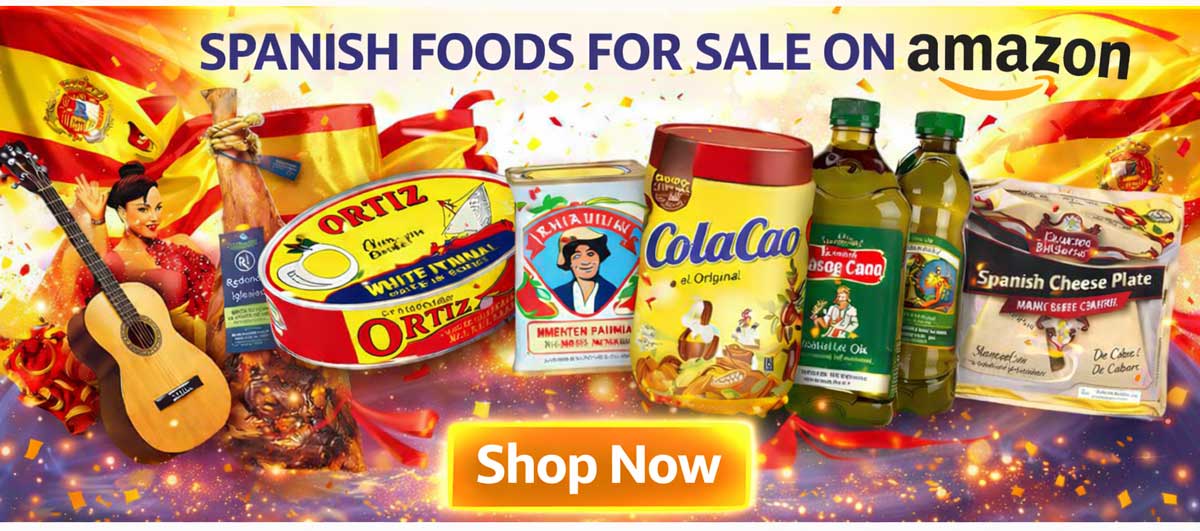
Good ingredients make most of the difference, and the essentials are easy to order online: pimentón de la Vera, Spanish saffron, bomba rice, a paella pan and a good Spanish extra virgin olive oil. Or browse our Spanish foods list on Amazon. For more, see our guides to Spanish desserts, side dishes, seafood, soups and stews and seafood tapas.
Sources and further reading
- Wikipedia: Spanish cuisine
- Wikipedia: Paella
- Wikipedia: Tapas
- Wikipedia: Jamón ibérico
- Wikipedia: Spanish omelette
More Spanish Foods
See all →
Jorge Garcia is the founder of AmigoFoods, where he has spent over 20 years helping readers discover authentic Latin American and Spanish cuisine. Raised in a Cuban-American household, Jorge learned to cook at the hands of his mother and grandmother, carrying forward generations of family recipes. That heritage, backed by his family’s four-generation history in the Latin food industry, inspired him to launch AmigoFoods in 2003. With more than 1,000 published articles on recipes, ingredients, and food culture, Jorge’s mission is simple: make authentic Latin cooking approachable for home cooks everywhere while honoring the traditions behind every dish.