

Patatas a lo pobre are Andalusian potatoes cooked slowly with onion, green pepper and garlic in olive oil until soft and silky. This four-serving recipe takes about 55 minutes and makes a simple tapa or a side for eggs, meat or fish.
Patatas a lo Pobre at a Glance
What Are Patatas a lo Pobre?
The name translates as “potatoes, poor-man’s style.” The phrase a lo pobre signals a dish made from what a modest pantry already holds: potatoes, onions, peppers, garlic, salt and olive oil.
Encyclopedic and Spanish food sources place the dish in Andalusia, and Directo al Paladar ties it especially to the eastern half of the region, around the Alpujarra. You’ll also see it called papas a lo pobre, since papa is the everyday word for potato in much of Andalusia and the Canary Islands.
How old is the dish?
Some recipe blogs claim patatas a lo pobre are “medieval.” That can’t be right. Potatoes came to Spain from the Americas, and botanical historians date their establishment in Spain to about 1570, with Seville hospital accounts recording purchases from 1573.
The honest answer is that nobody has pinned down when the recipe itself took shape. Directo al Paladar links its popularity to the lean postwar years, when a potato garnish often had to become the whole meal.
Not the same as Chile’s “a lo pobre”
If you search the phrase, you’ll run into Chilean bistec a lo pobre: steak topped with fried eggs, fried onions and French fries. Same words, very different plate. The Spanish potatoes are the humble original idea of the phrase, not a loaded platter.
| Detail | What to know |
|---|---|
| Region | Andalusia, especially Granada and Almería (the Alpujarra) |
| Core ingredients | Potatoes, onion, green pepper, garlic, olive oil, salt |
| Optional finish | A splash of white wine or sherry vinegar, parsley |
| Technique | Slow-cooked in abundant oil over low heat, often covered, then drained |
| Texture | Soft, almost falling apart, with a few golden edges |
| Served as | Tapa, side dish, or with fried eggs as a light meal |
| Diet | Naturally vegan and gluten-free (without the eggs) |
Confit, Not Fry: The Technique Most Recipes Miss
Many English-language versions boil the potatoes first, roast them, or pan-fry them in a few spoonfuls of oil until crisp. Those are tasty potatoes, but they aren’t patatas a lo pobre.
Spanish recipes describe something gentler. Directo al Paladar starts everything in a cold pan with plenty of oil and brings it up slowly. Divina Cocina, sharing a Granada family recipe, uses about a finger’s depth of oil for about 2 pounds (1 kg) of potatoes and cooks them covered over low heat, so they half-confit and half-steam. Bonviveur aims for potatoes that are pochadas, casi deshechas: soft and almost falling apart.
Why so much oil?
The oil is a cooking medium, not a sauce. It surrounds the slices so they cook evenly without scorching, and most of it is drained off at the end. What stays on the potatoes is a light, silky coating.
Low heat, a lid, and patience
The oil should bubble lazily, never roar. A lid traps the moisture from the onion and pepper, which keeps the potatoes tender. Some cooks uncover the pan for the last few minutes to give the edges a little color, and that’s a matter of taste.
Don’t Throw Out the Oil
This is the part of the dish that makes it truly a lo pobre. Spanish recipes routinely strain the cooking oil and keep it for frying eggs, making a Spanish tortilla or cooking other savory dishes. It picks up a gentle onion and pepper flavor that suits those uses well.
- Strain it: once it has cooled, pour it through a fine sieve lined with a paper towel to catch the bits.
- Store it: refrigerate promptly in a clean, covered container and use within 4 days, or freeze for longer storage. Do not keep garlic- and vegetable-flavored oil at room temperature. See Oregon State University Extension’s storage guidance.
- Use it for savory cooking: eggs, tortilla, sautéed vegetables, another batch of potatoes.
- Know when to stop: throw it out if it smells stale or rancid, turns dark and thick, or foams and smokes at normal heat.
If you want a strainer made for this, a stainless oil strainer pot with a fine mesh makes the job tidy. AmigoFoods earns a commission on qualifying Amazon purchases.
Good oil matters here because you taste it twice. Our guide to Spanish olive oil explains the main varieties and grades.
How to Make Patatas a lo Pobre
This version serves four as a side dish. It follows the Andalusian method: a cold-oil start, low heat under a lid, garlic added late, then a quick drain and an optional splash of vinegar.
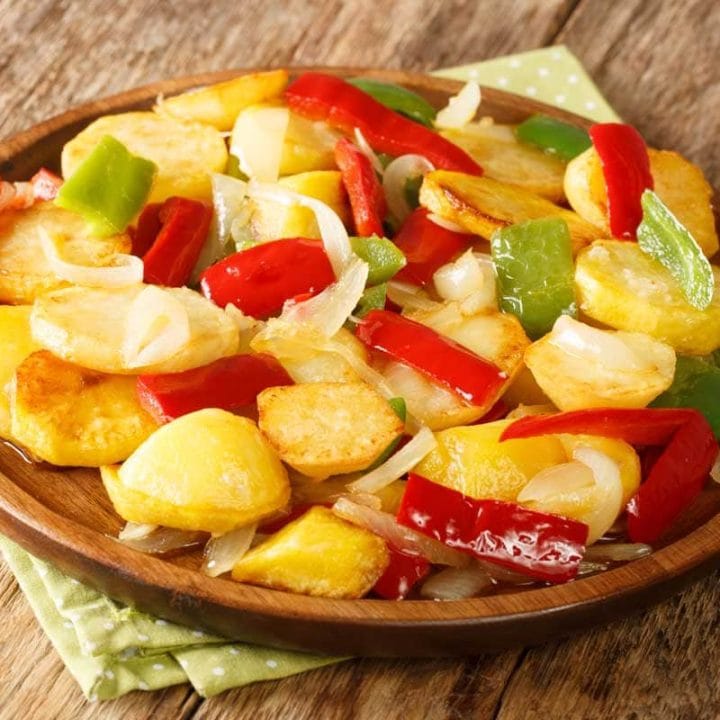
Patatas a lo Pobre (Andalusian Poor Man's Potatoes)
Sliced potatoes, onion and green pepper slowly confited in olive oil until meltingly soft, then drained and finished with garlic and an optional splash of vinegar. A classic Andalusian side dish or tapa.
Ingredients
- 2 lb (900 g) Yukon Gold or other waxy potatoes
- 1 large yellow onion (about 8 oz / 225 g), halved and thinly sliced
- 2 Cubanelle or Italian frying peppers, or 1 green bell pepper (about 6 oz / 170 g total), cut into strips
- 1 1/2 cups (360 ml) Spanish olive oil (most is drained and reused)
- 1 teaspoon (6 g) fine sea salt, plus more to taste
- 4 garlic cloves, thinly sliced
- 1 tablespoon (15 ml) white wine vinegar or sherry vinegar (optional)
- 1 tablespoon (4 g) chopped fresh flat-leaf parsley (optional)
- 4 large eggs, for serving (optional)
Instructions
- Peel the potatoes, halve them lengthwise and cut into slices about 1/4 inch (6 mm) thick. Pat them dry and toss with the salt.
- Put the olive oil, potatoes, onion and green pepper into a cold 12-inch (30 cm) deep skillet. Spread into an even layer.
- Set over medium heat until the oil starts to bubble gently, 5 to 7 minutes. Reduce the heat to low or medium-low, cover and cook for 25 to 30 minutes, turning gently with a wooden spoon or spatula every 5 minutes. The oil should bubble lazily, never fry hard.
- Add the sliced garlic for the last 8 to 10 minutes. The dish is ready when the potatoes are completely tender and starting to break at the edges.
- For a few golden edges, uncover, raise the heat to medium-high and cook for 3 to 5 minutes more, stirring once or twice. Skip this for the softest texture.
- Set a colander over a heatproof bowl and drain the vegetables. Reserve the oil.
- Return the potatoes to the skillet with 1 tablespoon of the reserved oil. Add the vinegar, if using, and toss over medium heat for 30 seconds. Taste for salt and sprinkle with parsley.
- If serving with eggs, heat about 1/2 inch (1 cm) of the reserved oil in a small skillet and fry the eggs one or two at a time, spooning hot oil over the whites. Set them on top of the potatoes and serve hot.
- Strain the remaining oil through a fine sieve lined with a paper towel. Refrigerate it promptly in a clean, covered container and use within 4 days, or freeze for longer storage. Do not store this garlic- and vegetable-flavored oil at room temperature.
Notes
Potatoes: waxy or all-purpose varieties hold their shape best. Russets tend to turn mushy. Peppers: Cubanelle or Italian frying peppers are closest to Spanish green frying peppers. A green bell pepper works, or use half red pepper for sweetness. Oil: most of the oil is drained and can be reused for frying eggs, a Spanish tortilla or another batch. Discard it if it smells rancid, darkens or foams. Less oil: cook with 3 to 4 tablespoons, covered, over low heat, adding a splash of water if the potatoes stick. The texture will be less silky. Vinegar is optional and some Andalusian cooks leave it out. Make ahead: refrigerate covered for up to 3 days and reheat in a skillet with a spoonful of the reserved oil. To double the batch, use two skillets so the potatoes stay in a shallow layer. Without the eggs the recipe is vegan and gluten-free.
Tips for getting it right
- Slice evenly. Slices about 1/4 inch (6 mm) thick cook at the same pace. Thinner slices fall apart, and thicker ones stay firm in the center.
- Use a wide, heavy pan. A 12-inch skillet keeps the layer shallow. A 12-inch carbon steel skillet or a deep cast-iron pan holds a steady, gentle heat.
- Stir gently. Turn the potatoes with a flat olive wood spoon or spatula every few minutes. A little breakage is normal and welcome.
- Add the garlic late. Sliced garlic burns and turns bitter if it goes in at the start.
- Salt early, then taste. Salting at the start seasons the slices all the way through. Adjust after draining.
Regional Versions and Variations
Plato alpujarreño (Granada and Almería)
In the Alpujarra, the high valleys on the southern slopes of the Sierra Nevada, patatas a lo pobre anchor one of the area’s best-known plates. The plato alpujarreño piles them with fried eggs, morcilla, chorizo or longaniza, and slices of jamón serrano. Some versions add lomo de orza, pork loin preserved in oil.
Spanish sources describe it as a showcase of the area’s local products, and the exact line-up changes from village to village. If you’re curious about the ham, here’s how jamón serrano compares with jamón ibérico.
With vinegar and garlic, or without
Spanish cooks don’t agree on the vinegar. Cocina Casera fries sliced garlic until it just colors, adds a splash of white wine vinegar and pours it straight over the potatoes. Bonviveur’s Alpujarra version uses no vinegar at all. Try it both ways and see which you like.
Divina Cocina also mentions a lighter take that skips the pepper and finishes the potatoes with garlic, parsley and vinegar, usually to go with fish.
Easy additions
- Red pepper: swap half the green pepper for red for sweetness and color.
- Herbs: a bay leaf in the oil, or chopped parsley at the end.
- Pimentón: a pinch of smoked paprika after draining. It isn’t traditional, but it’s good. Our curated list of Spanish pantry staples on Amazon covers pimentón and chorizo.
- Chorizo: brown a few slices separately and scatter them on top.
Patatas a lo Pobre vs. Other Spanish Potato Dishes
Spain has many ways with potatoes. Here’s how this one compares with the dishes it’s most often confused with. For more, see our roundup of Spanish potato dishes.
| Dish | Cut and cooking | Texture | Signature |
|---|---|---|---|
| Patatas a lo pobre | Slices slow-cooked in oil with onion and pepper | Soft, silky | Drained, optional vinegar |
| Patatas bravas | Chunks fried until crisp | Crunchy outside | Spicy brava sauce, sometimes alioli |
| Spanish tortilla | Potatoes (and often onion) poached in oil, then set in egg | Tender, custardy | Thick omelet served in wedges |
| Huevos rotos | Fried potatoes topped with runny fried eggs | Crisp potatoes, runny yolk | Eggs broken over at the table, often with ham |
| Patatas panaderas | Slices baked (or slow-cooked in oil) with onion and garlic | Tender, lightly golden | Named for the baker’s oven; often a bed for roast fish or lamb |
The potato base for a tortilla is cooked much like patatas a lo pobre, which is why Spanish home cooks often fold leftovers into eggs the next day.
What to Serve with Patatas a lo Pobre
Spanish sources suggest pairing them with fried eggs, pork, chicken, rabbit or fish. They’re equally at home as a tapa with a cold beer or glass of wine.
- Fried eggs: the simplest light supper. Fry them in the reserved oil.
- Grilled or roasted meat: pork chops, ribs, lamb or roast chicken.
- Fish: baked white fish or grilled sardines, especially with the vinegar finish.
- A tapas spread: alongside pimientos de Padrón, olives and cured meats. Browse more ideas among our Spanish side dishes.

Buying Guide: Ingredients That Make a Difference
Potatoes
Choose waxy or all-purpose potatoes, such as Yukon Gold, that hold their shape while turning creamy. Very starchy russets tend to collapse into mush during the long cook.
Green peppers
Andalusian recipes use thin-skinned green frying peppers. In the US, Cubanelle or Italian frying peppers are the closest match. A green bell pepper works but tastes a bit more bitter.
Olive oil
Use a Spanish olive oil you’d happily cook with every day. Since you’ll reuse it, a good-quality oil pays for itself twice. A pricey finishing oil isn’t necessary for this.
Vinegar
White wine vinegar is the classic choice in Spanish recipes. Sherry vinegar (vinagre de Jerez) adds a deeper, nuttier note and is still Andalusian.
Frequently Asked Questions
Why are they called “poor man’s potatoes”?
Because they’re made from cheap, everyday pantry staples: potatoes, onion, pepper, garlic and olive oil. Spanish food writers also tie their popularity to the postwar years of scarcity, when this “garnish” often became the whole meal.
What’s the difference between patatas a lo pobre and patatas bravas?
Patatas a lo pobre are sliced and cooked slowly in oil until soft, with onion and pepper. Patatas bravas are chunks fried until crisp and served with a spicy sauce.
What’s the difference between patatas a lo pobre and patatas panaderas?
They’re close cousins, and many Spanish home cooks use the names loosely. Patatas panaderas (“baker’s potatoes”) take their name from the village baker’s oven: sliced potatoes with onion, garlic and olive oil, traditionally baked and often served under roast fish or lamb. Patatas a lo pobre are cooked on the stove in plenty of oil and usually include green pepper. Today plenty of panaderas recipes are pan-cooked too, so the clearest differences are the pepper and the oven.
Can I use less oil?
Yes, but the texture changes. With just a few tablespoons you’re sautéing, so cover the pan, lower the heat and add a splash of water if the potatoes stick. Remember that most of the oil in the traditional method is drained and reused, not eaten.
Are patatas a lo pobre a side dish or a main course?
They’re usually a side or a tapa. Topped with fried eggs, or served as part of a plato alpujarreño, they become a full meal.
Can I make them ahead and reheat them?
Yes. Refrigerate them covered for up to 3 days and reheat in a skillet with a spoonful of the reserved oil. Leftovers also make an excellent Spanish tortilla.
Are patatas a lo pobre vegan and gluten-free?
The basic recipe is both, since it’s only vegetables, olive oil, salt and vinegar. Leave out the eggs and sausages to keep it that way, and check your vinegar label if you’re strict about gluten.
A Humble Dish Worth Slowing Down For
Patatas a lo pobre prove how much flavor patience can pull out of a few pantry basics. Keep the heat low, drain the potatoes well, save the oil, and decide for yourself whether a splash of vinegar belongs on top.
Once you’ve made them, try them as a plato alpujarreño or next to other chorizo dishes from Spain.
More Spanish Foods
See all →
Jorge Garcia is the founder of AmigoFoods, where he has spent over 20 years helping readers discover authentic Latin American and Spanish cuisine. Raised in a Cuban-American household, Jorge learned to cook at the hands of his mother and grandmother, carrying forward generations of family recipes. That heritage, backed by his family’s four-generation history in the Latin food industry, inspired him to launch AmigoFoods in 2003. With more than 1,000 published articles on recipes, ingredients, and food culture, Jorge’s mission is simple: make authentic Latin cooking approachable for home cooks everywhere while honoring the traditions behind every dish.