

Sopaipillas are Chile’s golden fried dough rounds, made with cooked winter squash (zapallo) so they come out orange, soft inside and crisp at the edges. Chileans eat them savory with pebre or mustard from street carts, or sweet as sopaipillas pasadas, simmered in spiced chancaca syrup on rainy days.
This recipe makes about 20 four-inch sopaipillas chilenas with canned pumpkin or your own roasted squash, plus the pasadas syrup.
Sopaipillas at a Glance
What Are Chilean Sopaipillas?
Chilean sopaipillas are flat, round pieces of fried dough made from flour, mashed squash, fat and baking powder. They are about the size of a saucer and a quarter inch thick, pricked with a fork so they stay flat instead of puffing up.
The squash is what makes them Chilean. It turns the dough orange, adds a faint sweetness and keeps the inside soft and almost cakey under a crisp, blistered crust.

You will find them all over Chile:
- From street carts. In Santiago, carts fry sopaipillas to order on busy corners, with squeeze bottles of mustard, ketchup, mayo and ají on the side. See more in our guide to Chilean street food.
- At home on rainy days. Rain in central Chile is the cue for a pot of sopaipillas pasadas in chancaca syrup.
- At once. Chile’s late-afternoon tea break often includes sopaipillas with pebre, avocado or cheese, next to Chilean breads like marraqueta and hallulla.
- During Fiestas Patrias. They show up at the fondas around September 18, alongside empanadas de pino.
Where the name comes from
The word is usually traced to sopaipa, a fried dough eaten in Andalusia, which in turn comes from xopaipa, a Mozarabic word for bread soaked in oil. The Spanish brought fried doughs to Chile in the colonial period; Chilean cooks added the squash.
With squash or without?
Central Chile, including Santiago, makes sopaipillas with zapallo. In southern Chile many families make them without squash, so they are paler and closer to a fried bread. Both are sopaipillas. This recipe is the orange, squash version most people mean when they search for sopaipillas chilenas.
Chilean Sopaipillas vs. New Mexican Sopapillas
The names are almost the same, but these are different foods. If you grew up with the puffy honey-drizzled pillows from New Mexico, the Chilean version will surprise you.
| Chilean sopaipillas | New Mexican sopapillas | Argentine tortas fritas | |
|---|---|---|---|
| Dough | Flour, squash, fat, baking powder | Flour, fat, baking powder, water or milk | Flour, fat, water, salt |
| Shape | Flat rounds, pricked with a fork | Squares or triangles that puff hollow | Flat rounds with a hole poked in the middle |
| Color | Orange inside | Pale | Pale |
| Served with | Pebre, mustard, chancaca syrup | Honey, or stuffed with savory fillings | Sugar, dulce de leche, mate |
| When | Rainy days, once, street snack | With a meal, as bread or dessert | Rainy days, with mate |
Argentina’s tortas fritas are the closest relative, and in parts of western Argentina people call them sopaipillas too. Mexico’s buñuelos are thinner and crisper, more like a fried cracker.
Sopaipillas Ingredients
You need six pantry ingredients. Exact amounts are in the recipe card.
- All-purpose flour. Regular flour, nothing special. Spoon and level it so the dough doesn’t get dry.
- Pumpkin or winter squash purée. Plain canned pumpkin works well. Use 100% pumpkin, never pumpkin pie filling, which is sweetened and spiced.
- Melted fat. Lard (manteca) is the classic Chilean choice and gives the most tender result. Vegetable shortening or butter also work.
- Baking powder. It lifts the dough just enough to keep the center soft. Check that it is fresh; flat, hard sopaipillas often come from old baking powder.
- Salt. Sopaipillas are a bread first, so they should taste seasoned even before toppings.
- Neutral oil for frying. Canola, vegetable or sunflower oil. You need about 2 inches in the pot.
Which squash to use
Chileans use zapallo camote, a dense, sweet, orange winter squash. In the US, the closest matches are kabocha, butternut and small sugar pie pumpkins. Big carving pumpkins are watery and bland, so skip them.

How to Make Sopaipillas
Here is the method with the details that make a difference. The printable recipe card below has the short version.
1. Mix the dough
Whisk the flour, baking powder and salt in a large bowl. Add the squash purée and the melted fat, then mix with a fork until shaggy. Finish with your hands.
The dough should be soft and smooth, like play dough. If it won’t come together, add water a tablespoon at a time. If it sticks to your hands, add flour a tablespoon at a time. Squash varies, so this step always needs a small adjustment.
2. Knead briefly, then rest 20 minutes
Knead on a lightly floured counter for 1 to 2 minutes, just until smooth. Then cover the bowl and let the dough rest for 20 minutes. Resting relaxes the gluten, so the dough rolls out without springing back and fries up tender.
3. Heat the oil
While the dough rests, pour about 2 inches of oil into a heavy pot and heat it to 350°F (175°C). A clip-on thermometer takes the guesswork out of frying, and a heavy pot holds the temperature steady between batches.
4. Roll, cut and prick
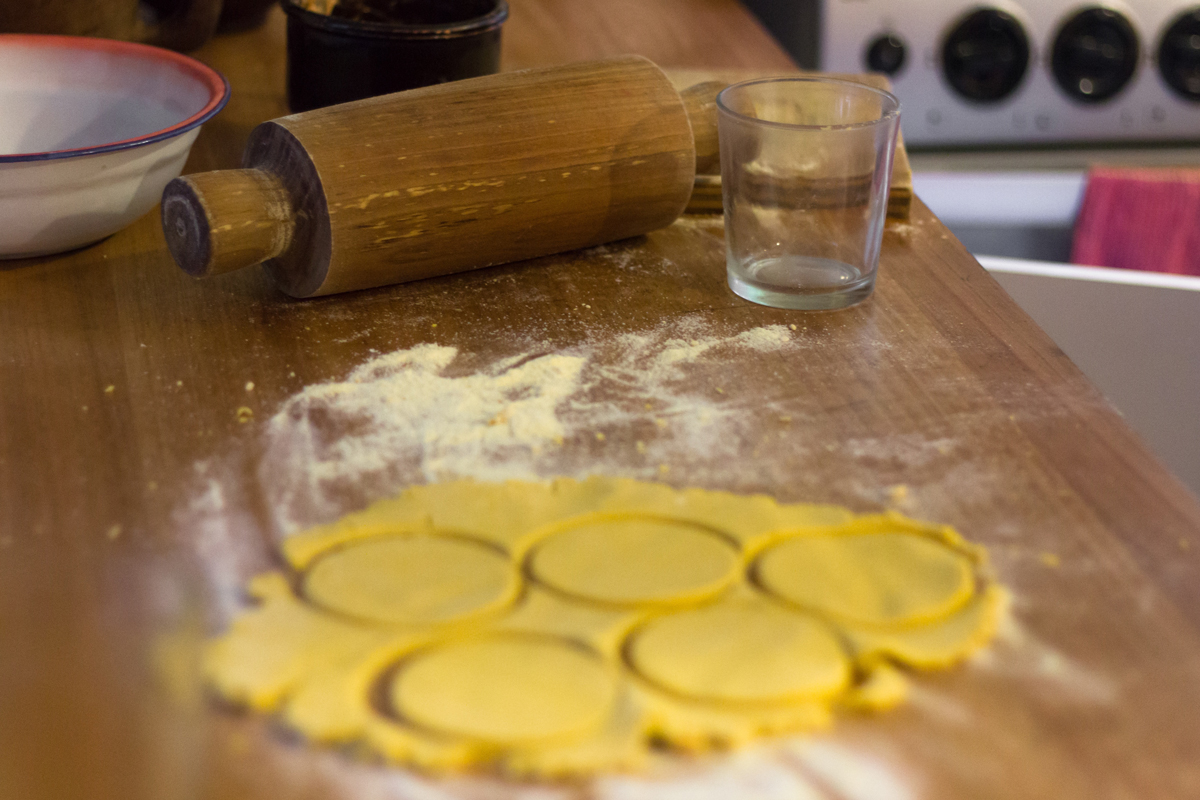
Roll the dough about ¼ inch (6 mm) thick. Cut 4-inch rounds with a cutter or the rim of a glass, then reroll the scraps once.
Prick each round 3 or 4 times with a fork. The holes let steam escape, so the sopaipillas stay flat and cook evenly instead of ballooning.
5. Fry until deep golden
Fry 3 or 4 rounds at a time, about 1½ to 2½ minutes per side, until deep golden. They sink first, then float. Keep the oil between 340°F and 360°F; if it drops lower, the sopaipillas soak up oil.
6. Drain and serve warm
Lift them out with a slotted spoon and drain on a rack or paper towels. Sopaipillas are best within an hour of frying. Keep finished batches warm in a 200°F oven while you fry the rest.
- CRAFT911 deep-fry thermometer with pot clip keeps the oil at 350°F.
- HULISEN round biscuit cutter set includes a 4-inch cutter for even rounds.
- Lodge enameled cast iron Dutch oven (6 qt) is deep and heavy enough for safe frying.
As an Amazon Associate, AmigoFoods earns from qualifying purchases.
Sopaipillas Pasadas (Sopaipillas in Chancaca Syrup)
Sopaipillas pasadas are sopaipillas simmered in a dark syrup of chancaca, cinnamon, cloves and orange peel until they soak it up. “Pasadas” means passed through: the fried rounds are passed through hot syrup. It is the classic Chilean rainy-day dessert, and a good use for day-old sopaipillas.

The method is quick:
- Simmer 8 oz chancaca with 3 cups water, a cinnamon stick, 3 cloves and a few strips of orange peel for 15 to 20 minutes, until lightly syrupy.
- Thicken it with a teaspoon of cornstarch mixed into cold water, if you like a heavier syrup.
- Slide in the sopaipillas a few at a time and simmer 1 to 2 minutes, turning once, until they are soaked but still hold their shape.
- Serve warm in bowls with extra syrup spooned over.
Get the sopaipillas pasadas recipe card ↓
Chancaca is Chile’s unrefined cane sugar, sold in hard blocks. Mexican piloncillo and Colombian panela are the same kind of sugar and work exactly the same way. Read more in our guide to chancaca.
How Chileans Eat Sopaipillas
There is no wrong way, but most Chileans split into two camps.
Savory sopaipillas
- Pebre
- Mustard
- Ketchup
- Mayo
- Ají or hot sauce
- Mashed avocado (palta)
- Melted cheese
- Butter
Sopaipillas with pebre are the classic pairing. The fresh tomato, onion, cilantro and ají salsa cuts through the fried dough. Make a bowl with our pebre recipe while the dough rests.

Sweet sopaipillas
- Chancaca syrup
- Manjar
- Powdered sugar
- Honey
- Jam
Beyond pasadas, sweet sopaipillas are usually dusted with powdered sugar while hot or spread with manjar, Chile’s name for dulce de leche. If you can’t find Chilean manjar, Colombina dulce de leche is a good stand-in, and a powdered sugar shaker gives an even dusting without clumps.
As an Amazon Associate, AmigoFoods earns from qualifying purchases.
Sopaipillas Troubleshooting
| Problem | Likely cause | Fix |
|---|---|---|
| Hard or tough | Too much kneading or extra flour; old baking powder | Knead 1 to 2 minutes only; test baking powder in hot water (it should fizz hard) |
| Greasy | Oil below 340°F, or too many in the pot | Fry 3 or 4 at a time and let the oil recover between batches |
| Raw in the middle | Rolled too thick, or oil too hot | Roll to ¼ inch and keep the oil at 350°F |
| Puffed like pillows | Not pricked, or rolled too thin | Prick each round 3 or 4 times |
| Dough too sticky | Wet, boiled squash | Roast the squash instead, or add flour a tablespoon at a time |
| Pale, not orange | Bland squash or too little purée | Use kabocha, butternut or canned pumpkin |
Make Ahead, Storing and Reheating
- Dough: wrap and refrigerate for up to 24 hours. Let it sit at room temperature for 20 minutes before rolling.
- Cut rounds: freeze unfried rounds between sheets of parchment for up to 2 months, then fry from frozen, adding about 30 seconds per side.
- Fried sopaipillas: keep in an airtight container for up to 2 days, or freeze for up to 2 months.
- Reheating: 5 minutes in a 375°F oven or 3 to 4 minutes in an air fryer brings back the crisp edges. The microwave makes them chewy.
- Leftovers: day-old sopaipillas are perfect for pasadas, because they drink up the syrup.
Sopaipillas FAQ
Are sopaipillas Chilean or Mexican?
Both, but they are different foods. Chilean sopaipillas are flat, orange rounds made with squash. The puffy, hollow sopapillas served with honey come from New Mexico, not Mexico, and have no squash.
Can you make sopaipillas without pumpkin?
Yes. Southern Chileans often skip the squash. Replace the purée with about 1 cup of warm water or milk and expect paler, breadier sopaipillas. This recipe is written for the squash version, so the amounts in the card assume purée.
Can you bake or air-fry sopaipillas?
You can bake them at 400°F for about 15 minutes, or air-fry brushed rounds at 375°F for 8 to 10 minutes, turning once. They come out more like a soft biscuit than a crisp sopaipilla. Baked ones work well for pasadas, where the syrup softens them anyway.
Are sopaipillas a dessert?
Only sometimes. Plain sopaipillas are a savory snack or bread. They become dessert as sopaipillas pasadas or with powdered sugar, honey or manjar.
What is the difference between sopaipillas and sopaipillas pasadas?
Sopaipillas are the fried rounds. Sopaipillas pasadas are the same rounds simmered in chancaca syrup and served in a bowl as a dessert.
What does sopaipilla mean?
It is the diminutive of sopaipa, an old Andalusian word for fried dough, so it means something like “little fried bread.”
Sopaipillas Recipe
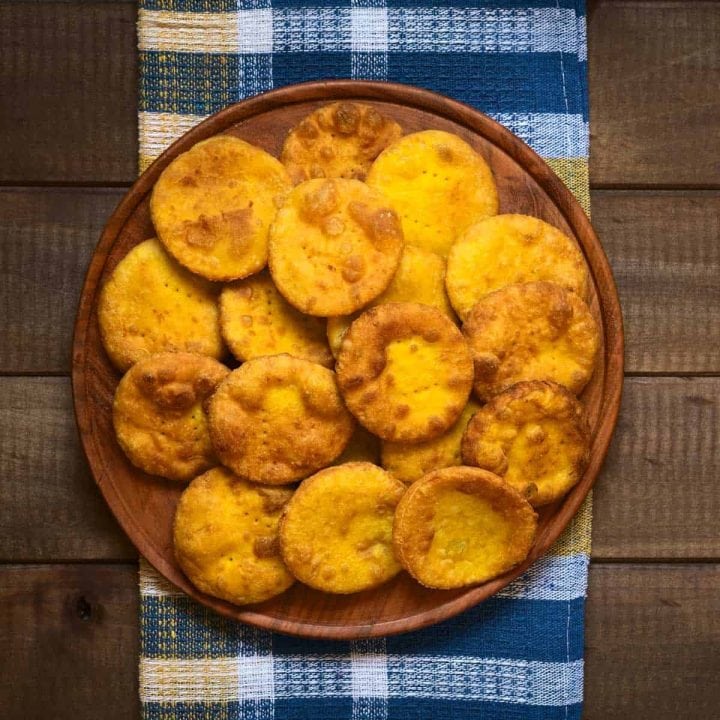
Chilean Sopaipillas (Sopaipillas Chilenas)
Soft, orange Chilean sopaipillas made with pumpkin or winter squash and fried until golden. Serve them warm with pebre or mustard, or simmer them in chancaca syrup for sopaipillas pasadas.
Ingredients
- 4 cups (500 g) all-purpose flour, plus more for rolling
- 4 teaspoons baking powder
- 1 1/2 teaspoons fine salt
- 2 cups (480 g) pumpkin or winter squash purée, cooled (plain canned pumpkin, not pie filling)
- 6 tablespoons (85 g) lard, vegetable shortening or butter, melted and slightly cooled
- 1 to 3 tablespoons water, only if needed
- Neutral oil, for frying
- Pebre, mustard, powdered sugar or chancaca syrup, for serving
Instructions
- Whisk the flour, baking powder and salt in a large bowl. Add the pumpkin purée and melted fat and mix with a fork, then your hands, into a soft, smooth dough. Add water a tablespoon at a time only if it is too dry, or flour a tablespoon at a time if it is sticky.
- Knead on a lightly floured counter for 1 to 2 minutes, just until smooth. Cover and rest for 20 minutes.
- Meanwhile, heat about 2 inches of oil in a heavy pot to 350°F (175°C).
- Roll the dough about 1/4 inch (6 mm) thick and cut 4-inch rounds. Reroll the scraps once. Prick each round 3 or 4 times with a fork.
- Fry 3 or 4 at a time for 1 1/2 to 2 1/2 minutes per side, until deep golden, keeping the oil between 340°F and 360°F.
- Drain on a rack or paper towels and serve warm with pebre, mustard, powdered sugar or chancaca syrup.
Notes
No canned pumpkin? Roast 2 lb of kabocha, butternut or sugar pumpkin cut side down at 400°F for 40 to 50 minutes, then cool and mash it. This adds about 1 hour. Avoid boiled squash, which makes a wet dough.
Hard sopaipillas usually mean too much kneading, too much flour or old baking powder.
Make ahead: refrigerate the dough up to 24 hours, or freeze cut, unfried rounds up to 2 months and fry from frozen. Reheat fried sopaipillas 5 minutes at 375°F.
For dessert, simmer them in chancaca syrup to make sopaipillas pasadas (see the second recipe card).
Sopaipillas Pasadas Recipe
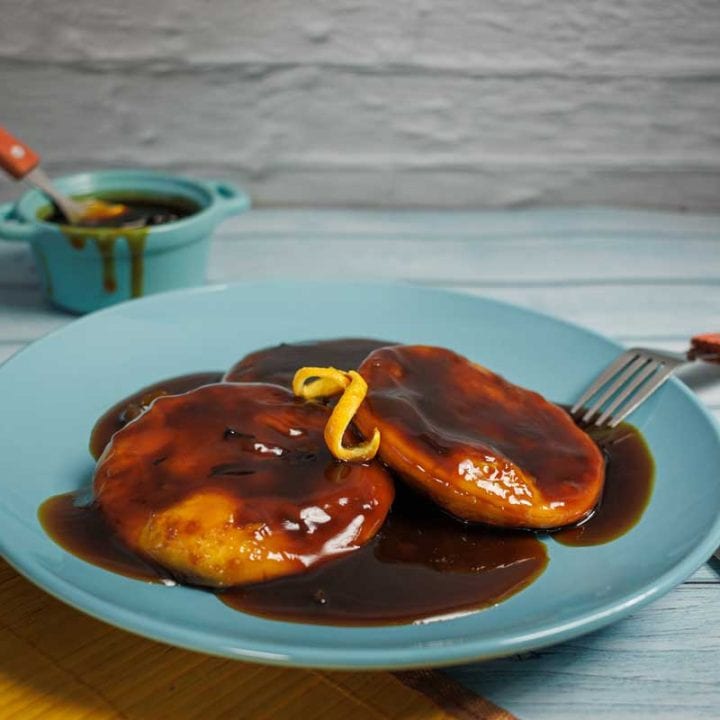
Sopaipillas Pasadas (Sopaipillas in Chancaca Syrup)
Chile's rainy-day dessert: fried sopaipillas simmered in a dark syrup of chancaca, cinnamon, cloves and orange peel until they soak it up.
Ingredients
- 12 fried sopaipillas (day-old are fine)
- 8 oz (225 g) chancaca, piloncillo or panela, chopped
- 3 cups (720 ml) water
- 1 cinnamon stick
- 3 whole cloves
- 3 wide strips orange peel, without the white pith
- 1 teaspoon cornstarch mixed with 1 tablespoon cold water (optional)
Instructions
- Put the chancaca, water, cinnamon stick, cloves and orange peel in a wide saucepan. Bring to a boil, stirring until the chancaca dissolves.
- Simmer uncovered for 15 to 20 minutes, until the syrup has reduced by about a third and lightly coats a spoon.
- For a thicker syrup, stir in the cornstarch mixture and boil for 1 minute.
- Lower the heat to a gentle simmer. Add the sopaipillas 3 or 4 at a time and simmer 1 to 2 minutes, turning once, until soaked but still holding their shape.
- Serve warm in bowls with extra syrup spooned over. Remove the cinnamon, cloves and peel before serving.
Notes
No chancaca? Use piloncillo or panela, which are the same kind of unrefined cane sugar, or 1 cup packed dark brown sugar plus 2 tablespoons molasses.
Day-old sopaipillas work best because they absorb more syrup. Leftover syrup keeps in the fridge for up to 2 weeks.
More Chilean Food to Try
Sopaipillas are one of Chile’s best-loved sweets and snacks. Keep going with these:
- 20 traditional Chilean desserts, from leche asada to calzones rotos and cuchuflí
- Mote con huesillo, the summer drink sold from the same street carts
- Chilean breakfast foods and Chilean breads for your next once
- Chilean ingredients worth stocking, including chancaca and merkén
- 25 traditional Chilean dishes to cook next
- Sopaipillas also represent Chile in our guide to Latin American and Spanish cakes and pastries
More Chilean Foods
See all →
Jorge Garcia is the founder of AmigoFoods, where he has spent over 20 years helping readers discover authentic Latin American and Spanish cuisine. Raised in a Cuban-American household, Jorge learned to cook at the hands of his mother and grandmother, carrying forward generations of family recipes. That heritage, backed by his family’s four-generation history in the Latin food industry, inspired him to launch AmigoFoods in 2003. With more than 1,000 published articles on recipes, ingredients, and food culture, Jorge’s mission is simple: make authentic Latin cooking approachable for home cooks everywhere while honoring the traditions behind every dish.