
Torrejas, called torrijas in Spain, are slices of day-old bread soaked in sweet infused milk (or wine or syrup), coated in egg, fried until golden and finished with cinnamon sugar, honey or a spiced syrup. Spain eats them at Easter, while across Mexico and Central America torrejas are made in Lent and again at Christmas, often bathed in a piloncillo or rapadura syrup. Below you will find what torrejas are, why the dish has two spellings, its history, the regional and Christmas versions, and a classic recipe that makes 12 torrijas, or 6 servings of 2.
Torrejas at a Glance
AmigoFoods may earn a commission from qualifying Amazon purchases made through links on this page.
What are torrejas and torrijas?
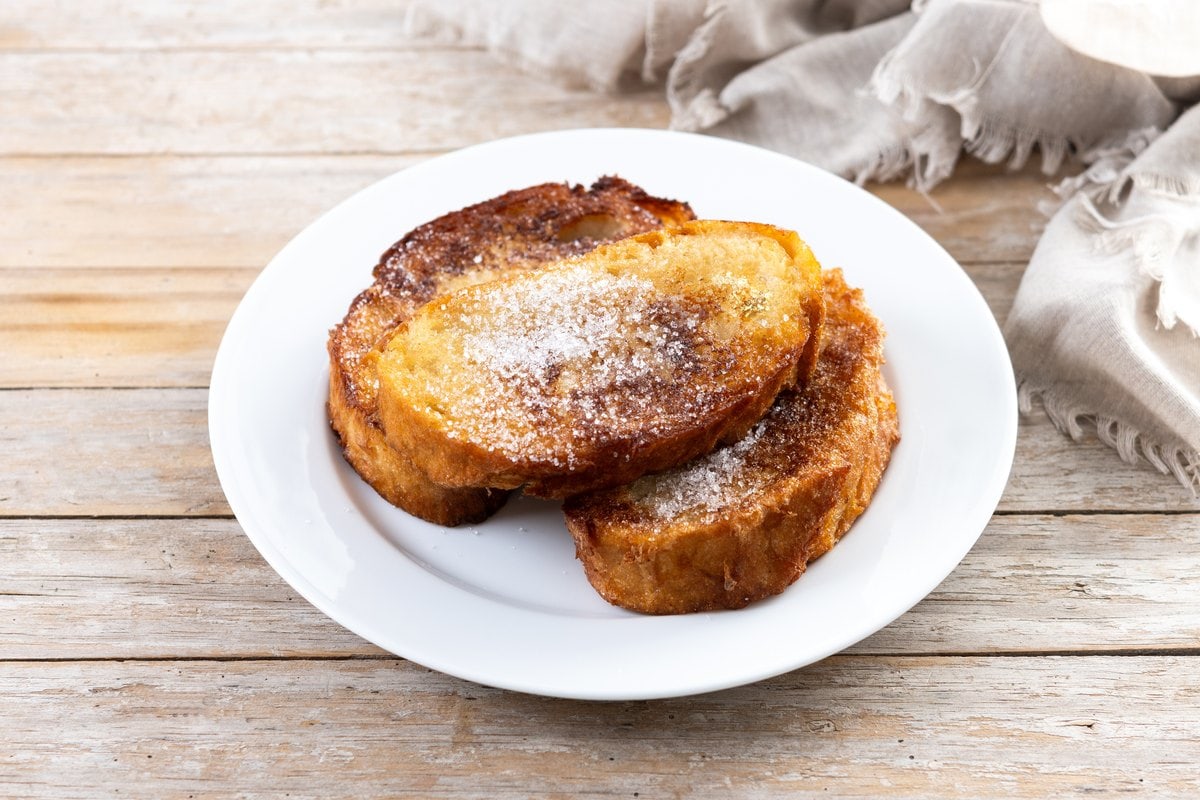
A torrija is a thick slice of bread, usually several days old, soaked in milk, syrup or wine, coated in egg and fried in oil. The Real Academia Española defines it simply as a slice of bread soaked in milk or wine, coated in egg, fried and sweetened. It is often called Spanish French toast, and the comparison is fair: both come from the same old European habit of reviving stale bread with milk and eggs. The difference is in the method. French toast is a quick breakfast cooked in butter on a griddle. A torrija soaks in infused milk until it is custardy all the way through, is shallow-fried in oil, and is eaten as a dessert or a sweet snack, coated in sugar and cinnamon or drenched in syrup.
In Spain, torrijas belong to Semana Santa (Holy Week), and every bakery and café seems to sell them through Lent. In Mexico and Central America, the same dish is called torrejas, and it shows up both in Lent and at Christmas.
Torrija or torreja: one dish, two spellings
Both spellings are correct and both are old. Torrija is the standard word in Spain today. Torreja is the older-sounding form that survives in most of Latin America, and it appears in the very first known Spanish mention of the dish. Larousse Cocina’s dictionary of Mexican gastronomy traces the word to the Spanish verb torrar, to toast over a fire.
| Name | Where you hear it | Typical soak | Typical finish |
|---|---|---|---|
| Torrija | Spain | Milk with cinnamon and citrus peel, or wine | Cinnamon sugar, honey or syrup |
| Torreja | Mexico, Central America, Cuba | Milk, wine, or none (dipped straight into egg) | Piloncillo, rapadura or sugar syrup with spices |
| Estorreja | Juchitán, Oaxaca (Mexico) | Bread coated in egg | Sugar and cinnamon syrup at Christmas |
| Rabanada | Brazil and Portugal | Milk, sometimes sweetened condensed milk | Cinnamon sugar |
| French toast | United States | Egg and milk custard | Butter and maple syrup |
Brazil’s version has its own guide: read about rabanada, the Brazilian Christmas French toast.
Where torrijas come from
Bread soaked in milk and fried is very old. Spanish Wikipedia points to a recipe in De re coquinaria, the Roman collection attributed to Apicius, in which bread is soaked in milk, and to medieval European versions such as the French tostées dorées and pain perdu.
The Spanish word is first recorded in 1496, and the setting is Christmas. In a Nativity villancico (carol) in his Cancionero, Juan del Encina has shepherds bring the mother of the newborn Christ “honey and many eggs to make torrejas.” Historians read the line as evidence that torrijas were a food for women who had just given birth, and Lope de Vega later wrote, “if they are making torrijas, they must be for the new mother.”
Recipes followed. In 1607 Domingo Hernández de Maceras mentions torrijas served with sugar and cinnamon, and in 1611 Francisco Martínez Motiño, cook to the Spanish court, describes bread soaked in milk, coated in egg and fried, then sweetened with syrup or honey and sprinkled with sugar. That is close to the torrija still made today. By the early 20th century torrijas were a standard snack in Madrid taverns, served with small glasses of wine. According to Diario de Sevilla, the custom of making torrijas for Lent took hold from the second half of the 19th century, because the ingredients suited the meatless days of fasting and were within everyone’s reach.

Torrijas are one of the best-known Spanish desserts and part of the Easter table described in our guide to Spain’s holidays.
Torrejas across Latin America
Spanish cooks brought the dish to the Americas, where it took the name torreja and, very often, a syrup made with unrefined cane sugar. Each country has its own way.
- Mexico: Larousse Cocina describes torrejas as a dessert eaten in many parts of Mexico during Lent and at Christmas. In Chihuahua the bread is coated in egg and bathed in piloncillo syrup. In Puebla it is soaked in milk, coated in egg and soaked in a syrup of sugar, water and rum. In Zacatecas it is sprinkled with sweet sherry and piloncillo or maguey syrup and topped with pine nuts and raisins. The Kitchn’s recipe by Sandra Gutierrez, modeled on Michoacán, fries the bread in a whipped-egg batter and soaks it in a spiced piloncillo syrup.
- Guatemala: According to The Kitchn, Guatemalan torrejas are often made with day-old pan dulce (sweet bread) and flavored with orange peel or anise. See more in our list of Guatemalan desserts.
- El Salvador: Spanish Wikipedia notes that Salvadoran torrejas are served with chilate, a lightly spiced corn drink that balances the sweet syrup. They also appear among our Salvadoran desserts.
- Honduras: Torrejas en miel, fried bread in a rapadura syrup, are a Christmas dessert (more below) and one of the dishes in our guide to Honduran food.
- Costa Rica: The bread may be soaked in milk first and eaten with honey, cinnamon or sugar.
- Cuba: Cuban torrejas are made much like the Spanish ones and are usually served with syrup, which The Kitchn says may be made with wine or vermouth. Cuban pastry cream is used on special occasions.
Christmas torrejas en miel
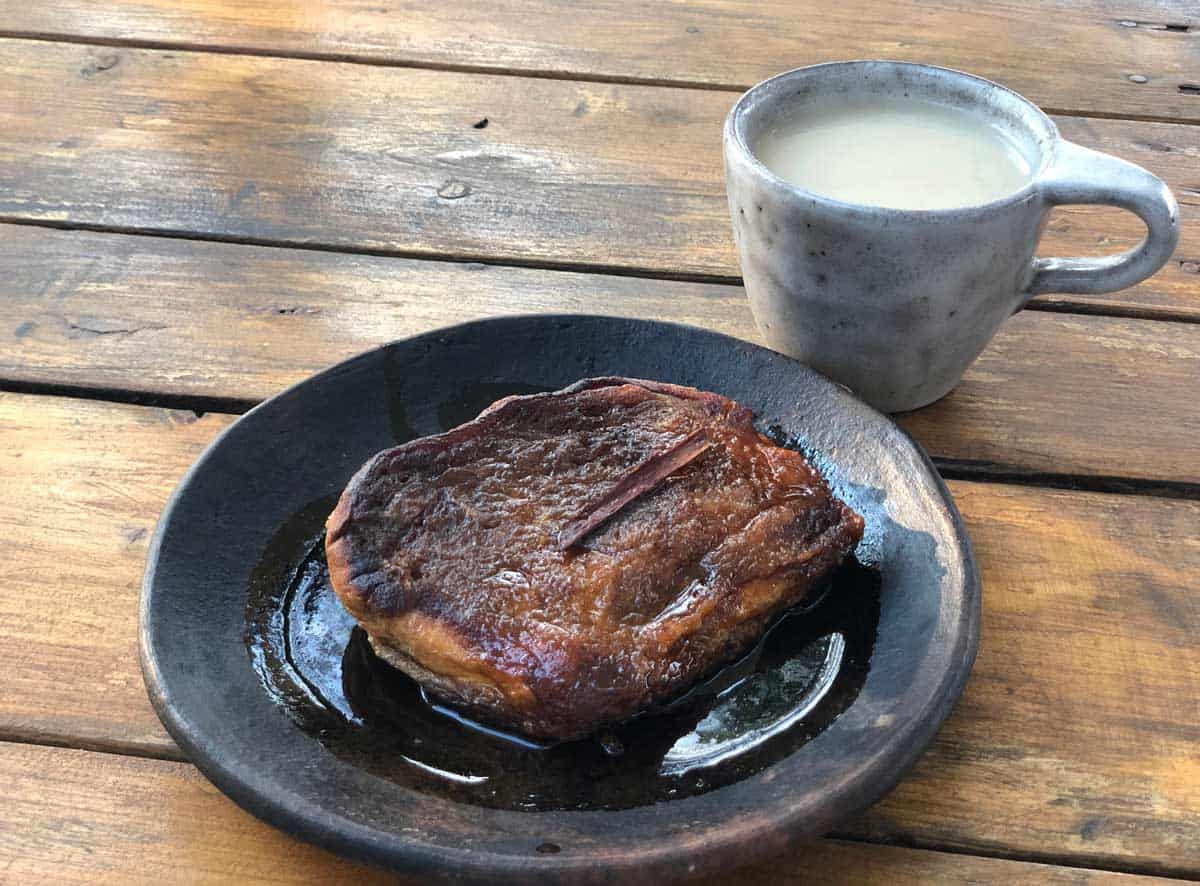
In Honduras, torrejas en miel are a Christmas dessert. HonduTurismo calls them a sweet that cannot be missing from Christmas and New Year celebrations in Honduran homes. If you are planning the whole Nochebuena (Christmas Eve) menu, our Nochebuena guide covers the savory side.
The Christmas version differs from the Spanish milk torrija in three ways:
- The bread: Honduran recipes call for bread rolls sold for the purpose (El Heraldo uses a bolillo de yema, an egg-bread roll), sliced so they hold together in the syrup.
- The coating: Instead of plain beaten egg, the whites are beaten until foamy and the yolks are folded in, as HonduTurismo describes, which gives a puffy, soft crust once fried.
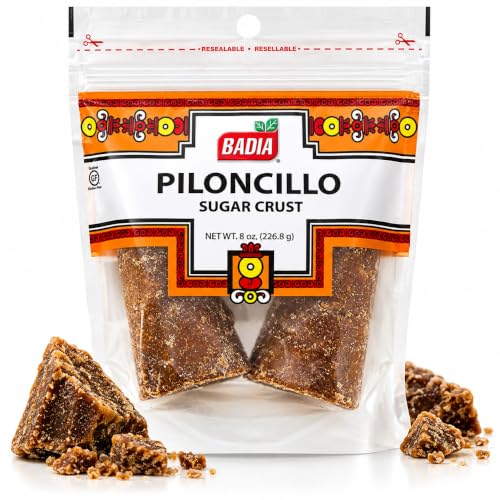
- The syrup: Rapadura (unrefined cane sugar, close to Mexican piloncillo) is melted in water with cinnamon sticks, cloves and allspice. El Heraldo uses 1 rapadura with 3 cinnamon sticks, 5 cloves, 5 allspice berries and 2 cups of water, and simmers the fried torrejas in the syrup for about 5 minutes. RedHonduras makes a larger batch with 500 g of rapadura and 1.5 liters of water.
To make a Christmas version from the recipe card below, follow the card’s slicing, soaking and frying steps, skip the cinnamon sugar, and finish the fried torrijas in a spiced cane-sugar syrup instead. Serve them warm or at room temperature with plenty of syrup spooned over, and refrigerate leftovers in the syrup.
- Traditional Sweetener: Classic unrefined Panela brown cane sugar widely used across Latin American...
- Baking & Dessert Essential: Perfect for cookies, pastries, empanadas, cakes and seasonal treats...


Ingredients and what to buy
The recipe card uses these ingredients for 12 torrijas:
- 1 dense day-old loaf, about 500 g, cut into 12 slices about 2 cm thick
- 1 liter whole milk (about 4¼ US cups)
- 1 cinnamon stick
- Thin peel of 1 lemon or orange, without the bitter white pith
- 1 cup (200 g) sugar, divided: ½ cup in the milk and ½ cup for coating
- 5 eggs
- Mild olive oil or sunflower oil, enough for about 1 cm depth in the skillet
- 1 teaspoon ground cinnamon
A few notes on choosing them:
- Bread: Use a firm, close-crumbed loaf that is at least a day old, such as a Spanish barra, a sturdy country loaf or bolillos. Soft sandwich bread falls apart.
- Citrus peel: Use a vegetable peeler and take only the colored zest. The white pith is bitter.
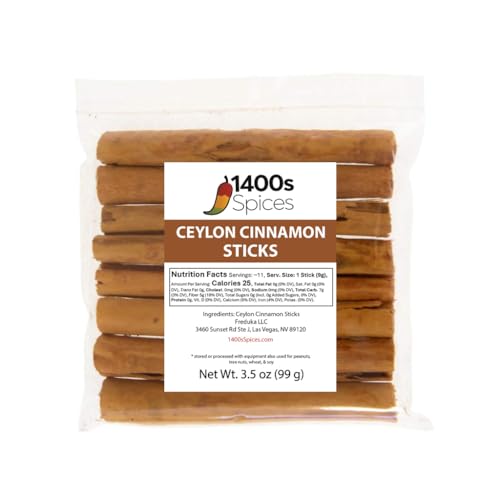
- Cinnamon: A stick in the milk and ground cinnamon in the coating. Ceylon cinnamon (canela) has a softer, sweeter flavor that suits the milk.
- Oil: Spanish cooks traditionally fry torrijas in mild olive oil. Sunflower oil works too.
- Satisfaction guarantee: If you aren't satisfied with your purchase, just contact us and we'll refund...
- Unique taste: One of the best parts about our bulk cinnamon sticks is their floral, soft, and...
How to make torrijas
These are the steps from the recipe card. The full card, with print and save buttons, is further down.
- Heat the milk with the cinnamon stick, citrus peel and ½ cup sugar until steaming, stirring to dissolve the sugar. Remove from the heat and let infuse and cool until lukewarm, about 20 minutes; remove the peel and cinnamon.
- Lay the bread in a wide dish and pour over enough milk to soak it. Turn carefully and allow about 5 minutes, or until moist through the center but still intact. Dense dry bread may need longer; fragile bread needs less.
- Beat the eggs in a shallow bowl. Heat about 1 cm of oil in a skillet over medium heat until a small drop of egg sizzles promptly. Mix the remaining ½ cup sugar with the ground cinnamon in another shallow dish.
- Lift each slice with a spatula and let surplus milk drip off without squeezing. Coat both sides in egg and lower into the hot oil.
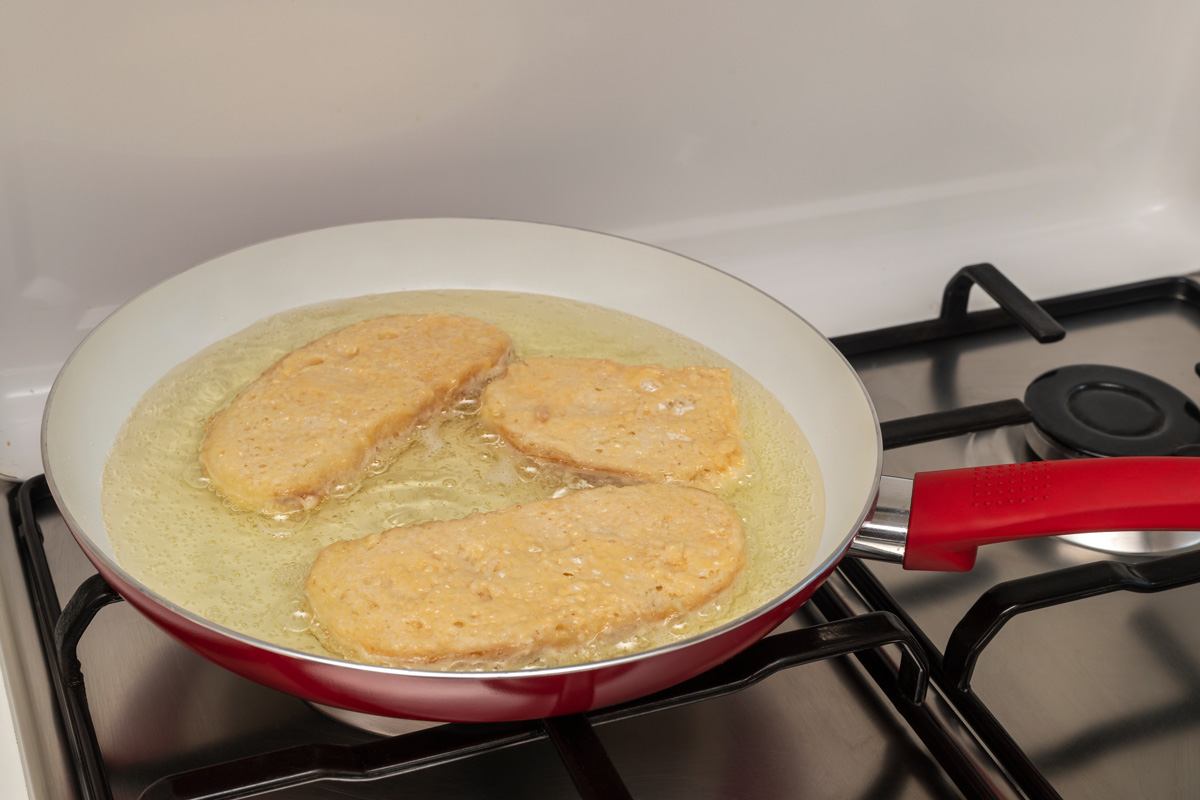
- Fry in batches for about 2–3 minutes per side, until golden and the egg coating is cooked; adjust heat to prevent burning.
- Drain briefly on paper towels, then turn in cinnamon sugar while warm. Serve warm or cooled.
Tips for soft centers and crisp edges
- Use old bread. Bread that is a day or more old absorbs milk without falling apart. Fresh bread turns to mush.
- Let the milk cool. Lukewarm milk soaks in evenly. Boiling milk softens the outside before the center is wet.
- Do not squeeze. Lift each slice with a spatula and let the extra milk drip off. Pressing it squeezes out the custardy center.
- Test the oil. A drop of egg should sizzle right away. If the oil is too cool, the torrijas soak up oil; if it is too hot, the egg browns before it cooks.
- Coat them warm. Cinnamon sugar sticks best while the torrijas are still warm from the pan.
How to serve and store torrejas
Serve torrijas warm or at room temperature, as a dessert, a merienda (afternoon snack) or with coffee. In Spain they are often eaten plain with their cinnamon sugar; some cooks drizzle them with honey instead, in the style of the 1611 court recipe. Mexican and Central American torrejas are served in their syrup, sometimes with fruit or, in El Salvador, a cup of chilate.
For storage, follow the card’s guidance: refrigerate within 2 hours and enjoy within 2–3 days. Spanish Wikipedia notes that milk torrijas keep only a couple of days because of the milk, while wine torrijas last longer.

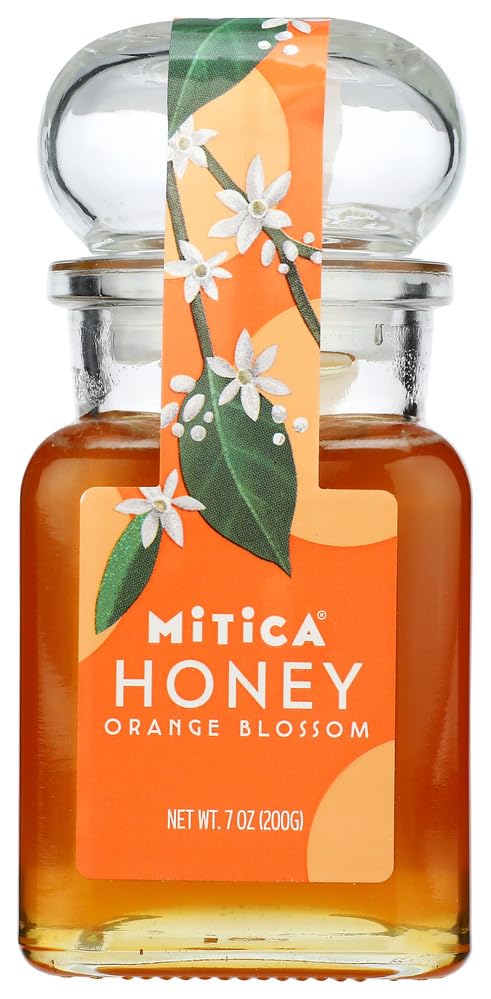
- This light, flowery orange blossom honey is delicate yet flavorful.
- This honey is versatile and works with any cheese, especially blues. Taken from apiaries around...
Troubleshooting
| Problem | Likely cause | Fix |
|---|---|---|
| Slices fall apart | Bread too fresh or soft, or soaked too long | Use dense day-old bread and check it after a few minutes; fragile bread needs less time |
| Dry center | Bread too dry or not soaked long enough | Soak until moist through the center; dense dry bread may need longer than 5 minutes |
| Greasy torrijas | Oil not hot enough or too many slices at once | Wait until a drop of egg sizzles promptly and fry in batches |
| Dark outside, raw egg | Oil too hot | Lower the heat so the egg coating cooks through in 2 to 3 minutes per side |
| Bitter flavor | White pith on the citrus peel | Peel only the colored zest |
| Sugar will not stick | Torrijas cooled too much | Coat them while warm, right after draining |
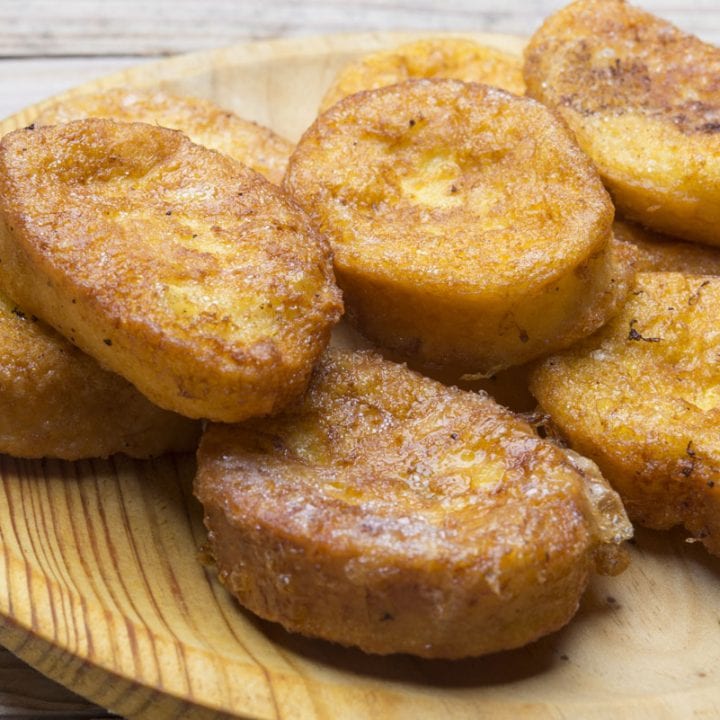
Torrijas de Leche
Thick bread soaked in cinnamon-and-citrus milk, dipped in egg and fried, with a cinnamon-sugar finish.
Ingredients
- 1 dense day-old loaf, about 500 g, cut into 12 slices about 2 cm thick
- 1 liter whole milk (about 4¼ US cups)
- 1 cinnamon stick
- Thin peel of 1 lemon or orange, without the bitter white pith
- 1 cup (200 g) sugar, divided: ½ cup in the milk and ½ cup for coating
- 5 eggs
- Mild olive oil or sunflower oil, enough for about 1 cm depth in the skillet
- 1 teaspoon ground cinnamon
Instructions
- Heat the milk with the cinnamon stick, citrus peel and ½ cup sugar until steaming, stirring to dissolve the sugar. Remove from the heat and let infuse and cool until lukewarm, about 20 minutes; remove the peel and cinnamon.
- Lay the bread in a wide dish and pour over enough milk to soak it. Turn carefully and allow about 5 minutes, or until moist through the center but still intact. Dense dry bread may need longer; fragile bread needs less.
- Beat the eggs in a shallow bowl. Heat about 1 cm of oil in a skillet over medium heat until a small drop of egg sizzles promptly. Mix the remaining ½ cup sugar with the ground cinnamon in another shallow dish.
- Lift each slice with a spatula and let surplus milk drip off without squeezing. Coat both sides in egg and lower into the hot oil. Fry in batches for about 2–3 minutes per side, until golden and the egg coating is cooked; adjust heat to prevent burning.
- Drain briefly on paper towels, then turn in cinnamon sugar while warm. Serve warm or cooled.
Notes
Makes about 12 torrijas, or 6 servings of 2. Allow 15 minutes preparation, about 25 minutes heating/frying and 25 minutes cooling/soaking (about 1 hour 5 minutes total). Bread absorbency and batch size change the timing and milk needed. Some milk, egg, oil and coating will remain unused. Use citrus peel rather than acidic juice in the milk; wine torrijas are a separate variation. Refrigerate within 2 hours and enjoy within 2–3 days.
Torrejas FAQ
What is the difference between torrejas and torrijas?
Nothing but the spelling. Torrija is the usual name in Spain, and torreja is used in Mexico, Central America and Cuba. Both forms are old: Juan del Encina wrote “torrejas” in 1496.
Are torrijas the same as French toast?
They are related but not the same. Torrijas soak longer in sweetened, infused milk, are fried in oil rather than cooked in butter, and are finished with cinnamon sugar, honey or syrup as a dessert.
When are torrejas eaten?
In Spain, mainly during Lent and Holy Week. In Mexico, Larousse Cocina notes they are eaten during Lent and at Christmas, and in Honduras torrejas en miel are a Christmas dessert.
What bread is best for torrijas?
A dense, day-old loaf with a tight crumb, cut about 2 cm thick. In Latin America bolillos and egg-bread rolls are common.
Can I make torrijas ahead?
Yes. They are good at room temperature on the day you make them. Refrigerate leftovers within 2 hours and eat them within 2 to 3 days.
Can I make torrijas with wine?
Yes. Wine torrijas are a classic Spanish variation, and they keep a little longer than the milk version. The card below is for milk torrijas.
More Spanish and Latin desserts
For more Holy Week and holiday sweets, browse our guides to Spanish desserts, Spanish breakfast foods and Honduran desserts. For more fried-bread desserts, try capirotada, Mexico’s Lenten bread pudding, and Brazil’s rabanada.
Shopping list: Ceylon cinnamon (canela) sticks, piloncillo for a Christmas syrup and Spanish orange blossom honey.
Sources
- Real Academia Española: torrija
- Wikipedia (Spanish): Torrija
- The Conversation: De pestiños y torrijas
- Larousse Cocina: Torrejas
- The Kitchn: Torrejas (Mexican French Toast)
- HonduTurismo: Torrejas en miel
- El Heraldo: Torrejas tradicionales en miel y leche
- RedHonduras: Honduran torrejas
- Recetas de Rechupete: Torrijas de leche
- Diario de Sevilla: La torrija, historia literaria
- El País: Torrijas
More Dessert
See all →
Jorge Garcia is the founder of AmigoFoods, where he has spent over 20 years helping readers discover authentic Latin American and Spanish cuisine. Raised in a Cuban-American household, Jorge learned to cook at the hands of his mother and grandmother, carrying forward generations of family recipes. That heritage, backed by his family’s four-generation history in the Latin food industry, inspired him to launch AmigoFoods in 2003. With more than 1,000 published articles on recipes, ingredients, and food culture, Jorge’s mission is simple: make authentic Latin cooking approachable for home cooks everywhere while honoring the traditions behind every dish.