
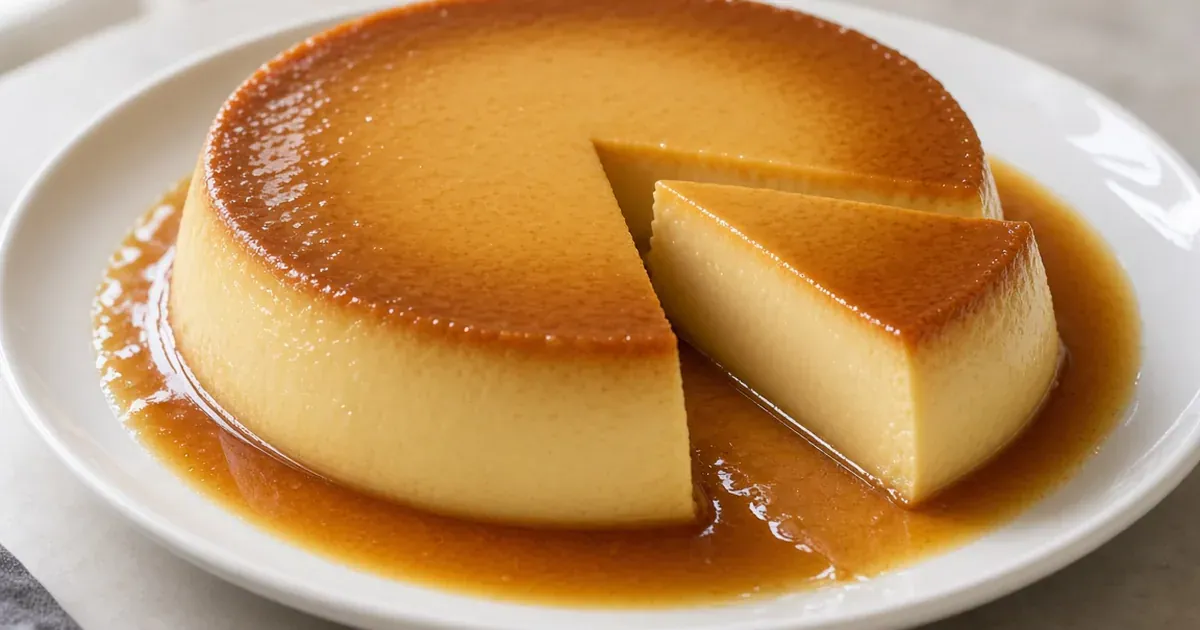
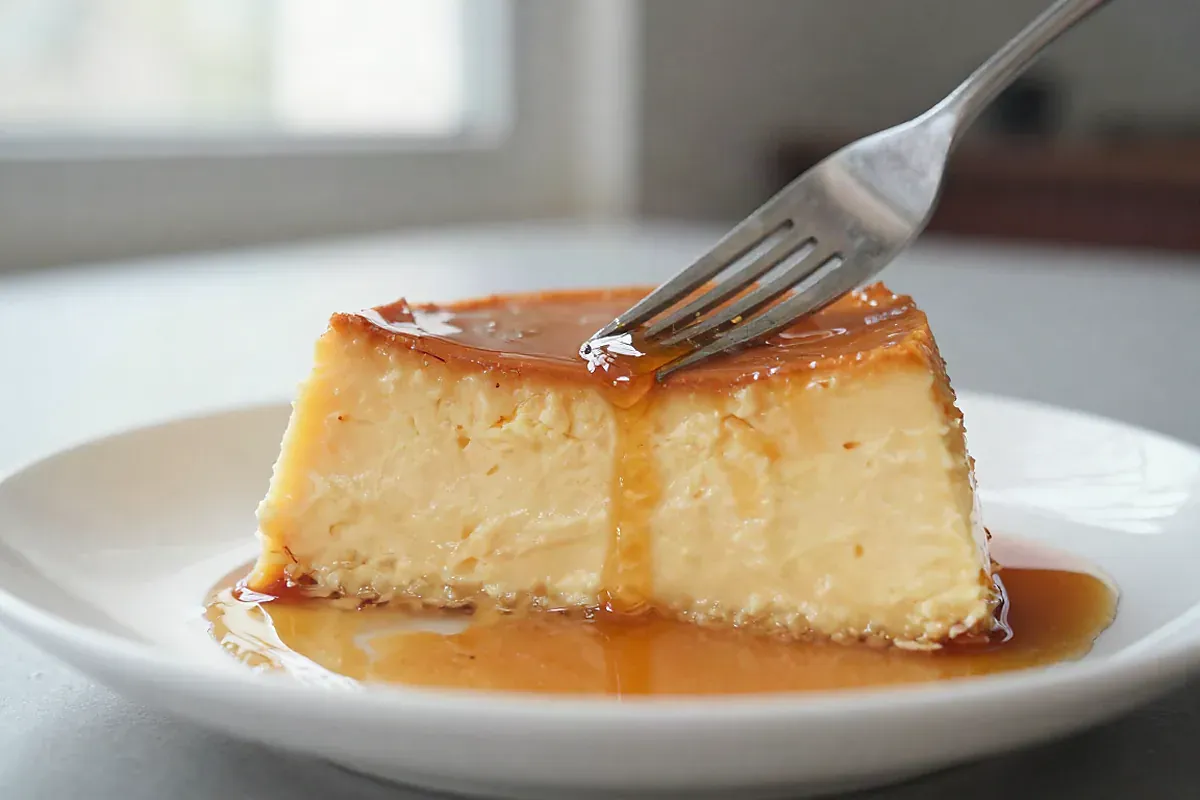
Tres leches flan is a caramel custard made with the same three milks as tres leches cake — sweetened condensed milk, evaporated milk and cream — baked in a water bath and turned out so the caramel becomes its sauce. It is a flan, not a cake: there is no sponge and nothing is soaked.
Tres Leches Flan at a Glance
AmigoFoods may earn a commission from qualifying Amazon purchases made through links on this page.
What Is Tres Leches Flan?
That last point is the one that trips people up. Tres leches cake is a light sponge poked all over and soaked until it is wet and spoonable. This is a flan: the three milks are in the custard itself, and the only sauce is the caramel from the mold. For the wider flan family, see every type of flan by country.
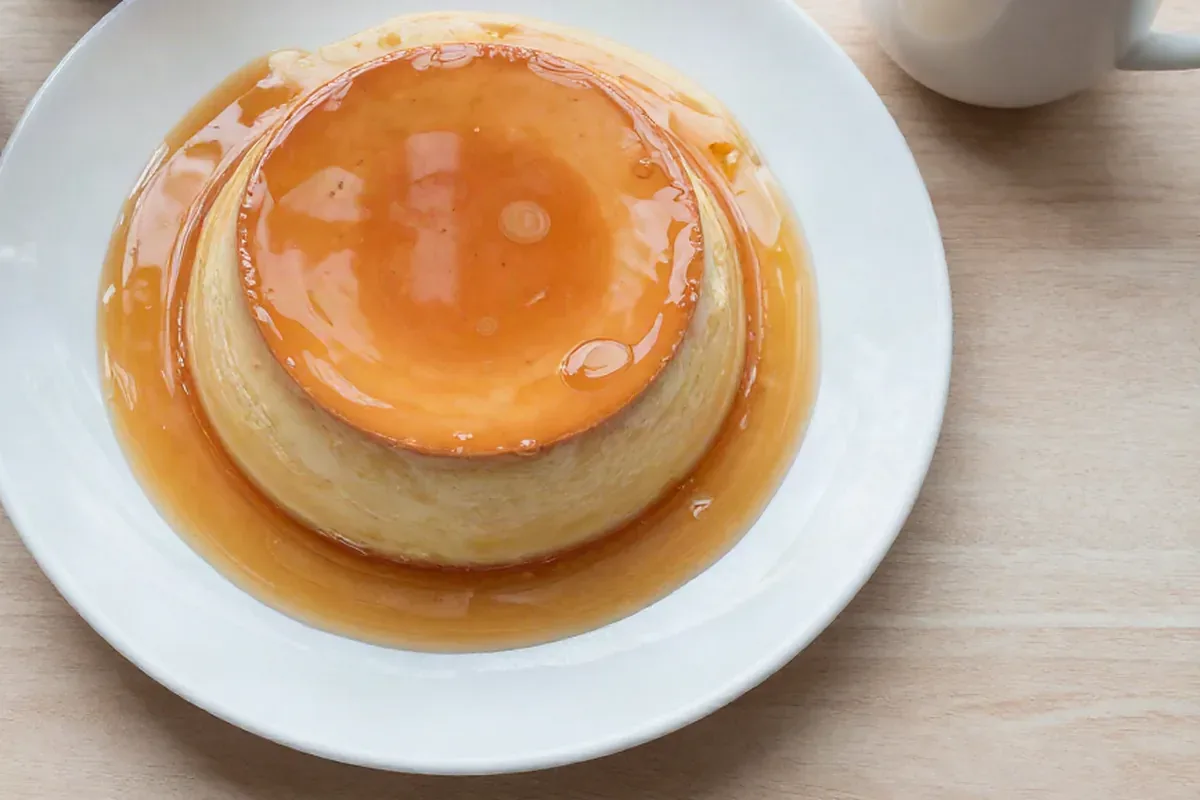
What the three milks do:
- Sweetened condensed milk. Sweetens the custard and gives it a dense, silky body. It is why this flan almost never curdles.
- Evaporated milk. Adds cooked-milk richness without more sugar.
- Heavy cream. The third milk, the same role it plays in our tres leches cake soak. It makes the flan richer than a classic two-milk flan. Whole milk can stand in for a lighter version.
Tres Leches Flan vs. Cake (and Classic Flan)
| Tres leches flan (this recipe) | Tres leches cake | Classic Latin flan | |
|---|---|---|---|
| What it is | A baked caramel custard | A sponge soaked in three milks | A baked caramel custard |
| The three milks | In the custard: condensed, evaporated, cream | Poured over the cake after baking | No cream; condensed + evaporated only |
| Flour | None | Yes, in the sponge | None |
| Cooked | Oven, water bath, over caramel | Cake baked, then soaked, not flipped | Oven, water bath, over caramel |
| Served | Chilled, turned out, with caramel | Chilled in its pan, topped with cream | Chilled, turned out, with caramel |
This recipe is deliberately richer than our classic flan, which uses only the two canned milks and five eggs. The extra cream is the whole point of the “tres leches” name, so the card and the method stay on that dessert, not a second classic flan.
Ingredients
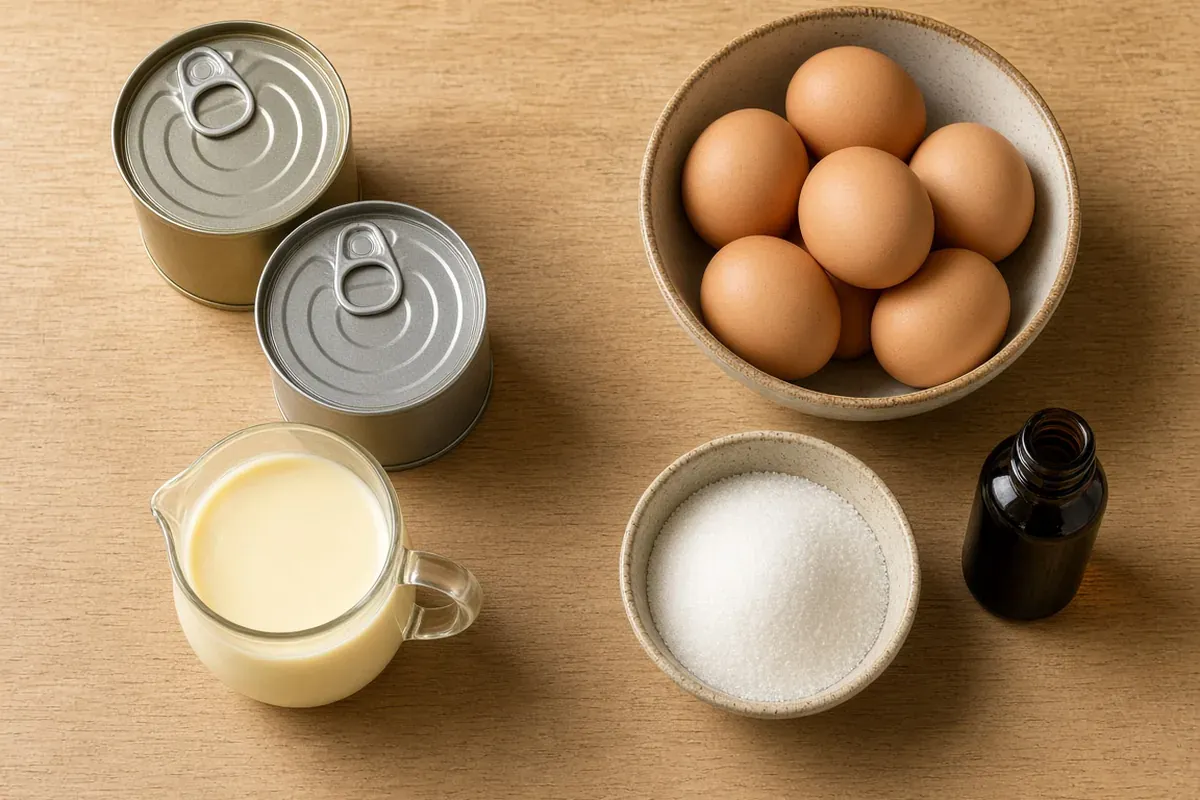
How to Make It, Step by Step
Here are the steps with photos. Exact amounts and times are in the recipe card below.
1. Make the caramel in the mold
Heat the oven to 325°F with a rack in the middle, and put a kettle of water on to boil. Cook ¾ cup sugar with 3 tablespoons water in a small saucepan over medium heat, swirling but not stirring, until it turns deep amber, 8 to 10 minutes. Pour it straight into the mold and tilt to cover the bottom and a little of the sides. It hardens in seconds and melts back into sauce as the flan chills.

2. Mix the three milks with the eggs
Whisk or blend the condensed milk, evaporated milk, cream, eggs, yolk, vanilla and salt just until smooth. If you use a blender, stop at about 20 to 30 seconds so you don’t beat in air, which shows up as holes in the finished flan. The mixture will be thinner than a two-milk flan because of the cream; that is expected.
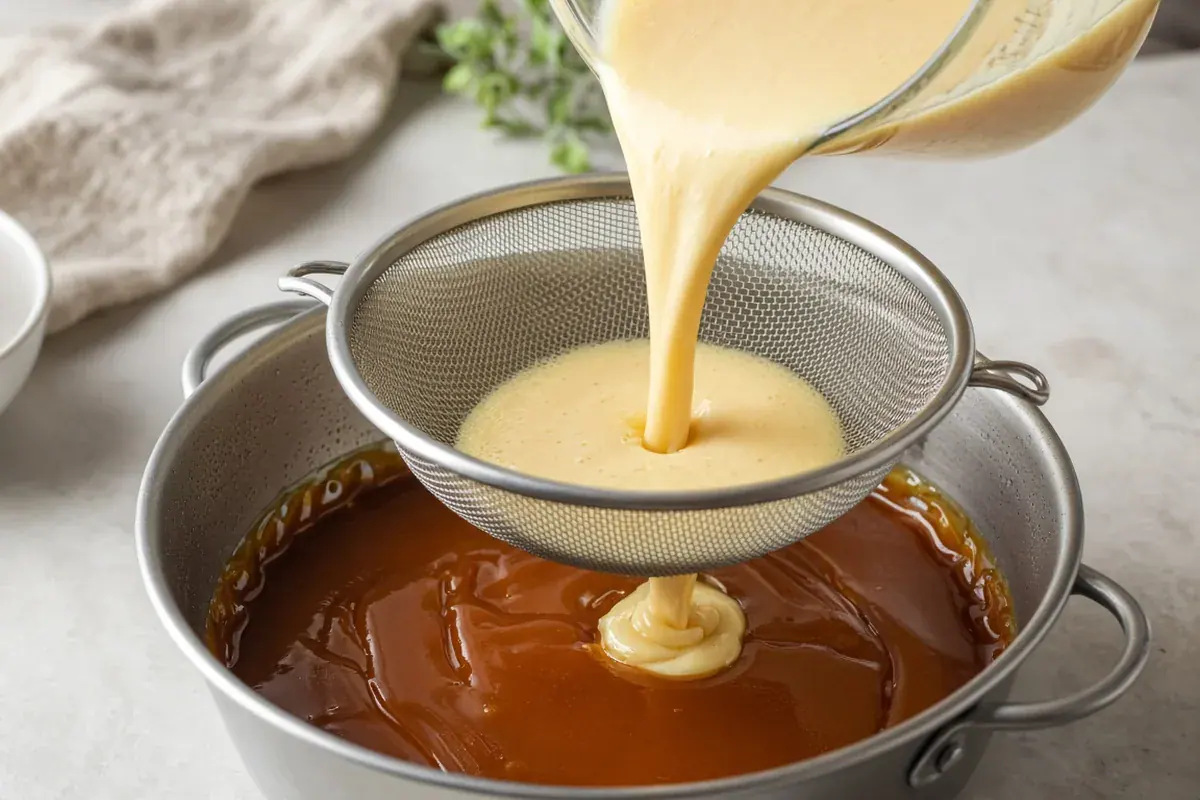
3. Strain into the mold
Pour the custard through a fine strainer into the caramel-lined mold and skim off any foam. Straining is worth the 30 seconds: it catches the stringy bits of egg white so the flan sets perfectly smooth.
A 7-inch stainless flan mold like this IMUSA flan mold with a latching lid holds the full recipe. An 8-inch round cake pan also works; it gives a slightly thinner flan, so start checking it 10 minutes early. For more options, see our guide to flan pans and molds.
4. Bake covered in a water bath
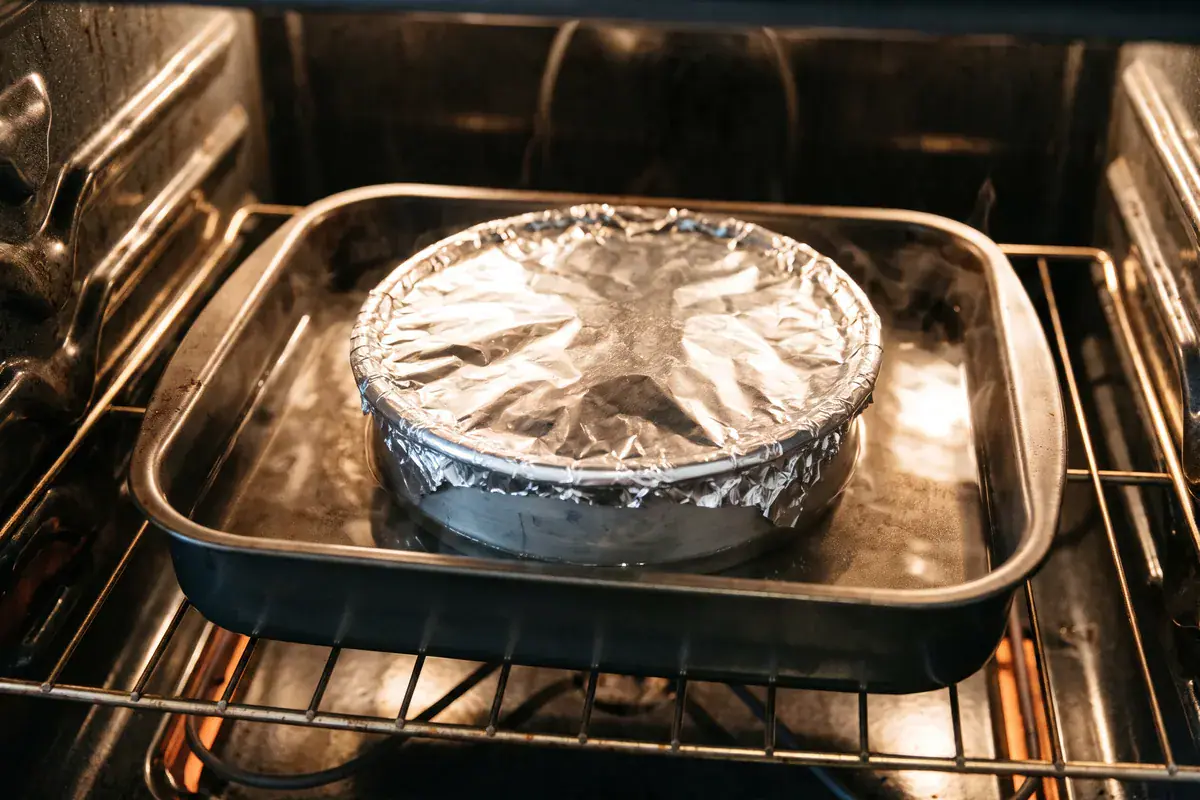
Cover the mold with its lid or with foil. Set it in a deep pan, put it on the oven rack and pour in hot water to come halfway up the sides of the mold. Bake for 55 to 70 minutes, until the edges are set and the center jiggles slightly as one piece. The low oven and the water keep the custard from boiling, which is what causes holes and a rubbery texture. This is a slightly larger batch than a two-milk flan, so it can take the full hour.
5. Chill, then turn it out
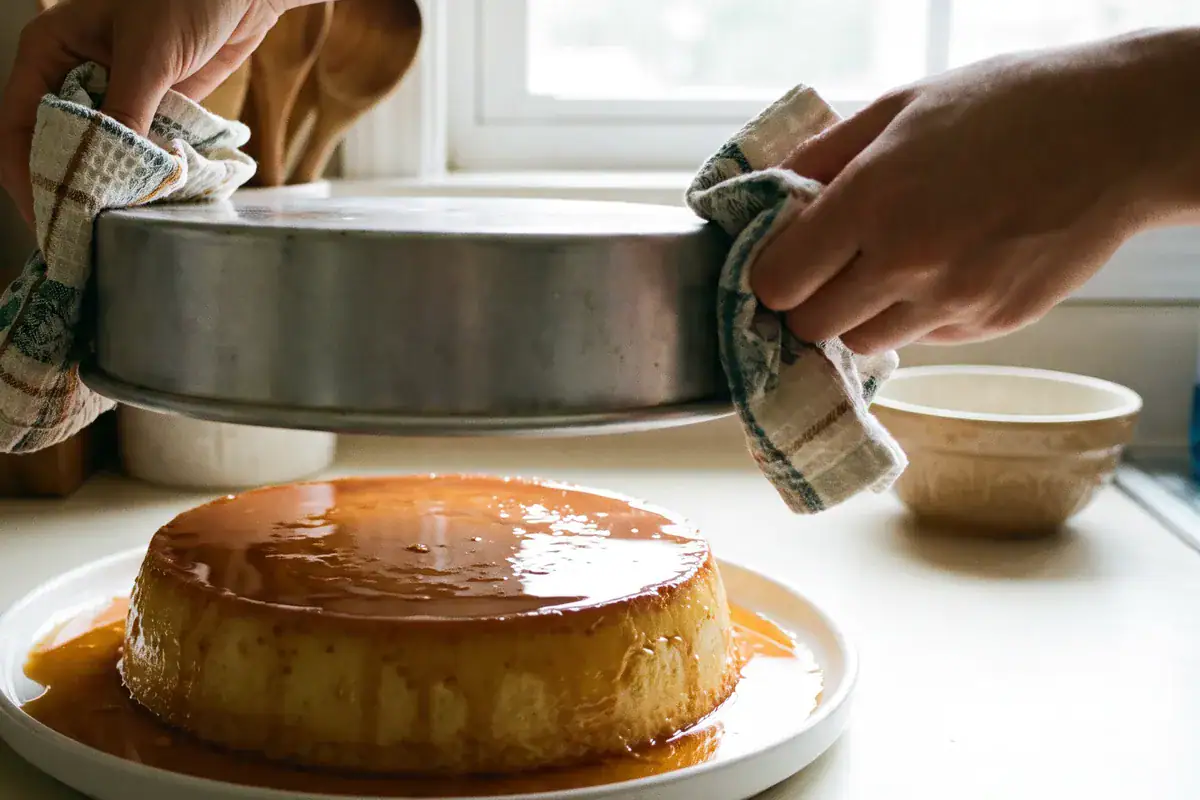
Lift the mold out of the water and let it cool on a rack for an hour, then refrigerate it for at least 4 hours or overnight. To serve, run a thin knife around the edge, set a rimmed plate on top and flip it over in one quick move. Lift off the mold and let the caramel run down the sides.
How to Tell When It’s Done
- Wobble: shake the pan gently. The edges are firm and the center moves slightly as one piece, like set gelatin, not in waves.
- Temperature: an instant-read thermometer in the center reads 170 to 175°F.
- Knife: a thin knife slipped in halfway between the edge and the center comes out clean.
- Surface: the top looks matte and set. If it has puffed or cracked, it has gone too far, so take it out now.
The flan keeps firming as it chills, so take it out while the center still trembles. The extra cream does not keep it from setting if the eggs are cooked to temperature.
Tres Leches Flan Recipe
Make it the day before so it has time to chill.
Tres Leches Flan
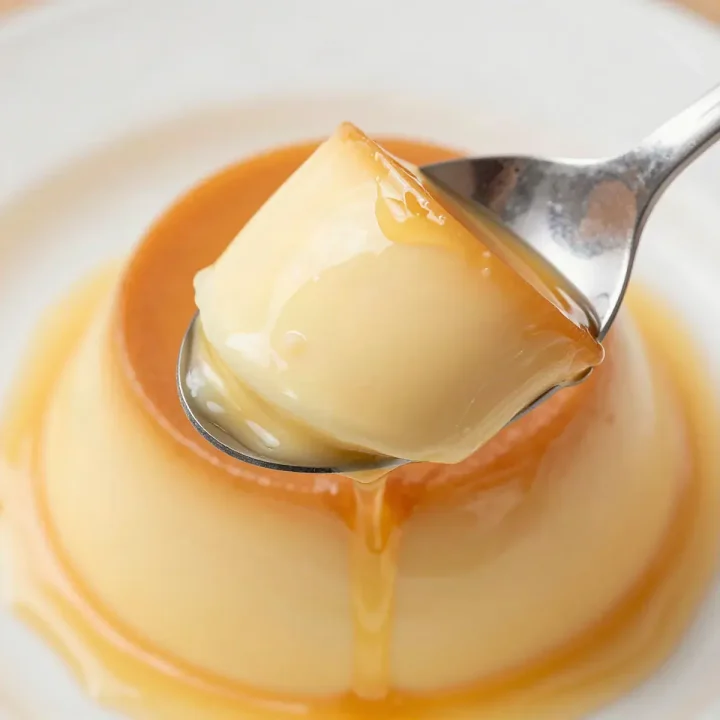
Tres leches flan is a caramel custard made with sweetened condensed milk, evaporated milk and heavy cream — the same three milks as tres leches cake — baked in a water bath and turned out. It is a flan, not a soaked cake. Serves 8.
Ingredients
Caramel
- 3/4 cup (150 g) sugar
- 3 Tbsp water
Custard
- 1 (14 oz / 397 g) can sweetened condensed milk
- 1 (12 oz / 354 ml) can evaporated milk
- 3/4 cup (180 ml) heavy cream
- 5 large eggs
- 1 large egg yolk
- 2 tsp vanilla extract
- Pinch of salt
Instructions
- Heat the oven to 325°F (165°C) with a rack in the middle. Put a kettle of water on to boil.
- Caramel: cook 3/4 cup sugar and 3 Tbsp water over medium heat, swirling (not stirring), until deep amber, 8–10 minutes. Pour into the mold at once and tilt to coat the bottom and a little up the sides. Let it set.
- Whisk or blend the condensed milk, evaporated milk, cream, eggs, yolk, vanilla and salt just until smooth, 20–30 seconds. Don't over-blend.
- Strain the custard into the caramel-lined mold and skim off any foam. Cover tightly with the lid or foil.
- Set the mold in the deep pan, pour in hot water halfway up the sides and bake 55–70 minutes, until the edges are set, the center jiggles slightly and the center reads 170–175°F.
- Cool in the water 15 minutes, then on a rack 1 hour. Chill at least 4 hours or overnight.
- Run a thin knife around the edge, set a rimmed plate on top and flip in one quick move. Lift off the mold and let the caramel run over. Cut into 8 wedges.
Notes
- Individual flans: 8–10 small molds or 6-oz ramekins, 30–40 minutes covered in a water bath at 325°F. 3-oz molds bake in 25–30 minutes.
- 8-inch round cake pan: thinner flan; start checking 10 minutes early.
- Lighter third milk: use 3/4 cup whole milk instead of cream.
- Stovetop: steam the covered mold in a pot of gently simmering water about 50–60 minutes.
- Storage: covered in the fridge, in the mold or unmolded with its caramel, up to 3 days. Don't freeze.
Nutrition Information:
Yield: 8 Serving Size: 1 wedgeAmount Per Serving: Calories: 422Total Fat: 19gSaturated Fat: 11gTrans Fat: 0gUnsaturated Fat: 7.1gCholesterol: 194mgSodium: 184mgCarbohydrates: 51gFiber: 0gSugar: 51gProtein: 12g
Nutrition information is an estimate and will vary with the brands and amounts used.
Individual Flans
Divide the caramel among 8 to 10 small molds or 6-ounce ramekins, fill them with the strained custard and bake them covered in a water bath at 325°F for 30 to 40 minutes, until they jiggle only slightly in the center. Chill for at least 3 hours before turning them out. Small aluminum flan molds like these individual flan molds (set of 10) work well; bake the smaller 3-ounce size for 25 to 30 minutes.

Variations
- Lighter third milk: use ¾ cup whole milk instead of cream, the same option as in our tres leches cake soak.
- Cinnamon: add a pinch of ground cinnamon to the custard, or steep a cinnamon stick in the cream (warmed, then cooled) and remove it before mixing.
- Coconut: replace the cream with unsweetened coconut milk for a tropical version, closer to our flan de coco but still with the two canned milks.
- Coffee: dissolve 2 teaspoons instant espresso in a spoonful of the evaporated milk before mixing.
- Without cream, two milks only: that is our classic flan recipe, not a lighter take on this one. Use that card so the two posts stay distinct.
Troubleshooting
| Problem | Why | Fix |
|---|---|---|
| Holes or a spongy texture | Too much air whisked in, or the custard boiled | Blend or whisk briefly, strain and skim; keep the oven at 325°F and use a water bath |
| Rubbery or weeping | Overbaked | Take it out at 170 to 175°F, while the center still jiggles |
| Won’t come out of the mold | Not chilled long enough, or the caramel set hard on the sides | Chill at least 4 hours; dip the mold in hot water for 30 seconds before flipping |
| Soft or slumps after unmolding | Underbaked, or the cream was increased without extra egg | Keep the 5 eggs + 1 yolk; bake until the center is only slightly wobbly |
| Little caramel sauce | The caramel stayed stuck to the mold | Chill overnight so more of it melts; next time add the 3 tablespoons water to the caramel |
| Bitter caramel | Cooked past deep amber | Take it off the heat as soon as it reaches the color of strong tea |
| It tastes like regular flan | The cream was left out | The third milk is what makes this a tres leches flan; don’t skip it |
Make Ahead, Serving and Storage
Tres leches flan is best made a day ahead. Keep it in the mold, covered, in the fridge, and turn it out shortly before serving. Serve it cold, in wedges, with plenty of the caramel. A little whipped cream or a dusting of cinnamon is optional; the flan does not need a soak or a frosting.
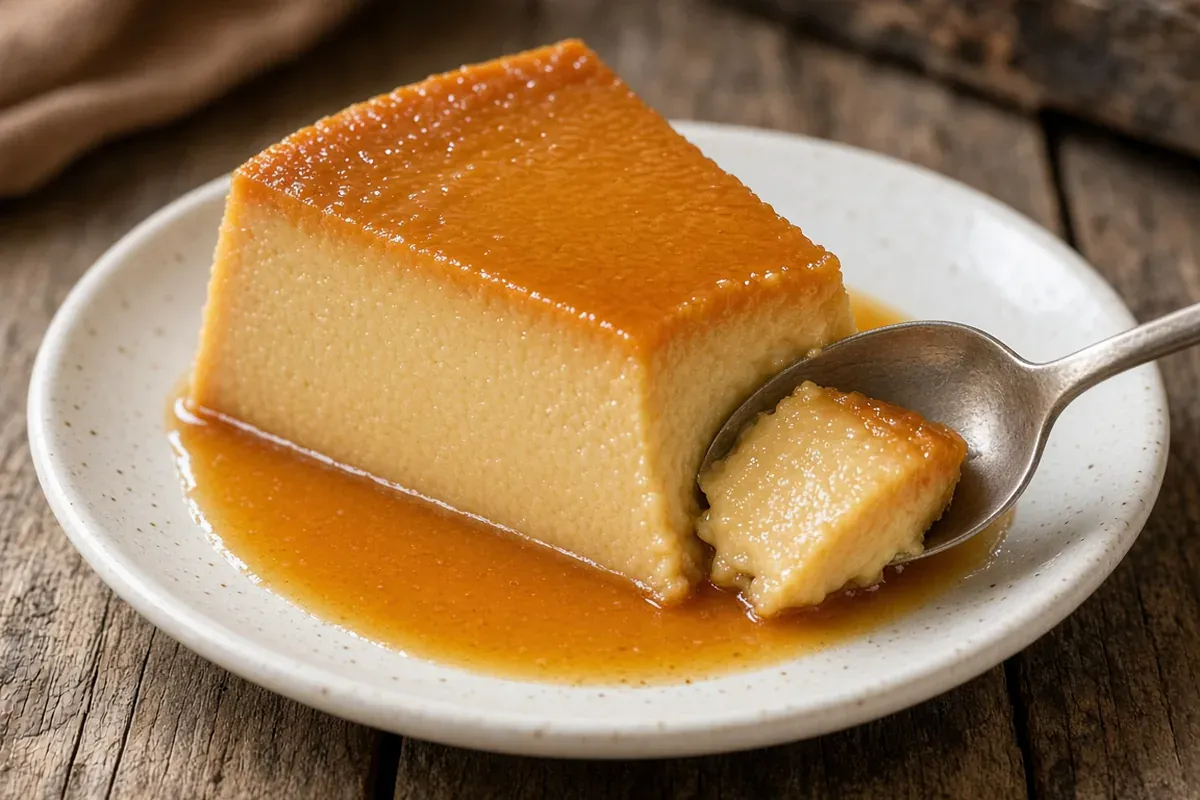
Once turned out, cover it loosely and eat it within 3 days. Don’t freeze it: the custard turns watery and grainy when it thaws.
FAQ
What is tres leches flan?
A caramel flan made with sweetened condensed milk, evaporated milk and cream — the same three milks used to soak tres leches cake. It is baked and turned out. It is not a cake.
Is tres leches flan the same as tres leches cake?
No. The cake is a sponge soaked in the three milks and served in its pan. The flan is a baked custard with those milks already in the mixture, turned out with caramel. They share a flavor, not a method.
What is the difference between tres leches flan and regular flan?
Classic Latin flan uses condensed and evaporated milk. Tres leches flan adds cream as a third milk, so it is a little richer. Spanish flan uses fresh milk only, with no canned milk.
Can I use whole milk instead of cream?
Yes. Use the same ¾ cup. The flan will be a bit lighter, closer to a classic two-milk flan with a little extra dairy.
Why does my flan have holes?
The custard got too hot, or air was whisked in. Whisk or blend gently, strain, cover the mold and bake it at 325°F in a water bath.
Can I make it without an oven?
Yes. Steam the covered mold in a large pot of gently simmering water for about 50 to 60 minutes, as in our Cuban flan, until the center jiggles only slightly.
How long does tres leches flan last?
Up to 3 days covered in the fridge. It keeps best in its mold until you serve it.
More Flan Recipes
See how every country makes flan and its cousins, and how this three-milk custard fits in.
Types of flan by country →- Tres leches cake
- Classic caramel flan
- Mexican flan (flan napolitano)
- Spanish flan (flan de huevo)
- Cuban flan (flan cubano)
- Leche asada
- Flan de coco
- Flan pans and molds
More Dessert
See all →
Jorge Garcia is the founder of AmigoFoods, where he has spent over 20 years helping readers discover authentic Latin American and Spanish cuisine. Raised in a Cuban-American household, Jorge learned to cook at the hands of his mother and grandmother, carrying forward generations of family recipes. That heritage, backed by his family’s four-generation history in the Latin food industry, inspired him to launch AmigoFoods in 2003. With more than 1,000 published articles on recipes, ingredients, and food culture, Jorge’s mission is simple: make authentic Latin cooking approachable for home cooks everywhere while honoring the traditions behind every dish.