

Empanadas de plátano are Salvadoran turnovers made with a dough of mashed ripe plantain, filled with thick leche poleada (milk custard) or refried beans, fried and rolled in sugar. This recipe makes 12 and shows how to pick the plantains, fix dough that cracks or sticks, and cook the custard thick enough to stay inside.
Empanadas de Plátano at a Glance
AmigoFoods may earn a commission from qualifying Amazon purchases made through links on this page.
What are empanadas de plátano?
In El Salvador, empanadas de plátano are an afternoon snack and a common dessert, sold in markets and street stands alongside the other Salvadoran street foods. Instead of wheat or corn, the dough is cooked ripe plantain mashed into a soft, sweet paste. It is shaped into small ovals or half-moons around the filling and fried until the outside caramelizes.
- Empanadas de leche: the classic version, filled with leche poleada, a cornstarch-thickened milk custard flavored with cinnamon and vanilla. “Empanadas de leche” and “empanadas de plátano con leche” mean the same thing in El Salvador.
- Empanadas de frijol: filled with thick refried red or black beans. They are still usually rolled in sugar, so the result is sweet and salty.
- Not to be confused with: Guatemalan rellenitos de plátano, a similar plantain dough filled with sweetened black beans and chocolate (see our Guatemalan desserts), or Guatemala’s wheat-pastry empanadas de manjar.
For how these fit with the other sweet turnovers of Latin America, see our sweet empanadas roundup.
Choosing the right plantains
Ripeness decides everything here. Plantains that are too green make a starchy dough that cracks when you fold it, and plantains that are overripe turn into a wet paste that will not hold its shape in the oil.

| Peel color | Dough you get | Use it? |
|---|---|---|
| Green or yellow-green | Starchy, bland and dry; cracks when folded | No. Wait 4 to 7 more days. |
| Yellow with a few black spots | Firm but only lightly sweet | Less sweet; use the optional 1 tablespoon sugar only if the flesh is ripe and tender |
| Heavily spotted to mostly black, still firm | Sweet, smooth and easy to shape | Best choice |
| Black peel with very soft flesh | May be too wet for a reliable dough | Choose firmer ripe fruit for this recipe. Discard fruit with mold, leaking flesh or an off/fermented smell; flour does not make spoiled fruit usable. |
To speed things up, keep green plantains in a paper bag at room temperature. Our plantain ripeness chart shows each stage in photos.
How to get the plantain dough right
Simmer the unpeeled pieces until a knife passes through the middle without resistance, usually about 15 to 20 minutes. Drain well and mash while warm. The finished dough should be smooth and pliable, with no firm chunks. Slight tackiness is normal: test it with lightly oiled hands before adding flour.
Troubleshooting plantain empanadas
| Problem | Likely cause | What to do |
|---|---|---|
| Dry cracks when folded | Undercooked plantain, dry dough or a thin edge | Check for hard pieces and mash thoroughly. For otherwise soft dough, knead in water 1 teaspoon at a time, starting with 1 to 2 teaspoons. Cover between portions and keep an even thickness. |
| Sticky dough that slumps | Warm, very soft or waterlogged plantain | Drain well, cool and chill 15 minutes. Oil your hands lightly. Add flour only if needed, 1 tablespoon at a time, up to 4 tablespoons total; stop as soon as it holds a ball. |
| Filling spreads out | Custard still warm or insufficiently thickened | Chill until cold and test a spoonful. If it was not cooked to a bubbling stage, return it to the pan, whisk until bubbling for 1 minute, then chill again. Do not seal loose filling into dough. |
| Empanada leaks or splits | Too much filling, filling on the seam, thin spots or trapped air | Use 1 level tablespoon, leave a clear border, press out air and seal. Patch any exposed filling. Test-fry one before the full batch. |
| Greasy or unevenly browned | Oil too cool, crowded pan or temperature swings | Check with a thermometer, aim for 350°F and let the oil recover between batches. Drain promptly; reduce the heat if the outside browns before the center heats. |
Flour is a correction, not a requirement: use 0 to 4 tablespoons as needed. For the rice-flour option, add it gradually and check the texture after each spoonful. Our gluten-free variation also requires gluten-free filling ingredients and clean utensils and frying oil.
Leche poleada: how thick should the filling be?
A filling for empanadas has to be much thicker than the custard you eat with a spoon. Our leche poleada recipe is made to be served in a bowl; for empanadas, use about 2 tablespoons of cornstarch per cup of milk and cook it until it bubbles for a full minute.

- Cook it fully. Whisk until thick bubbles break through the center, then continue for 1 minute, scraping the bottom so it does not scorch.
- Chill it until set. Spread it in a shallow dish, press plastic wrap on the surface and refrigerate for at least 30 minutes, or longer until cold and firm throughout. A spoonful should hold a mound without spreading; 30 minutes is a minimum, not a guarantee.
- Use less than you think. Use 1 level tablespoon (15 ml) per empanada. Twelve use 3/4 cup; this custard batch makes extra. Refrigerate the remainder separately instead of forcing it into the dough.

The bean version (empanadas de frijol)
Use 1 cup of thick refried red or black beans, the kind Salvadorans call frijoles molidos. They need to be stiff enough to hold a peak on a spoon; if canned beans are loose, cook them in a skillet, stirring, until they pull away from the pan and hold a mound on a spoon, then cool. This may take about 5 minutes, depending on their starting consistency. The bean empanadas are traditionally rolled in sugar as well. For a savory snack, skip the sugar and serve them with crema.
How to make empanadas de plátano
1. Boil the plantains
Wash the plantains, trim the ends and cut each one, unpeeled, into 3 pieces. Cover with water in a large pot and add 1 cinnamon stick. Bring to a boil, then simmer for about 15 to 20 minutes, until a knife slides through the center without resistance. Use tenderness rather than split skins alone as the check. Drain well and let cool about 10 minutes, until safe to handle.
2. Cook the leche poleada
Meanwhile, whisk the cold milk, sugar, cornstarch, egg yolk and salt in a small saucepan until smooth. Add the second cinnamon stick. Cook over medium heat, whisking and scraping the bottom, until thick and bubbling through the center; continue whisking for 1 minute. Remove from the heat, discard the cinnamon and stir in the vanilla. Spread in a shallow dish, cover the surface and refrigerate for at least 30 minutes, or longer until cold and firm. A spoonful should keep its mound without spreading; do not fill the dough with warm or runny custard.
3. Make the plantain dough
Peel the warm plantains, remove any tough central strand and mash thoroughly. Mix in the salt and the optional 1 tablespoon sugar. Let cool until comfortable to handle. The dough should feel soft and slightly tacky, but an oiled-hand test ball should hold its shape. If sticky, chill 15 minutes first; if still too wet to handle, mix in flour 1 tablespoon at a time, using no more than 4 tablespoons total. Use no flour if the dough already holds together. Keep covered.
4. Shape the discs
Weigh the finished dough and divide its weight by 12 for equal portions. For example, 720 g of finished dough makes twelve 60 g portions; this is a calculation example, not a guaranteed dough yield. Without a scale, divide into 12 similar balls. With lightly oiled hands, press each portion between two pieces of a cut-open zip-top bag into a roughly 4-inch (10 cm) disc about 1/4 inch (6 mm) thick. Keep the thickness even; do not stretch a small portion paper-thin to reach the diameter.
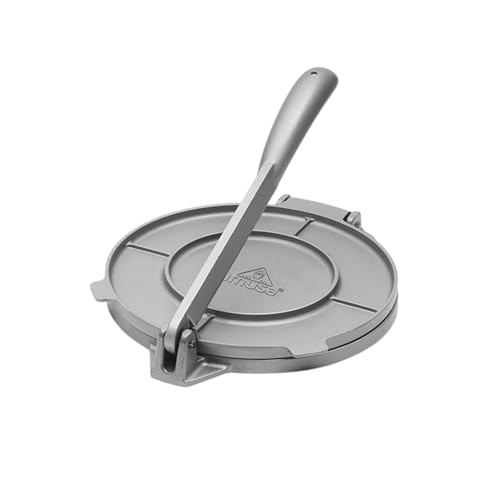
- MASTERFUL 8 INCHES TORTILLA PRESS: Measuring 8 inches, this cast aluminum Tortilla Press is perfect...
- LIGHTWEIGHT DURABILITY: Made of cast aluminum with a gray surface, this tortilla maker is lighter...

5. Fill and seal
Place 1 level tablespoon (15 ml) of cold, firm custard or cooled thick beans in the center. Leave a clear border of about 1/2 inch (1 cm). Fold with the help of the plastic, gently press out trapped air and pinch the edges closed. Keep filling off the seam and patch exposed filling with a little dough. Shape into a half-moon or short oval and place on a lightly oiled tray. Twelve empanadas use 3/4 cup filling; refrigerate any extra separately rather than overfilling.

6. Fry
Heat about 1 1/2 inches of oil in a heavy, deep pot to 350°F (175°C), leaving plenty of headroom. Fry one empanada first to check the seal and browning. Then fry 3 or 4 at a time without crowding, allowing about 2 to 3 minutes per side, until evenly golden and hot through. Turn gently once the underside has set. Keep the oil around 340 to 360°F and let it return to temperature between batches. Timing is approximate; drain on a rack or paper towels.
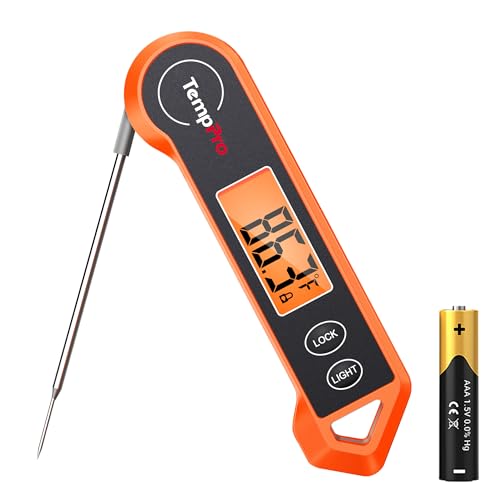
- Fast & Accurate: Get precise readings in just 1 second with ±0.9°F accuracy. NSF Certified for...
- 2.0" Large Auto-Rotating Backlit Display: A large 2.0-inch backlit display with 180° auto-rotation...
7. Roll in sugar and serve
Mix the finishing sugar with the optional ground cinnamon. Roll the drained empanadas in sugar while warm. Let stand at least 5 minutes and check the filling temperature before eating; the center can stay very hot. Serve warm. Refrigerate leftovers within 2 hours, or within 1 hour if the room or outdoor temperature is above 90°F (32°C).


Empanadas de Plátano (Salvadoran Plantain Empanadas)
Salvadoran empanadas de plátano made with a soft dough of mashed ripe plantain, filled with thick cinnamon-vanilla leche poleada (or refried beans), fried until caramelized and rolled in sugar. Makes 12.
Ingredients
For the plantain dough
- 4 large very ripe plantains (about 2 1/2 pounds / 1.1 kg total, weighed unpeeled), peels heavily spotted to mostly black but still firm
- 1 cinnamon stick, for the plantain cooking water
- 0 to 4 tablespoons all-purpose flour or rice flour, only as needed
- 1/4 teaspoon salt
- 1 tablespoon sugar, only if the plantains are just lightly spotted
For the leche poleada
- 1 1/2 cups whole milk
- 1/4 cup sugar
- 3 tablespoons cornstarch
- 1 large egg yolk
- Pinch of salt
- 1 cinnamon stick, for the custard
- 1/2 teaspoon vanilla extract
- Or, for bean empanadas: 1 cup thick refried red or black beans, in place of the leche poleada
For frying and finishing
- Vegetable or canola oil, for frying (about 1 1/2 inches deep)
- 1/2 cup sugar
- 1/2 teaspoon ground cinnamon (optional)
Instructions
- Boil the plantains. Wash the plantains, trim the ends and cut each one, unpeeled, into 3 pieces. Cover with water in a large pot and add 1 cinnamon stick. Bring to a boil, then simmer for about 15 to 20 minutes, until a knife slides through the center without resistance. Use tenderness rather than split skins alone as the check. Drain well and let cool about 10 minutes, until safe to handle.
- Cook the leche poleada. Meanwhile, whisk the cold milk, sugar, cornstarch, egg yolk and salt in a small saucepan until smooth. Add the second cinnamon stick. Cook over medium heat, whisking and scraping the bottom, until thick and bubbling through the center; continue whisking for 1 minute. Remove from the heat, discard the cinnamon and stir in the vanilla. Spread in a shallow dish, cover the surface and refrigerate for at least 30 minutes, or longer until cold and firm. A spoonful should keep its mound without spreading; do not fill the dough with warm or runny custard.
- Make the plantain dough. Peel the warm plantains, remove any tough central strand and mash thoroughly. Mix in the salt and the optional 1 tablespoon sugar. Let cool until comfortable to handle. The dough should feel soft and slightly tacky, but an oiled-hand test ball should hold its shape. If sticky, chill 15 minutes first; if still too wet to handle, mix in flour 1 tablespoon at a time, using no more than 4 tablespoons total. Use no flour if the dough already holds together. Keep covered.
- Shape the discs. Weigh the finished dough and divide its weight by 12 for equal portions. For example, 720 g of finished dough makes twelve 60 g portions; this is a calculation example, not a guaranteed dough yield. Without a scale, divide into 12 similar balls. With lightly oiled hands, press each portion between two pieces of a cut-open zip-top bag into a roughly 4-inch (10 cm) disc about 1/4 inch (6 mm) thick. Keep the thickness even; do not stretch a small portion paper-thin to reach the diameter.
- Fill and seal. Place 1 level tablespoon (15 ml) of cold, firm custard or cooled thick beans in the center. Leave a clear border of about 1/2 inch (1 cm). Fold with the help of the plastic, gently press out trapped air and pinch the edges closed. Keep filling off the seam and patch exposed filling with a little dough. Shape into a half-moon or short oval and place on a lightly oiled tray. Twelve empanadas use 3/4 cup filling; refrigerate any extra separately rather than overfilling.
- Fry. Heat about 1 1/2 inches of oil in a heavy, deep pot to 350°F (175°C), leaving plenty of headroom. Fry one empanada first to check the seal and browning. Then fry 3 or 4 at a time without crowding, allowing about 2 to 3 minutes per side, until evenly golden and hot through. Turn gently once the underside has set. Keep the oil around 340 to 360°F and let it return to temperature between batches. Timing is approximate; drain on a rack or paper towels.
- Roll in sugar and serve. Mix the finishing sugar with the optional ground cinnamon. Roll the drained empanadas in sugar while warm. Let stand at least 5 minutes and check the filling temperature before eating; the center can stay very hot. Serve warm. Refrigerate leftovers within 2 hours, or within 1 hour if the room or outdoor temperature is above 90°F (32°C).
Notes
Portions and filling: divide the actual finished dough weight by 12 (for example, 720 g gives twelve 60 g portions). Aim for roughly 4-inch (10 cm) discs, 1/4 inch (6 mm) thick. Use 1 level tablespoon (15 ml) filling each, leaving a clear border. Twelve use 3/4 cup; refrigerate extra custard or beans separately.
Ripeness and dough: choose heavily spotted to mostly black plantains with firm flesh. Discard fruit with mold, leaking flesh or an off/fermented smell. Cook until a knife slides through easily. Cool before judging stickiness; chill 15 minutes and use lightly oiled hands. Add flour only if needed, 1 tablespoon at a time, up to 4 tablespoons total. For otherwise soft dough with dry cracks, knead in water 1 teaspoon at a time, starting with 1 to 2 teaspoons. Keep covered.
Filling and leaks: cook the custard until thick bubbles break in the center, whisk for 1 minute, then chill at least 30 minutes and longer until cold and firm. A spoonful must hold a mound. If it never reached the bubbling stage, recook and chill before using. Keep filling off the seam, press out trapped air and patch thin spots. Test-fry one before cooking a full batch.
Bean variation: replace the custard with 1 cup thick refried red or black beans. Cook loose beans, stirring, until they pull away from the pan and hold a mound; about 5 minutes is only a guide. Cool before filling. Use 1 level tablespoon per empanada. Sugar coating is optional for a savory version.
Oven and air fryer: settings have not been verified for this exact plantain-and-custard recipe. Use the fried method; timings for wheat-pastry empanadas are not interchangeable. Frying time and the total preparation time are estimates; allow extra chilling until the custard is cold and set.
Make ahead: refrigerate dough and filling separately, covered, at 40°F (4°C) or below for up to 1 day. Use a shallow dish for the custard. Let chilled dough stand about 15 minutes, only until pliable; keep filling cold. Assemble and fry the same day for best texture. If holding assembled empanadas, refrigerate covered for up to 24 hours within that same 1-day preparation window, not an additional day.
Leftovers and extra custard: refrigerate within 2 hours (1 hour above 90°F / 32°C) and use within 3 days of preparation. Later assembly or cooking does not restart the filling storage clock. Reheat cooked empanadas in a preheated 350°F (175°C) oven until the center reaches 165°F (74°C); use a thermometer rather than a fixed reheating time. These are conservative planning limits based on USDA leftover guidance.
Freezing: refrigeration is preferred for the milk-custard version because cornstarch custard may lose its smooth texture after freezing. Freezing and cooking from frozen have not been verified for either filling in this recipe; no freezer duration or extra frying time is specified.
Gluten-free variation: use rice flour or omit flour if the dough holds its shape. Check the cornstarch and all filling ingredients for gluten-free labeling, and use clean utensils and uncontaminated frying oil.
Editorial review: source-checked against Salvadoran recipes from CociNamerica, Chachi-Tarta and Goya; this version retains its egg-enriched custard. This review does not represent kitchen testing. Nutrition values are estimates and vary with plantain size, filling used and oil absorption.
Nutrition Information:
Serving Size: 1 empanadaAmount Per Serving: Calories: 210Total Fat: 6gSaturated Fat: 1.5gCholesterol: 20mgSodium: 75mgCarbohydrates: 37gFiber: 2gSugar: 18gProtein: 2g
Frying tips and alternative cooking methods
Fried (traditional)
Use 350°F (175°C) as the target and fry in small batches. The suggested 2 to 3 minutes per side is an estimate; look for an evenly golden surface and a hot center. Goya’s Salvadoran plantain empanadas also use oil at about 350°F.
Oven or air fryer?
This recipe’s oven and air-fryer settings have not been verified. Plantain dough can dry or brown unevenly in circulating hot air, and a milk filling adds another variable. Expect a different crust from oil frying. Use the fried method here; reliable oven and air-fryer timings are not available for this exact formulation.
Our air fryer empanadas guide covers other doughs. Its timings are not a direct substitute for this plantain-and-custard recipe.
Make ahead, storing and freezing
- Separate dough and filling: prepare up to 1 day ahead. Refrigerate promptly in separate covered containers at 40°F (4°C) or below; spread warm custard in a shallow dish. Let chilled dough stand about 15 minutes before shaping, only until pliable, and keep the filling cold.
- Assembled, uncooked empanadas: for best texture, shape and fry on the same day. If assembling ahead, cover on a lightly oiled tray and refrigerate for up to 24 hours; this time is included in the 1-day prep window, not an extra day. Check and patch seams before frying.
- Cooked leftovers and extra custard: refrigerate within 2 hours, or 1 hour above 90°F (32°C). Use within 3 days of preparation. Keep extra filling covered separately; cooking or assembling later does not restart its storage clock.
- Reheating: use a preheated 350°F (175°C) oven and heat until the center reaches 165°F (74°C), checking with a food thermometer. Time depends on size and starting temperature, so do not rely on a fixed 5-to-8-minute window. Add fresh sugar after reheating if desired.
- Freezing: refrigeration is the preferred make-ahead option for this milk-custard version. Cornstarch custards may lose their smooth texture after freezing; King Arthur Baking advises against freezing its comparable egg-and-cornstarch pastry cream. Freezing and cooking from frozen have not been verified for this recipe, including the bean variation, so no freezer duration or extra frying time is specified.
The cooling and reheating guidance follows USDA leftover storage guidance and its 165°F reheating recommendation; the 1-day preparation and 3-day use-by windows above are conservative planning limits.
Empanadas de plátano FAQ
What are Salvadoran empanadas made of?
Salvadoran empanadas are made from cooked, mashed ripe plantain instead of wheat or corn dough. They are filled with leche poleada (milk custard) or refried beans, fried and rolled in sugar.
What is the difference between empanadas de leche and empanadas de plátano?
In El Salvador they are the same snack. Empanadas de plátano names the plantain dough, and empanadas de leche names the milk custard filling. In Guatemala, though, “empanadas de leche” can mean a wheat pastry filled with custard.
Can I use bananas instead of plantains?
No. Bananas are too soft and watery once cooked, so the dough will not hold together in the oil. Ripe plantains have more starch even when their skins turn black.
Why do my plantain empanadas fall apart when frying?
Check for wet dough, thin spots, too much filling or an unsealed seam. Cool the dough, use flour only as needed (up to 4 tablespoons total), seal around 1 level tablespoon of cold filling and test-fry one at 350°F.
Are empanadas de plátano gluten-free?
Plantains, milk custard and beans contain no gluten. Use rice flour, or no flour, in the dough, and check that your cornstarch is labeled gluten-free.
Can you make empanadas de plátano ahead?
Yes. Refrigerate the dough and filling separately for up to 1 day and assemble when ready. Shaped empanadas can stay covered in the refrigerator within that same 24-hour window. Freezing and frying from frozen are not verified for this recipe; refrigeration is preferred for the custard filling.
Recipe review: the method was cross-checked against Carmen’s Salvadoran milk-filled empanadas and Chachi-Tarta’s family version. Fillings, sizes and use of flour vary; this version retains its egg-enriched custard. This is a source-based editorial review, not a claim of kitchen testing.
More empanadas and Salvadoran sweets
Explore every style in our guide to empanadas by country, find more dessert turnovers in sweet empanadas, or browse our Salvadoran desserts and Salvadoran street food guides.
More Salvadoran Foods
See all →
Jorge Garcia is the founder of AmigoFoods, where he has spent over 20 years helping readers discover authentic Latin American and Spanish cuisine. Raised in a Cuban-American household, Jorge learned to cook at the hands of his mother and grandmother, carrying forward generations of family recipes. That heritage, backed by his family’s four-generation history in the Latin food industry, inspired him to launch AmigoFoods in 2003. With more than 1,000 published articles on recipes, ingredients, and food culture, Jorge’s mission is simple: make authentic Latin cooking approachable for home cooks everywhere while honoring the traditions behind every dish.