
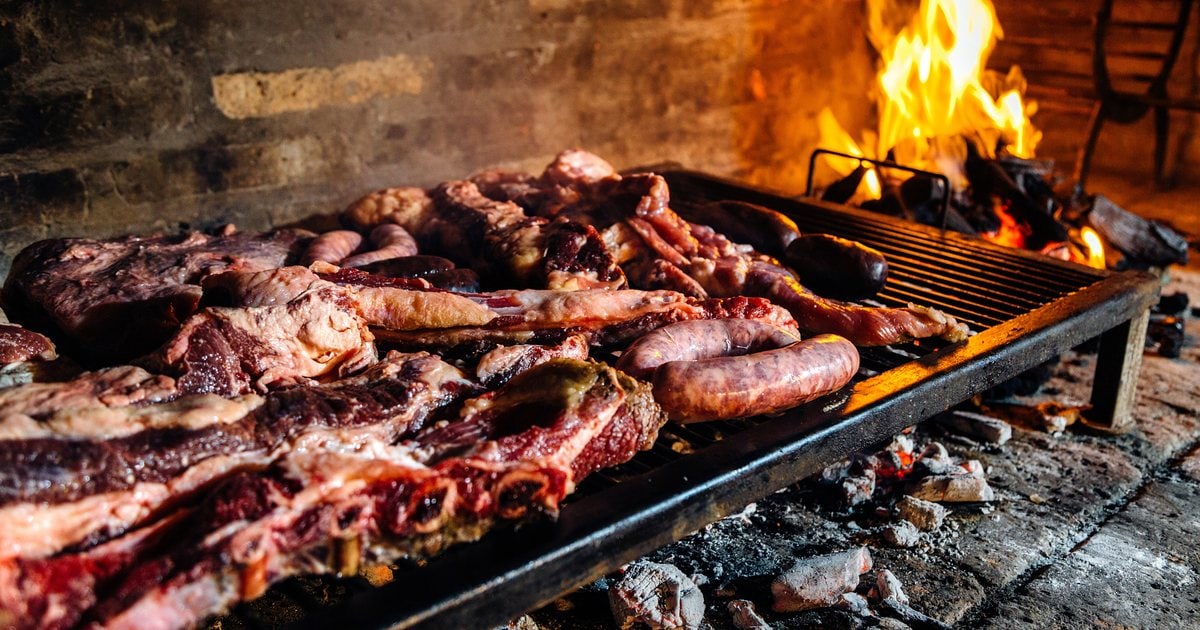
Argentine asado is Argentina’s national barbecue: beef short ribs, flank, sausages and offal cooked slowly on a grill called a parrilla over wood or charcoal embers, seasoned with nothing but coarse salt. It is also the gathering itself, a long afternoon where the cook, the asador, serves the meat in rounds as each cut is ready, with chimichurri, salad and red wine on the table.
Argentine Asado at a Glance
AmigoFoods may earn a commission from qualifying Amazon purchases made through links on this page.
What Is Argentine Asado?
In Argentina the word asado does three jobs. It is the cooking method (meat roasted slowly over embers), the event (Sunday lunch with the family, a birthday, a Friday night with friends), and a specific cut: tira de asado, the long strip of beef short ribs that almost every asado includes.
What makes it Argentine is restraint. The beef is not marinated, rubbed or sauced on the grill. It gets coarse salt and time. The heat is gentle, the grate sits well above the coals, and a large cut can spend two hours over the fire. The flavor comes from good beef, rendered fat and wood smoke, and the sauces stay on the table.
The person in charge is the asador or parrillero. He or she lights the fire, decides when each cut goes on, and carves at the grill. When the meat is done, it is customary for the table to stop and give the asador a round of applause: ¡un aplauso para el asador!
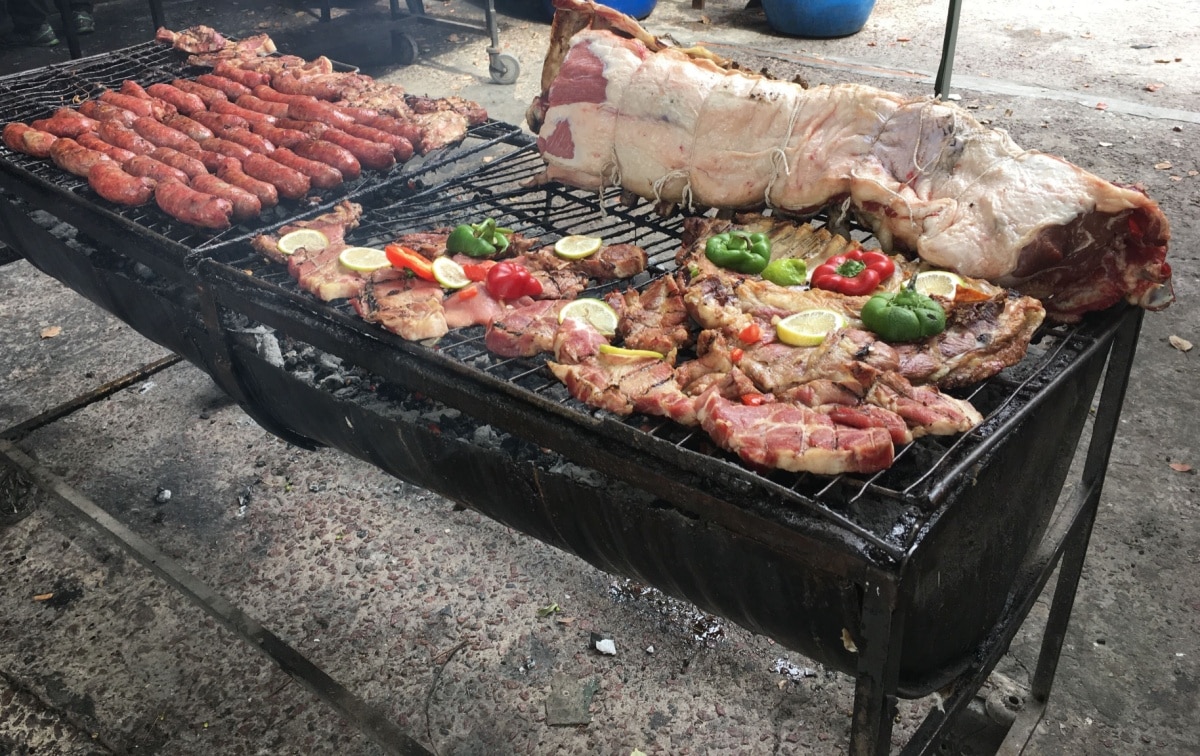
Argentine Asado vs. Carne Asada (and Uruguayan Asado)
The names sound alike, but these are different ways of cooking. Mexican carne asada is a thin steak, usually skirt or flank, marinated in citrus, garlic and spices and seared fast over high heat for tacos. Argentine asado is a slow, salt-only cookout of many cuts. Across the River Plate, Uruguay cooks almost the same way, with a few differences you can read about in our guide to Uruguayan asado.
| Argentine asado | Mexican carne asada | Uruguayan asado | |
|---|---|---|---|
| What it is | A whole cookout of many cuts | One grilled steak, sliced | A whole cookout of many cuts |
| Seasoning | Coarse salt only | Citrus, garlic, spice marinade | Coarse salt only |
| Heat | Low, slow embers | High, fast heat | Low embers, almost always hardwood |
| Time on the grill | 1 to 3 hours | 10 to 15 minutes | 1 to 3 hours |
| Served with | Chimichurri, salsa criolla, salad, bread | Tortillas, salsa, guacamole | Chimichurri, salad, morcilla dulce |
The Cuts to Buy for an Argentine Asado
An Argentine butcher cuts beef differently from an American one, so names do not translate one for one. These are the cuts you will see at almost every asado, with what to ask for in the United States.
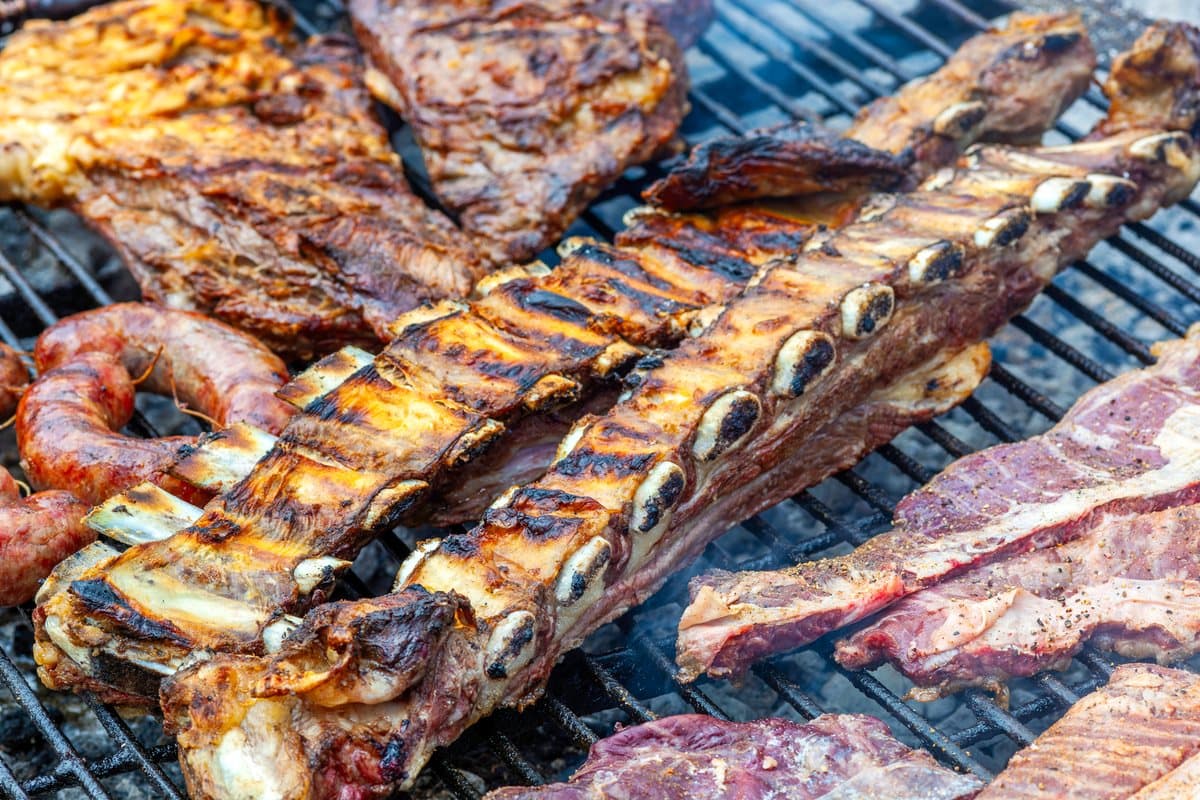
Asado de tira
US: flanken-cut beef short ribs
Short ribs sawn across the bones into strips 1 to 1½ inches thick. Fatty, chewy in the best way, and the backbone of the meal.
45–75 minbone side down first
Vacío
US: whole flank steak or flap meat
A thick, loose-grained cut from the flank, cooked whole with its fat and membrane on so the outside crisps while the inside stays juicy.
1½–2 hrslice across the grain
Entraña
US: outside skirt steak
Thin, intensely beefy and quick. Many Argentines consider it the best bite of the day. Cook it over hotter embers near the end.
10–15 minmembrane on
Matambre
US: rarely sold; ask a Latin butcher
The thin layer of meat between the hide and the ribs. Grilled flat until tender, or topped with sauce and cheese as matambre a la pizza.
40–60 min
Bife de chorizo & ojo de bife
US: New York strip & ribeye
The steakhouse cuts, sliced about 2 inches thick and cooked late in the asado over a hotter bed of coals.
20–30 min
Colita de cuadril
US: tri-tip
A lean, tender triangle from the bottom sirloin. Cook it whole and slice it thin. It is easy to find in American supermarkets.
40–50 min
Chorizo & morcilla
US: fresh Argentine-style sausage & blood sausage
Mild fresh pork (or pork and beef) chorizo, not the spicy Mexican or cured Spanish kind. Morcilla is already cooked and only needs warming. These go out first, often as choripán.
20–30 min
Achuras
US: offal, from a specialty butcher
Chinchulines (small intestine), mollejas (sweetbreads) and riñones (kidneys). Grilled crisp and served with lemon as the first course. Optional at home, essential to purists.
20–40 min
Pork has a place too: bondiola (pork shoulder or collar) and matambre de cerdo (pork flank) are common, and in Patagonia the star is a whole lamb cooked upright on an iron cross. For a first asado at home, short ribs, vacío and chorizo are enough.
How Much Meat per Person for an Asado?
The Argentine rule of thumb is about half a kilo, roughly 1 pound, of raw meat per adult. That sounds like a lot, but it includes bones, fat and sausages, and an asado lasts all afternoon. Go a little lower if there are plenty of sides and children at the table, a little higher for a crowd of big eaters.
| Guests | Total raw meat | A good split |
|---|---|---|
| 4 | 4 lb (1.8 kg) | 1½ lb short ribs, 1½ lb vacío, 4 chorizos |
| 8 | 8 lb (3.6 kg) | 3 lb short ribs, 2½ lb vacío, 8 chorizos, 1 lb morcilla |
| 12 | 12 lb (5.4 kg) | 4 lb short ribs, 4 lb vacío, 2 lb tri-tip or skirt, 12 chorizos |
| 20 | 20 lb (9 kg) | 6 lb short ribs, 6 lb vacío, 4 lb tri-tip, 20 chorizos, 2 lb morcilla |
Planning a big one? Our guide to hosting an Argentine asado party covers the shopping list, timeline and table setup.
The Fire: Wood, Charcoal and the Parrilla
A traditional parrilla has two parts: a brasero, a metal basket at one side where the wood burns, and a grate over a flat bed where the cook spreads the embers that fall from it. The grate is often V-grooved and tilted so fat runs off instead of dripping into the coals, and many can be raised or lowered with a crank. In Argentina the classic fuel is quebracho, a very hard native wood that burns long and hot.

You do not need a parrilla to make a real asado. A kettle grill or any charcoal grill with room to keep a fire going at one side works. What matters:
- Use real wood or lump charcoal. Oak, hickory or a hardwood blend gives the closest flavor to quebracho. Skip lighter fluid: asadores avoid it because it can leave a chemical taste on the meat.
- Cook over embers, never flames. Let the fire burn for 40 to 45 minutes until it collapses into glowing coals.
- Keep a feeder fire. Burn wood at one side and shovel fresh embers under the meat every 20 to 30 minutes so the heat stays even for two hours.
- Raise the meat. About 6 inches above the coals is right for slow cuts. Do the hand test: hold your palm just above the grate and count. If you can hold it 8 to 10 seconds, the heat is right.
- Argentine-style parrilla grill with an adjustable grate, if you want the real thing
- Hardwood lump charcoal or oak cooking wood
- Chimney starter so you never need lighter fluid
- Sal parrillera, the coarse Argentine grilling salt
- Instant-read meat thermometer while you learn your fire
How to Make Argentine Asado, Step by Step
This is the method in the recipe card below, written out with the reasoning behind each step. It feeds 8 with short ribs, vacío, chorizo and morcilla.
1. Build the fire and let it burn down
Light the wood or charcoal at one side of the grill and let it burn for 40 to 45 minutes. Use this time to take the meat out of the fridge, pat it dry and set out the chimichurri. Then rake a 1- to 2-inch layer of embers under the grate, a little deeper where the thick cuts will sit, and keep the corner fire going.
2. Salt with sal parrillera, and nothing else
Sprinkle coarse salt on the side of the vacío and ribs facing up, about 1 teaspoon per pound, just before they go on. Coarse grains melt slowly and season without drawing out too much juice. Salt the other side after you flip. Leave the sausages unsalted; they are seasoned already.

3. Start the big cuts first
Lay the vacío on the grate fat side down; it needs the longest. Half an hour later, add the short ribs bone side down. The bones shield the meat and conduct heat slowly into it. Put the chorizos and morcilla at the cooler edges.
4. Serve the sausages as the first round
Turn the chorizos every 5 to 10 minutes and pull them at 25 to 30 minutes, browned and 160°F inside. Most asadores do not prick them, so the juices stay inside. Warm the morcilla gently for 15 to 20 minutes. Split the chorizos into crusty rolls with chimichurri for choripán and pass them around while the beef keeps going.
5. Flip once, when the meat tells you
Flip the ribs when the bones are browned and beads of juice appear on the top surface, usually 45 to 60 minutes in. Salt the new top and cook 15 to 20 minutes more. Turn the vacío after about an hour and cook it 30 to 45 minutes more. Feed fresh embers under both as the bed fades.

6. Rest, carve at the grill, serve in rounds
Rest the vacío 5 to 10 minutes and slice it across the grain; cut the ribs between the bones. In Argentina the asador carves on a wooden board at the grill and sends each cut out as it is ready, so the table eats in waves rather than all at once.
The Order of an Asado
An asado is a sequence, not a single plate. A typical afternoon runs like this:
- Picada and provoletaCheese, salami, olives and bread while the fire burns down, then provoleta, a disc of provolone grilled until crusty.
- Chorizo and morcillaThe sausages, often as choripán, to take the edge off hunger.
- AchurasSweetbreads, chinchulines and kidneys, crisp, with lemon.
- The main cutsShort ribs and vacío, then any steaks or entraña cooked over hotter coals at the end.
- Postre and sobremesaDessert, coffee or mate, and a long talk at the table. Try one of these Argentinian desserts.

Jugoso, a Punto, Cocido: How Argentines Order Their Meat
Ask an Argentine how they like their beef and you will hear these words, not “medium-rare.” Many Argentines prefer their asado a punto or even cocido, while steakhouse regulars ask for jugoso.
| Argentine term | Closest US doneness | Pull from the grill at |
|---|---|---|
| Vuelta y vuelta | Blue to rare | 115–120°F |
| Jugoso | Medium-rare | 130–135°F |
| A punto | Medium | 140–145°F |
| Cocido | Well done | 155°F and up |
The USDA recommends cooking whole cuts of beef to at least 145°F with a 3-minute rest, and fresh sausage to 160°F. Short ribs are best well past that point: their fat and connective tissue need time to render, so judge them by tenderness rather than temperature.
What to Serve With Argentine Asado
Sauces: chimichurri and salsa criolla
Two sauces sit on every asado table. Chimichurri is parsley, garlic, oregano, dried chile, vinegar and oil, best made a day ahead. Salsa criolla is a fresh relish of finely chopped onion, tomato and bell pepper in oil and vinegar. Both go on the meat after it is sliced, never on the grill.

Sides
Sides are kept simple so the meat stays the focus:
- Provoleta: grilled provolone with oregano and chile flakes, served bubbling.
- Ensalada mixta: lettuce, tomato and onion dressed with oil, vinegar and salt.
- Ensalada rusa: potato, carrot and pea salad with mayonnaise.
- Grilled vegetables: peppers, onions, eggplant and squash, or morrones con huevo, bell pepper halves with an egg cracked inside and cooked on the grill.
- Bread: crusty pan francés for choripán and for wiping up juices.
For more ideas, see our Argentine side dishes and sauces for asado and these Argentine appetizers to set out while the fire burns down.

Drinks
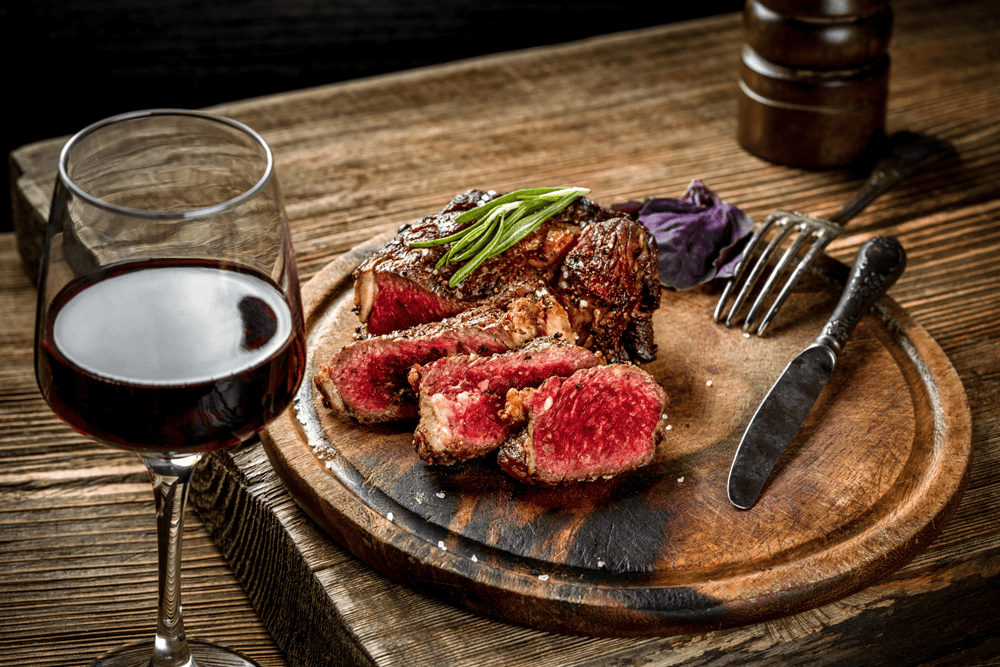
Malbec is the classic pairing; its dark fruit and soft tannins suit fatty, salty beef. Fernet with Coca-Cola is the other national favorite, along with cold beer and, for those who are driving, soda water from a siphon.
A Short History of Asado
Spanish settlers brought cattle to the Río de la Plata in the 16th century. On the open grasslands of the Pampas the herds multiplied and ran wild, and beef became the cheapest food in the region. The gauchos, the horsemen who worked those herds, cooked meat al asador: large cuts or a whole animal spread on an iron cross and planted beside an open fire, seasoned with salt and eaten with a knife.
As cities grew, the fire moved to backyards, rooftops and restaurant parrillas, and the cross gave way to the grate. The habits stayed: salt only, slow embers, many cuts, and a meal that takes the whole afternoon. Read more about why Argentinian beef tastes so good and where asado sits among the national dishes of Latin America.
Tips From the Parrilla
- Patience beats heat. If the fat is flaring or the outside is charring before the inside cooks, raise the grate or pull embers out.
- Flip once. Constant turning dries the meat. Wait for juice to bead on top.
- Tongs, not a fork. Piercing the meat lets the juice run into the fire.
- Salt late, salt coarse. Fine table salt dissolves too fast and draws out moisture.
- Keep feeding the fire. A cooling bed of coals is the most common reason a home asado stalls.
Argentine Asado FAQ
What is in an Argentinian asado?
A typical Argentine asado includes beef short ribs (asado de tira), vacío (flank), chorizo and morcilla sausages, and often offal such as sweetbreads and chinchulines, plus steaks like bife de chorizo or entraña. It is served with chimichurri, salsa criolla, salad, bread and red wine.
What’s the difference between asado and asada?
Asado is Argentina’s slow, salt-only cookout of many cuts over embers. Carne asada is a Mexican dish of thin steak marinated in citrus and spices and grilled quickly over high heat, usually for tacos.
What does asado mean in Argentina?
It means three things: meat roasted over embers, the social gathering built around it, and the short-rib cut called tira de asado.
How long does an Argentine asado take?
Plan on 3 to 4 hours from lighting the fire: about 45 minutes for the fire to burn down and 1½ to 2½ hours of cooking, with the sausages ready after about 30 minutes.
What wood do Argentines use for asado?
Quebracho, a dense native hardwood, is the classic choice, along with algarrobo and other local hardwoods. Outside Argentina, oak or hardwood lump charcoal is the closest substitute.
Do you marinate meat for asado?
No. Argentine asado meat gets only coarse salt (sal parrillera). Some cooks brush large cuts with salmuera, a salty brine, but marinades and rubs are not part of the tradition.
Can you make asado on a gas grill?
Yes. Use two zones, one burner on medium and one off, and cook with the lid open: brown the cuts over the flame, then finish them on the cool side. The timing is similar, though you lose the wood smoke.
Argentine Asado Recipe
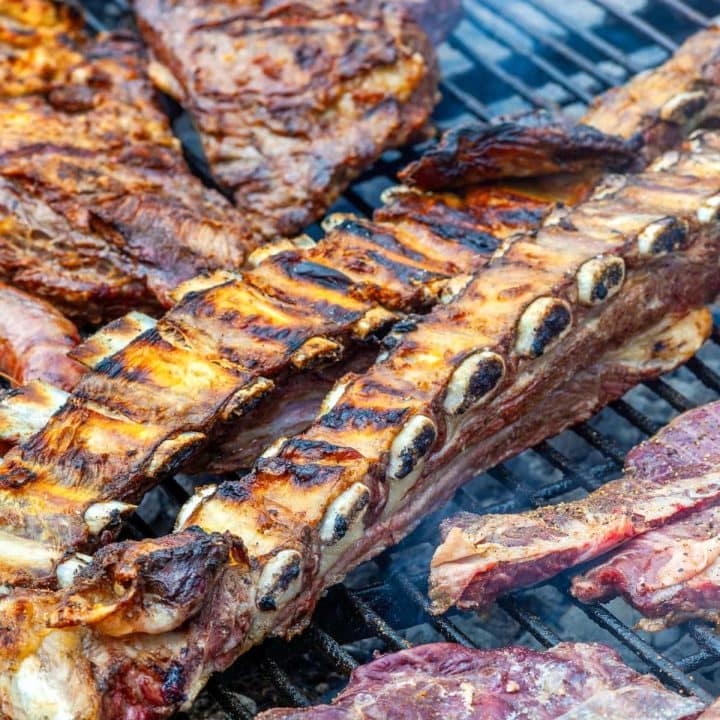
Argentine Asado
A home-grill Argentine asado: short ribs, vacío and chorizo cooked slowly over wood embers with nothing but coarse salt, served in rounds with chimichurri.
Ingredients
- 3 pounds asado de tira (flanken-cut beef short ribs, 1 to 1½ inches thick)
- 2½ pounds vacío (whole flank steak or flap meat, fat left on)
- 1½ pounds Argentine-style chorizo (8 fresh links)
- 1 pound morcilla (blood sausage), optional
- 2 to 3 tablespoons sal parrillera (coarse grilling salt)
- 1½ cups chimichurri, to serve
- 2 cups salsa criolla, to serve
- 8 crusty French rolls (pan francés), for choripán
Instructions
- Take the meat out of the fridge while you build the fire, about 45 minutes before cooking. Pat the ribs and vacío dry. Make the chimichurri now if you have not already, so the flavors can settle.
- Light the hardwood or lump charcoal in one corner of the grill or in a fire basket (brasero). Use a chimney starter or newspaper, never lighter fluid. Let it burn for 40 to 45 minutes, until the wood breaks down into glowing embers.
- Rake a 1- to 2-inch layer of embers under the grate, a little thicker where the vacío and ribs will sit. Set the grate about 6 inches above the coals. Hold your palm just above the grate: you should manage 8 to 10 seconds before pulling away. That is the steady medium-low heat an asado needs. Keep the corner fire going and pull fresh embers under the meat every 20 to 30 minutes.
- Salt the vacío and ribs on the side facing up with sal parrillera just before they go on, about 1 teaspoon per pound. Do not salt the sausages.
- Put the vacío on first, fat side down. After 30 minutes, add the short ribs bone side down. Lay the chorizos and morcilla at the cooler edges of the grill.
- Turn the chorizos every 5 to 10 minutes and cook for 25 to 30 minutes, until browned and 160°F inside. Warm the morcilla for 15 to 20 minutes, turning it gently because it is already cooked. Serve the sausages first, as choripán in bread with chimichurri, while the big cuts keep cooking.
- When the rib bones are browned and juices bead on the top of the meat (45 to 60 minutes), salt the top and flip. Cook 15 to 20 minutes more. Flip the vacío after about 1 hour, salt it, and cook 30 to 45 minutes more, to 130 to 135°F for jugoso (medium-rare) or 140 to 145°F for a punto (medium).
- Rest the vacío for 5 to 10 minutes, then slice it across the grain. Cut the ribs between the bones. Serve on a wooden board in rounds as each cut is ready, with chimichurri, salsa criolla, bread and salad.
Notes
Butcher names: asado de tira is flanken-cut beef short ribs, cut across the bones 1 to 1½ inches thick. For vacío, ask for a whole flank steak or flap meat (bavette) with the fat left on. Argentine-style chorizo is a fresh, mild pork or pork-and-beef sausage, not Mexican or Spanish chorizo.
Gas grill: set up two zones, one burner on medium and the other off. Cook with the lid open, starting the thick cuts on the hot side and finishing them on the cool side. You will not get the wood smoke, but the timing is the same.
Safety: the USDA recommends 145°F with a 3-minute rest for whole beef cuts and 160°F for fresh sausage.
Leftovers: refrigerate for up to 4 days. Slice cold vacío thin for sandwiches, or reheat ribs on the grill.
More Argentine Cooking
- Argentina food: 32 traditional Argentine dishes
- Argentine main dish recipes
- Choripán, Argentina’s sausage sandwich
- Matambre
- Argentine ingredients: 15 essentials from asado to mate
- Uruguayan asado
Stocking an Argentine pantry? Browse our Argentine foods list on Amazon for dulce de leche, yerba mate, chimichurri seasoning and more.
More Argentine Foods
See all →
Jorge Garcia is the founder of AmigoFoods, where he has spent over 20 years helping readers discover authentic Latin American and Spanish cuisine. Raised in a Cuban-American household, Jorge learned to cook at the hands of his mother and grandmother, carrying forward generations of family recipes. That heritage, backed by his family’s four-generation history in the Latin food industry, inspired him to launch AmigoFoods in 2003. With more than 1,000 published articles on recipes, ingredients, and food culture, Jorge’s mission is simple: make authentic Latin cooking approachable for home cooks everywhere while honoring the traditions behind every dish.