
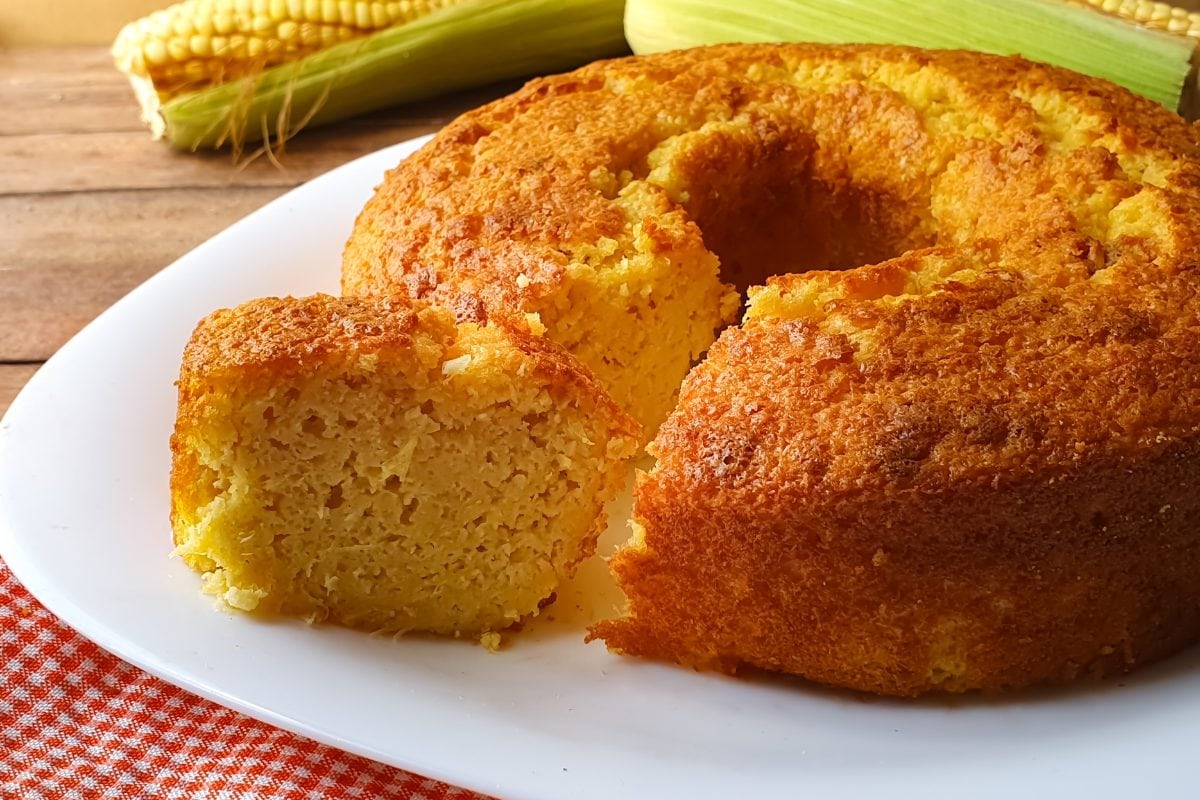
Bolo de milho is a moist Brazilian corn cake made by blending whole kernels with milk, eggs and cornmeal. A favorite at June festivals and afternoon coffee, this version makes 12 slices and takes about 75 minutes, including cooling in the pan.
Bolo de Milho at a Glance
What Is Bolo de Milho?
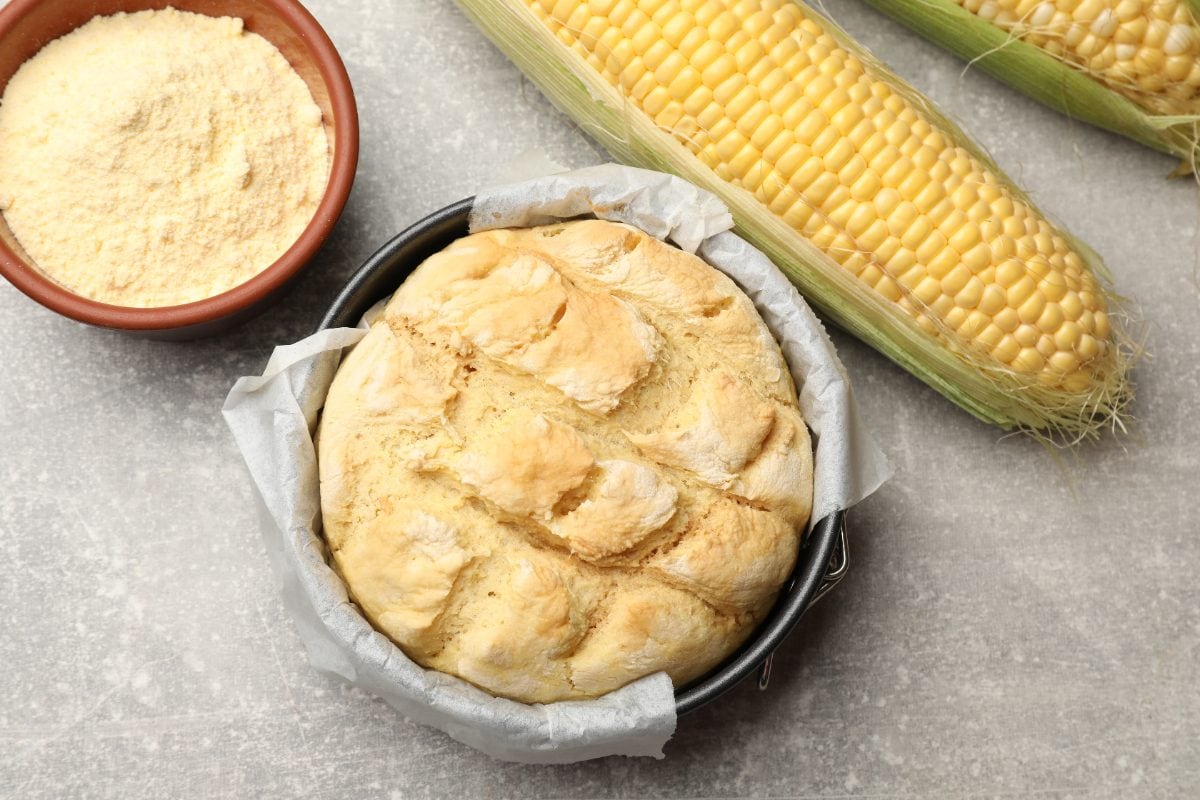
Bolo de milho is built on whole corn. Fresh kernels cut from the cob, or a drained can of sweet corn, go into the blender with milk and eggs and are blitzed until the mixture is smooth and thick. Sugar, oil and cornmeal follow, the baking powder goes in last, and the batter is poured straight into the pan.
Because the corn is blended rather than folded in, the cake bakes up dense and moist, closer to a baked pudding than to a fluffy sponge. The top browns hard and crackles slightly, which is the part Brazilians fight over.
Many home cooks use the empty corn can as the measuring cup for everything else, which is why Brazilian recipes often read “one can of milk, one can of sugar.”
Bolo de Milho vs. Bolo de Fubá
They are cousins, not the same cake:
- Bolo de milho uses whole corn kernels, blended. It is moist, heavy and tastes distinctly of sweet corn.
- Bolo de fubá uses fubá (dry cornmeal) rather than whole kernels; recipes may also contain wheat flour, milk and eggs. It is lighter, drier and more like a plain coffee cake, often flavored with fennel seed or finished with a layer of guava.
If a Brazilian offers you “bolo de milho cremoso,” that is a third thing: the same blended batter loosened with coconut milk or condensed milk so it sets like a corn flan with a cake-like top.
A Festa Junina Cake
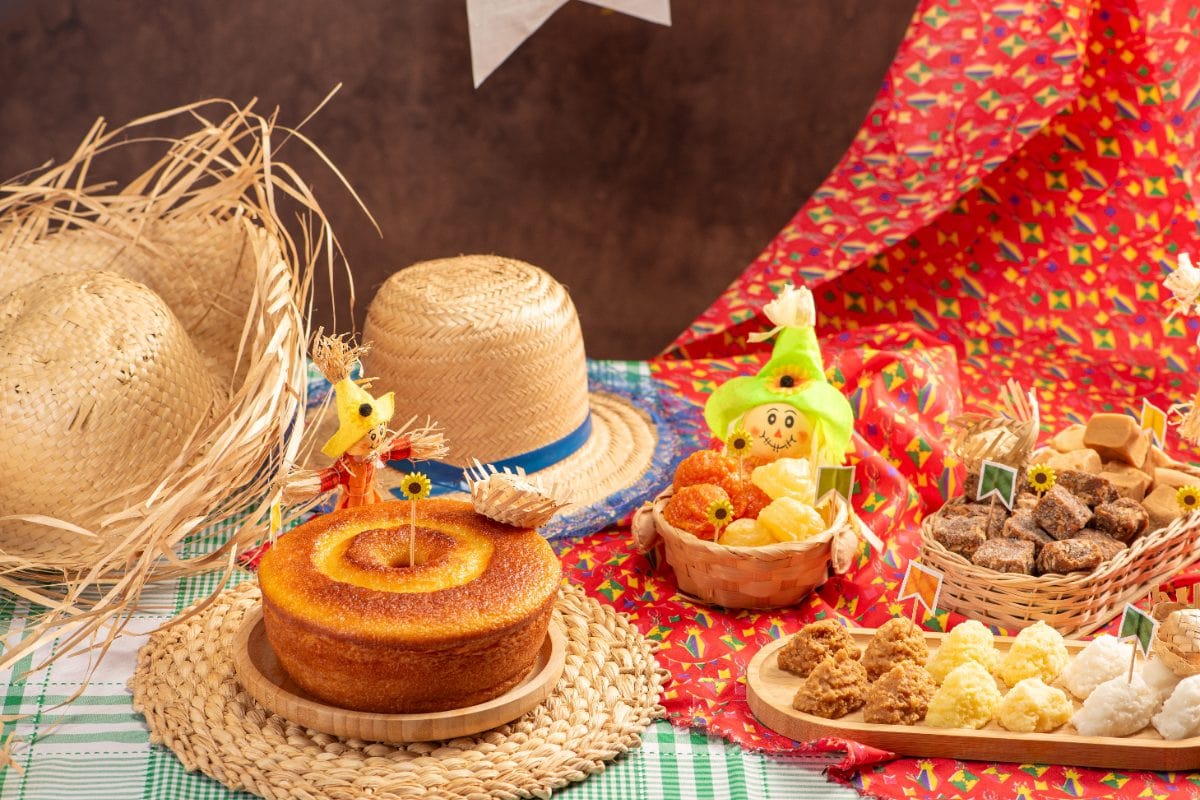
June in Brazil belongs to corn. The Festas Juninas honor Saint Anthony, Saint John and Saint Peter, and they land exactly when the corn comes in, so the food is almost entirely corn-based: pamonha, curau, canjica, grilled cobs and bolo de milho, with quentão to drink.
Bolo de milho is the one that travels best, so it also shows up at school parties, church fairs and Sunday coffee long after the bonfires are out.
Tips for a Better Bolo de Milho
- Blend the corn long enough. Two to three minutes. Under-blended corn leaves the cake gritty and the hulls noticeable.
- Drain canned corn well. The packing liquid throws off the ratio and makes the batter too loose.
- Add the baking powder last. Pulse it in. Blending it for a full minute knocks the lift out of the cake.
- Grease and dust with cornmeal. Not flour. It keeps the crust crisp and the corn flavor clean.
- Don’t rush the cooling. The crumb is wet and sets as it cools. Give it 15 minutes in the pan before turning it out.
- Try the Minas version. A half cup of grated cheese in the batter makes it savory-sweet, the way it is baked in Minas Gerais.
The full recipe is in the card below.
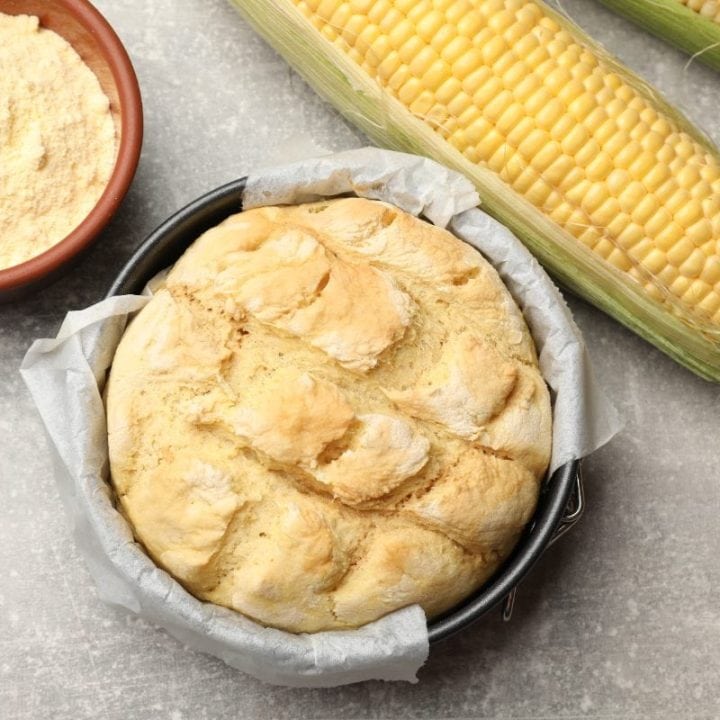
Bolo de Milho (Brazilian Corn Cake)
Bolo de milho is the blender cake of the Brazilian June festivals: whole corn kernels, milk and cornmeal blended into a batter that bakes up moist, custardy and golden.
Ingredients
- 1 can (15 oz / 425 g) sweet corn, drained, or kernels from 3 ears of fresh corn
- 1 cup (240 ml) whole milk
- 3 eggs
- 1 cup (200 g) sugar
- 1/2 cup (120 ml) neutral oil
- 1 cup (150 g) fine cornmeal (fubá), plus more for the pan
- 1/2 cup (60 g) all-purpose flour
- 1 tablespoon baking powder
- 1/2 cup (50 g) grated parmesan or queijo minas, optional
Instructions
- Heat the oven to 350F (180C). Grease a 9-inch (24 cm) ring or tube pan and dust it with cornmeal.
- Drain the canned corn, or cut the kernels from 3 ears of fresh corn.
- Put the corn, milk, eggs, sugar, oil and grated cheese (if using) in a blender and blend for 2 to 3 minutes, until completely smooth and creamy.
- Add the cornmeal and flour and blend briefly, just until combined.
- Add the baking powder and pulse two or three times. Do not over-blend once the leavening is in.
- Pour the batter into the pan and bake 40 to 50 minutes, until the top is deeply golden and a skewer comes out clean.
- Cool in the pan for 15 minutes, then turn out. Serve slightly warm or at room temperature with coffee.
Notes
The additional time allows the cake to cool in its pan. This recipe contains wheat flour and is not gluten-free. Drain canned corn thoroughly. For a different cremoso version, use a recipe developed for that variation; substituting a whole can of coconut milk for 1 cup of milk changes the liquid ratio. Refrigerate this moist cake within two hours and use within three to four days, or freeze slices.
Frequently Asked Questions
Can I use canned corn for bolo de milho?
Yes, and most Brazilians do outside the harvest months. Drain it well. Fresh milho verde in season gives a sweeter, slightly looser batter.
What is fubá?
Fubá is Brazilian cornmeal, finer than the coarse flocão used for cuscuz nordestino and not the same as masa harina. Look for it in Brazilian markets or use a fine yellow cornmeal.
Is bolo de milho gluten-free?
This recipe is not gluten-free: it contains 1/2 cup of all-purpose wheat flour. For a gluten-free cake, use a recipe specifically developed without wheat and check the labels on all ingredients. Simply omitting the flour changes the structure and has not been tested for this recipe.
How long does it keep?
For this moist, custardy cake, refrigerate in a covered container within two hours and use within three to four days. Freeze individual slices for longer storage.
More Brazilian Breakfast and Coffee Foods
Bolo de milho belongs with the afternoon cafezinho. Try it alongside bolo de fubá, pão de queijo, pão francês and a cup of Brazilian coffee, or see the full Brazilian breakfast guide and the Brazilian breakfast hub.
More Brazilian Foods
See all →
Jorge Garcia is the founder of AmigoFoods, where he has spent over 20 years helping readers discover authentic Latin American and Spanish cuisine. Raised in a Cuban-American household, Jorge learned to cook at the hands of his mother and grandmother, carrying forward generations of family recipes. That heritage, backed by his family’s four-generation history in the Latin food industry, inspired him to launch AmigoFoods in 2003. With more than 1,000 published articles on recipes, ingredients, and food culture, Jorge’s mission is simple: make authentic Latin cooking approachable for home cooks everywhere while honoring the traditions behind every dish.