

Bolo de fubá is Brazil’s golden cornmeal cake, made with fine fubá, eggs, milk and oil for breakfast or afternoon coffee. This blender version bakes in a ring pan and makes 12 slices, ready in about 1 hour 15 minutes including cooling.
Bolo de Fubá at a Glance
AmigoFoods may earn a commission from qualifying Amazon purchases made through links on this page.
What is bolo de fubá?

Bolo de fubá (say BOH-loo jee foo-BAH) simply means “cornmeal cake” in Portuguese: bolo is cake and fubá is finely ground dried corn. In English it is usually called Brazilian cornmeal cake or Brazilian corn cake.
It is a true cake, not cornbread. The crumb is fine and tender, the crust thin and golden, and the flavor is sweet and toasty rather than savory. It is almost always baked in a forma com furo, the ring-shaped tube pan found in every Brazilian kitchen, and cut into thick wedges.
Brazilians eat bolo de fubá at breakfast and above all at café da tarde, the late-afternoon coffee break. It is on the table at every Festa Junina in June, and with bolo de cenoura it is one of the best-loved everyday Brazilian cakes. You will find it in our guides to Brazilian breakfast foods and traditional Brazilian food.
What does bolo de fubá taste like?
Think of a sponge cake with the warm, toasty flavor of corn. It is moderately sweet, with a soft, slightly springy crumb that is a little more open than a butter cake and just a touch grainy from the cornmeal, in a pleasant way. A good one is moist enough to eat plain but dry enough to dunk in coffee, which is exactly how most Brazilians eat it.
It is often confused with two other corn favorites. Here is how they differ:
| Bolo de fubá | American cornbread | Bolo de milho | |
|---|---|---|---|
| Made from | Fine dry cornmeal plus some wheat flour | Medium-grind cornmeal, often with flour and buttermilk | Fresh or canned corn kernels blended into the batter |
| Sweetness | Sweet, a cake for coffee | Lightly sweet or savory | Sweet |
| Texture | Light, tender, fine crumb | Coarse and crumbly | Very moist, almost pudding-like |
| Baked in | Bundt or tube pan | Cast-iron skillet or square pan | Tube pan or square pan |
| Served | Breakfast and afternoon coffee | As a side with chili or barbecue | Festa Junina, afternoon coffee |
If you love the fresh-corn version, try our bolo de milho recipe next.
What is fubá? Choosing the right cornmeal

Fubá is dried corn milled into a fine, silky yellow flour. The word came into Brazilian Portuguese from Kimbundu, a language of Angola, and in everyday Brazil it means the fine meal used for baking. Brazilian stores sell several grinds, and for this cake you want the finest one, fubá mimoso. Coarser corn flakes called flocão are for Brazilian cuscuz, not cake.
The grind matters more than the brand. Here is what works outside Brazil:
Ingredients for bolo de fubá
- Fubá mimoso or very fine cornmeal: 2 cups, spooned into the cup and leveled. Packing it in is the most common reason for a dry cake.
- All-purpose flour: 1 cup gives the cake structure and the fluffy, fofinho crumb. Some grandmother recipes use only a few spoonfuls, which makes a denser, more corn-forward cake.
- Eggs: 4 large, at room temperature. Blending them with the sugar until foamy is where much of the lift comes from.
- Sugar: 1½ cups. Many Brazilian recipes use a full 2 cups; this version is still sweet enough for coffee.
- Oil: ¾ cup of a neutral oil such as canola. Oil keeps this version moist; butter-based versions also exist.
- Whole milk: 1 cup. For a coconut version, use coconut milk instead.
- Fine salt: ¼ teaspoon to balance the sweetness.
- For the pan: 1 tablespoon oil and 1 tablespoon fubá or granulated sugar.
- Baking powder: 1 tablespoon. Brazilians call it fermento em pó ; in this version, fold it in last by hand.
- Fennel or anise seeds (optional): 1 tablespoon of erva-doce gives the old-fashioned flavor many Brazilians grew up with.
Shopping for Brazilian staples? Browse our Brazilian pantry picks on Amazon, or read our guide to Brazilian ingredients.
How to make bolo de fubá
This is a bolo de liquidificador, a blender cake: the blender does the mixing, and the only hand work is folding in the baking powder.
- Prepare the pan. Heat the oven to 350°F (175°C). Brush a 10-inch Bundt or tube pan (10–12 cups) with oil, including the center tube, then dust it with fubá or sugar and tap out the excess. Sugar gives the cake a thin, caramelized crust.
- Blend the wet ingredients. Blend the eggs, sugar, oil and milk on high for 1 to 2 minutes, until pale and foamy.
- Add the dry ingredients. Add the fubá, flour and salt and blend on low for 20 to 30 seconds, scraping down once, just until smooth. The batter should be thick but pourable.
- Fold in the baking powder. Pour the batter into a large bowl, sprinkle the baking powder (and fennel seeds, if using) over it and fold until no streaks remain.
- Bake. Pour into the pan and bake for 40 to 45 minutes, until deep golden and a skewer pushed in halfway between the edge and the tube comes out clean. Keep the oven closed for the first 30 minutes.
- Cool and unmold. Cool in the pan for 15 to 20 minutes, run a thin knife around the edge and the tube, and turn the cake out onto a plate. Slice warm or at room temperature.

Watch how it comes together:
Tips for a fluffy bolo de fubá (fofinho)
The five habits behind a fofinho cake
- Use the finest fubá you can find and spoon it into the cup rather than scooping.
- Start with room-temperature eggs and milk, and blend them with the sugar and oil until foamy.
- Blend briefly once the flour is in, and fold the baking powder in by hand. Avoid prolonged blending once the batter is combined.
- Keep the oven door shut for the first 30 minutes so the cake does not sink.
- Trust the skewer, not the color. Cornmeal browns early; pull the cake as soon as the skewer comes out clean.
| Problem | Likely cause | Fix next time |
|---|---|---|
| Dry or crumbly | Overbaked, or cornmeal packed into the cup | Spoon and level the fubá; start checking at 38 minutes |
| Sank in the middle | Oven opened early, underbaked, or too much baking powder | Keep the door closed for 30 minutes; use a level tablespoon |
| Gritty | Coarse cornmeal | Use fubá mimoso or fine cornmeal, or pulse coarse meal in the blender |
| Dense and heavy | Baking powder blended in, or batter overmixed after the flour | Blend the dry ingredients briefly; fold the baking powder in by hand |
| Stuck to the pan | Center tube not greased, or unmolded cold | Oil and dust every surface; turn it out after 15 to 20 minutes |
Bolo de fubá cremoso
Bolo de fubá cremoso is the version that seems to work by magic. The batter is very thin, almost like milk, and in the oven it separates on its own: the bottom sets into a soft, custardy layer while a thin layer of cake bakes on top. A little Parmesan makes it taste rich rather than cheesy. It is cut into squares and is best served cool.
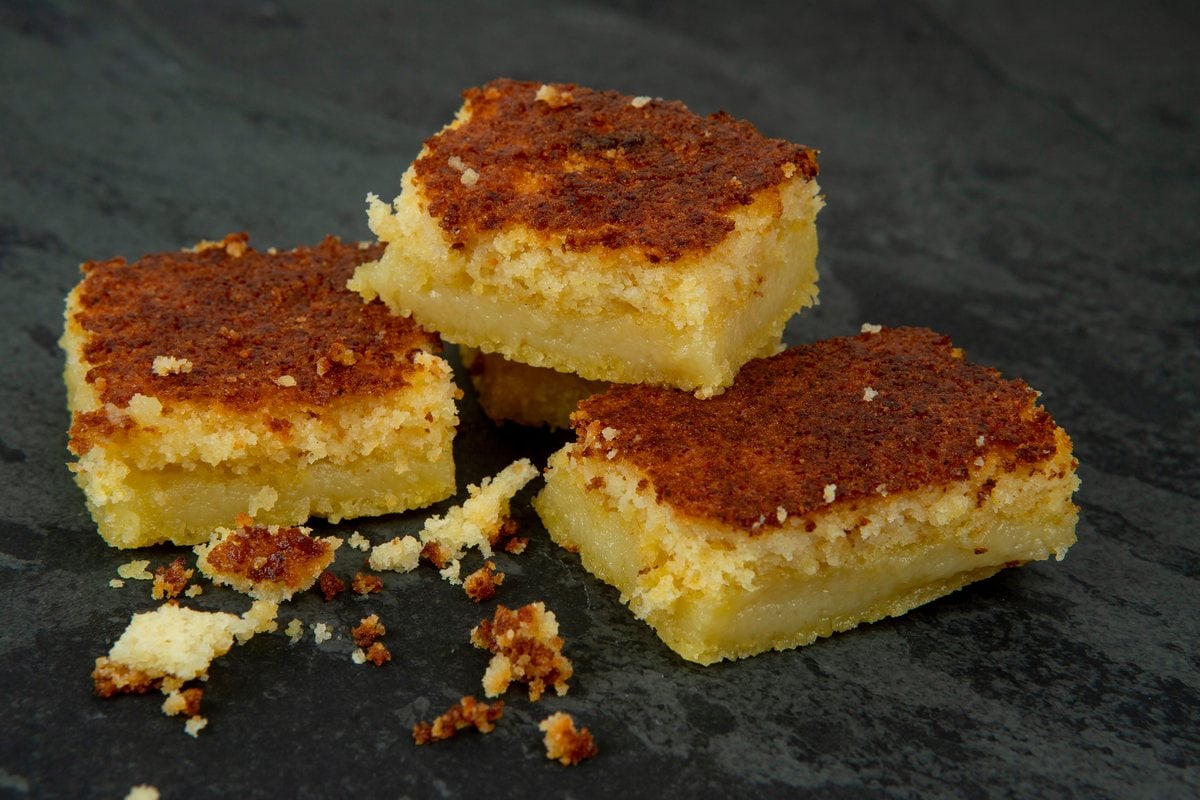
How to make bolo de fubá cremoso
Ingredients (9×13-inch pan, 15 squares)
- 3 large eggs
- 1½ cups (300 g) sugar
- 3 tablespoons (42 g) butter, softened
- ⅓ cup (30 g) finely grated Parmesan
- 1 cup (130 g) fubá mimoso or fine cornmeal
- 2 tablespoons all-purpose flour
- 4 cups (960 ml) whole milk, or 2⅓ cups milk plus one 13.5-ounce can of coconut milk
- 1 tablespoon baking powder
Method
- Heat the oven to 350°F (175°C) and butter a 9×13-inch baking dish. Do not use a Bundt pan or a springform; the batter is too thin.
- Blend everything except the baking powder for 1 minute. Add the baking powder and pulse two or three times, just to mix.
- Pour into the dish. It will look like a pan of milk; that is correct.
- Bake for 45 to 55 minutes, until the top is deep golden and set. The center can still wobble slightly.
- Cool for about 1 hour, then refrigerate; do not leave this custard cake at room temperature for more than 2 hours. Chill further before slicing for a firmer creamy layer.
More bolo de fubá variations

Every Brazilian family has its own twist. Each of these starts from the main recipe below.
How Brazilians serve bolo de fubá

- With coffee. A wedge with a cafezinho or café com leite is the classic. Read more about Brazilian coffee.
- Warm and buttered. Split a warm slice and spread it with butter or requeijão.
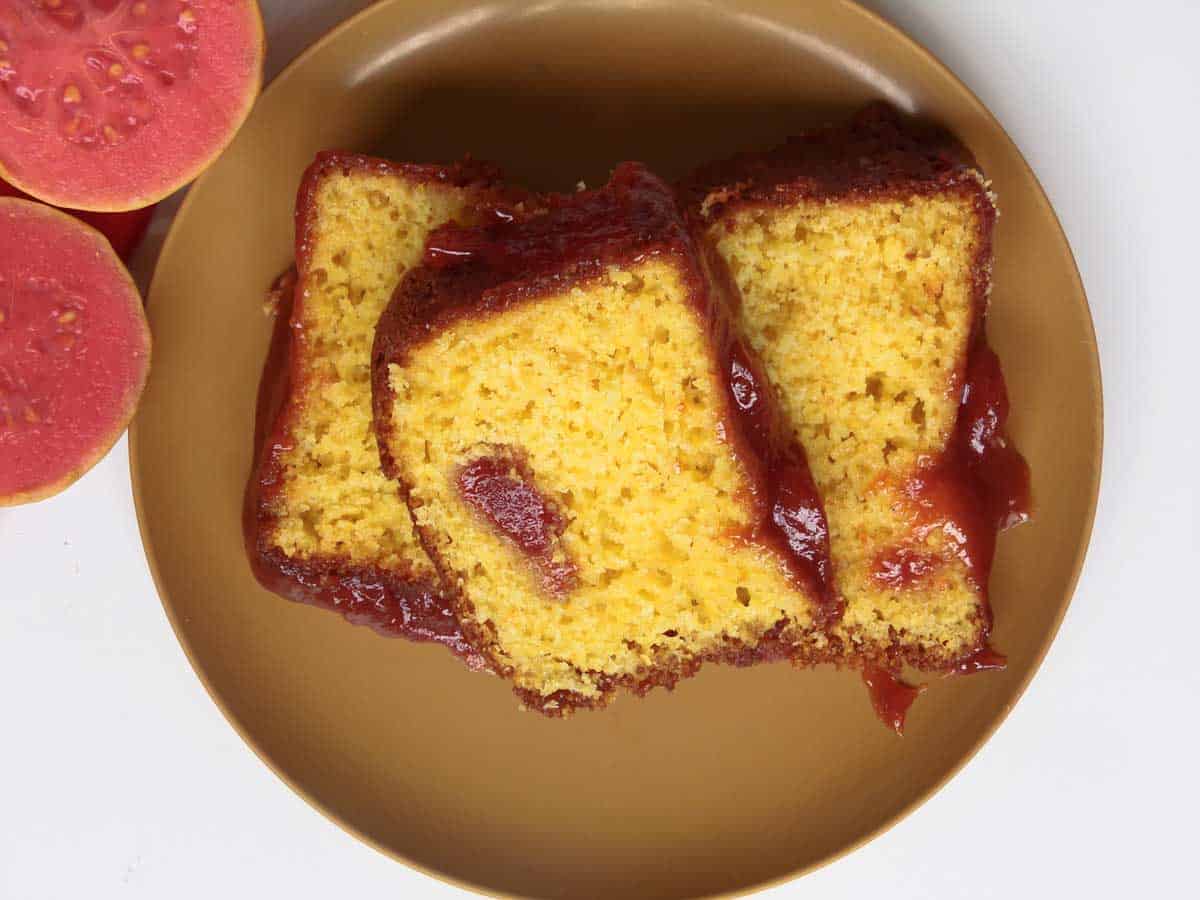
- With cheese and guava. A slice of queijo minas and a slice of goiabada on the side.
- With something sweet. A spoonful of doce de leite or fruit jam.
- Alongside other café da tarde favorites such as pão de queijo and pão francês.
A short history of bolo de fubá

Corn was grown by Indigenous peoples across South America long before the Portuguese reached Brazil in 1500. The word fubá comes from Kimbundu, a Bantu language of Angola; enslaved Africans brought it to Brazil, where it came to mean dry-milled corn, and it passed into Portuguese.
The cake itself follows the Portuguese baking tradition of eggs and sugar. For most of Brazil’s history wheat flour was imported and costly, so home cooks baked with what grew locally: cassava and corn. Bolo de fubá became a fixture of the inland, rural cooking of Minas Gerais, São Paulo and Goiás, where a cake waiting on the table for afternoon coffee is a sign of a welcoming home.
It is also a star of Festa Junina, the June festivals that fall during the corn harvest, alongside pamonha, canjica, pé-de-moleque and quentão. Today most Brazilian bakeries sell it by the slice.
How to store bolo de fubá
- Room temperature: covered, up to 3 days. The fridge dries this cake out, so skip it.
- Freezer: wrap slices individually and freeze for up to 3 months. Thaw at room temperature or warm for 10 seconds in the microwave.
- Bolo de fubá cremoso: because of its custard layer, refrigerate within 2 hours of baking and eat within 4 days. It is delicious cold.
Bolo de fubá FAQ
What is bolo de fubá called in English?
Brazilian cornmeal cake, or Brazilian corn cake. Bolo means cake and fubá means fine cornmeal.
What does bolo de fubá taste like?
Like a light, moderately sweet sponge cake with a toasty corn flavor and a soft, slightly grainy crumb. It is sweeter and finer than cornbread.
Can I use regular cornmeal instead of fubá?
Yes, if it is finely ground. Medium or coarse cornmeal makes a gritty cake; pulse it in a blender first. Do not use masa harina or precooked corn flour.
What is the difference between bolo de fubá and bolo de milho?
Bolo de fubá is made with dry cornmeal and has a cake-like crumb. Bolo de milho is made with fresh or canned corn kernels blended into the batter and is much moister, close to a pudding.
Why is my bolo de fubá dry?
Usually it was overbaked or the cornmeal was packed into the cup. Spoon and level the fubá, use oil rather than butter, and take the cake out as soon as a skewer comes out clean.
Is bolo de fubá gluten-free?
Not as written, because it contains wheat flour. Replace the flour with more fubá or a 1:1 gluten-free blend and use cornmeal labeled gluten-free.
Can I make bolo de fubá without a blender?
Yes. Whisk the eggs and sugar until pale, whisk in the oil and milk, then the dry ingredients, and fold in the baking powder last.
Bolo de Fubá Recipe
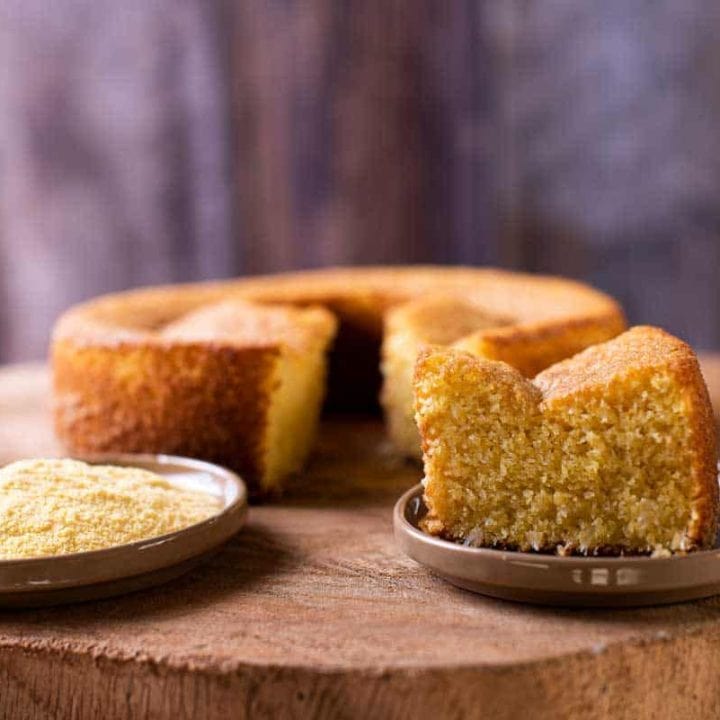
Bolo de Fubá (Brazilian Cornmeal Cake)
Brazil’s everyday cornmeal cake: fine fubá, eggs, milk and oil blended smooth, then baked in a ring pan until golden, tender and lightly sweet. Made for afternoon coffee.
Ingredients
For the cake
- 4 large eggs, at room temperature
- 1½ cups (300 g) granulated sugar
- ¾ cup (180 ml) vegetable or canola oil
- 1 cup (240 ml) whole milk, at room temperature
- 2 cups (260 g) fubá mimoso or very fine yellow cornmeal
- 1 cup (125 g) all-purpose flour
- ¼ teaspoon fine salt
- 1 tablespoon (12 g) baking powder
- 1 tablespoon fennel or anise seeds (erva-doce), optional
For the pan
- 1 tablespoon oil
- 1 tablespoon fubá or granulated sugar
Instructions
- Heat the oven to 350°F (175°C). Brush a 10-inch Bundt or tube pan (10 to 12 cups) with oil, dust it with the cornmeal or sugar for the pan, and tap out the excess.
- Put the eggs, sugar, oil and milk in a blender and blend on high for 1 to 2 minutes, until pale and foamy.
- Add the fubá, flour and salt. Blend on low for 20 to 30 seconds, scraping down the sides once, just until smooth. The batter will be thick but pourable.
- Pour the batter into a large bowl. Sprinkle the baking powder (and fennel seeds, if using) over the top and fold it in with a whisk or spatula until no streaks remain. Do not blend the baking powder.
- Pour the batter into the prepared pan and bake for 40 to 45 minutes, until deep golden and a skewer inserted halfway between the edge and the center tube comes out clean. Keep the oven door closed for the first 30 minutes.
- Cool the cake in the pan on a rack for 15 to 20 minutes. Run a thin knife around the outer edge and the center tube, then invert onto a plate. Serve warm or at room temperature.
Notes
Fubá: use Brazilian fubá mimoso or the finest yellow cornmeal you can find. Coarse cornmeal, polenta and masa harina make a gritty or heavy cake.
Sweetness: many Brazilian family recipes use a full 2 cups of sugar. This version uses 1½ cups for a cake that still tastes sweet with coffee.
No blender: whisk the wet ingredients together until foamy, then whisk in the dry ingredients and fold in the baking powder.
Variations: fold in 1 cup grated Parmesan or queijo minas for bolo de fubá com queijo, or scatter 1 cup diced guava paste (tossed in 1 tablespoon flour) over the batter in the pan for bolo de fubá com goiabada.
Storage: keep covered at room temperature for up to 3 days, or freeze slices for up to 3 months.
More Brazilian cakes and coffee-time treats
Bake your way through our roundup of Brazilian cakes, from bolo de cenoura to bolo de rolo, or try the fresh-corn bolo de milho. For a whole morning spread, see our Brazilian breakfast recipes and Brazilian dessert recipes, or explore cakes from every country in our guide to Latin American cakes and pastries.
More Brazilian Foods
See all →
Jorge Garcia is the founder of AmigoFoods, where he has spent over 20 years helping readers discover authentic Latin American and Spanish cuisine. Raised in a Cuban-American household, Jorge learned to cook at the hands of his mother and grandmother, carrying forward generations of family recipes. That heritage, backed by his family’s four-generation history in the Latin food industry, inspired him to launch AmigoFoods in 2003. With more than 1,000 published articles on recipes, ingredients, and food culture, Jorge’s mission is simple: make authentic Latin cooking approachable for home cooks everywhere while honoring the traditions behind every dish.