
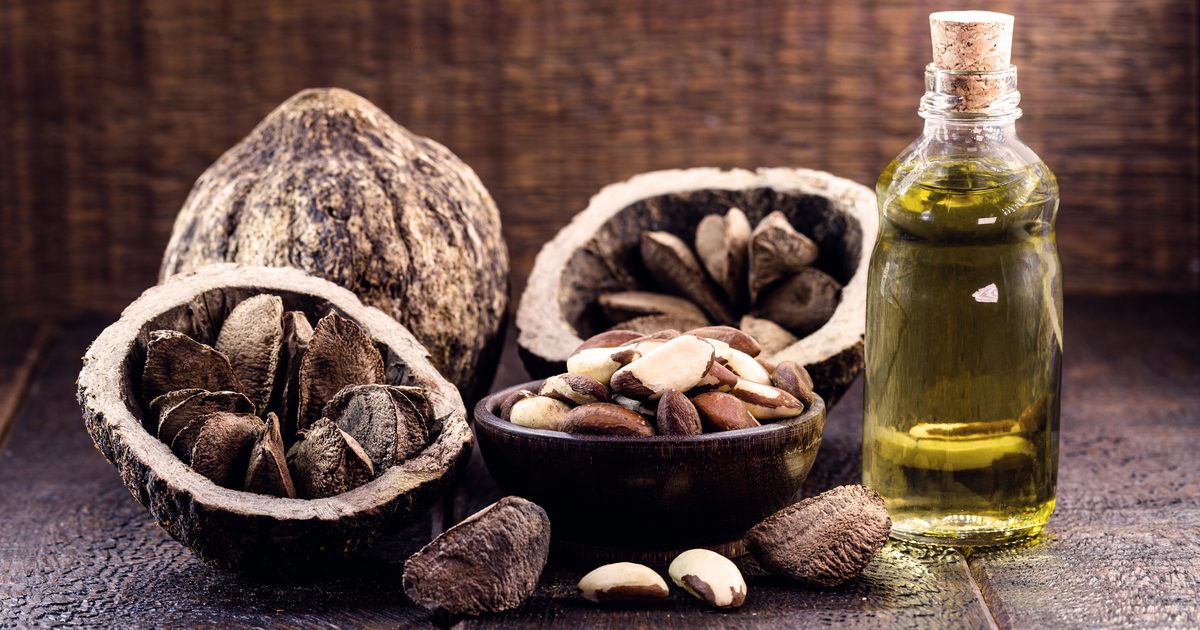
Brazil nuts are the large, creamy seeds of a giant Amazon rainforest tree, and they are the one nut you should count rather than pour. A single Brazil nut holds about 68 to 91 micrograms of selenium, more than an adult needs in a whole day, so one or two Brazil nuts a day is plenty for most adults. Below: how many is too many, where Brazil nuts really come from (more from Bolivia than you would think), how to crack, roast and store them, and four recipes that use them well.
Brazil Nuts at a Glance
AmigoFoods may earn a commission from qualifying Amazon purchases made through links on this page.
What Are Brazil Nuts?
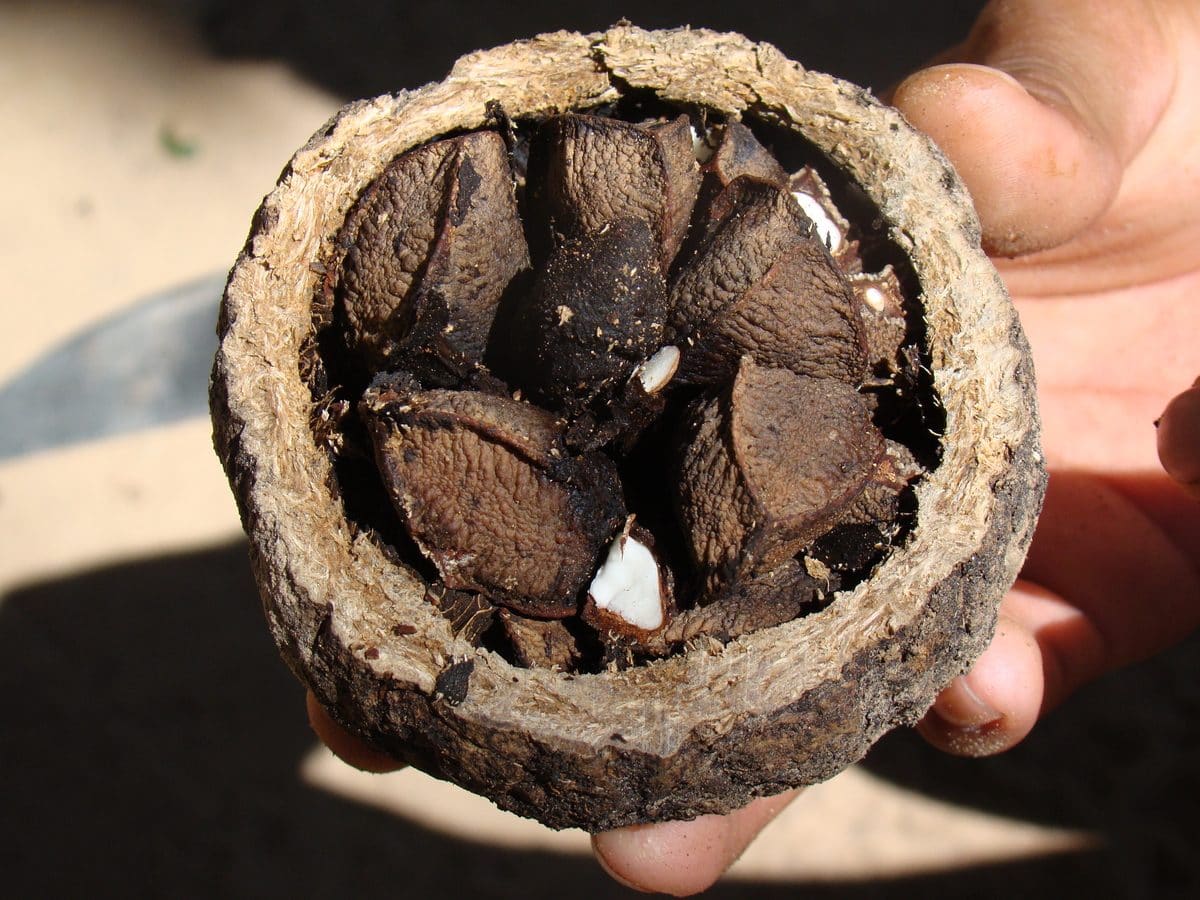
Brazil nuts are not technically nuts. They are the seeds of Bertholletia excelsa, one of the tallest trees in the Amazon rainforest. Each tree drops hard, round, coconut-like pods, and inside every pod sit 10 to 20 or so seeds packed together like the segments of an orange. Each of those seeds has its own woody, three-sided shell. Crack that, and you get the long, ivory kernel we eat.

They taste rich, creamy and buttery, with an earthy finish and a faint bitterness from the thin brown skin. The texture is softer than an almond and denser than a cashew, which is why Brazil nuts blend so smoothly into nut butter and milk.
In Brazil they are called castanha-do-pará, after the Amazonian state of Pará, and they are part of everyday life in the north of the country. Elsewhere in Brazil you will mostly meet them at Christmas, when bowls of in-shell nuts go out on the holiday table. For more on how nuts fit into the country’s cooking, see does Brazilian food have nuts? and our guide to Brazilian ingredients.
How Many Brazil Nuts Should You Eat a Day?
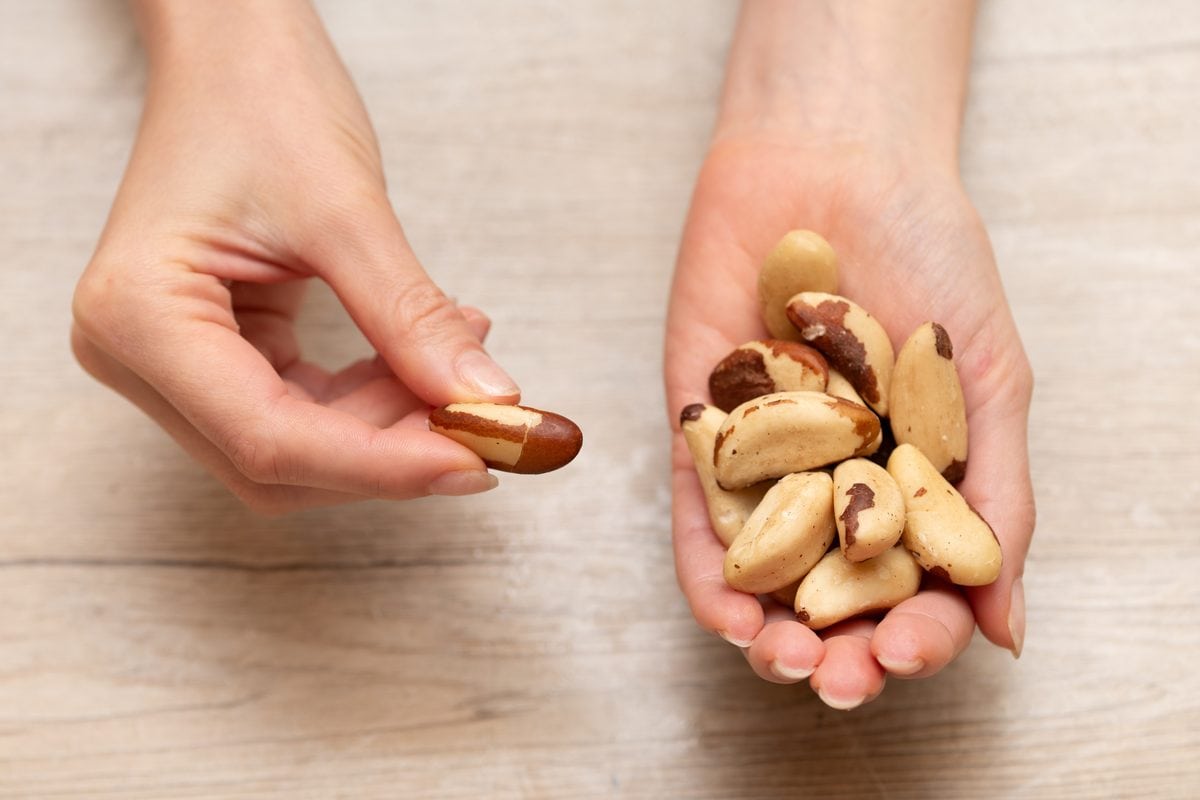
Brazil nuts are the richest food source of selenium by a wide margin. A one-ounce serving, about six nuts, averages 544 mcg in USDA data, which is nearly ten times the daily value. That is why the usual advice to eat “a handful of nuts a day” does not work here. Count them out instead.
The amount also varies from nut to nut, because selenium in Brazil nuts depends on the soil where each tree grew. Two nuts from the same bag can be quite different, so leave yourself some room rather than eating right up to the limit.
| Brazil nuts | Approx. selenium | What it means |
|---|---|---|
| 1 nut | 68–91 mcg | Covers an adult’s daily need on its own. |
| 2 nuts | 136–182 mcg | A comfortable daily maximum for most adults. |
| 3 nuts | 204–273 mcg | Fine now and then; watch other selenium sources that day. |
| 4 nuts | 272–364 mcg | Close to the upper limit before the rest of your diet counts. |
| 6 nuts (1 oz) | about 400–550 mcg | At or over the 400 mcg adult upper limit. |
Per-nut range from the NIH Office of Dietary Supplements; 1-ounce average from USDA FoodData Central. Europe’s food safety agency (EFSA) sets a lower adult limit of 255 mcg a day.
Who should be more careful: anyone who takes a multivitamin, thyroid formula or selenium supplement, since those already add selenium; people with thyroid or kidney disease; and children. Kids have much lower limits (90 mcg a day for ages 1–3, 150 mcg for ages 4–8, 280 mcg for ages 9–13), so half a nut, finely chopped, is plenty for a young child. Whole nuts are also a choking hazard for small children. If you are using Brazil nuts for a health reason, talk it over with your doctor first.
Signs you are eating too many
Regularly going over the selenium limit can cause selenosis. The NIH lists early signs as a garlic odor on the breath and a metallic taste in the mouth, followed by brittle or lost nails, hair loss, skin rash, nausea, diarrhea, fatigue and irritability. These come from weeks of excess, not one generous day. If you notice them and eat Brazil nuts or take selenium every day, stop and check with your doctor.
Brazil Nut Nutrition Facts
Besides selenium, Brazil nuts are a calorie-dense source of mostly unsaturated fat, with useful amounts of magnesium, copper and phosphorus.
| Nutrient | 1 oz (28 g, about 6 nuts) | 1 nut (about 5 g) |
|---|---|---|
| Calories | 187 | about 33 |
| Fat | 19 g (4 g saturated) | 3.4 g |
| Protein | 4 g | 0.7 g |
| Carbohydrates | 3.3 g | 0.6 g |
| Fiber | 2.1 g | 0.4 g |
| Magnesium | 107 mg (25% DV) | about 19 mg |
| Copper | 0.5 mg (about 55% DV) | about 0.09 mg |
| Phosphorus | 206 mg (16% DV) | about 37 mg |
| Selenium | 544 mcg (989% DV) | 68–91 mcg |
Approximate values for dried, unblanched Brazil nuts from USDA FoodData Central. Selenium varies widely by growing region.
Are Brazil Nuts Good for You?
Yes, in small amounts. Selenium is an essential mineral your body builds into proteins that help make thyroid hormones, protect cells from oxidative damage and support the immune system. The thyroid holds more selenium than any other organ, which is why Brazil nuts come up so often in thyroid conversations online.
The honest version is narrower than the internet suggests. Most people in the United States already get enough selenium from bread, eggs, meat and seafood, and clinical trials have not shown that extra selenium prevents heart disease, cancer or cognitive decline in people who are not deficient. Brazil nuts are a good food and an easy way to cover your selenium needs. They are not a treatment for thyroid disease or anything else, and more is not better.
Like other nuts, they also bring unsaturated fat, fiber and minerals to the table, which is why nuts in general fit into heart-healthy eating patterns. The difference with Brazil nuts is simply portion size.
Are Brazil Nuts Toxic? Selenium, Radium and Aflatoxin
Brazil nuts are not poisonous. The three concerns you will read about are all about quantity and quality, and all three are handled by the same habit: eat one or two fresh nuts a day.
- Selenium. The real limit, covered above. Problems come from eating several a day for weeks, or stacking nuts on top of supplements.
- Radium. The trees’ deep roots pull up trace minerals from the soil, including naturally occurring radium, so Brazil nuts carry far more of it than other foods. The amount from a nut or two a day is small, and it is one more reason to treat them as a garnish rather than a snack food.
- Aflatoxin. This mold toxin can develop when nuts are stored warm and damp, especially in the shell. The European Union tightened its checks on in-shell Brazil nuts in 2003 for this reason. Buy from a busy seller, keep nuts cool and dry, and throw out any that are shriveled, moldy or taste bitter and stale.
Brazil nuts are tree nuts, so anyone with a tree nut allergy should avoid them.
Where Do Brazil Nuts Come From?
Brazil nuts grow wild in the Amazon rainforest of Bolivia, Brazil and Peru, with scattered trees in Colombia, Venezuela and the Guianas. Despite the name, Brazil does not dominate the trade. FAO and Brazilian agricultural research figures put Brazil and Bolivia at a bit under half of the world harvest each, with Peru a distant third. Bolivia, though, shells and exports most of the kernels sold abroad, so the bag of Brazil nuts in a US supermarket is very often Bolivian.

The Brazil nut tree
The Brazil nut tree can grow more than 160 feet tall, rising above the rest of the canopy, and it can live for centuries. Its fruit, a woody pod about the size of a baseball and weighing up to 5 pounds, takes more than a year to mature. When ripe, during the rainy season from roughly December to March, the pods fall to the forest floor at high speed. Harvesters wait for them to drop rather than climb, and they do not linger under the trees.

Why almost all Brazil nuts are wild-harvested
Almost every Brazil nut you have eaten came from a wild tree. The trees can be cultivated, and Embrapa, Brazil’s agricultural research agency, publishes guidance on planting them, but plantations are slow and difficult because the tree depends on the forest around it. Its flowers can only be opened by large, strong bees, including orchid bees that need specific rainforest orchids to breed. And the pod is so hard that only the agouti, a rainforest rodent with chisel-like teeth, can gnaw it open. Agoutis bury the seeds they can’t eat, and some of those forgotten seeds become the next generation of trees. A young tree can take 10 years or more to start bearing.
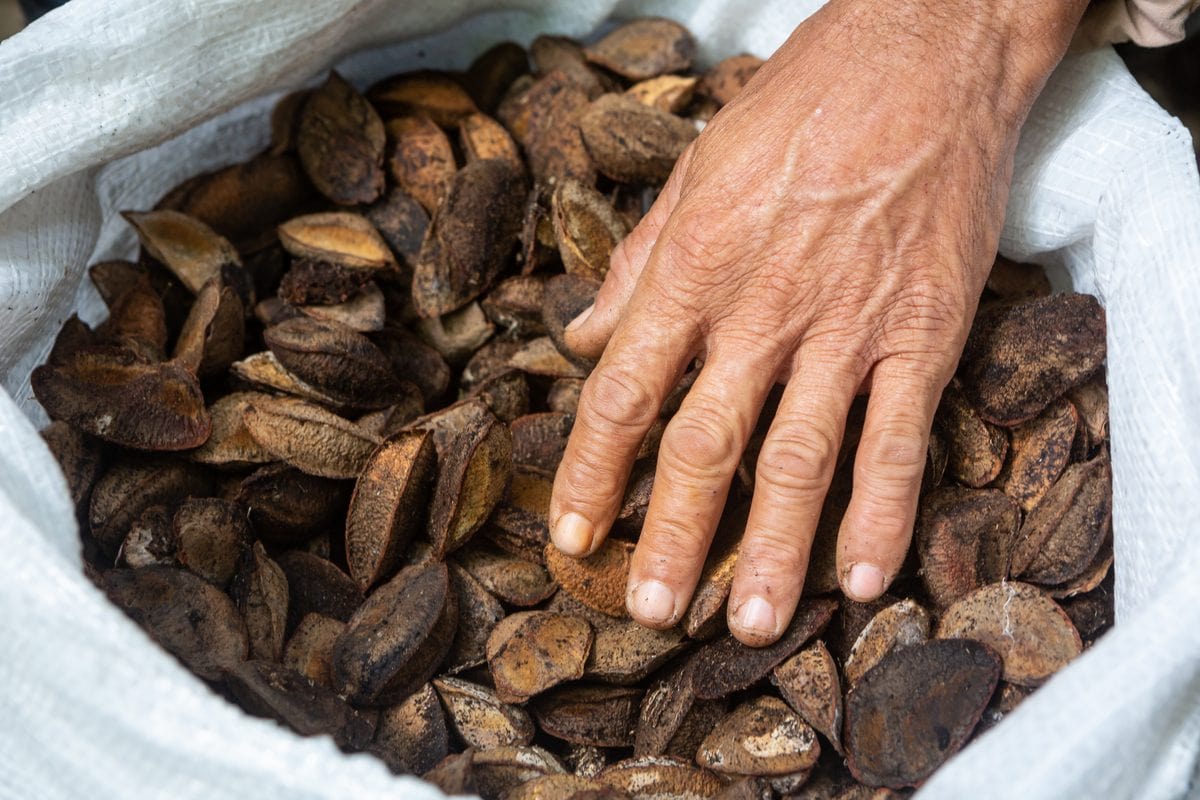
That dependence makes the Brazil nut one of the best economic arguments for keeping the Amazon standing. Felling Brazil nut trees is illegal in Brazil, Bolivia and Peru, and the harvest supports thousands of forest families, called castañeros in Spanish and castanheiros in Portuguese, who gather the pods by hand, split them with machetes and haul the seeds out of the forest by river.
If you are curious about the other foods of this region, see our guides to Brazilian rainforest fruits, açaí and the Amazonian soup tacacá.
What Brazil Nuts Are Called
| Where | Name | Notes |
|---|---|---|
| Brazil | castanha-do-pará | The everyday name. Trade and government sources often use castanha-do-brasil. |
| Bolivia and Peru | castaña, almendra | “Castaña amazónica” is common on Peruvian and Bolivian packaging. |
| Spanish elsewhere | nuez de Brasil | What you will usually see in Mexico, Spain and the Caribbean. |
| English | Brazil nut, Amazon nut | “Amazon nut” is increasingly used by exporters outside Brazil. |
For much of the 20th century, a racist slur was also used as a nickname for Brazil nuts in the United States, and it still turns up in old cookbooks and family stories. It is not an acceptable name for them; “Brazil nut” is the one to use.
How to Crack, Roast and Store Brazil Nuts
How to crack Brazil nuts in the shell
In-shell Brazil nuts are hard, angular and slippery, which makes them the most frustrating nut in the holiday bowl. Two tricks help:
- Chill or blanch them first. Freeze the nuts for a few hours, or drop them into boiling water for 2 to 3 minutes and let them cool. Either one makes the shell more brittle and loosens the kernel.
- Crack along the seam. Set the nut on its flat side in a lever-style nutcracker, or tap the seam with a hammer on a folded towel, and squeeze until the shell splits. Peel away the pieces. Expect some broken kernels; they are perfect for recipes.
If you want to try it, a bag of raw mixed nuts in the shell with Brazil nuts, walnuts, almonds and hazelnuts is exactly what ends up on Brazilian Christmas tables.
How to roast Brazil nuts
Spread shelled nuts on a sheet pan and roast at 350°F (175°C) for 8 to 10 minutes, shaking the pan halfway, until fragrant and lightly golden. On the stove, toast them in a dry skillet such as this Tramontina 10-inch pan (Tramontina is a Brazilian brand) over medium heat for 4 to 5 minutes, stirring often. Roasting deepens the buttery flavor and does not change the selenium content.
How to store Brazil nuts
Their high oil content means Brazil nuts go rancid faster than almonds. Keep them in an airtight container in the refrigerator for up to about 6 months, or in the freezer for up to a year. If they smell like old paint or taste bitter, throw them out.
How to Eat Brazil Nuts
- As a measured snack. One or two with a piece of fruit or a square of dark chocolate.
- Chopped as a topping. Over oatmeal, yogurt or an açaí bowl, the Brazilian way to eat them every day without overdoing it.
- In savory Brazilian dishes. Toasted into farofa, scattered over rice or salads, or ground into a pesto-style sauce for fish.
- In sweets. In northern Brazil, Brazil nuts are candied, folded into cupuaçu bonbons and used in place of peanuts in brittles like pé de moleque.
- Blended. Into nut butter or a creamy nut milk. Because these concentrate several nuts per serving, use them by the spoonful.
Brazil Nut Recipes
Each recipe below is portioned so that one serving holds roughly one or two Brazil nuts’ worth of selenium.
1. Chocolate Brazil Nut Bites
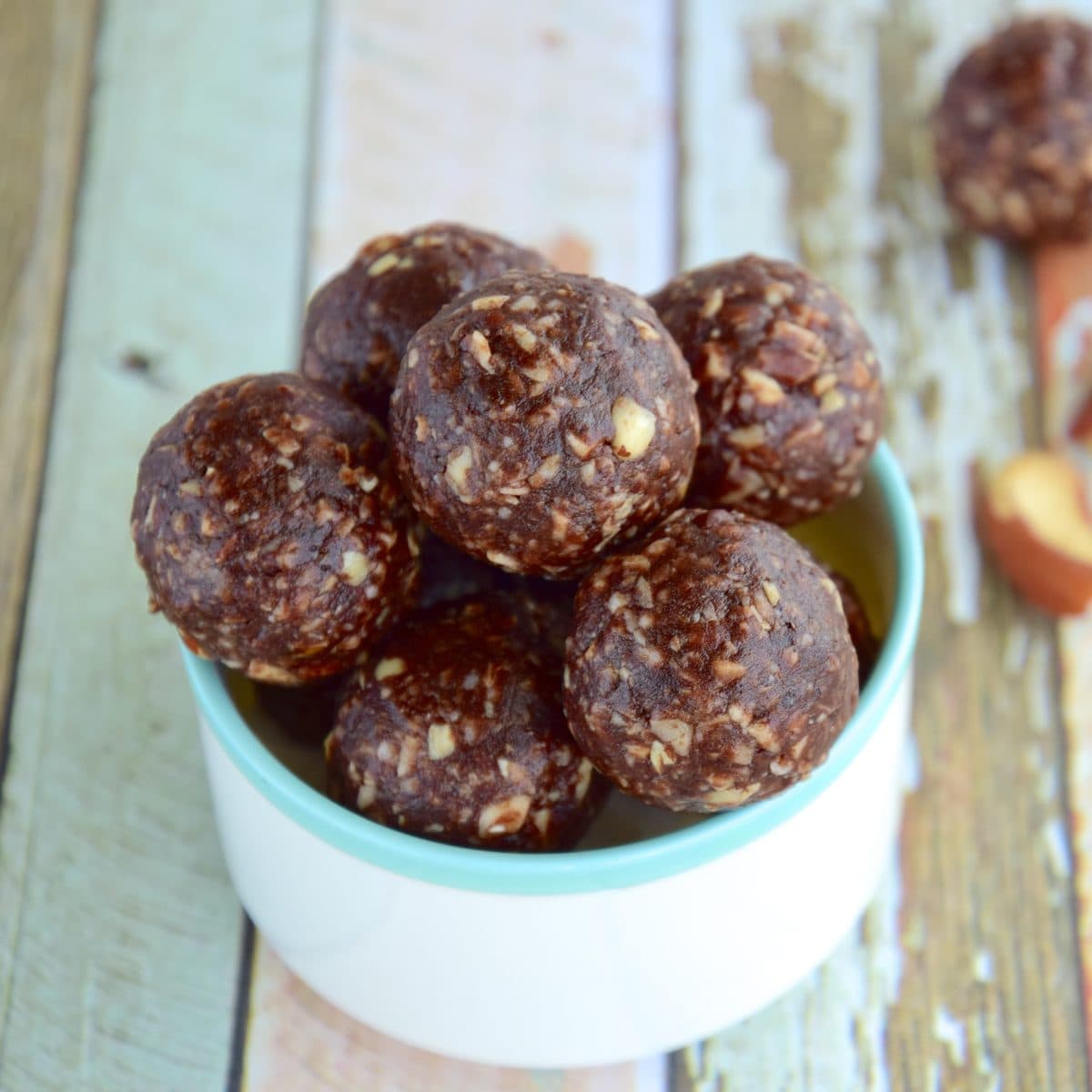
No-bake chocolate bites made with Brazil nuts, almond butter and cocoa butter. Each bite holds a little more than one Brazil nut, so one bite is your Brazil nut for the day.
Chocolate Brazil Nut Bites
No-bake chocolate Brazil nut bites made with almond butter, cocoa butter and cocoa. Each bite holds a little more than one Brazil nut, so one bite a day is the right portion.
Ingredients
- 1 cup Brazil nuts
- 1/4 cup food-grade cocoa butter, melted
- 2 tablespoons unsweetened cocoa powder
- 1/4 cup almond butter
- 2 tablespoons agave nectar
- 1/4 teaspoon fine sea salt
Instructions
- Melt the food-grade cocoa butter gently in a microwave-safe bowl using short 15–20 second bursts, stirring between bursts until just melted.
- Process the melted cocoa butter, almond butter, cocoa powder, agave and salt until combined. Add the Brazil nuts and pulse until finely chopped and evenly distributed. Stop and scrape the bowl as needed.
- If too soft to shape, chill briefly until scoopable. Divide evenly into 24 small bites on a parchment-lined tray, using a small spoon or scoop.
- Refrigerate for about 30 minutes, or until firm, then transfer to a covered container. Keep refrigerated and serve one small bite at a time.
Notes
Makes 24 small bites. Allow about 15 minutes preparation and 30 minutes chilling; a very soft mixture may need extra chilling before shaping. Use food-grade cocoa butter, not a cosmetic product. This recipe contains Brazil nuts and almonds (tree nuts).
Each bite contains a little more than one Brazil nut, roughly 100 mcg of selenium. Brazil nut selenium varies a lot, so serve one bite at a time and count it as your Brazil nut for the day. Refrigerate in an airtight container and use within 1 week.
2. Brazil Nut Butter
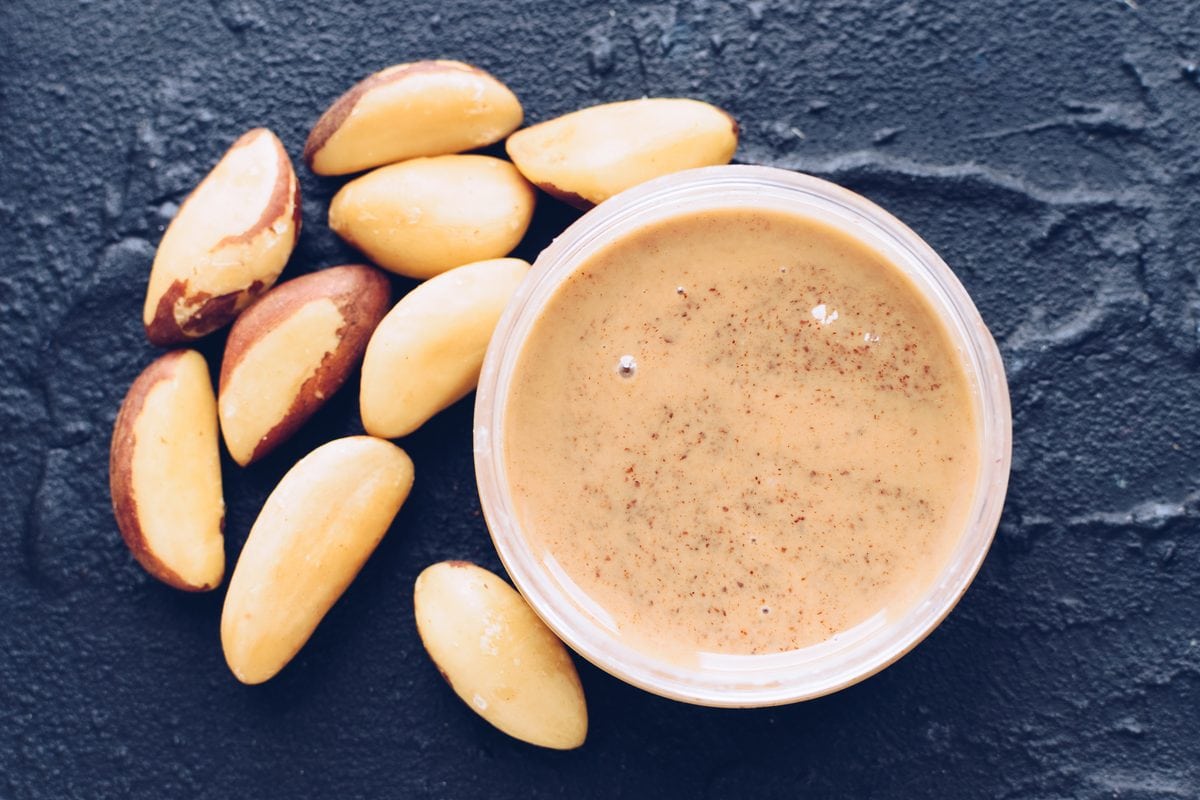
Brazil nut butter is the silkiest nut butter you can make at home, because the nuts are so high in oil. It is also concentrated: one teaspoon carries about as much selenium as a whole nut, so treat it as a spread for one slice of toast, not a spoon-from-the-jar snack.
Ingredients
- 2 cups shelled Brazil nuts
- 1/4 teaspoon fine salt
- 1 teaspoon honey or agave (optional)
Method
- Toast the nuts in a 350°F (175°C) oven for 8 to 10 minutes, or in a dry skillet for 4 to 5 minutes, until fragrant. Let them cool for 10 minutes.
- Process in a food processor, stopping to scrape the bowl every minute or two. The nuts go from crumbs to a thick paste and then, after 8 to 12 minutes, to a smooth, pourable butter. Let the motor rest if it gets hot.
- Add the salt and sweetener near the end and blend 30 seconds more.
- Scrape into a clean jar and refrigerate for up to 1 month. Stir before using, since the oil separates.
3. Brazil Nut Milk
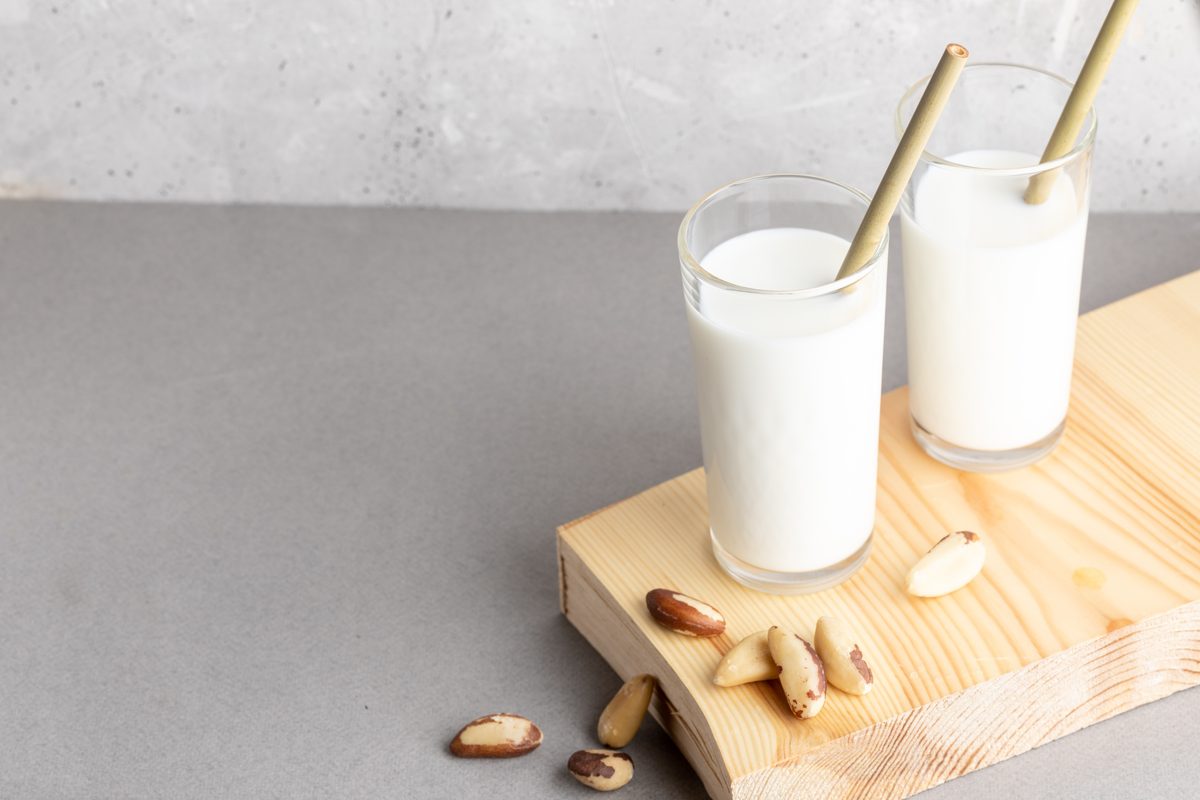
Pure Brazil nut milk made from two cups of nuts would carry several days of selenium per glass, so this version blends a small amount of Brazil nuts with almonds. You still get the rich, vanilla-scented creaminess, at about two nuts’ worth per cup at most.
Ingredients
- 1/4 cup Brazil nuts (about 8 nuts)
- 3/4 cup raw almonds
- 4 cups cold water, plus more for soaking
- 1/2 Madagascar vanilla bean, or 1 teaspoon vanilla extract
- 2 pitted dates or 1 tablespoon maple syrup (optional)
- Pinch of salt
Method
- Cover the nuts with cold water and soak in the refrigerator for 8 hours or overnight. Drain and rinse.
- Split the vanilla bean and scrape out the seeds.
- Blend the nuts, 4 cups fresh water, vanilla seeds, dates and salt on high for about 2 minutes, until very smooth.
- Strain through a nut milk bag or a fine sieve lined with cheesecloth, squeezing out as much liquid as you can.
- Refrigerate in a covered jar and use within 3 days. Shake before pouring.
4. Farofa de Castanha-do-Pará (Brazil Nut Farofa)
Farofa, toasted cassava flour cooked in butter, is the crunchy side dish on nearly every Brazilian plate. Chopped Brazil nuts make it richer and more festive, and it is a natural partner for roast chicken, grilled steak or feijoada. Use Brazilian farinha de mandioca, not tapioca starch.
Ingredients
- 3 tablespoons butter
- 1/2 small onion, finely chopped
- 1 garlic clove, minced
- 1/3 cup Brazil nuts (about 12), roughly chopped
- 1 cup farinha de mandioca (cassava flour)
- 1/2 teaspoon salt, or to taste
- 2 tablespoons chopped parsley or scallion
Method
- Melt the butter in a wide skillet over medium heat. Cook the onion for about 4 minutes, until soft and starting to color. Add the garlic for 30 seconds.
- Add the chopped Brazil nuts and stir for 2 minutes, until lightly golden.
- Add the farinha and salt. Stir constantly for 4 to 5 minutes, until the flour smells toasty and looks like damp golden sand.
- Take off the heat, stir in the parsley and taste for salt. Serve warm or at room temperature.
Where to Buy Brazil Nuts
Shelled Brazil nuts are sold in most US supermarkets, in the bulk section of natural food stores and at warehouse clubs, usually raw or roasted and salted. In-shell Brazil nuts mostly appear in mixed-nut bags around Thanksgiving and Christmas.
- Choose raw or dry-roasted and unsalted for cooking. Oil-roasted, salted nuts are made to be eaten by the handful, which is the wrong habit with Brazil nuts.
- Check the date and the color. Kernels should be ivory inside with intact brown skins, not yellowed or shriveled.
- Buy what you will use in a few months, or freeze the rest.
Online, these wild-harvested raw Brazil nuts come batch-tested and resealable, and you can compare other brands in this Amazon search for raw Brazil nuts. For other Latin American staples worth keeping on hand, see our Latin American pantry essentials.
Brazil Nuts FAQ
How much selenium is in one Brazil nut?
About 68 to 91 micrograms, according to the NIH Office of Dietary Supplements, though individual nuts can fall well outside that range depending on where the tree grew. Adults need 55 micrograms a day.
Can you eat raw Brazil nuts?
Yes. Most Brazil nuts sold as raw were briefly steamed or soaked in the shell to make cracking possible and then dried, so “raw” on the bag means unroasted. They are safe to eat as they come.
What do Brazil nuts taste like?
Rich, creamy and buttery, a little like a macadamia with an earthier finish. The brown skin adds a slight bitterness. Toasting brings out a deeper, almost coconut-like sweetness.
How many Brazil nuts are in an ounce?
About six whole nuts, sometimes four or five if they are very large. An ounce averages around 544 micrograms of selenium, which is why a full ounce is more than you should eat in a day.
Why are Brazil nuts so expensive?
Nearly all of them come from wild trees rather than plantations, so they are gathered by hand in remote forest, carried out by boat and cracked twice. Harvests also swing with the weather. A severe El Niño drought in 2016 and 2017 cut the crop sharply and sent prices soaring.
Are Brazil nuts radioactive?
They contain more naturally occurring radium than other foods, because of how deeply the trees root into mineral-rich soil. The amount from one or two nuts a day is small, but it is another reason not to eat them by the handful.
Can dogs eat Brazil nuts?
It is best not to share them. Brazil nuts are not toxic to dogs the way macadamia nuts are, but they are very high in fat, which can upset a dog’s stomach or trigger pancreatitis, a whole nut can be a choking or blockage risk, and they are loaded with selenium for a small body.
What is Brazil nut oil used for?
Cold-pressed Brazil nut oil is used in some kitchens in the Amazon and, more often, in soaps, lotions and hair products, where its rich fatty acids make it a popular moisturizing ingredient. Buy food-grade oil if you plan to cook with it; cosmetic oils are not meant to be eaten.

Are Brazil nuts good for your thyroid?
Your thyroid needs selenium to make and convert thyroid hormones, and one Brazil nut covers a day’s needs. That supports normal thyroid function, but Brazil nuts are not a treatment for thyroid disease. If you have a thyroid condition, ask your doctor before adding them daily, especially if you also take a supplement.
Brazil nuts are one of the Amazon’s great gifts, and the best way to enjoy them is a few at a time. For more from the region, explore our best Brazilian foods, the Brazilian food hub and the Bolivian food hub, home of most of the world’s shelled Brazil nuts.
Sources: NIH Office of Dietary Supplements, Selenium Fact Sheet for Health Professionals; USDA FoodData Central; FAO Non-Wood Forest Products statistics; Embrapa (Brazilian Agricultural Research Corporation) market studies, 2024 and 2025; Rainforest Alliance species profile.
More Brazilian Foods
See all →
Jorge Garcia is the founder of AmigoFoods, where he has spent over 20 years helping readers discover authentic Latin American and Spanish cuisine. Raised in a Cuban-American household, Jorge learned to cook at the hands of his mother and grandmother, carrying forward generations of family recipes. That heritage, backed by his family’s four-generation history in the Latin food industry, inspired him to launch AmigoFoods in 2003. With more than 1,000 published articles on recipes, ingredients, and food culture, Jorge’s mission is simple: make authentic Latin cooking approachable for home cooks everywhere while honoring the traditions behind every dish.