

There is no single Brazilian pantry. There are at least three, and they came from different places. One is African, landed in Bahia, and runs on red palm oil and hot little peppers. One is Indigenous and Amazonian, built on cassava and on fruit that mostly never leaves the region. One is Portuguese and southern, all cured meat, beans and things grilled over fire.
What follows is the short list that those three traditions actually share — fourteen ingredients that turn up across the country, what each one is for, and what to look for when you buy it.
The 14 at a Glance
| Ingredient | What it is | Where it shows up | Region |
|---|---|---|---|
| Farinha de mandioca | Toasted cassava flour | Farofa, feijoada, almost every plate | Everywhere |
| Azeite de dendê | Unrefined red palm oil | Moqueca, acarajé, vatapá | Bahia |
| Malagueta | Small, seriously hot chili | Hot sauce, street food, moqueca | Everywhere |
| Feijão preto | Black turtle beans | Feijoada, feijão e arroz | Rio, southeast |
| Charque | Salted, sun-dried beef | Beans, stews, northeastern cooking | Northeast, south |
| Queijo coalho | Firm cheese that grills without melting | Beach skewers, sides | Northeast |
| Açaí | Amazonian palm fruit pulp | Tigela bowls, savoury dishes in Pará | Amazon |
| Brazil nuts | Wild-harvested Amazon seeds | Snacking, baking, pé de moleque | Amazon |
| Guaraná | High-caffeine Amazonian seed | The national soft drink, powders | Amazon |
| Rainforest fruits | Cupuaçu, buriti, graviola and others | Juice, ice cream, sweets | Amazon |
| Jabuticaba | Grape-like fruit that grows on the trunk | Jelly, liqueur, eaten fresh | Southeast |
| Coffee | The world’s largest crop | Cafezinho, all day, everywhere | Minas, São Paulo |
| Cachaça | Spirit from fresh cane juice | Caipirinha, batidas | Everywhere |
| Chimarrão | Yerba mate drunk from a gourd | All day, socially | Rio Grande do Sul |
The Everyday Pantry
Farinha de mandioca

If you only take one thing from this list, take this one. Farinha de mandioca is cassava grated and toasted into a coarse flour, and Brazilians put it on almost everything.
Toast it in butter or bacon fat with onion and you have farofa, the side dish that goes with feijoada, with barbecue, with a fried egg.
Worth knowing: cassava comes in sweet and bitter varieties. Sweet cassava (aipim in the southeast, macaxeira in the northeast) is peeled, boiled and eaten as a vegetable.
Raw or inadequately processed cassava can release cyanide. Bitter cassava requires specialized processing; this overview is not a home preparation method. Buy commercially prepared food-grade farinha and follow the package directions.
That processing is exactly what produces farinha. The technique is Indigenous, it predates contact by a long way, and it is the reason a toxic root became the staple of a continent.
Do not confuse it with tapioca. Tapioca is the extracted starch, and in the northeast it means the crepe made from that starch, not the pearls. Different product, same root.
More on farinha de mandioca and farofa.
Azeite de dendê

Azeite de dendê is unrefined red palm oil, and it arrived in Bahia with enslaved West Africans who brought the palm and the cooking with them.
It is the single most recognisable flavour in Afro-Brazilian food: orange, faintly nutty, a little grassy, and impossible to fake.
The colour is real. Unrefined palm oil is loaded with carotenoids, which is why a spoonful turns a whole pot of moqueca the shade it is famous for.
Refined palm oil — the industrial stuff in processed food — is stripped pale and tastes of nothing. For Brazilian cooking you want the red kind, sold in small bottles and solid at cool room temperature.
Use it with a light hand if you are new to it. Dendê is assertive, and the classic Bahian dishes — moqueca, acarajé, vatapá, caruru — are built around it rather than merely seasoned with it.
Malagueta

The malagueta is a Capsicum frutescens — the same species as the tabasco pepper — and it runs roughly 60,000 to 100,000 Scoville units.
That is well above a jalapeño and in the neighbourhood of a cayenne. It is small, about two inches, and it is the chili in the little bottle on every Brazilian table.
It is also the same plant that became piri-piri in Mozambique and Portugal, carried there along Portuguese trade routes.
And the name is a historical mix-up: it was named after melegueta pepper, the unrelated West African spice, because early Europeans reached for whatever they already had a word for.
Most of what you will find outside Brazil is jarred in vinegar or brine, which is authentic — that is how it is usually kept there too. Compare it with the wider Latin American chile family and it sits at the hotter end.
Feijão preto

Black turtle beans are the backbone of feijoada and of the plain rice and beans eaten at lunch across the country.
They are not interchangeable with every other bean in the cupboard: they cook down into a dark, almost glossy broth that carries the smoke and salt of whatever pork went in with them.
This is a regional preference rather than a national law. Rio and the southeast cook black; much of the northeast and centre-west uses brown or carioca beans and would find a black feijoada slightly foreign. Both are correct.
If a recipe says feijão with no colour, it usually means whichever one that state cooks.
More on feijão preto and the feijoada myth.
Charque

Charque is beef heavily salted and dried in the sun — a preservation method from before refrigeration that stayed because people came to prefer the taste.
It goes into beans, into stews, into the northeastern dishes that pair it with cassava or pumpkin, and it turns up in the south’s arroz carreteiro.
It is sold hard and very salty, and it needs desalting according to the package directions, with soaking and water changes carried out in the refrigerator.
Skip that step and the dish is inedible. Charque and carne de sol are close cousins and the names get used loosely; carne de sol is lightly salted and dried faster, so it stays softer.
Queijo coalho
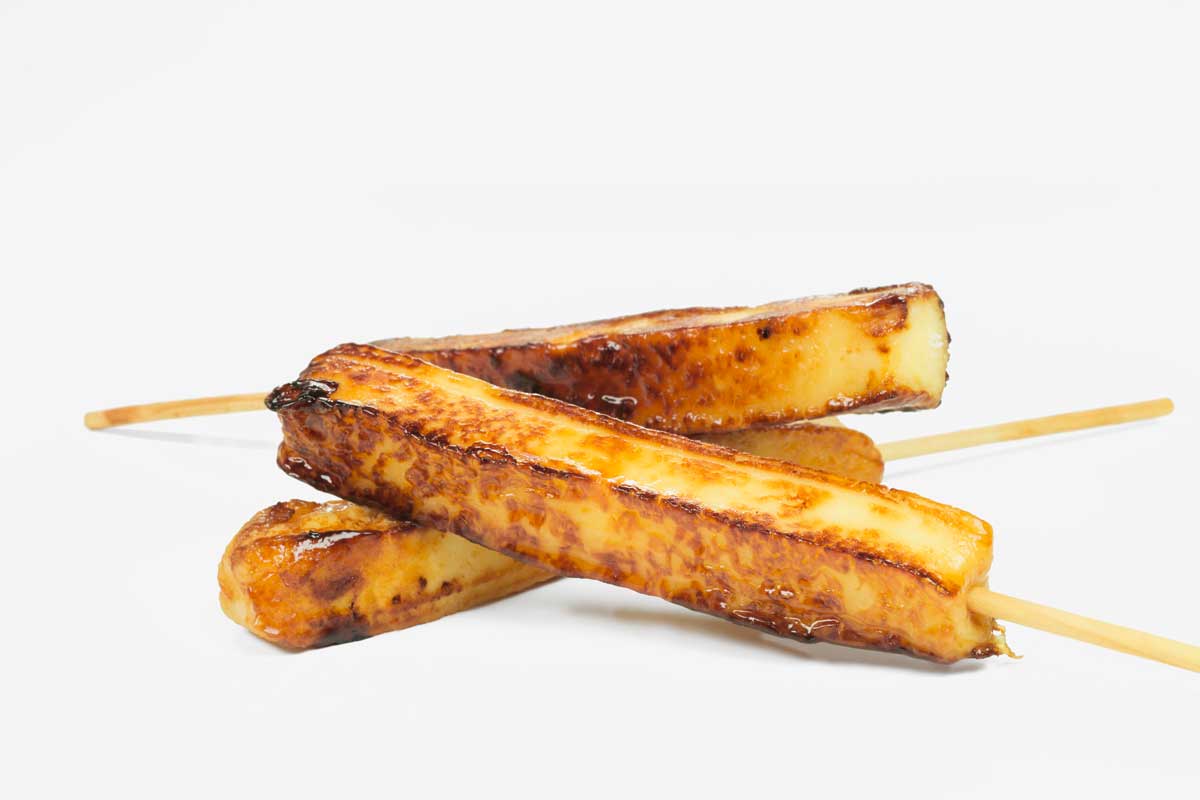
Queijo coalho is a firm rennet cheese from the northeast with a high melting point, which is the whole point of it. Put it over coals and it browns and squeaks rather than collapsing — the same trick halloumi does, arrived at independently.
On the beaches of Recife and Fortaleza it is sold on skewers from a portable charcoal grill, often finished with a drizzle of molasses or oregano.
At home it goes into tapioca crepes, onto the churrasco grill, or just under the broiler. Buy it in a block; pre-sliced dries out fast.
From the Amazon
Açaí

Açaí is the fruit of an Amazonian palm, and almost none of it is sugar. It is mostly fat and fibre, which is why it tastes closer to an unsweetened berry crossed with dark chocolate than to anything in a smoothie bar.
The pulp oxidises within hours of harvest, so it has always been processed fast and frozen — that is not a modern shortcut, it is the only way the fruit travels at all.
And the bowl the rest of the world knows is a southeastern invention. In Pará, where it comes from, açaí is savoury: served thick and unsweetened alongside fried fish and farinha.
Brazil nuts

Brazil nuts come largely from forest harvesting, but the claim that they cannot be cultivated is incorrect. Embrapa publishes guidance on growing Brazil-nut trees, including planting and seedling production.
Cultivation is challenging: successful production depends on suitable growing conditions, pollination and years of tree development. Forest ecosystems and traditional harvesting remain important to the crop.
Harvesting, opening the tough fruits, processing and transporting the nuts all contribute to the work behind a bag of Brazil nuts.
They are also the densest dietary source of selenium there is, to the point where nutritionists talk about them in units of one or two nuts rather than handfuls.
Guaraná

Guaraná is an Amazonian climbing plant whose seed contains roughly 2–8% caffeine by weight, against 1–3% for a coffee bean. The Sateré-Mawé people cultivated and used it long before it reached a bottling plant.
Most Brazilians meet it as the soft drink, which is sweet, faintly apple-like and outsells cola in parts of the country.
The powdered seed is the other form — stirred into juice or water, and sold as an energy supplement well outside Brazil.
Cupuaçu, buriti and the rest

Beyond açaí there is a long list of Brazilian rainforest fruits that barely leave the region: cupuaçu, cacao’s tart cousin, which makes an extraordinary ice cream; buriti, orange and oily and rich in vitamin A; graviola, bacuri, açaí’s relatives and a dozen more.
Most are too fragile to ship fresh, so if you find them at all it will be as frozen pulp in a Brazilian grocery — which is, usefully, exactly how Brazilians buy them too.
Jabuticaba

Jabuticaba grows directly on the trunk and main branches, so a fruiting tree looks like it has been studded with black marbles. It tastes roughly like a grape with more perfume and a thicker skin.
The window is short and the fruit does not keep, which is why it is almost never exported and why so much of the crop becomes jelly, liqueur or cachaça infusion. If you are ever in the southeast when it fruits, eat it off the tree.
What Brazil Drinks
Coffee

Brazil has grown more coffee than any other country for more than a century and a half, and the crop shaped the economy, the politics and the map.
Most of it is arabica from Minas Gerais and São Paulo, grown at lower altitudes than the Colombian or Ethiopian benchmarks, and typically dry-processed — which is what gives Brazilian coffee its low acidity and heavy chocolate-and-nut body.
That profile is why it anchors so many espresso blends. At home, though, the default is the cafezinho: small, strong, already sweetened, offered to anyone who walks in, and traditionally strained through a cloth coador.
Cachaça
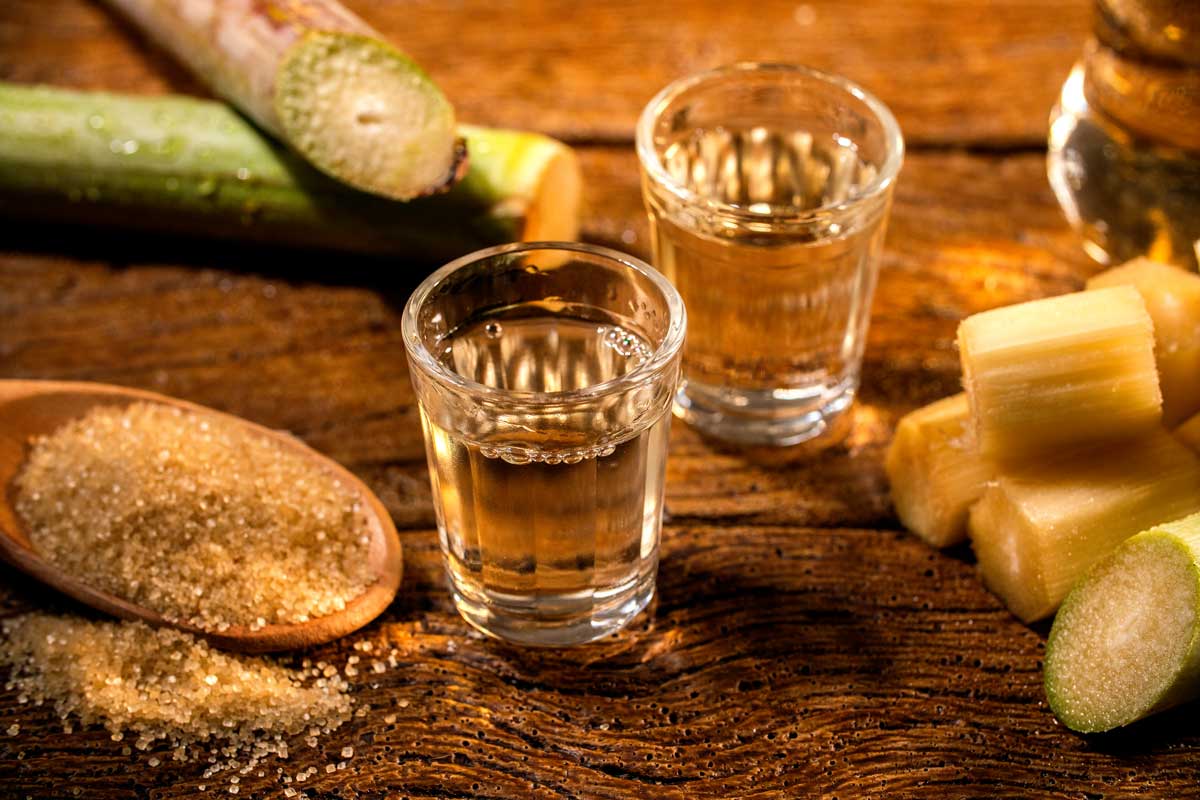
The distinction that matters: rum is usually made from molasses, a by-product of sugar refining. Cachaça is made from fresh-pressed sugarcane juice, fermented and distilled straight. That is why it tastes green and grassy where rum tastes sweet and round.
Brazilian law puts it between 38% and 48% ABV and caps added sugar at 6 grams per litre — above that, up to 30 grams, it has to be labelled adoçada.
Anything sold as aged must be at least half spirit that spent a year in wood, and Brazilian producers use native timbers that no other spirit category touches, which is where the interesting bottles live.
Unaged prata is what goes into a caipirinha. Aged ouro is for drinking neat, and if your only experience of cachaça is a rough caipirinha, that is the thing to try next.
Chimarrão

In Rio Grande do Sul and Santa Catarina, chimarrão is less a drink than a social structure. Yerba mate, ground fine and green, packed into a gourd, topped with hot water and drunk through a metal bomba, then refilled and passed to the next person.
Brazilian chimarrão mate is ground finer and greener than the Argentine style, and it is drunk unsweetened and very hot. Its cold counterpart, tereré, belongs to the hotter centre-west and to Paraguay.
Where to Start
If you are stocking a Brazilian shelf from nothing, three things get you furthest: a bag of farinha de mandioca, a small bottle of azeite de dendê, and a jar of malagueta.
Those three cover farofa, the entire Bahian repertoire, and the heat that goes on top of both.
After that it depends where you are cooking. Black beans and charque get you to feijoada. Coffee and cachaça cover most of the day in either direction.
Our Brazilian pantry picks on Amazon gather the staples worth keeping in stock — Guaraná Antarctica, Pilão coffee and the rest.
For the dishes these ingredients turn into, browse our Brazilian ingredients hub, the best Brazilian street food, or everything we have written about Brazilian food.
Questions About Brazilian Ingredients
What is the most essential Brazilian ingredient?
Farinha de mandioca. Toasted cassava flour appears on more Brazilian tables more often than anything else on this list, and farofa made from it accompanies almost every major dish.
Can I substitute regular palm oil for dendê?
No. Refined palm oil is pale and neutral; azeite de dendê is unrefined, deep orange and strongly flavoured. The colour and taste of moqueca and acarajé come entirely from the unrefined kind.
What can I use instead of malagueta peppers?
Tabasco peppers are the same species and the closest match. Thai bird chilies work for heat but taste different. Whatever you use, a Brazilian hot sauce is usually just chilies, vinegar and salt.
Is cachaça just Brazilian rum?
Not quite. Most rum is distilled from molasses; cachaça must be distilled from fresh sugarcane juice and bottled between 38% and 48% ABV under Brazilian law. The result is grassier and more vegetal.
Why are Brazil nuts so expensive?
Harvesting and processing are labor-intensive, and remote transport adds cost. Many nuts come from forest harvests, but Brazil-nut trees can also be cultivated; production is challenging rather than impossible.
What is the difference between farinha de mandioca and tapioca?
Farinha is the whole root grated and toasted into a coarse flour. Tapioca is the starch extracted from the same root — and in northeastern Brazil, the crepe made from that starch.
More Brazilian Foods
See all →
Jorge Garcia is the founder of AmigoFoods, where he has spent over 20 years helping readers discover authentic Latin American and Spanish cuisine. Raised in a Cuban-American household, Jorge learned to cook at the hands of his mother and grandmother, carrying forward generations of family recipes. That heritage, backed by his family’s four-generation history in the Latin food industry, inspired him to launch AmigoFoods in 2003. With more than 1,000 published articles on recipes, ingredients, and food culture, Jorge’s mission is simple: make authentic Latin cooking approachable for home cooks everywhere while honoring the traditions behind every dish.