

Champiñones al ajillo are Spanish garlic mushrooms browned in olive oil, then finished with sliced garlic, guindilla, a splash of dry sherry and fresh parsley. This simple tapa takes about 25 minutes and is made for sharing with crusty bread.
Champiñones al Ajillo at a Glance
What “Al Ajillo” Means
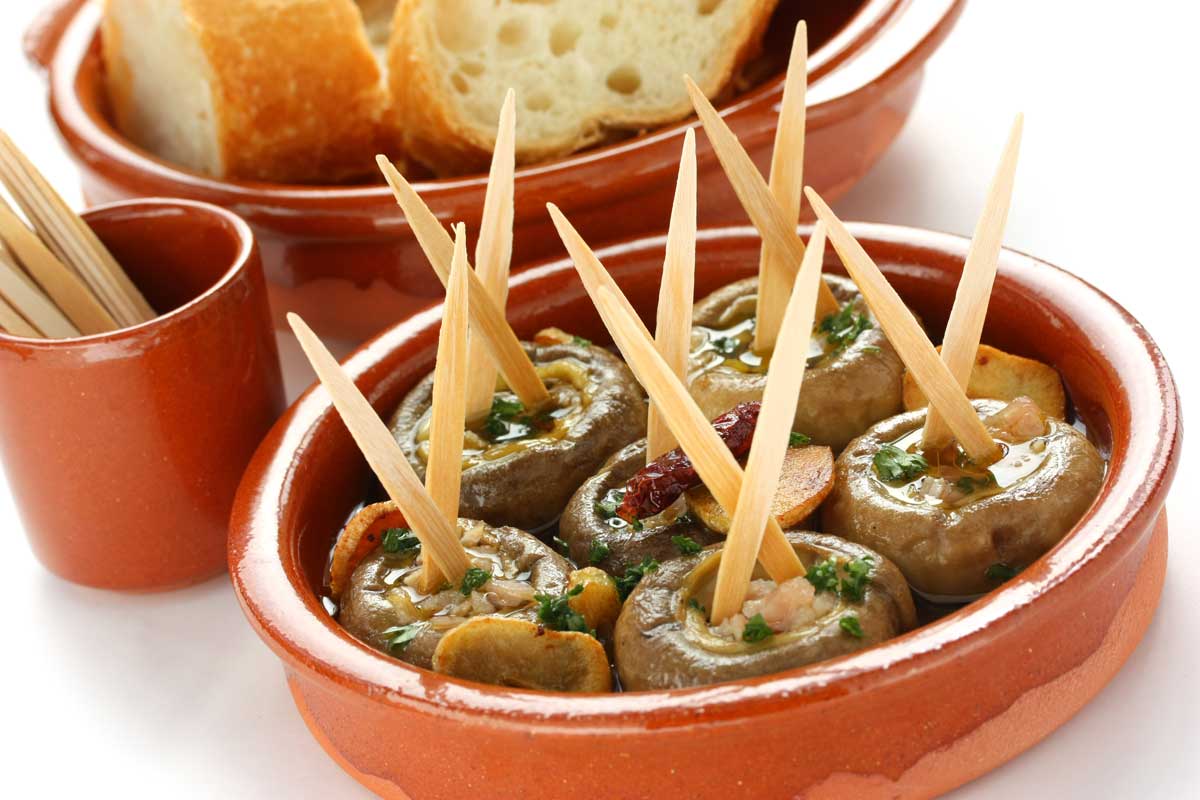
The Real Academia Española defines ajillo as a kind of sauce made from garlic and other ingredients. In practice, al ajillo describes a cooking style rather than a fixed recipe: garlic gently sizzled in plenty of olive oil, often with dried chili and parsley, sometimes loosened with wine.
The same method gives Spain gambas al ajillo, the famous sizzling garlic shrimp, as well as rabbit and chicken al ajillo. If you can make one, you already understand the other.
How the mushroom version differs from gambas al ajillo
Shrimp cook in a minute or two and release almost no liquid, so gambas are basically poached in hot garlic oil. Mushrooms are the opposite. They are mostly water, and they need several minutes of high heat to release that moisture and brown.
That’s why a good mushroom version flips the order: sear the mushrooms first, then add the garlic. Several of the best recipes online, and plenty that aren’t, still start with garlic, which either burns or forces you to cook the mushrooms too gently.
The ingredients that make it Spanish
- Extra-virgin olive oil. This dish is as much about the oil as the mushrooms. A fruity Spanish oil makes a real difference; see our guide to Spanish olive oil.
- Guindilla. The RAE describes it simply as a small, very hot pepper. In al ajillo dishes it’s usually a dried red chili, added whole or in pieces for gentle heat. Red pepper flakes are a fine stand-in.
- Dry sherry or white wine. A splash of fino or manzanilla sherry adds a nutty, saline edge, while a dry white keeps things bright. Spanish home recipes most often use white wine; some skip alcohol and finish with lemon.
- Pimentón (optional). A pinch of pimentón, Spanish smoked paprika, added off the heat gives color and smokiness. It’s a common variation, not a requirement.
Logroño’s Famous Champi: The Bar Soriano Pincho
No conversation about Spanish mushroom tapas is complete without Logroño, the capital of La Rioja. On the tiny Travesía del Laurel, just off the famous tapas street Calle Laurel, Bar Soriano has served essentially one thing for decades: the champi.
According to the Spanish press, the bar opened on November 8, 1972, founded by the Barrero Benito family from Soria province, which explains the name. Over the years it cut its menu down to mushrooms alone.
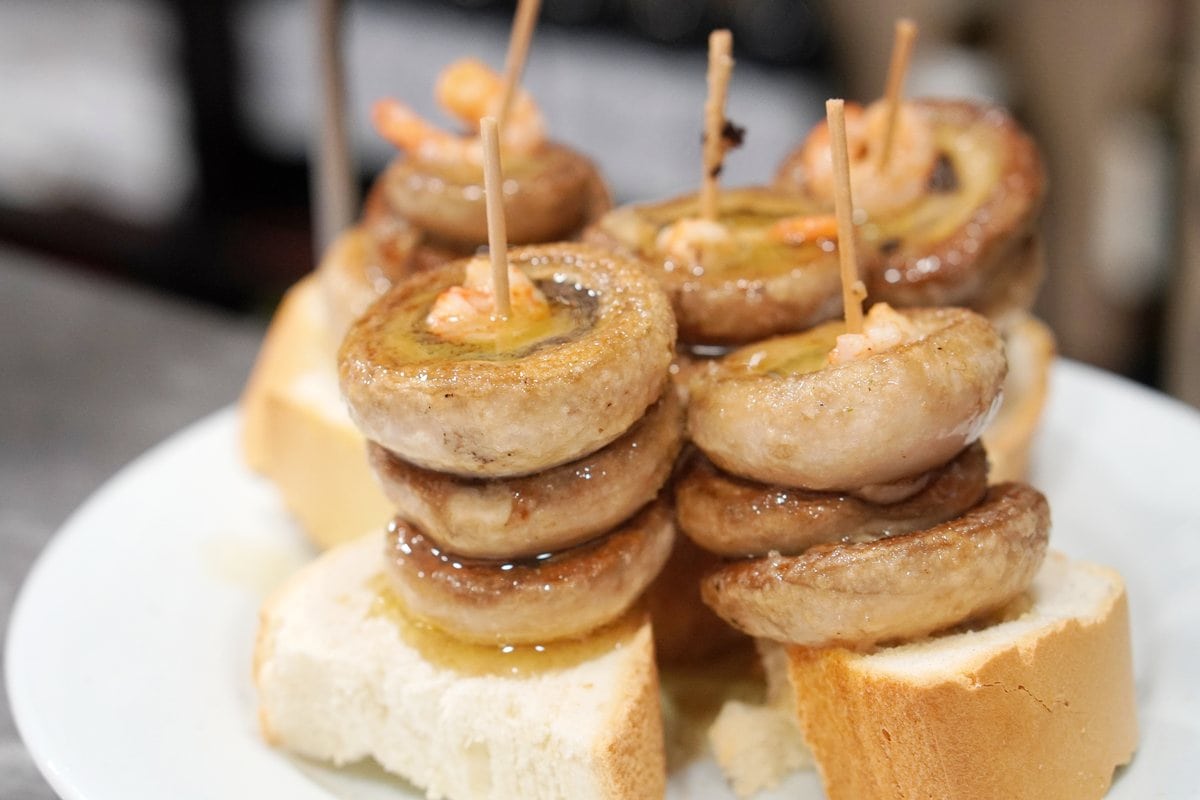
The pincho itself is simple. Three fresh mushroom caps are cooked to order a la plancha (on a flat griddle), brushed with the house “special sauce,” stacked on a toothpick with a small shrimp on top and set on a slice of bread. The Calle Laurel association’s own listing describes it as a griddled mushroom with shrimp, made on the spot.
The exact sauce is a house secret. Home cooks in Spain approximate it with a blended garlic and olive oil emulsion, and some add a little vinegar or parsley, so treat any “copycat” recipe as a guess.
Why La Rioja is mushroom country
La Rioja is famous for wine, but mushrooms are the region’s other big crop. The town of Pradejón is often called Spain’s mushroom capital, with cultivation that grew out of old family wine cellars in the mid-20th century.
Sources disagree on the exact share. Spanish outlets have described La Rioja Baja as producing around 60% of Spain’s mushrooms, while Directo al Paladar reports that La Rioja and Castilla-La Mancha together account for almost half of Spanish cultivated mushroom production. Either way, it’s one of the country’s two major growing regions.
Which Mushrooms to Use in the US
In Spain, champiñón means the common cultivated mushroom, Agaricus bisporus. That’s great news for American cooks, because it’s the same species as white button mushrooms, cremini and portobellos, and most of the US supply is grown around Kennett Square, Pennsylvania.
- Cremini (baby bella): our first pick. Firmer and a little more flavorful than white buttons, and they brown well.
- White button: the most classic match for the Spanish original. Choose small, tightly closed caps.
- Portobello: works if cut into chunks, but the dark gills stain the sauce and release more liquid.
- Oyster, shiitake or a mix: this makes setas al ajillo. Delicious, just cook oyster mushrooms a bit less.
Look for dry, firm mushrooms with no slimy patches. Size matters more than you’d think: pieces that are all roughly the same size cook evenly.
To wash or not to wash
You’ll read that mushrooms must never touch water. That’s overstated. Cultivated mushrooms can take a quick rinse as long as you dry them well right away, and high heat drives off any surface water. For very clean mushrooms, a damp paper towel is enough.
Why Garlic Mushrooms Turn Out Watery (and How to Fix It)
Gray, rubbery mushrooms sitting in a puddle are the most common complaint with this dish. Here’s what causes it.
- Crowding the pan. Too many mushrooms trap steam. Use your widest skillet and cook in two batches if needed. They should sit in a single layer.
- Salting too early. Salt pulls out moisture before the surface can brown. Spanish recipes such as Bon Viveur’s specifically advise salting at the end.
- Stirring constantly. Let the mushrooms sit for a couple of minutes between stirs so they can color.
- Low heat. Mushrooms need medium-high heat to evaporate their water quickly. Save the gentle heat for the garlic.
- Adding the wine too soon. Deglaze only after the mushrooms are browned, then reduce for a minute or two.
A little liquid at the end is good. That garlicky, wine-scented juice is the sauce. It just shouldn’t be a soup.
How to Make Champiñones al Ajillo
This version serves four as a tapa. It uses the “mushrooms first, garlic second” method, a whole dried guindilla and a splash of dry sherry, with white wine as an easy swap.
A heavy cast-iron skillet gives you the best browning; if you don’t own one, a 12-inch cast-iron skillet is a workhorse for all kinds of tapas. AmigoFoods earns a commission on qualifying Amazon purchases.
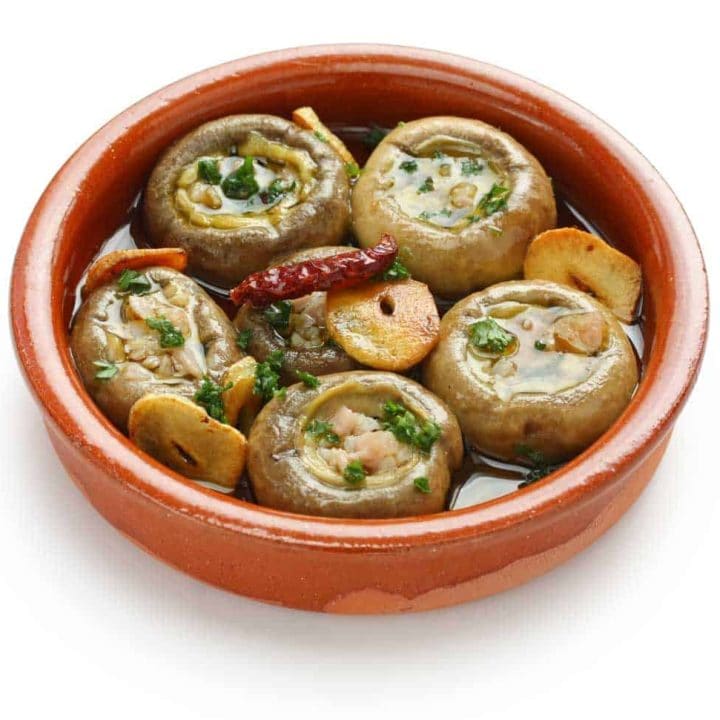
Champiñones al Ajillo (Spanish Garlic Mushrooms)
Mushrooms seared until golden, then tossed with sliced garlic, a dried guindilla, a splash of dry sherry and parsley. A classic Spanish tapa made for dunking bread.
Ingredients
- 1 lb (450 g) cremini or white button mushrooms
- 1/3 cup (80 ml) Spanish extra-virgin olive oil, divided
- 6 garlic cloves, thinly sliced
- 1 dried guindilla chili, or 1/4 teaspoon red pepper flakes
- 1/4 cup (60 ml) dry fino or manzanilla sherry, or dry white wine
- 1/2 teaspoon (3 g) kosher salt, plus more to taste
- 1/4 teaspoon freshly ground black pepper
- 1/4 teaspoon pimentón (Spanish smoked paprika), optional
- 3 tablespoons (10 g) chopped fresh flat-leaf parsley, divided
- 1 teaspoon (5 ml) fresh lemon juice, optional
- Crusty bread, for serving
Instructions
- Prep the mushrooms: wipe or quickly rinse the mushrooms and pat them completely dry. Trim the stem ends and cut into halves or quarters of similar size, leaving small ones whole. Thinly slice the garlic and chop the parsley.
- Brown the mushrooms: heat 2 tablespoons of the olive oil in a 12-inch cast-iron or heavy skillet over medium-high heat until shimmering. Add the mushrooms in a single layer (work in two batches if they don't fit) and do not salt them yet. Cook for 2 to 3 minutes without stirring, then stir and cook 5 to 7 minutes more, until their liquid has evaporated and they are golden brown. Transfer to a plate.
- Toast the garlic: lower the heat to medium-low and add the remaining olive oil, the sliced garlic and the guindilla. Cook, stirring, for 1 to 2 minutes, just until the garlic is fragrant and pale gold at the edges. Do not let it brown deeply.
- Deglaze: return the mushrooms to the pan, raise the heat to medium-high and pour in the sherry or wine. Let it bubble for 1 to 2 minutes, scraping the pan, until the alcohol smell fades and only a few spoonfuls of glossy sauce remain.
- Season: take the pan off the heat. Stir in the salt, black pepper, pimentón (if using) and most of the parsley. Add the lemon juice if you like a brighter finish, then taste and adjust the salt.
- Serve: spoon everything, oil and all, into a warmed cazuela or serving dish. Scatter over the remaining parsley and serve immediately with crusty bread for dipping.
Notes
Mushrooms: cremini, white button or a mix of oyster and shiitake all work; cut pieces to a similar size and cook oyster mushrooms a little less. Do not crowd the pan and do not salt until the end, or the mushrooms will steam instead of brown. No alcohol: replace the sherry with 3 tablespoons vegetable broth plus the lemon juice. Heat: use two guindillas, or break them open, for more kick. Variations: add 2 oz (55 g) diced jamón with the garlic, or top with small seared shrimp for a Logroño-style tapa. Doubling: cook the mushrooms in batches and combine them for the garlic and sherry step. Storage: refrigerate up to 3 days and rewarm in a skillet over medium heat; add fresh parsley before serving.
Tips for getting it right
- Cut mushrooms into halves or quarters of similar size, and leave tiny ones whole.
- Slice the garlic thinly rather than mincing it. Slices turn golden without scorching.
- Warm your serving dish. A preheated terracotta cazuela keeps the oil sizzling at the table.
- Add pimentón only off the heat. It burns in seconds and turns bitter.
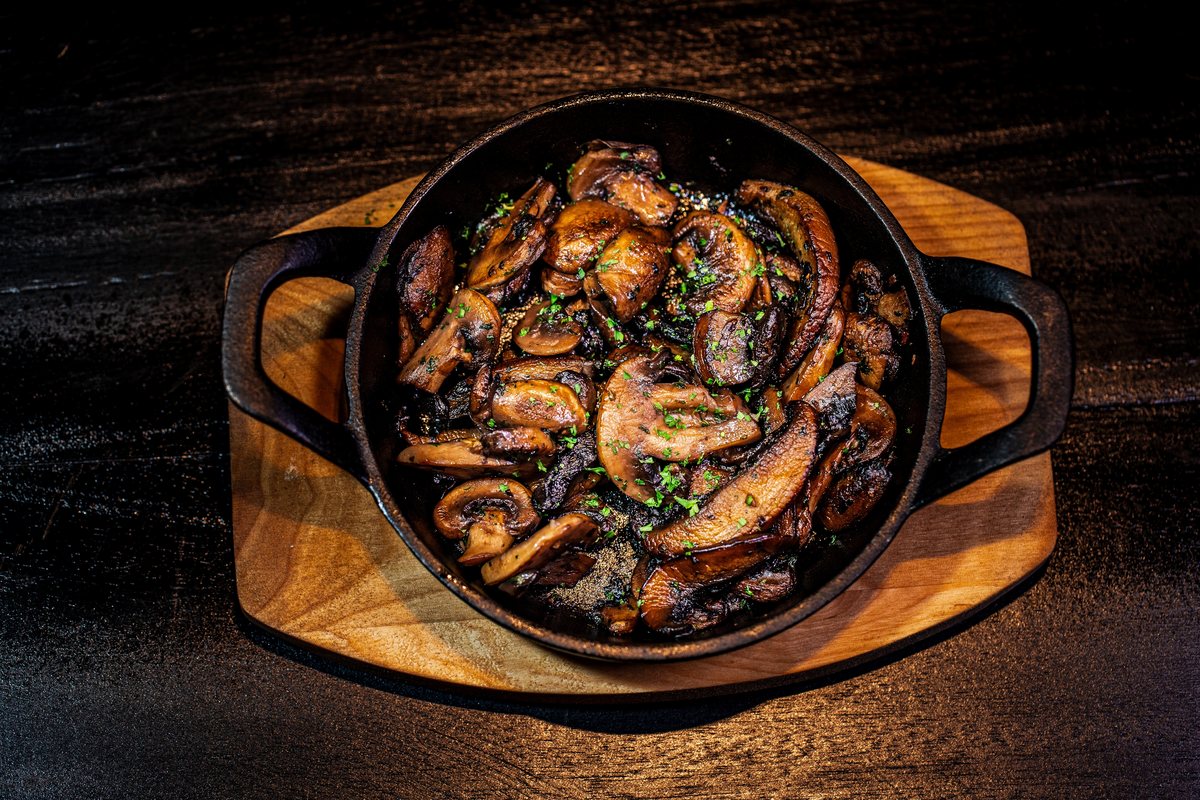
Variations
With jamón
Add a handful of diced jamón along with the garlic for a richer, saltier tapa. Our explainer on jamón ibérico covers which ham to pick.
Logroño-style with shrimp
Griddle whole mushroom caps, spoon garlic oil over them, top each stack with a small seared shrimp and serve on bread. It’s a home riff on the Bar Soriano idea, not the original recipe.
Smoky pimentón version
Skip the wine, finish with a pinch of pimentón de la Vera and a squeeze of lemon.
Wild mushroom setas al ajillo
Swap in oyster, shiitake or chanterelles. Tear rather than slice oyster mushrooms and shorten the cooking time.
Extra heat
Use two guindillas, or break them open so the seeds hit the oil. If you want the real thing, look for dried Spanish guindilla peppers.
What to Serve with Spanish Garlic Mushrooms
Bread is non-negotiable. After that, build a spread. Garlic mushrooms sit happily next to other classic Spanish tapas.
- Patatas bravas for something crispy and spicy.
- Pimientos de Padrón, another quick skillet tapa.
- Pan con tomate to soak up the extra oil.
- A wedge of Spanish tortilla to make it a meal.
For a meat-free spread, browse our best vegetarian tapas. Champiñones al ajillo are also an excellent side for grilled steak, pork chops or fish.
Drinks
The sherry in the pan points the way: a chilled glass of fino or manzanilla is a natural match. A young Rioja, a crisp Spanish white or a cold beer all work too. Find more ideas in our guide to Spanish drinks.
Buying Guide: What You Need
- Mushrooms: cremini or white button, firm and dry, about 1 pound for four tapas servings.
- Olive oil: a good Spanish extra-virgin oil. You’ll taste it.
- Guindilla: dried whole Spanish chilies, or red pepper flakes in a pinch.
- Sherry: a dry fino or manzanilla, never cream or cooking sherry, which is salted and sweetened.
- Pimentón: optional; choose sweet or bittersweet smoked pimentón de la Vera.
- Pan: a heavy cast-iron skillet or a terracotta cazuela (season clay before first use).
For other Spanish pantry staples, this curated list of Spanish ingredients on Amazon is a handy starting point.
Frequently Asked Questions
What does champiñones al ajillo mean?
It means “mushrooms with garlic.” Champiñones are cultivated button-type mushrooms, and al ajillo is the Spanish garlic-and-olive-oil cooking style also used for gambas al ajillo.
Can I make Spanish garlic mushrooms ahead of time?
They are best straight from the pan. You can make them a few hours ahead and rewarm them in a skillet over medium heat, adding fresh parsley at the end. Refrigerate leftovers up to 3 days.
What can I use instead of sherry or wine?
Use a splash of vegetable broth plus a squeeze of lemon juice, or a teaspoon of sherry vinegar mixed with water. Many Spanish home cooks simply skip the alcohol.
Are champiñones al ajillo vegan?
Yes, the classic version is vegan and gluten-free. Only add-ons like jamón or shrimp change that.
Why did my garlic turn bitter?
The heat was too high or the garlic cooked too long. Lower the heat before adding the garlic and pull the pan once the slices are pale gold at the edges.
What is the most famous mushroom tapa in Spain?
Garlic mushrooms are served everywhere, but the most famous single mushroom tapa is probably the griddled champi with shrimp at Bar Soriano on Logroño’s Travesía del Laurel, served since 1972.
Bring Spain’s Easiest Tapa Home
Champiñones al ajillo prove how much flavor Spain gets from a few humble ingredients. Brown the mushrooms properly, go gently with the garlic and don’t forget the bread.
Once you’ve mastered this one, you’re halfway to a full tapas night at home.
More Side Dish
See all →
Jorge Garcia is the founder of AmigoFoods, where he has spent over 20 years helping readers discover authentic Latin American and Spanish cuisine. Raised in a Cuban-American household, Jorge learned to cook at the hands of his mother and grandmother, carrying forward generations of family recipes. That heritage, backed by his family’s four-generation history in the Latin food industry, inspired him to launch AmigoFoods in 2003. With more than 1,000 published articles on recipes, ingredients, and food culture, Jorge’s mission is simple: make authentic Latin cooking approachable for home cooks everywhere while honoring the traditions behind every dish.