

Pan con tomate is Spanish tomato bread: crisp toast rubbed with ripe tomato and finished with olive oil, salt and optional garlic. Known as pa amb tomàquet in Catalonia, it takes about ten minutes and works for breakfast, tapas or alongside grilled food.
Pan con Tomate at a Glance
What Is Pan con Tomate?

Pan con tomate (“bread with tomato”) is toasted bread topped with the pulp and juice of a very ripe tomato, seasoned with salt and extra virgin olive oil, and often rubbed with raw garlic first. It comes from Catalonia, in northeastern Spain, where it is called pa amb tomàquet, and today it is eaten all over the country.
It is not a sandwich and it is not bruschetta. The tomato is not chopped and piled on top; it is rubbed or grated into a juicy pulp that sinks into the bread. That is what makes it taste so much bigger than its ingredient list.
Pan con tomate, pan tumaca or pa amb tomàquet?
| Name | Language | Where you’ll hear it |
|---|---|---|
| Pa amb tomàquet | Catalan | Catalonia, the original name. Also pa amb tomaca or pa amb tomata in some regions. |
| Pan con tomate | Spanish | Menus across Spain and in the US. The standard Spanish translation. |
| Pan tumaca | Spanish slang | Bars in Madrid and the south. A Spanish-ized version of the Catalan word tomaca; Catalans tend to wince at it. |
| Pa amb oli | Catalan (Mallorca) | The Balearic cousin: bread “with oil,” rubbed with small local ramellet tomatoes and usually served with cheese and cured meats. |

Where Pan con Tomate Comes From
Tomatoes arrived in Spain from the Americas in the 1500s, but bread with tomato is much younger. The Catalan food historian Néstor Luján traced the first written mention to 1884, when the writer Pompeu Gener described eating “bread with oil seasoned with tomato.” Luján’s theory is the one most Catalans accept: country families used the late-summer glut of tomatoes to soften bread that had gone stale.
The dish became a symbol of Catalan home cooking in the 20th century. In 1985 the Barcelona photographer Leopoldo Pomés published a whole book on it, Teoría y práctica del pan con tomate, which laid down the “rules” many Catalans still defend: rub, don’t grate; salt before oil; and never, ever add sugar.
The hanging tomato: Catalan cooks traditionally use tomàquets de penjar, small, thick-skinned tomatoes that are harvested in late summer and hung in clusters in a cool pantry. They keep for months, get juicier as they hang, and give up their pulp easily when rubbed on bread, which is how pa amb tomàquet stayed on the table all winter.
Pan con Tomate Ingredients

- BreadA crusty loaf with an open, chewy crumb: Catalan pa de pagès, ciabatta, a rustic country loaf or a good baguette.
- TomatoesThe ripest, juiciest ones you can find. Soft is good. Pale, mealy winter tomatoes are the only real way to ruin this dish.
- GarlicOne clove, halved. Optional, and a point of debate in Catalonia.
- Olive oilExtra virgin, and the best you have. A fruity Spanish Arbequina is the classic Catalan choice.
- SaltFlaky or coarse sea salt, for crunch and to wake up the tomato.
Because there is so little else going on, the olive oil is half the flavor. Read our guide to Spanish olive oil to pick one, or start with a widely available Spanish extra virgin like this one:

- FIRST COLD PRESSED: Extra virgin olive oil extracted mechanically from fresh olives for full, fresh...
- FRUITY AND PEPPERY: A well-balanced oil with fruity aroma, pleasant bitterness and a peppery finish.

The best bread for pan con tomate
| Bread | Why it works | How to cut and toast |
|---|---|---|
| Pa de pagès / country loaf | The traditional Catalan choice. Thick crust, open crumb that drinks up tomato. | ¾-inch (2 cm) slices; grill or broil until golden. |
| Pan de cristal | Barcelona’s “glass bread”: a very wet dough baked into a thin, shattering crust with huge holes. | Split horizontally; toast briefly, it browns fast. |
| Ciabatta | The closest US match to pan de cristal, easy to find in any supermarket. | Split lengthwise, then cut into 4-inch pieces. |
| Baguette | Fine for tapas and parties; a smaller slice means less tomato per bite. | Cut on a long diagonal so each slice has more surface. |
| Sourdough | Works well if it has an open crumb. Very tangy loaves can fight the tomato. | Thinner slices, about ½ inch, toasted well. |
Skip soft sandwich bread: it turns to paste the moment the tomato hits it. Day-old bread is perfect, which is exactly how the dish was born.
The best tomatoes for pan con tomate
In Spain, cooks reach for hanging tomatoes or very ripe tomates de pera. In the US, the best choices are summer beefsteaks, heirlooms and ripe Romas from a farmers’ market. Out of season, tomatoes sold on the vine and Campari (cocktail) tomatoes are the most reliably juicy. Leave them on the counter for a few days until they give when you press them. Never refrigerate them; the cold dulls their flavor.
Rub or Grate? Two Ways to Make It
There are two schools of pan con tomate, and Spaniards argue about them the way Americans argue about barbecue. Both are authentic. Which one you choose depends mostly on how ripe your tomatoes are.
Catalan style: rubbed
Cut the tomato in half and rub the cut side straight onto the toasted bread, squeezing as you go, until the crumb is pink and wet and only the skin is left in your hand.
Best for: very ripe, soft tomatoes and the traditional Catalan breakfast. Lighter, with a thin, juicy coat of tomato.
Madrid and Andalusian style: grated
Grate the tomato on the large holes of a box grater into a bowl, discard the skin, season the pulp with salt and oil, then spoon it onto the bread.
Best for: firmer supermarket tomatoes, bars and parties. More tomato per slice, and the pulp can be made ahead.

How to Make Pan con Tomate
- Slice the bread. Cut a crusty loaf into ¾-inch (2 cm) slices, or split a ciabatta lengthwise and cut it into pieces.
- Toast it well. Grill, broil or use a grill pan for 1 to 2 minutes per side, until golden and crisp at the edges but still a little soft in the middle. A charcoal or gas grill adds a lovely smoky note.
- Rub with garlic (optional). While the toast is hot, swipe the cut side of a garlic clove over it once or twice. The rough surface works like a grater.
- Add the tomato. Rub a halved tomato straight onto the bread, or spoon on 1 to 2 tablespoons of grated tomato pulp per slice.
- Salt, then oil. Sprinkle with flaky salt first, then drizzle generously with olive oil, about a teaspoon per slice. Salt goes first so the oil doesn’t wash it off.
- Eat right away. Pan con tomate waits for no one. Serve it plain or with toppings while the toast is still warm and crisp.

Flaky salt adds crunch as well as seasoning. Any good coarse sea salt works too:

- Bursting with Naturally-Occurring Minerals: Original whole crystal grey sea salt naturally rich in...
- Designed for Everyday Cooking: Ideal for seasoning, pickling, brining, and crunchy finishing, this...
Pan con Tomate Recipe
Here is the full recipe with exact amounts, both methods and make-ahead notes. It doubles and triples easily for a party.
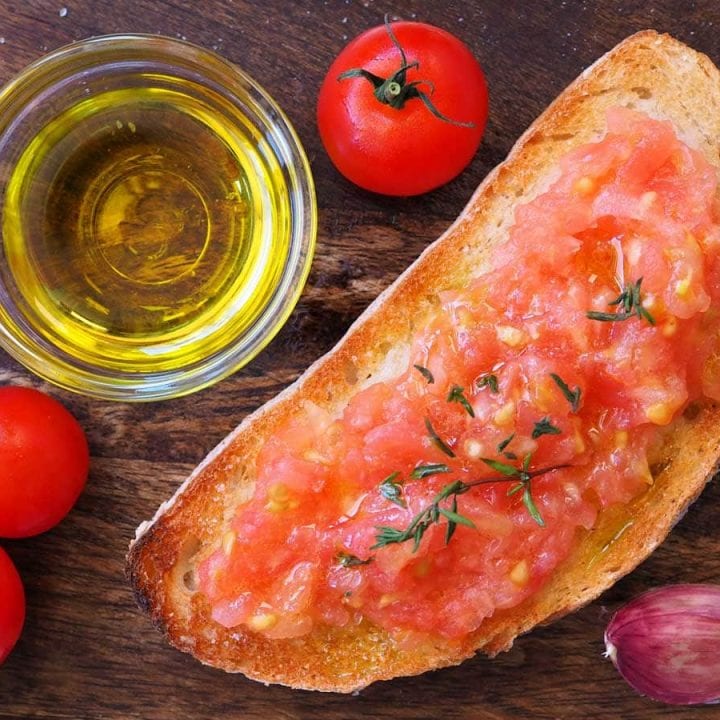
Pan con Tomate (Spanish Tomato Bread)
Crisp toasted bread rubbed with garlic and fresh ripe tomato, finished with good olive oil and flaky salt. This is the Catalan pa amb tomàquet that Spain eats for breakfast, as a tapa and with grilled meat, ready in 10 minutes.
Ingredients
- 1 crusty loaf country bread, ciabatta or pan de cristal (about 1 lb / 450 g)
- 2 to 3 very ripe medium tomatoes (about 1 lb / 450 g)
- 1 large garlic clove, halved (optional)
- 3 to 4 tablespoons extra virgin olive oil, preferably Spanish Arbequina
- Flaky or coarse sea salt, to taste
- Optional toppings: thinly sliced jamón ibérico or serrano, Manchego cheese or anchovy fillets
Instructions
- Slice the bread. Cut the loaf into 8 slices about ¾ inch (2 cm) thick. For ciabatta or pan de cristal, split it horizontally and cut each half into 4 pieces.
- Toast. Grill, broil or toast in a grill pan over medium-high heat for 1 to 2 minutes per side, until golden and crisp at the edges but still slightly soft in the center.
- Rub with garlic (optional). While the bread is hot, swipe the cut side of the garlic once or twice over each slice.
- Add the tomato, rubbed (Catalan style): cut the tomatoes in half crosswise and rub the cut side firmly over each slice, squeezing gently, until the bread is pink and juicy and only the skin is left. Discard the skins.
- Or grated (Madrid style): grate the tomato halves, cut side down, on the large holes of a box grater set in a bowl until only the skin remains. Discard the skins, stir a pinch of salt into the pulp and spoon 1 to 2 tablespoons onto each slice.
- Season. Sprinkle each slice with flaky salt, then drizzle with about 1 teaspoon of olive oil.
- Serve immediately, plain or topped with jamón, Manchego or anchovies.
Notes
Tomatoes: use the ripest, juiciest tomatoes you can find. In winter, tomatoes on the vine or Campari tomatoes are the most reliable. Never refrigerate them.
Make ahead: grated tomato keeps, covered, in the fridge for 1 day. Let it come to room temperature and toast the bread just before serving.
Watery pulp: if the grated tomato looks thin, drain it in a fine sieve for 5 minutes.
Vegan: pan con tomate is vegan without toppings.
Tips for the Best Pan con Tomate

- Toast until truly crisp. The crust is what keeps the bread from going soggy. Pale toast collapses under the tomato.
- Use the large holes of the grater. Hold the tomato cut side down and grate until you’re left with a flat sheet of skin. Your knuckles stay safe and nothing is wasted.
- Drain watery pulp. If grated tomato looks thin, let it sit in a fine sieve for 5 minutes. Keep the juice for gazpacho or a Bloody Mary.
- Go easy on the garlic. Raw garlic gets stronger as it sits. One or two swipes is plenty, and you can skip it at breakfast.
- Salt before oil. It’s the Catalan rule for a reason: the salt sticks to the wet tomato and the oil seals it in.
- Don’t sweeten it. If your tomatoes are bland, a pinch of salt in the pulp and better olive oil will help. Sugar won’t.
- Assemble at the last minute. Grate the tomato ahead if you like, but toast and top the bread just before eating.
Pan con Tomate vs. Bruschetta
They look alike, but they are built differently. Bruschetta is Italian: grilled bread rubbed with garlic and oil, then topped with chopped tomato, basil and sometimes balsamic, so the tomato sits on top. In pan con tomate the tomato is crushed into a pulp and becomes part of the bread.
| Pan con tomate | Bruschetta al pomodoro | |
|---|---|---|
| Country | Spain (Catalonia) | Italy |
| Tomato | Rubbed or grated into a pulp, no skin | Diced, with seeds and skin |
| Herbs | None | Basil, sometimes oregano |
| Extras | Jamón, cheese or anchovies on top | Balsamic, red onion, mozzarella |
| When it’s eaten | Breakfast, tapas, with grilled meat | Antipasto, before the meal |

What to Put on Top
Plain pan con tomate is a complete dish. But in Spain it is just as often the base for something salty and rich, and a platter of it with a few toppings is one of the easiest tapas spreads you can make.


- JamónPaper-thin jamón ibérico or serrano. The classic: pa amb tomàquet amb pernil.
- Cured sausagesSlices of Catalan fuet, llonganissa or chorizo.
- CheeseAged Manchego or another firm Spanish cheese.
- AnchoviesSalt-cured anchovies from L’Escala, or tangy boquerones en vinagre.
- TortillaA wedge of Spanish tortilla on top makes a full breakfast.
- EscalivadaSmoky roasted peppers and eggplant: try escalivada for a vegan topping.
For an easy upgrade, lay a couple of white anchovy fillets across each slice:
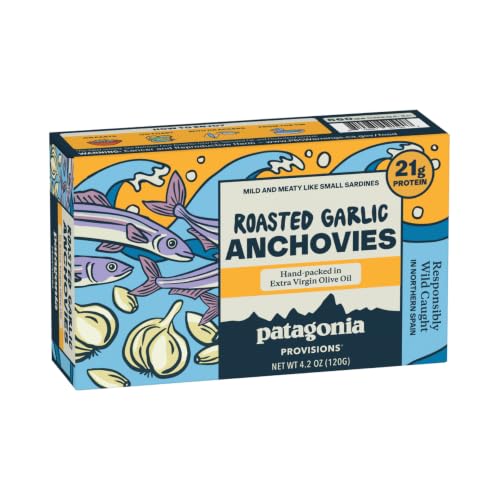
- Our Spanish White Anchovies have a delicate texture and mild flavor (unlike salt-cured anchovies...
- Delicious AND Nutritious: our anchovies are an excellent source of Protein (21g per tin), contain...
Building a whole spread? Our guide to the Spanish tapas board shows how much meat, cheese and bread to buy per person, and what to serve with jamón ibérico covers the rest.
How Spaniards Eat Pan con Tomate


- BreakfastOrder a tostada con tomate and a café con leche at almost any bar in Spain. It’s one of the most common Spanish breakfast foods, and here’s how to order the coffee.
- TapasA basket of pan con tomate goes on the table before the other tapas arrive, the way American restaurants bring bread and butter.
- With grilled meatCatalans serve it with grilled lamb chops, sausages and calçots (grilled spring onions) at outdoor cookouts.
- As a sandwichA Catalan entrepà is a baguette rubbed with tomato before the jamón or cheese goes in, so the bread is never dry.
What to Serve With Pan con Tomate
Make it the opening act of a tapas night. These dishes all come together in under an hour:
- Patatas bravas, crispy potatoes with spicy brava sauce
- Gambas al ajillo, shrimp sizzled in garlic and olive oil (pan con tomate is perfect for the oil)
- Champiñones al ajillo, Spanish garlic mushrooms
- Croquetas de jamón, creamy ham croquettes
- Chorizo a la sidra, chorizo simmered in cider
- Pimientos de Padrón, blistered green peppers
- Spanish olives and almonds
To drink, try a glass of cava, Catalonia’s sparkling wine, a Spanish vermouth on ice, or a cold tinto de verano in summer.
Where to Eat Pan con Tomate
In Barcelona, nearly every bar serves pa amb tomàquet, from the morning coffee counter to the cava bars of El Born, where El Xampanyet has been pouring cava with tomato bread and anchovies for generations.
In Miami, where Spanish restaurants are part of the food scene, look for it at Bulla Gastrobar (several South Florida locations), Casa Juancho in Little Havana and La Jamoteca, a Spanish ham shop and tapas bar in Coral Gables. Menus change, so check before you go. Or make it at home: it really is better when the toast comes straight off your own grill.

Pan con Tomate FAQ
What is pan con tomate?
Pan con tomate is a Spanish dish of toasted bread topped with fresh tomato pulp, extra virgin olive oil and salt, often rubbed with garlic first. It comes from Catalonia, where it is called pa amb tomàquet, and is eaten across Spain for breakfast, as a tapa or with grilled meat.
Is pan con tomate the same as pan tumaca?
Yes. Pan tumaca is a popular Spanish nickname for the same dish, blending the Spanish word pan with a Spanish-sounding version of the Catalan tomaca (tomato). Pa amb tomàquet is the Catalan name.
Do you grate or rub the tomato for pan con tomate?
Both are traditional. Catalans rub a halved tomato directly onto the toast, which works best with very ripe, soft tomatoes. In Madrid and Andalusia the tomato is usually grated on a box grater and spooned on, which gives more tomato per slice and works better with firmer tomatoes.
What kind of bread is best for pan con tomate?
Use a crusty bread with an open crumb: Catalan pa de pagès, pan de cristal, ciabatta, a rustic country loaf or a baguette. Toast it until crisp. Soft sandwich bread gets soggy.
Do you put garlic on pan con tomate?
It’s optional. Many Spaniards rub a cut garlic clove on the hot toast before the tomato, especially for tapas and with grilled meat. Purists and breakfast eaters often skip it.
Is pan con tomate the same as bruschetta?
No. Bruschetta is Italian and is topped with chopped tomatoes, basil and sometimes balsamic. Pan con tomate uses rubbed or grated tomato pulp with no herbs, so the tomato soaks into the bread.
Can I make pan con tomate ahead of time?
You can grate the tomato up to a day ahead and keep it covered in the fridge; let it come back to room temperature. Toast and top the bread just before serving, or it will go soggy.
Is pan con tomate healthy?
It’s a light, plant-based dish built on Mediterranean staples: tomato, extra virgin olive oil and bread. Olive oil also helps your body absorb lycopene, the antioxidant in tomatoes. A slice runs roughly 150 to 200 calories depending on the bread and how much oil you use, and it’s vegan without toppings.
When do Spaniards eat pan con tomate?
At any time of day. It’s a standard breakfast with coffee, a tapa with drinks, a side with grilled meat and the base of Catalan sandwiches.
More Spanish Recipes
- Salmorejo, Córdoba’s thick tomato and bread soup, pan con tomate’s cold cousin
- Gazpacho, Spain’s chilled tomato soup
- Huevos rotos con jamón ibérico, broken eggs over fried potatoes
- Serranito, Seville’s pork, pepper and jamón sandwich
- Crema catalana, to finish a Catalan meal
- Spanish tapas recipes and Spanish side dishes
- Spanish food: 50 traditional dishes and all Spanish recipes
More Spanish Foods
See all →
Jorge Garcia is the founder of AmigoFoods, where he has spent over 20 years helping readers discover authentic Latin American and Spanish cuisine. Raised in a Cuban-American household, Jorge learned to cook at the hands of his mother and grandmother, carrying forward generations of family recipes. That heritage, backed by his family’s four-generation history in the Latin food industry, inspired him to launch AmigoFoods in 2003. With more than 1,000 published articles on recipes, ingredients, and food culture, Jorge’s mission is simple: make authentic Latin cooking approachable for home cooks everywhere while honoring the traditions behind every dish.