
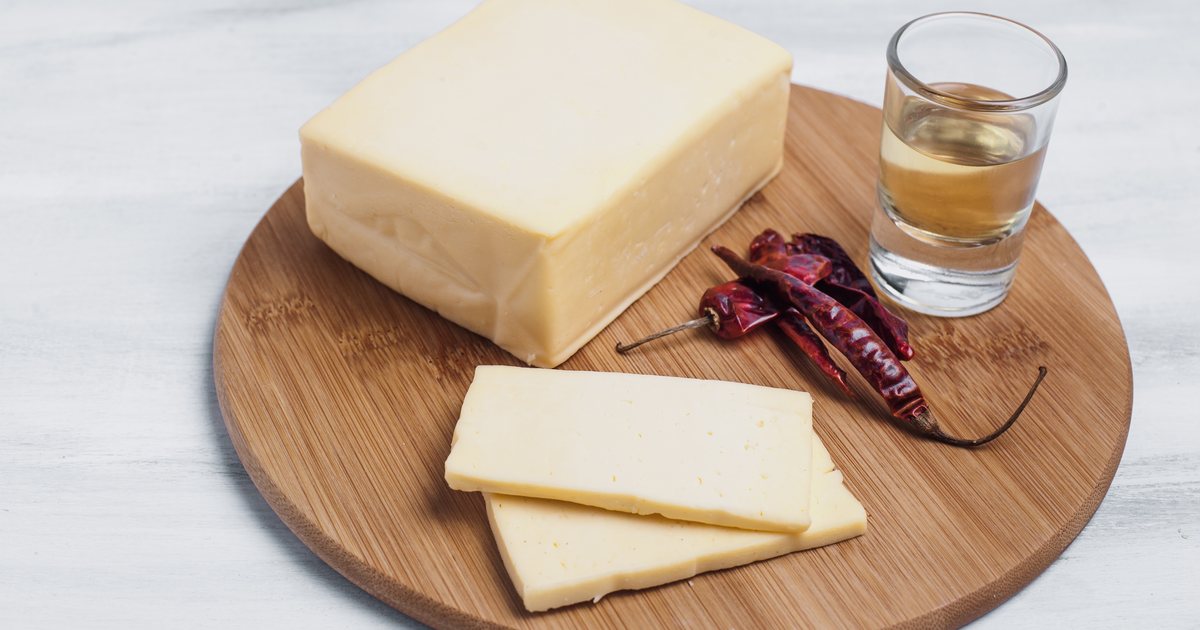
Chihuahua cheese (queso Chihuahua) is a semi-firm, pale yellow Mexican cheese made from cow’s milk by the Mennonite communities of Chihuahua state, which is why it is also called queso menonita. It tastes mild, buttery and slightly tangy, like a young Monterey Jack or mild cheddar, and it melts into a smooth, creamy layer, which makes it a favorite for queso fundido, quesadillas and enchiladas.
Chihuahua Cheese at a Glance
AmigoFoods may earn a commission from qualifying Amazon purchases made through links on this page.
What Is Chihuahua Cheese?

Chihuahua cheese is a pressed, lightly aged cow’s milk cheese. Unlike Mexico’s fresh cheeses, it has a firm, smooth body that slices and shreds cleanly, and it is often pale yellow rather than white. Some wheels have a thin wax coating and small holes in the paste.
In Mexico it is sold as queso menonita or queso Chihuahua. In the US, “Chihuahua” is a registered brand name owned by V&V Supremo, so other companies label the same style of cheese “Chihuahua-style” or “queso menonita.”
It is one of the melting cheeses in our guide to Mexican cheese.
Why Is It Called Chihuahua Cheese?
The cheese is named for the northern Mexican state of Chihuahua, not the dog. In 1922, thousands of Mennonite farmers moved from Canada to the area around what is now Cuauhtémoc, Chihuahua, after Mexico offered them land and the freedom to keep their own schools and language. The first group, about 3,000 people, arrived by train that March and started farming the high valley around the town, then called San Antonio de los Arenales.
Cheese came a few years later. Around 1929, a young colonist named Peter G. Friesen left to find work and spent two years learning the trade from an American cheesemaker in Nuevo Casas Grandes. Back home, with no money of his own, he opened the colony’s first quesería with the backing of two Mennonite dairy farmers in Cuauhtémoc. The cheese sold well, and by the mid-1930s cheesemaking had spread to the Mennonite colonies in neighboring Durango. culture magazine tells the full story of queso menonita, from Friesen’s first quesería to today.
Mennonite farms and cheese plants around Cuauhtémoc still produce it today, and Mexicans often simply call it queso menonita, “Mennonite cheese.” It is such a part of local life that Cuauhtémoc even has its own “Mennonite pizza,” topped with shredded queso menonita and pickled jalapeños.
How Queso Menonita Is Made
Mennonite queserías still make it much the way Friesen did. Cow’s milk is set with rennet, and the curds are cut, drained and pressed overnight in a process close to making cheddar. The wheels and bricks are then sealed in paraffin wax and aged. Most are sold after about two weeks, but some go out after just two days and others age for up to three months, which is why one queso menonita can taste noticeably sharper than another. Many Mennonite dairies feed their cows oats, which cheesemakers say gives the milk its own character.
Queso Menonita in Mexico vs. Chihuahua Cheese in the US
In Mexico, queso menonita is often made from raw milk, which gives it a fuller, tangier flavor, and it is sold in big wheels and bricks stamped with the name of the quesería. Cheese sold in US stores is made from pasteurized milk, so US Chihuahua-style cheese is milder and more uniform from block to block.
If you buy it in Mexico, look for 100% leche (100% milk) on the label. The name is not protected, and some cheaper Chihuahua-style cheeses made outside the region stretch the milk with added milk proteins.
What Does Chihuahua Cheese Taste Like?
Chihuahua cheese is mild, milky and buttery, with a light tang that gets more noticeable as it ages. It is not salty like cotija or stringy like Oaxaca. If you like Monterey Jack, Muenster or a young cheddar, you’ll like Chihuahua cheese.
Does Chihuahua Cheese Melt?

Yes, and very well. Chihuahua cheese melts smoothly and evenly without turning greasy or separating, which is exactly why it is the go-to cheese for queso fundido, chile con queso and baked dishes.
I can vouch for that at home: Chihuahua is the cheese my wife uses for her queso fundido, and it comes out smooth and delicious.
Chihuahua Cheese vs. Oaxaca Cheese
| Chihuahua cheese | Oaxaca cheese | |
|---|---|---|
| Where from | Chihuahua, northern Mexico | Oaxaca, southern Mexico |
| How it’s made | Pressed, lightly aged | Stretched (pasta filata) and wound into a ball |
| Color | Pale yellow | White |
| Texture | Semi-firm, smooth | Soft, peels into strings |
| Melt | Smooth and creamy | Stretchy and stringy |
| Best for | Queso fundido, enchiladas, nachos | Quesadillas, tlayudas, chiles rellenos |
Both are excellent melting cheeses and you can swap one for the other. Chiles rellenos are a good example: Oaxaca gives the classic stretchy pull, while Chihuahua makes a creamier filling. Many cooks mix them for quesadillas: Oaxaca for stretch and Chihuahua for creaminess.
Is Chihuahua cheese just mozzarella? No. Mozzarella is a stretched, white, very mild cheese, much closer to Oaxaca. Chihuahua is pressed and aged, firmer and more flavorful.
Is Chihuahua cheese the same as queso quesadilla? Not quite, though the labels blur. V&V Supremo sells its Chihuahua brand as a “quesadilla cheese,” but queso quesadilla is also a style of its own: whiter, softer and milder, with a looser melt. Chihuahua is firmer, slightly yellow and has more flavor. Either one makes a great quesadilla.
How to Use Chihuahua Cheese
- Queso fundido: melt it in a hot skillet, top with chorizo or rajas and scoop with warm tortillas.
- Quesadillas: one of the best cheeses for quesadillas, especially on flour tortillas warmed on a cast iron comal.
- Enchiladas: melt it inside or over the top of enchiladas and enchiladas suizas.
- Chiles rellenos: it stays creamy inside a roasted poblano in a chile relleno.
- Nachos and chile con queso: it melts into a smooth sauce with a splash of milk.
- Burritos, tortas and molletes: anywhere you want a mild, melty cheese.
- As a table cheese: sliced on its own with fruit or crackers; a wire cheese slicer gives thin, even slices.


Chihuahua Cheese Substitutes
- Monterey Jack: the closest match in flavor and melt.
- Monterey Jack + mild white cheddar: a little more flavor, still smooth.
- Asadero or queso quesadilla: Mexican melting cheeses that melt even softer.
- Muenster: mild, buttery and melts beautifully.
- Mild cheddar or Colby: fine for baked dishes; mix with Jack to avoid greasiness.
- Oaxaca cheese: works anywhere you want more stretch.
Where to Buy Chihuahua Cheese
Look in the Hispanic cheese section of large supermarkets, at Mexican grocery stores and at warehouse clubs. In the US you’ll see V&V Supremo’s Chihuahua brand, plus Chihuahua-style cheese and queso menonita from brands such as La Chona, El Mexicano and Cacique. It comes in blocks, slices and shreds.
Buy a block when you can and shred it on the large holes of a grater; a rotary cheese grater makes quick work of a big batch for queso fundido.
How to Store Chihuahua Cheese
- Unopened: refrigerate and use by the date on the package.
- Opened: wrap tightly in waxed paper, then plastic or a beeswax wrap. A block keeps for about three to four weeks in the fridge; opened shredded cheese for about a week.
- Freezing: shred it, then freeze in a bag for up to three months. Frozen cheese is best for melting.
Chihuahua Cheese Nutrition
A 1-ounce (28 g) slice of Chihuahua cheese has about 106 calories, according to USDA FoodData Central. Like most semi-firm cheeses, it is rich in fat and protein and a good source of calcium.
Chihuahua Cheese FAQ
What is Chihuahua cheese similar to?
Monterey Jack is the closest American cheese. Mild cheddar, Muenster and asadero are also similar.
What is the difference between Oaxaca and Chihuahua cheese?
Oaxaca is a white, stretched string cheese from southern Mexico. Chihuahua is a pale yellow, pressed cheese from northern Mexico that melts smoother but with less stretch.
Is Chihuahua cheese the same as queso menonita?
Yes. Queso menonita is the Mexican name for the same style of cheese, made by Mennonite communities in Chihuahua.
Is Chihuahua cheese good for quesadillas?
Yes. It melts smoothly and is one of the most popular quesadilla cheeses, especially with flour tortillas.
Is Chihuahua cheese safe during pregnancy?
Chihuahua cheese sold in US stores is made from pasteurized milk and is generally considered safe. Avoid raw-milk cheese bought from farms or markets unless it is labeled pasteurized.
More Mexican Cheese Guides
More Ingredients
See all →
Jorge Garcia is the founder of AmigoFoods, where he has spent over 20 years helping readers discover authentic Latin American and Spanish cuisine. Raised in a Cuban-American household, Jorge learned to cook at the hands of his mother and grandmother, carrying forward generations of family recipes. That heritage, backed by his family’s four-generation history in the Latin food industry, inspired him to launch AmigoFoods in 2003. With more than 1,000 published articles on recipes, ingredients, and food culture, Jorge’s mission is simple: make authentic Latin cooking approachable for home cooks everywhere while honoring the traditions behind every dish.