

On this page
Chilate is a warm, lightly thickened corn drink from El Salvador, simmered with whole allspice and fresh ginger and served unsweetened alongside sticky sweets like nuégados in panela syrup. In Mexico’s Guerrero state, the same name belongs to a completely different drink: a cold, foamy blend of cacao, rice and cinnamon. This guide covers both, with a recipe for each.
Salvadoran Chilate at a Glance
Plan ahead: chilate keeps thickening as it stands, so cook it right before you serve. Make the nuégados, torrejas or plátanos en miel first and keep the syrup warm; the drink goes on the stove last.
What Is Chilate?
Chilate is one of the oldest drinks in El Salvador: corn and water cooked into a pourable, slightly thick drink, scented with allspice and ginger. It sits in the same family as atol, but with one important difference. It is not sweet.
That restraint is the whole point. Salvadorans drink chilate with the sweetest things on the table: nuégados (fried yuca or corn fritters), torrejas, ripe plantain and sweet potato, all drenched in dark panela syrup. A sip of plain, spiced corn between bites resets your palate.
The name comes from Nahuatl chīlātl, usually translated as “chili water.” Despite that, Salvadoran chilate contains no chile at all. The drink reached El Salvador with the Nawat-speaking Pipil people, whose corn cooking still shapes the country’s food.
You will find it at chilaterías, market stalls and church fairs, usually in the late afternoon, ladled hot into a gourd cup called a guacal.
Salvadoran Chilate vs. Chilate de Guerrero
Search “chilate” and you will see two very different drinks. They share a Nahuatl name and nothing else. Here is how to tell them apart:
| Salvadoran chilate | Chilate de Guerrero | |
|---|---|---|
| Where | El Salvador, Honduras, Guatemala, Nicaragua | Costa Chica of Guerrero, Mexico (and coastal Oaxaca) |
| Base | Corn: toasted dried corn or masa | Cacao beans and rice |
| Flavorings | Allspice and ginger | Cinnamon |
| Sweet? | No, unsweetened | Yes, piloncillo or sugar |
| Served | Hot, in a gourd guacal | Ice-cold and foamy, often in a jícara |
| Eaten with | Nuégados, torrejas, fruit in panela syrup | Sold on its own as a thirst-quencher |
Most of this page is about the Salvadoran drink. Jump to Chilate de Guerrero for the Mexican cacao version and its recipe.
What Does Chilate Taste Like?
Think of a thin, warm cream of corn with no sugar. The toasted corn tastes nutty, almost like the crust of a fresh tortilla. Allspice adds a clove-and-pepper warmth, and ginger brings a gentle bite at the end.
On its own it can seem plain. With a piece of syrupy nuégado it suddenly makes sense: the drink is the savory counterweight that keeps a plate of sweets from becoming too much.
Chilate Ingredients
Salvadoran chilate needs only four ingredients. The quality of the corn matters most.

Where to buy: Maseca instant corn masa flour is sold in every Latin market and online, and whole allspice berries are usually in the Mexican spice section as pimienta gorda.As an Amazon Associate, AmigoFoods earns from qualifying purchases.
How to Make Salvadoran Chilate
The method is simple: toast, whisk, simmer, stir. The only real rule is to keep stirring the bottom of the pot so the corn never scorches.
1. Toast the masa harina
Spread ½ cup masa harina in a dry skillet or comal over medium-low heat. Stir constantly for 4 to 5 minutes, until it smells like toasted tortillas and turns a shade darker. Tip it into a bowl so it stops cooking.
2. Make a smooth slurry
Whisk the toasted masa into 1 cup of cool water until no lumps remain. Cold water first is what keeps chilate silky.
3. Infuse the spices
Bring the remaining 3 cups of water to a simmer with the cracked allspice and smashed ginger. Let it bubble gently for 10 minutes to draw out the flavor.
4. Cook until lightly thickened
Whisk the slurry again, then pour it into the pot while whisking. Cook on low for 15 to 20 minutes, stirring along the bottom with a wooden spoon, until it coats the spoon lightly and no longer tastes of raw flour.
5. Strain out the spices and serve hot
Fish out the ginger and allspice with a slotted spoon (some vendors leave the berries in; you just sip around them). Add a pinch of salt, thin with hot water if needed, and serve right away.
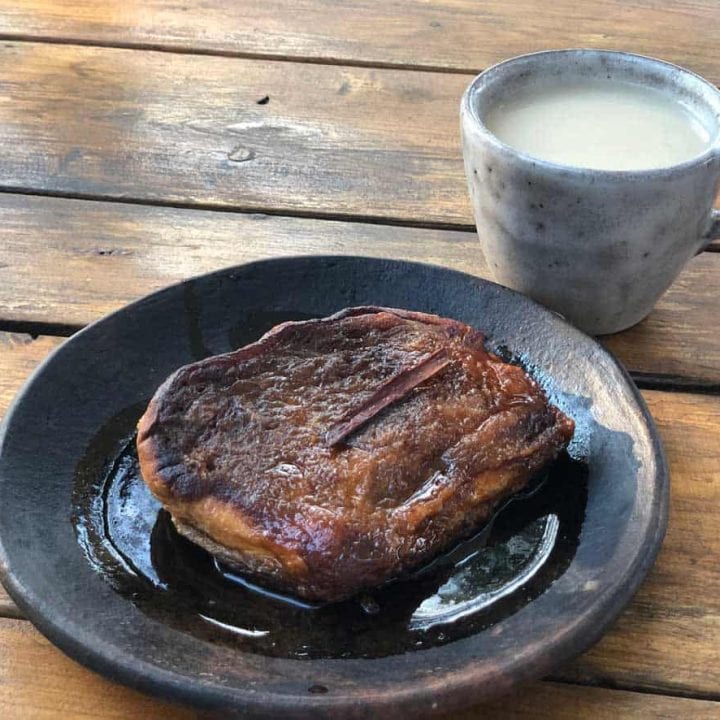
Salvadoran Chilate (Warm Corn, Allspice and Ginger Drink)
Salvadoran chilate is a warm, unsweetened corn drink scented with allspice and fresh ginger, made to sip between bites of nuégados and other sweets in panela syrup.
Ingredients
- 1/2 cup (about 60 g) masa harina (nixtamalized corn flour)
- 4 cups (950 ml) water, divided, plus more to thin if needed
- 2 thick slices fresh ginger, lightly crushed
- 4 whole allspice berries
- 1 small pinch salt, optional
Instructions
- Toast the masa harina in a dry skillet or comal over medium-low heat, stirring constantly, for 4 to 5 minutes, until it smells like toasted tortillas and darkens slightly. Transfer to a bowl.
- Whisk the toasted masa harina into 1 cup of cool water until completely smooth.
- In a medium saucepan, bring the remaining 3 cups of water to a simmer with the lightly cracked allspice and smashed ginger. Simmer gently for 10 minutes.
- Whisk the corn mixture again and pour it into the pot while whisking. Cook on low for 15 to 20 minutes, stirring along the bottom with a wooden spoon, until the chilate lightly coats the spoon and no longer tastes of raw flour.
- Remove the ginger and allspice with a slotted spoon, add a small pinch of salt, and thin with hot water to a pourable, heavy-cream consistency. Serve hot with nuégados, torrejas or plátano en miel.
Notes
Traditional Salvadoran chilate is unsweetened; the sweetness comes from the foods served with it in panela syrup.
Traditional method: toast ¾ cup dried white corn kernels on a comal, grind them, mix with water and strain through a fine sieve, then cook as above.
Chilate thickens as it stands. Refrigerate leftovers within 2 hours and use within 3 days; reheat slowly with a splash of water, whisking, until steaming (165°F/74°C).
What to Serve With Chilate
In El Salvador, chilate is rarely served alone. Order it at a chilatería and you choose your sweets, all bathed in miel de panela, a dark syrup of unrefined cane sugar spiced with cinnamon and allspice.

How Chilate Is Served in El Salvador
Chilate is an afternoon drink. Families serve it for a merienda between lunch and dinner, and it shows up at fiestas patronales, Holy Week and the independence celebrations in September.
The traditional cup is a guacal de morro, a bowl made from the dried shell of the morro (calabash) fruit. It is light, insulating and comfortable to hold. A heat-safe mug works perfectly well at home.

Watch a short introduction to chilate and where it comes from:
Chilate in Honduras, Guatemala and Nicaragua
The unsweetened corn chilate is shared across the region, with small local differences.
Honduras
Honduran chilate is very close to the Salvadoran drink: white corn flour cooked with water and allspice, often with a stick of cinnamon in place of ginger. It is a Semana Santa staple, served with torrejas, mangoes in syrup and other Honduran desserts.
Guatemala
Guatemalans also know chilate as a plain corn-and-allspice drink, served warm and unsweetened next to sweets in syrup.
Nicaragua
In the Carazo towns of Jinotepe, Diriamba and Masatepe, chilate is made from pujagua, a purple-tinged local corn. For Nicaragua’s better-known corn drink, see pinolillo, which blends toasted corn with cacao.
Chilate de Guerrero: Mexico’s Cold Cacao Drink
On Guerrero’s Costa Chica, especially around Ayutla de los Libres, chilate means a cold, frothy cacao drink sold from big clay pots in markets and street stands. It is sweetened, served over ice, and made to beat the coastal heat.
The base is toasted cacao and soaked raw rice, ground with cinnamon into a paste, then diluted with water and sweetened with piloncillo. The signature foam comes from pouring it from a height, 30 centimeters or more, or beating it with a molinillo.

How to make chilate de Guerrero
Soak the rice for at least 4 hours. Toast whole cacao beans in a dry skillet over low heat until fragrant and the shells crack, then peel them. Blend the rice, cacao and cinnamon with water until completely smooth, strain, sweeten and chill. Pour from a height to build the foam and serve over ice.
Pantry picks: Navitas Organics cacao powder (non-alkalized) and Badia cinnamon sticks.As an Amazon Associate, AmigoFoods earns from qualifying purchases.

Chilate de Guerrero (Cold Cacao and Rice Drink)
Chilate de Guerrero is an ice-cold, foamy drink of toasted cacao, rice and cinnamon sweetened with piloncillo, sold on the Costa Chica of Guerrero, Mexico.
Ingredients
- ½ cup (100 g) long-grain white rice
- ½ cup (75 g) whole cacao beans
- 1 cinnamon stick (canela), about 3 inches, broken
- 5 cups (1.2 liters) cold water, divided
- ⅓ to ½ cup grated piloncillo or brown sugar, to taste
- Ice, for serving
Instructions
- Rinse the rice, cover with plenty of water and soak for at least 4 hours or overnight. Drain.
- Toast the cacao beans in a dry skillet over low heat, stirring often, for 15 to 20 minutes, until fragrant and the shells crack. Let cool slightly, then rub off and discard the shells.
- Blend the drained rice, peeled cacao and broken cinnamon stick with 2 cups of the water for 2 to 3 minutes, until completely smooth.
- Strain through a fine-mesh sieve or cheesecloth into a pitcher, pressing on the solids. Stir in the remaining 3 cups of water and the piloncillo until dissolved. Taste and add more sweetener if you like.
- Chill for at least 1 hour. To serve, stir well, then pour into glasses over ice from a height of about 12 inches (30 cm), or beat with a molinillo, to build a thick foam. Spoon extra foam on top.
Notes
No cacao beans? Use ½ cup natural (non-alkalized) cacao powder and skip the toasting step.
The unsweetened blended paste keeps 3 to 5 days in the fridge; the finished drink keeps up to 2 days. Stir and re-froth before serving.
This is the cold cacao chilate of Guerrero, Mexico, not the warm corn chilate of El Salvador.
If you like chilate de Guerrero, try its warm cousins: champurrado and Mexican hot chocolate, or browse more Mexican drinks.
Storing and Reheating Chilate
Salvadoran chilate is best fresh. Refrigerate leftovers within 2 hours and use within 3 days. It sets almost solid in the fridge; reheat slowly over low heat with a splash of water, whisking until smooth and steaming (165°F/74°C).
Chilate de Guerrero keeps in the fridge for up to 2 days. The rice settles, so stir or shake well and re-froth before serving. The unsweetened cacao-rice paste keeps 3 to 5 days, so many cooks make the paste ahead and mix a fresh pitcher as needed.
Chilate FAQ
What is chilate made of?
Salvadoran chilate is made from corn (toasted dried corn or masa harina), water, whole allspice and ginger. Chilate de Guerrero is made from cacao, rice, cinnamon, piloncillo and water.
Is chilate sweet?
Salvadoran chilate is not sweet; it is served with very sweet foods instead. Mexican chilate from Guerrero is sweetened with piloncillo or sugar.
Is chilate served hot or cold?
Hot in El Salvador, Honduras, Guatemala and Nicaragua. Ice-cold in Guerrero, Mexico.
Does chilate have chile in it?
No. The name comes from Nahuatl chīlātl, often translated as “chili water,” but neither the Salvadoran nor the Guerrero drink contains chile.
What does chilate mean in English?
There is no direct English word. It is usually described as a warm corn drink (Salvadoran) or a cold cacao and rice drink (Mexican).
What is the difference between chilate and atol?
Both are corn drinks, but most atoles are sweetened and often made with milk, like atole de elote. Chilate is unsweetened, made with water, and flavored with allspice and ginger.
Can I make chilate with masa harina?
Yes. Masa harina is the easiest option outside Central America. Toast it in a dry pan first for the roasted-corn flavor of the traditional drink.
What do you eat with chilate?
Nuégados, torrejas, plátano en miel, camote en miel and yuca en miel, all served in panela syrup.
More Salvadoran Drinks and Sweets
- NuégadosThe fritters made to go with chilate
- Salvadoran DessertsTorrejas, quesadilla, semita and more
- Salvadoran FoodThe country’s most-loved dishes
- Salvadoran IngredientsFrom masa to loroco
- PupusasEl Salvador’s national dish
- AtoleThe sweet corn-drink family chilate belongs to
More Salvadoran Foods
See all →
Jorge Garcia is the founder of AmigoFoods, where he has spent over 20 years helping readers discover authentic Latin American and Spanish cuisine. Raised in a Cuban-American household, Jorge learned to cook at the hands of his mother and grandmother, carrying forward generations of family recipes. That heritage, backed by his family’s four-generation history in the Latin food industry, inspired him to launch AmigoFoods in 2003. With more than 1,000 published articles on recipes, ingredients, and food culture, Jorge’s mission is simple: make authentic Latin cooking approachable for home cooks everywhere while honoring the traditions behind every dish.