
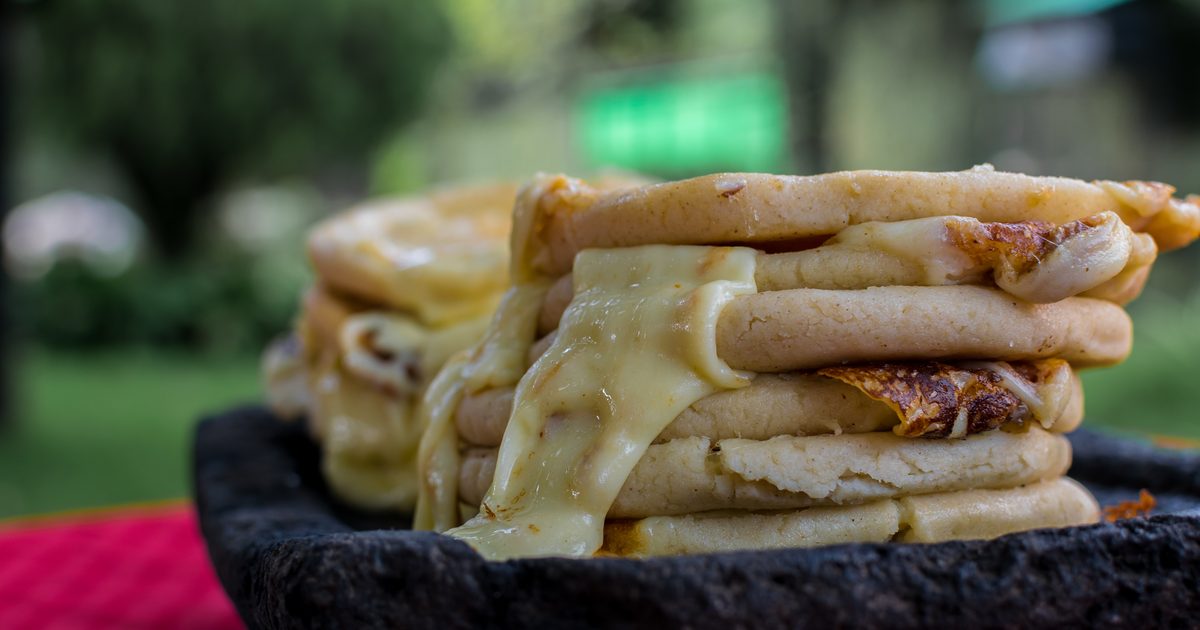
Salvadoran cooking starts with corn masa and ends, very often, with a pupusa. The thick stuffed tortilla is the national dish, and most of the ingredients on this list end up inside one, on top of one or in the cup next to one.
The pantry is small and very local. There’s a flower bud you won’t find in most cookbooks, a drink made from the seeds of a gourd tree, and a powder of ground squash seeds sprinkled on fruit.
Here are the twelve ingredients behind a plate of pupusas with curtido, a Salvadoran breakfast and a glass of horchata, and what each one is doing.
Salvadoran Ingredients at a Glance
| Ingredient | What it is | Where it shows up |
|---|---|---|
| Maíz | Corn and masa | Pupusas, tamales, riguas, atol |
| Harina de arroz | Rice flour | Rice pupusas from Olocuita |
| Frijoles rojos | Small red beans, often seda | Pupusas, breakfast, soups |
| Quesillo | Soft, stretchy cheese | Pupusas de queso, revueltas |
| Loroco | Edible flower bud | Pupusas de queso con loroco |
| Chicharrón | Fried, ground pork | Pupusas revueltas, yuca con chicharrón |
| Repollo | Cabbage | Curtido |
| Yuca | Cassava root | Yuca frita, nuegados |
| Plátano | Ripe plantain | Breakfast, empanadas de plátano |
| Semillas de morro | Seeds of the gourd tree | Salvadoran horchata |
| Alguashte | Ground toasted squash seed | Green mango, fruit, atol shuco |
| Café | Volcanic-slope coffee | Every morning, Pacamara beans |
Masa
1. Maíz

Corn masa is the base of the Salvadoran table. It’s patted around a filling to make pupusas, wrapped in leaves for tamales and cooked into thick, warm drinks like atol de elote and atol shuco.
Fresh corn has its own season. Ground young corn becomes riguas, sweet corn cakes cooked in husks, and tamales de elote. For the difference between masa harina and precooked corn flour, see our guide to Harina P.A.N. vs. Maseca.
2. Harina de Arroz
Not every pupusa is made with corn. In Olocuita, a town in the La Paz department, pupusas are made with rice flour dough. The town is known as the home of the rice pupusa, and its stretch of the highway is lined with pupuserías.
Rice-flour pupusas are softer and more delicate, and they’re now served all over the country. Plain rice flour, not glutinous rice flour, is what you need.
The Fillings
3. Frijoles Rojos
Salvadorans cook small red beans, often frijoles de seda, then blend and fry them into a smooth paste. It’s spread inside bean-and-cheese pupusas and served at every breakfast with eggs, plantains, cheese and cream.
Whole beans go into soups, and in some towns a bowl of atol shuco is served with a spoonful of whole beans on top.
4. Quesillo
Quesillo is a soft, stretchy cheese, a little like mozzarella but saltier. It’s what makes a pupusa de queso pull apart in strings, and it’s often mixed with loroco.
The Salvadoran dairy case also holds queso duro, a hard, salty grating cheese, queso fresco and thick crema. Outside El Salvador, a mix of mozzarella and a salty fresh cheese works well in pupusas.
5. Loroco

Loroco is the edible bud of a climbing vine native to Central America. It tastes green and a little floral, somewhere between asparagus, artichoke and fresh herbs.
Chopped and mixed with quesillo, it becomes the filling of pupusas de queso con loroco, one of the most popular pupusas in the country. It’s also cooked with eggs, rice and chicken. Outside Central America, look for it frozen or pickled in jars.
6. Chicharrón
Salvadoran chicharrón isn’t crisp pork skin. For pupusas, pork is fried slowly, then ground with tomato and chile into a thick, savory paste.
A pupusa revuelta, the most popular order, is stuffed with chicharrón, beans and cheese together. Fried pork chunks are also served with yuca, below.
On the Side
7. Repollo

Cabbage is the base of curtido, the lightly fermented slaw served with every pupusa. It’s shredded with carrot and onion and seasoned with vinegar, oregano and chile.
A thin tomato sauce, salsa roja, goes on top. Cabbage also turns up in soups and with yuca frita.
8. Yuca

Cassava is boiled or fried and served with fried pork, curtido and salsa as yuca con chicharrón, one of the country’s favorite street foods.
Mashed cassava is also fried into nuegados, small fritters soaked in panela syrup and eaten during Holy Week.
9. Plátano
Ripe plantains are fried and served at breakfast with beans, cheese and cream. They’re also mashed into a dough and stuffed with custard to make empanadas de plátano, filled with leche poleada.
Plantains are cooked in syrup for dessert, too. See our guide to Salvadoran desserts.
Seeds and Drinks
10. Semillas de Morro
Salvadoran horchata isn’t made only from rice. Its signature is the seed of the morro, the fruit of a gourd tree that grows across the dry lowlands.
The seeds are toasted and ground with rice, cacao, cinnamon, sesame and peanuts into a powder, then mixed with water, milk and sugar. The result is nuttier and darker than Mexican horchata. It’s one of many Latin American drinks made from seeds and grains.
11. Alguashte
Alguashte is squash seed, toasted and ground to a fine green powder with salt. Salvadorans sprinkle it on green mango, jocotes and other fruit, with a squeeze of lime.
It also seasons soups and is sprinkled over atol shuco, the dark corn drink. It’s the same idea as Guatemalan pepitoria, but ground finer.
Coffee
12. Café
Coffee built modern El Salvador. For much of the twentieth century it was the country’s main export, grown on the slopes of its volcanoes.
El Salvador also gave the world a coffee variety. Pacamara, a cross of the Pacas and Maragogipe varieties, was developed by Salvadoran researchers starting in 1958. Its huge beans are prized by specialty roasters. See our guide to Latin American coffees.
Where to Buy Salvadoran Ingredients
Most of this list is easy to find in the US, where there’s a large Salvadoran community. Latin groceries carry masa harina, rice flour, red beans, quesillo, crema, frozen loroco, cassava and plantains.
Online, look for loroco, Salvadoran horchata mix, alguashte and Pacamara coffee.
Fresh loroco and morro seeds are the hardest to find. Use frozen or jarred loroco, and a ready-made horchata powder.
Frequently Asked Questions
What is the most important ingredient in Salvadoran food?
Corn masa. It’s the base of pupusas, tamales and atol.
What is loroco?
The edible flower bud of a Central American vine. It has a green, floral flavor and is mixed with cheese in pupusas.
What cheese goes in pupusas?
Quesillo, a soft, stretchy, slightly salty cheese. A mix of mozzarella and a salty fresh cheese is a good substitute.
How is Salvadoran horchata different?
It’s made with toasted morro seeds, rice, cacao and spices, so it’s nuttier and darker than Mexican horchata.
What is alguashte?
Toasted, finely ground squash seed with salt, sprinkled on green mango and other fruit.
What Else Is Always There
A few more things live in a Salvadoran kitchen. There’s rice, eggs, tomatoes, onion, bell pepper, oregano for curtido, and panela for sweetening drinks and syrups.
Once your pantry is stocked, cook your way through our guide to traditional Salvadoran food, see what’s served on Salvadoran holidays or browse everything we’ve written about Salvadoran food. To compare pantries, see our guides to Guatemalan ingredients and Honduran ingredients, or explore ingredients by country.
More Ingredients
See all →
Jorge Garcia is the founder of AmigoFoods, where he has spent over 20 years helping readers discover authentic Latin American and Spanish cuisine. Raised in a Cuban-American household, Jorge learned to cook at the hands of his mother and grandmother, carrying forward generations of family recipes. That heritage, backed by his family’s four-generation history in the Latin food industry, inspired him to launch AmigoFoods in 2003. With more than 1,000 published articles on recipes, ingredients, and food culture, Jorge’s mission is simple: make authentic Latin cooking approachable for home cooks everywhere while honoring the traditions behind every dish.