

Estrogonofe de carne, also called strogonoff de carne, is Brazilian beef stroganoff: tender beef and mushrooms in a creamy sauce of ketchup, mustard and creme de leite. White rice and crunchy batata palha complete this comforting 40-minute meal.
Estrogonofe de Carne at a Glance
What Is Estrogonofe de Carne?
Estrogonofe de carne is a Brazilian beef stroganoff: beef strips seared hot and fast, then folded into a sauce of sautéed onion and mushrooms, ketchup or tomato paste, mustard and creme de leite (Brazil’s shelf-stable cream). The tomato turns the sauce a soft, rosy orange, and instead of egg noodles it’s eaten with white rice and batata palha. It’s one of the most common home-cooked meals in Brazil, from Sunday lunches to quick weeknight dinners.

Estrogonofe or strogonoff?
Both. Brazilians write the dish as estrogonofe (the Portuguese spelling), strogonoff or stroganoff, and all three appear on menus and recipe sites.
Brazilian vs. American (and Russian) Stroganoff
| Brazilian estrogonofe | American stroganoff | Early Russian recipe | |
|---|---|---|---|
| Cream | Creme de leite (light, shelf-stable cream) | Sour cream | Sour cream |
| Tomato | Yes: ketchup and/or tomato paste | Rarely | No |
| Mushrooms | Almost always | Usually | No |
| Color | Rosy orange | Pale tan | Pale |
| Served with | White rice and batata palha | Wide egg noodles | Not specified |
The key differences are the ketchup and the cream. Brazilian cooks use creme de leite instead of sour cream, so the sauce is mild and silky rather than tangy, and a spoonful or two of ketchup gives it its color and a little sweetness. The other giveaway is the plate: rice and potato sticks instead of noodles.
A Short History: From Russia to Brazil
The Stroganov name and the first recipe
The dish is named after the Stroganov family, wealthy Russian nobles, though historians still debate which Count Stroganov it honors. The earliest known written recipe appears in Elena Molokhovets’ classic Russian cookbook A Gift to Young Housewives, in its 1871 edition: “beef à la Stroganov, with mustard,” cubes of beef in a mustard sauce finished with sour cream, with no onions or mushrooms yet.
The French connection
Russian aristocratic kitchens of the 1800s were full of French-trained cooks, and in 1891 a French chef working in St. Petersburg, Charles Brière, entered a stroganoff recipe in a contest run by the French magazine L’Art culinaire. That’s why some cookbooks credit a French chef, and why Brazilian sources often tell the story of “a French chef who cooked for the Stroganov family.” The dish and its name, however, were already in print 20 years earlier.
How it became a Brazilian classic
No one has documented exactly when stroganoff arrived in Brazil. What is clear is that by the 1960s and 70s it was a fashionable dinner-party dish, a sign of sophistication, always served with rice and batata palha. Over the following decades it moved from party menus to everyday family cooking, and the chicken version, Brazilian chicken stroganoff (estrogonofe de frango), became just as popular as the beef one.
Ingredients You’ll Need
- BeefSirloin for everyday, tenderloin (filé mignon) for special occasions. Sliced into strips.
- MushroomsFresh white or cremini, or jarred sliced mushrooms (champignon), as many Brazilian cooks use.
- Ketchup and tomato pasteFor the classic rosy color and gentle sweetness.
- Mustard and WorcestershireFor tang and depth. Both are common but optional.
- Creme de leiteOr media crema or heavy cream, stirred in at the end.
- Batata palhaCrunchy shoestring potato sticks for serving.
Best cut of beef
Use a tender cut that cooks in minutes: sirloin or tenderloin (filé mignon). Slice it against the grain into strips about 2 inches long and ½ inch thick. Ground beef makes a quick, budget-friendly version. Avoid stewing cuts like chuck, which need long braising and turn tough with a quick sear.
Creme de leite and US substitutes
Brazilian creme de leite is a light, shelf-stable cream sold in cans (about 20 to 25% fat) or cartons (about 17%). In the US, the closest match is Nestlé media crema, sold in 7.6-ounce cans in the Latin aisle of most supermarkets; look for media crema or Nestlé creme de leite online. Heavy cream works too: it’s richer and thinner, so simmer the sauce a minute or two longer. Sour cream changes the flavor completely and isn’t used in the Brazilian version.
Don’t let it boil. Once the cream goes in, keep the heat low and warm the sauce just until it steams. Boiling can make shelf-stable cream split and turn grainy.
Batata palha
Batata palha (“straw potatoes”) are thin, crisp, fried potato sticks, and estrogonofe isn’t complete without them. Brazilian markets sell them in bags, and you can find batata palha and shoestring potato sticks online. Add them at the table, not in the pot, so they stay crunchy.
How to Make Estrogonofe de Carne
- Slice and season the beef. Cut it against the grain into strips, pat dry and season with salt and pepper. Start the rice.
- Sear hot and in batches. Brown the strips in oil and butter over high heat, 1 to 2 minutes per side, then set them aside. Crowding the pan steams the meat instead of browning it.
- Cook the onion, garlic and mushrooms in the same pan until soft and golden.
- Deglaze with a splash of brandy if you like, scraping up the browned bits.
- Build the sauce with ketchup, tomato paste, mustard, Worcestershire and broth, and simmer for 3 to 4 minutes.
- Return the beef, then add the cream over low heat. Warm through without boiling and serve with rice and batata palha.

A wide, heavy 12-inch skillet gives the beef room to brown instead of steaming. Exact amounts and timings are in the recipe card below.
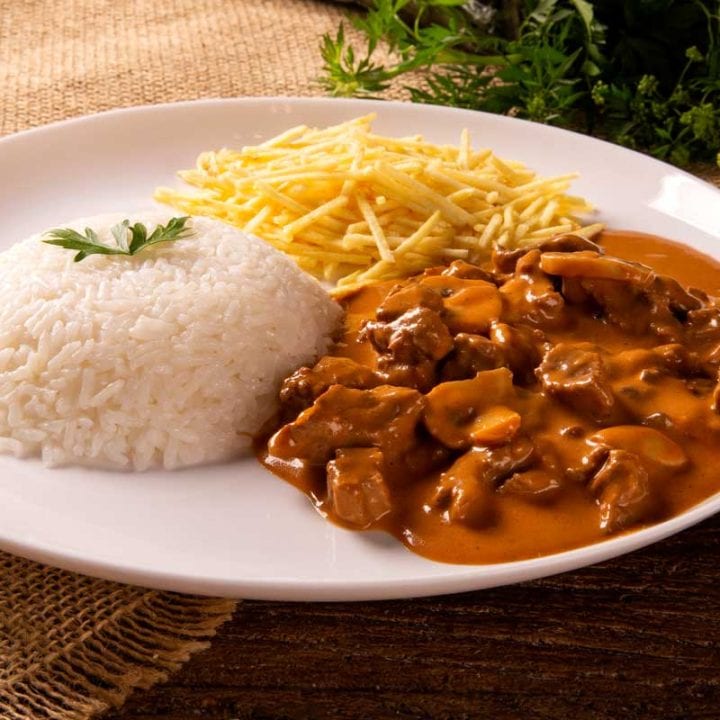
Estrogonofe de Carne (Brazilian Beef Stroganoff)
Seared beef strips and mushrooms in a creamy, rosy ketchup-and-mustard sauce, served Brazilian-style over white rice with crunchy batata palha. Ready in 40 minutes.
Ingredients
For the beef
- 1½ pounds (680 g) beef sirloin or tenderloin, sliced into thin strips
- 1 teaspoon kosher salt
- ½ teaspoon black pepper
- 1 tablespoon neutral oil
- 2 tablespoons unsalted butter, divided
For the sauce
- 1 medium yellow onion, finely chopped
- 3 garlic cloves, minced
- 8 ounces (225 g) white or cremini mushrooms, sliced (or one 4.5-ounce jar sliced mushrooms, drained)
- 2 tablespoons brandy or cognac (optional)
- ¼ cup ketchup
- 1 tablespoon tomato paste
- 1 tablespoon yellow mustard
- 1 tablespoon Worcestershire sauce
- ½ cup beef broth or water
- 1 can (7.6 ounces) media crema or creme de leite, or 1 cup heavy cream
To serve
- Cooked white rice
- Batata palha (shoestring potato sticks)
- Chopped fresh parsley
Instructions
- Prep the beef. Slice the beef against the grain into strips about 2 inches long and ½ inch thick. Pat dry and season with the salt and pepper. Start the rice now so it is ready with the sauce.
- Sear in batches. Heat the oil and 1 tablespoon of the butter in a large skillet over high heat. Add the beef in a single layer and sear 1 to 2 minutes per side, until browned outside but still pink inside. Move to a bowl with its juices and repeat with the rest.
- Soften the aromatics. Lower the heat to medium, add the remaining butter and cook the onion for 4 to 5 minutes until soft. Add the garlic and cook 30 seconds.
- Brown the mushrooms. Add the mushrooms and cook 4 to 5 minutes until golden (about 2 minutes if using jarred mushrooms).
- Deglaze (optional). Take the pan off the heat, add the brandy, then return it to the heat and let it bubble for 30 to 60 seconds while you scrape up the browned bits.
- Build the sauce. Stir in the ketchup, tomato paste, mustard, Worcestershire sauce and broth. Simmer 3 to 4 minutes until slightly thickened.
- Return the beef. Add the beef and its juices and simmer 1 to 2 minutes, just to heat through.
- Finish with cream. Turn the heat to low and stir in the media crema or cream. Heat until steaming but do not let it boil. Taste and adjust the salt and pepper.
- Serve. Spoon over white rice, top with batata palha right before eating and sprinkle with parsley.
Notes
Cream: Media crema or canned creme de leite is closest to what Brazilian home cooks use. Heavy cream is richer and thinner, so simmer it 1 to 2 minutes longer. Sour cream is not traditional in the Brazilian version.
Cut of beef: Tenderloin (filé mignon) is the special-occasion choice; sirloin is the everyday one. Ground beef also works for a quick budget version.
Chicken version: For estrogonofe de frango, use 1½ pounds of boneless chicken breast or thighs cut into 1-inch cubes and cook to 165°F. The full recipe is on our Brazilian chicken stroganoff page.
Batata palha: Store-bought shoestring potato sticks are standard. Add them at the table so they stay crunchy.
Storage: Refrigerate up to 3 days and reheat gently with a splash of water. Freezing is not recommended because the cream can separate.
Tips for the Best Strogonoff
- Dry the beefWet meat won’t brown. Pat the strips dry before seasoning.
- Sear in batchesA single layer over high heat; leave the center pink, since it finishes in the sauce.
- Balance to tasteMore ketchup makes it sweeter and rosier; more mustard makes it tangier.
- Canned mushrooms are fineMany Brazilian home cooks use them. Drain well and brown briefly.
- Low heat for the creamWarm until steaming. Never boil.
- Potato sticks lastAdd batata palha at the table so it stays crunchy.
Estrogonofe de Frango (Chicken Variation)
In many Brazilian homes the chicken version is even more common than beef. Swap the beef for 1½ pounds of boneless chicken breast or thighs cut into 1-inch cubes, brown them, then simmer them in the sauce until they reach 165°F. For the full recipe, tips and photos, see our Brazilian chicken stroganoff (estrogonofe de frango).
What to Serve with Estrogonofe
- White ricePlain, fluffy long-grain rice is non-negotiable.
- Batata palhaCrunchy potato sticks on the side or on top.
- Simple saladLettuce (alface) and tomato with a squeeze of lime.
- Black beansSome families add a ladle of feijão preto.
To drink, try a cold guaraná soda or a glass of Brazilian lemonade. For dessert, pick one of these Brazilian desserts.
Storing and Reheating
Refrigerate leftovers in an airtight container for up to 3 days. Reheat gently in a pan over low heat, adding a splash of water if the sauce has thickened. Store the batata palha separately. Freezing isn’t recommended because the cream sauce can separate when thawed.
Estrogonofe de Carne FAQ
What is Brazilian stroganoff made of?
Beef (or chicken) strips, onion, garlic and mushrooms in a sauce of ketchup or tomato paste, mustard and creme de leite. It’s served with white rice and batata palha.
What is the difference between Brazilian and Russian stroganoff?
The early Russian recipe was beef in a mustard and sour cream sauce. The Brazilian version adds mushrooms and ketchup or tomato, uses milder creme de leite instead of sour cream, and is served with rice and potato sticks rather than noodles or fried potatoes.
What makes Brazilian stroganoff unique?
The ketchup, which makes the sauce rosy and slightly sweet, the light creme de leite, and the batata palha served on the side.
What is the secret to a great stroganoff?
Sear the beef hot and in batches so it browns without overcooking, then add the cream over low heat and never let it boil.
What can I use instead of creme de leite?
Nestlé media crema is the closest substitute in the US. Heavy cream also works; simmer it a little longer to thicken.
Is it estrogonofe or strogonoff?
Both are correct in Brazil. Estrogonofe is the Portuguese spelling; strogonoff and stroganoff are also widely used.
More Brazilian Recipes
- Brazilian chicken stroganoff (estrogonofe de frango)
- Picanha, Brazil’s favorite steak
- Moqueca baiana
- Pão de queijo
- The best Brazilian foods
- All Brazilian recipes
More Brazilian Foods
See all →
Jorge Garcia is the founder of AmigoFoods, where he has spent over 20 years helping readers discover authentic Latin American and Spanish cuisine. Raised in a Cuban-American household, Jorge learned to cook at the hands of his mother and grandmother, carrying forward generations of family recipes. That heritage, backed by his family’s four-generation history in the Latin food industry, inspired him to launch AmigoFoods in 2003. With more than 1,000 published articles on recipes, ingredients, and food culture, Jorge’s mission is simple: make authentic Latin cooking approachable for home cooks everywhere while honoring the traditions behind every dish.