
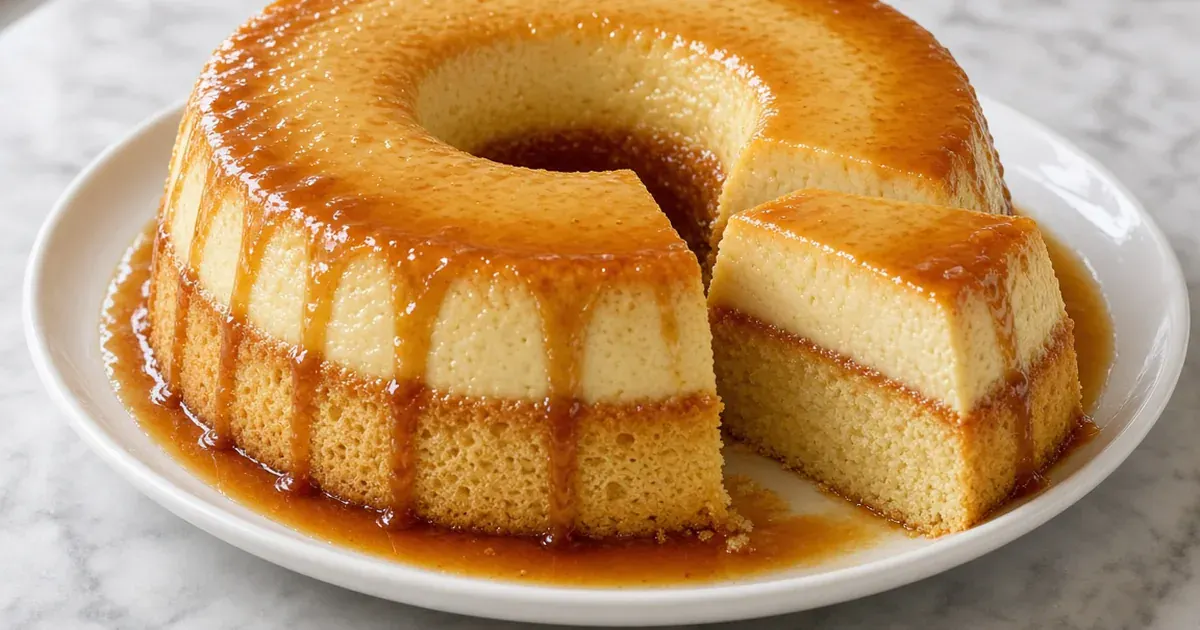
Flancocho is a vanilla cake and a caramel flan baked in the same Bundt pan, so the layers swap places in the oven and the dessert turns out with flan on top and cake underneath. It is the Dominican and Puerto Rican cousin of Mexican chocoflan, made here with a from-scratch vanilla cake instead of chocolate.
Flancocho at a Glance
AmigoFoods may earn a commission from qualifying Amazon purchases made through links on this page.
What Is Flancocho?
The name is simply flan plus bizcocho (cake). Home cooks in the Dominican Republic and Puerto Rico make it this way, with a yellow or vanilla cake. Mexico’s version uses chocolate cake and is called chocoflan or pastel imposible. For how this sits among other flans, see every type of flan by country.
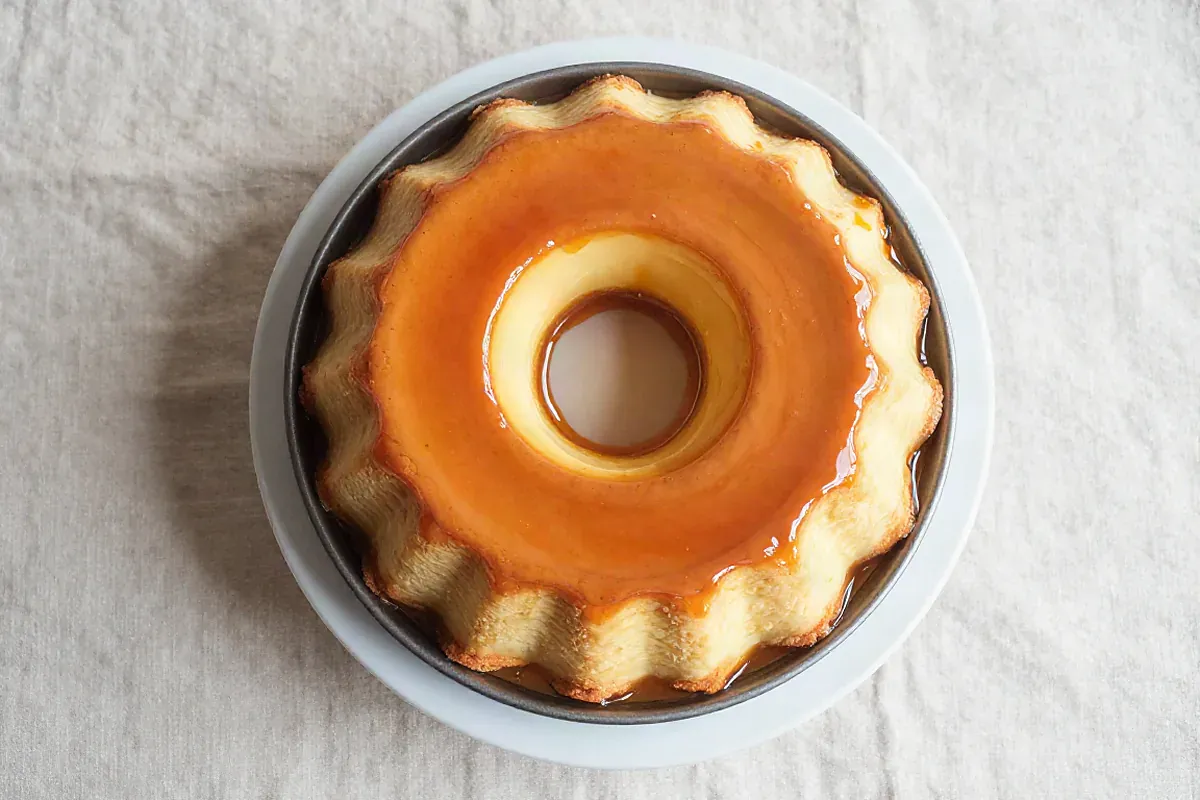
What makes flancocho different from a regular flan:
- Two desserts in one pan. A silky condensed-milk flan and a tender vanilla cake bake at the same time.
- The layers swap. You assemble them in one order and unmold them in the opposite order. Nothing is stirred.
- A Bundt or tube pan. The center tube helps both layers bake through evenly. A springform pan will leak.
- A water bath is not optional. It keeps the flan from curdling at the 350°F the cake needs.
Flancocho vs. Chocoflan
They are built the same way and often get searched interchangeably. The difference is the cake, and a few details in the flan.
| Flancocho (this recipe) | Chocoflan | |
|---|---|---|
| Where it’s from | Dominican Republic and Puerto Rico | Mexico |
| Cake | From-scratch vanilla (or a yellow cake mix) | Chocolate / devil’s-food cake, often with coffee |
| Flan | Condensed + evaporated milk, eggs, vanilla | The same, usually with cream cheese |
| Pan | 12-cup Bundt, water bath, 350°F | 12-cup Bundt, water bath, 350°F |
| What you taste | Milky flan, vanilla cake, bittersweet caramel | The same swap, with a cocoa cake base |
Our chocoflan recipe pours the cake batter first and the flan on top. This flancocho pours the flan first and the cake batter on top, which is the usual method for this dessert and makes it easier not to overfill the pan. Either order works: the flan is denser, so it always ends up against the caramel.
Ingredients
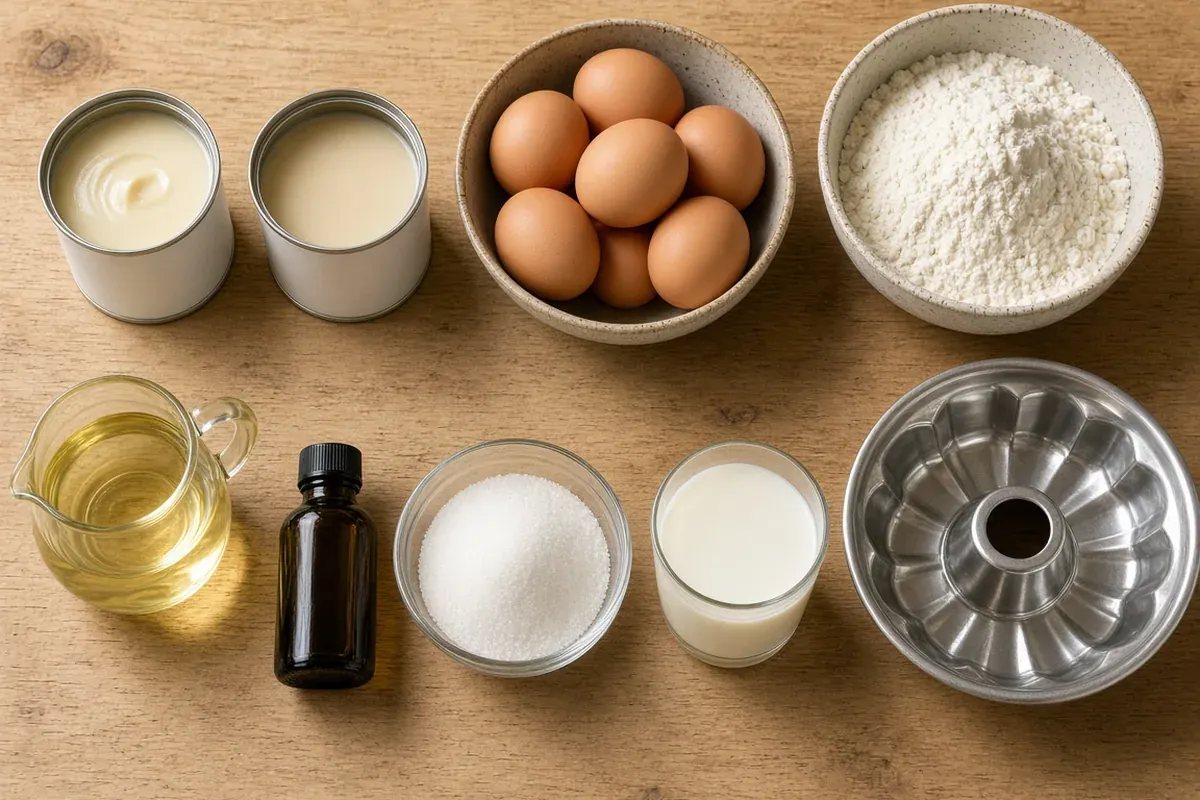
The amounts below fill a 12-cup Bundt pan to about three-quarters full, which leaves room for the cake to rise. Exact weights are in the recipe card.
For the caramel
For the flan
For the vanilla cake
How to Make It, Step by Step
Here are the steps with photos. Exact amounts and times are in the recipe card below.
1. Heat the oven and grease the pan
Heat the oven to 350°F with a rack in the lower-middle position, and put a kettle of water on to boil. Grease a 12-cup Bundt pan thoroughly with softened butter or baking spray, including every ridge and the center tube. The caramel will cover the bottom; the cake will stick to any dry spots on the sides.
2. Make the caramel in the pan
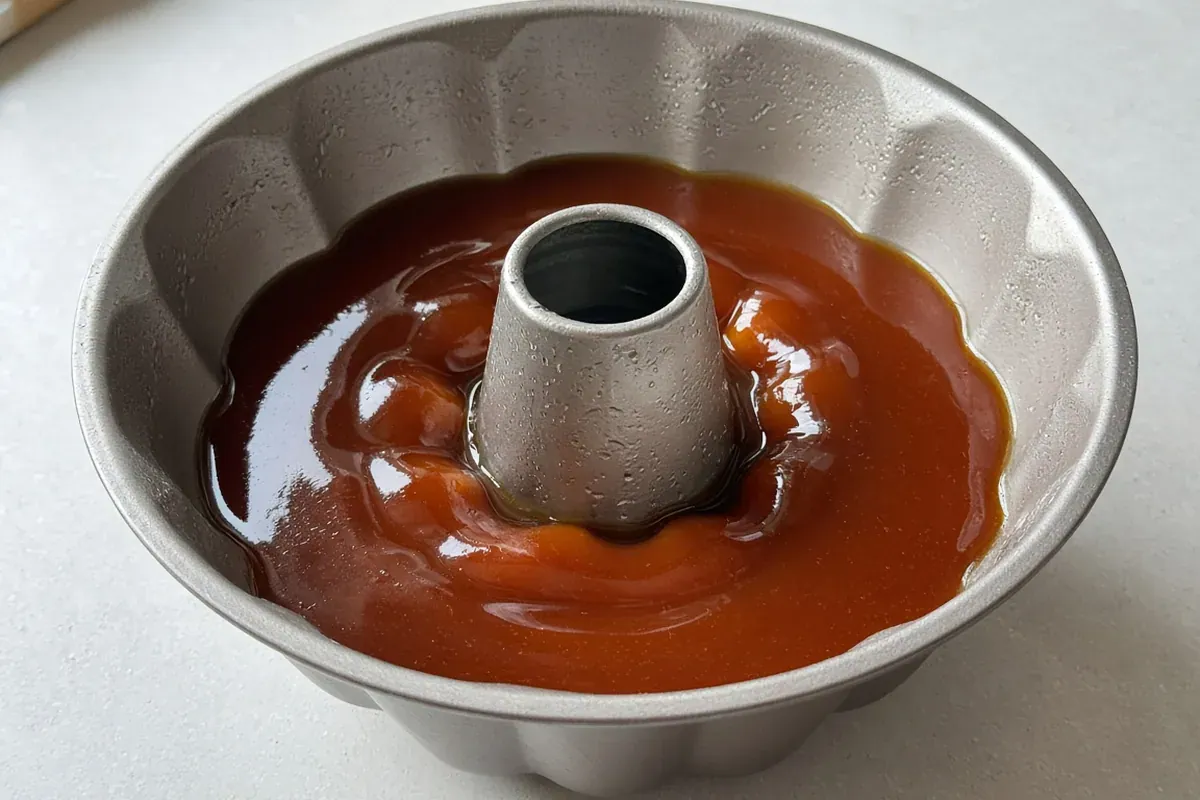
Cook ¾ cup sugar with 3 tablespoons water in a small saucepan over medium heat, swirling but not stirring, until it turns deep amber, 8 to 10 minutes. Pour it immediately into the Bundt pan and tilt to coat the bottom ring. It hardens in seconds. Let it cool at least 15 minutes before the flan goes in; warm caramel can start to cook the eggs.
3. Mix and strain the flan
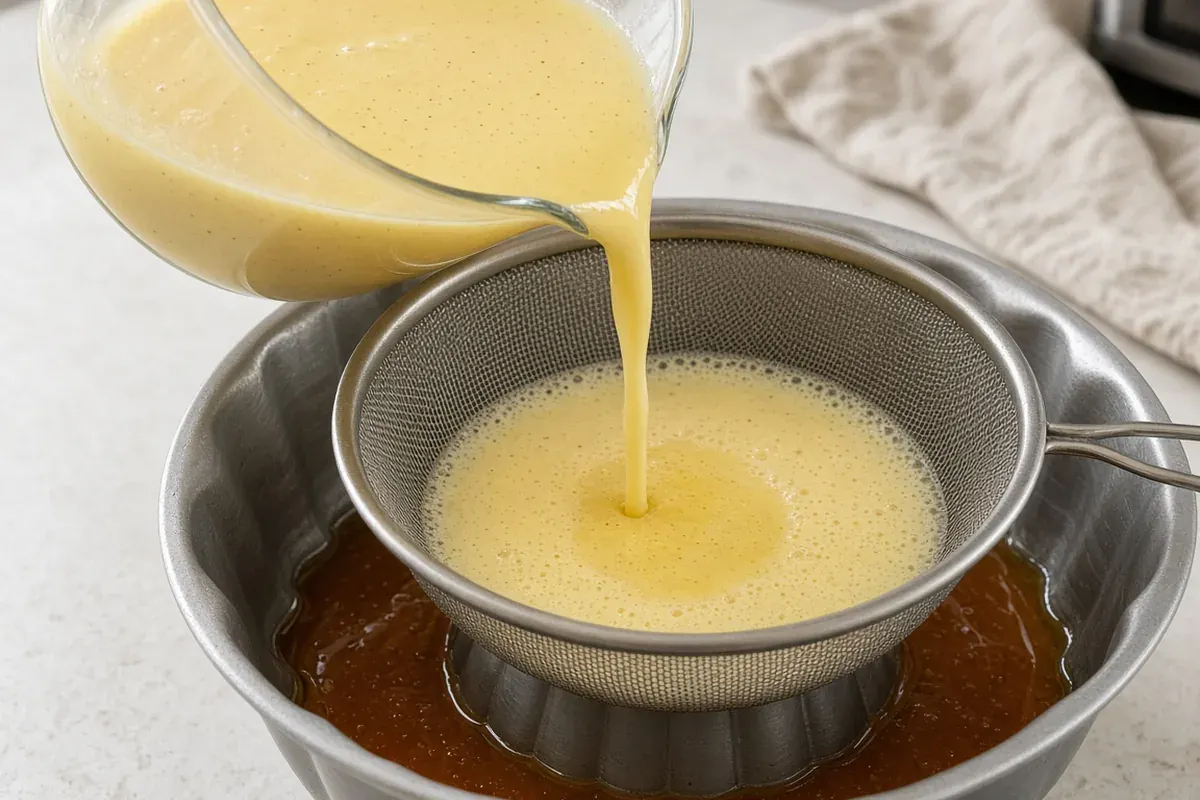
Blend or whisk the condensed milk, evaporated milk, eggs, vanilla and salt just until smooth. Don’t run the blender for more than about 30 seconds, or you will beat in air that shows up as holes in the flan. Strain the custard into the pan over the cooled caramel and skim off any foam.
4. Mix the cake batter and layer it on top
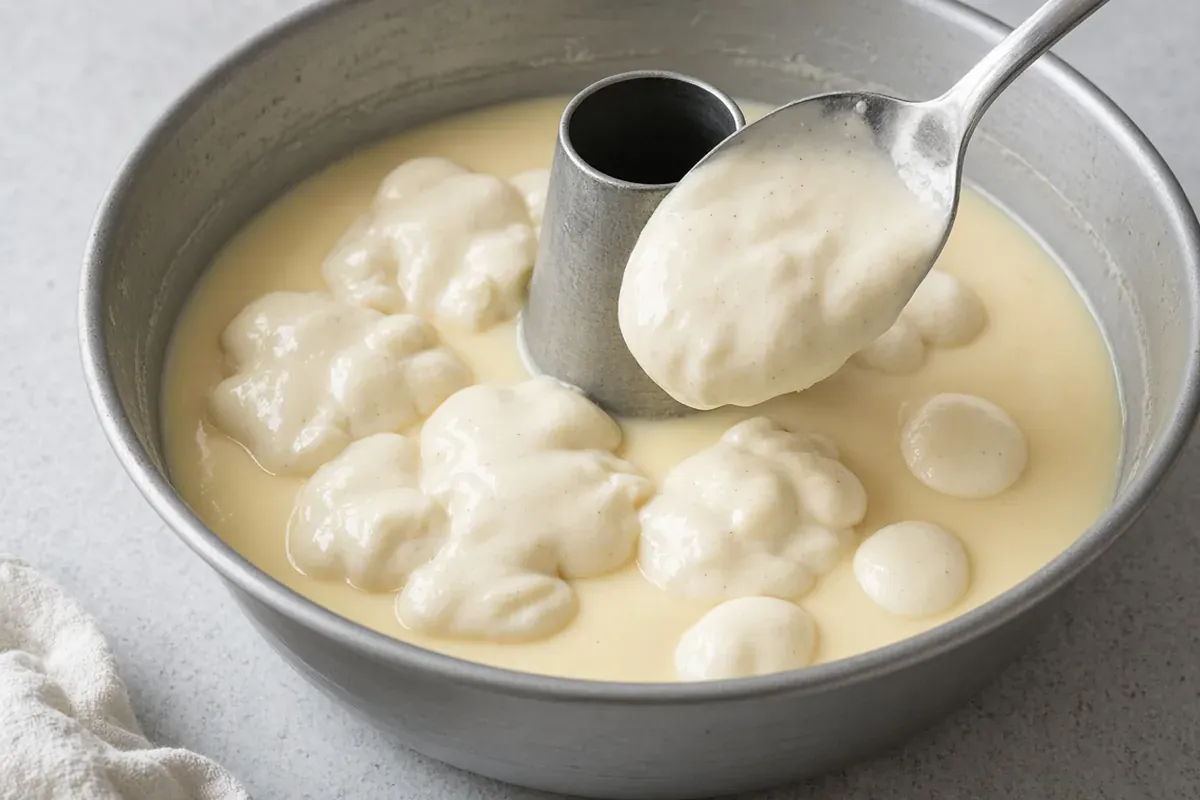
Whisk the flour, baking powder and salt in a bowl. In another bowl whisk the sugar, eggs, oil, milk and vanilla until smooth. Stir the wet ingredients into the dry just until no dry streaks remain. The batter should be pourable, not stiff. Spoon or pour it gently over the back of a large spoon onto the flan so it floats on top. Do not stir. Stop when the pan is about three-quarters full.
A 12-cup Bundt pan is the right size for this recipe. A Nordic Ware Original 12-cup Bundt pan leaves enough headroom for the cake to rise. For a water-bath pan that can hold the Bundt, a 16 × 12-inch, 3-inch-deep roasting pan holds it with room for water. A 9 × 13-inch pan is usually too narrow for a 12-cup Bundt. See our guide to flan pans and molds for other shapes.
5. Bake covered in a water bath
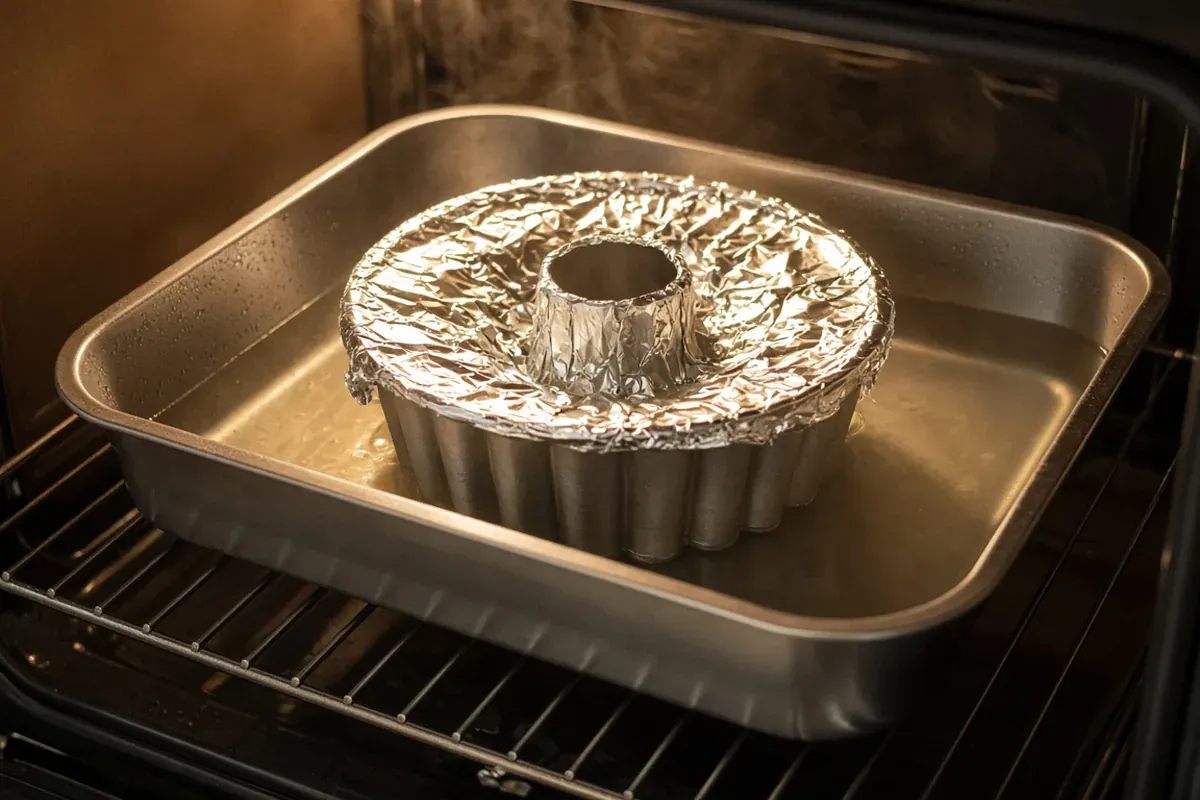
Cover the Bundt pan tightly with greased foil. Set it in a roasting pan, put the roasting pan on the oven rack, and pour in hot water to come 1 to 2 inches up the sides of the Bundt (as high as the roasting pan allows without risking a spill). Bake for 60 minutes, then carefully remove the foil and bake 15 to 25 minutes more, until a toothpick inserted in the cake (the top layer in the oven) comes out clean and the flan at the bottom only jiggles slightly as one piece.
6. Cool, chill, then turn it out
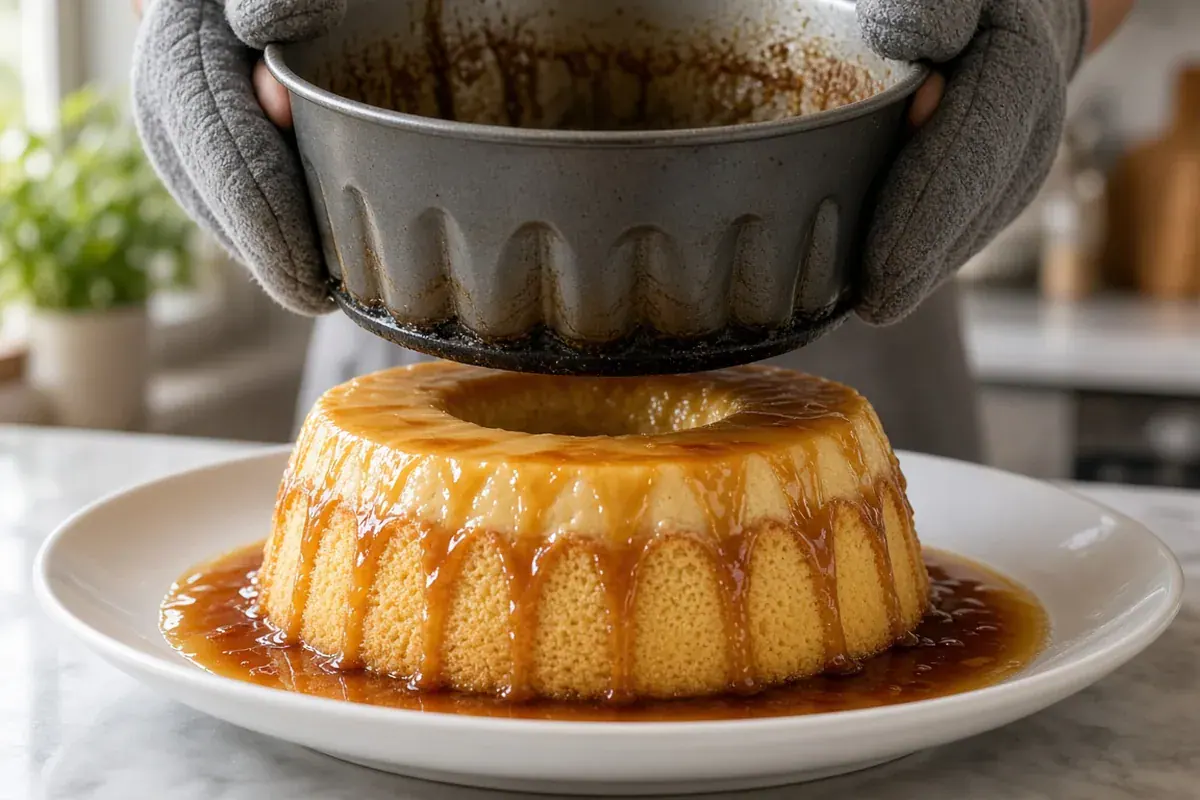
Lift the Bundt out of the water and cool on a rack for an hour, then refrigerate it in the pan for at least 6 hours or overnight. To serve, run a thin knife around the outer edge and the center tube. Dip the bottom of the pan in hot water for 1 to 2 minutes to loosen the caramel. Set a rimmed platter on top, flip in one quick motion, and give a gentle shake. Lift off the pan and spoon any caramel left inside over the top.
How the Layers Swap Places
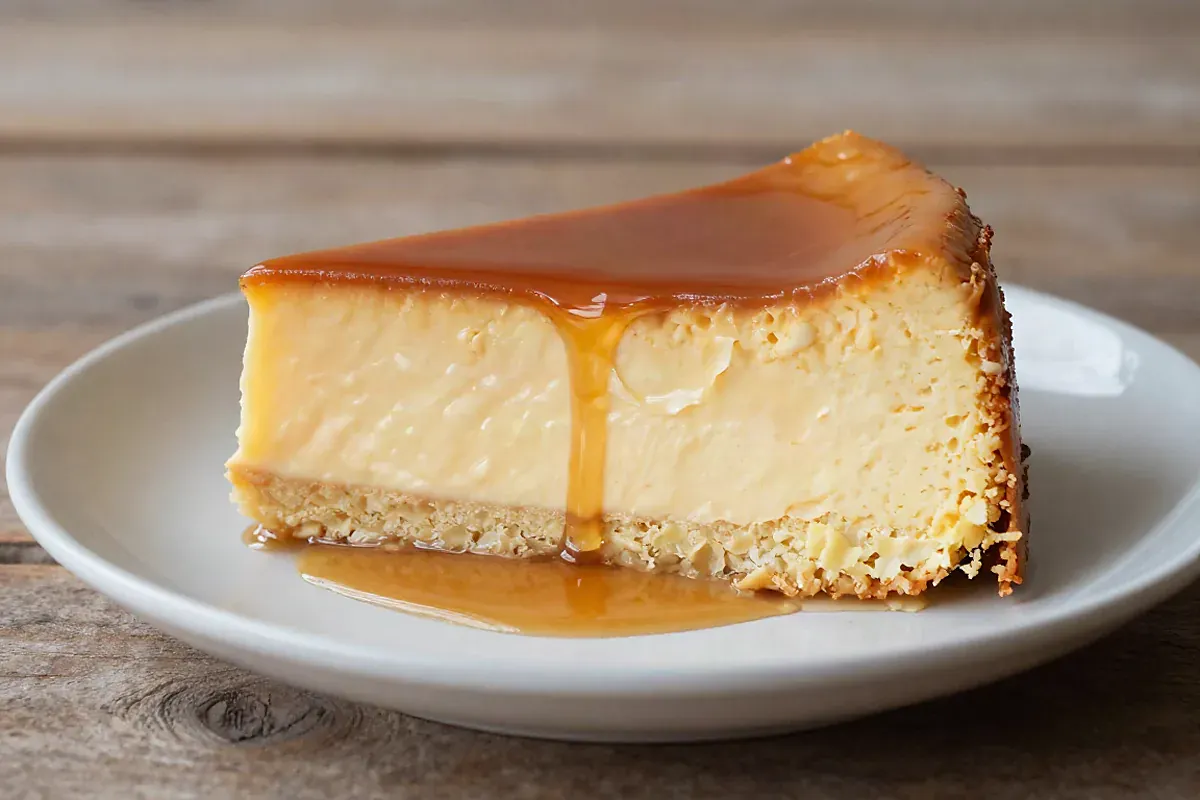
The flan mixture is mostly milk, sugar and eggs: dense, with nothing to make it rise. The cake batter starts out dense too, but in the oven the baking powder fills it with bubbles, so it becomes lighter than the custard around it. The cake floats up and the flan sinks down onto the caramel. When you flip the pan, the caramel that was on the bottom becomes the sauce, the flan sits in the middle, and the cake becomes the base.
That is why you should not stir after you layer, and why stale baking powder is one of the few things that can stop the swap.
How to Tell When It’s Done
- Cake: a toothpick or skewer poked into the cake layer (the top in the oven) comes out clean, with no wet batter.
- Flan: the pan, given a gentle shake, shows a slight jiggle in the custard, not a liquid wave. The flan is under the cake, so trust the jiggle plus the bake time.
- Temperature: an instant-read thermometer in the flan (from the side, under the cake) reads about 170 to 175°F.
- Don’t rush the chill. Even a fully baked flancocho will slump if you flip it before it has had at least 6 hours in the fridge.
Flancocho Recipe
Make it the day before so it has time to chill.
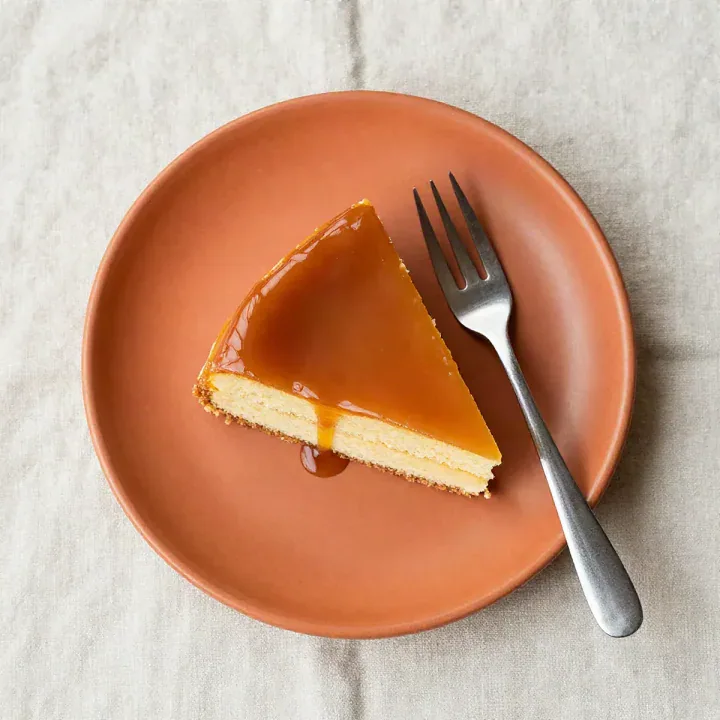
Flancocho
Flancocho is a vanilla cake and a caramel flan baked together in a Bundt pan so the layers swap places in the oven. This from-scratch Dominican and Puerto Rican recipe turns out with flan on top, cake underneath and caramel for a sauce. Serves 12.
Ingredients
Caramel
- 3/4 cup (150 g) sugar
- 3 Tbsp water
Flan
- 1 (14 oz / 397 g) can sweetened condensed milk
- 1 (12 oz / 354 ml) can evaporated milk
- 4 large eggs
- 2 tsp vanilla extract
- Pinch of salt
Vanilla cake
- 1 1/2 cups (190 g) all-purpose flour
- 1 1/2 tsp baking powder
- 1/4 tsp salt
- 3/4 cup (150 g) sugar
- 2 large eggs, at room temperature
- 1/3 cup (80 ml) vegetable oil
- 1/2 cup (120 ml) whole milk
- 2 tsp vanilla extract
Instructions
- Heat the oven to 350°F (175°C) with a rack in the lower-middle position. Put a kettle of water on to boil. Grease a 12-cup Bundt pan thoroughly, including the ridges and the center tube.
- Caramel: cook 3/4 cup sugar and 3 Tbsp water over medium heat, swirling (not stirring), until deep amber, 8–10 minutes. Pour into the Bundt pan and tilt to coat the bottom ring. Cool at least 15 minutes.
- Whisk or blend the condensed milk, evaporated milk, 4 eggs, 2 tsp vanilla and a pinch of salt just until smooth, about 30 seconds. Strain over the cooled caramel and skim any foam.
- Whisk the flour, baking powder and 1/4 tsp salt. In another bowl whisk 3/4 cup sugar, 2 eggs, the oil, milk and 2 tsp vanilla. Stir the wet ingredients into the dry just until combined. Spoon the batter gently over the flan. Do not stir. Fill the pan only to three-quarters full.
- Cover tightly with greased foil. Set the Bundt in a roasting pan, place it on the oven rack and pour in hot water 1 to 2 inches up the sides. Bake 60 minutes, then uncover and bake 15–25 minutes more, until a toothpick in the cake comes out clean and the flan only jiggles slightly.
- Cool on a rack 1 hour, then refrigerate in the pan at least 6 hours or overnight.
- Run a thin knife around the outer edge and the center tube. Dip the pan in hot water 1–2 minutes. Set a rimmed platter on top, flip, and shake gently. Spoon any caramel left in the pan over the top. Cut into 12 slices.
Notes
- Box mix: prepare one 15.25-oz yellow or vanilla cake mix as the box says; use only enough batter, with the flan already in, to fill the pan three-quarters full. Bake the rest as cupcakes. Flan, caramel and chill stay the same.
- 10-cup Bundt: use about 3/4 of the cake batter so it doesn’t overflow.
- Cream-cheese flan: blend in 4 oz softened cream cheese with the flan ingredients.
- Don’t use a springform pan: it leaks into the water bath.
- Storage: covered in the fridge, in the pan or unmolded, up to 4 days. Don’t leave it out more than 2 hours.
Nutrition Information:
Yield: 12 Serving Size: 1 sliceAmount Per Serving: Calories: 400Total Fat: 14gSaturated Fat: 5gTrans Fat: 0gUnsaturated Fat: 8.5gCholesterol: 114mgSodium: 221mgCarbohydrates: 59gFiber: 0gSugar: 47gProtein: 10g
Nutrition information is an estimate and will vary with the brands and amounts used.
Box-Mix Shortcut
A yellow or vanilla cake mix works if you would rather not mix a cake from scratch. Prepare one 15.25-oz box as the package says, then use only enough batter to fill the Bundt, with the flan already in, to three-quarters full. A full box often overflows a 10-cup pan and can crowd a 12-cup one. Bake the extra batter as cupcakes. The flan, caramel, water bath and chill stay the same; start checking the cake at 70 minutes.
Pans and Sizes
| Pan | Batter | Bake time |
|---|---|---|
| 12-cup Bundt (this recipe) | Full recipe | About 80 minutes (60 covered, then uncovered) |
| 10-cup Bundt | Use about ¾ of the cake batter; bake the rest as cupcakes | 70 to 80 minutes; start checking early |
| Tube pan, solid bottom | Full recipe, if it holds 12 cups and has no removable bottom | Similar to a 12-cup Bundt |
| 10-inch round cake pan, 3 inches deep | Full recipe | 60 to 75 minutes; check the center |
| Springform | Don’t use it | The flan leaks into the water bath |
These times are guides. Pans vary, so start checking early: the cake should test clean and the flan should only jiggle slightly.
Variations
- Cream-cheese flan: blend 4 oz softened cream cheese into the flan, as in flan de queso.
- Lemon vanilla cake: add 1 teaspoon finely grated lemon zest to the cake batter, a common flavor in Dominican bizcocho.
- Rum: add 1 tablespoon dark rum to the flan, or 1 tablespoon to the cake batter.
- Chocolate version: that is chocoflan. Use that recipe rather than swapping cocoa into this batter.
- Cajeta or dulce de leche: skip the cooked caramel and line the pan with ¾ cup warmed dulce de leche or cajeta.
Troubleshooting
| Problem | Why | Fix |
|---|---|---|
| Layers didn’t swap | Old baking powder, or a cake batter so thick it couldn’t rise through the flan | Use fresh baking powder; mix the batter just until smooth and pourable; don’t stir after layering |
| Flan is runny or the cake and flan mix | Underbaked, or flipped too soon | Bake until the cake tests clean and the flan only jiggles; chill at least 6 hours. Chilling cannot fix an underbaked custard |
| Flan is spongy or full of holes | No water bath, oven too hot, or too much air in the custard | Always use the water bath; blend only 30 seconds; strain and skim |
| Cake is dry or tough | Overbaked, or butter was used and then the cake was served cold | Start checking at 70 minutes; oil stays more tender after chilling |
| Stuck in the pan | Sides weren’t greased, or the caramel is still cold and glued to the metal | Grease every ridge and the tube; dip the pan in hot water 1–2 minutes; run a knife around both edges |
| Caramel stayed hard in the pan | Cooked past deep amber, or not chilled long enough | Take it off the heat at the color of strong tea; after unmolding, set the empty pan in hot water and pour the melted caramel over the top |
| Water in the cake | Foil leaked, or the water bath was too high | Crimp greased foil tightly around the rim; keep the water 1 to 2 inches up the sides |
| Pan overflowed | Too much cake batter for the pan | Fill only to three-quarters; use a 12-cup Bundt, or hold back some batter in a 10-cup pan |
Make Ahead, Serving and Storage
Flancocho is best made a day ahead. Keep it in the pan, covered, in the fridge, and turn it out shortly before serving. Serve it cold, cut with a thin knife dipped in hot water and wiped between slices, and spoon the pooled caramel over each piece.
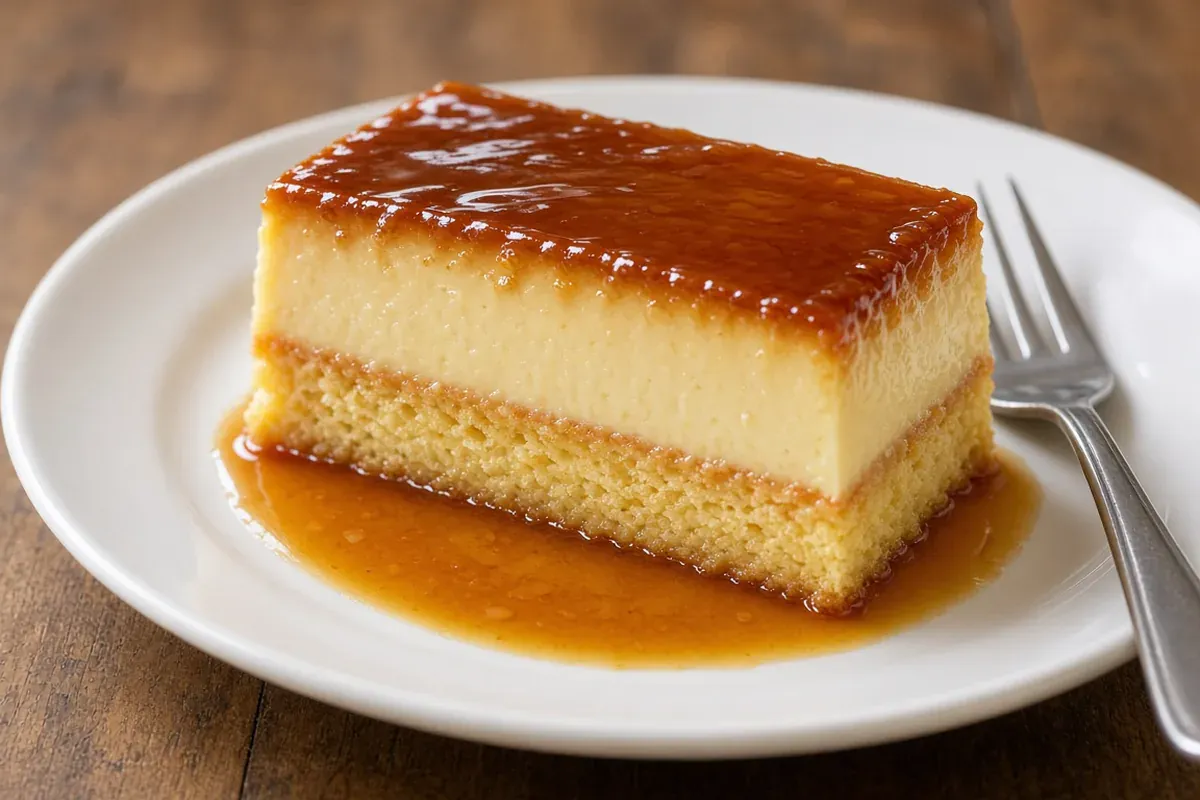
Once turned out, cover it loosely and eat it within 4 days. You can freeze wrapped slices for up to 2 months and thaw them overnight in the fridge; the flan may weep a little, so fresh is better. Don’t leave it out for more than 2 hours: the flan is an egg custard.
FAQ
What is flancocho?
A caramel flan and a vanilla cake baked together in a Bundt pan so the layers swap places. It is made in the Dominican Republic and Puerto Rico. Mexico’s chocolate version is chocoflan.
Is flancocho Dominican or Puerto Rican?
Both. The same dessert — vanilla or yellow cake, flan and caramel, baked so the layers swap — is made under the name flancocho in the Dominican Republic and in Puerto Rico. This recipe is that vanilla-cake version.
What is the difference between flancocho and chocoflan?
They are built the same way. Flancocho uses a vanilla or yellow cake. Chocoflan is Mexican and uses chocolate cake, often with cream cheese in the flan.
Why do the layers swap?
The flan is denser than the baked cake. As the batter heats, baking powder fills it with bubbles, the cake floats up and the flan sinks onto the caramel. Flipping the pan puts the flan on top.
Do I have to use a water bath?
Yes. The cake needs a 350°F oven, which is hotter than a plain flan (see our classic flan recipe). The water keeps the custard from boiling, which is what causes a rubbery, holey flan and can keep the layers from separating cleanly.
Can I use a cake mix?
Yes. Prepare a yellow or vanilla cake mix as the box says, and use only enough batter to fill the pan, with the flan already in, to three-quarters full. The flan, caramel and bake stay the same.
Can I make flancocho without a Bundt pan?
Yes, in a solid-bottom tube pan or a deep 10-inch round cake pan. Don’t use a springform pan, which leaks. A 10-cup Bundt needs less cake batter so it doesn’t overflow.
How long does flancocho last?
Up to 4 days covered in the fridge. It keeps best in the pan until you serve it. Don’t leave it at room temperature for more than 2 hours.
More Flan Recipes
See how every country makes flan and its cousins, including this cake-and-flan swap.
Types of flan by country →- Chocoflan (Mexican impossible cake)
- Classic caramel flan
- Mexican flan (flan napolitano)
- Cuban flan (flan cubano)
- Spanish flan (flan de huevo)
- Leche asada
- Flan de queso
- Dominican desserts
- Flan pans and molds
More Dessert
See all →
Jorge Garcia is the founder of AmigoFoods, where he has spent over 20 years helping readers discover authentic Latin American and Spanish cuisine. Raised in a Cuban-American household, Jorge learned to cook at the hands of his mother and grandmother, carrying forward generations of family recipes. That heritage, backed by his family’s four-generation history in the Latin food industry, inspired him to launch AmigoFoods in 2003. With more than 1,000 published articles on recipes, ingredients, and food culture, Jorge’s mission is simple: make authentic Latin cooking approachable for home cooks everywhere while honoring the traditions behind every dish.