
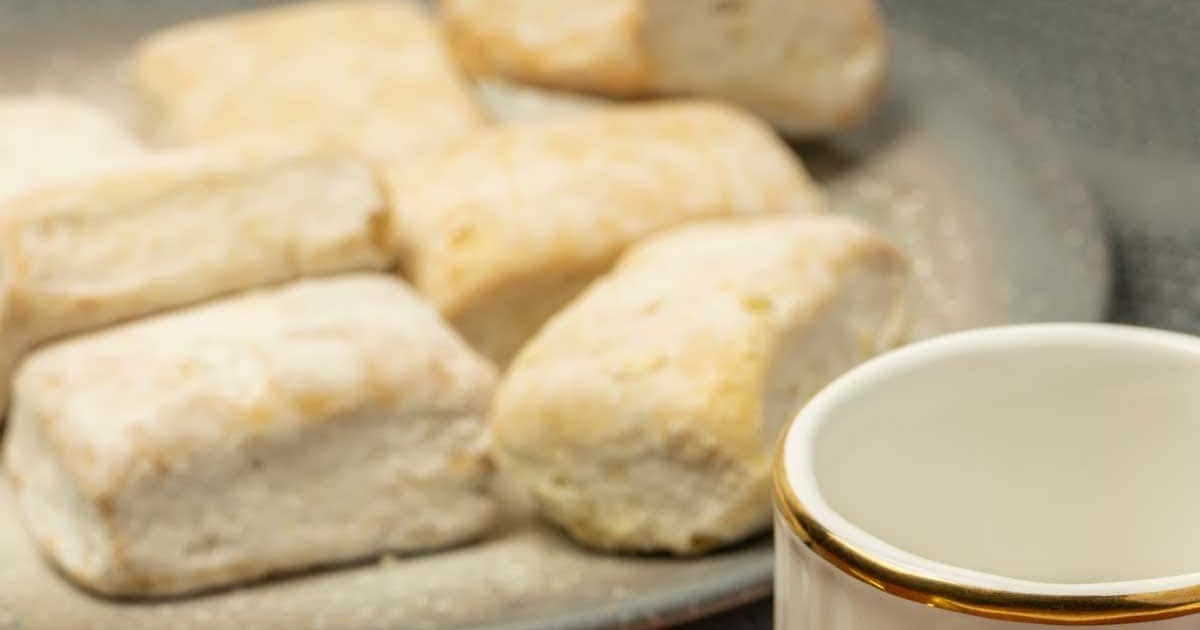
Hojaldrinas are Andalusia’s flaky Christmas pastries: a dough of flour, pork lard, orange and sweet wine, folded like puff pastry, baked into small squares and buried in powdered sugar. They’re crisp at the edges, tender and layered inside, and they taste of orange.
They sit on the same December tray as mantecados and polvorones, but they’re the one that shatters instead of crumbling. This recipe makes about 30 at home, with three simple folds, exact amounts in cups and grams, and fixes for the usual problems: pastries that don’t puff, and lard that leaks out.
Hojaldrinas at a Glance
What Are Hojaldrinas?
The name says it: hojaldre is Spanish for puff pastry, and an hojaldrina is a little one. In Spain they’re counted as part of the mantecado family, the lard-based Christmas sweets of Andalusia, and you’ll sometimes see them called mantecados de hojaldre.
What sets them apart is the folding. A mantecado or a polvorón is pressed or cut from a crumbly dough. An hojaldrina’s dough is rolled out, spread with lard and folded over itself several times, so it bakes into thin, flaky sheets.
Mantecados come from the towns of Estepa, in Seville province, and Antequera, in Málaga, which still argue over who made them first. Estepa’s mantecados earned an EU protected geographical indication in 2011, and its polvorones followed in 2016. The oldest written mantecado recipe on record, though, comes from a 1740 manuscript from Morón de la Frontera, another Seville town.
What do hojaldrinas taste like?
Like a cross between a shortbread and a palmier. The first bite is crisp and flaky, then the inside melts the way a mantecado does. Orange zest and juice give them a clean citrus flavor, the wine adds a faint fruitiness, and the thick snow of powdered sugar makes them sweeter than the dough itself, which has very little sugar.
How do you pronounce hojaldrinas?
oh-hahl-DREE-nahs. The first h is silent and the j sounds like an English h.
Hojaldrinas Ingredients
Six pantry ingredients, plus powdered sugar. Exact amounts are in the recipe card.

How to Make Hojaldrinas
The method is a simplified puff pastry. Instead of locking in one slab of butter, you spread a thin layer of lard on the dough three times and fold it like a letter. It takes about 45 minutes of hands-on work, spread across the chilling breaks.
1. Make the dough
Whisk the flour, sugar, salt and orange zest in a large bowl. Rub in ½ cup (100 g) of the lard with your fingertips until it looks like damp sand. Add the cold orange juice and wine and knead in the bowl for about a minute, just until smooth. Pat it into a rectangle, wrap it and chill for 30 minutes.
2. Spread with lard and fold
Roll the dough into an 8 by 16-inch (20 x 40 cm) rectangle. Spread ¼ cup (50 g) of lard thinly over the top two-thirds, leaving a ½-inch border. Fold the bare third up over the middle, then fold the top third down over it, like a business letter. Press the edges shut.
3. Repeat twice more
Turn the dough 90 degrees, roll it out to the same size, spread with another ¼ cup (50 g) of lard and fold again. Chill 20 minutes, then do the third and final fold with the last of the lard. Wrap and chill 30 minutes.
4. Roll and cut into squares
Heat the oven to 375°F (190°C). Roll the dough to about 10 by 12 inches (25 x 30 cm) and a scant ½ inch (1 cm) thick. Trim the edges, then cut 2-inch (5 cm) squares, pressing a sharp knife straight down. Sawing or using a dull blade pinches the edges shut and stops them from rising. A bench scraper makes clean, straight cuts.
5. Bake until golden underneath
Bake one sheet at a time on parchment for 20 to 25 minutes. They’re done when the sides show open layers, the tops are pale gold and the bottoms are golden brown. Hojaldrinas should stay light on top, so check the bottoms rather than waiting for the tops to brown.
6. Cool, then dust heavily
Let them sit on the sheet for 15 minutes before you move them. Warm lard pastry breaks if you look at it wrong. Once completely cool, sift on a thick layer of powdered sugar, or roll each one gently in a bowl of it.
Hojaldrinas Troubleshooting
| Problem | Why it happened | Fix |
|---|---|---|
| Didn’t puff or flake | The lard melted into the dough, or the edges were pinched by a dull knife. | Chill between every fold and cut straight down with a sharp blade. |
| Lard leaking on the pan | The dough was too warm going into the oven. | Chill the cut squares for 10 minutes before baking. |
| Tough or chewy | Too much kneading, or bread flour. | Knead only until the dough comes together. Use all-purpose flour. |
| Crumbly dough that won’t roll | Not enough liquid. | Work in more cold orange juice, 1 tablespoon at a time. |
| Sugar disappears | It was dusted on while they were warm and melted into the fat. | Wait until they’re completely cool, then dust again before serving. |
| Raw center | Squares cut too thick, or the oven runs cool. | Keep them under ½ inch thick and check the oven with a thermometer. |
Hojaldrinas vs. Mantecados vs. Polvorones
All three are lard-based Spanish Christmas sweets dusted with powdered sugar, and boxed assortments mix them together. The difference is in how the dough is made.
| Sweet | Dough | Typical flavor | Texture | Shape |
|---|---|---|---|---|
| Hojaldrinas | Raw flour, lard and liquid, folded in layers | Orange and sweet wine | Flaky, crisp outside, tender inside | Squares or rectangles |
| Mantecados | Toasted flour and lard, not folded | Cinnamon, lemon, sesame | Crumbly, melts in the mouth | Rounds |
| Polvorones | Toasted flour, lard and ground almonds, pressed | Almond | Powdery, falls apart easily | Ovals wrapped in paper |
| Hojaldre (puff pastry) | Butter dough with many more folds | Neutral, filled or glazed | Very tall, airy layers | Pastries like miguelitos |
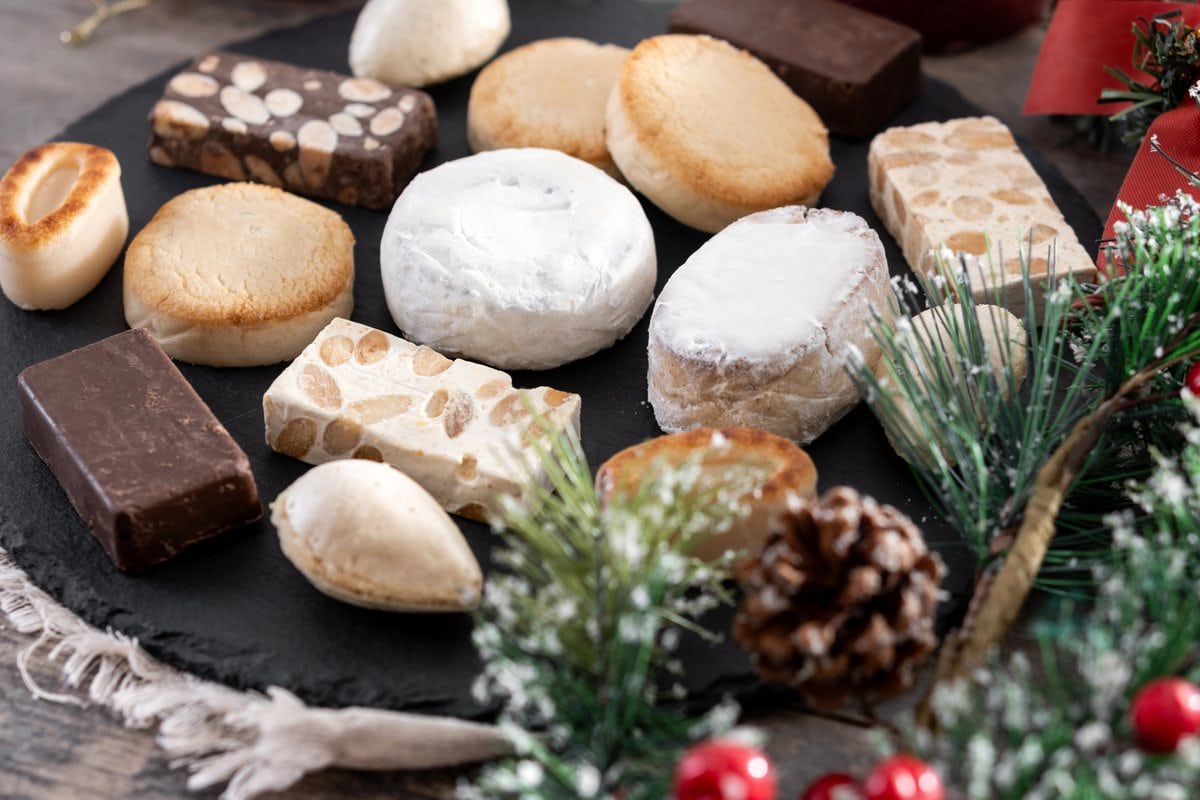
For the whole lineup, see our guide to traditional Spanish Christmas sweets.
Hojaldrinas Variations
How to Serve and Store Hojaldrinas
In Spain they come out after Christmas Eve dinner on a tray with turrón, mantecados and marzipan, and they keep appearing through New Year’s and Three Kings’ Day. Serve them with a café con leche, hot chocolate or a small glass of the same sweet wine that went into the dough. Put a napkin under each one. The powdered sugar goes everywhere.
- Room temperature: up to 2 weeks in an airtight tin. Lard pastries keep well.
- Freezer, unbaked: freeze the cut squares on a tray, then bag them for up to 2 months. Bake from frozen, adding 3 to 5 minutes.
- Freezer, baked: freeze them undusted for up to 2 months, thaw in the tin and dust before serving.
- As a gift: wrap each one in tissue paper, the way polvorones are sold, and pack them snugly in a tin so they don’t rattle.
Planning the whole holiday table? See what else Spain cooks in our guide to Spanish Christmas foods.
Where to Buy Hojaldrinas in the US
Boxed hojaldrinas are a supermarket staple in Spain every December, often packed in the same assorted boxes as mantecados and polvorones. In the US, look for them in Spanish import shops in November and December, or check hojaldrinas on Amazon. Our Spanish pantry list on Amazon has other Christmas sweets and the ingredients for making them.
Packaged ones are good, but homemade hojaldrinas are flakier and taste far more of orange. They’re also one of the easier Spanish Christmas sweets to make: no toasting, no special molds, just three folds.
Hojaldrinas FAQ
What are hojaldrinas made of?
Flour, pork lard, orange zest and juice, sweet white wine, a little sugar and salt. They’re finished with a thick coat of powdered sugar.
Where are hojaldrinas from?
Andalusia, in southern Spain. They belong to the mantecado family of Christmas sweets from the area around Estepa and Antequera, and they’re now sold all over Spain at Christmas.
Are hojaldrinas the same as mantecados?
They’re related but not the same. Both use lard, but hojaldrina dough is folded into layers so it flakes, while mantecado dough is made with toasted flour and isn’t folded, so it crumbles.
Can I make hojaldrinas without lard?
Yes. Use the same weight of cold unsalted butter or vegetable shortening. Butter tastes richer but makes a crisper, less melting pastry. Keep the dough colder, because butter softens faster.
Do I have to fold the dough?
Some Spanish home cooks skip the folds and rely on the lard alone, and the pastries still flake a little. The three folds are what give you distinct layers.
Why didn’t my hojaldrinas puff up?
The lard got too warm and blended into the dough, or the cuts pinched the edges shut. Chill the dough between folds and cut straight down with a sharp knife.
How long do hojaldrinas last?
Up to 2 weeks in an airtight tin at room temperature, or 2 months in the freezer.
More cookies and small sweets from Spain and Latin America are in our country-by-country guide to cookies and sweets.
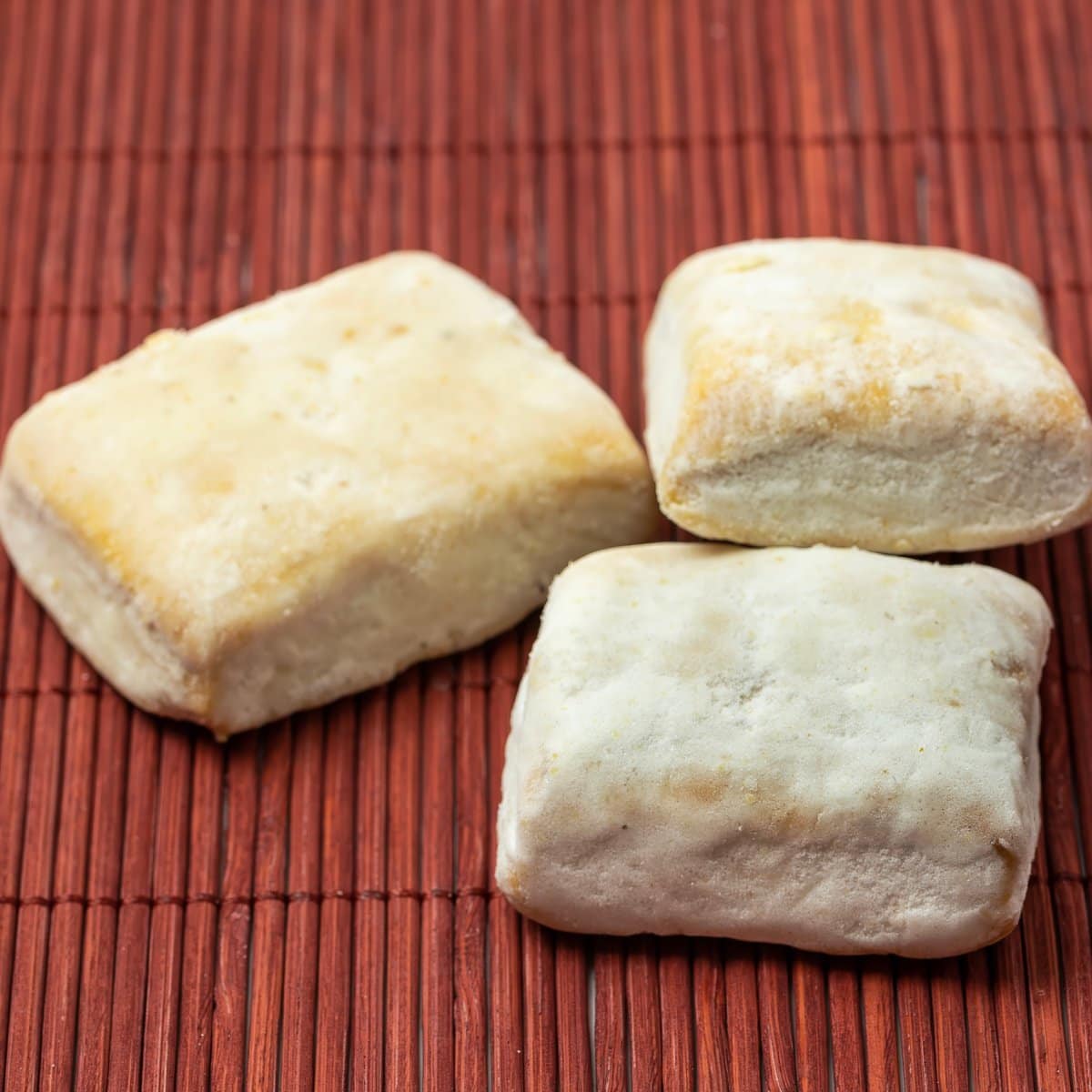
Hojaldrinas (Spanish Flaky Orange Christmas Pastries)
Hojaldrinas are Andalusian Christmas pastries made with lard, orange and sweet wine, folded like puff pastry so they bake into flaky, tender layers, then buried in powdered sugar.
Ingredients
- 4 cups (500 g) all-purpose flour, plus more for rolling
- 3 tablespoons (40 g) granulated sugar
- ½ teaspoon fine salt
- Finely grated zest of 1 large orange
- 1¼ cups (250 g) pork lard, cool but spreadable, divided
- ⅓ cup (80 ml) fresh orange juice, cold
- ¼ cup (60 ml) sweet white wine, such as moscatel or cream sherry, cold
- 1 cup (120 g) powdered sugar, for dusting
Instructions
- Make the dough. In a large bowl, whisk the flour, granulated sugar, salt and orange zest. Add ½ cup (100 g) of the lard and rub it in with your fingertips until no lumps remain and the mixture looks like damp sand. Pour in the cold orange juice and wine, stir, then knead briefly in the bowl just until a smooth, soft dough forms, about 1 minute. If it won't come together, add more orange juice 1 tablespoon at a time. Pat into a rectangle, wrap and refrigerate for 30 minutes.
- First fold. On a lightly floured counter, roll the dough into a rectangle about 8 by 16 inches (20 x 40 cm), with a short side facing you. Spread ¼ cup (50 g) of the remaining lard thinly over the top two-thirds, leaving a ½-inch (1 cm) border. Fold the bare bottom third up over the middle, then fold the top third down over it, like a letter. Press the open edges to seal.
- Second and third folds. Turn the dough 90 degrees so the folded edge is on your left. Roll it out to 8 by 16 inches again, spread with another ¼ cup (50 g) lard and fold the same way. Wrap and chill for 20 minutes. Repeat once more with the last ¼ cup (50 g) lard, then wrap and chill for 30 minutes. If lard squeezes out or the dough feels greasy at any point, chill it for 15 minutes before you continue.
- Roll and cut. Heat the oven to 375°F (190°C) and line 2 baking sheets with parchment. Roll the dough into a rectangle about 10 by 12 inches (25 x 30 cm) and a scant ½ inch (1 cm) thick. Trim the edges with a sharp knife, then cut into 2-inch (5 cm) squares, pressing the knife straight down without sawing so the layers stay open. Set the squares 1 inch apart on the sheets. Stack the scraps flat (don't knead them into a ball), re-roll once and cut more. If your kitchen is warm, chill the cut squares for 10 minutes.
- Bake. Bake one sheet at a time on the middle rack for 20 to 25 minutes, until the hojaldrinas have puffed into visible layers, the tops are pale golden and the bottoms are golden brown.
- Cool and dust. Leave them on the sheet for 15 minutes, because they are very fragile while warm, then move them to a rack to cool completely. Sift the powdered sugar heavily over the top, or roll each one gently in a bowl of powdered sugar.
Notes
- Lard: it should be cool but spreadable, like soft butter. Leaf lard from a butcher has the cleanest flavor; the shelf-stable tubs of manteca in the Latin aisle also work.
- No lard? Use the same weight of unsalted butter. The dough softens faster, so chill it 10 minutes longer between folds. Butter hojaldrinas are crisper and less melting.
- Wine: moscatel, a cream sherry or any sweet white wine. To skip the alcohol, use more orange juice.
- Make ahead: freeze the cut, unbaked squares on a tray, then bag them for up to 2 months. Bake from frozen, adding 3 to 5 minutes.
- Storage: keep baked hojaldrinas in an airtight tin at room temperature for up to 2 weeks. Dust with a little more powdered sugar before serving.
More Spanish Foods
See all →
Jorge Garcia is the founder of AmigoFoods, where he has spent over 20 years helping readers discover authentic Latin American and Spanish cuisine. Raised in a Cuban-American household, Jorge learned to cook at the hands of his mother and grandmother, carrying forward generations of family recipes. That heritage, backed by his family’s four-generation history in the Latin food industry, inspired him to launch AmigoFoods in 2003. With more than 1,000 published articles on recipes, ingredients, and food culture, Jorge’s mission is simple: make authentic Latin cooking approachable for home cooks everywhere while honoring the traditions behind every dish.