

Spanish Christmas desserts are an essential part of holiday festivities, bringing together family, friends, and generations-old recipes that capture the spirit of the season.
From crumbly almond polvorones to the colorful, ring-shaped Roscón de Reyes, these sweets reflect Spain’s diverse regional flavors and cherished culinary traditions.

Each dessert tells a story of Spanish culture, celebrating local ingredients like almonds, honey, and spices.
In this list of the top 12 Spanish Christmas desserts, we’ll explore some of the most beloved treats enjoyed across Spain during the holidays.
Prepare to discover a world of flavors that make Spanish Christmas foods unforgettable.
1. Turrón

Turrón, a classic Spanish Christmas confection, traces its origins to Moorish influences and has been a holiday staple for centuries.
Made primarily from almonds and honey, it comes in two main varieties: Jijona (soft and chewy) and Alicante (hard and crunchy).
Turrón is often sold in rectangular bars and is enjoyed across Spain, with regional specialties adding chocolate, candied fruits, or even liqueurs.

Families traditionally share turrón during holiday gatherings, and its rich, nutty flavor has become synonymous with Spanish Christmas festivities.
This classic Christmas dessert showcases the importance of almonds and honey in Spanish culinary traditions.
2. Mazapán

Mazapán, or marzipan, is an almond-based sweet that dates back to medieval Spain, particularly in Toledo.
Traditionally made from ground almonds and sugar, it’s often shaped into miniature fruits, animals, or holiday symbols.
Mazapán plays a significant role during Christmas, when families enjoy it as part of their seasonal celebrations.
Its delicate almond flavor and slightly chewy texture make it an ideal treat for winter gatherings.
Some regions add egg yolk or honey to the mixture, adding richness.
Toledo remains Spain’s marzipan capital, with artisans creating intricately molded mazapán by hand, keeping the festive tradition alive.
3. Mantecados

Mantecados are classic Spanish cookies enjoyed primarily during the Christmas season, loved for their crumbly texture and melt-in-the-mouth sweetness.
Originating in Andalusia, particularly in the town of Estepa, mantecados are made from a simple blend of flour, sugar, and lard, with many varieties adding cinnamon, lemon zest, or aniseed for extra flavor.
Their name comes from “manteca,” meaning lard in Spanish, which gives these cookies their signature crumbly texture.
Each region has its twist on the recipe, with some adding almonds or sesame seeds.
Wrapped individually in colorful paper, mantecados are festive treats that have become a holiday staple across Spain, symbolizing warmth and tradition.
4. Polvoron

Polvorones are delicate, crumbly Spanish cookies often enjoyed alongside mantecados during the Christmas season.
Named after the Spanish word “polvo,” meaning “dust” or “powder,” polvorones are known for their powdery texture, achieved by using ground almonds, flour, and sugar, which gives them a unique, melt-in-the-mouth consistency.

Traditionally dusted with powdered sugar, they have a rich, buttery flavor with subtle hints of cinnamon or lemon zest, depending on regional variations.
These treats originated in Andalusia but have spread throughout Spain, becoming a symbol of holiday gatherings.
Wrapped in bright, festive paper, polvorones add a sweet, nostalgic touch to Christmas celebrations across Spanish households.
5. Pestiños

Pestiños are small, deep-fried pastries popular in Andalusia during Christmas and Easter.
Made from dough flavored with orange zest, anise, and olive oil, these treats are traditionally fried and coated with honey or sugar.
Pestiños have a crisp, golden exterior with a light, airy interior, offering a sweet and subtly spiced flavor.
Their deep-fried goodness makes them a comforting treat during the chilly winter months, and their preparation often brings families together.
Passed down through generations, pestiños are a testament to Spain’s rich culinary heritage, particularly in the southern regions where olive oil is abundant.
6. Roscón de Reyes

Roscón de Reyes, or “King’s Ring,” is a festive cake typically enjoyed on January 6, Epiphany, marking the visit of the Three Wise Men.
This crown-shaped cake is flavored with orange blossom and decorated with candied fruits to resemble a jeweled crown.
Hidden inside are a figurine and a dry bean; finding the figurine means good luck, while the bean requires buying next year’s cake.
Traditionally served with whipped cream or custard, Roscón de Reyes has a light, fluffy texture that makes it an eagerly awaited treat.
This cake adds a sweet end to Spain’s extended holiday season.
7. Yemas de Santa Teresa

Yemas de Santa Teresa, or “Saint Teresa’s Yolks,” are traditional sweets from the city of Ávila, made from egg yolks and sugar.
These small, round treats are cooked to a rich, custard-like consistency and coated in sugar, giving them a sweet and creamy taste.
Yemas de Santa Teresa are a beloved Christmas treat, with their simplicity highlighting the flavors of fresh ingredients.
Each yema is delicately formed by hand, symbolizing a long-standing Spanish tradition.
Their rich, indulgent flavor and smooth texture make them a perfect holiday dessert, especially among those who appreciate classic Spanish sweets.
8. Hojaldrinas
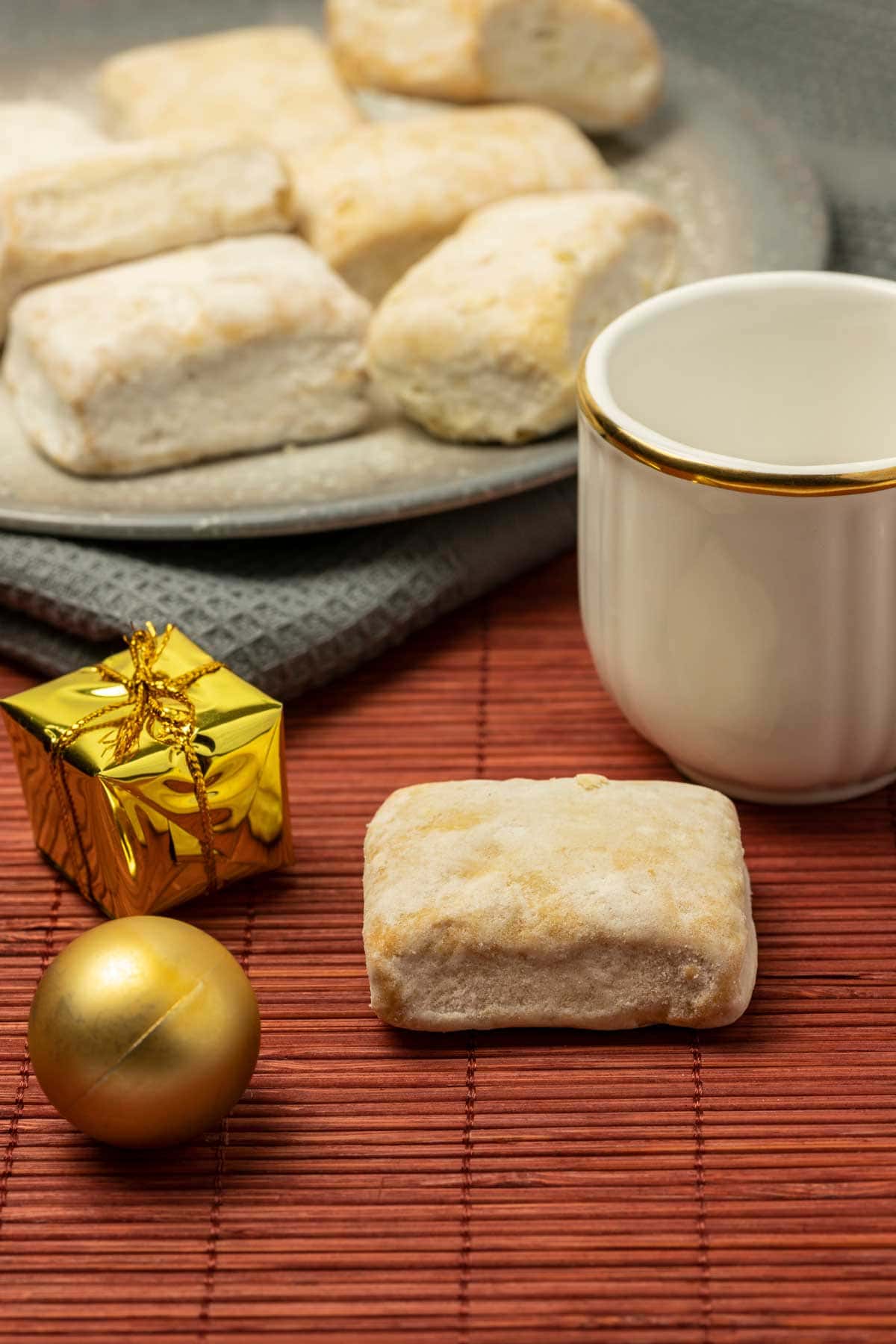
Hojaldrinas are buttery, flaky pastries that bring a taste of luxury to Spanish Christmas celebrations.
Originating in Andalusia, these pastries are made by layering dough with rich butter or lard, similar to puff pastry, which creates a delicate, airy texture that melts in the mouth.

The dough is infused with the zest of oranges, giving hojaldrinas a fragrant citrus note that balances their sweetness.
Once baked to golden perfection, they’re generously dusted with powdered sugar, adding a touch of snowy elegance.
Hojaldrinas are often stored in tin boxes and shared with family and friends, symbolizing the warmth and hospitality of the holiday season.
Their delicate layers and citrus aroma make them a favorite treat on Christmas tables across Spain.
To bake them at home, follow our hojaldrinas recipe, with exact amounts and three simple folds.
9. Nevaditos

Nevaditos, meaning “little snowies,” are delightful, powdery cookies that resemble snow-covered treats, thanks to their generous coating of powdered sugar.
Made from simple ingredients like flour, sugar, and lard or butter, nevaditos have a dense, crumbly texture and a mildly sweet flavor.
Their light sugar coating and buttery richness make them an ideal treat for the holidays.
Nevaditos are often paired with coffee or hot chocolate, adding a cozy element to festive gatherings.
These Spanish cookies are particularly popular in the Castile-La Mancha region, where families enjoy baking and sharing them during Christmas.
10. Leche Frita

Leche Frita, or “Fried Milk,” is a creamy Spanish dessert with a crispy exterior and custardy center.
Made by cooking milk with flour, sugar, and cinnamon, the mixture is then chilled, cut into squares, coated in breadcrumbs, and fried.
Leche Frita’s golden, crisp exterior gives way to a soft, luscious filling, making it a comforting treat during the colder months.
Typically dusted with sugar and cinnamon, it’s served warm, offering a unique and satisfying dessert option.
Its creamy texture and delicate flavor make it an enduring favorite during Spain’s holiday celebrations.
11. Peladillas

Peladillas are traditional Spanish sugared almonds often enjoyed during the Christmas season and on special occasions.
Originating from the Valencia region, these treats consist of almonds coated in a crisp, sweet sugar shell that provides a delightful contrast between the crunchy exterior and the nutty center.

Peladillas are known for their pure, simple flavor, letting the natural taste of the almond shine through.
They’re commonly presented in small decorative bags or boxes and are frequently given as gifts, symbolizing good fortune and celebration.
With their elegant white coating, peladillas add a touch of classic charm to holiday gatherings and make for a timeless, beloved Christmas sweet in Spain.
12. Pan de Cádiz

Pan de Cádiz is a traditional Spanish Christmas treat hailing from the Andalusian city of Cádiz.
This rich and indulgent dessert is crafted from marzipan—made of ground almonds and sugar—shaped into a rectangular loaf and filled with layers of sweetened egg yolk, candied fruit, or jam.
Its smooth, dense texture and delicate sweetness make it a standout on holiday tables across Spain.
Baked to a golden perfection, Pan de Cádiz reflects the region’s Moorish heritage, where almond-based confections have deep historical roots.
Often enjoyed during festive gatherings, this treat is a true symbol of Spanish Christmas traditions, offering a delightful blend of flavors that celebrate the season’s joy.
13. Almendras Rellenas

Almendras Rellenas are a delightful Spanish confection that combines the natural crunch of almonds with a sweet, creamy filling.
These treats are traditionally made by carefully splitting almonds, hollowing them out, and stuffing them with a flavorful paste, often made from marzipan, chocolate, or nougat.
The filled almonds are then often coated in a delicate layer of sugar or chocolate, adding a touch of elegance to their appearance and taste.
Popular during festive occasions, especially Christmas, almendras rellenas showcase the rich tradition of Spanish sweets and are a testament to the country’s mastery of combining simple ingredients into irresistible bites of joy.
Perfect as a dessert or a gift, they are a beloved treat across Spain.
Spanish Christmas Desserts: Not Just for Christmas
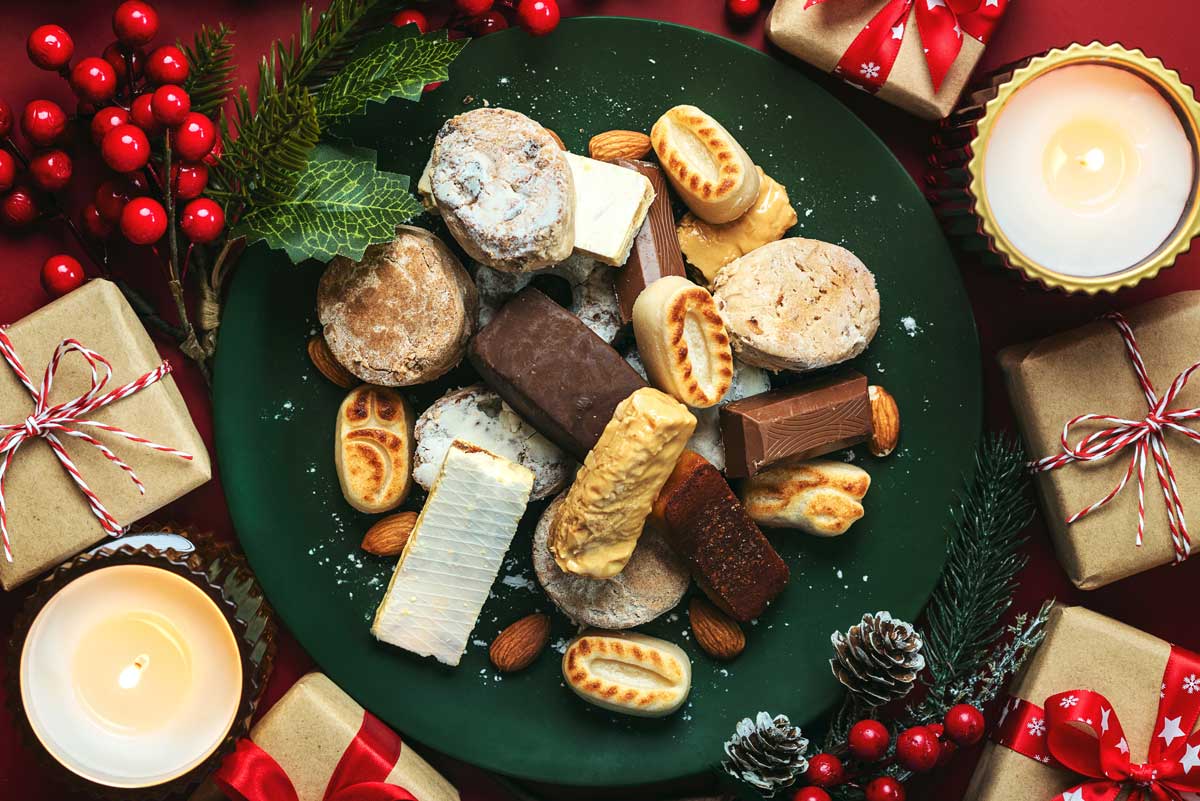
Once you’ve gotten a taste of the best Spanish Christmas desserts, it’s hard not to develop a craving for them.
But there are many more traditional Spanish desserts enjoyed all year round.
The good thing is you don’t have to book a trip to Spain anytime you want a Spanish Christmas treat.
Check your local specialty stores if they carry these sweets or look for an online store that offers the best Latin American and Spanish food and drinks.

Want to Know More About Spanish Foods?
Now that you know some of the best Spanish Christmas desserts to try, why not use this opportunity to learn about Spanish Food: 50 Traditional Dishes You Need to Try?Check out the rest of our blog for more information on Spanish sweets, dishes, and recipes.
More Spanish Foods
See all →
Jorge Garcia is the founder of AmigoFoods, where he has spent over 20 years helping readers discover authentic Latin American and Spanish cuisine. Raised in a Cuban-American household, Jorge learned to cook at the hands of his mother and grandmother, carrying forward generations of family recipes. That heritage, backed by his family’s four-generation history in the Latin food industry, inspired him to launch AmigoFoods in 2003. With more than 1,000 published articles on recipes, ingredients, and food culture, Jorge’s mission is simple: make authentic Latin cooking approachable for home cooks everywhere while honoring the traditions behind every dish.