
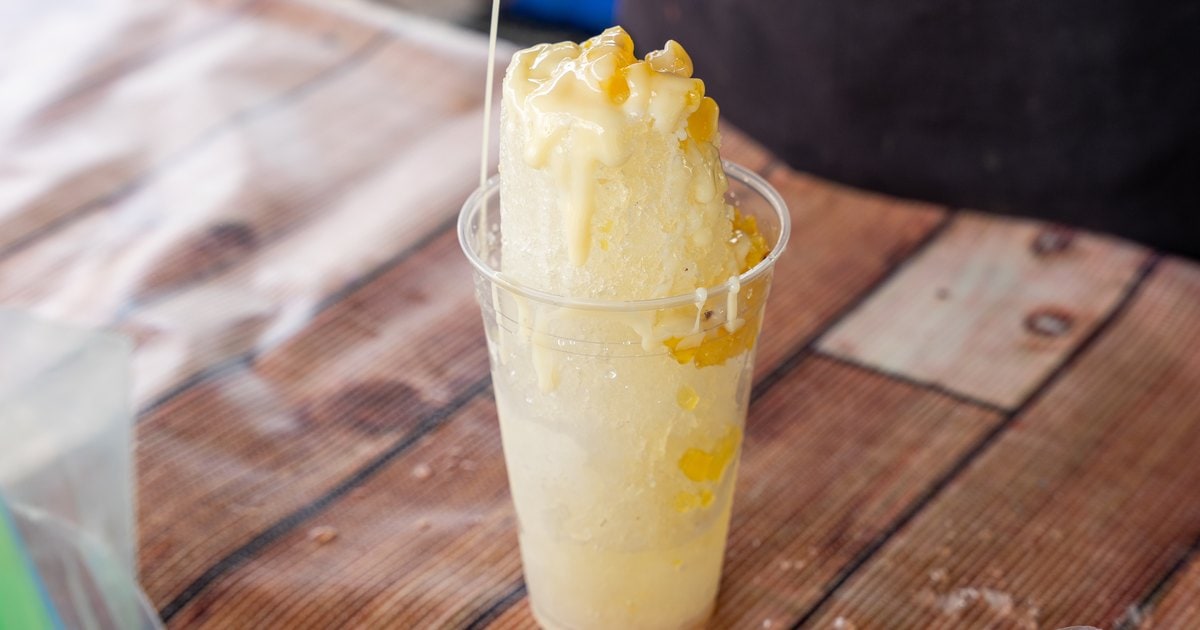
Shave a block of ice, pour syrup over it, hand it to somebody standing in the sun. Every hot country arrived at this independently, and Latin America arrived at it about a dozen times over, which is why the same basic thing has a different name, a different topping and a different set of rules every few hundred miles.
A Mexican raspado is not a Puerto Rican piragua. A Costa Rican granizado is a different proposition from a Panamanian raspao, even though both drown the ice in condensed milk. And a Colombian cholado is barely shaved ice at all by the time it reaches you. Here is the map.
Shaved ice is one of four families of frozen dessert in the region — the rest are in our guide to Latin American and Spanish frozen treats.
Mexico: Raspados
The word comes from raspar, to scrape. A raspado is block ice shaved with a hand plane into a cup, then soaked with fruit syrup — tamarindo, jamaica, limón, fresa, piña — and eaten with a spoon rather than drunk.

What separates a serious raspado stand from a mediocre one is whether the syrups are made from real fruit and whether there is fruit pulp at the bottom of the cup. The northern border states push it further with raspados locos, which add chamoy, chili powder, tamarind candy, cucumber and lime until the thing is closer to a salad than a dessert — the same logic that produces the mangonada.
Note the distinction Mexicans make and visitors usually miss: a raspado is shaved ice with syrup poured on. A nieve de garrafa is churned ice cream. Ordering one and expecting the other is a common disappointment.
Puerto Rico: Piraguas
The name is a compound of pirámide and agua, and it describes the shape exactly: the piragüero packs shaved ice into a paper or plastic cup and shapes it into a peak before pouring syrup down the sides.
The ice is shaved by hand from a block with a metal scraper, which produces a finer, more absorbent texture than the machine-crushed pellets in a mainland snow cone. Classic syrups are tamarindo, coco, crema (vanilla), frambuesa, limón and parcha (passion fruit). The carretón — the piragua cart, usually painted in bright colors with a parasol over it — is a fixture of Puerto Rican plazas and a genuine cultural institution, not a tourist prop. Our roundup of Puerto Rican desserts covers what else to eat around it.
Panama: Raspao
Panama’s version drops the final D and adds dairy. A raspao is shaved ice with colored fruit syrup and then a heavy pour of condensed milk over the top, which is non-negotiable in a way it is not in Mexico.

Raspaderos work wooden carts with a block of ice under a cloth, shaving to order with a hand plane. Casco Viejo and the plazas of Panama City are the reliable places to find them, and the trade is old enough that vendors who have worked the same corner for twenty-five years are not unusual. See Panamanian desserts for the rest.
Costa Rica: Granizado, Copo and the Churchill
Costa Rica builds the most structurally ambitious version in the region, and the build order matters.
Shaved ice goes into the cup. A scoop of powdered milk goes on top — this is the step that surprises everyone. Then kola syrup, the bright red one, and finally a drizzle of condensed milk. That is a copo, or a granizado, depending on who is selling it.

The deluxe version is the Churchill, from Puntarenas: the same construction in a tall glass with ice cream on top and often a wafer cookie, dried milk and more syrup. The name is local legend — attributed to a Puntarenas regular whose profile reminded people of Winston Churchill — and the port city remains the place to drink one. More in our Costa Rican desserts roundup.
Colombia: Cholado
The cholado comes from Jamundí in Valle del Cauca, and it is the maximalist of the group. Shaved ice, chopped fruit — banana, pineapple, papaya, strawberry, mango, kiwi, lulo — condensed milk, fruit syrup, sometimes whipped cream, always a wafer cookie planted on top. You get a spoon and a straw because you will need both.

On the Caribbean coast the same family of drinks goes by raspao, and in Cali the cholado is close to a street meal. Colombian desserts has the wider list.
The Rest of the Map
Peru calls it raspadilla, sold from carts with syrup and sometimes a spoonful of fruit — see Peruvian desserts for its company. Venezuela says cepillado, after the brush-like plane used to shave the ice, and finishes it with condensed milk and sometimes powdered milk. Cuba and the Dominican Republic use granizado and frío frío respectively, both syrup-over-ice with no dairy required; Cuban desserts covers the surrounding sweets. Ecuador is the odd case — its famous frozen dessert, helado de paila, is churned rather than shaved.
How the Ice Is Actually Shaved
Two methods, and they produce genuinely different products.
The hand plane is a blade set in a wooden or metal body, drawn across the face of an ice block. It takes off thin curls that hold syrup well and melt slowly. This is what the traditional carts still use, and it is why a good raspado tastes less watery than it looks.
The electric shaver is faster and now standard in shops. It produces a finer, fluffier snow that takes syrup beautifully but collapses sooner. Neither is wrong; the difference is texture and, to regulars, authenticity.
Making It at Home
- Freeze a real block. A loaf pan or a large plastic container of water, frozen solid overnight. Crushed ice from a machine will not hold syrup the same way.
- Shave, do not crush. A hand ice shaver is inexpensive; a sturdy box grater works for one or two servings.
- Make syrup from fruit. Equal parts sugar and water simmered with fruit pulp or hibiscus, then cooled. Bottled snow-cone syrup is the main thing separating a homemade raspado from a good one.
- Layer, do not just pour. Syrup partway through the cup as you pack it, not only on top, so the last third is not plain ice.
- Finish by country. Condensed milk for Panama, powdered milk plus kola syrup plus condensed milk for Costa Rica, chopped fruit and a wafer for Colombia, chamoy and chili for northern Mexico.
Hand shavers, syrups and the pantry pieces are available on Amazon.
Questions About Latin American Shaved Ice
What is the difference between a raspado and a piragua?
Mostly geography and shape. A raspado is Mexican, served flat in a cup and eaten with a spoon; a piragua is Puerto Rican and packed into a pyramid. Piraguas are traditionally hand-shaved from a block, and raspados often come with fruit pulp in the bottom.
Why is there condensed milk on shaved ice?
Because it works, and because condensed milk is a pantry staple across the tropics where fresh milk historically was not. Panama, Costa Rica, Colombia and Venezuela all treat it as standard; Mexico and Puerto Rico generally do not.
Is a snow cone the same thing?
Not quite. American snow cones use machine-crushed pellet ice and bottled syrup. Traditional Latin American versions shave a block by hand, which gives finer ice that absorbs syrup instead of letting it run to the bottom.
What is powdered milk doing in a Costa Rican granizado?
Adding body and a malted flavor. It is scattered over the ice before the syrup, and Costa Ricans consider a copo without it incomplete.
Which one should I try first?
The cholado, if you can get to Valle del Cauca — it is the most generous. Otherwise a Panamanian raspao, which is the clearest demonstration of what condensed milk does to shaved ice.
More frozen treats: Mexican nieve de garrafa, Mexican paletas, Ecuadorian helado de paila, dulce de leche ice cream, and the full list of Latin American desserts. For the baked side of the table, see Latin American and Spanish cakes and pastries.
More Latin Favorites
See all →
Jorge Garcia is the founder of AmigoFoods, where he has spent over 20 years helping readers discover authentic Latin American and Spanish cuisine. Raised in a Cuban-American household, Jorge learned to cook at the hands of his mother and grandmother, carrying forward generations of family recipes. That heritage, backed by his family’s four-generation history in the Latin food industry, inspired him to launch AmigoFoods in 2003. With more than 1,000 published articles on recipes, ingredients, and food culture, Jorge’s mission is simple: make authentic Latin cooking approachable for home cooks everywhere while honoring the traditions behind every dish.