

Helado de paila is Ecuador’s hand-spun fruit ice cream. Fruit pulp and sugar are poured into a wide copper pan (the paila) that sits on a bed of ice and salt, then spun by hand while a wooden paddle scrapes the freezing fruit off the sides. There is no cream and no machine, just fruit, sugar, sometimes a whipped egg white, and about 20 minutes of steady work.
Helado de Paila at a Glance
AmigoFoods may earn a commission from qualifying Amazon purchases made through links on this page.
What is helado de paila?
Helado de paila is a fruit sorbet frozen by contact. The juice freezes in a thin film wherever it touches the ice-cold metal, the paddle scrapes that film back into the center, and the whole batch thickens from the outside in. The result is dense, glossy and intensely fruity.
The name means “ice cream from the paila.” A paila is the broad, shallow copper or bronze pan that Andean kitchens also use for fritada and toasted corn. Ibarra, in Ecuador’s northern Imbabura province, is the city most closely tied to it, and southern Colombia (Nariño, around Pasto) makes it the same way.
In July 2025, TasteAtlas placed helado de paila on its list of the world’s 50 best frozen desserts, which made national news in Ecuador. It is one of four freezing traditions we cover in our guide to Latin American and Spanish frozen treats.
Does helado de paila have milk?
Traditional helado de paila has no milk and no cream. The base is fruit, sugar and water, so strictly speaking it is a sorbet, not an ice cream. That is why the colors are so bright and why it melts faster than gelato.
The one common addition is egg white, whipped stiff and folded in near the end. It adds air without adding fat and turns an icy paila into a creamy one. Some modern shops do add milk or condensed milk; purists will tell you that version is no longer real helado de paila.
| Helado de paila | Regular ice cream | |
|---|---|---|
| Base | Fruit pulp, sugar, water | Milk, cream, sugar, often egg yolks |
| Dairy | None in the classic version | Yes |
| How it freezes | On cold copper over ice and salt, spun by hand | In a churn or machine |
| Time | 15 to 25 minutes, served at once | Churned, then hardened for hours |
| Texture | Dense, glossy, sorbet-like | Rich and smooth from fat |
How helado de paila is made in Ecuador
Each part of the traditional setup has a job. None of it is decoration.
The vendor pours the fruit base into the paila, grips the rim with one hand and spins the pan in circles. With the other hand, a long wooden spatula scrapes the frozen layer off the sides and folds it back into the middle. Stop moving, and the juice sets in hard sheets.
It is the same ice-and-salt chemistry behind an old hand-crank churn and behind Mexico’s nieve de garrafa, arrived at independently in the Andes. Every paila is still turned by hand, which is why good heladerías hire people with forearms like rowers.
Helado de paila flavors
The flavor list is what makes helado de paila specifically Ecuadorian. The classics come from the same highland and cloud-forest fruit that fills the country’s juice stands. Our guide to Ecuadorian fruits covers each one in detail.


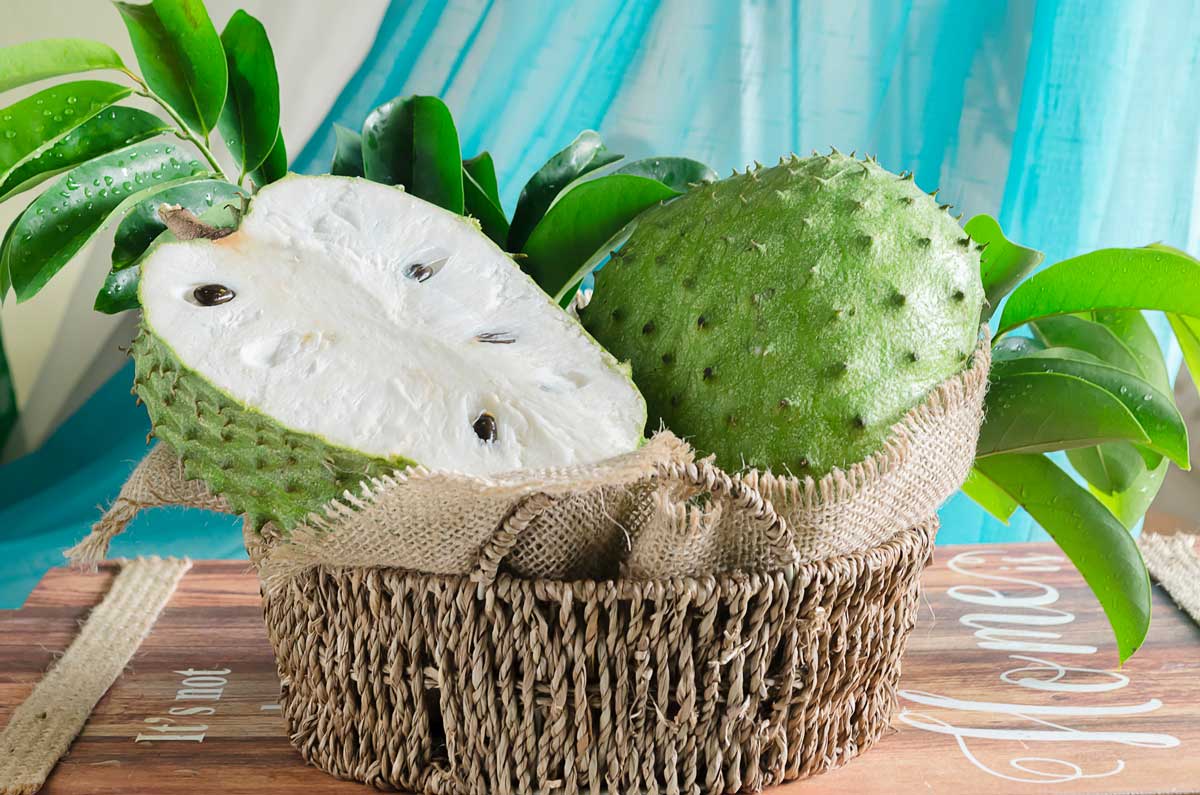
Beyond those four you will find coconut, mango, tamarind, tomate de árbol (tamarillo), strawberry and passion fruit, plus whatever is in season at the market that morning.
Ingredients for helado de paila
You need very little. The full amounts are in the recipe card below.
- Fruit: 1 pound of mora or regular blackberries, fresh or frozen. Frozen naranjilla, guanábana and mora pulp are sold in the freezer aisle of most Latin markets and work perfectly.
- Sugar: Plain granulated sugar. The base should taste a little too sweet before it freezes, because cold dulls sweetness.
- Lime juice: A spoonful sharpens the berries. Skip it for naranjilla, which is sour enough.
- Egg whites (optional): Two whites, whipped stiff, make it creamy. Use pasteurized whites, since they are not cooked.
- Ice and rock salt: About 10 cups of crushed ice and 1 cup of coarse ice cream rock salt. Table salt works in a pinch but dissolves too fast.
For the pan, a thin stainless steel mixing bowl does the job, and a pure copper bowl gets you closest to a real paila. Set either one inside any bigger bowl or tub. For other hard-to-find staples, browse Ecuadorian pantry staples on Amazon or our list of Ecuadorian ingredients.
How to make helado de paila at home
You do not need a copper paila. A thin metal bowl set into a bigger bowl of ice and salt gets you most of the way there. Here is the method in brief; the step-by-step recipe with exact amounts is in the card below.
- Make the base. Blend the berries with water, strain out the seeds, and stir in the sugar and lime juice. Chill it for at least 30 minutes.
- Build the ice bath. Pack crushed ice and rock salt in layers around the metal bowl, up to about 2 inches below its rim. Set the outer tub on a folded towel so it does not slide.
- Chill the pan. Give the empty bowl 3 minutes in the bath before any fruit goes in.
- Spin and scrape. Pour in half the base. Turn the bowl with one hand and scrape the frozen layer off the sides with a wooden spatula, folding it into the center. Add the rest once the first half is slushy.
- Fold in egg white (optional). Whip the whites to stiff peaks and fold them in for the last few minutes for a creamier, fluffier helado.
- Serve right away. It is done when it is thick, glossy and holds a soft peak, usually 20 to 25 minutes in.
Tips for the best helado de paila
- Start cold. A base straight from the fridge freezes in half the time of one at room temperature.
- Use thin metal. Copper is best, stainless steel is fine. Glass and ceramic bowls insulate the base and it will never set properly.
- Work in halves. A shallow layer freezes faster than a deep one, so add the base in two batches.
- Drain the meltwater. If the bath turns to slush, pour off some water and add fresh ice and salt.
- Taste for sweetness. Too little sugar and the helado freezes hard and icy. Sugar is what keeps it scoopable.
- Strain seedy fruit. Mora, naranjilla and passion fruit all need a fine-mesh sieve.
History of helado de paila: Rosalía Suárez and Ibarra
The story Ecuador tells starts in Ibarra in 1896, with a 16-year-old named Rosalía Suárez. Working with a friend, she set a bronze paila into ice and straw and started spinning fruit juice into helado.
The ice came down from the slopes of Imbabura, the volcano that gives the province its name. Hieleros cut it from the high páramo and hauled it to town wrapped in insulating straw, the same trade that Chimborazo’s last hieleros kept alive into the 21st century.
Her heladería is still open in Ibarra, run by her descendants and grown into a small chain. Food historians point out that the paila technique appears in records from Quito in the 18th and 19th centuries, before she was born, so she almost certainly did not invent it. What she did was turn a household method into a business that outlived generations of competitors, which is why her name is the one on the sign.
Where to eat helado de paila
Ibarra is the pilgrimage. The Rosalía Suárez shop is the obvious stop, but the city has dozens of heladerías working pailas in the window, and the competition keeps everyone honest. Otavalo’s market, about 30 minutes south, is the other reliable place to watch it being made.

In Quito, look for it in the old town and at Mitad del Mundo, served in a small glass coupe or pressed into a cone. Across the border, Pasto and the rest of Nariño in southern Colombia make it the same way. It travels badly and does not store well, so it is nearly always eaten right where it is spun.
Helado de paila usually shares the table with other Ecuadorian sweets. See our roundup of Ecuadorian desserts for quimbolitos, suspiros and dulce de higos, our Colombian desserts for the neighbors, or the Ecuadorian desserts hub for more recipes.
Street carts selling helado de paila often share a plaza with vendors of espumilla, Ecuador’s guava meringue cream. It is served in a cone and looks like ice cream, but it is never frozen.
Helado de paila FAQ
What does helado de paila mean?
It means “ice cream from the paila.” A paila is a wide, shallow copper or bronze pan. The ice cream is named after the pan it is made in.
What are the ingredients in helado de paila?
Fruit pulp or juice, sugar and water, plus whipped egg whites in many versions. The pan sits on crushed ice mixed with coarse salt, which does the freezing.
Is helado de paila vegan?
The plain fruit version is vegan and dairy-free. Versions made with whipped egg white are not, and they are common, so ask before you order.
Why is salt mixed with the ice?
Salt lowers the melting point of ice, so the bath around the pan gets much colder than ice alone, down toward -21°C (-6°F) in a saturated mix. That extra cold is what freezes the juice on contact.
Can I make helado de paila without a copper pan?
Yes. A thin stainless steel bowl works well. It freezes a little more slowly than copper, so expect a few extra minutes of spinning. Avoid glass or ceramic.
Can I make helado de paila in an ice cream maker?
You can churn the same base in a machine and get a good fruit sorbet. It will be softer and airier than the hand-spun version, which is denser and glossier.
How long does helado de paila keep?
It is best within minutes. You can hold it in the freezer for up to an hour in a chilled, covered container. After that it turns icy; let it soften and stir it hard before serving.
What does naranjilla taste like?
Tart and green, somewhere between rhubarb, lime and underripe tomato. It is the most Ecuadorian flavor on the paila menu and the one most visitors remember.
How is it different from Peru’s queso helado or Colombia’s cholado?
Peru’s queso helado is a milk-based frozen dessert with coconut and cinnamon, and cholado is shaved ice topped with fruit and condensed milk. Helado de paila is a dairy-free fruit sorbet, frozen in a pan.
Can I find helado de paila outside Ecuador?
Rarely, and almost never made fresh. Some Ecuadorian bakeries and farmers-market vendors in the U.S. make it in summer. Your best bet is to make it at home with frozen fruit pulp.
Helado de Paila Recipe
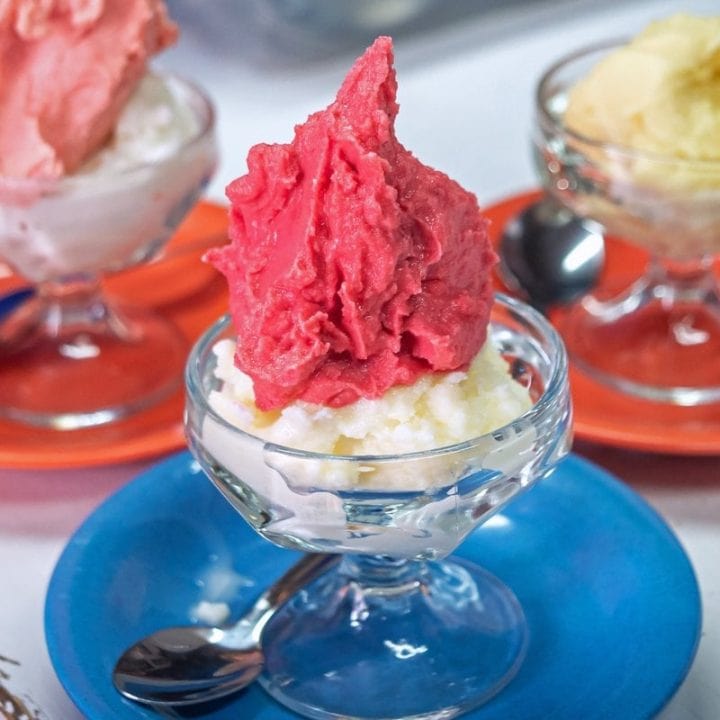
Helado de Paila (Ecuadorian Blackberry Ice Cream)
Ecuador’s hand-spun fruit ice cream: blackberry purée and sugar spun in a metal bowl set in ice and rock salt, scraped with a wooden spatula until thick and glossy. No cream and no machine. Fold in whipped egg white for a creamier helado.
Ingredients
For the fruit base
- 1 pound (450 g) mora (Andean blackberries) or regular blackberries, fresh or frozen
- 1 cup (240 ml) cold water
- 3/4 cup (150 g) granulated sugar
- 1 tablespoon fresh lime juice
- 1 pinch fine salt
- 2 large pasteurized egg whites (optional, for a creamier helado)
For the ice bath
- 10 cups crushed ice (about 3 pounds)
- 1 cup coarse rock salt (ice cream salt)
Instructions
- Blend the blackberries with the water until completely smooth. Pour through a fine-mesh sieve into a bowl, pressing on the pulp with a spatula; discard the seeds. You should have about 2½ cups of purée.
- Stir in the sugar, lime juice and pinch of salt until the sugar dissolves. Taste: it should be a little sweeter than you want the finished helado, because cold dulls sweetness. Cover and refrigerate for at least 30 minutes, or up to 1 day.
- Build the ice bath: set a large tub or bowl (at least 8 quarts) on a folded kitchen towel. Add a layer of crushed ice and sprinkle with rock salt, set the thin metal bowl on top, then pack the remaining ice and salt in layers around its sides, up to about 2 inches below the rim. Let the empty bowl chill for 3 minutes.
- Pour about half of the cold fruit base into the metal bowl. Holding the rim with one hand, turn the bowl steadily in the ice while you scrape the frozen layer off the sides and bottom with a wooden spatula, folding it into the center. The edges start to freeze within 2 to 3 minutes. Keep everything moving.
- When the first half is thick and slushy, about 8 to 10 minutes, add the rest of the base. Keep spinning and scraping until the helado is thick, glossy and holds a soft peak, 10 to 15 minutes more. If the bath turns slushy, pour off some meltwater and add more ice and salt.
- For a creamier helado (optional): beat the egg whites to stiff peaks, fold them into the helado, and keep spinning and scraping for 3 to 4 minutes until fluffy.
- Serve immediately in chilled glasses or cones.
Notes
Naranjilla (lulo): use 2 cups thawed frozen naranjilla pulp, ½ cup water and 1 cup sugar; skip the lime juice.
Guanábana (soursop): use 2 cups thawed frozen guanábana pulp, ½ cup water and ⅔ cup sugar.
Mora pulp: 14 ounces of thawed frozen mora pulp can replace the fresh berries.
Bowl: copper is closest to a real paila; thin stainless steel also works. Avoid glass or ceramic, which insulate the base.
Egg whites are not cooked, so use pasteurized egg whites.
Storage: best eaten right away. You can hold it in a chilled, covered container in the freezer for up to 1 hour; after that it turns icy.
More Ecuadorian food and frozen treats
Keep eating your way through Ecuador with our guides to Ecuadorian breakfast, Ecuadorian drinks, Ecuadorian ceviche, llapingachos, Ecuadorian holiday foods and everything Ecuadorian on the site. For frozen treats elsewhere in the region, try Mexican paletas, the mangonada, dulce de leche ice cream, Argentine helado, or browse all our Latin American and Spanish desserts.
More Ecuadorian Foods
See all →
Jorge Garcia is the founder of AmigoFoods, where he has spent over 20 years helping readers discover authentic Latin American and Spanish cuisine. Raised in a Cuban-American household, Jorge learned to cook at the hands of his mother and grandmother, carrying forward generations of family recipes. That heritage, backed by his family’s four-generation history in the Latin food industry, inspired him to launch AmigoFoods in 2003. With more than 1,000 published articles on recipes, ingredients, and food culture, Jorge’s mission is simple: make authentic Latin cooking approachable for home cooks everywhere while honoring the traditions behind every dish.