
On this page
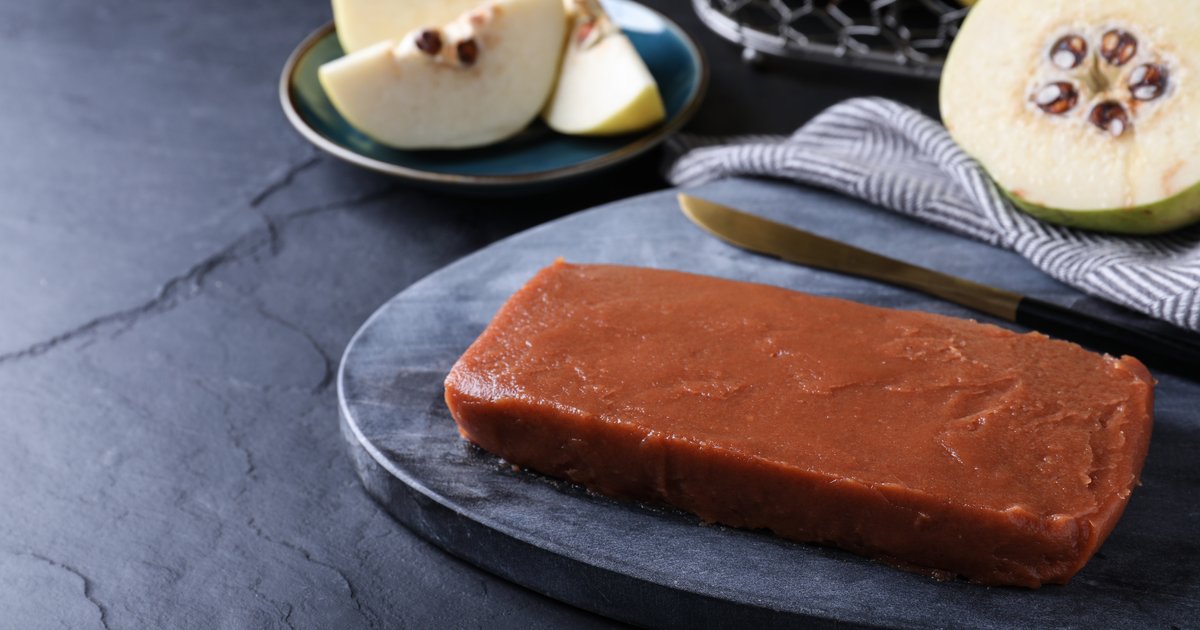
Membrillo is Spanish quince paste: quinces cooked down with sugar and lemon until they turn a deep garnet red and set into a firm, sliceable block. It tastes like a cross between apple, pear and rose, and in Spain it is eaten in thin slices on Manchego cheese. You only need three ingredients and a pot, but plan on a day for it to set.
Membrillo at a Glance
AmigoFoods may earn a commission from qualifying Amazon purchases made through links on this page.
What Is Membrillo?
Membrillo means “quince” in Spanish, and the word is used for both the fruit and the sweet paste made from it. The paste is also called dulce de membrillo or carne de membrillo (“quince meat”) in Spain. In English it goes by quince paste or quince cheese. There is no dairy in it; “cheese” is an old English name for any firm, sliceable fruit preserve.

Good membrillo is sweet but tart, with a perfumed, floral flavor that tastes faintly of honey, pear and rose. The texture should be dense and smooth, like a very firm jelly. It is not a jam: it is cooked until most of the water is gone, so it holds its shape for months.
The idea is ancient. Greeks and Romans cooked quince with honey, and the Latin name melimelum, “honey apple,” eventually gave Spanish the word membrillo. In Portugal the same paste is called marmelada, from marmelo, the Portuguese word for quince. That is where the English word “marmalade” comes from, long before anyone made it with oranges.
What Is a Quince?
A quince (Cydonia oblonga) is a cousin of the apple and pear that looks like a lumpy, oversized yellow pear, sometimes with a light gray fuzz. Unlike its cousins, it is almost never eaten raw: the flesh is rock hard, dry and so astringent it puckers your mouth. Cooking changes everything, turning it soft, sweet and fragrant.
In the US, quinces show up from about September through December, mostly grown in California. Look for them at Latin, Middle Eastern and Armenian markets, farmers’ markets and well-stocked grocery stores. Choose fruit that is mostly yellow (green ones are underripe), heavy for its size and strongly fragrant. A few brown bruises are fine since you will peel them. Ripe quinces keep for a couple of weeks on the counter and perfume the whole kitchen while they wait.
Can’t find quinces? There is no true substitute. Apples or pears cooked the same way make a pleasant paste, but they lack the pectin and the rosy flavor. If quinces aren’t in season, buy a good imported membrillo instead (see where to buy).
Why Membrillo Turns Red
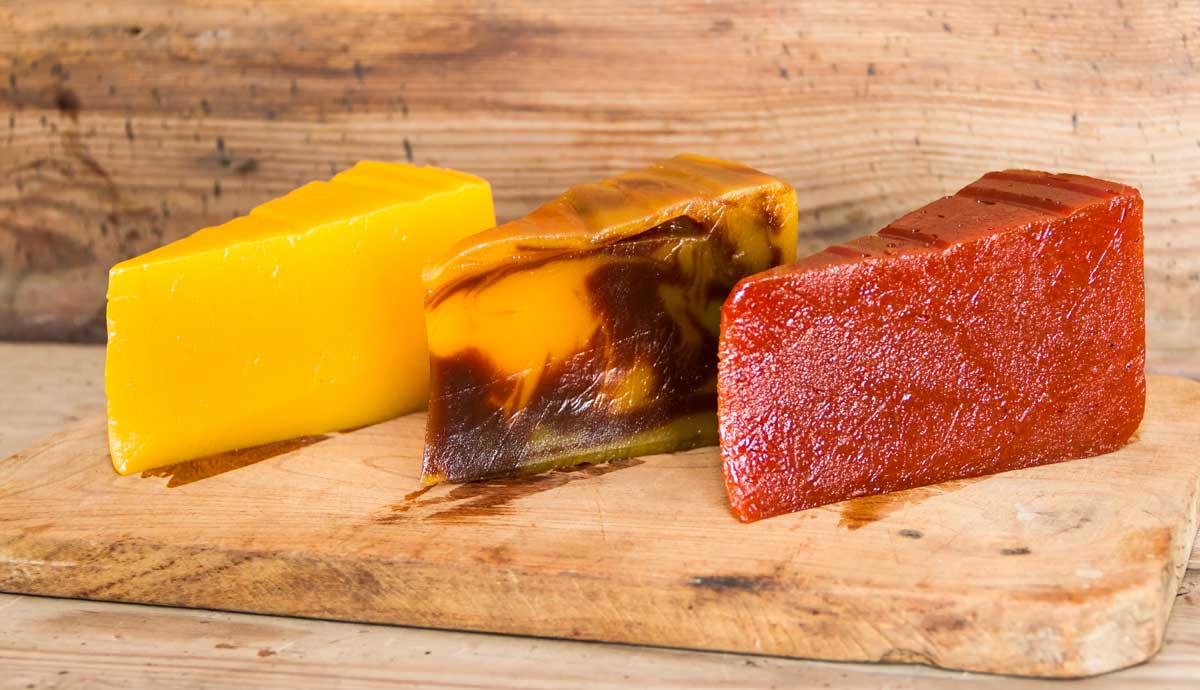
Raw quince flesh is creamy white, yet membrillo comes out of the pot a deep red-orange. Quinces are packed with tannins, the same compounds that make them so astringent raw. Long, slow cooking in an acidic mixture breaks those tannins apart and releases red pigments called anthocyanins. The longer and gentler you cook, the darker the color.
That is also why many cooks simmer the peels and cores with the fruit: they are full of tannins and pectin, so they deepen the color and help the paste set firm. Cooking with the lid on also tends to give a redder result. If your membrillo comes out pale amber, it is still delicious; it was just cooked a little faster.
How to Make Membrillo
There are two ways to make membrillo. Some cooks cut the raw fruit and cook it straight down with sugar, but we prefer the traditional two-stage method: poach the quince first, then purée and reduce it with sugar. Poaching softens the fruit fully, so the paste is smoother and you can weigh the purée to get the sugar exactly right. The full amounts and times are in the recipe card below; here is how it works.
- Prep the quinces. Rub off any fuzz, then peel, quarter and core them. Cut the flesh into chunks and drop them into a bowl of water with lemon juice so they don’t brown. Tie the peels and cores in a square of cheesecloth.
- Poach until tender. Cover the quince and the cheesecloth bundle with water and simmer for 30 to 40 minutes, until a knife slides through with no resistance. Drain, saving the pink cooking liquid if you like, and discard the bundle.
- Purée and weigh. Blend the fruit until completely smooth, then weigh it. Add the same weight of sugar, plus the lemon juice.
- Cook it down. Cook over low heat, stirring often, for 60 to 90 minutes. It will darken from yellow to orange to deep red and thicken until a spoon dragged across the bottom of the pot leaves a clear trail for a few seconds.
- Set it. Spread the paste in a parchment-lined 8×8-inch pan, smooth the top and leave it uncovered at room temperature for 24 hours. Then unmold, wrap and refrigerate.
Protect your hands: thick membrillo bubbles and spits like lava as it reduces. Use a heavy pot such as an enameled cast-iron Dutch oven, stir with a long wooden spoon and wear an oven mitt on your stirring hand. An immersion blender lets you purée right in the pot, and plain cheesecloth holds the peels and cores.
How do you know membrillo is done?
Watch the color and the spoon, not the clock. Finished membrillo is a deep orange-red, very thick, and pulls away from the sides of the pot. The best test is the trail: drag a spoon across the bottom and the line should stay open for two or three seconds before slowly closing. If you use a clip-on candy thermometer, look for about 220 to 225°F. Stop too early and the paste will stay soft; push it too far and it can scorch and taste bitter.
Can you make membrillo with less sugar?
Yes. The traditional ratio is equal weights of purée and sugar, which gives the firmest set and the longest shelf life. You can drop the sugar to about 75 percent of the purée’s weight. It will be tarter, a little softer and should be kept in the fridge and eaten within a month or two. Below that, it behaves more like a thick jam than a sliceable paste.
Membrillo Troubleshooting
| Problem | Why it happens | Fix |
|---|---|---|
| Too soft to slice | Not cooked long enough, or too little sugar | Return it to the pot and cook longer, or dry the slab in the oven at its lowest setting for 1 to 2 hours |
| Pale yellow or beige | Cooked too fast, or peels and cores left out | Cook lower and slower next time, with the peel bundle and the lid partly on while poaching |
| Grainy texture | Fruit not fully tender before puréeing | Poach until a knife slides through easily, and blend longer |
| Bitter or burnt taste | Scorched on the bottom | Use a heavy pot, keep the heat low and stir all the way to the bottom |
| Sugar crystals on top | Stored uncovered or too long in a dry fridge | Wrap tightly; the crystals are harmless |
How to Serve Membrillo
The classic way is the Spanish one: a thin slice of membrillo on a slice of aged Manchego cheese. The sweet, floral paste and the salty, nutty cheese balance each other perfectly. It works with almost any firm or creamy cheese, especially sheep’s-milk and blue cheeses; our guide to Spanish cheese has plenty to choose from.

- On a cheese or tapas board. Cut it into cubes or thin slabs next to Manchego, Idiazábal or Cabrales, with Marcona almonds and crusty bread. See how to build a full Spanish tapas board.
- For breakfast. Spread it on buttered toast, or eat it with fresh white cheese and a cup of coffee, the way many Spanish and Argentine families do.
- In baking. Argentina’s pasta frola is a lattice tart filled with softened membrillo. It is also lovely swirled into cheesecake or tucked into turnovers.
- With meat. Melt a spoonful with a splash of sherry vinegar or wine to glaze roast pork, duck or lamb.
- As dessert. In Argentina and Uruguay, a slab of membrillo with a slab of cheese is a dessert of its own, called queso y dulce or postre vigilante.

Membrillo in Spain and Latin America
The Spanish brought quinces and the paste to the Americas, and each country made it its own.
- Spain: eaten all year with cheese and made at home every autumn. The Andalusian town of Puente Genil in Córdoba is famous for its membrillo.
- Mexico: called ate de membrillo. Ate is the Mexican name for firm fruit pastes, and the city of Morelia in Michoacán is known for them, made from quince, guava and other fruits. It is eaten with cheese as ate con queso.
- Argentina and Uruguay: dulce de membrillo is a pantry staple, sold in big rectangular blocks next to sweet potato paste (dulce de batata). It fills pasta frola and pastries, and pairs with cheese for dessert. See more in our guide to Argentine desserts.
- Chile: also called dulce de membrillo, often made at home when the fruit is in season.
- Portugal and Brazil: marmelada is the Portuguese version. In Brazil, guava paste (goiabada) mostly took its place, as in the cheese-and-guava dessert Romeu e Julieta.
Membrillo vs. Quince Jelly vs. Guava Paste
| Membrillo | Quince jelly | Guava paste | |
|---|---|---|---|
| Made from | Puréed quince flesh and sugar | Strained quince juice and sugar | Puréed guava and sugar |
| Texture | Firm, opaque, sliceable | Clear, spreadable, wobbly | Firm, opaque, sliceable |
| Flavor | Floral, tart, apple-pear | Delicate, floral | Tropical, musky, very sweet |
| Where it’s popular | Spain, Argentina, Mexico, Chile | Spain, Europe | Caribbean, Brazil, Mexico |
| Classic pairing | Manchego | Toast, fresh cheese | Cream cheese or queso blanco |
Guava paste works the same way on a cheese board; see our recipe for pasta de guayaba y queso. Save the pink liquid from poaching the quinces: boiled down with sugar, it becomes quince jelly.
How to Store Membrillo
Once it has set, cut the slab into a few blocks and wrap each one tightly in parchment and then plastic wrap or a zip-top bag. Membrillo made with the full amount of sugar keeps for at least 3 months in the refrigerator, and often much longer. Lower-sugar versions are best within a month or two. It also freezes well for up to a year; thaw it in the fridge. Serve it cool or at room temperature, and slice it with a thin, sharp knife wiped clean between cuts.
Where to Buy Membrillo
If quinces are out of season, store-bought membrillo is very good. In the US you will find Spanish brands in the cheese section of Whole Foods, Trader Joe’s, Costco and specialty cheese shops, often right next to the Manchego. Latin markets carry Mexican ate de membrillo and Argentine dulce de membrillo, which are usually a little sweeter and softer than the Spanish style.
Dulce de membrilloArgentine and Uruguayan quince paste in big blocks, for pasta frola and queso y dulce.Shop on Amazon
igourmet Best of Spain AssortmentSpanish cheeses, cured meats and quince paste together, ready for a tasting board.See it on Amazon
Spanish Cheese Assortment (2 lb)Several Spanish cheeses in one box to serve with your homemade membrillo.See it on Amazon
Membrillo FAQ
What is membrillo called in English?
Membrillo is quince in English. The paste is called quince paste or quince cheese, and in Spanish it is also dulce de membrillo.
Is membrillo Spanish or Mexican?
Both. It is a Spanish tradition that came to the Americas with the Spanish. In Mexico it is called ate de membrillo, and it is also a staple in Argentina, Uruguay and Chile.
What does membrillo taste like?
Sweet and tart, with a floral, perfumed flavor somewhere between apple, pear, honey and rose. It is less sugary than most jams and has a firm, smooth texture.
Can you eat quince raw?
Most quince varieties are too hard and astringent to enjoy raw. They need cooking to turn soft, sweet and fragrant, which is why they are usually made into membrillo, jelly or poached fruit.
How long does homemade membrillo last?
Wrapped tightly, membrillo made with equal weights of fruit and sugar keeps at least 3 months in the refrigerator and up to a year in the freezer.
Why didn’t my membrillo set?
It wasn’t cooked long enough to drive off the water. Return it to the pot and keep cooking until a spoon leaves a clear trail across the bottom, or dry the slab in a very low oven for an hour or two.
What cheese goes with membrillo?
Aged Manchego is the classic, but it is excellent with any sheep’s-milk cheese, with blue cheeses like Cabrales and Valdeón, and with mild fresh cheese for breakfast.
Keep Exploring Spanish Food
Membrillo is one of the essentials of the Spanish pantry. Meet the others in our guide to Spanish ingredients, pick a cheese to go with it from our Spanish cheese guide, and find more sweets on the Spanish Foods hub.
Membrillo (Spanish Quince Paste)
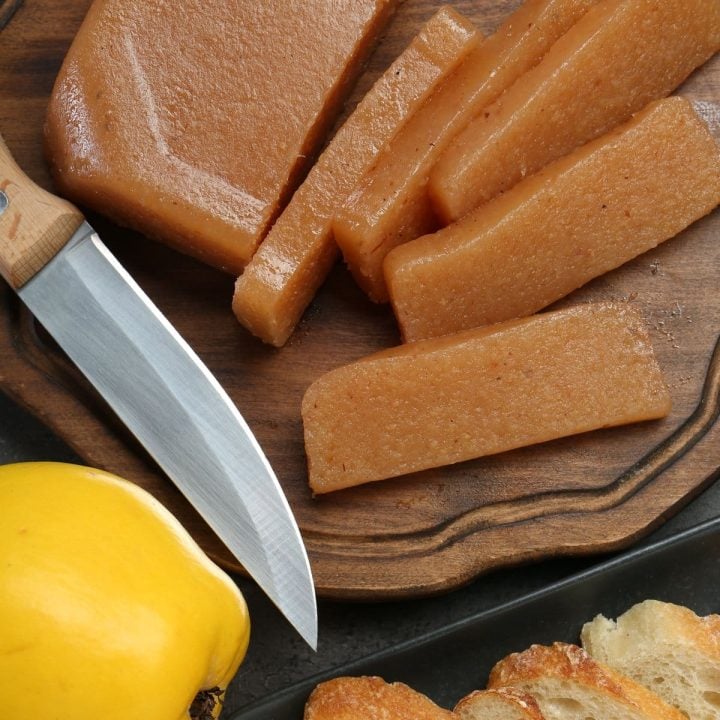
Homemade membrillo, the Spanish quince paste served with Manchego cheese. Quinces are poached, puréed and slowly cooked with sugar and lemon until deep red and firm enough to slice.
Ingredients
- 3 pounds ripe yellow quinces (about 5 medium)
- 2 tablespoons fresh lemon juice (from about 1 lemon), divided
- About 5 cups (1 kg) granulated sugar, equal to the weight of the cooked quince purée
- 1 vanilla bean, split, or 1 cinnamon stick (optional)
- Water, to cover
Instructions
- Fill a large bowl with cold water and stir in 1 tablespoon of the lemon juice. Rub any gray fuzz off the quinces under running water. Peel, quarter and core them, cutting away any hard, gritty bits around the core. Cut the flesh into 1-inch chunks and drop them into the lemon water as you go so they don't brown.
- Pile the peels and cores in the center of a square of cheesecloth and tie it into a bundle.
- Drain the quince chunks and put them in a large, heavy pot or Dutch oven with the cheesecloth bundle and the vanilla bean or cinnamon stick, if using. Add water just to cover. Bring to a boil, then partly cover and simmer for 30 to 40 minutes, until a knife slides through the fruit with no resistance.
- Drain the fruit, saving the cooking liquid for quince jelly or syrup if you like. Discard the bundle and the vanilla or cinnamon.
- Purée the quince until completely smooth with an immersion blender, food processor or blender. Weigh the purée. Weigh out an equal amount of sugar (about 1 kg for 1 kg of purée).
- Return the purée to the pot with the sugar and the remaining lemon juice. Cook over medium-low heat, stirring often with a long wooden spoon and scraping the bottom, for 60 to 90 minutes. The paste will spit, so wear an oven mitt on your stirring hand. It is ready when it is a deep orange-red, very thick, pulls away from the sides, and a spoon dragged across the bottom leaves a trail that stays open for 2 to 3 seconds (about 220 to 225°F on a candy thermometer).
- Line an 8x8-inch pan with parchment paper. Scrape the paste into the pan and smooth the top with an offset spatula or the back of a wet spoon.
- Leave uncovered at room temperature for 24 hours to set. For a firmer paste, dry it in the oven at the lowest setting (about 150 to 170°F) for 1 to 2 hours before cooling.
- Turn the membrillo out of the pan, peel off the parchment and cut into blocks. Wrap tightly and refrigerate. Serve in thin slices with Manchego or other cheese.
Notes
Sugar: equal weights of purée and sugar give the firmest set and longest shelf life. You can reduce the sugar to 75 percent of the purée weight for a tarter, softer paste; keep it refrigerated and eat it within 2 months.
Storage: wrapped tightly, full-sugar membrillo keeps at least 3 months in the refrigerator and up to 1 year in the freezer.
Quince season: in the US, quinces are in stores from about September to December. Choose fruit that is mostly yellow and very fragrant.
More Spanish Foods
See all →
Jorge Garcia is the founder of AmigoFoods, where he has spent over 20 years helping readers discover authentic Latin American and Spanish cuisine. Raised in a Cuban-American household, Jorge learned to cook at the hands of his mother and grandmother, carrying forward generations of family recipes. That heritage, backed by his family’s four-generation history in the Latin food industry, inspired him to launch AmigoFoods in 2003. With more than 1,000 published articles on recipes, ingredients, and food culture, Jorge’s mission is simple: make authentic Latin cooking approachable for home cooks everywhere while honoring the traditions behind every dish.