

On this page
Pasta frola (also written pastafrola) is a lattice-topped shortcrust tart filled with dulce de membrillo, the firm quince paste of the Río de la Plata. In English it usually goes by quince tart or quince pie. It is the afternoon cake of Argentina, Uruguay and Paraguay: sold by the slice in every bakery, baked at home for birthdays and set out with mate or coffee at merienda.
This recipe makes one 10-inch tart with a lemon-and-vanilla crust that bakes up crisp at the edges and tender in the middle. It takes about 25 minutes of hands-on work; the rest is chilling, baking and cooling.
Pasta Frola at a Glance
Plan ahead: the dough needs 30 minutes in the fridge before you shape it, and the baked tart needs at least 30 minutes to cool before the filling sets enough to slice. You can make the dough up to 2 days ahead.
What Is Pasta Frola?

Pasta frola is a sweet tart with three parts: a shortcrust base, a thick layer of fruit paste and a criss-cross lattice made from the same dough. The classic filling is dulce de membrillo, a quince paste firm enough to slice. Warmed with a splash of water, it melts into a glossy, tart-sweet layer that tastes somewhere between apple, pear and citrus.
The crust is closer to a soft shortbread than to American pie pastry. It is made with self-rising flour, so it puffs slightly in the oven and stays tender rather than flaky. Lemon zest and vanilla are the usual flavorings.
Pasta frola is not a special-occasion dessert. It is everyday baking, the kind of tart that sits under a dish towel on the kitchen counter and disappears a slice at a time over a few days.
Pasta Frola vs. Pasta Frolla vs. Crostata
The names trip people up, and search engines mix them too. Here is how the related tarts and doughs compare.
| What it is | Typical filling | Where | |
|---|---|---|---|
| Pasta frola / pastafrola | A finished lattice tart | Quince paste, sweet potato paste, dulce de leche, guava | Argentina, Uruguay, Paraguay |
| Pasta frolla | The Italian word for sweet shortcrust dough, not a dessert on its own | Used for crostate, cookies and tart shells | Italy |
| Crostata | An Italian jam tart with a lattice, made from pasta frolla | Apricot, cherry or other jams, ricotta, custard | Italy |
| Pasta flora | The Greek name for a jam tart descended from the same Italian dough | Usually apricot or other fruit jam | Greece, also Egypt |
| Linzer torte | A lattice tart with a spiced nut dough | Red currant or raspberry jam | Austria |
Where Pasta Frola Comes From
The name gives the story away. Pasta frolla is Italian for shortcrust pastry; the word frolla means crumbly or tender. Millions of Italians emigrated to Argentina and Uruguay between the late 1800s and the early 1900s, and they brought the crostata with them.
In the Río de la Plata the jam changed. Quince paste, a Spanish preserve that was already a staple in Argentine and Uruguayan kitchens, was cheap, shelf-stable and firm enough to bake without running. The Italian tart with a Spanish filling became pastafrola. Spanish dictionaries and the Argentine Academy of Letters now favor that one-word spelling, but you will see pasta frola and even pasta flora on bakery signs.
The tart traveled up the river to Paraguay as well, which is why it shows up on the dessert tables of all three countries today.
Pasta Frola Ingredients
Everything in pasta frola is pantry-basic except the quince paste. Exact amounts in cups and grams are in the recipe card.
Self-rising flour
Argentine cooks use harina leudante, which gives the crust its slight puff and tender bite. No self-rising flour? Use all-purpose flour plus 1½ teaspoons baking powder and ¼ teaspoon salt per cup.
Butter and sugar
Equal weights of soft unsalted butter and granulated sugar, creamed together. This ratio is what makes the crust taste like shortbread.
Egg plus a yolk
One whole egg binds the dough; the extra yolk adds richness and color without making it sticky.
Lemon zest and vanilla
Both are traditional. The zest is not optional in my book: it cuts the sweetness of the filling.
Dulce de membrillo
Firm quince paste sold in blocks. Spanish membrillo works too. You need about 1.1 lb (500 g) for a 10-inch tart.
Coconut or powdered sugar
Some bakeries scatter shredded coconut over the lattice after baking; others dust it with powdered sugar. Both are optional.
How to Make Pasta Frola
The method is simple, but a few details decide whether you get a tender crust or a dry one. Here is what to look for at each stage.
1Cream the butter and sugar
Beat soft butter and sugar for 2 to 3 minutes, until pale and fluffy. Beat in the egg, the yolk, the vanilla and the lemon zest. Then add the flour and a pinch of salt and mix with a spatula or your fingertips only until a soft dough forms.
2Chill the dough
Split the dough into two pieces, about two-thirds and one-third. Flatten each into a disc, wrap and refrigerate for 30 minutes. Cold dough rolls cleanly and holds its shape in the oven.
3Soften the quince paste
Cut the membrillo into cubes and warm it in a small saucepan over low heat with 3 tablespoons of water, mashing with a fork or whisk for about 5 minutes. It is ready when it spreads like thick jam. Add a fourth tablespoon of water only if it is still stiff, then let it cool until lukewarm.
4Line the pan
Heat the oven to 350°F (180°C) and butter a 10-inch (25 cm) tart pan with a removable bottom. Roll the larger disc between two sheets of parchment to about ¼ inch (6 mm) thick and fit it into the pan, or simply press it in with your fingers. Cover the base and the sides, then spread the cooled filling evenly over the dough.
5Make the lattice

Roll the smaller disc between parchment and cut it into strips about ½ inch (1.5 cm) wide with a knife or pastry wheel. Lay half the strips in one direction and half across them on the diagonal, which gives the classic diamond pattern. Press the ends into the edge of the crust. If the strips tear, slide the parchment into the freezer for 10 minutes and try again.
6Bake and cool
Bake on the middle rack for 35 to 40 minutes, until the edges and lattice are golden. The filling will still look soft. Let the tart cool in the pan for at least 30 minutes, then unmold it. For neat slices, wait until it is completely cool.
Pasta Frola Fillings
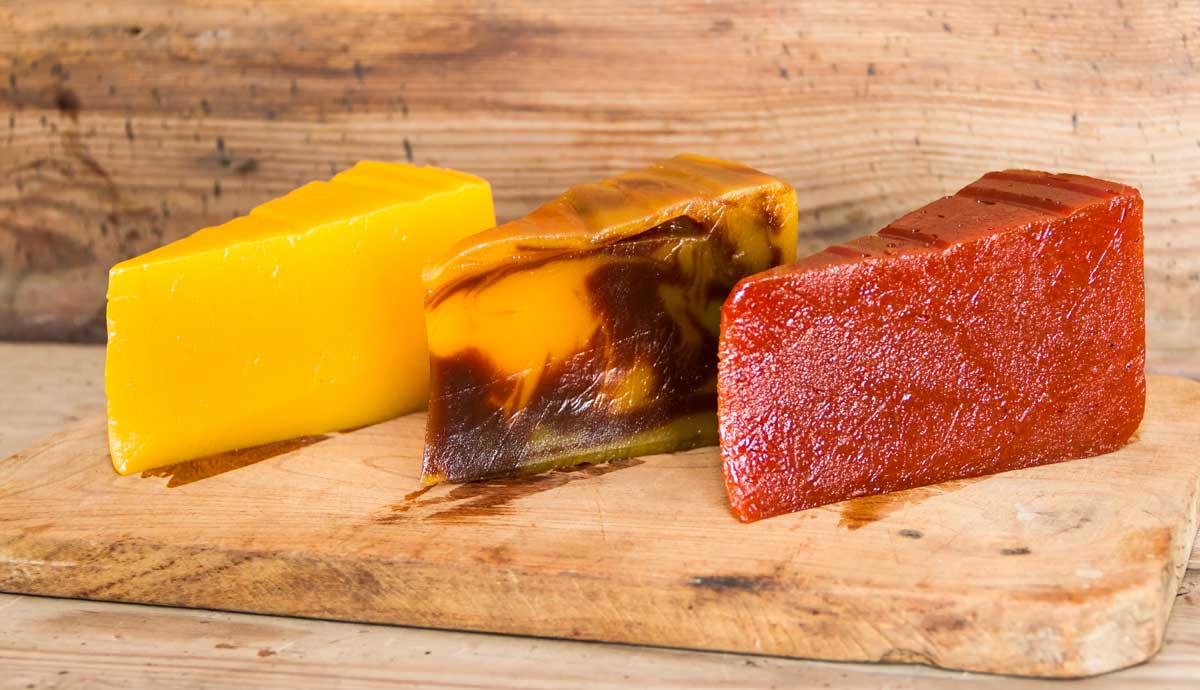
Quince is the classic, but pasta frola is really a format. Any filling that stays firm in the oven works, and bakeries in Buenos Aires often sell two or three versions side by side.
Dulce de membrillo
Tart, fruity and deep amber once baked. Soften it with water as in the recipe.
Dulce de batata
Sweet potato paste, milder and sweeter than quince. Use the same weight and soften it the same way. The chocolate-swirled version is a favorite with kids.
Dulce de leche
Use thick pastry-style dulce de leche straight from the jar, about 1 lb (450 g), and do not heat it. A thin, saucy one such as Colombina Dulce de Leche is better for drizzling over a slice than as the filling.
Guava paste
Firm guava paste behaves like quince paste. It gives a brighter, more floral tart and is popular in Paraguay.
Pasta Frola in Argentina, Uruguay and Paraguay

The everyday bakery tart
Quince and sweet potato versions sit next to each other in every panadería, often finished with coconut. It ranks with alfajores and chocotorta among the country’s favorite sweets; see more in our guide to Argentine desserts.
Merienda with mate
Uruguayans spell it pastafrola and eat it in the late afternoon alongside chajá, Massini and Martín Fierro. Find them all in our Uruguayan desserts guide.
Guava as well as quince
Paraguayan home bakers make it with quince or guava paste and serve it with cocido or tereré. It appears in our roundup of Paraguayan desserts.
Pasta frola also has cousins elsewhere in the region. For the wider family of Latin American tarts, cakes and pastries, see our Latin American cakes and pastries guide.
Pasta Frola Troubleshooting
Most pasta frola problems come down to dough temperature, flour measurement or a filling that is too wet.
| Problem | Likely cause | Fix |
|---|---|---|
| Dough is dry and crumbly | Too much flour, usually from scooping the cup into the bag | Weigh the flour, or spoon it into the cup and level it. Add milk a tablespoon at a time until the dough holds. |
| Dough is sticky and won’t roll | Butter too warm | Chill another 15 to 30 minutes and roll between parchment instead of on a floured counter. |
| Lattice strips break | Dough too cold or rolled too thin | Let the dough sit 5 minutes, roll to ¼ inch, and move strips with a thin spatula. |
| Filling bubbles over | Paste thinned with too much water | Use only enough water to make it spreadable, and leave a little room below the rim. |
| Base is pale or soft | Pan too high in the oven, or sliced while warm | Bake on the middle or lower-middle rack and cool fully before cutting. |
| Lattice browns before the base is done | Hot oven | Lay a sheet of foil loosely over the top for the last 10 minutes. |
How to Serve Pasta Frola
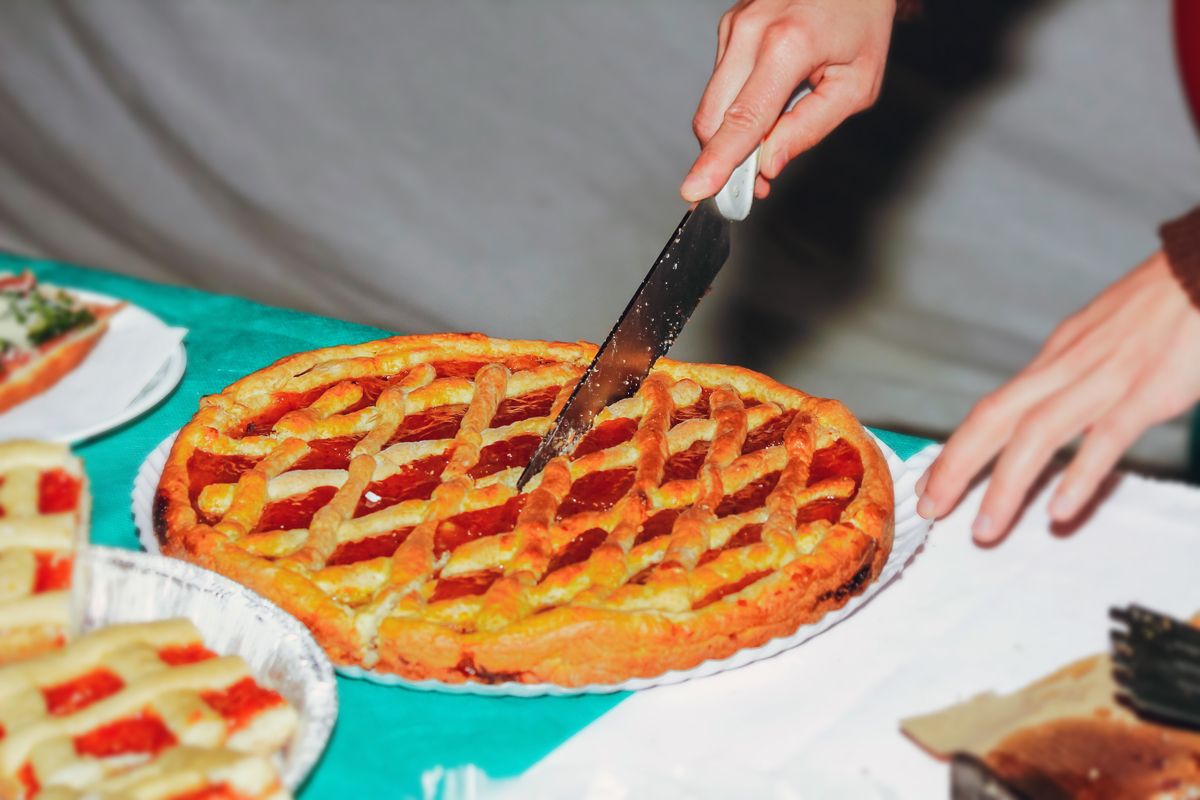
Serve pasta frola at room temperature, cut into wedges or, from a rectangular pan, into squares. It is made for merienda, the late-afternoon snack, with a gourd of yerba mate, café con leche or a glass of cold milk. If you have never prepared mate, our guide to how to make yerba mate walks you through it, and a simple mate cup and bombilla set is all you need to start.
For a dessert table, pair it with alfajores, pastelitos or a chocotorta.
How to Store and Freeze Pasta Frola
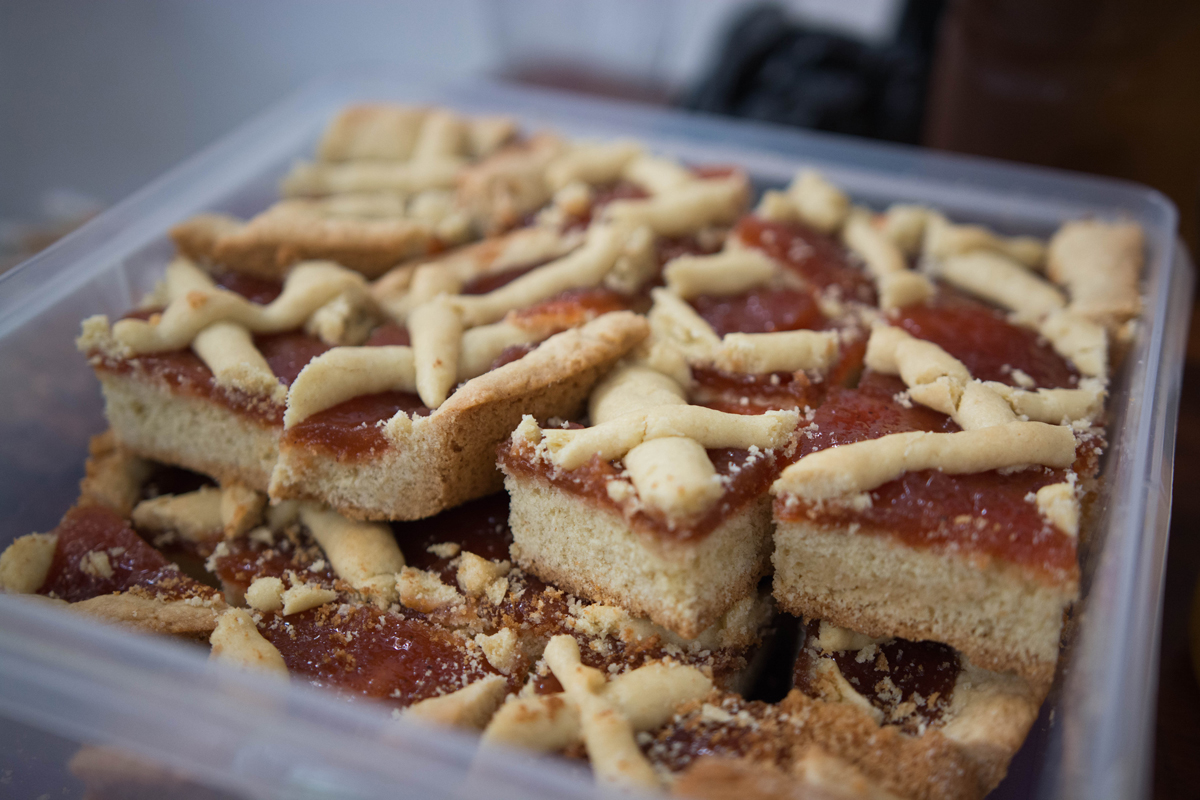
- Room temperature: covered, up to 3 days. The crust softens slightly by day two, which many people prefer.
- Refrigerator: in an airtight container, up to 1 week. Let slices warm up for 20 minutes before eating.
- Freezer: wrap the cooled tart or individual slices tightly and freeze for up to 3 months. Thaw at room temperature.
- Dough: keeps 2 days in the fridge or 3 months frozen. Thaw it overnight in the fridge before rolling.
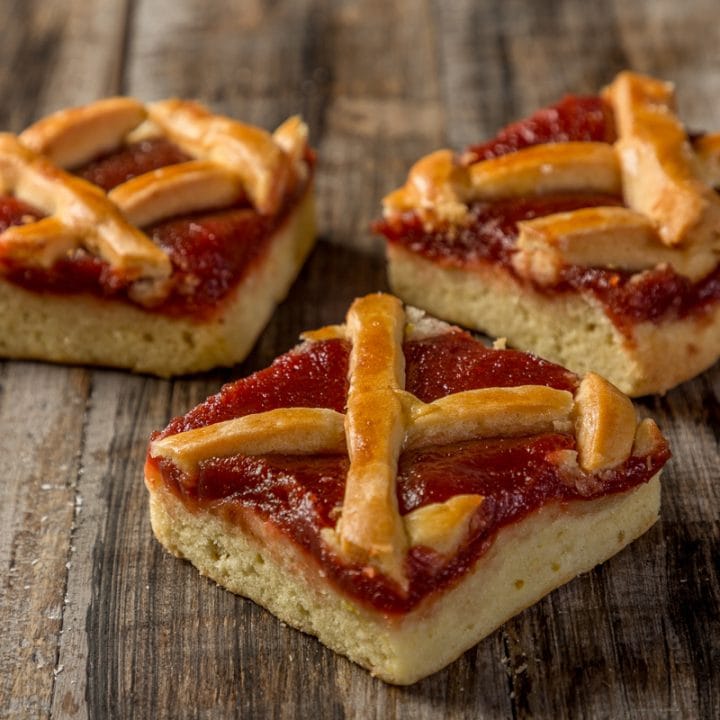
Pasta Frola de Membrillo
Pasta frola is the lattice quince tart of Argentina, Uruguay and Paraguay: a tender, lemony shortcrust filled with dulce de membrillo. Chill the dough and let the baked tart cool before slicing.
Ingredients
Dough
- 3¼ cups (400 g) self-rising flour, plus more for rolling
- 14 tablespoons (200 g) unsalted butter, softened, plus more for the pan
- 1 cup (200 g) granulated sugar
- 1 large egg, at room temperature
- 1 large egg yolk, at room temperature
- 1 teaspoon vanilla extract
- Finely grated zest of 1 lemon
- Pinch of fine salt
- 1–2 tablespoons milk, only if needed
Filling
- 1.1 lb (500 g) dulce de membrillo (firm quince paste), cut into cubes
- 3–4 tablespoons water
To finish (optional)
- 1 egg beaten with 1 tablespoon milk, for brushing
- Powdered sugar or shredded coconut
Instructions
- Make the dough: beat the butter and sugar until pale and creamy, 2 to 3 minutes. Beat in the egg, yolk, vanilla and lemon zest. Add the flour and salt and mix just until a soft dough forms; add milk 1 tablespoon at a time only if it will not hold together. Do not knead.
- Divide the dough into two-thirds and one-third, flatten each into a disc, wrap and refrigerate for 30 minutes.
- Meanwhile, warm the cubed quince paste with 3 tablespoons water in a small saucepan over low heat, mashing for about 5 minutes until smooth and spreadable. Add the last tablespoon of water only if it is still stiff. Cool until lukewarm.
- Heat the oven to 350°F (180°C) and butter a 10-inch (25 cm) tart pan with a removable bottom. Roll the larger disc between parchment to about ¼ inch (6 mm) and line the base and sides of the pan, or press it in by hand. Spread the filling evenly.
- Roll the smaller disc between parchment and cut ½-inch (1.5 cm) strips. Lay them diagonally across the filling in a lattice and press the ends into the edge. Chill the strips for 10 minutes if they are too soft to lift. Brush with the egg wash, if using.
- Bake on the middle rack for 35 to 40 minutes, until the edges and lattice are golden.
- Cool in the pan for at least 30 minutes, then unmold. Cool completely before slicing for clean cuts. Finish with powdered sugar or shredded coconut, if you like.
Notes
No self-rising flour? Use all-purpose flour plus 1½ teaspoons baking powder and ¼ teaspoon salt per cup.
Other fillings: use the same weight of dulce de batata or firm guava paste, softened the same way. For dulce de leche, use about 1 lb (450 g) of thick pastry-style dulce de leche straight from the jar, without heating. Avoid ordinary jam unless you cook it down until thick.
Make ahead: the dough keeps 2 days in the fridge or 3 months frozen.
Storage: covered at room temperature for up to 3 days, in the fridge for up to 1 week, or frozen for up to 3 months.
Pasta Frola FAQ
What does pasta frola mean in English?
It comes from the Italian pasta frolla, meaning shortcrust or “crumbly” pastry. In English the finished dessert is usually called a quince tart or quince pie.
Is pasta frola Argentine or Uruguayan?
Both, and Paraguayan too. The tart came from Italian immigrants to the Río de la Plata and is a national favorite on both sides of the river.
Is pasta frola the same as pasta frolla?
No. Pasta frolla is the Italian dough itself. Pasta frola is the South American tart made from a version of that dough and filled with quince paste.
Can I make pasta frola with all-purpose flour?
Yes. Add 1½ teaspoons of baking powder and ¼ teaspoon of salt for every cup of all-purpose flour so the crust stays tender.
Can I use jam instead of quince paste?
Only thick jam. Regular jam runs and makes the crust soggy, so cook it down first. Firm fruit pastes such as quince, sweet potato or guava paste work best.
Do you eat pasta frola warm or cold?
Room temperature is traditional. Warm pasta frola is delicious but the filling is too soft to slice cleanly.
How is pasta frola different from a Linzer torte?
A Linzer torte uses a spiced dough made with ground nuts and is filled with red currant or raspberry jam. Pasta frola uses a plain butter shortcrust and quince paste.
Sources
More Argentine Foods
See all →
Jorge Garcia is the founder of AmigoFoods, where he has spent over 20 years helping readers discover authentic Latin American and Spanish cuisine. Raised in a Cuban-American household, Jorge learned to cook at the hands of his mother and grandmother, carrying forward generations of family recipes. That heritage, backed by his family’s four-generation history in the Latin food industry, inspired him to launch AmigoFoods in 2003. With more than 1,000 published articles on recipes, ingredients, and food culture, Jorge’s mission is simple: make authentic Latin cooking approachable for home cooks everywhere while honoring the traditions behind every dish.