
Misto quente is Brazil’s everyday hot ham-and-cheese sandwich: buttered bread toasted until golden around a melted cheese filling. Make one in about eight minutes in a skillet, or use a preheated sandwich press for a quicker finish.
Misto Quente at a Glance
What Is a Misto Quente?
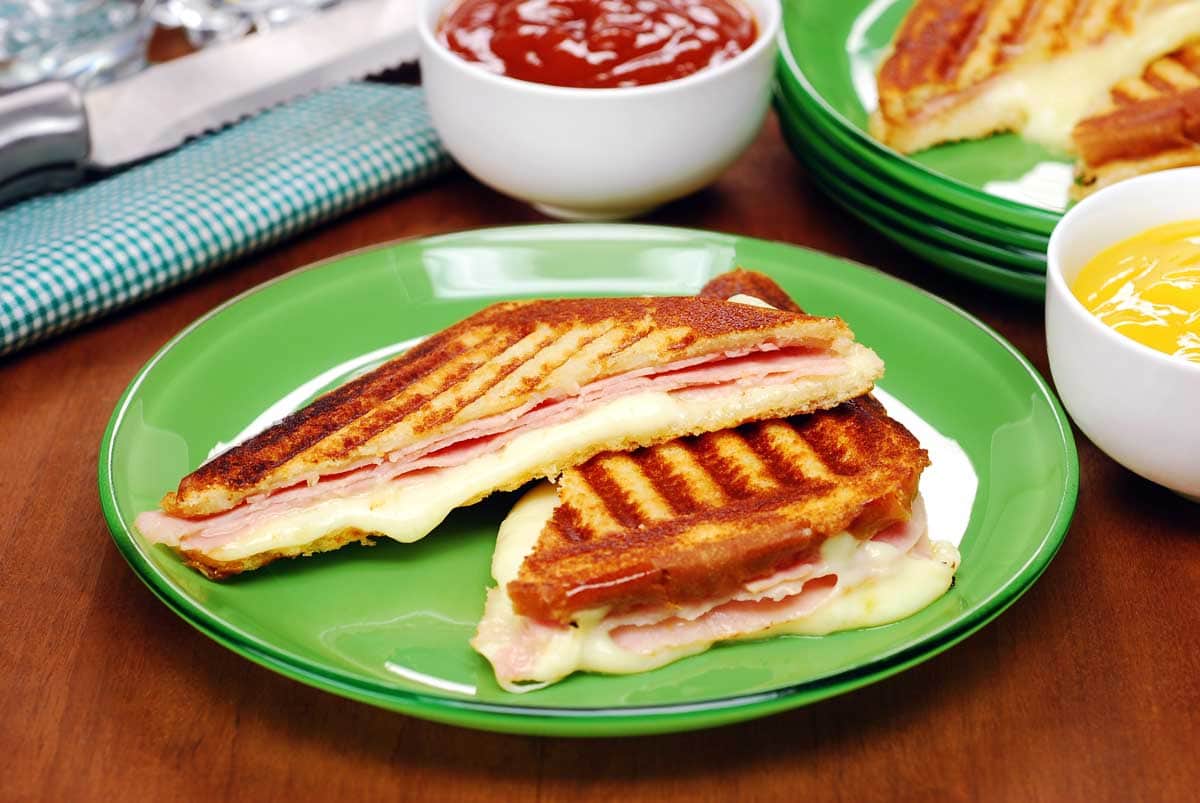
A misto quente is a sandwich of cooked ham and cheese in buttered bread, toasted until the outside is crisp and the cheese melts into the ham.
The name says it all. Misto means mixed, short for the mix of ham and cheese, and quente means hot. Order a misto frio and you get the same filling in untoasted bread.
It’s close to an American grilled ham and cheese or a French croque monsieur without the béchamel. What makes it Brazilian is where and how it’s eaten: at the padaria counter or the lanchonete, any time from breakfast to the late-afternoon snack, usually with a pingado (coffee with milk) or a fresh juice.
The Ingredients That Matter
With only four ingredients, each one counts.
- Bread: at home, soft white pão de forma, Brazilian sliced sandwich bread. At the padaria, it’s often made in a split pão francês, the crusty Brazilian roll, pressed on the flat griddle like pão na chapa.
- Ham: presunto, thinly sliced, ready-to-eat cooked deli ham. Cooked ham is often cured; it is different from dry-cured presunto cru or prosciutto.
- Cheese: queijo prato, a mild, yellow, semi-soft cheese that melts smoothly, or mozzarella (muçarela). Outside Brazil, mild provolone, Monterey Jack or young Gouda are good stand-ins.
- Butter: spread on the outside of the bread, which is what gives a misto quente its golden, crunchy crust.
How to Make a Misto Quente
In Brazil, most homes make misto quente in a sanduicheira, an electric sandwich press. A skillet works just as well.
In a sandwich press: butter the outside of both slices, fill with ham and cheese, close the press and toast for 3 to 4 minutes until the bread is golden and the cheese is melted.
In a skillet: cook over medium-low heat for about 3 minutes per side, pressing down with a spatula or a small heavy pan. A lid for the first minute helps the cheese melt before the bread browns too much.
The complete recipe is in the card below.
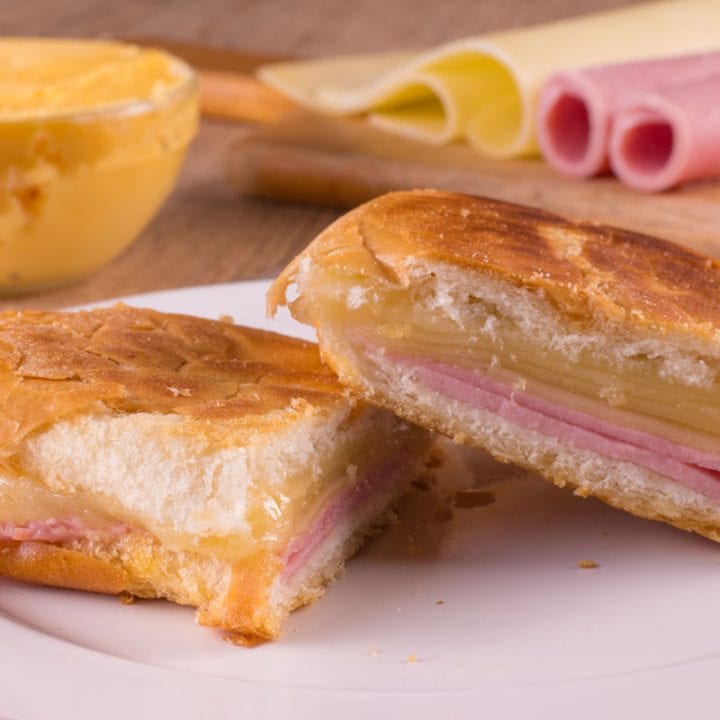
Misto Quente (Brazilian Hot Ham and Cheese Sandwich)
Brazil's hot pressed ham and cheese sandwich, buttered on the outside and toasted until golden, the bakery breakfast classic.
Ingredients
- 2 slices soft white sandwich bread
- 1 tablespoon softened butter
- 2 slices queijo prato or mozzarella
- 2 thin slices cooked ham (presunto)
- 1 pinch dried oregano (optional)
Instructions
- Spread the butter on one side of each slice of bread.
- Place one slice butter-side down. Add a slice of cheese, the folded ham, the oregano if using and the second slice of cheese. Top with the other slice of bread, butter-side up.
- Choose ONE cooking method. In a preheated sandwich press, close the press and toast for about 3–4 minutes, until golden and the cheese has melted; then go to the serving step.
- Alternatively, use a skillet: cook over medium-low heat, covered for the first minute, for about 3 minutes per side, pressing gently with a spatula. The listed six-minute cook time uses this method.
- Cut in half diagonally and serve hot.
Notes
Keep the heat moderate so the cheese melts before the bread browns too much.
Tips for a Better Misto Quente
- Butter the outside, not the inside. The butter crisps the bread. Inside, it just makes the sandwich greasy.
- Cheese on both sides of the ham. Put a slice of cheese against each piece of bread with the ham in the middle, so the melted cheese holds everything together.
- Low and slow in a pan. High heat burns the bread before the cheese melts.
- Fold the ham. Folded slices give a thicker, softer bite than a single flat layer.
Popular Variations
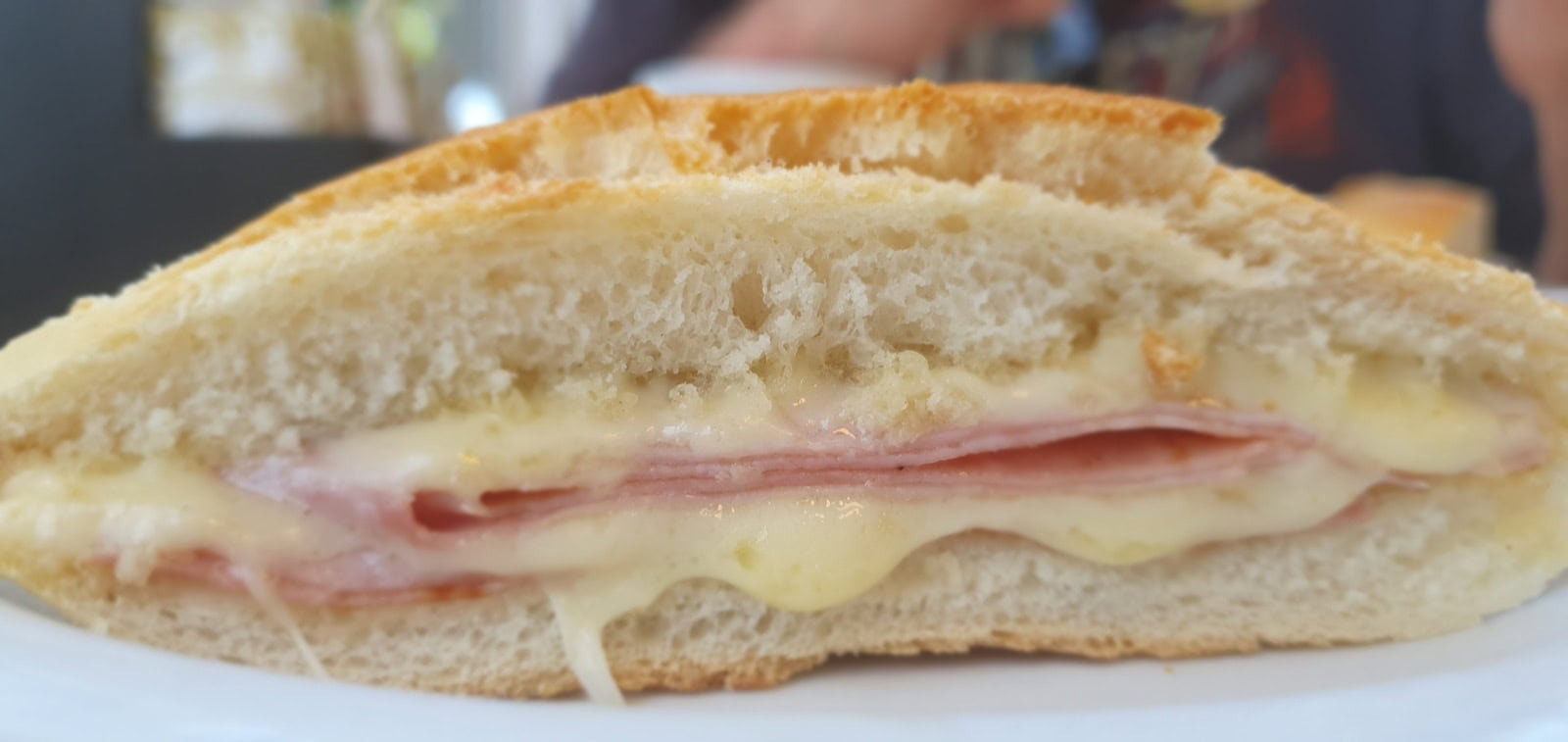
- Misto quente com ovo: with a fried egg inside.
- Com tomate e orégano: with sliced tomato and a pinch of dried oregano.
- Com requeijão: with a spread of requeijão, Brazil’s creamy spreadable cheese.
- Na chapa: made on a split pão francês and pressed on the padaria griddle.
- Tapioca de presunto e queijo: the same filling folded into a Brazilian tapioca crepe.
Misto Quente vs Bauru
Another famous Brazilian sandwich is the bauru. Its original roast-beef filling makes it distinct from misto quente.
The bauru was created in 1934 at Ponto Chic, a São Paulo bar popular with students, by Casimiro Pinto Neto, whose nickname came from his hometown of Bauru. The original is made on a pão francês with the soft crumb pulled out and filled with roast beef, tomato, pickled cucumber and cheese melted in a bain-marie.
A misto quente is simpler: just ham and cheese, usually in sliced bread, and far more common at home. For more of the region’s sandwiches, see our guide to Latin American sandwiches.
Frequently Asked Questions
What does misto quente mean?
It means “hot mixed.” Misto refers to the mix of ham and cheese, and quente means hot.
What cheese is used in a misto quente?
Usually queijo prato or mozzarella. Both are mild and melt well. Outside Brazil, use a mild melting cheese like provolone, Monterey Jack or young Gouda.
Is misto quente a breakfast food?
Yes. It’s one of the most common breakfast orders at Brazilian bakeries and snack bars, and a favorite afternoon snack.
More Brazilian Breakfast Foods
Pair your misto quente with a vitamina or a cup of Brazilian coffee. For more morning favorites, try Brazilian tapioca, pão na chapa, Brazilian cuscuz and pão de queijo, or browse our guide to traditional Brazilian breakfast foods.
More Brazilian Foods
See all →
Jorge Garcia is the founder of AmigoFoods, where he has spent over 20 years helping readers discover authentic Latin American and Spanish cuisine. Raised in a Cuban-American household, Jorge learned to cook at the hands of his mother and grandmother, carrying forward generations of family recipes. That heritage, backed by his family’s four-generation history in the Latin food industry, inspired him to launch AmigoFoods in 2003. With more than 1,000 published articles on recipes, ingredients, and food culture, Jorge’s mission is simple: make authentic Latin cooking approachable for home cooks everywhere while honoring the traditions behind every dish.