
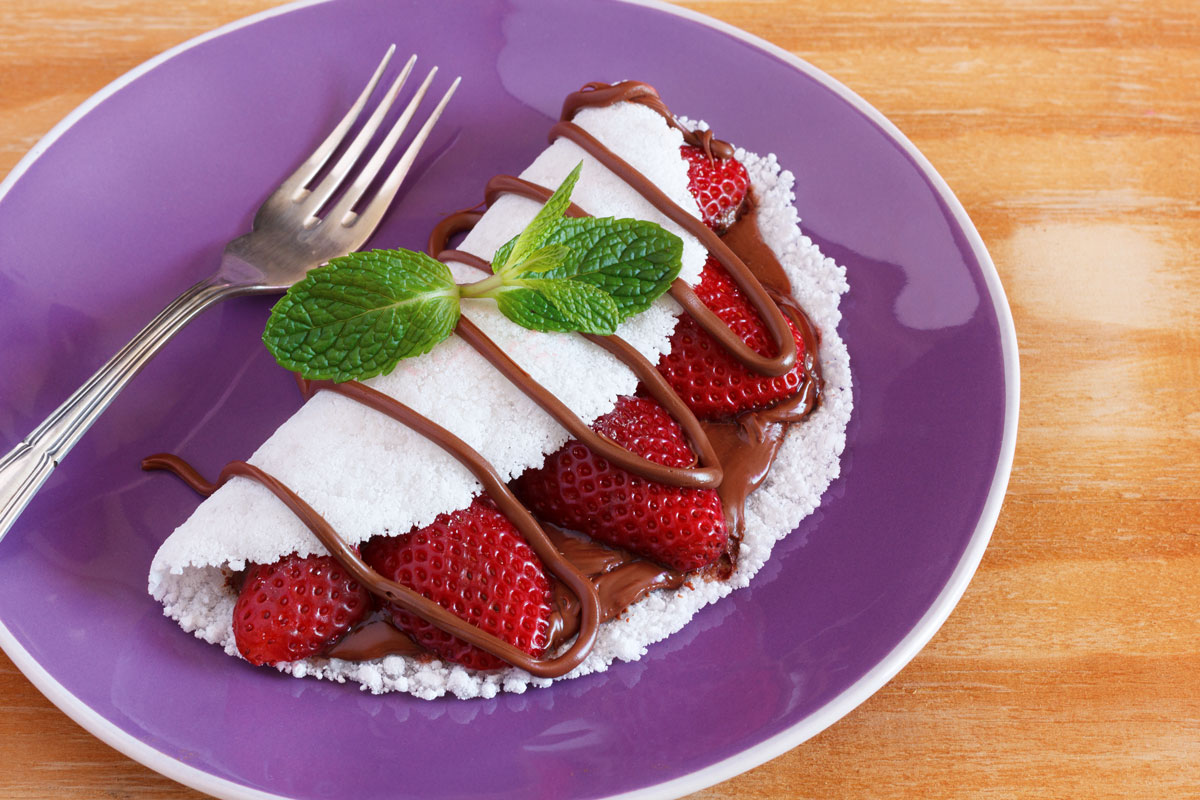
Brazilian tapioca is a soft cassava-starch crepe cooked in a dry skillet and folded around a filling. This recipe makes two with butter and queijo coalho, including the short rest needed to hydrate dry starch.
Brazilian Tapioca at a Glance
What Is Brazilian Tapioca?
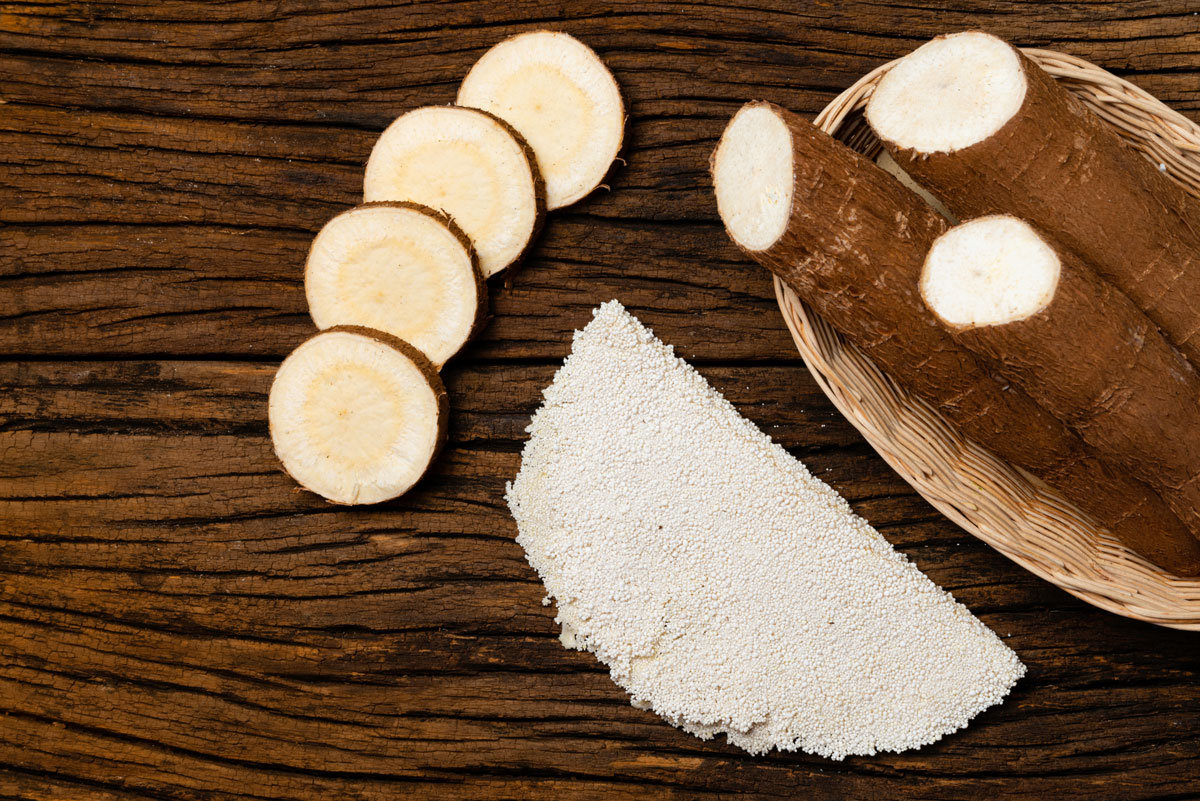
Brazilian tapioca is a thin, round flatbread made from goma de tapioca, cassava starch that has been moistened just enough to clump.
When the damp starch is sifted into a hot, dry pan, the heat fuses the granules together into a single white disc. There’s no egg, no flour, no oil and no batter. The result is soft and slightly chewy, with a mild flavor that works with both sweet and savory fillings.
The starch comes from cassava, the same root behind farinha de mandioca and the chewy dough of pão de queijo. In Brazil, tapioca is sold ready to use as goma pronta, in bags in the refrigerated section of any supermarket.
Where Tapioca Comes From
Tapioca is one of the oldest foods in Brazil.
An Indigenous food. Long before the Portuguese arrived, Indigenous peoples processed cassava into flour and starch and cooked flat cakes of it on hot clay griddles. Those cakes, called beiju, are the direct ancestor of today’s tapioca. The word itself comes from the Tupi tipi’óka, which describes the starch clotting as it settles out of the pressed cassava.
A Northeastern street food. In the Northeast, tapioca became a staple of markets and street corners. The tapioqueiras who cook it to order on the Alto da Sé in Olinda are part of the city’s identity.
A national breakfast. In the 2000s tapioca spread well beyond the Northeast, helped by its reputation as a light, gluten-free alternative to bread. Today you’ll find tapiocarias in São Paulo shopping malls and tapioca on hotel breakfast buffets all over the country.
The Best Tapioca Fillings

A tapioca is only as good as what goes inside it. These are the fillings you’ll see on a Brazilian menu.
Savory
- Manteiga: just butter, melted into the hot crepe. The simplest and one of the most popular.
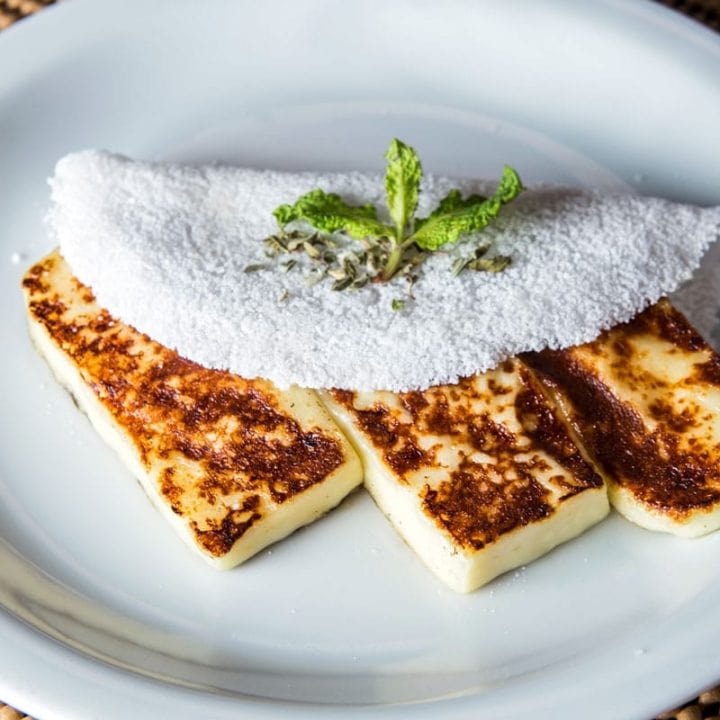
- Queijo coalho: the squeaky Northeastern grilling cheese, sliced thin or grated so it warms and softens; it generally keeps its shape. See our guide to queijo coalho.
- Carne de sol com queijo: shredded carne de sol with cheese or requeijão, the heartiest option.
- Presunto e queijo: ham and cheese, the tapioca version of a misto quente.
- Ovo: scrambled egg, sometimes with tomato and oregano.
Sweet
- Coco com leite condensado: fresh grated coconut and sweetened condensed milk, the Northeastern classic.
- Banana com canela: sliced banana, cinnamon and a little sugar.
- Doce de leite: with or without banana.
- Chocolate and strawberries: a modern favorite at tapiocarias.
How to Make Tapioca at Home
Outside Brazil, you probably won’t find goma pronta, but you can make it in a few minutes from dry tapioca starch (also sold as tapioca flour or polvilho doce). You can find Brazilian brands like Yoki in our Brazilian pantry list on Amazon.
Step 1: Hydrate the starch
Sprinkle water over the starch a spoonful at a time, rubbing it in with your fingers. Stop when the starch holds together when you squeeze a handful but crumbles again when you poke it. It should feel like damp sand, not a dough.
Step 2: Sieve it
Let the dampened starch rest for 10 minutes, then push it through a fine sieve. This breaks up the clumps into a light, powdery goma, and it’s the step that makes the crepe hold together. Hydrated goma keeps in the fridge in a closed container for several days.
Step 3: Cook it in a dry pan
Heat a nonstick skillet over medium heat. Don’t add oil. Sift or spoon in a thin, even layer of goma and press the edges with a spoon to make a neat circle. In about a minute the starch will fuse into a disc and the edges will lift.
Step 4: Fill and fold
Flip it for a few seconds if you like, add your filling to one half, fold it over and serve right away.
The full recipe, with the classic butter and queijo coalho filling, is in the recipe card below.
Brazilian Tapioca with Queijo Coalho
A soft, chewy Brazilian crepe made from cassava starch in a dry pan, filled with butter and warm queijo coalho.
Ingredients
- 1 cup (130 g) tapioca starch (polvilho doce)
- 3 to 4 tablespoons water to start, plus more by the teaspoon as needed
- 1 pinch salt
- 1 tablespoon butter
- 2 oz (60 g) queijo coalho, thinly sliced or grated
Instructions
- In a bowl, mix the tapioca starch and salt. Sprinkle in the water 1 tablespoon at a time, rubbing it into the starch with your fingertips, until the starch holds together when squeezed but crumbles when poked. The listed water is a starting amount; add more a teaspoon at a time if needed to reach damp, sieveable crumbs, not a liquid batter.
- Let it rest for 10 minutes, then push it through a fine sieve to make a light, powdery goma.
- Heat a nonstick skillet over medium heat. Without adding oil, sift or spoon about half of the goma into the pan in a thin, even circle, pressing the edges neatly with a spoon.
- Cook for about 1 minute, until the starch fuses into a single disc and the edges lift. Flip and cook 20 to 30 seconds more.
- Spread half the butter over the hot tapioca, add half the queijo coalho to one side, fold it in half and press gently until the cheese is warmed and softened; queijo coalho usually holds its shape rather than melting into a flowing filling.
- Repeat with the remaining goma, butter and cheese. Serve immediately.
Notes
Hydrated goma keeps in a closed container in the refrigerator for several days. If the tapioca falls apart, the goma is too dry. If it is gummy, the goma is too wet or the layer is too thick.
Tips for Perfect Tapioca
- If it falls apart, the goma is too dry. Add a few drops of water, rub it in and sieve again.
- If it’s gummy or sticky, the goma is too wet or the layer is too thick. Add a spoonful of dry starch and sieve again.
- Use a nonstick pan. Tapioca is cooked without any fat, so a sticky pan will tear it.
- Keep it thin. A layer about as thick as a coin cooks through before it gets tough.
- Fill it while it’s hot. Butter melts readily; cheese behavior depends on the type. Fill and fold while the crepe is flexible.
Frequently Asked Questions
Can I use ready-hydrated goma instead of dry tapioca starch?
Yes. Goma pronta is already hydrated, so skip the added water and hydration rest and follow its package directions. Do not substitute equal weights of hydrated goma and dry starch: the water content differs. The recipe below starts with dry starch and takes about 25 minutes including its ten-minute rest.
Is Brazilian tapioca the same as tapioca pearls?
They’re made from the same cassava starch, but in different forms. Pearls are starch rolled into balls and dried. Brazilian tapioca is loose, moistened starch cooked into a flat crepe.
Is tapioca gluten-free?
Yes. Cassava starch contains no gluten, which is one reason tapioca became popular across Brazil as a bread alternative. Check your fillings if you’re avoiding gluten.
Can I use cassava flour instead of tapioca starch?
No. Cassava flour is made from the whole root and won’t fuse into a crepe. You need the pure starch, sold as tapioca starch, tapioca flour or polvilho doce.
What do Brazilians drink with tapioca?
Usually coffee with milk, fresh juice or a vitamina, the Brazilian fruit and milk smoothie.
More Brazilian Breakfast Foods
Tapioca is one of the essential dishes of a Brazilian breakfast, alongside pão na chapa, misto quente, cuscuz nordestino and pão de queijo. For the full picture, see our guide to traditional Brazilian breakfast foods, or explore more Brazilian food.
More Brazilian Foods
See all →
Jorge Garcia is the founder of AmigoFoods, where he has spent over 20 years helping readers discover authentic Latin American and Spanish cuisine. Raised in a Cuban-American household, Jorge learned to cook at the hands of his mother and grandmother, carrying forward generations of family recipes. That heritage, backed by his family’s four-generation history in the Latin food industry, inspired him to launch AmigoFoods in 2003. With more than 1,000 published articles on recipes, ingredients, and food culture, Jorge’s mission is simple: make authentic Latin cooking approachable for home cooks everywhere while honoring the traditions behind every dish.