

A molcajete is one of the most iconic tools in Mexican cuisine and an essential piece of cookware for preparing authentic Mexican dishes.
This traditional Mexican mortar and pestle, carved from volcanic rock, has been used for centuries to grind chiles, spices, herbs, and fresh ingredients into flavorful salsas, guacamole, and marinades.
Many Mexican cooks believe that food simply tastes better when prepared in a molcajete.
The rough stone surface crushes ingredients instead of chopping them, releasing natural oils and creating a rustic texture that blenders can’t match.
Whether you’re making homemade salsa verde, creamy guacamole, or other classic Mexican dishes, a molcajete adds depth of flavor and a touch of tradition to every recipe.
In this guide, you’ll learn what a molcajete is, how to season and use it, and why it remains a must-have tool for anyone who loves authentic Mexican cooking.
What is a Molcajete?

A molcajete is a three-legged mortar and pestle built out of volcanic rock.
It’s been used to mill spices and grains in Mexico since pre-Hispanic times.
The name “molcajete” derives from the Nahuatl terms mollicaxtli and temolcaxitl, which means “mortar for salsa” or “stone mortar for mole,” according to the National Institute of Anthropology and History (INAH).
The basin/mortar and the tejolote, or grinder/pestle, are the two halves of a molcajete.
Ingredients are ground by squeezing and twisting with the tejolote, which releases the foods’ essential oils and adds taste complexity.
Cooks have been using volcanic rock mortar and pestles for thousands of years.
The rustic tool is perfect for guacamole, spice grinding, and serving rich dips and latin salsas.
When you’ve finished seasoning your mortar and pestle, you’ll want to take careful care of it to keep your molcajete clean and in good working order.
What Is a Molcajete Used For?

A molcajete can help pulverize ingredients to a fine paste.
Using a molcajete, you can release the enzymes, flavors, juices, and oils in ingredients like jalapeños, poblano peppers, and garlic cloves by grinding them, then mixing or blending them in an electric food processor.
You can easily crush ingredients by pressing and grinding them with a hard tejolote (the pestle) against the molcajete’s rough surface (the mortar) stone cup.
For example, using the pestle can smash a firm avocado into smooth guacamole or pulverize a habanero pepper into a spicy paste.
Additionally, it’s possible to achieve the perfect texture for the Mexican dish you’re making.
With a molcajete, you can control each grind and stop when you reach your desired consistency.
It’s crucial to note that a molcajete is usually made of brittle volcanic rock, making it difficult to clean.
It’s beneficial because the taste that lingers in the nooks and crannies of the stone molcajete season the next dish made in it.
A finer marble, ceramic, glass, or granite mortar may not be effective at retaining flavors from one preparation to the next.
How To Cure & Season a Molcajete

When you buy an unseasoned molcajete, it may feel dusty, and when you brush your palm over the base, tiny rock fragments may fall off.
Since this kind of mortar and pestle is traditionally made of volcanic rock, the tool is very porous.
Dirt, debris, and grit can be easily stuck within these small gaps.
First, use water to clean the molcajete. This will remove a small amount of grit as well as any dust that has accumulated on it.
You can fill your sink with warm water, submerge the mortar and pestle in it several times, switch out the water each time, or even soak it overnight.
Then, place a small handful of uncooked white rice in the mortar, using just enough to cover the bottom evenly.
Pour a tiny amount of water, about a cup, over the rice. Holding the pestle firmly in one hand, support the mortar by using your other hand.
Grind the white rice in a circular motion and work the rice all around the inside of the bowl.
The white rice may turn into a gray-colored paste after grinding.
The grinding of white rice pulls out all of the soil and sediment stuck in the rock’s pores.
Finally, rinse out the rice and repeat more times until the rice paste retains a white color and does not become gray.
Over time the molcajete will absorb flavors and add to your ingredients.
If the trapped flavors are undesirable or overpowering, then you can season the molcajete by grinding white rice to remove these flavors.
How To Clean a Molcajete

Cleaning and caring of your molcajete can differ depending on the type of material.
Read the directions that came with your molcajete, as well as any washing and maintenance instructions.
Ceramic molcajete varieties may be washed with soapy water, while those made of wood and other rocks can need the same treatment as volcanic rock.
When washing a volcanic rock molcajete, the most important item to note is never to use soap and let the tool dry entirely before storing it.
Due to the small holes in the porous volcanic rock, your molcajete can capture the smell and flavor of any soap you use to clean the tool.
After each use, give your mortar and pestle a thorough rinse with warm water.
Repeat a few times more with a brush if needed.
You may find it helpful to purchase a brush that can only be used on your molcajete, ensuring that no soap contaminates the tool.
It’s crucial to let your mortar and pestle air dry before storing it.
It’s also possible that mold can develop if you don’t empty, rinse, and dry the molcajete properly.
After washing the molcajete, blot excess water from the surface with a towel.
To ensure even air drying on all sides, turn the molcajete upside down, then right side up, and repeat it if necessary.
Popular Dishes Made with a Molcajete
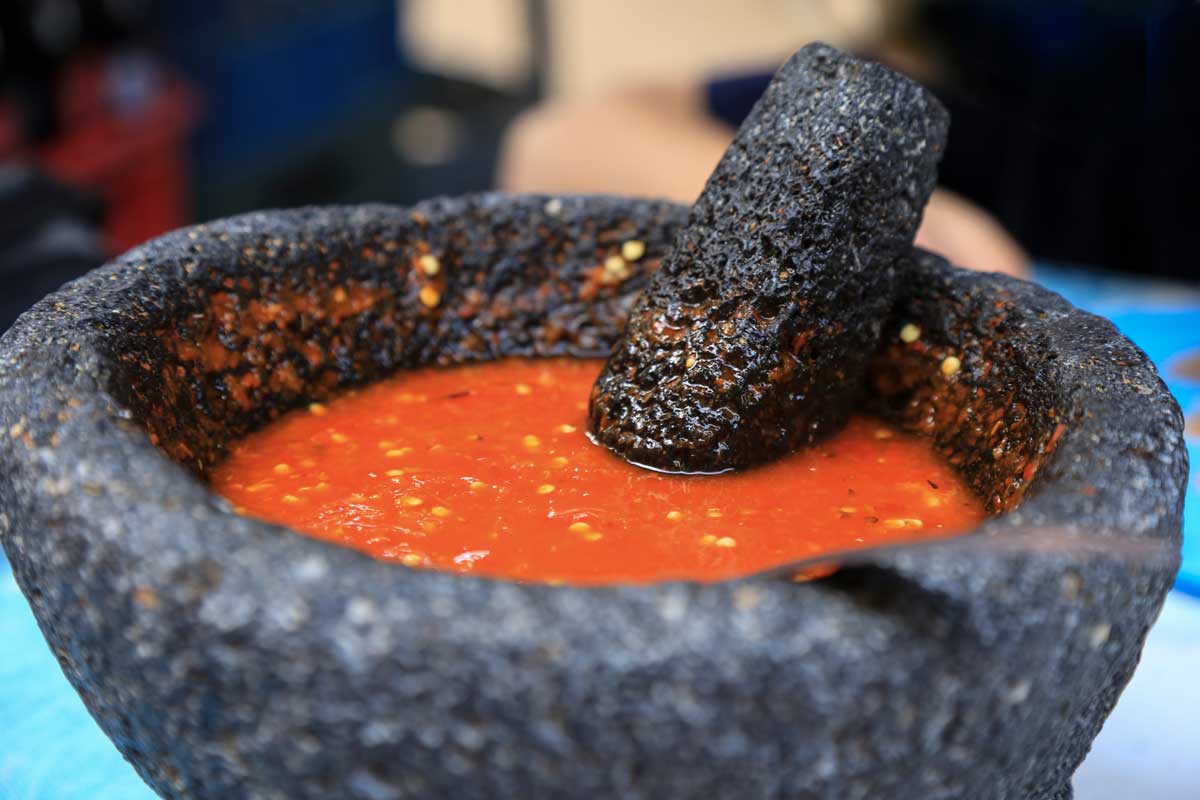
A molcajete is the cornerstone of many traditional Mexican recipes, infusing dishes with unique flavors and textures.
Here are some beloved Mexican dishes that highlight the molcajete’s culinary prowess:
1. Guacamole
- Description: The molcajete’s rough surface helps break down avocados, releasing their oils and enhancing the creamy texture of guacamole.
- Recipe Tips: Add ingredients like onions, cilantro, tomatoes, and lime juice directly into the molcajete and gently grind to combine. This method intensifies the flavors, making each bite of guacamole rich and flavorful.
2. Salsa Roja
- Description: Mexican salsas made in a molcajete offer a unique texture that’s both rustic and flavorful. The molcajete gently crushes tomatoes, onions, and chiles, blending them without losing the chunkiness.
- Recipe Tips: Roast tomatoes, jalapeños, and garlic before adding them to the molcajete. Grind the ingredients until they reach the desired consistency, then season with salt and cilantro.
3. Mole Sauce
- Description: Many mole sauces start by grinding spices, nuts, and chiles to create a rich paste. The molcajete’s stone surface is ideal for extracting the oils and flavors from these ingredients, giving the mole its depth.
- Recipe Tips: Begin by grinding the dried chiles and spices to release their essential oils. Continue to add ingredients gradually, using the molcajete to work them into a smooth paste before incorporating with liquids.
4. Pico de Gallo
- Description: Although commonly chopped, making pico de gallo in a molcajete creates a different experience, blending flavors together while keeping the ingredients fresh and chunky.
- Recipe Tips: Crush a few garlic cloves with salt to create a flavorful base. Add tomatoes, onions, and jalapeños, then gently press to combine. Finish with fresh cilantro and lime juice for an elevated pico de gallo.
5. Molcajete Mixto (Mixed Molcajete Platter)
- Description: This traditional dish is often served in the molcajete itself, featuring grilled meats, nopales (cactus), cheese, and sometimes shrimp, all cooked with a spicy, bubbling salsa.
- Recipe Tips: Serve the dish directly in a heated molcajete for added flair. The residual heat keeps the ingredients warm, blending the flavors as they’re enjoyed straight from the stone.
6. Frijoles con Veneno (Beans with “Poison”)
- Description: This dish is named for its “veneno” or “poison”—a mixture of lard and chiles blended in a molcajete, which is then poured over cooked beans for a rich, smoky flavor.
- Recipe Tips: Start by grinding chiles and garlic in the molcajete, then mix with hot lard. Pour this savory “veneno” over beans to elevate their flavor.
Each of these molcajete dishes highlights the versatility and authenticity a molcajete brings to Mexican cooking.
By using this traditional tool, you can achieve flavors and textures that are difficult to replicate with modern kitchen appliances.
Where to Buy an Authentic Molcajete
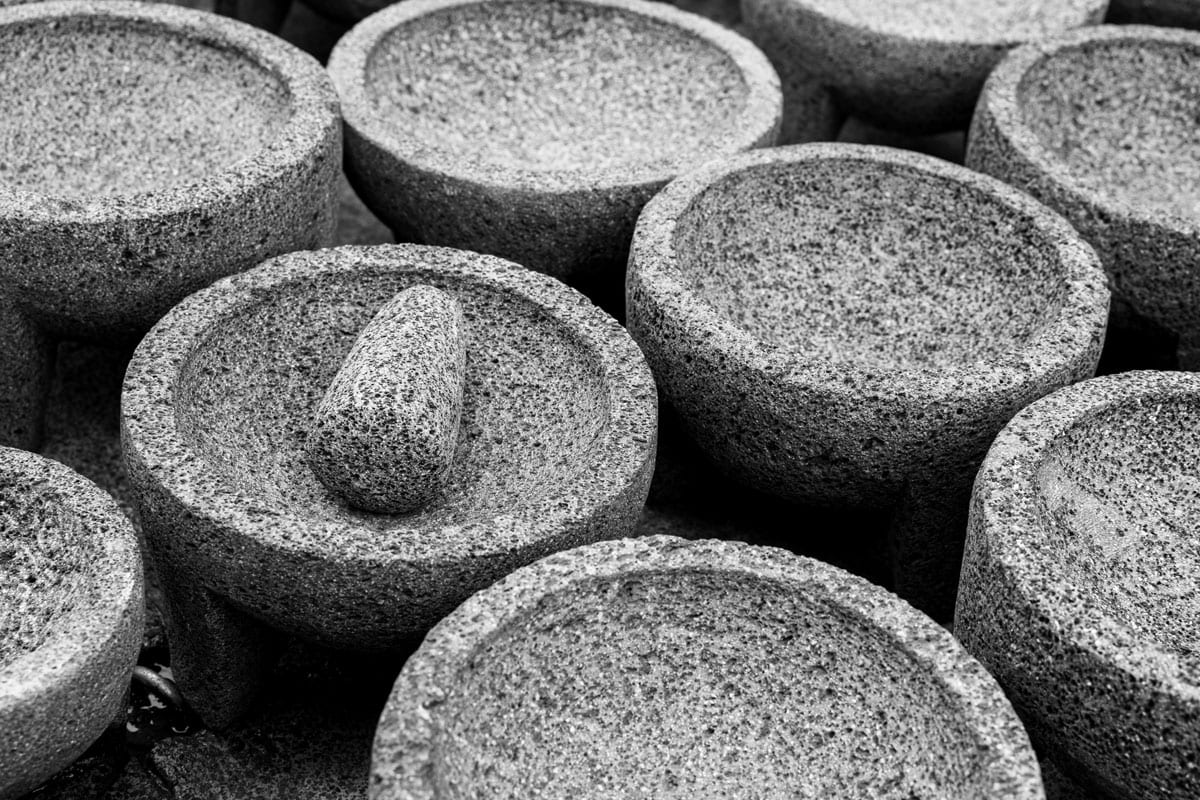
If you’re ready to add a molcajete to your kitchen, it’s important to choose an authentic one made from volcanic basalt rock.
A genuine molcajete will provide better grinding performance, superior flavor, and durability that can last for decades.
One of the easiest places to buy an authentic molcajete is Amazon, where you’ll find a wide range of sizes and styles along with customer reviews to help you compare options.
Mexican grocery stores and Latin markets are also excellent places to shop, especially if you want to inspect the stone and craftsmanship in person.
For handmade pieces, artisan marketplaces and specialty cookware shops often carry high-quality molcajetes sourced directly from Mexico.
What to Look for When Buying a Molcajete
- Made from natural volcanic basalt stone
- Rough, porous interior surface Includes a matching tejolote (pestle)
- Heavy and sturdy construction
- Three stable legs Hand-carved appearance rather than smooth concrete
Best Places to Buy a Molcajete
- Amazon
- Mexican grocery stores
- Latin markets
- Specialty cookware stores
- Artisan shops and Mexican markets
- Online retailers that specialize in authentic Mexican cookware
Recommended Molcajete Sizes
- 6 to 7 inches: Ideal for small batches of salsa or guacamole
- 8 inches: Great all-purpose size for most home cooks
- 10 inches or larger: Best for entertaining and larger recipes
Final Buying Tip
When shopping online, read customer reviews carefully and look for descriptions that specifically mention volcanic rock or basalt.
Avoid lightweight versions made from cement or composite materials, as they won’t perform as well and may wear down over time.
Embracing Tradition with a Molcajete

The molcajete is more than just a kitchen tool; it’s a bridge to the past and an essential part of authentic Mexican cooking.
From guacamole to rich, complex moles, it transforms simple ingredients into deeply flavored dishes, capturing the true essence of Mexican cuisine.
By using a molcajete, you’re not only embracing a centuries-old tradition but also enhancing your dishes in a way that modern appliances can’t.
Whether you’re new to Mexican cooking or looking to elevate your skills, incorporating a molcajete into your kitchen will deepen your connection to these flavors and traditions.
So grab your molcajete, and get ready to experience Mexican cooking as it was meant to be—rich, rustic, and full of flavor.
Read: 21 Must Have Latin Cooking Utensils for the Latin Chef In You
Sources
- The Yucatan Times: Molcajete
- Masterclass: Molcajete
- The Spruce Eats: Molcajete
- The Spruce Eats: How to Season a Brand New Mortar and Pestle
More Mexican Foods
See all →
Jorge Garcia is the founder of AmigoFoods, where he has spent over 20 years helping readers discover authentic Latin American and Spanish cuisine. Raised in a Cuban-American household, Jorge learned to cook at the hands of his mother and grandmother, carrying forward generations of family recipes. That heritage, backed by his family’s four-generation history in the Latin food industry, inspired him to launch AmigoFoods in 2003. With more than 1,000 published articles on recipes, ingredients, and food culture, Jorge’s mission is simple: make authentic Latin cooking approachable for home cooks everywhere while honoring the traditions behind every dish.