

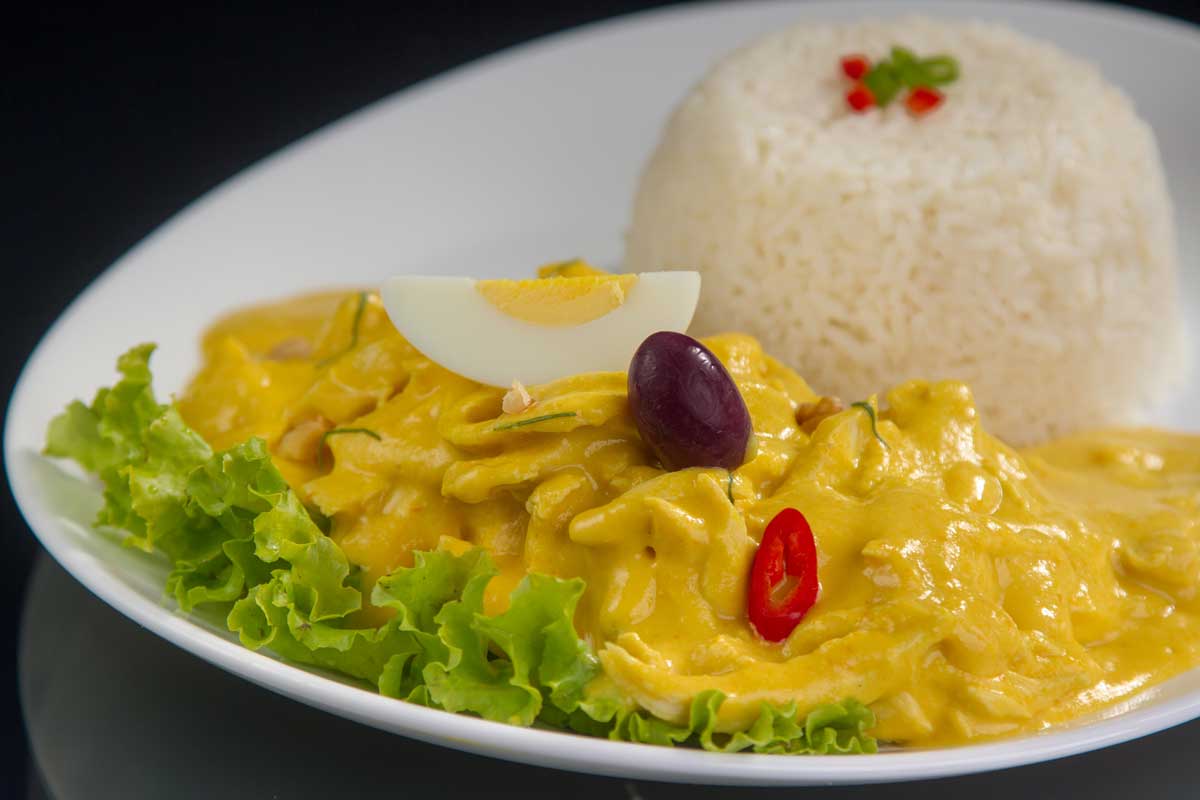
Ají de gallina is Peruvian shredded chicken in a creamy ají amarillo sauce thickened with bread, evaporated milk, nuts and Parmesan. This version serves four over potatoes with rice, egg and olives, and takes about an hour with the sides prepared alongside the chicken.
Ají de Gallina at a Glance
What is ají de gallina?
Pronounced ah-HEE deh gah-YEE-nah, ají de gallina belongs to Peru’s comida criolla. The name refers to chili and hen, although modern home cooks often use chicken. You may also see the chicken version called ají de pollo.
The sauce should be thick enough to cling to the shredded meat, yet loose enough to spoon over potatoes. Its flavor is savory, gently nutty and peppery. Heat varies with the ají paste: a golden sauce is not necessarily mild.
Unlike pollo a la brasa, which is roasted, this Peruvian chicken dish starts with poached, shredded meat. The cooking broth becomes part of the sauce.
Ají de gallina ingredients and substitutions
The recipe card below contains the full measurements. Here is what matters when shopping.
- Chicken: use 1½ pounds (680 g) of boneless, skinless breast. Weight is more reliable than “two breasts,” which can vary considerably. Thighs also work, but cooking time may differ. A mature hen needs a longer simmer to become tender.
- Ají amarillo paste: use 3 tablespoons, or start with 2 for less heat. Choose a cooking paste made from ají amarillo peppers, not a creamy bottled table sauce. Different brands have different heat, salt and acidity levels.
- Bread: three trimmed slices, about 75 g, thicken the sauce. Soaking softens the crumb; blending prevents lumps. Weighing the bread helps avoid a gluey sauce when slices are unusually large.
- Evaporated milk: 1 cup adds richness. Use unsweetened evaporated milk. Whole milk can replace it in the same volume, with a lighter result; sweetened condensed milk cannot.
- Walnuts or pecans: ¼ cup adds richness. Both are established variations. For a nut-free adaptation, omit them and begin with slightly less broth; check labels for your dietary needs.
- Parmesan: ¼ cup provides savory depth. Add it near the end, then taste before salting.
- Broth: reserve 1½ cups from poaching. Blend ½ cup with the bread; use the remainder only as needed to loosen the sauce.

Look in a Latin American grocery store’s Peruvian section or shop for the paste online. A different yellow pepper will change the flavor and heat; there is no exact everyday substitute. This recipe is written for paste, so fresh peppers are not a spoon-for-spoon swap.
How to make ají de gallina
1. Poach and shred the chicken
Gently simmer the chicken in broth until the thickest part reaches 165°F (74°C), usually 15–20 minutes for boneless breasts. Avoid a hard boil. Save 1½ cups of broth, then shred the chicken once it is cool enough to handle. Cook the potato rounds, rice and eggs while you work.
2. Blend the creamy base
Soak the torn bread in evaporated milk for 5–10 minutes. Blend with the nuts and ½ cup of reserved broth until smooth. Cool hot broth before blending and follow your blender’s hot-liquid instructions.
3. Cook the onion and chili paste
Soften the onion in oil for 5–7 minutes, add garlic for 1 minute, then cook the ají amarillo paste for 2–3 minutes. Stir frequently: scorched garlic or chili can make the sauce bitter.
4. Bring the sauce together
Stir in the bread mixture over low heat for 3–5 minutes. Fold in the chicken and warm gently for about 5 minutes. Add extra reserved broth 2 tablespoons at a time until spoonable, then stir in Parmesan. Taste before adding salt.
Ají de gallina recipe
A practical chicken-breast version with measured ingredients and the traditional potato, rice, egg and olive accompaniments. Times are estimates; use the doneness and texture cues.
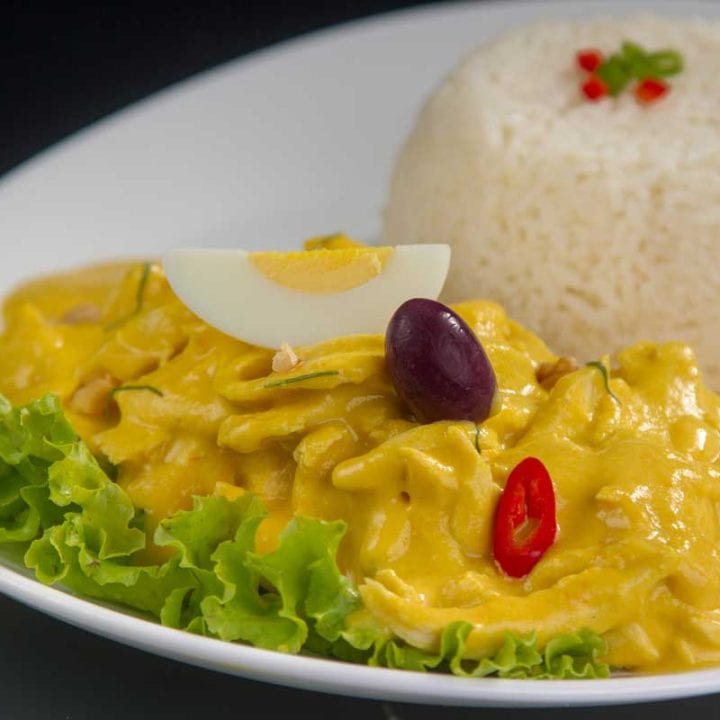
Ají de Gallina (Peruvian Creamy Chicken)
Shredded chicken in a creamy ají amarillo sauce with bread, evaporated milk, nuts and Parmesan, served over potatoes with rice, eggs and olives.
Ingredients
- 1 1/2 lb (680 g) boneless, skinless chicken breasts
- 4 cups (960 ml) low-sodium chicken broth, plus water if needed to cover chicken; reserve 1 1/2 cups after poaching
- 3 slices white sandwich bread, crusts removed (about 75 g after trimming), torn
- 1 cup (240 ml) unsweetened evaporated milk
- 2 tablespoons vegetable oil
- 1 medium onion (about 150 g), finely chopped
- 2 garlic cloves, minced
- 3 tablespoons ají amarillo paste (use 2 tablespoons for less heat; see notes)
- 1/4 cup (30 g) walnuts or pecans
- 1/4 cup (25 g) finely grated Parmesan
- Salt and freshly ground black pepper, to taste
- 4 medium yellow potatoes (about 600 g), peeled and cut into 1/2-inch rounds
- 2 hard-boiled eggs, quartered
- 8 pitted black olives, preferably botija
- 2 cups cooked white rice, for serving
Instructions
- Place chicken in a saucepan with the broth, adding water only if needed to cover. Bring to a gentle simmer, then reduce heat and poach for about 15–20 minutes, depending on thickness, until the thickest part reaches 165°F (74°C). Reserve 1 1/2 cups of the cooking broth. Let chicken cool enough to handle, then shred.
- Meanwhile, cover potato rounds with water in a separate saucepan. Simmer 10–15 minutes until fork-tender; drain. Prepare rice and hard-boiled eggs if not already cooked.
- Soak torn bread in evaporated milk for 5–10 minutes. Blend with the nuts and 1/2 cup of the reserved broth until smooth. Let hot broth cool before blending; follow your blender’s hot-liquid instructions.
- Heat oil in a wide saucepan over medium heat. Cook onion 5–7 minutes until soft. Add garlic and cook 1 minute. Stir in ají amarillo paste and cook 2–3 minutes, stirring so it does not scorch.
- Reduce heat to low. Add the bread mixture and stir 3–5 minutes until the sauce is creamy. Fold in chicken and warm gently for about 5 minutes. Add reserved broth 2 tablespoons at a time as needed for a thick but spoonable sauce; you may not need all of it.
- Stir in Parmesan and season with salt and pepper. Divide potatoes among four plates, spoon the chicken sauce over them, and serve rice alongside. Garnish each plate with two egg quarters and two olives.
Notes
Timing is an estimate for boneless chicken; prepare sides while it poaches. Mature hen needs a longer cooking time and is not a direct 20-minute substitute. Chili paste strength varies: use 2 tablespoons for a milder start, or 3 tablespoons for the standard version. Buy ají amarillo paste rather than a finished table sauce. For a nut-free adaptation, omit the nuts and start with a little less broth; check all ingredient labels for your needs. Whole milk can replace evaporated milk in the same volume, but makes a less rich sauce. Do not use sweetened condensed milk. Refrigerate in shallow covered containers within 2 hours (1 hour above 90°F/32°C); use within 3–4 days and reheat to 165°F/74°C, loosening with broth. Recipe reviewed against published Peruvian sources; not kitchen-tested by AmigoFoods for this revision.
Fixing the sauce: texture and heat
| The problem | How to fix it |
|---|---|
| Too thick or pasty | Stir in warm reserved broth 2 tablespoons at a time. Stop when the sauce falls easily from a spoon. |
| Too thin | Simmer gently, uncovered, stirring frequently. Give the bread a few minutes to thicken before adding anything else. |
| Too spicy | For the next batch, begin with 2 tablespoons of paste. Extra milk can soften the heat of the current batch but also thins and dilutes it. |
| Grainy or lumpy | Soak the bread fully and blend the bread-and-nut mixture smooth before adding chicken. |
| Too salty | Use low-sodium broth and taste after the Parmesan. A salty chili paste or rotisserie chicken needs less added salt. |
What to serve with ají de gallina
Arrange cooked yellow potato rounds on each plate, spoon the chicken sauce over them, and place white rice alongside. Finish with hard-boiled egg quarters and black olives, preferably Peruvian botija olives. Yukon Gold potatoes are a practical alternative when Peruvian yellow potatoes are unavailable.
For this four-serving recipe, use four medium potatoes, two eggs, eight olives and two cups of cooked rice. A crisp salad provides a fresh contrast. For more ideas, explore our Peruvian side dishes or serve a glass of chicha morada.
Storage, freezing and reheating
Refrigerate leftovers in shallow covered containers within 2 hours, or within 1 hour when the temperature is above 90°F (32°C). Keep refrigerated for 3–4 days. Reheat to 165°F (74°C), stirring and adding a splash of broth to restore the sauce’s texture. These handling limits follow USDA leftover guidance.
You can freeze the chicken and sauce in portions. For best texture, aim to use them within 2 months; the dairy sauce may separate slightly. Thaw in the refrigerator, then reheat gently while stirring. Prepare fresh potatoes and garnishes when serving.
Ají de gallina: frequently asked questions
Is ají de gallina spicy?
It can be. Ají amarillo has fruity heat, and commercial pastes vary. This recipe uses 3 tablespoons for four servings; use 2 tablespoons if you prefer a milder starting point. Milk and bread soften the intensity but do not remove it.
Can I make ají de gallina with rotisserie chicken?
Yes. Use about 3 cups of shredded cooked chicken, skip poaching, and use low-sodium broth for the sauce. Warm the chicken thoroughly to 165°F (74°C). Season cautiously because rotisserie chicken is already salted. Total preparation time will be shorter.
Can I make it without nuts?
Yes, as an adaptation. Leave out the walnuts or pecans, use slightly less broth at first, and adjust the finished sauce. The bread still thickens it, although the flavor will be less nutty.
Is ají de gallina gluten-free?
This version contains wheat bread. Gluten-free white bread is a possible adaptation, but absorption varies, so add broth gradually. Check the broth, chili paste and other packaged ingredients as well. The substitution has not been kitchen-tested for this revision.
What is the difference between ají de gallina and ají de pollo?
Gallina means hen; pollo means chicken. The familiar dish name is often retained even when younger chicken is used. The key difference for the cook is that mature hen generally needs longer cooking to become tender.
Can I make it ahead?
Yes. Prepare the chicken and sauce, cool and refrigerate promptly, then reheat with a little broth. Store rice and garnishes separately for easier serving and follow the storage limits above.
Recipe references and editorial notes
We cross-referenced this revision with Peru Delights’ ají de gallina, Peru Travel’s recipe, SkyKitchen’s Peruvian cooking-class recipe, and Eat Peru’s version. They support the shared chicken, chili, bread, dairy and nut method while showing legitimate differences in proportions and seasoning. This revision specifies chicken and bread weights, broth adjustments and a four-serving yield. It is a source-based editorial review, not a kitchen test.
Explore more Peruvian cooking
Learn how ají amarillo tastes and how to use it.
Discover more traditional chicken preparations.
More Peruvian Foods
See all →
Jorge Garcia is the founder of AmigoFoods, where he has spent over 20 years helping readers discover authentic Latin American and Spanish cuisine. Raised in a Cuban-American household, Jorge learned to cook at the hands of his mother and grandmother, carrying forward generations of family recipes. That heritage, backed by his family’s four-generation history in the Latin food industry, inspired him to launch AmigoFoods in 2003. With more than 1,000 published articles on recipes, ingredients, and food culture, Jorge’s mission is simple: make authentic Latin cooking approachable for home cooks everywhere while honoring the traditions behind every dish.