
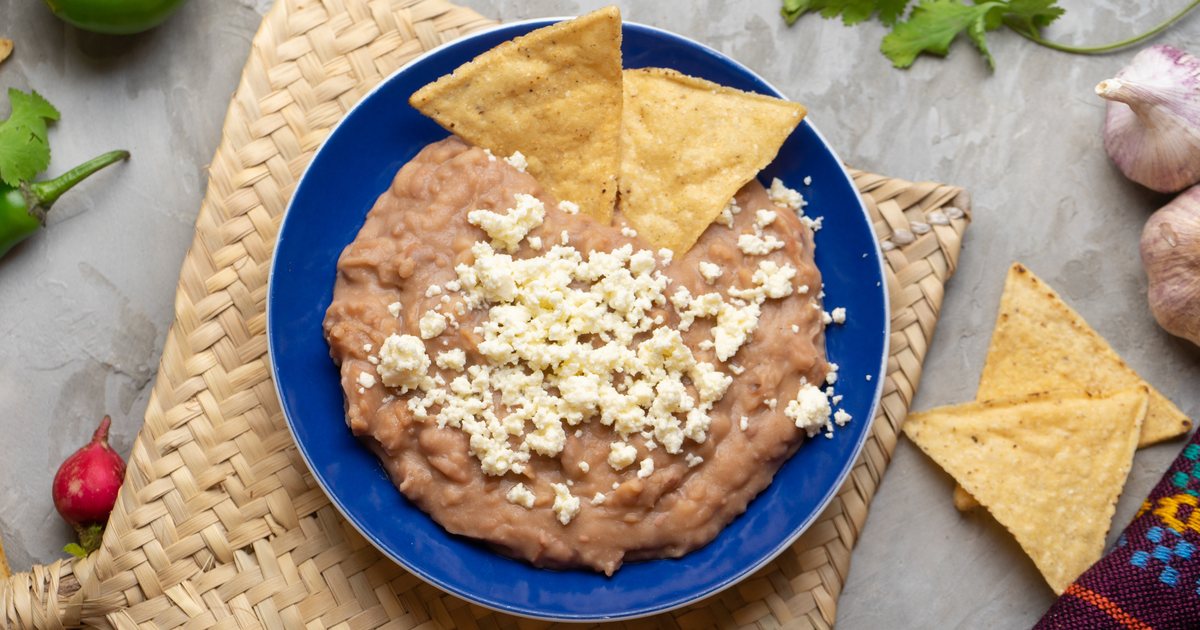
Refried beans (frijoles refritos) are cooked beans, usually pinto, mashed in hot lard or oil with some of their own cooking broth until thick and creamy. In Mexico they are an everyday side and the base layer of molletes, tlayudas, sopes and tostadas.
Despite the name, they are fried only once. This guide covers the from-scratch method, a 15-minute version with canned beans, refried black beans, the regional styles, and why restaurant beans taste the way they do.
Refried Beans at a Glance
AmigoFoods may earn a commission from qualifying Amazon purchases made through links on this page.
What Are Refried Beans?
Refried beans are a two-step dish. First the beans are simmered until soft, the way Mexican cooks make frijoles de la olla. Then they go into a hot pan of fat with fried onion and are mashed while they cook, with splashes of bean broth, until they turn into a thick, spoonable purée.
The fat is what makes them taste like refried beans and not like mashed beans. Traditionally that fat is lard (manteca), which is why good refried beans taste faintly savory and porky even when no meat is in sight.
They are eaten all over Mexico. In the north they are made with pinto beans. In the south, from Veracruz down to Oaxaca, Chiapas and Yucatán, they are made with black beans. They also cross into Central America, where Guatemalans cook black bean paste into frijoles volteados and Hondurans spread refried red beans inside baleadas.
Why are they called “refried” if they are fried once?
Refritos does not mean “fried again.” In Mexican Spanish the prefix re- often works as an intensifier, the way requete does in requetebueno. Frijoles refritos means something closer to “well-fried beans.” The English name is a literal translation that stuck.
Which Beans to Use
Any soft-cooked bean can be refried, but each region has its favorite and they taste different.
| Bean | Where it is used | What it gives you |
|---|---|---|
| Pinto | Northern Mexico, the US | The classic: earthy, creamy, light brown. What most restaurants use. |
| Peruano (mayocoba, canario) | Jalisco, Sinaloa, western Mexico | Pale yellow and buttery with thin skins. The creamiest refried beans of all. |
| Bayo and flor de mayo | Central Mexico | Mild and slightly sweet, a little lighter than pinto. |
| Black (negro) | Veracruz, Oaxaca, Chiapas, Yucatán | Dense, deep and almost smoky. Often seasoned with epazote or avocado leaf. |
If you are new to them, start with pintos. For dry beans, a big bag like Iberia dried pinto beans is enough for several batches. Try peruanos once you have the method down, because their texture is something else.
The Fat: Lard, Bacon Drippings, Oil or Butter
This is the biggest flavor decision in the recipe. Use enough: about ¼ cup for 6 cups of beans. Cut it much further and the beans taste flat and turn pasty.
| Fat | Flavor | Notes |
|---|---|---|
| Lard (manteca) | Rich, savory, traditional | Best is freshly rendered lard from a Mexican carnicería. Many shelf-stable supermarket bricks are hydrogenated and taste of nothing. |
| Bacon drippings | Smoky, salty | The easiest home substitute for good lard. Add salt carefully. |
| Chorizo fat | Spicy, red | Fry 2 ounces of Mexican chorizo first and leave it in. This is close to frijoles puercos. |
| Avocado or vegetable oil | Neutral | Makes them vegan. Fry the onion until deeply golden to make up for the missing flavor. |
| Butter | Sweet, dairy | Not traditional, but good, especially mixed half and half with oil. |
Why restaurant refried beans taste better: three reasons. More fat than most home cooks dare to use, almost always lard. More salt. And they keep the beans loose with plenty of bean broth because the pan sits on a steam table, where beans thicken by the minute. Use real bean broth instead of water and you are most of the way there.
How to Make Refried Beans
Here is the method. Exact amounts are in the recipe card below.
- Start with soft beans and keep the broth. The beans should crush easily between two fingers. Save at least 2 cups of the cooking liquid. Bean broth has body and flavor that water does not.
- Heat the fat in a wide pan. A 12-inch skillet gives the beans room to fry instead of steam. Melt the lard over medium heat until it shimmers.
- Fry the onion until golden. Chopped white onion goes in for 5 to 6 minutes, until the edges brown. Add garlic or a dried chile for the last 30 seconds if you like. Some cooks fish the onion out at this point. Most leave it in.
- Add the beans a ladle at a time. They will spit. Pour in some broth with each ladle and let it sizzle before the next.
- Mash while they cook. Work a masher through the pan for 8 to 10 minutes, adding broth whenever they look dry. Stop when they are a little looser than you want, because they thicken as they cool.
- Salt, then fry to the finish. Taste and salt. Keep stirring until the beans slide away from the pan as one mass when you tilt it. That is the sign of properly fried beans.
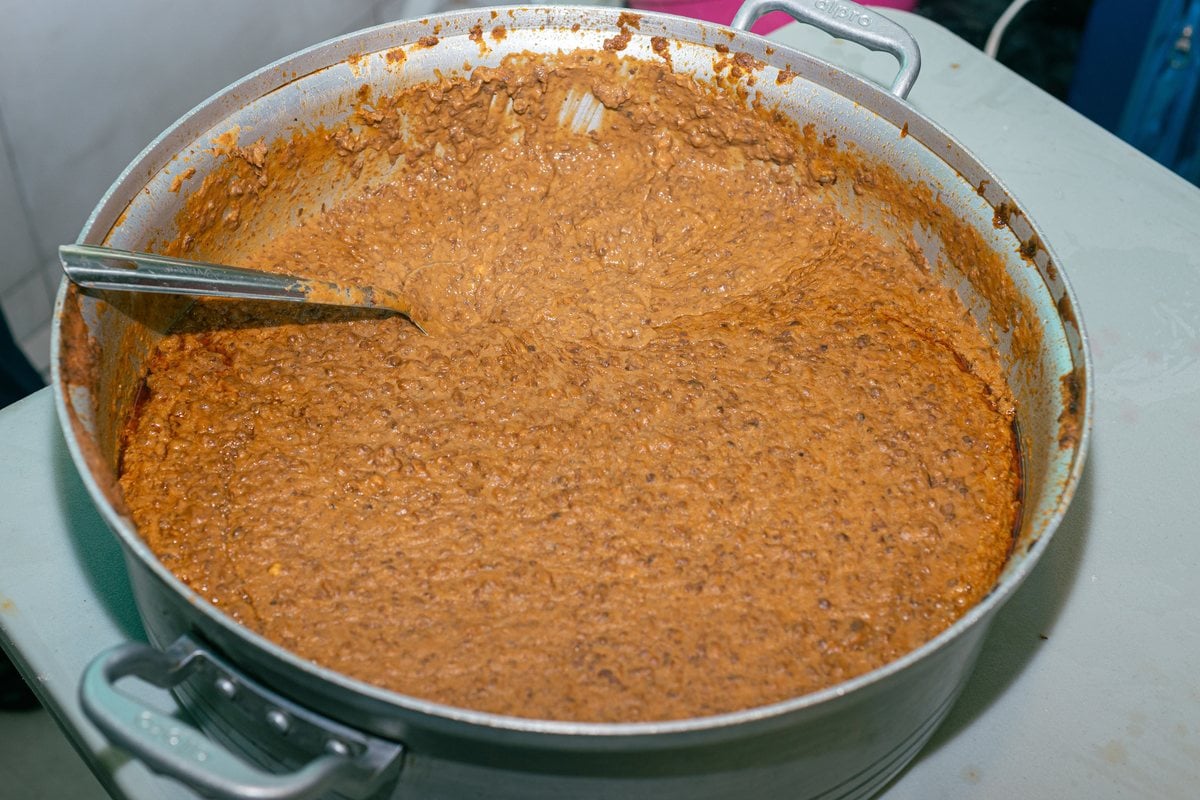
Chunky or smooth? A wire masher gives rustic, home-style beans with some broken pieces. For the silky texture of restaurant beans, blitz the beans and broth with an immersion blender before they go into the fat, then fry. A countertop blender works too, but blend in batches and never fill it more than halfway with hot beans.
The tool that makes it easy
- KitchenAid stainless steel wire masher: the open zigzag head crushes beans fast and does not clog the way a perforated plate does.
As an Amazon Associate, AmigoFoods earns from qualifying purchases.
Refried Beans Recipe
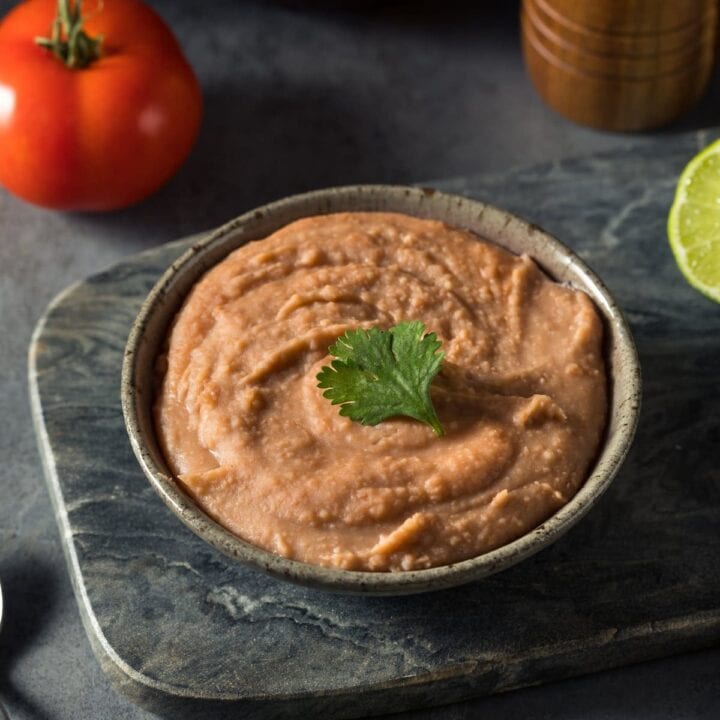
Refried Beans (Frijoles Refritos)
Creamy Mexican refried beans made the traditional way: soft-cooked pinto beans mashed in lard with fried onion and their own broth. Works with homemade or canned beans.
Ingredients
- 6 cups cooked pinto beans plus 2 cups of their cooking broth (from 1 pound dried beans; see notes for canned)
- ¼ cup lard, bacon drippings or avocado oil
- ½ medium white onion, finely chopped
- 1 garlic clove, minced (optional)
- 1 dried chile de árbol (optional)
- ¾ to 1 teaspoon fine salt, to taste
- Crumbled queso fresco or cotija, for serving
- Tortilla chips (totopos), for serving
Instructions
- Heat the fat. In a wide, heavy skillet (a 12-inch cast-iron pan is ideal), melt the lard over medium heat until it shimmers.
- Fry the onion. Add the onion and cook, stirring, 5 to 6 minutes, until golden at the edges. Add the garlic and chile for the last 30 seconds.
- Add the beans. Add the beans a ladleful at a time with a splash of broth after each, letting it sizzle before adding more. Stand back: they spatter.
- Mash. Mash the beans with a bean or potato masher as they simmer, 8 to 10 minutes, adding broth whenever they look dry. For smooth beans, purée the beans and broth with an immersion blender before step 3.
- Season and finish. Taste and add salt. Keep stirring until the beans pull away from the pan as one mass when you tilt it, stopping while they are still slightly looser than you want; they thicken as they cool. Remove the chile.
- Serve. Spoon into a bowl, top with crumbled queso fresco and serve with tortilla chips.
Notes
From canned beans: use three 15-ounce cans of pinto beans with their liquid plus ½ cup water or broth, cut the fat to 3 tablespoons, and taste before salting.
Vegan: use avocado oil and vegetable broth, and brown the onion well.
Black beans: same method; cook the beans with a sprig of epazote first.
Storage: up to 5 days in the fridge or 3 months in the freezer. Reheat with a splash of water or broth.
Nutrition Information:
Yield: 8 Serving Size: ½ cupAmount Per Serving: Calories: 244Total Fat: 7gSaturated Fat: 3gTrans Fat: 0gUnsaturated Fat: 4gCholesterol: 6mgSodium: 220mgCarbohydrates: 34gNet Carbohydrates: 22gFiber: 12gSugar: 1gProtein: 12g
How to Make Refried Beans From a Can
Canned whole pinto beans make very good refried beans in 15 minutes. Use canned whole beans, not canned refried beans. You are doing the frying yourself, and that is where the flavor comes from.
- Use three 15-ounce cans of pinto beans with their liquid, plus about ½ cup water or chicken broth. If you prefer, drain and rinse low-sodium beans and use 1 to 1½ cups of broth instead.
- Fry ½ chopped onion in 3 tablespoons of lard or bacon drippings until golden.
- Add the beans and liquid, mash and simmer for 8 to 10 minutes, until thick. Canned beans are already salted, so taste before you add any.
Making canned refried beans better: if you only have a can of refried beans, warm it in a skillet with a tablespoon of lard or bacon fat and a little fried onion, loosen it with a splash of broth, and finish with crumbled queso fresco. It will not be from-scratch, but it is a big step up from the can.
Refried Black Beans
In southern Mexico, refried beans are black. Veracruz, Oaxaca, Chiapas and Yucatán cook black beans with epazote, then fry them into a dark, glossy paste. That paste is what goes on tlayudas, memelas and Yucatecan panuchos.
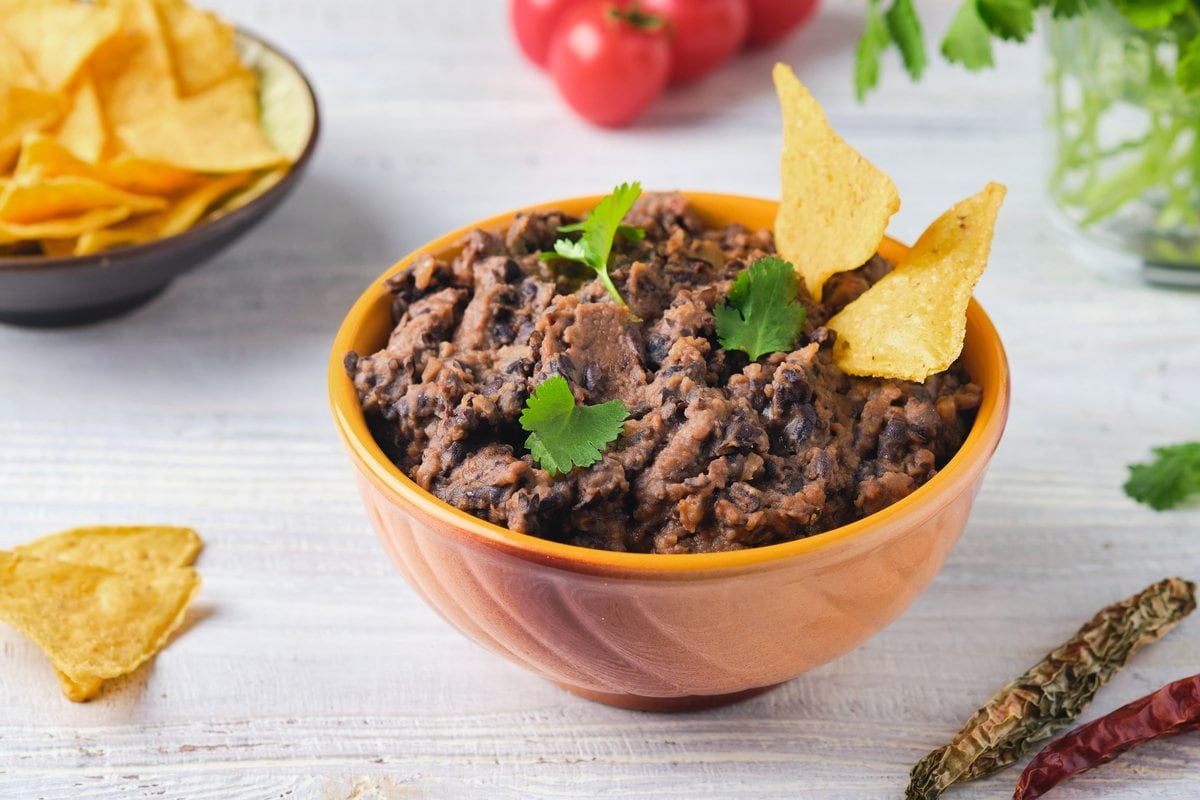
The method is the same as for pintos. Three things make them taste southern:
- Cook the beans with epazote. A sprig of epazote in the pot gives them their pungent, resinous flavor.
- Toast a Mexican avocado leaf. In Oaxaca and Veracruz cooks toast a dried avocado leaf (hoja de aguacate) on a comal, crumble it and fry it with the onion. It adds a faint anise note. Use only leaves sold for cooking.
- Blend them smooth and fry them dry. Southern refried black beans are usually puréed and cooked until thick enough to spread.
For dried beans, Iberia dried black beans are an inexpensive bulk option.
Regional Styles of Refried Beans
Refried beans change from region to region. Here are the versions worth knowing.
Frijoles puercos
“Pig beans”: refried with chorizo, bacon and sometimes pickled jalapeños and olives, then finished with melted cheese. A party dish.
Frijoles maneados
Refried beans stirred with milk, butter, dried red chile and plenty of melting cheese until they stretch. Rich and very northern.
Frijoles negros refritos
Black beans cooked with epazote or avocado leaf, then blended and fried into a smooth paste for tlayudas and memelas.
Frijoles volteados
Black bean paste fried until it can be rolled into a log, which is the “turned” in the name. Served with eggs, plantains and cream.
Frijoles fritos (red)
Small red beans, refried until smooth. Spread inside baleadas with cream and crumbly cheese.
Restaurant style
Pinto beans blended very smooth, kept loose and topped with melted cheese. The combo-plate classic.

Instant Pot and Vegan Refried Beans
Instant Pot refried beans from dry
Put 1 pound of rinsed, unsoaked pinto beans in the pot with ½ onion, 2 garlic cloves and 7 cups of water. Cook on high pressure for 45 minutes and let the pressure release naturally for 20 minutes. Scoop out the beans, keeping the broth, then switch to Sauté, melt the lard and finish them in the same pot as in the steps above. With soaked beans, cut the pressure time to 10 to 12 minutes.
Vegan and lighter refried beans
Swap the lard for 3 tablespoons of avocado or olive oil, and use bean broth or vegetable broth. To make up for the lard, fry the onion until it is deeply browned, add a garlic clove and a chipotle in adobo, and finish with a squeeze of lime. You can cut the oil to 1 tablespoon, but expect a drier, more hummus-like texture.
The Best Store-Bought Refried Beans
Homemade is better, but a good pouch or can is handy for quick breakfasts and weeknight tostadas. These are the styles worth keeping in the pantry:
Pantry picks
- Ducal refried black beans (pouch): the Central American favorite. Smooth, seasoned black bean paste, very close to frijoles volteados.
- La Sierra refried pinto beans (pouch): Mexican-made pinto beans in a microwaveable pouch, with a home-style texture.
- La Sierra refried black beans (pouch): the black bean version, good for molletes and memelas.
- La Costeña refried pinto beans: a familiar Mexican brand, ready in about a minute.
As an Amazon Associate, AmigoFoods earns from qualifying purchases. Check labels if you avoid lard: many traditional canned refried beans contain it, while “vegetarian” versions use oil.
How to Serve Refried Beans
In Mexico refried beans show up at every meal. Some of the best ways to use them:
- As a side. Next to Mexican rice with any grilled meat, topped with crumbled queso fresco and a few totopos.
- For breakfast. With huevos rancheros or huevos divorciados, or spread on a split bolillo with cheese to make molletes.
- As a base layer. Under the toppings on sopes, tostadas de tinga and tlayudas, or stuffed into gorditas.
- Inside sandwiches and wraps. Spread in tortas, pambazos, burritos and chimichangas.
- As a dip. Thin them with a little broth, top with melted cheese and pickled jalapeños, and serve hot with chips.

Are Refried Beans Healthy?
Mostly, yes. Beans are high in fiber, plant protein, potassium and iron. The “fried” part is less dramatic than it sounds: a typical batch has about ¼ cup of fat spread over 8 servings, roughly 1½ teaspoons each.
For reference, USDA data for traditional canned refried beans puts a ½-cup serving at about 107 calories, 6 g of protein, 4 to 5 g of fiber and 2.5 g of fat. Sodium is the number to watch: about 440 mg per ½ cup, and some brands go near 600 mg. Homemade beans let you control both the salt and the fat.
- Lighter: use 2 tablespoons of avocado oil instead of lard and lean on bean broth for creaminess.
- Lower sodium: cook dried beans yourself and salt at the end, or use no-salt-added canned beans.
- Is lard really that bad? Lard has less saturated fat than butter and is high in monounsaturated fat. Fresh-rendered lard is not hydrogenated. It is still fat, so how much you use matters more than which one.
Storing, Freezing and Reheating
- Fridge: up to 5 days in a covered container. They will firm up a lot.
- Freezer: up to 3 months. Freeze in flat zip-top bags or 1-cup portions and thaw overnight in the fridge.
- Reheating: warm in a skillet with a splash of water or broth, stirring until loose again. In the microwave, add a spoonful of liquid and stir every 30 seconds.
Refried Beans FAQ
Are refried beans fried twice?
No. They are boiled once and fried once. Refritos means “well-fried” in Mexican Spanish, not “fried again.”
Can I make refried beans without lard?
Yes. Use bacon drippings for a smoky flavor close to lard, or avocado oil to make them vegan. With oil, fry the onion until deeply golden, because the lard’s savory flavor is missing.
Why are my refried beans dry or pasty?
There is not enough liquid or fat. Add bean broth a few tablespoons at a time while they cook, and take them off the heat while they are still a little looser than you want. They keep thickening as they cool.
Should refried beans be made with pinto or black beans?
Both are traditional. Pintos are the northern Mexican and US standard. Black beans are the norm in Veracruz, Oaxaca, Chiapas and the Yucatán. Peruano beans make the creamiest version of all.
How do I make refried beans from canned pinto beans?
Fry half an onion in 3 tablespoons of lard or bacon fat, add three 15-ounce cans of pinto beans with their liquid and about ½ cup water, then mash and simmer for 8 to 10 minutes until thick. Taste before you salt.
Are refried beans gluten-free?
Beans, lard, onion and salt are naturally gluten-free, so homemade refried beans are too. Most canned brands are as well, but check the label for added seasonings or a gluten-free claim if you are sensitive.
Can dogs eat refried beans?
It is best not to share them. Refried beans usually contain onion and garlic, which are toxic to dogs, plus plenty of salt and fat. Plain cooked beans with nothing added are a safer occasional treat. Ask your vet if you are unsure.
How long do refried beans last?
About 5 days in the fridge and 3 months in the freezer. Reheat with a splash of water or broth to loosen them.
More Mexican Bean Recipes
Start with the beans: our frijoles de la olla guide shows how to cook pinto beans from dry so they are creamy, well seasoned and ready to refry.
Then try frijoles charros with bacon and chorizo, a bowl of sopa de frijol, or enfrijoladas bathed in bean sauce. For more ideas, browse our Mexican side dishes.
More Mexican Foods
See all →
Jorge Garcia is the founder of AmigoFoods, where he has spent over 20 years helping readers discover authentic Latin American and Spanish cuisine. Raised in a Cuban-American household, Jorge learned to cook at the hands of his mother and grandmother, carrying forward generations of family recipes. That heritage, backed by his family’s four-generation history in the Latin food industry, inspired him to launch AmigoFoods in 2003. With more than 1,000 published articles on recipes, ingredients, and food culture, Jorge’s mission is simple: make authentic Latin cooking approachable for home cooks everywhere while honoring the traditions behind every dish.