

Serranito is Seville’s hot sandwich of thin seared pork loin, fried green pepper, tomato and jamón serrano on a soft roll. This recipe makes four generous sandwiches, with optional fries for a classic Andalusian bar-style meal.
Serranito at a Glance
Serranito Essentials
| Feature | Details |
|---|---|
| Type | Bocadillo (Spanish sandwich on a split roll) |
| Home | Seville, Andalusia, southern Spain |
| Dates to | Seville bars of the 1970s; popularized in the 1980s |
| Classic filling | Pork loin, fried green Italian-style pepper, tomato, jamón serrano |
| Common swaps | Chicken breast instead of pork; allioli, mayonnaise or tortilla added |
| Bread | Pan de viena (Andalusian soft roll) or a mollete |
| Served with | French fries, and usually a cold beer |
| Time at home | About 45 minutes with fries, 25 without |
Where the Serranito Comes From (and Who Really Invented It)
Everyone agrees the serranito is from Seville and dates to the 1970s. Beyond that, the story splits into competing claims, and no single account is backed by documents everyone accepts.
The neighborhood-bar version
The most repeated account, found in the Spanish and English Wikipedia entries, places the sandwich in bars in the working-class Seville neighborhoods of Cerro del Águila and Juan XXIII during the 1970s.
The Seville food site Cosas de Comé adds names: it credits two partners from a bar called Los Caños, José Morales Ligero and Pepe Gutiérrez, sometime between 1975 and 1978. According to that account, they reworked an older tapa known as the caballito de jamón.
The Mesones del Serranito claim
José Luis Cabeza Hernández, a former novice bullfighter known as José Luis del Serranito, opened his first Mesón del Serranito in 1983. His company registered “Serranito” as a trademark and describes the tapa and name as its registered brand.
Some recipe sites credit him with inventing the sandwich. His own company’s history is more careful: it says the dish was born in those 1970s neighborhood bars and that he built the brand around it.
The Hermanos Morales claim
The Hermanos Morales restaurant in Seville, linked by Cosas de Comé to José Morales, bills itself as “the authentic creators of the serranito.” Its website makes the claim without offering historical records.
The honest summary: the sandwich grew out of Seville’s bar culture in the 1970s, the name became a brand in the 1980s, and at least two local businesses still say they were first.
What Goes in an Authentic Serranito
Seville bars argue about the details, but the core is short and consistent across Spanish sources.
Pork loin, sliced thin
The original meat is lomo de cerdo, pork loin cut into thin fillets and cooked fast on a plancha (flat-top griddle). Chicken breast is the most common modern swap, and many bars offer both.
Jamón serrano
A few slices of dry-cured serrano ham go on top of the hot pork, where they warm and soften slightly. Some upscale versions use ibérico ham; if you’re curious how the two differ, see our guide to jamón ibérico vs. jamón serrano.
A fried green pepper
The pepper is a long, thin-walled pimiento italiano, fried whole in olive oil until blistered and soft. It is a different pepper from the small blistered pimientos de Padrón served as a tapa.
Tomato
Sliced fresh tomato is part of the classic build, though some bars leave it out. A few home cooks rub the bread with tomato instead, a nod to pan con tomate.
The bread
Traditionally the sandwich goes into a pan de viena, a soft, pale Andalusian roll with a thin crust. A mollete is the other common choice: a flattish, spongy white roll with a soft, floury crust.
The most famous is the Mollete de Antequera, which holds Protected Geographical Indication (IGP) status. Cosas de Comé also mentions molletes from Écija and Marchena and the pan prieto of La Algaba as local favorites. The key point for home cooks: the bread should be soft and tender, not a shatteringly crisp baguette.
Optional sauces
Allioli (garlic mayonnaise) and plain mayonnaise are the most common extras. Canary-style mojo picón also shows up on some menus.
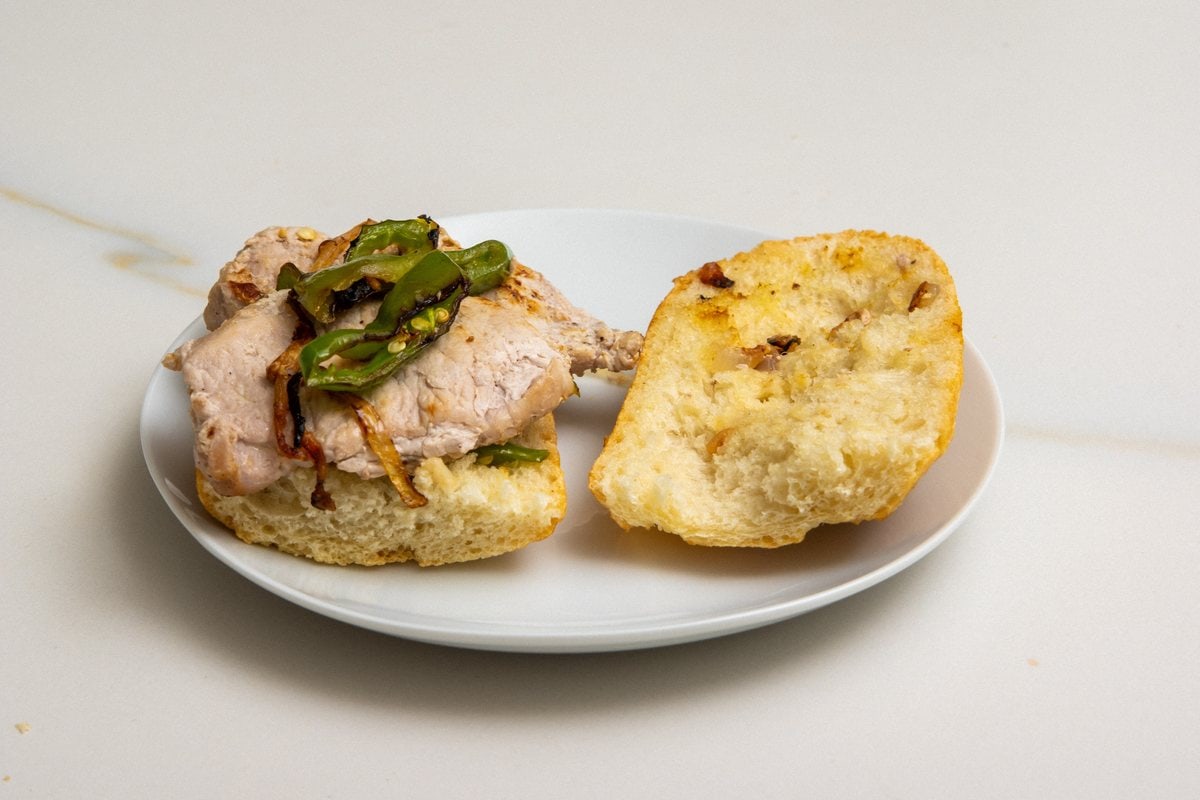
Serranito vs. Other Andalusian Sandwiches
The serranito has neighbors that often get confused with it online. Here’s how to tell them apart.
- Campero malagueño: Málaga’s favorite, built on a round Antequera-style mollete with ham, cheese, lettuce, tomato and mayonnaise, then pressed hot on a grill. No pork loin, no fried pepper.
- Montadito de serranito: the same fillings on a small roll, sized as a tapa rather than a meal.
- Flamenquín: Córdoba’s rolled, breaded and fried pork loin and ham. Similar ingredients, but no bread; read more about flamenquín.
For the bigger picture of what Spaniards eat on the go, browse our hub of Spanish street foods.
How to Make a Serranito at Home
A serranito is quick bar food, so the home version comes together in under an hour, including fries. Prepare the peppers while the fries cook, then sear the pork last and rest it before assembling.
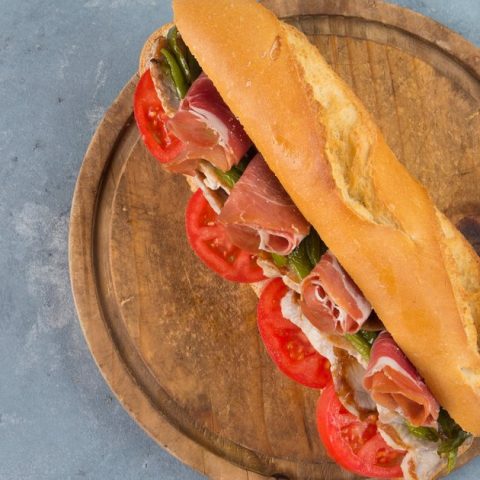
Serranito Sandwich (Seville Pork, Pepper and Serrano Ham Bocadillo)
Seville's classic bar sandwich: thin seared pork loin, slow-fried green peppers, tomato and jamón serrano on soft rolls, served with fries.
Ingredients
- 1 1/2 lb (680 g) russet potatoes, for fries (optional)
- Olive oil or neutral oil, for frying the potatoes (optional)
- 4 Italian frying peppers or Cubanelle peppers (about 12 oz / 340 g)
- 1/4 cup (60 ml) Spanish extra-virgin olive oil, divided
- 1 lb (450 g) boneless pork loin, cut into 8 slices about 1/4 inch (6 mm) thick
- 1 teaspoon (5 g) kosher salt, divided, plus more to taste
- 4 soft rolls, about 6 inches (15 cm) long (pan de viena, molletes, or soft Italian sub rolls)
- 1/4 cup (60 g) allioli or garlic mayonnaise (optional)
- 2 medium ripe tomatoes (about 12 oz / 340 g), sliced
- 8 thin slices jamón serrano (about 3 oz / 85 g)
Instructions
- If serving fries, cut the potatoes into sticks, fry them in hot oil until golden, drain, salt and keep warm in a 200°F (95°C) oven.
- Heat 3 tablespoons of the olive oil in a large skillet over medium-low heat. Pat the peppers dry and cut a slit in each. Add them to the oil and cook 10 to 12 minutes, turning occasionally, until the skins blister and the peppers are completely soft. Lower the heat if they darken too quickly; do not add water to the hot oil. Sprinkle with a pinch of salt, remove the stems and seeds, and tear or slice each pepper into strips.
- Warm the rolls in the oven with the fries for 3 to 4 minutes, just until warm but still soft. Split them lengthwise, leaving one side attached if possible.
- Season the pork slices with the remaining salt. Heat a cast-iron griddle or skillet over high heat and brush with the remaining 1 tablespoon olive oil. Sear the pork 1 to 2 minutes per side, until browned and at least 145°F (63°C) at the center, then rest for 3 minutes before assembling. Insert the thermometer from the side of each thin slice; allow longer cooking as needed.
- Spread the rolls with allioli, if using. Layer tomato slices on the bottom half, add 2 pork slices per roll, then the fried pepper strips, and finish with 2 slices of jamón serrano laid over the hot pork.
- Close the sandwiches, cut in half if you like, and serve right away with the fries.
Notes
Chicken version (serranito de pollo): use 1 lb (450 g) chicken breast, butterflied and pounded to 1/4 inch (6 mm), and sear 2 to 3 minutes per side until the center reaches 165°F (74°C), allowing longer as needed. Prosciutto can replace jamón serrano. Anaheim peppers work if you can't find Italian frying peppers or Cubanelles; avoid thick bell peppers. For 2 servings, halve everything. For a crowd, fry the peppers up to a day ahead, refrigerate, and rewarm in the skillet; sear the pork just before serving. Leftover pork and peppers keep 2 days refrigerated, but assemble sandwiches fresh.
Timing: About 45 minutes including fries, or about 25 minutes without. Prepare the peppers while the fries cook; allow longer for extra batches.
Tips for getting it right
- Slice the pork thin. About 1/4 inch (6 mm) is ideal. Partially freezing the loin for 20 minutes makes clean slicing easier.
- Get the pan very hot. Thin pork may need only a minute or two per side, but verify 145°F (63°C) at the center and rest for 3 minutes before serving.
- Be patient with the peppers. Pat the peppers dry, slit each one and fry over moderate heat until soft and blistered. Lower the heat if they darken too quickly; do not add water to hot oil.
- Ham goes on last. Lay the serrano slices over the hot pork so they warm through without cooking.
- Warm the bread, don’t toast it hard. A few minutes in the oven or on the griddle is enough to keep it soft.
Buying Guide: US Substitutes That Work
You can build a very good serranito from a regular American supermarket. Here’s what to look for.
Bread
Look for soft Italian sub rolls, bolillos, or soft French rolls about 6 inches long. Avoid crusty artisan baguettes; they fight the fillings and scrape your mouth.
Peppers
Cubanelle peppers, often sold as Italian frying peppers, are the closest match. They’re thin-walled, sweet and very mild, which is exactly what you want. Anaheim peppers work in a pinch; bell peppers are too thick and watery.
Pork
Buy boneless center-cut pork loin and slice it yourself, or look for thin-cut boneless loin chops. Pound thicker chops between plastic wrap. Tenderloin also works but is pricier.
Jamón serrano
Pre-sliced Spanish serrano ham is sold at many supermarkets and warehouse clubs. You can also find sliced jamón serrano on Amazon. AmigoFoods earns a commission on qualifying Amazon purchases. Prosciutto is the easiest substitute, though it’s usually milder and sweeter.
Olive oil and tools
Fry the peppers in a fruity Spanish extra-virgin olive oil, like those in our Spanish olive oil guide or this selection of Spanish extra-virgin olive oils.
A cast-iron griddle pan is the best home stand-in for a bar plancha. If you want to make allioli from scratch, a heavy mortar and pestle makes it easier. For other pantry staples, browse our curated list of Spanish foods on Amazon.
Popular Serranito Variations
- Serranito de pollo: chicken breast fillets instead of pork, cooked to 165°F (74°C) at the center. Common in Seville bars today.
- With tortilla: a thin French-style omelet or a slice of Spanish tortilla added inside.
- With allioli or mojo picón: a swipe of garlicky or spicy sauce on the bread.
- Without tomato: some bars skip it for a drier, meatier sandwich.
- Ibérico upgrade: presa ibérica in place of the loin, or ibérico ham in place of serrano. Hermanos Morales lists presa ibérica among its versions.
- Fries inside: not traditional, but some people tuck a few fries into the sandwich.
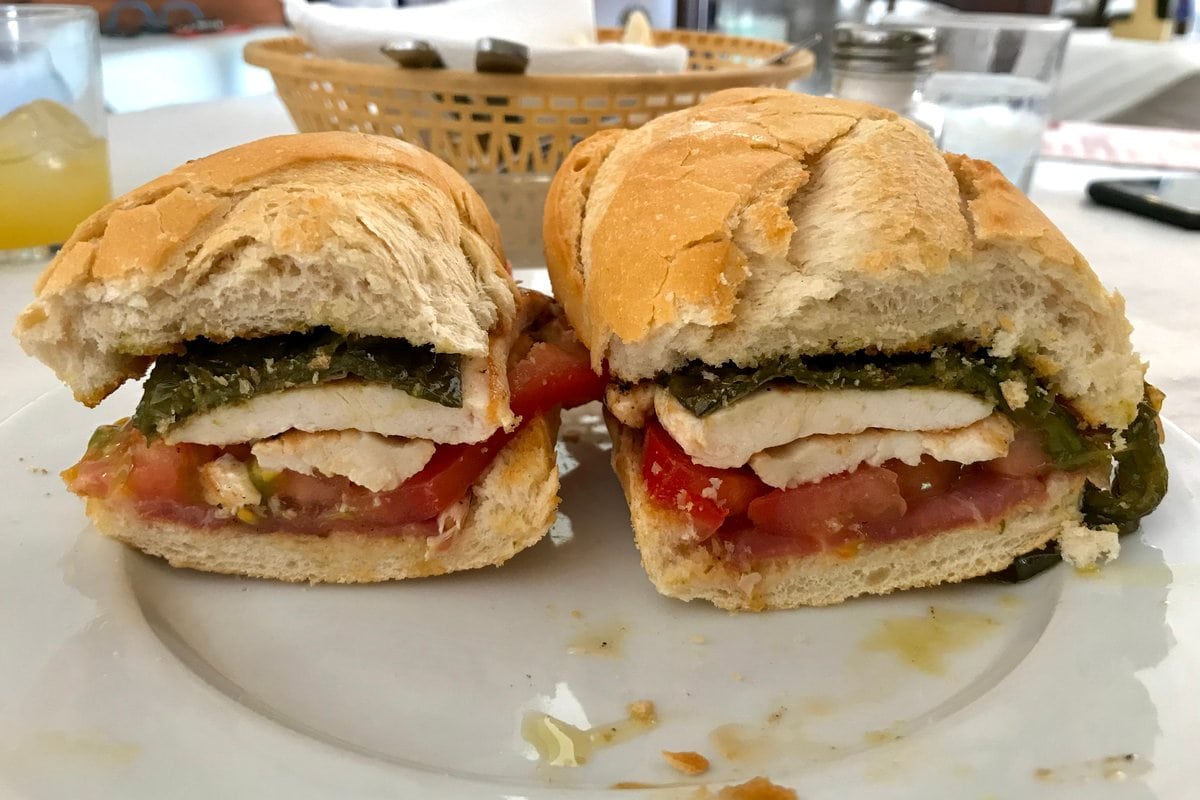
How to Serve a Serranito
In Seville, the serranito is served whole or halved on a plate, with patatas fritas alongside. Frozen fries are common in bars, but homemade fries fried in olive oil are a real upgrade. For a saucier side, try patatas bravas.
It’s eaten as a hearty late lunch, a quick dinner, or a late-night bite. Diario de Sevilla has described it as the sandwich that saved many late lunches in the city.
What to drink
- An ice-cold lager, the default in Seville bars.
- Tinto de verano, red wine with lemon soda, on hot days.
- A dry fino or manzanilla sherry if you’re serving it as part of a tapas spread.
To round out a Spanish-style meal, add a bowl of chilled salmorejo, another Andalusian classic.
The World’s Longest Serranito
On September 29, 2023, José Luis Cabeza of Mesones del Serranito organized a serranito stretching the length of Seville’s Triana Bridge to mark 40 years of his business. La Voz del Sur reported that a notary measured it at 158.7 meters (about 520 feet).
Canal Sur and other outlets described it as a Guinness record. About 800 portions were sold to benefit the charitable work of six Arenal-district hermandades (religious brotherhoods).
Serranito FAQ
What is a serranito sandwich made of?
A classic serranito has thin seared pork loin, a fried green Italian-style pepper, sliced tomato and jamón serrano on a soft Andalusian roll. Chicken often replaces the pork, and allioli or mayonnaise is a common extra.
Who invented the serranito?
Nobody knows for certain. Most sources place its birth in Seville neighborhood bars in the 1970s. José Luis Cabeza (José Luis del Serranito) trademarked the name after opening his first mesón in 1983, and the Hermanos Morales restaurant also claims to be the original creator.
Why is it called a serranito?
The name refers to the jamón serrano in the sandwich. Serranito is an affectionate diminutive, roughly “little serrano.”
What bread is best for a serranito?
In Andalusia it’s a soft pan de viena or a mollete. In the US, soft Italian sub rolls, bolillos or soft French rolls are the best substitutes.
Can I use prosciutto instead of jamón serrano?
Yes. Prosciutto is the easiest swap and works well, although it’s usually a little sweeter and less intense than Spanish serrano ham.
What’s the difference between a bocadillo and a sandwich?
In Spain, a bocadillo is made on a split roll or piece of baguette-style bread. A sándwich usually means sliced sandwich bread. The serranito is a bocadillo.
What do you serve with a serranito?
French fries are the standard side in Seville. A cold beer or tinto de verano is the classic drink.
Bring Seville’s Favorite Sandwich Home
The serranito proves that a few good ingredients, cooked with care, beat a complicated recipe. Sear the pork fast, fry the peppers slowly, and don’t skimp on the ham.
Whoever invented it, the result is one of Spain’s great sandwiches, and it’s easy to make on a weeknight. For more ideas, explore our roundup of Spanish tapas.
More Spanish Foods
See all →
Jorge Garcia is the founder of AmigoFoods, where he has spent over 20 years helping readers discover authentic Latin American and Spanish cuisine. Raised in a Cuban-American household, Jorge learned to cook at the hands of his mother and grandmother, carrying forward generations of family recipes. That heritage, backed by his family’s four-generation history in the Latin food industry, inspired him to launch AmigoFoods in 2003. With more than 1,000 published articles on recipes, ingredients, and food culture, Jorge’s mission is simple: make authentic Latin cooking approachable for home cooks everywhere while honoring the traditions behind every dish.