
On this page
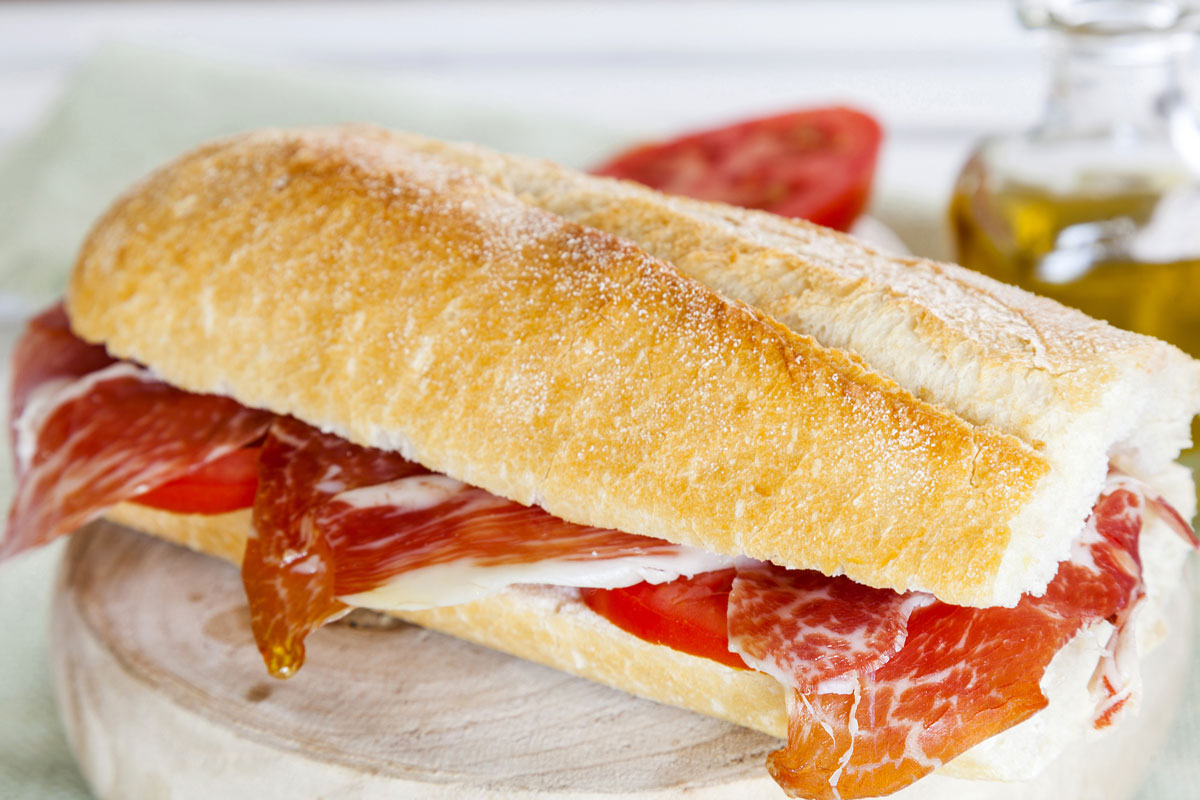
A bocadillo is Spain’s everyday sandwich: a crusty Spanish baguette split lengthwise and filled with one or two good things, like jamón, a wedge of potato tortilla, fried calamari or chorizo. Below is what makes a bocadillo different from a sándwich, the bread to use, the classic fillings from Madrid to Valencia, and a recipe for the simplest and most popular of them all, the bocadillo de jamón with tomato.
Bocadillo at a Glance
What Is a Bocadillo?

“Bocadillo” literally means “little bite,” from bocado (a bite), which comes from boca (mouth). In Spain, it’s the word for a sandwich made on a barra de pan, the crusty, airy loaf that Spain eats every day. The bread is split lengthwise, filled, and eaten in your hands, often wrapped in paper or foil.
What makes a bocadillo Spanish is restraint. Where an American sub stacks five or six fillings, a bocadillo usually has one star ingredient, maybe two: jamón alone, a wedge of tortilla, a heap of fried squid, slices of chorizo. Butter is rare. Instead, the bread might be rubbed with tomato and olive oil, or brushed with a little alioli.
It’s one of the most democratic foods in Spain. Bars serve bocadillos at the counter from breakfast until late, schoolkids carry one in their backpacks, and families pack them for the beach, road trips and football matches. In slang it’s a bocata; in Catalan, an entrepà.
In Colombia, “bocadillo” means something completely different: a firm, sweet guava paste, often sold in small bars wrapped in bijao leaves (the famous bocadillo veleño from Vélez, Santander) and eaten with fresh cheese. This page is about the Spanish sandwich. For the fruit behind the sweet, see our guide to guava (guayaba).
Bocadillo vs. Sándwich vs. Montadito vs. Bocata
Spaniards are precise about sandwich names, and the bread decides the word.
| Name | Bread | What it is |
|---|---|---|
| Bocadillo | Barra de pan (crusty Spanish baguette) | The everyday split-loaf sandwich, usually a half or third of a barra. |
| Bocata | Same as a bocadillo | Casual, slangy word for a bocadillo, usually a big one. |
| Sándwich | Pan de molde (sliced sandwich bread) | Sliced-bread sandwich, often toasted, like the ham-and-cheese sándwich mixto. |
| Montadito | A slice of bread or a small roll | Tapa-size, two or three bites, sold by the piece in bars. |
| Pulga / pulguita | Small, soft mini roll | A miniature bocadillo, popular at parties and in tapas bars. |
The Bread: Barra de Pan

The standard bocadillo bread is the barra de pan, a long loaf with a thin, crackly crust and a light, open crumb. It’s a little wider and softer than a French baguette. Bakeries also sell the pistola (shorter and thicker), the chapata (Spain’s ciabatta) and soft, slightly sweet pan de Viena, which some bars use for hot fillings. See our guide to Spanish breakfast foods for how the barra fits into the day.
In the US, the best substitute is a fresh French baguette, ideally a fatter “demi” or bakery batard rather than a skinny one. A soft-crumbed ciabatta also works. Whatever you buy, use it the same day: day-old bread is for migas, not bocadillos.
When Spaniards Eat Bocadillos
- Almuerzo (mid-morning): the second breakfast around 10 or 11 a.m. In Valencia, l’almuerzo is a near-religious tradition of a big bocadillo, olives and peanuts, a drink and a coffee to finish.
- Merienda (afternoon snack): the classic after-school bocadillo, often of chorizo, cheese or chocolate.
- On the go: train rides, beach days, hikes and football matches. A bocadillo wrapped in foil is Spain’s original fast food.
- Late night: a bocadillo de calamares or a serranito after the bars is a rite of passage in Madrid and Seville.
Classic Bocadillos from Around Spain
Bocadillo de jamón
- Everywhere
- The classic
Thin slices of cured ham on fresh bread, often rubbed with tomato and olive oil first (in Catalonia that’s pa amb tomàquet, our pan con tomate). Use jamón serrano for everyday or jamón ibérico for a splurge. If you can’t find good ham locally, Monte Nevado sliced serrano ham (24-month cure) and Cinco Jotas hand-carved ibérico de bellota both ship pre-sliced. The recipe card below is for this one.
Bocadillo de calamares
- Madrid
- Plaza Mayor favorite

Madrid’s signature: a roll stuffed with hot, crisp rings of battered squid, sold from the bars around the Plaza Mayor. Purists add nothing; others add a squeeze of lemon or a smear of alioli or mayo. Make the squid with our calamares a la romana recipe.
Bocadillo de tortilla
- Everywhere
- Vegetarian
A thick wedge of Spanish potato omelet in bread. It sounds like a carb on carb, and it is, and it’s wonderful, especially with a little tomato rubbed on the bread. Use leftover tortilla española at room temperature.
Bocadillo de lomo
- Bars everywhere
- Hot
Thin slices of marinated pork loin (lomo adobado), seared on the plancha. It comes plain, con queso, or con pimientos with fried green peppers.
Serranito
- Seville & Andalusia
- Hot
Andalusia’s upgrade of the lomo bocadillo: seared pork loin, a fried green Italian pepper, a slice of jamón serrano and often tomato. Full recipe in our serranito guide.
Pepito de ternera
- Madrid
- Hot
A thin beef steak, seared fast and tucked into a roll, sometimes with fried peppers or a slice of cheese. A bar-counter classic.
Bocadillo de chorizo
- Everywhere
- Merienda classic

Thin slices of cured Spanish chorizo, nothing else. It’s the classic school-day merienda. A pre-sliced spicy Pamplona-style chorizo makes it a two-minute lunch. More on Spain’s cured sausages in our cured meats guide.
Bocadillo de fuet
- Catalonia
- No cooking
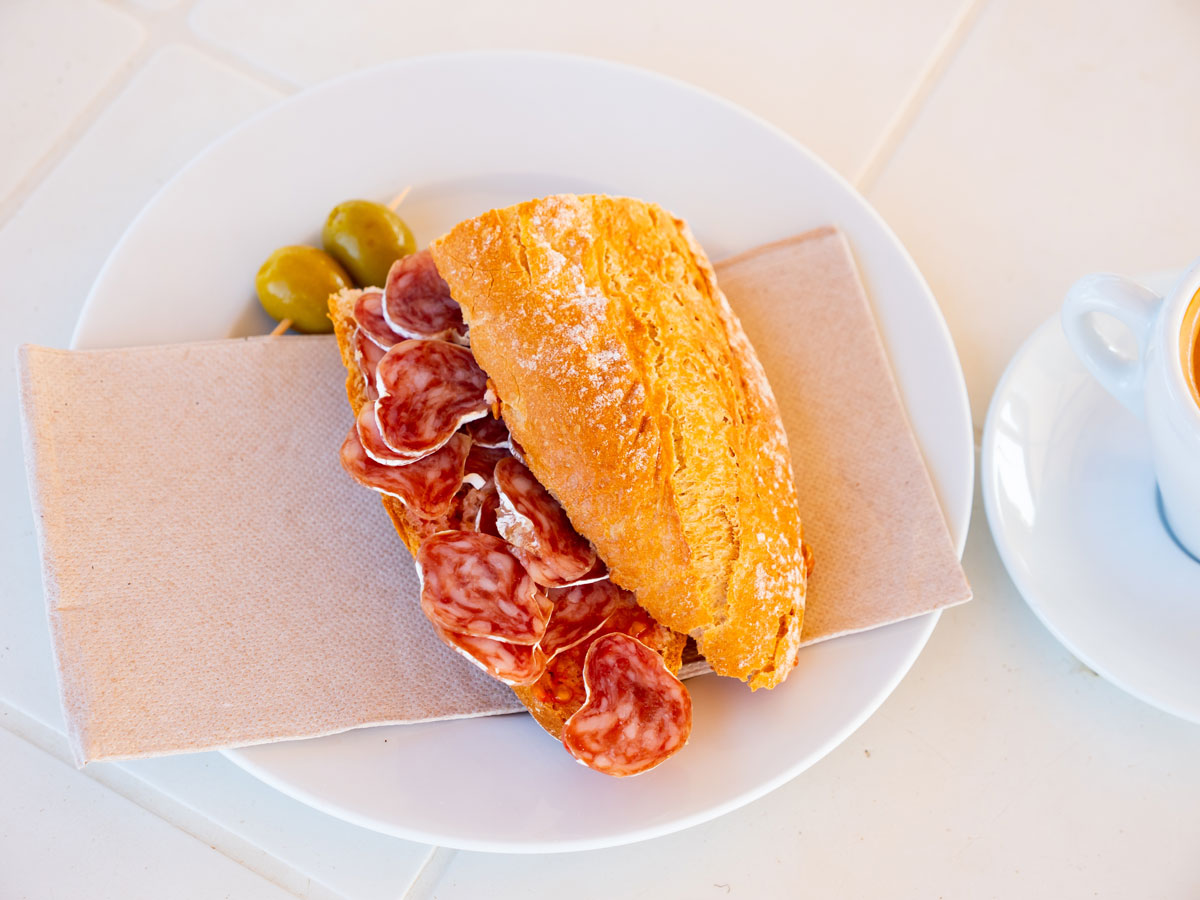
Catalonia’s thin, mild dry-cured pork sausage, sliced and layered on tomato-rubbed bread. Read more about fuet.
Bocadillo de queso manchego
- La Mancha
- Vegetarian
Thick slices of aged Manchego, sometimes with a few slices of membrillo for a sweet-salty bite. Pair it with ham and you have a bocadillo de jamón y queso. A Spanish cheese assortment with ibérico ham and loin covers both.
Bocadillo de atún
- All over Spain
- No cooking
Good Spanish canned tuna in olive oil, often with roasted red piquillo peppers, olives or a hard-boiled egg. Spanish conservas are a different league from supermarket tuna; Ortiz bonito del norte in olive oil is the classic.
Bocadillo vegetal
- Everywhere
- Fresh
The Spanish “salad sandwich”: lettuce, tomato, sliced hard-boiled egg and mayo, usually with tuna or white asparagus. Despite the name, many versions aren’t vegetarian, so ask.
Bocadillo de sobrasada
- Mallorca
- Spreadable
Mallorca’s soft, paprika-red cured sausage, spread on bread like a pâté. Some islanders add a drizzle of honey.
Brascada
- Valencia
- Almuerzo star
A Valencian almuerzo favorite: strips of grilled beef, sautéed onion and jamón serrano in a crusty roll.
How to Make a Bocadillo de Jamón

This is the bocadillo most Spaniards grew up on. Exact amounts are in the recipe card.
1. Warm the bread (optional)
If your baguette isn’t fresh from the oven, crisp it in a 400°F oven for 3 minutes. Let it cool for a minute so the ham doesn’t sweat.
2. Split it lengthwise
Cut the loaf in half crosswise, one piece per person, then split each piece through the side with a serrated knife, leaving it hinged if you like.
3. Rub with tomato, oil and salt
Halve a very ripe tomato and rub the cut side hard into the crumb until the bread turns pink, or grate the tomato and spread the pulp. Drizzle with extra virgin olive oil and add a pinch of flaky salt. A peppery Spanish oil like this cold-pressed Spanish EVOO makes a noticeable difference here.
4. Layer the jamón loosely
Drape 2 to 3 ounces of thin jamón slices in loose folds rather than flat sheets. Folds trap air and make the sandwich feel generous and tender. Close and eat right away.
As an Amazon Associate, AmigoFoods earns from qualifying purchases.
Tips for a Better Bocadillo
Bread is everything
Use bread baked the same day. A crisp crust and soft middle matter more than any filling.
Room-temperature ham
Cold jamón tastes waxy. Twenty minutes on the counter lets the fat turn silky.
Don’t overfill
A bocadillo should be easy to bite. One or two ingredients, generously but not piled high.
Wrap it for the road
Wrap in paper, then foil. Skip the tomato if it will sit more than an hour, or the bread goes soggy.
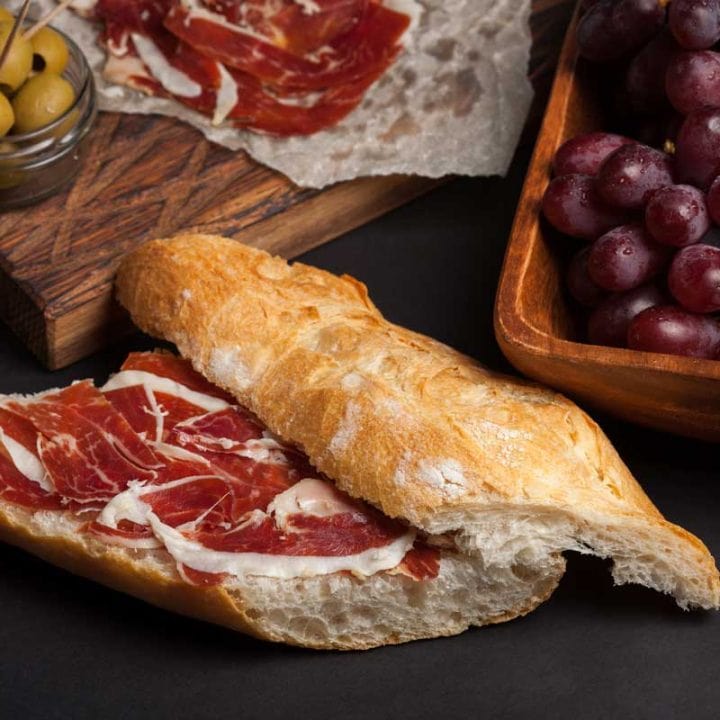
Bocadillo de Jamón con Tomate
The classic Spanish bocadillo: a crusty barra rubbed with ripe tomato, olive oil and salt, then filled with loose folds of jamón serrano or ibérico. Ten minutes, no cooking.
Ingredients
- 1 fresh barra de pan or French baguette (about 12 inches)
- 1 very ripe medium tomato
- 1 small garlic clove, halved (optional)
- 2 tablespoons Spanish extra virgin olive oil
- Flaky sea salt, to taste
- 4 to 6 ounces jamón serrano or jamón ibérico, thinly sliced
Instructions
- Temper the ham. Take the jamón out of the fridge 20 to 30 minutes before you start so the fat softens.
- Warm the bread (optional). If the bread is not fresh from the bakery, crisp it in a 400°F oven for 3 minutes, then let it cool for 1 minute.
- Cut the bread. Cut the baguette in half crosswise, then split each piece lengthwise with a serrated knife.
- Rub with tomato. If using garlic, rub the cut side of the clove lightly over the bread first. Halve the tomato and rub the cut sides firmly into the crumb until it turns pink (or grate the tomato and spread the pulp, discarding the skin).
- Oil and salt. Drizzle each piece with olive oil and sprinkle with flaky salt.
- Fill and serve. Drape the jamón over the bottom halves in loose folds, close the bocadillos and eat right away.
Notes
Bread: A Spanish barra or a fresh, slightly fat French baguette is best. Use bread baked the same day.
Ham: Jamón serrano for everyday; jamón ibérico for a special occasion.
Packing it: Skip the tomato if the bocadillo will sit for more than an hour, or the bread goes soggy. Wrap in paper, then foil.
Bocadillo FAQ
What does bocadillo mean in English?
It means “sandwich,” specifically one made on a baguette-style loaf. Literally, it’s “little bite,” from bocado (a bite), which comes from boca, mouth.
Is a bocadillo the same as a sandwich?
In English, yes. In Spain, no: a bocadillo is made on a crusty barra, while a sándwich is made on sliced sandwich bread and is often toasted.
What is the most popular bocadillo in Spain?
The bocadillo de jamón and the bocadillo de tortilla are the everyday staples nearly everywhere. Regionally, Madrid is known for bocadillo de calamares, Seville for the serranito, and Valencia for its big almuerzo bocadillos.
What is a bocata?
Just a casual, slangy word for a bocadillo, usually implying a big one.
What bread is used for a bocadillo?
A Spanish barra de pan, a crusty, airy loaf similar to a slightly fatter French baguette. A fresh baguette or ciabatta is the best substitute in the US.
What is bocadillo in Colombia?
In Colombia, bocadillo is a firm guava paste sweet, often wrapped in bijao leaves and eaten with cheese. It has nothing to do with the Spanish sandwich besides the name.
Can I make a bocadillo ahead?
Dry fillings like chorizo, fuet or cheese hold well for a few hours wrapped in paper and foil. Skip the tomato rub if it will wait, and add it just before eating.
Sources
More Spanish Foods
See all →
Jorge Garcia is the founder of AmigoFoods, where he has spent over 20 years helping readers discover authentic Latin American and Spanish cuisine. Raised in a Cuban-American household, Jorge learned to cook at the hands of his mother and grandmother, carrying forward generations of family recipes. That heritage, backed by his family’s four-generation history in the Latin food industry, inspired him to launch AmigoFoods in 2003. With more than 1,000 published articles on recipes, ingredients, and food culture, Jorge’s mission is simple: make authentic Latin cooking approachable for home cooks everywhere while honoring the traditions behind every dish.