
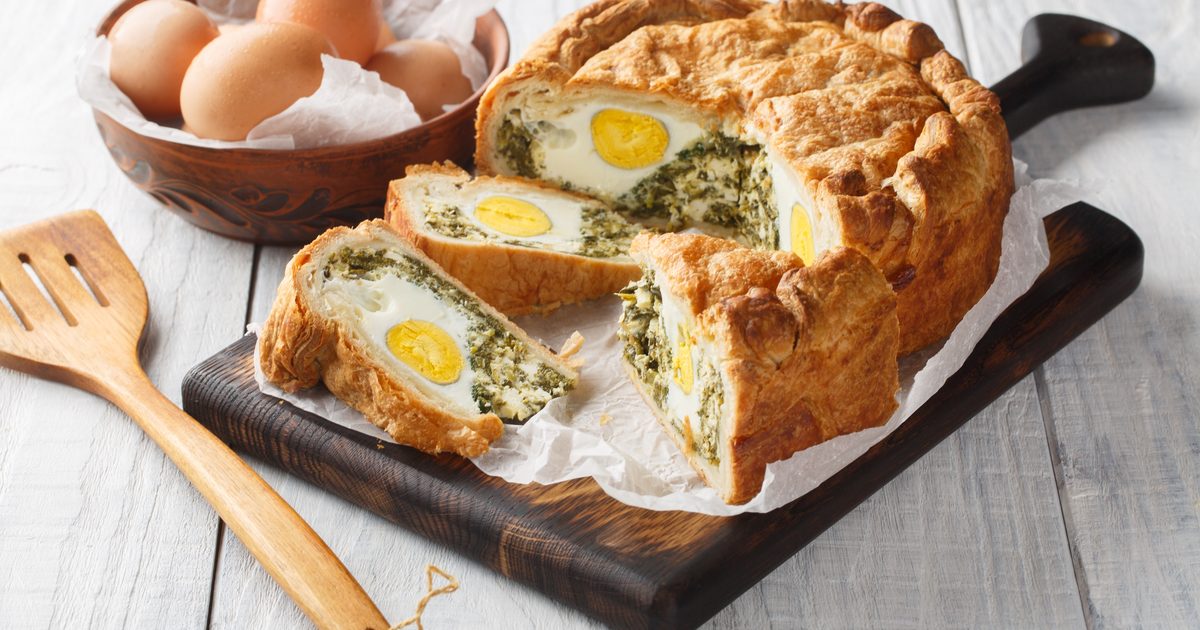
Cut into a torta pascualina and every slice shows the same surprise: a whole egg set into a green filling of chard and cheese, wrapped in a golden crust. It is one of the most loved savory pies in Uruguay and Argentina, baked at home for Holy Week and sold by the slice in bakeries all year long.
It came to the Río de la Plata with Italian immigrants and has been part of the local table ever since. Here is its story and how to make it.
Torta Pascualina at a Glance
From Genoa to Montevideo
The pie began in Liguria, the region around Genoa in northern Italy, as the torta pasqualina, the Easter pie. Pasqua means Easter in Italian, and the Spanish name keeps the reference: Pascua.
Italians began arriving in Uruguay and Argentina in large numbers in the late 1800s, and they brought the recipe with them. Along with pizza, fainá and fresh pasta, it became part of everyday cooking in Montevideo and Buenos Aires.
The Legend of the 33 Layers
In the old Ligurian tradition, skilled cooks built the crust from many paper-thin sheets of dough brushed with oil. A popular story says there were 33, one for each year of Christ’s life. Few home cooks go that far today. Most use two rounds of store-bought pastry, sold in Uruguay as tapas de pascualina.
Chard or Spinach?
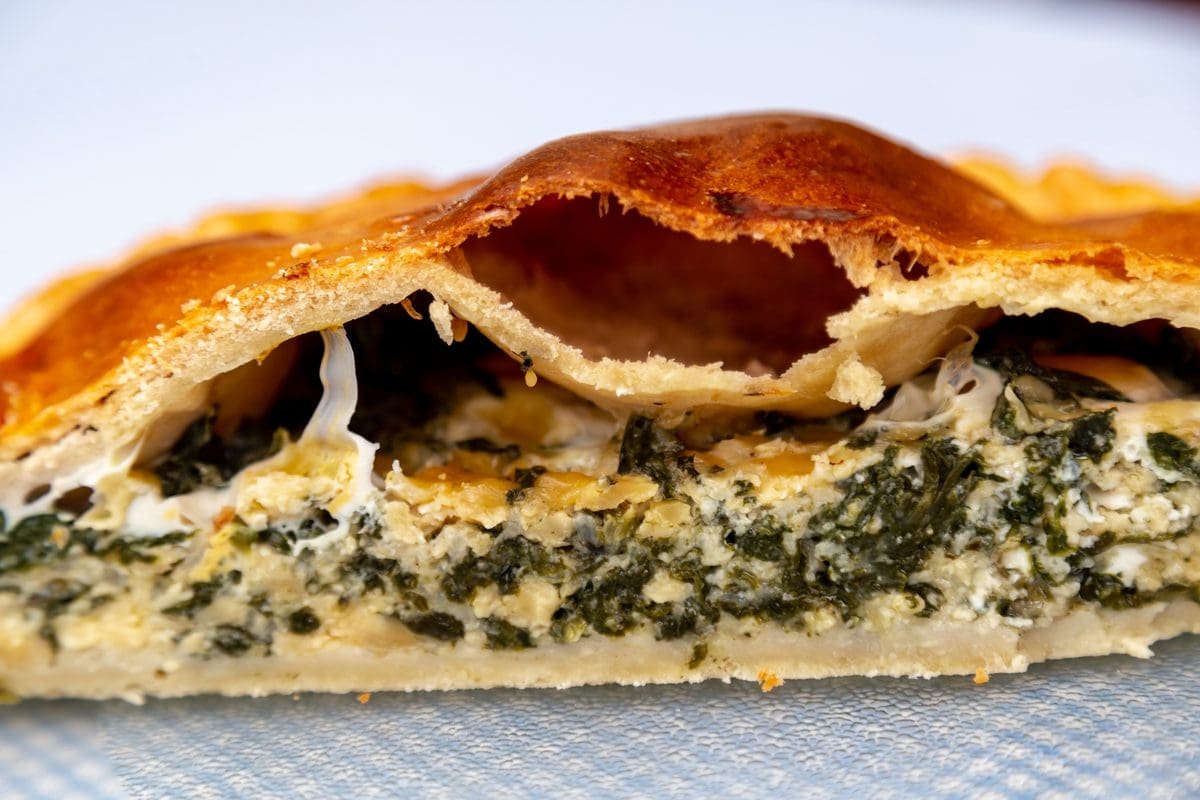
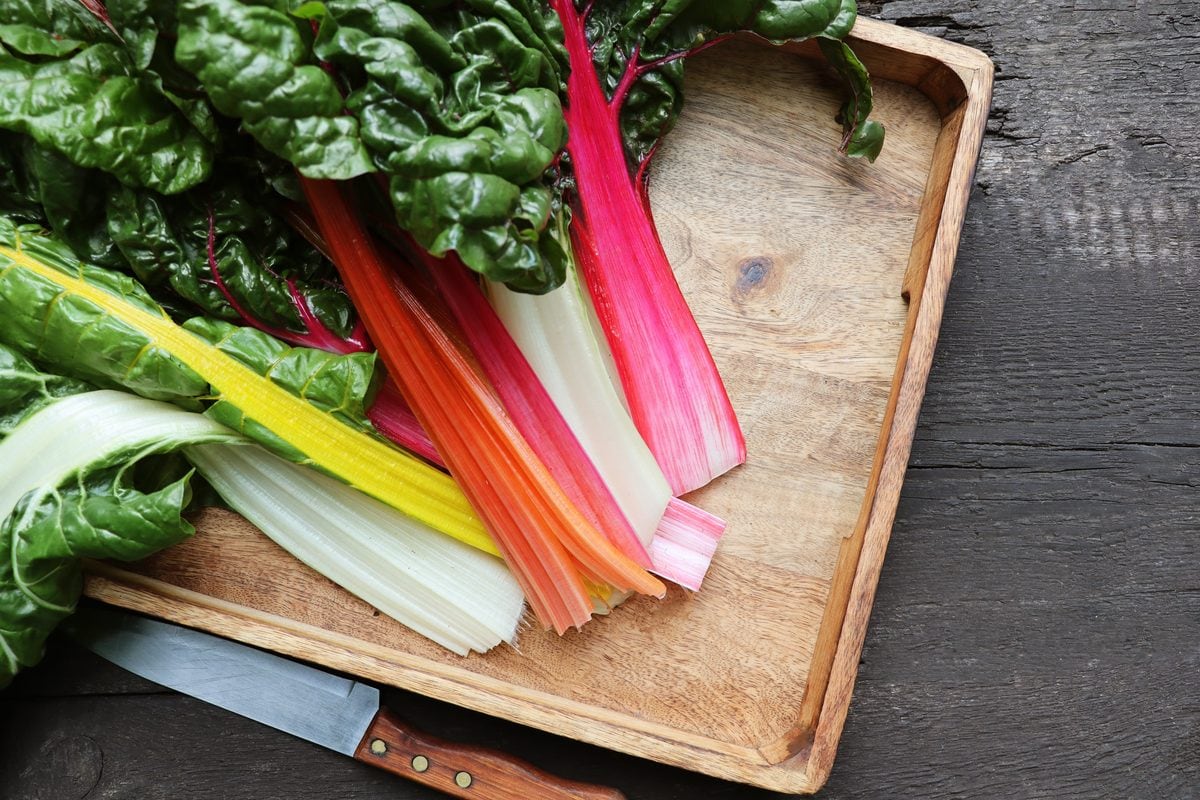
Both are traditional. Acelga, Swiss chard, is the classic choice in Uruguay. It has a mild, earthy flavor and holds its shape when cooked. Spinach makes a softer, darker filling. Either way, the greens are blanched, squeezed very dry and chopped, then mixed with onion, garlic, cheese, eggs and a pinch of nutmeg.
The Eggs
The whole eggs are what make a pascualina. Most home cooks make wells in the filling and crack raw eggs into them, so they bake along with the pie and each slice shows a neat cross-section of white and yolk. Some prefer to tuck in peeled hard-boiled eggs instead. Both are correct.
When Uruguayans Eat It
Pascualina is traditional during Semana Santa, Holy Week, when many families avoid meat. The rest of the year it is an easy lunch: bakeries in Montevideo sell it cut into rectangles to take away, and it is just as good cold as warm, which makes it a favorite for picnics.
How It’s Made
The chard leaves are blanched for 3 minutes, squeezed dry and chopped. Onion and garlic cook in olive oil, then the chard goes in with salt, pepper and nutmeg. Once cooled, the mix is combined with two beaten eggs, ricotta and Parmesan.
A pie dish is lined with one round of pastry and filled, five wells are made and an egg is cracked into each, and the second round goes on top. After a brush of beaten egg and a few holes pricked in the lid, it bakes at 375°F for about 45 minutes. It needs 15 minutes of rest before slicing.
Torta Pascualina FAQ
Can I freeze torta pascualina?
Yes, before or after baking. Wrap it well and thaw it in the fridge before baking or reheating.
What pastry should I use?
Store-bought pie crust or puff pastry both work. Puff pastry gives a flakier crust.
Is it served hot or cold?
Both. Many Uruguayans prefer it warm, but it is excellent at room temperature.
Torta Pascualina (Uruguayan Chard and Egg Pie)
A flaky pie filled with chard, cheese and whole eggs that bake right into the filling. Uruguay's Easter classic.
Ingredients
- 2 bunches Swiss chard (about 2 lb)
- 2 tablespoons olive oil, divided
- 1 medium onion, finely chopped
- 2 garlic cloves, minced
- 1 teaspoon salt
- ½ teaspoon black pepper
- ¼ teaspoon ground nutmeg
- 8 large eggs, divided (2 for the filling, 5 whole, 1 for brushing)
- 1 cup whole-milk ricotta
- ½ cup grated Parmesan
- 2 rounds (9 to 10 inch) pie crust or puff pastry
Instructions
- Preheat the oven to 375°F. Strip the chard leaves from the stems. Blanch the leaves in boiling salted water for 3 minutes, drain, squeeze very dry and chop.
- Heat 1 tablespoon of the oil in a skillet. Cook the onion for about 7 minutes, until translucent, then add the garlic and cook 1 minute. Stir in the chard, salt, pepper and nutmeg. Let cool for 10 minutes.
- Beat 2 of the eggs and mix them into the chard with the ricotta and Parmesan.
- Grease a 9-inch deep pie dish with the remaining oil and line it with one pastry round. Spread in the filling, make 5 wells and crack an egg into each.
- Cover with the second pastry round and seal the edges. Brush with the last egg, beaten, and prick the top a few times with a fork.
- Bake for 45 to 50 minutes, until golden. Let rest for 15 minutes before slicing.
Notes
Spinach instead of chard: use 20 oz frozen spinach, thawed and squeezed very dry.
Hard-boiled eggs: instead of cracking raw eggs into the wells, you can tuck in 5 peeled hard-boiled eggs.
The pie freezes well before or after baking.
Keep Cooking Uruguayan
For a bigger Uruguayan spread, pair pascualina with a chivito sandwich or a plate of tortas fritas, and finish with chajá, the national cake. Find more in our guide to Uruguayan desserts and the full roundup of Uruguayan food, or browse everything on the Uruguayan food hub.
More Main Course
See all →
Jorge Garcia is the founder of AmigoFoods, where he has spent over 20 years helping readers discover authentic Latin American and Spanish cuisine. Raised in a Cuban-American household, Jorge learned to cook at the hands of his mother and grandmother, carrying forward generations of family recipes. That heritage, backed by his family’s four-generation history in the Latin food industry, inspired him to launch AmigoFoods in 2003. With more than 1,000 published articles on recipes, ingredients, and food culture, Jorge’s mission is simple: make authentic Latin cooking approachable for home cooks everywhere while honoring the traditions behind every dish.