
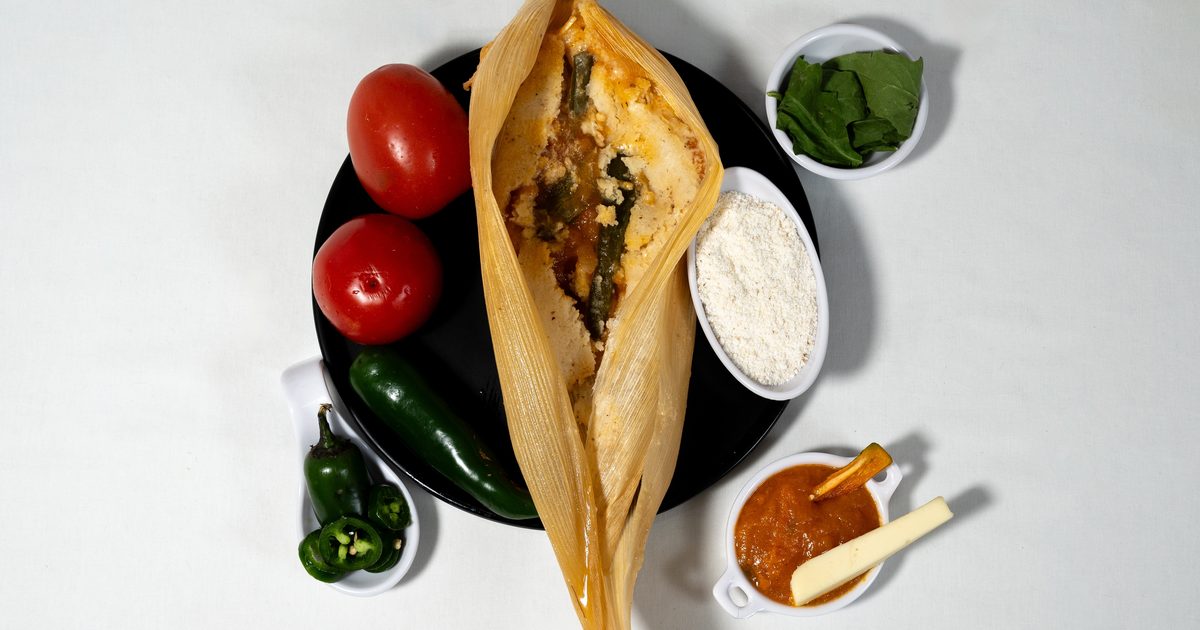
Tamales de rajas (tamales de rajas con queso) are corn husks spread with soft, fluffy masa and filled with strips of roasted poblano chile, a stick of melting Oaxaca cheese and a spoonful of tomato salsa, then steamed until the masa sets and the cheese melts into the chiles. They are the classic meatless tamal of central Mexico, sold next to the green chicken and red pork tamales at every tamal stand, and a favorite for Christmas Eve and Candelaria. This recipe makes about 24 tamales and is fully vegetarian: the masa is beaten with vegetable shortening and vegetable broth. Below is how to roast and peel the poblanos, the cooked tomato-jalapeño salsa, how much filling goes in each tamal, how to keep the cheese from turning rubbery, storing and reheating, variations and the full recipe.
Tamales de Rajas at a Glance
The short version: Char 5 poblanos, sweat them in a covered bowl, peel, seed and cut them into strips, then cook them briefly with a sliced onion. Simmer and blend tomatoes and jalapeños into a thick salsa. Beat 1 cup shortening until fluffy, then beat in 4 cups masa harina, baking powder, salt and about 3½ cups warm vegetable broth. Spread about 1/4 cup masa on each soaked husk, add 1 tablespoon salsa, a few rajas and a strip of Oaxaca cheese, fold, stand the tamales upright and steam 60 to 75 minutes, until the husk peels away cleanly. Rest 15 minutes.
AmigoFoods may earn a commission from qualifying Amazon purchases made through links on this page.
What are tamales de rajas?
Rajas means strips or slices, and in Mexican cooking it almost always means strips of roasted, peeled poblano chile. A tamal de rajas is a corn-husk tamal with those strips as the filling, nearly always with cheese, so tamales de rajas and tamales de rajas con queso are the same thing at most tamal stands. The cheese is usually Oaxaca cheese (quesillo), a mild, stringy melting cheese, and many cooks add a spoonful of salsa, either a red tomato salsa or a green tomatillo salsa.
They are the tamales to make when you want something lighter than meat, when you are feeding vegetarians, or when you want a third kind on the platter next to the red and green ones. Poblanos are large, dark green and only mildly hot (1,000 to 2,000 Scoville heat units, according to our guide to Mexican ingredients), and roasting them gives the filling a smoky flavor. For the full background on tamales and the red chile pork version, see our tamales recipe and guide.
Rajas tamales vs. other savory tamales
The masa, the husks and the steaming are the same for every savory Mexican tamal. Only the filling changes.
| Tamales de rajas con queso | Tamales verdes (chicken) | Tamales rojos (pork) | |
|---|---|---|---|
| Filling | Roasted poblano strips, onion, Oaxaca cheese, a little salsa | Shredded chicken in tomatillo salsa verde | Pork shoulder in red chile sauce |
| Flavor | Smoky, mild chile heat, milky cheese | Tart, bright, green-chile heat | Earthy, deep dried-chile flavor |
| Filling time | About 45 minutes (roast chiles, cook salsa) | About 45 minutes | Longer: the pork simmers until tender |
| Vegetarian? | Yes, with shortening and vegetable broth in the masa | No | No |
| Recipe | This page | Our chicken tamales | Our red chile pork tamales |
If you are making more than one kind on the same day, tie the rajas tamales with a strip of husk or mark them with a twist at the tip so you can tell them apart in the steamer.
The ingredients
For the masa
- Masa harina for tamales (4 cups, about 480 g). This is dried, ground nixtamalized corn. A bag labeled “for tamales” is ground a little coarser than tortilla masa harina and gives a fluffier tamal; regular masa harina works too. Cornmeal and precooked arepa flour do not work. Our Harina P.A.N. vs. Maseca guide explains the difference.
- Vegetable shortening (1 cup, about 205 g). It keeps the tamales vegetarian and beats up light, like lard. If you do not need them vegetarian, lard is the traditional fat and gives more flavor.
- Baking powder (2 teaspoons) for lift, and salt (2 teaspoons).
- Warm vegetable broth (3½ to 4 cups). Use low-sodium broth so you can control the salt. Chicken broth is common in Mexico if you are not cooking for vegetarians.
For the filling
- Poblano chiles (5 large). Choose firm, glossy, dark green chiles with smooth sides; they char and peel more evenly.
- White onion (1, thinly sliced) and oil (1 tablespoon) to cook with the rajas.
- Oaxaca cheese (1 lb). It melts without turning greasy. Monterey Jack or a whole-milk mozzarella are the usual substitutes.
- Tomato-jalapeño salsa (recipe below): 1½ lb ripe tomatoes, 2 jalapeños, a little onion, a garlic clove, salt and oil.
Plus
- Dried corn husks (about 30 large ones, plus extras to line the steamer). A 1 lb bag has far more than you need, and the rest keeps for months in the pantry.

How to make tamales de rajas
The order matters. Roast the poblanos and make the salsa first, so both have time to cool while you soak the husks and beat the masa. A warm filling softens the masa and makes it harder to fold.
1. Roast and peel the poblanos
Char the poblanos directly over a gas flame, on a hot grill or under the broiler, turning them with tongs, until the skin is blistered and blackened all over, 8 to 10 minutes. Put them in a bowl, cover tightly with a plate or plastic wrap and let them sweat 10 to 15 minutes. The steam loosens the skin.
Rub off the charred skin with your fingers or a paper towel. Do not rinse them under the tap, which washes away the smoky flavor. Pull out the stems, slit the chiles open and scrape out the seeds and veins. Cut them into strips about 1/4 inch wide and 2 to 3 inches long.
2. Cook the rajas with onion
Heat 1 tablespoon oil in a skillet over medium heat. Add 1 thinly sliced white onion and cook, stirring, 5 to 6 minutes, until soft and translucent. Add the poblano strips and a pinch of salt and cook 2 minutes more. Let the rajas cool.
3. Make the tomato salsa
Put 1½ lb ripe tomatoes (about 4 medium) and 2 jalapeños in a saucepan, cover with water and simmer 12 to 15 minutes, until the tomatoes are soft and the skins split. Drain, then blend the tomatoes and jalapeños with 2 tablespoons chopped white onion, 1 garlic clove and 1/2 teaspoon salt until smooth.
Heat 1 tablespoon oil in a saucepan over medium heat, pour in the salsa (it will splatter) and simmer 5 to 10 minutes, stirring often, until it thickens and darkens slightly. You should have about 2 cups. Taste for salt and let it cool. You will use about 1½ cups in the tamales; serve the rest on the side.
4. Soak the husks
Separate the corn husks, rinse off any dust and silk, and put them in a large bowl or the sink. Cover with hot water and weigh them down with a plate so they stay under. Soak 30 minutes to 1 hour, until they are soft and pliable. Pick out about 24 large husks for the tamales; tear a few of the small or split ones into thin strips for tying, and keep the rest for lining the steamer.
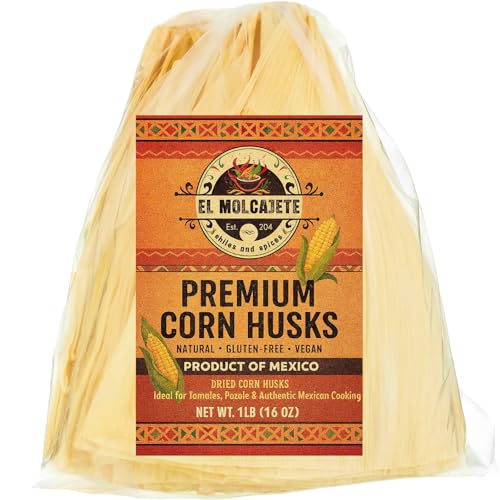
- FROM MEXICO, Non-GMO, premium quality dried corn husks
- About 110 pieces of husks per pack
5. Beat the masa
In a stand mixer with the paddle (or with a hand mixer), beat 1 cup vegetable shortening on medium-high for 1 to 2 minutes, until it is white and fluffy. Mix 4 cups masa harina with 2 teaspoons baking powder and 2 teaspoons salt. On low, add the masa harina mixture to the shortening a cup at a time, alternating with the warm vegetable broth, until you have used about 3½ cups of broth. Raise the speed to medium and beat 5 minutes more. The masa should be soft and spreadable, like thick hummus. If it is stiff or cracks, beat in more broth a few tablespoons at a time.
The float test: drop a 1/2-teaspoon ball of masa into a glass of cold water. If it floats, the masa has enough air and will steam up light. If it sinks, beat a few minutes more and test again. Taste the masa too: it should be well seasoned, a little saltier than you would like the finished tamal, because steaming mutes the salt.
6. Spread, fill and fold
Pat a husk dry and lay it with the smooth side up and the wide end toward you. Spread about 1/4 cup masa in a thin, even layer (about 1/4 inch) over the wide half of the husk, leaving a border of about 1 inch on the sides and 2 to 3 inches at the narrow tip.
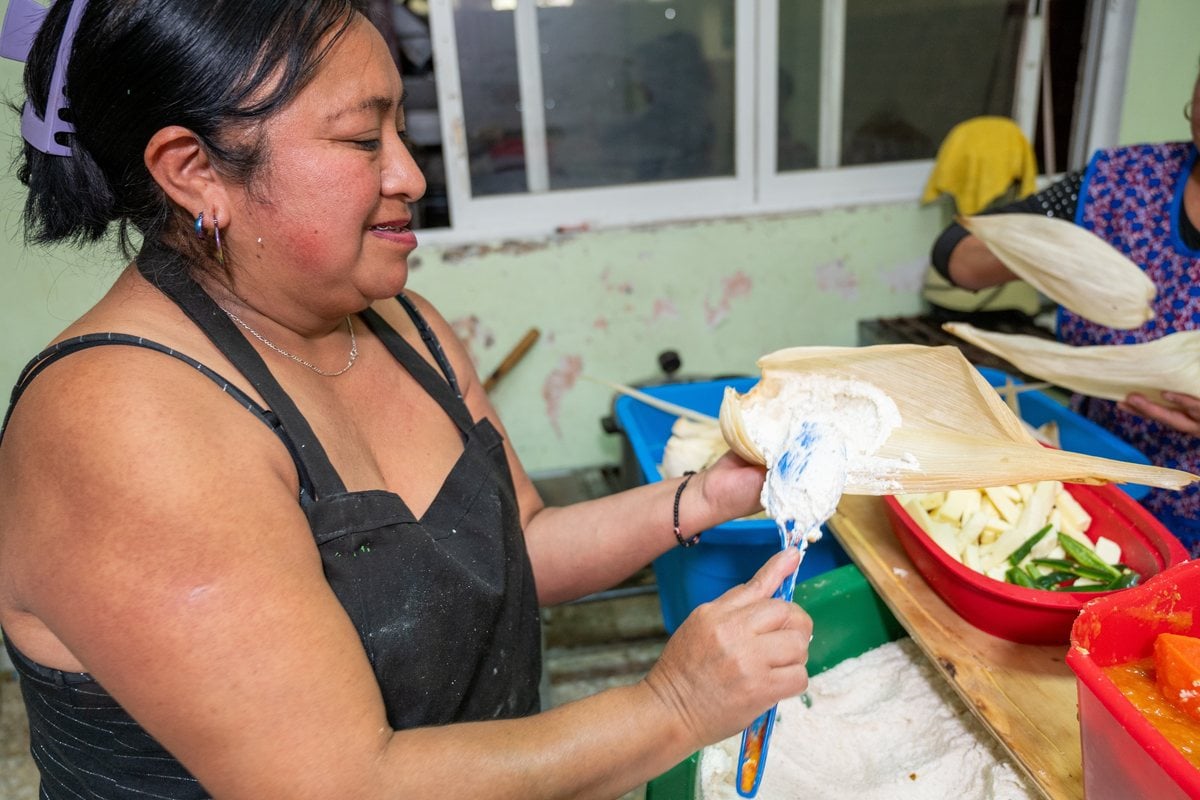
Spoon about 1 tablespoon of the salsa down the center of the masa, then lay a few strips of rajas and onion and a strip of Oaxaca cheese (about 2/3 oz) on top. Fold one long side of the husk over the filling so the masa edges meet, then fold the other side over it. Fold the narrow tip up toward the open end. If you like, tie the tamal around the middle with a strip of husk. Set it on a tray, open end up, and repeat with the rest of the masa and filling.
7. Load the steamer
Pour water into the steamer pot to just below the rack. Drop a coin into the water: if the water starts running low, the coin rattles loudly, so you know to add more without lifting the lid. Line the rack with a few husks. Stand the tamales upright, open end up, leaning against each other. Pack them snugly but not tightly, since the masa expands. If your pot is not full, fill the gaps with balls of foil or crumpled husks so the tamales do not fall over.
8. Steam
Cover the tamales with more husks and a clean kitchen towel, then put on the lid. Bring the water to a boil over high heat, then lower the heat to medium so it keeps a steady steam. Steam 60 to 75 minutes. Check the water every 20 to 30 minutes if you are unsure, and add boiling water down the side of the pot, never over the tamales.
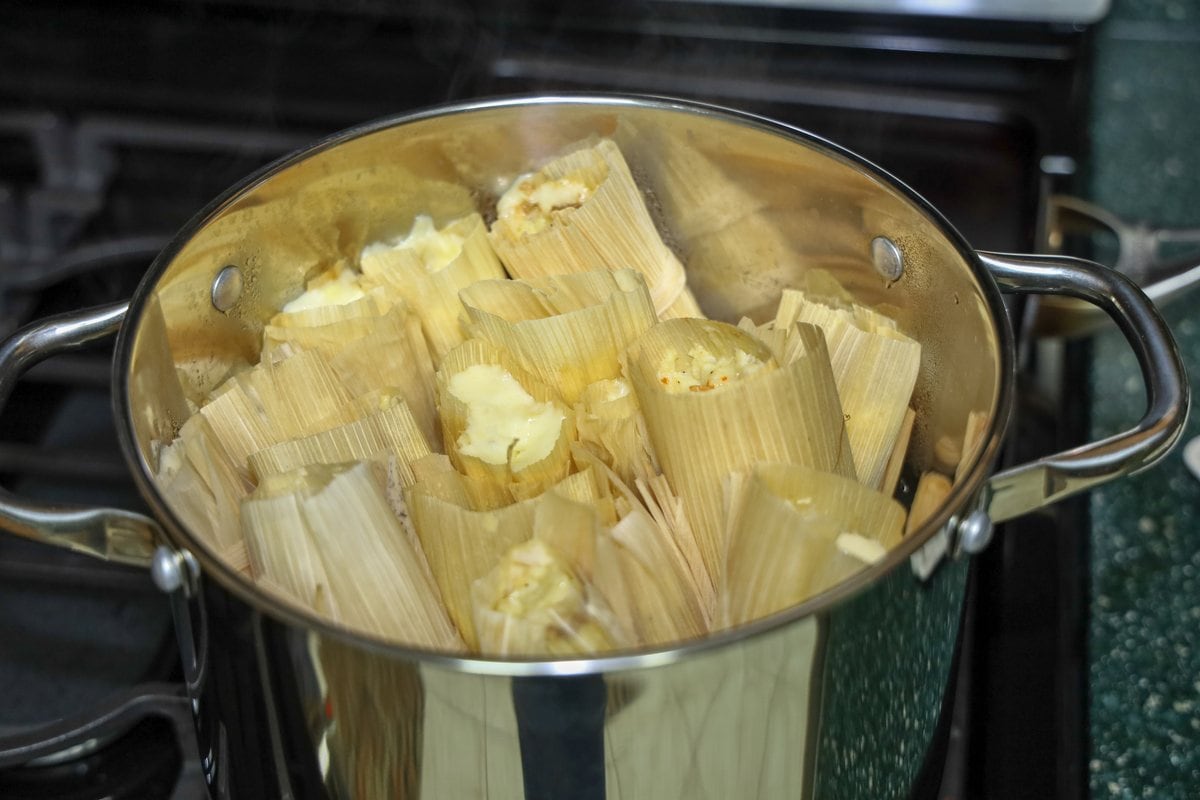
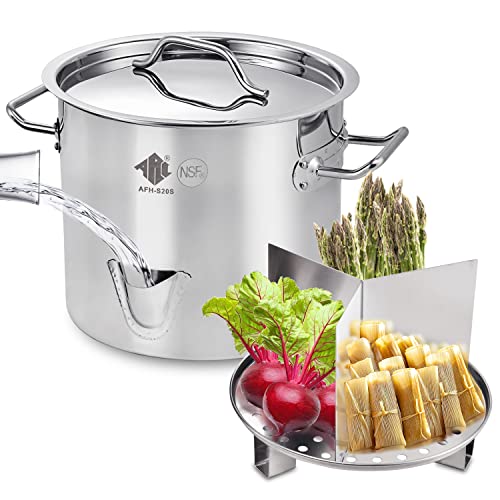
- PREMIUM STAINLESS STEEL: ARC Vegetable steamer pot and parts are made of multi-ply food-grade...
- SPOUT DESIGN: Vaporeras para tamales with spout allows adding more water without opening the lid...
No tamale steamer? Any tall stockpot works with a metal steamer basket or a heatproof rack set on a few balls of foil, as long as the tamales sit above the water and the lid closes.
9. Test for doneness and rest
At 60 minutes, take one tamal out with tongs, let it sit on a plate for 2 to 3 minutes, then unwrap it. A cooked tamal pulls away from the husk cleanly and the masa is firm and spongy all the way through. If the masa sticks to the husk or looks wet and pasty, wrap the tamal back up, return it to the pot and steam 10 to 15 minutes more before testing again. Do not steam them much longer than they need. Sonia Mendez of La Piña en la Cocina warns that overcooked cheese turns dark and rubbery, so she checks her cheese tamales after one hour.
Once they are done, turn off the heat and let the tamales rest in the covered pot for 15 minutes. The masa firms up as it cools slightly, so tamales that seem soft right out of the pot set up during the rest.
How to serve them
Serve tamales de rajas in their husks and let everyone unwrap their own (the husk is not eaten). Put out the rest of the tomato salsa, a green salsa verde, Mexican crema or sour cream, and crumbled queso fresco. Two tamales with rice and beans make a full vegetarian meal; for more ideas see our Mexican side dishes.
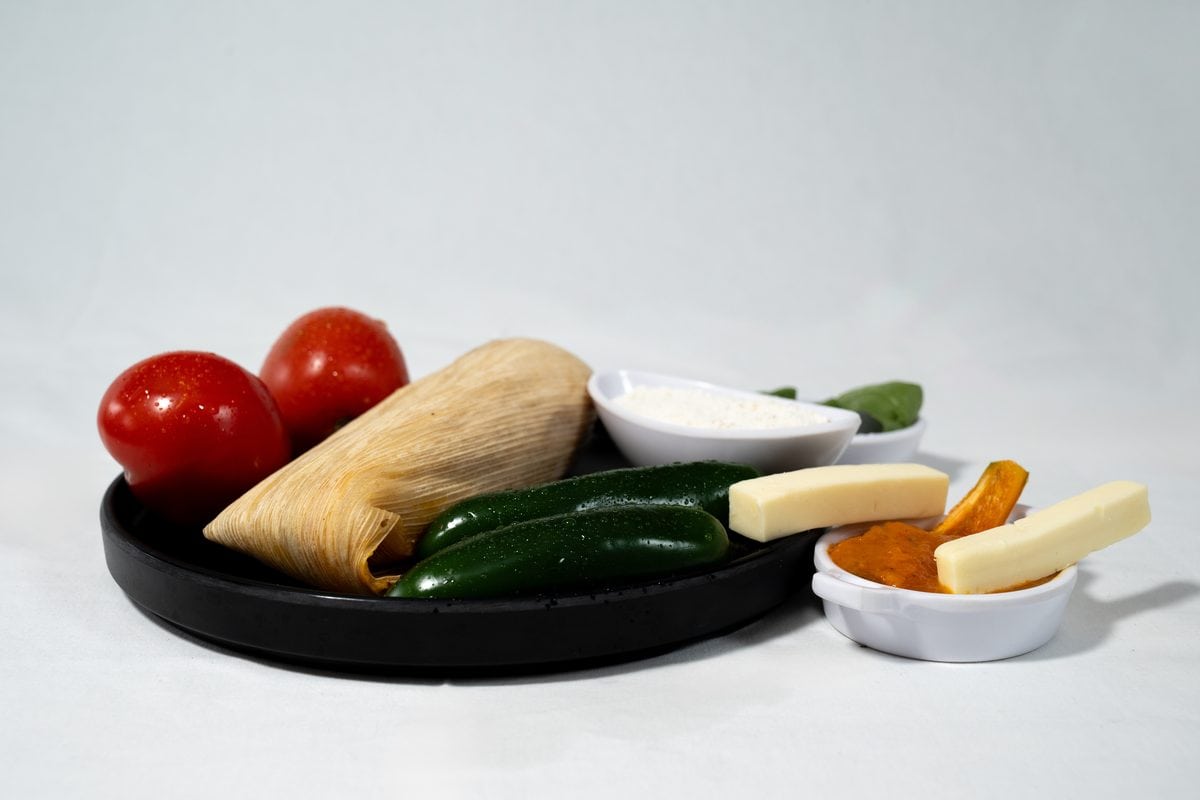
In Mexico, tamales are breakfast and supper food as much as party food, and the classic drink with them is a thick, warm corn drink: atole, chocolate champurrado, or a cup of Mexican hot chocolate. Tamales are also the food of December posadas and of Christmas Eve (see our Nochebuena guide), and of February 2, Día de la Candelaria. Rajas tamales are a good choice for a mixed holiday platter because they please the guests who do not eat meat.
Make ahead, store and reheat
- Split the work: roast and cook the rajas and make the salsa a day ahead and refrigerate them. On tamal day, soak the husks, beat the masa and assemble.
- Refrigerate: cool cooked tamales, then refrigerate them in their husks in an airtight container within 2 hours. Eat within 3 to 4 days.
- Freeze: freeze cooked, cooled tamales in their husks in freezer bags for up to 4 months.
- Reheat: steam them in their husks, about 20 minutes from the refrigerator or about 45 minutes from frozen, until hot in the center (165°F) and the cheese is soft again. For a crisp outside, heat them in the husk on a dry comal or skillet, turning a few times.
Variations and shortcuts
- Green salsa: use a tomatillo salsa verde instead of the red tomato salsa. The tart sauce is a good match for the smoky chiles.
- Rajas with corn: add a few kernels of corn to each tamal along with the rajas, the same pairing as in rajas con crema.
- Rajas con crema filling: stir a few tablespoons of Mexican crema into the cooled rajas and onion before filling.
- Other cheeses: Monterey Jack, a whole-milk mozzarella, or panela, which holds its shape instead of melting.
- Jalapeño rajas: for spicier tamales, use strips of roasted jalapeño or pickled jalapeño in place of some of the poblanos.
- With lard: if you do not need the tamales vegetarian, beat the masa with lard and chicken broth for the most traditional flavor.
- Shortcut chiles: canned roasted poblano or green chile strips save the roasting, but they are softer and less smoky. Drain them well.
For other tamales, try banana-leaf tamales oaxaqueños with mole, fresh-corn uchepos or pink sweet tamales. For more meatless Mexican mains, see our vegetarian enchiladas.
Troubleshooting
| Problem | Likely cause | Fix |
|---|---|---|
| Masa sticks to the husk | Not steamed long enough, or tested straight out of the pot | Let the test tamal rest 2 to 3 minutes; if it still sticks, steam 10 to 15 minutes more |
| Dense, heavy tamales | Masa too dry or not beaten enough | Beat the shortening until fluffy, beat the masa 5 minutes and do the float test |
| Poblano skin will not peel | Not charred enough, or not sweated long enough | Char until black all over and keep the bowl tightly covered for the full 10 to 15 minutes |
| Cheese leaked out | Cheese too close to the edge, or the tamal was not folded snugly | Keep the cheese in the center of the masa and fold the sides so the masa edges meet |
| Rubbery, dark cheese | Steamed too long | Start testing at 60 minutes and stop as soon as the masa pulls away from the husk |
| Soggy tamales | Salsa too thin, or water boiled up into the tamales | Cook the salsa until thick, use only 1 tablespoon per tamal and keep the water below the rack |
| Bland tamales | Under-salted masa | Taste the masa before spreading; it should taste a little salty |
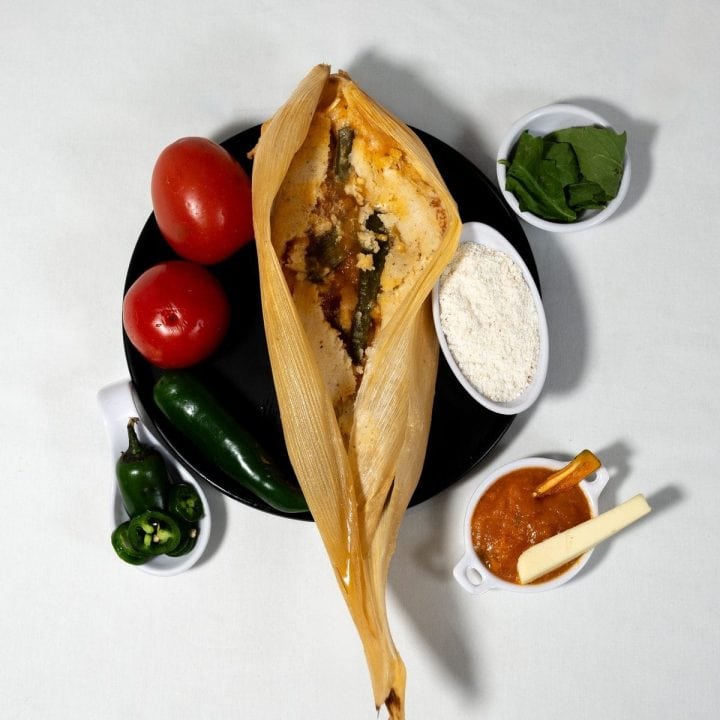
Tamales de Rajas con Queso (Poblano and Cheese Tamales)
Vegetarian Mexican tamales: corn husks spread with fluffy masa made with vegetable shortening and vegetable broth, filled with roasted poblano strips and onion, Oaxaca cheese and a spoonful of cooked tomato-jalapeño salsa, and steamed until the masa pulls cleanly from the husk. Makes about 24.
Ingredients
Rajas
- 5 large poblano chiles
- 1 tablespoon vegetable oil
- 1 white onion, thinly sliced
- Pinch of salt
Tomato-jalapeño salsa
- 1 1/2 lb (680 g) ripe tomatoes (about 4 medium)
- 2 jalapeños
- 2 tablespoons chopped white onion
- 1 garlic clove
- 1/2 teaspoon salt
- 1 tablespoon vegetable oil
Masa
- 1 cup (205 g) vegetable shortening (or lard if not vegetarian), at room temperature
- 4 cups (480 g) masa harina for tamales
- 2 teaspoons baking powder
- 2 teaspoons salt
- 3 1/2 to 4 cups warm low-sodium vegetable broth
To assemble
- 1 lb (454 g) Oaxaca cheese, pulled into strips about 3 inches long
- About 30 large dried corn husks, plus extra for lining the steamer
Instructions
- Roast and peel the poblanos. Char the poblanos directly over a gas flame, on a hot grill or under the broiler, turning them with tongs, until the skin is blistered and blackened all over, 8 to 10 minutes. Put them in a bowl, cover tightly with a plate or plastic wrap and let them sweat 10 to 15 minutes. The steam loosens the skin. Rub off the charred skin with your fingers or a paper towel. Do not rinse them under the tap, which washes away the smoky flavor. Pull out the stems, slit the chiles open and scrape out the seeds and veins. Cut them into strips about 1/4 inch wide and 2 to 3 inches long.
- Cook the rajas with onion. Heat 1 tablespoon oil in a skillet over medium heat. Add 1 thinly sliced white onion and cook, stirring, 5 to 6 minutes, until soft and translucent. Add the poblano strips and a pinch of salt and cook 2 minutes more. Let the rajas cool.
- Make the tomato salsa. Put 1½ lb ripe tomatoes (about 4 medium) and 2 jalapeños in a saucepan, cover with water and simmer 12 to 15 minutes, until the tomatoes are soft and the skins split. Drain, then blend the tomatoes and jalapeños with 2 tablespoons chopped white onion, 1 garlic clove and 1/2 teaspoon salt until smooth. Heat 1 tablespoon oil in a saucepan over medium heat, pour in the salsa (it will splatter) and simmer 5 to 10 minutes, stirring often, until it thickens and darkens slightly. You should have about 2 cups. Taste for salt and let it cool. You will use about 1½ cups in the tamales; serve the rest on the side.
- Soak the husks. Separate the corn husks, rinse off any dust and silk, and put them in a large bowl or the sink. Cover with hot water and weigh them down with a plate so they stay under. Soak 30 minutes to 1 hour, until they are soft and pliable. Pick out about 24 large husks for the tamales; tear a few of the small or split ones into thin strips for tying, and keep the rest for lining the steamer.
- Beat the masa. In a stand mixer with the paddle (or with a hand mixer), beat 1 cup vegetable shortening on medium-high for 1 to 2 minutes, until it is white and fluffy. Mix 4 cups masa harina with 2 teaspoons baking powder and 2 teaspoons salt. On low, add the masa harina mixture to the shortening a cup at a time, alternating with the warm vegetable broth, until you have used about 3½ cups of broth. Raise the speed to medium and beat 5 minutes more. The masa should be soft and spreadable, like thick hummus. If it is stiff or cracks, beat in more broth a few tablespoons at a time. The float test: drop a 1/2-teaspoon ball of masa into a glass of cold water. If it floats, the masa has enough air and will steam up light. If it sinks, beat a few minutes more and test again. Taste the masa too: it should be well seasoned, a little saltier than you would like the finished tamal, because steaming mutes the salt.
- Spread, fill and fold. Pat a husk dry and lay it with the smooth side up and the wide end toward you. Spread about 1/4 cup masa in a thin, even layer (about 1/4 inch) over the wide half of the husk, leaving a border of about 1 inch on the sides and 2 to 3 inches at the narrow tip. Spoon about 1 tablespoon of the salsa down the center of the masa, then lay a few strips of rajas and onion and a strip of Oaxaca cheese (about 2/3 oz) on top. Fold one long side of the husk over the filling so the masa edges meet, then fold the other side over it. Fold the narrow tip up toward the open end. If you like, tie the tamal around the middle with a strip of husk. Set it on a tray, open end up, and repeat with the rest of the masa and filling.
- Load the steamer. Pour water into the steamer pot to just below the rack. Drop a coin into the water: if the water starts running low, the coin rattles loudly, so you know to add more without lifting the lid. Line the rack with a few husks. Stand the tamales upright, open end up, leaning against each other. Pack them snugly but not tightly, since the masa expands. If your pot is not full, fill the gaps with balls of foil or crumpled husks so the tamales do not fall over.
- Steam. Cover the tamales with more husks and a clean kitchen towel, then put on the lid. Bring the water to a boil over high heat, then lower the heat to medium so it keeps a steady steam. Steam 60 to 75 minutes. Check the water every 20 to 30 minutes if you are unsure, and add boiling water down the side of the pot, never over the tamales. No tamale steamer? Any tall stockpot works with a metal steamer basket or a heatproof rack set on a few balls of foil, as long as the tamales sit above the water and the lid closes.
- Test for doneness and rest. At 60 minutes, take one tamal out with tongs, let it sit on a plate for 2 to 3 minutes, then unwrap it. A cooked tamal pulls away from the husk cleanly and the masa is firm and spongy all the way through. If the masa sticks to the husk or looks wet and pasty, wrap the tamal back up, return it to the pot and steam 10 to 15 minutes more before testing again. Do not steam them much longer than they need. Sonia Mendez of La Piña en la Cocina warns that overcooked cheese turns dark and rubbery, so she checks her cheese tamales after one hour. Once they are done, turn off the heat and let the tamales rest in the covered pot for 15 minutes. The masa firms up as it cools slightly, so tamales that seem soft right out of the pot set up during the rest.
Notes
Make ahead: roast and cook the rajas and make the salsa a day ahead and refrigerate them.
Storage: refrigerate cooked tamales in an airtight container within 2 hours; eat within 3 to 4 days. Freeze cooked tamales in their husks for up to 4 months.
Reheat: steam about 20 minutes from the refrigerator or about 45 minutes from frozen, until hot in the center (165°F).
Vegetarian: as written, with shortening and vegetable broth. For the traditional version, use lard and chicken broth.
Cheese: Monterey Jack or whole-milk mozzarella can replace the Oaxaca cheese; panela holds its shape instead of melting.
Milder: use 1 jalapeño, or seed them; the poblanos themselves are mild.
Nutrition Information:
Serving Size: 1 tamal (1/24 of recipe)Amount Per Serving: Calories: 230Total Fat: 15gSaturated Fat: 5gTrans Fat: 1gUnsaturated Fat: 9gCholesterol: 15mgSodium: 447mgCarbohydrates: 20gFiber: 2gSugar: 3gProtein: 7g
Nutrition information is an estimate and will vary with the brands and amounts used.
Tamales de Rajas FAQ
What does “rajas” mean in tamales?
Rajas are strips of roasted, peeled chile, usually poblano. Tamales de rajas are filled with those chile strips, almost always with cheese, which is why they are also called tamales de rajas con queso.
Are tamales de rajas spicy?
Mildly. Poblanos are one of the mildest Mexican chiles, and the cheese softens the heat. Most of the heat in this recipe comes from the jalapeños in the salsa, so use one jalapeño, or seed them, for a milder tamal.
What cheese goes in tamales de rajas?
Oaxaca cheese is the classic choice because it melts smoothly and pulls into strips. Monterey Jack and whole-milk mozzarella are good substitutes, and panela works if you want the cheese to hold its shape.
Are tamales de rajas vegetarian?
The filling is, but the masa often is not: many cooks beat it with lard and chicken broth. This recipe uses vegetable shortening and vegetable broth, so it is fully vegetarian. If you buy tamales, ask how the masa was made.
Do you have to peel the poblanos?
Yes. The charred skin is tough and bitter. Sweating the chiles in a covered bowl after roasting makes the skin slip off easily.
How long do you steam tamales de rajas?
About 60 to 75 minutes over medium heat, then 15 minutes resting in the covered pot. They are done when the masa pulls away cleanly from the husk after the tamal sits for a couple of minutes.
Can I freeze tamales de rajas?
Yes. Freeze them after steaming and cooling, in their husks, in freezer bags, for up to 4 months. Steam them from frozen for about 45 minutes, until hot in the center.
More tamales and poblano recipes
For the full tamal guide and the red version, see our red chile pork tamales, and for the green version, our chicken tamales. For more tamales from Mexico and Latin America, make tamales oaxaqueños, sweet tamales, uchepos, Nicaraguan nacatamales and Venezuelan hallacas. For another way to use poblanos, make rajas con crema.
Shopping list: Maseca masa harina for tamales, dried corn husks (hojas para tamal), Oaxaca cheese, vegetable shortening and an ARC tamale steamer pot.
Sources
- Serious Eats: Tamales With Rajas and Oaxacan Cheese
- Mely Martinez, Mexico in My Kitchen: Tamales de Rajas con Queso
- Sonia Mendez, La Piña en la Cocina: Tamal de Rajas con Queso
- Maricruz Avalos: Tamales de Rajas con Queso
- USDA FSIS: Leftovers and Food Safety
- USDA FoodData Central (nutrition estimate)
More Latin Christmas Foods
See all →
Jorge Garcia is the founder of AmigoFoods, where he has spent over 20 years helping readers discover authentic Latin American and Spanish cuisine. Raised in a Cuban-American household, Jorge learned to cook at the hands of his mother and grandmother, carrying forward generations of family recipes. That heritage, backed by his family’s four-generation history in the Latin food industry, inspired him to launch AmigoFoods in 2003. With more than 1,000 published articles on recipes, ingredients, and food culture, Jorge’s mission is simple: make authentic Latin cooking approachable for home cooks everywhere while honoring the traditions behind every dish.