
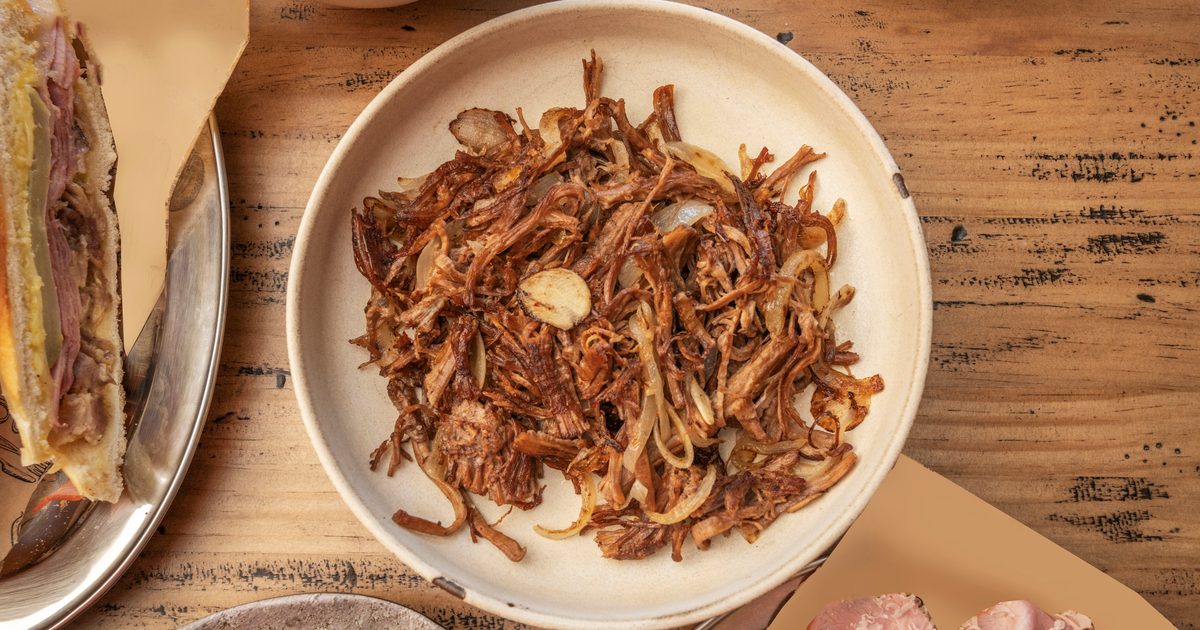
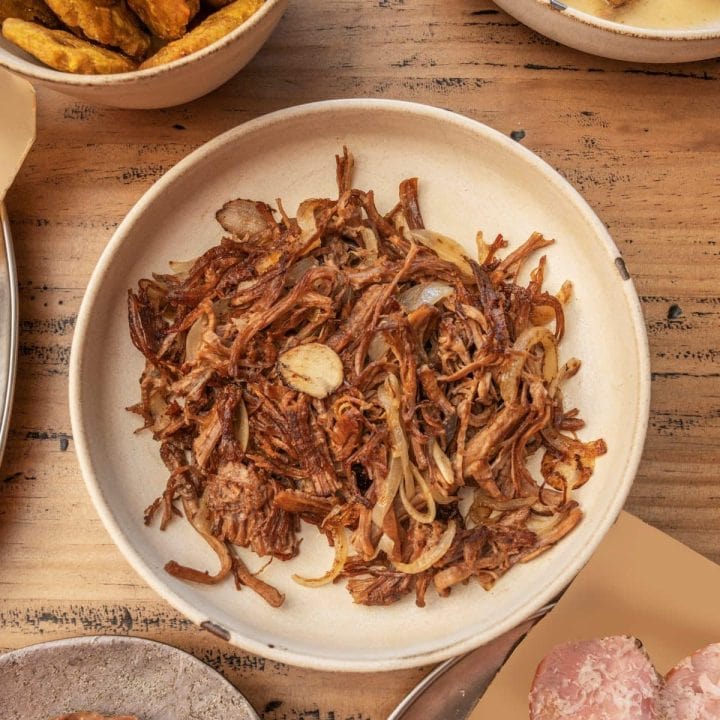
Vaca frita (“fried cow”) is Cuban shredded beef that is simmered until tender, pulled into thin strands, tossed with lime juice, garlic and salt, and then pan-fried with onions until the edges turn brown and crisp. It uses the same boiled flank steak as ropa vieja, but instead of going into a tomato sauce, the beef goes into a hot skillet, so it comes out crunchy outside and juicy inside, sharp with citrus and garlic. Served with white rice, black beans and fried plantains, it is one of the most popular plates in Cuban restaurants and Cuban homes. This recipe serves 6. Below is the cut to buy, how long to simmer it, the marinade and how long to leave it, how to fry it so it crisps instead of steaming, what to serve with it, storing and reheating, variations and the full recipe.
Vaca Frita at a Glance
The short version: Simmer 2 lb flank steak in salted water with bay leaves and half an onion for 1½ to 2 hours, until it pulls apart easily. Cool and shred it. Toss it with 1/4 cup lime juice, 5 minced garlic cloves, salt, pepper and a pinch of cumin and let it sit 30 minutes. Cook a sliced onion in olive oil until soft and set it aside. Fry the beef in batches in a hot skillet, in a thin layer, 3 to 4 minutes without stirring, then flip and cook 2 to 3 minutes more, until crisp. Toss with the onions and a squeeze of lime.
AmigoFoods may earn a commission from qualifying Amazon purchases made through links on this page.
What is vaca frita?
Vaca frita means “fried cow”, and the name describes the dish exactly: beef that has already been cooked until tender is fried until crisp. The beef is usually flank steak (falda), the long-grained cut that shreds into neat strands. It is simmered in salted water with a bay leaf, pulled apart, seasoned with lime or sour orange juice and lots of garlic, and fried in a hot pan with onions. The result is a pile of shredded beef with a mix of chewy, crisp and tender pieces.
It is a home-cooking dish as much as a restaurant one. Many Cuban cooks simmer a big piece of flank steak once and split it two ways: half becomes ropa vieja, stewed in tomato sauce with peppers, and the other half becomes vaca frita. The broth goes into rice or soup. For the bigger picture of where it fits on the Cuban table, see our guide to Cuban food.
Vaca frita vs. ropa vieja
Both start with simmered, shredded flank steak. What happens next is completely different.
| Vaca frita | Ropa vieja | Picadillo | |
|---|---|---|---|
| Beef | Simmered flank steak, shredded | Simmered flank steak, shredded | Ground beef |
| Cooked in | A hot skillet with oil and onions | A tomato sauce with peppers, onion and wine | A tomato sofrito with olives and raisins |
| Texture | Crisp brown edges, dry | Soft and saucy | Soft and loose |
| Main flavors | Lime or sour orange, garlic, onion | Tomato, sweet pepper, cumin, oregano | Tomato, olives, a little sweetness |
| Recipe | This page | Our ropa vieja | Our Cuban picadillo |
If you like crunchy edges and bright citrus, make vaca frita. If you want a saucy dish to spoon over rice, make ropa vieja.
The ingredients
For simmering the beef
- Flank steak (2 lb, about 900 g). It is the traditional cut because its long fibers pull into strands. Cut it into 3 or 4 pieces so it fits in the pot and cooks evenly. Skirt steak works the same way. Beef chuck also works and is more forgiving, since its fat keeps it juicy, but it shreds into shorter, chunkier pieces.
- Half an onion, 2 bay leaves and 1 tablespoon salt for the cooking water. Some cooks add a few peppercorns, a pinch of cumin or a little dried oregano.

For the marinade
- Fresh lime juice (1/4 cup, from about 2 limes), plus wedges for serving. Cuban cooks traditionally use sour orange juice (naranja agria); lime is the easiest substitute to find. See the variations below for the sour orange version.
- Garlic (5 large cloves, finely minced or grated). Do not skimp: garlic is the main seasoning.
- Salt (1 teaspoon), black pepper (1/2 teaspoon) and ground cumin (1/4 teaspoon, optional).
For frying
- Olive oil (1/4 cup, divided). Vegetable oil works too.
- A large white or yellow onion, halved and thinly sliced.
How to make vaca frita
The work happens in three stages: simmer the beef until tender, shred and marinate it, then fry it in batches. You can simmer and shred the beef up to 2 days ahead, which makes it a fast weeknight dinner.
1. Simmer the beef
Cut 2 lb flank steak into 3 or 4 pieces. Put them in a large pot or Dutch oven with half an onion, 2 bay leaves and 1 tablespoon salt, and add cold water to cover by about 1 inch. Bring to a boil over high heat, skim off any foam, then lower the heat, cover and simmer gently 1½ to 2 hours, until the meat is very tender and pulls apart easily with a fork. Add hot water if the level drops below the meat.
In a pressure cooker or Instant Pot, cook the beef with the same seasonings and water on high pressure for 40 minutes, then let the pressure release naturally for 10 minutes before venting. Check that it shreds easily.
2. Cool and shred
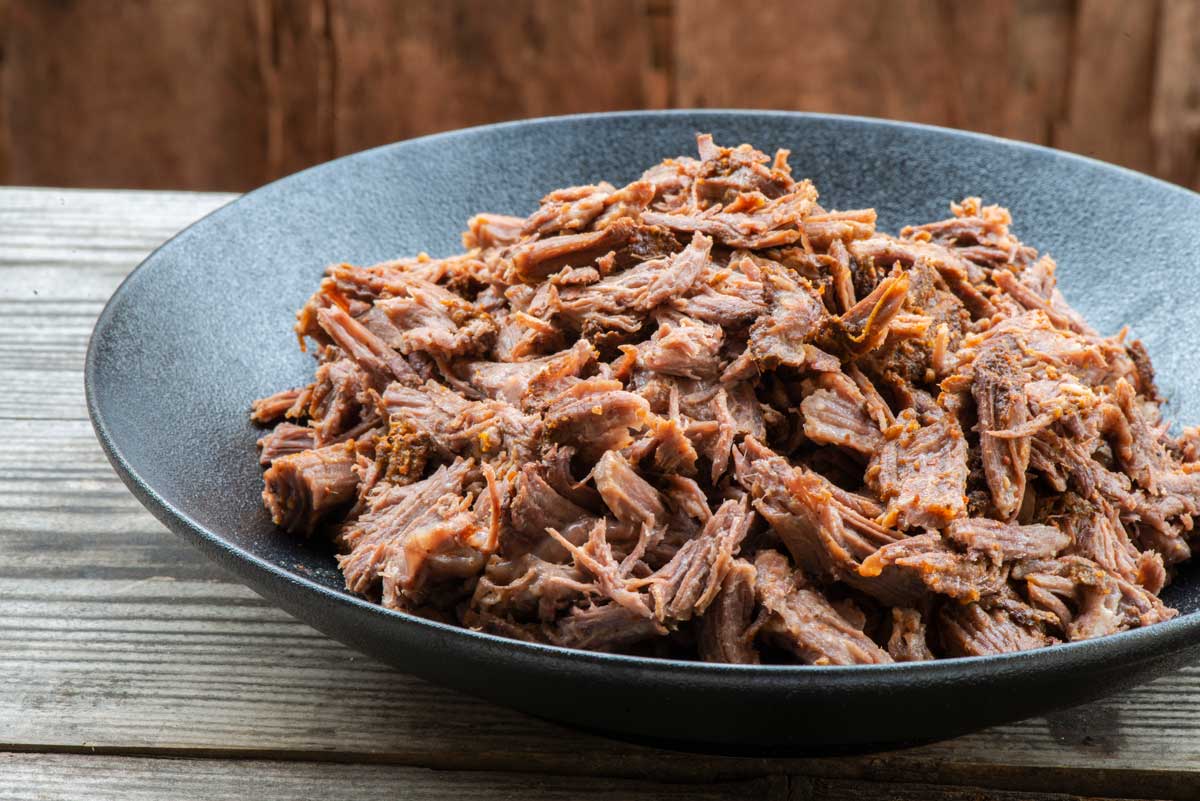
Lift the beef out of the pot and let it cool on a cutting board until you can handle it, about 15 minutes. Save the broth for rice, beans or soup. Pull the beef apart along the grain into thin strands with two forks or your fingers, removing any gristle or fat. For more crisp edges, first flatten each piece with a meat mallet or the bottom of a heavy pan, which breaks the fibers into a mix of fine shreds and bigger pieces, the way Serious Eats recommends.
3. Marinate
In a large bowl, whisk 1/4 cup fresh lime juice with 5 finely minced garlic cloves, 1 teaspoon salt, 1/2 teaspoon black pepper and 1/4 teaspoon ground cumin. Add the shredded beef and toss with your hands so every strand is coated. Let it sit at room temperature for 30 minutes, or up to 45 minutes. Do not leave it longer: Coco and Ash warns that a long soak in the acid breaks the meat down too much and makes it mushy.
4. Cook the onions
Heat 1 tablespoon olive oil in a large, heavy skillet over medium heat. Add 1 large thinly sliced onion and a pinch of salt and cook, stirring, 5 to 7 minutes, until soft, translucent and golden at the edges. Move the onions to a plate and keep them warm. Do not wipe out the skillet.
5. Fry the beef in batches
Add 2 tablespoons olive oil to the skillet and heat it over medium-high heat until it shimmers. Add about a third of the beef and spread it into a thin, even layer. Let it cook without stirring 3 to 4 minutes, until the bottom is brown and crisp. Flip it with a spatula in sections and cook 2 to 3 minutes more, until the second side is browned. Move it to the plate with the onions and repeat with the rest of the beef, adding the remaining 1 tablespoon oil, or a little more, when the pan looks dry.
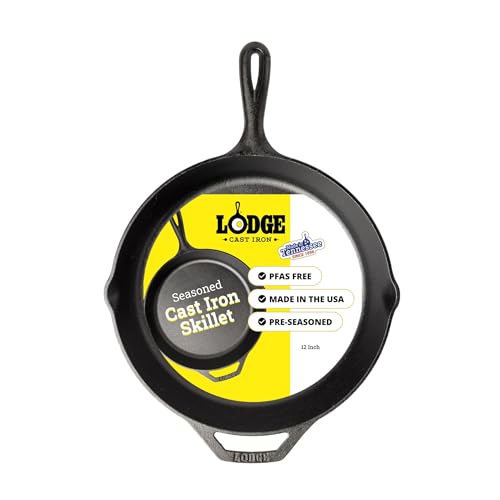
- Quality Cast Iron Frying Pan: The Lodge Seasoned Cast Iron Skillet is loved for its great heat...
- Naturally Seasoned for Non-Stick Finish: Each pre-seasoned skillet arrives ready to use with a...

6. Combine and finish
Return all the beef and the onions to the skillet and toss them together over medium heat for about 1 minute, until hot. Turn off the heat, squeeze over the juice of half a lime and taste for salt. Serve right away, with lime wedges on the side, while the edges are still crisp.
How to get it crispy
Vaca frita should have real crunch. Most soggy vaca frita comes from one of three things:
- A crowded pan. Too much beef in the skillet releases moisture faster than it can evaporate, and the meat steams. Fry it in two or three batches, in a layer no thicker than about 1/2 inch.
- Stirring too soon. Leave each batch alone for the first 3 to 4 minutes. The crust forms only where the beef touches the hot pan.
- Wet beef. If there is liquid at the bottom of the marinade bowl, lift the beef out with your hands and leave the juice behind, or squeeze it lightly.
A cast-iron skillet holds its heat best when the cold beef goes in, but a large stainless steel or heavy nonstick pan works too. The flatter the beef, the more of it touches the pan, which is why pounding it before shredding gives more crisp bits.
How to serve it
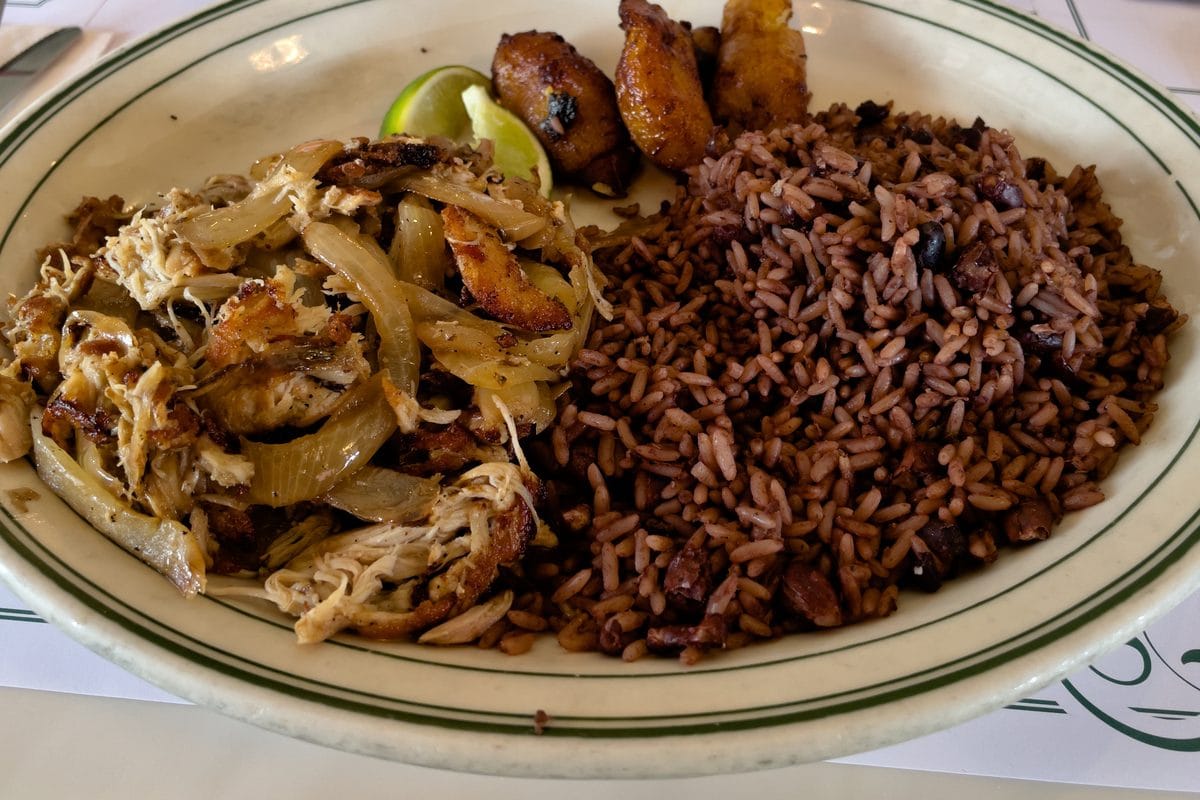
The classic plate is vaca frita with white rice, black beans and sweet fried plantains, with lime wedges on the side. Instead of rice and beans separately, serve it with moros y cristianos, the black beans and rice cooked together. Fried plátanos maduros are sweet and soft against the salty, crisp beef, and green tostones are the crunchy alternative. Our tostones vs. maduros guide explains the difference.
Other good sides are yuca con mojo, a simple avocado and tomato salad, or more ideas from our list of Cuban side dishes. Leftover vaca frita is also good in a sandwich on Cuban bread with fried onions, or folded into scrambled eggs for breakfast.
Make ahead, store and reheat
- Make ahead: simmer and shred the beef up to 2 days ahead. Cool it, then refrigerate it in an airtight container, without the marinade. On the day, marinate it 30 minutes and fry.
- Refrigerate: refrigerate cooked vaca frita within 2 hours, in an airtight container, and eat it within 3 to 4 days.
- Freeze: freeze the plain shredded beef, or the finished vaca frita, in freezer bags for up to 3 months. Thaw it overnight in the refrigerator.
- Reheat: fry it again in a hot skillet with a little oil, in a thin layer, until crisp and hot all the way through (165°F). The microwave reheats it but softens the crisp edges.
Variations
- Sour orange: use 1/4 cup fresh sour orange juice instead of the lime juice. If you cannot find sour oranges, mix 3 tablespoons fresh orange juice with 1 tablespoon fresh lime juice, or use a bottled bitter orange marinade and cut back on the salt. Our Cuban mojo uses the same citrus and garlic.
- Vaca frita de pollo: make it with chicken. Simmer boneless, skinless chicken breasts 20 to 25 minutes, until cooked through (165°F), then shred, marinate and fry the same way.
- With peppers: fry strips of green bell pepper or cubanelle pepper with the onions.
- Extra garlic: push the beef to the sides of the pan at the end, add 2 minced garlic cloves and a little oil to the center and cook 30 seconds, until golden, then toss. America’s Test Kitchen finishes its version this way.
- Chuck instead of flank: 2 lb boneless chuck roast, cut into large chunks, simmered 2 to 2½ hours. It stays juicier, with shorter shreds.
- Adobo-seasoned: season the beef with 2 teaspoons adobo seasoning, 1/2 teaspoon cumin and 1 teaspoon dried oregano before simmering. Cut the salt in the cooking water in half.
For other Cuban beef dishes, try ropa vieja and picadillo. For another Latin shredded beef, see Venezuelan carne mechada.
Troubleshooting
| Problem | Likely cause | Fix |
|---|---|---|
| Beef will not shred | Not simmered long enough | Simmer 20 to 30 minutes more and test again; it should pull apart with a fork |
| Soggy, steamed beef | Pan too crowded, not hot enough, or beef too wet | Fry in batches in a thin layer over medium-high heat and leave the marinade juice in the bowl |
| Mushy texture | Marinated too long in the citrus | Keep the marinade to 30 to 45 minutes |
| Dry, stringy beef | Fried too long or shredded too fine | Stop as soon as both sides are brown; leave some bigger pieces when you shred |
| Bitter garlic | Garlic burned in the hot oil | Mince it into the marinade so it is spread through the beef, and keep the heat at medium-high, not high |
| Too salty | Salt in both the cooking water and the marinade, or bottled marinade | Taste a shred of beef before marinating and reduce the salt in the marinade |
| Bland | Not enough citrus or salt | Finish with more lime juice and salt off the heat |
Vaca Frita (Cuban Crispy Shredded Beef)
Cuban vaca frita: flank steak simmered with bay leaves until tender, shredded, marinated in fresh lime juice and garlic, then pan-fried with onions until the edges are brown and crisp. Serve with white rice, black beans and fried plantains. Serves 6.
Ingredients
- To simmer the beef:
- 2 lb (900 g) flank steak, cut into 3 or 4 pieces
- 1/2 onion
- 2 bay leaves
- 1 tablespoon salt
- Water to cover
- Marinade:
- 1/4 cup fresh lime juice (about 2 limes), plus lime wedges for serving
- 5 large garlic cloves, finely minced or grated
- 1 teaspoon salt
- 1/2 teaspoon black pepper
- 1/4 teaspoon ground cumin (optional)
- To fry:
- 1/4 cup olive oil, divided
- 1 large white or yellow onion, halved and thinly sliced
- Pinch of salt
- Juice of 1/2 lime, to finish
Instructions
- Simmer the beef. Cut 2 lb flank steak into 3 or 4 pieces. Put them in a large pot or Dutch oven with half an onion, 2 bay leaves and 1 tablespoon salt, and add cold water to cover by about 1 inch. Bring to a boil over high heat, skim off any foam, then lower the heat, cover and simmer gently 1½ to 2 hours, until the meat is very tender and pulls apart easily with a fork. Add hot water if the level drops below the meat. In a pressure cooker or Instant Pot, cook the beef with the same seasonings and water on high pressure for 40 minutes, then let the pressure release naturally for 10 minutes before venting. Check that it shreds easily.
- Cool and shred. Lift the beef out of the pot and let it cool on a cutting board until you can handle it, about 15 minutes. Save the broth for rice, beans or soup. Pull the beef apart along the grain into thin strands with two forks or your fingers, removing any gristle or fat. For more crisp edges, first flatten each piece with a meat mallet or the bottom of a heavy pan, which breaks the fibers into a mix of fine shreds and bigger pieces, the way Serious Eats recommends.
- Marinate. In a large bowl, whisk 1/4 cup fresh lime juice with 5 finely minced garlic cloves, 1 teaspoon salt, 1/2 teaspoon black pepper and 1/4 teaspoon ground cumin. Add the shredded beef and toss with your hands so every strand is coated. Let it sit at room temperature for 30 minutes, or up to 45 minutes. Do not leave it longer: Coco and Ash warns that a long soak in the acid breaks the meat down too much and makes it mushy.
- Cook the onions. Heat 1 tablespoon olive oil in a large, heavy skillet over medium heat. Add 1 large thinly sliced onion and a pinch of salt and cook, stirring, 5 to 7 minutes, until soft, translucent and golden at the edges. Move the onions to a plate and keep them warm. Do not wipe out the skillet.
- Fry the beef in batches. Add 2 tablespoons olive oil to the skillet and heat it over medium-high heat until it shimmers. Add about a third of the beef and spread it into a thin, even layer. Let it cook without stirring 3 to 4 minutes, until the bottom is brown and crisp. Flip it with a spatula in sections and cook 2 to 3 minutes more, until the second side is browned. Move it to the plate with the onions and repeat with the rest of the beef, adding the remaining 1 tablespoon oil, or a little more, when the pan looks dry.
- Combine and finish. Return all the beef and the onions to the skillet and toss them together over medium heat for about 1 minute, until hot. Turn off the heat, squeeze over the juice of half a lime and taste for salt. Serve right away, with lime wedges on the side, while the edges are still crisp.
Notes
Make ahead: simmer and shred the beef up to 2 days ahead and refrigerate it without the marinade; marinate and fry on the day.
Storage: refrigerate within 2 hours in an airtight container; eat within 3 to 4 days. Freeze the shredded beef or the finished dish up to 3 months.
Reheat: fry in a hot skillet with a little oil until crisp and hot all the way through (165°F).
Sour orange: use 1/4 cup sour orange juice instead of lime, or 3 tablespoons orange juice plus 1 tablespoon lime juice.
Chicken (vaca frita de pollo): simmer boneless, skinless chicken breasts 20 to 25 minutes until cooked through (165°F), then shred, marinate and fry the same way.
Air fryer: toss the marinated beef with the sliced onions and air fry in a thin layer, in batches, at 375°F for 6 to 8 minutes per batch, turning several times.
Save the broth for rice, beans or soup.
Nutrition Information:
Yield: 6 Serving Size: about 2/3 cup (1/6 of the recipe)Amount Per Serving: Calories: 340Total Fat: 21gSaturated Fat: 6gTrans Fat: 0gUnsaturated Fat: 13gCholesterol: 98mgSodium: 762mgCarbohydrates: 4gFiber: 1gSugar: 1gProtein: 33g
Nutrition information is an estimate and will vary with the brands and amounts used.
Vaca Frita FAQ
What does vaca frita mean?
Vaca frita means “fried cow” in Spanish. It is Cuban shredded beef that is simmered until tender, marinated in citrus and garlic and pan-fried until crisp.
What cut of beef is best for vaca frita?
Flank steak is the traditional cut because it shreds into long, thin strands. Skirt steak works the same way. Beef chuck is juicier and more forgiving but gives shorter, chunkier shreds.
What is the difference between vaca frita and ropa vieja?
Both use simmered, shredded flank steak. Vaca frita is fried in a hot skillet with onions, lime and garlic until crisp. Ropa vieja is stewed in a tomato sauce with peppers and onions, so it is soft and saucy.
How long should I marinate vaca frita?
About 30 minutes, and no more than 45. The beef is already cooked, so it soaks up the flavor fast, and a longer soak in the citrus makes it mushy.
Why is my vaca frita not crispy?
Usually because the pan was crowded or the beef was too wet. Fry it in batches in a thin layer, leave it alone for the first 3 to 4 minutes and drain off extra marinade before it goes in the pan.
Can I make vaca frita in an air fryer?
Yes. Toss the marinated beef with the sliced onions and air fry it in a thin layer, in batches, at 375°F for 6 to 8 minutes per batch, turning it several times, until crisp in spots.
What do you serve with vaca frita?
White rice, black beans (or moros y cristianos) and fried sweet plantains are the classic plate. Tostones, yuca con mojo and an avocado salad are also common.
More Cuban recipes
For more Cuban classics, make ropa vieja, picadillo, arroz con pollo cubano or a pressed Cuban sandwich. For the story behind the cuisine, read our guide to Cuban food history.
Shopping list: Lodge 12-inch cast iron skillet, Goya bitter orange (naranja agria) marinade, Goya adobo seasoning.
Sources
- Serious Eats: Vaca Frita (Cuban Shredded Beef)
- Coco and Ash: Cuban Vaca Frita (Shredded Fried Beef)
- America’s Test Kitchen: Cuban Shredded Beef
- USDA FSIS: Leftovers and Food Safety
- USDA FoodData Central (nutrition estimate)
More Cuban Foods
See all →
Jorge Garcia is the founder of AmigoFoods, where he has spent over 20 years helping readers discover authentic Latin American and Spanish cuisine. Raised in a Cuban-American household, Jorge learned to cook at the hands of his mother and grandmother, carrying forward generations of family recipes. That heritage, backed by his family’s four-generation history in the Latin food industry, inspired him to launch AmigoFoods in 2003. With more than 1,000 published articles on recipes, ingredients, and food culture, Jorge’s mission is simple: make authentic Latin cooking approachable for home cooks everywhere while honoring the traditions behind every dish.