

Arrachera brings the bold flavor of skirt steak to Mexican cooking. A lime, garlic and oregano marinade seasons the meat before a quick grill; slice it across the grain and tuck it into warm tortillas with onion, cilantro and salsa.
Arrachera Tacos at a Glance
What is Arrachera?
Arrachera, a beloved Mexican dish, features a specific cut of beef known as skirt steak. Skirt steak is a long, flat cut from the short plate area of the cow. It is prized for its rich, beefy flavor and distinctive texture. When compared to other cuts of beef, such as flank steak or ribeye, skirt steak has a pronounced grain, so careful cooking and thin slicing across the fibers matter for tenderness.In Mexican and Tex-Mex cuisine, Arrachera is often used as the star ingredient in a variety of Mexican dishes, including grilled skirt steak tacos, fajitas, and quesadillas.
Its versatility makes it a favorite among home cooks and professional chefs alike.
The History of Arrachera

A. Origins in Mexican cuisine
Arrachera has deep roots in Mexican culinary history.
The dish can be traced back to the ranching traditions of northern Mexico, where Vaqueros (Mexican cowboys) played a significant role in popularizing this flavorful cut of meat.
Skirt steak, being a less expensive and more accessible cut, became a staple for ranchers who needed to prepare hearty, flavorful meals.
B. The role of Vaqueros (Mexican cowboys)
Vaqueros, known for their resourcefulness and expertise in cooking over open flames, discovered that marinating skirt steak in a blend of spices, lime juice and chiles not only tenderized the meat but also enhanced its natural flavors.
This preparation method became the foundation for modern-day Arrachera recipes and has been passed down through generations.
C. Evolution and popularity in modern-day cooking
Over time, the popularity of Arrachera has spread beyond the borders of Mexico, with the dish now being widely enjoyed in the United States and other parts of the world.
The versatile skirt steak has become a popular choice for home cooks and professional chefs alike, finding its way into various dishes, from traditional tacos and fajitas to innovative fusion recipes.
The growing interest in authentic Mexican cuisine has further cemented Arrachera’s place as a beloved and sought-after dish on menus and in kitchens worldwide
How to Choose the Perfect Arrachera

A. Tips for selecting quality meat
When shopping for skirt steak to make Arrachera, pay attention to the quality and characteristics of the meat.
Look for an even cut with medium thickness and a good amount of marbling, as this will contribute to a tender and juicy final product.
Choose properly refrigerated meat with intact packaging and check its use-by date; color alone does not establish freshness.
B. Differences between inside and outside skirt steak
There are two types of skirt steak: inside and outside.
Both are sold as skirt steak and come from the short plate area, but they differ in shape and texture.
Although both cuts can be used for Arrachera, the outside skirt steak is generally considered more desirable due to its superior flavor and tenderness.
The outside cut is also thicker, which allows for better portioning and presentation.
C. Importance of marbling and thickness
Marbling, or the visible fat distribution within the muscle fibers, plays a crucial role in the flavor and juiciness of the meat.
When selecting skirt steak, choose a cut with even marbling, as this fat will render during cooking, creating a succulent and delicious final product.
Thickness also matters when it comes to cooking Arrachera, as it will impact the cooking time and method.
Aim for a cut that is consistently thick throughout to ensure even cooking and a tender, juicy texture.
Marinating and Seasoning Arrachera

A. The importance of marinating for tenderness and flavor
Marinating the skirt steak is an essential step in the preparation of Arrachera.
The marinade not only infuses the meat with a rich blend of flavors but also helps to break down the fibers, resulting in a more tender and succulent dish.
For the lime-based recipe below, marinate for 4 hours in the refrigerator. More time is not automatically better: an acidic marinade can soften the surface excessively.
B. Traditional Mexican marinade ingredients
A classic Arrachera marinade features a combination of ingredients that provide a harmonious balance of acidity, spice and earthiness.
Key components of a traditional Mexican marinade include lime juice, olive oil, garlic, Mexican oregano and chile peppers.
The acidity from the lime juice tenderizes the meat, while the other ingredients add depth and complexity to the dish.
C. Creative and alternative marinade options
While traditional Mexican marinade ingredients yield a delicious Arrachera, you can also experiment with other flavors to create a unique and personalized dish.
Some alternative ingredients to consider include soy sauce, Worcestershire sauce, balsamic vinegar, or even fruit juices like pineapple or orange juice.
Additionally, you can play with spices such as cumin, paprika and chipotle powder to add a smoky or spicy kick to the meat.

D. Seasoning tips for maximum flavor
After marinating the skirt steak, it’s crucial to season it well before cooking.
A simple mix of salt and black pepper will enhance the natural beefy flavors and help to create a beautiful crust when grilled.
It’s important to remember that the marinade has already imparted some flavor, so adjust your seasoning accordingly.
Pat the meat dry before applying the seasoning to ensure that it adheres well and creates an even crust during the cooking process.
Cooking Techniques for Perfect Arrachera

A. Grilling for the best results
Grilling is the ideal cooking method for Arrachera because it brings out the best flavors and textures in the meat.
The high heat and direct flame invokes a smoky, charred taste that complements the flavors of the marinade.
Whether you use a charcoal grill or a grill pan, preheating it to high heat is essential for achieving the perfect sear on the skirt steak.
B. Preparing the meat for cooking
Keep the steak refrigerated until you are ready to cook. Preheat the grill before removing it from its marinade.
Remove the skirt steak from the marinade, discard the used marinade, pat the beef dry and adjust salt and pepper if needed.
C. Grilling time and temperature
Start with about 3–5 minutes per side over medium-high to high heat, adjusting for thickness. Insert an instant-read thermometer sideways into the thickest part and cook to at least 145°F (63°C), then rest for 5 minutes. Follow any additional package instructions for mechanically tenderized steak.

D. Resting and slicing the Arrachera
After grilling, let the Arrachera rest for 5 minutes before slicing.
This allows the juices to redistribute within the meat, ensuring a juicy and tender result.
When it’s time to slice the steak, cut against the grain into thin slices.
Cutting against the grain shortens the muscle fibers, making the meat even more tender and easier to chew.
E. Alternative cooking methods
While grilling is the traditional method for cooking Arrachera, you can also use alternative methods such as pan-searing or broiling.
Both options provide high heat and will yield a similar charred and caramelized exterior.
Remember that cooking times may vary, so be sure to monitor the meat’s internal temperature to avoid overcooking.
Serving and Enjoying Arrachera

A. Traditional Arrachera tacos
One of the most popular ways to serve Arrachera is in the form of tacos.
To prepare delicious grilled skirt steak tacos, warm either corn or flour tortillas and fill them with slices of the cooked meat.
Top with finely chopped white onion, fresh cilantro and a squeeze of lime juice for a burst of freshness.
Serve alongside your favorite salsa or pico de gallo for an authentic Mexican experience.
B. Accompaniments and side dishes
Arrachera pairs well with a variety of Mexican side dishes and accompaniments that highlight its robust flavors.
Consider serving it with Mexican rice, refried beans or grilled vegetables.
For a complete meal, add some guacamole, sour cream, or queso fresco.
Don’t forget the chips and salsa to complete your feast!
C. Pairing with beverages

When it comes to beverages, Arrachera is perfectly complemented by a cold Mexican beer, a refreshing margarita or your favorite Mexican drink.
You can also enjoy it with a glass of red wine, such as a fruity Malbec or a bold Cabernet Sauvignon, which will stand up to the rich flavors of the grilled skirt steak.
D. Taking your Arrachera to the next level
For an even more memorable meal, consider experimenting with different toppings and sauces.
You can add a creative twist to your Arrachera by incorporating unconventional ingredients like grilled pineapple, pickled onions or a tangy chimichurri sauce.
The possibilities are truly endless when it comes to customizing and elevating your Arrachera experience.

Frequently Asked Questions about Arrachera
1. Can I use flank steak instead of skirt steak for Arrachera?
Yes, you can use flank steak as a substitute for skirt steak in Arrachera recipes.
While the two cuts have different textures and flavors, they are similar enough to work well in most dishes.
Flank steak may require longer cooking because of its thickness; use a thermometer rather than extending the marinade automatically.
2. How do I store leftover cooked Arrachera?
Refrigerate leftover cooked Arrachera within 2 hours in shallow, covered containers. Do not leave it out until it reaches room temperature.
Place the wrapped meat in an airtight container and refrigerate it for up to 3-4 days.
Reheat leftovers to 165°F (74°C), adding a little water or broth to keep the meat from drying out.
3. Can I freeze marinated skirt steak?
Yes, you can freeze marinated skirt steak for future use.
Place the marinated meat in a freezer-safe container or a resealable plastic bag, being sure to remove as much air as possible.
The marinated skirt steak can be frozen for up to 3 months.
When you’re ready to use it, defrost the meat in the refrigerator overnight before cooking.
4. How do I know if my skirt steak is cooked to the desired doneness?
Using a meat thermometer is the most accurate way to determine if your skirt steak has reached the desired level of doneness.
For this recipe, cook to at least 145°F (63°C) and rest for 5 minutes. A touch test or meat color cannot reliably confirm the internal temperature.
5. What is the difference between carne asada and arrachera?
The main difference between carne asada and arrachera lies in the cut of meat and marinade used.
Carne asada can be made from various cuts of beef, such as flank steak, skirt steak, ribeye or sirloin, while arrachera specifically refers to skirt steak.
The marinades can also vary, with carne asada often including citrus juice, garlic and a mix of herbs and spices, while arrachera marinades typically contain lime juice, olive oil, garlic and Mexican oregano.
Both are marinated, grilled beef dishes popular in Mexican cuisine.
Read: Carne Asada Tacos: How to Make Authentic Street-Style Tacos at Home
Arrachera Tacos Recipe

Now that you’re an expert in the art of cooking arrachera, it’s time to impress your friends and family with some great tacos.
Try our grilled skirt steak tacos recipe, and don’t forget to share your experiences with us in the comments below.
Ingredients
- 2 lb (900 g) skirt steak, membrane removed
- 1/4 cup olive oil
- 1/4 cup fresh lime juice
- 2 garlic cloves, minced
- 1 teaspoon dried Mexican oregano
- Salt and black pepper, to taste
- 12 small corn tortillas or flour tortillas, warmed
- 1/2 cup chopped fresh cilantro, for serving
- 1/2 cup finely chopped white onion, for serving
- Pico de gallo or salsa, to serve
- Lime wedges, to serve
Instructions
- Combine the oil, lime juice, garlic, oregano, salt and pepper in a nonreactive container. Add the skirt steak, coat well, cover and refrigerate for 4 hours.
- Preheat a grill or grill pan over medium-high to high heat. Remove the beef from the refrigerator when ready to cook, lift it from the marinade and pat dry. Discard used marinade. Cut the long steak into sections if needed to fit the cooking surface.
- Grill the steak, starting with about 3–5 minutes per side, until an instant-read thermometer inserted sideways into the thickest part reads at least 145°F (63°C). Thickness and heat determine the actual time; allow longer or cook in batches if needed.
- Move the steak to a clean board and rest for 5 minutes. Warm the tortillas during this time. Slice the beef thinly across the grain, then cut into shorter pieces if desired.
- Divide among 12 small tortillas and add cilantro, onion, salsa and lime. Serve immediately.
Makes 12 small tacos, about 4 servings of 3 tacos. Total time is approximately 4 hours 35 minutes: 15 minutes preparation, 4 hours refrigerated marinating, 15 minutes cooking and 5 minutes resting. Extra grill batches may take longer.
The four-hour marinade is sufficient for this lime-based mixture; longer is not automatically better. Use a different recipe’s timing if changing the marinade, especially with fresh pineapple. For mechanically tenderized steak, also follow package cooking instructions.
Flank steak can be substituted, but its thickness may require longer cooking. Use the same thermometer endpoint rather than a fixed time. Refrigerate cooked leftovers within 2 hours, use within 3–4 days and reheat to 165°F (74°C).
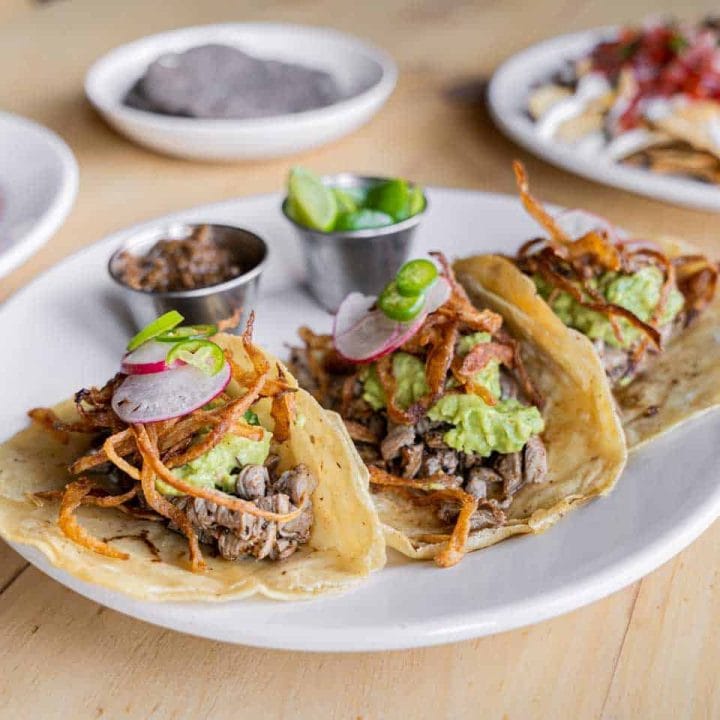
Arrachera Tacos (Grilled Mexican Skirt Steak)
Lime-and-garlic marinated skirt steak, grilled and sliced across the grain for tacos.
Ingredients
- 2 lb (900 g) skirt steak, membrane removed
- 1/4 cup olive oil
- 1/4 cup fresh lime juice
- 2 garlic cloves, minced
- 1 teaspoon dried Mexican oregano
- Salt and black pepper, to taste
- 12 small corn or flour tortillas, warmed
- 1/2 cup chopped fresh cilantro, for serving
- 1/2 cup finely chopped white onion, for serving
- Pico de gallo or salsa, to serve
- Lime wedges, to serve
Instructions
- Combine the oil, lime juice, garlic, oregano, salt and pepper in a nonreactive container. Add the skirt steak, coat well, cover and refrigerate for 4 hours.
- Preheat a grill or grill pan over medium-high to high heat. Remove the beef from the refrigerator when ready to cook, lift it from the marinade and pat dry. Discard used marinade. Cut the long steak into sections if needed to fit the cooking surface.
- Grill the steak, starting with about 3–5 minutes per side, until an instant-read thermometer inserted sideways into the thickest part reads at least 145°F (63°C). Thickness and heat determine the actual time; allow longer or cook in batches if needed.
- Move the steak to a clean board and rest for 5 minutes. Warm the tortillas during this time. Slice the beef thinly across the grain, then cut into shorter pieces if desired.
- Divide among 12 small tortillas and add cilantro, onion, salsa and lime. Serve immediately.
Notes
Makes 12 small tacos, about 4 servings of 3 tacos. Total time is approximately 4 hours 35 minutes: 15 minutes preparation, 4 hours refrigerated marinating, 15 minutes cooking and 5 minutes resting. Extra grill batches may take longer.
The four-hour marinade is sufficient for this lime-based mixture; longer is not automatically better. Use a different recipe’s timing if changing the marinade, especially with fresh pineapple. For mechanically tenderized steak, also follow package cooking instructions.
Flank steak can be substituted, but its thickness may require longer cooking. Use the same thermometer endpoint rather than a fixed time. Refrigerate cooked leftovers within 2 hours, use within 3–4 days and reheat to 165°F (74°C).
Final Thoughts

You are now well-equipped to choose, prepare, cook and serve Mexican grilled skirt steak.
Enjoy the process of experimenting with different marinades, cooking techniques and accompaniments to create your own unique version of Arrachera that’s perfect for your taste buds.
Happy cooking!
More Mexican Foods
See all →
Jorge Garcia is the founder of AmigoFoods, where he has spent over 20 years helping readers discover authentic Latin American and Spanish cuisine. Raised in a Cuban-American household, Jorge learned to cook at the hands of his mother and grandmother, carrying forward generations of family recipes. That heritage, backed by his family’s four-generation history in the Latin food industry, inspired him to launch AmigoFoods in 2003. With more than 1,000 published articles on recipes, ingredients, and food culture, Jorge’s mission is simple: make authentic Latin cooking approachable for home cooks everywhere while honoring the traditions behind every dish.