
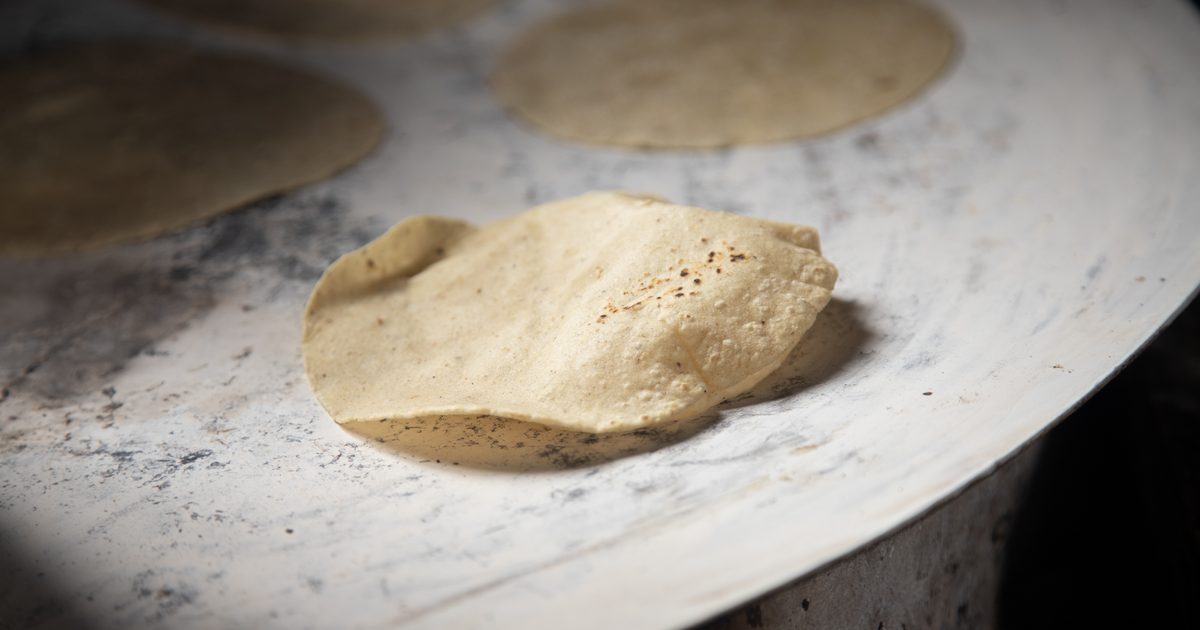
Corn tortillas turn masa harina, warm water and a little salt into a soft, fragrant base for tacos, enchiladas and chilaquiles. Rest the dough, press it thin and cook on a hot comal for a warm stack of 16 homemade tortillas.
Corn Tortillas at a Glance
What Are Corn Tortillas?
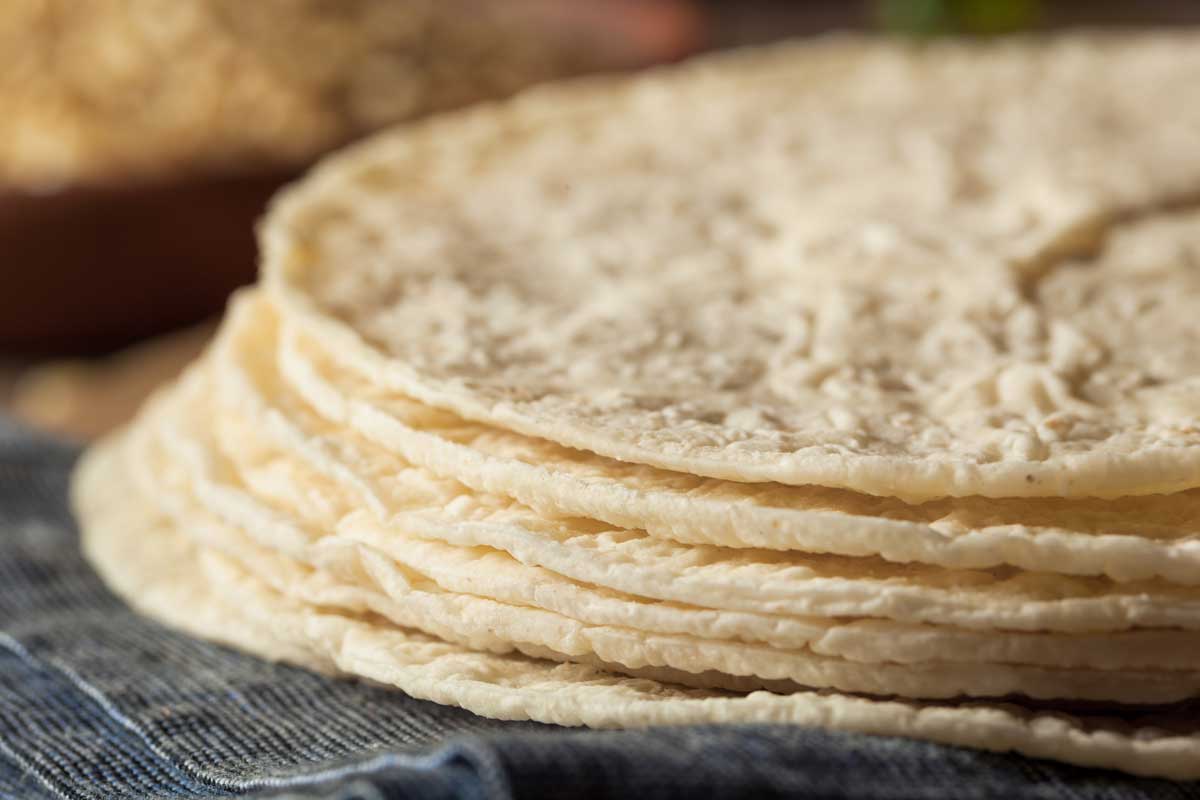
A corn tortilla (tortilla de maíz) is a flat, round bread made from masa, a dough of ground corn that has been nixtamalized, meaning the dried kernels were simmered and soaked in an alkaline solution of water and calcium hydroxide (cal, or slaked lime) before grinding. There is no yeast, no baking powder, no fat and no wheat. Masa, water, salt if you like, and heat.
That alkaline bath is the whole secret. Nixtamalization loosens the tough outer skin of the kernel so it can be rubbed off, softens the corn so it grinds into a dough that holds together, gives tortillas their distinctive toasty, slightly floral aroma and, most importantly, unlocks the niacin (vitamin B3) and amino acids locked inside the corn. Cultures that adopted corn without the lime treatment suffered pellagra; the Mesoamericans who invented the process never did. When you eat a corn tortilla you are eating a piece of food technology that is at least 3,000 years old.
Compared with a flour tortilla, a corn tortilla is smaller (usually 5 to 6 inches), thinner, more fragile when cold, more flavorful, naturally gluten-free and much lower in fat and sodium. It is the tortilla of tacos, enchiladas, chilaquiles, tostadas and tortilla soup. Flour tortillas belong to the wheat-growing north of Mexico and to burritos; everywhere else, corn rules.
A very short history: from tlaxcalli to the tortillería

The Nahuatl word for the bread is tlaxcalli. Spanish colonists renamed it tortilla, “little cake,” from torta, which is why a Spanish tortilla is a potato omelet and a Mexican one is corn bread (we untangle that in our tortilla española article). Evidence of nixtamalized corn goes back to roughly 1500 to 1200 BCE along Guatemala’s Pacific coast, and by the time of the Aztecs, tortillas were the daily bread of every class, patted out by hand on a stone metate and cooked on a clay comal.
Two twentieth-century inventions changed everything. The first was the mechanical tortilla machine, which turned the neighborhood tortillería into a Mexican institution: a kilo of hot tortillas, wrapped in paper, bought fresh every day. The second was masa harina, dehydrated nixtamalized corn flour, introduced by Maseca in 1949. It made real corn tortillas possible anywhere there was a bag of flour and a tap. Today tortillas are still the most eaten food in Mexico, and Gruma, Maseca’s parent company, is the largest tortilla producer in the world.
Corn Tortilla Essentials
| Question | Answer |
|---|---|
| Made from | Nixtamalized corn dough (masa), either fresh or reconstituted from masa harina, plus water and optional salt |
| Ratio | 2 cups masa harina : 1 1/2 to 1 3/4 cups warm water : 1/2 tsp salt (by weight, about 1 part flour to 1.5–1.75 parts water) |
| Yield | 16 tortillas, 5 to 6 inches, from 2 cups masa harina |
| Cook time | About 90 seconds per tortilla on a hot, dry skillet or comal |
| Texture | Soft and pliable when warm, with a slight chew and a toasted-corn flavor |
| Nutrition (1 tortilla, 24 g) | About 53 calories, 10 g carbs, 1.5 g fiber, 1.3 g protein, under 1 g fat, 10 mg sodium (USDA) |
| Gluten-free? | Yes, naturally. Check the bag for a certified label if you are celiac |
| Used for | Tacos, enchiladas, chilaquiles, tostadas, quesadillas, sopes, tortilla soup, chips |
Masa Harina, Fresh Masa and Maseca: What to Buy
You have two ways to get masa. Fresh masa (masa fresca or masa preparada) is ground that day at a tortillería or Mexican market and makes the best tortillas you will ever eat, but it spoils in a day or two and is hard to find outside cities with large Mexican communities. Masa harina is fresh masa that has been dried and milled into flour; add water and you are back to dough. It keeps for months and makes very good tortillas, so it is what this recipe uses. Read more in our complete guide to masa harina.
Whatever you buy, the bag should say masa harina, harina de maíz nixtamalizado or “instant corn masa flour.” Regular cornmeal, corn flour and polenta are not nixtamalized and will not make tortillas; the dough simply crumbles. Precooked corn flour for arepas (Harina P.A.N.) is not nixtamalized either and gives you a thick, sweet, crumbly round instead of a tortilla. We explain the difference in Harina P.A.N. vs. Maseca.
| Brand | What it is like | Best for |
|---|---|---|
| Maseca | The standard in Mexico and the easiest to find. Fine grind, mild flavor, very consistent. Buy the plain “Instant Corn Masa Flour,” not the tamal grind | Everyday tortillas, first-timers |
| Bob’s Red Mill Golden Masa Harina | Yellow corn, slightly coarser, sweeter and more “corny” than Maseca. Gluten-free certified | Flavorful yellow tortillas |
| Masienda (Heirloom) | Single-origin heirloom Mexican corn in white, yellow and blue. The most flavor and the highest price. Drinks a little more water | Special-occasion tortillas, blue corn tortillas |
| Gold Mine / King Arthur / Gruma “Minsa” | Reliable alternatives; organic options available. Any nixtamalized masa harina works with this recipe | Whatever your store carries |
Masa harina goes stale. If the bag has been open for months and your tortillas taste flat or crack constantly, buy a fresh bag before you blame your technique. Store it sealed in the freezer if you only make tortillas occasionally.
Equipment: Do You Need a Tortilla Press?
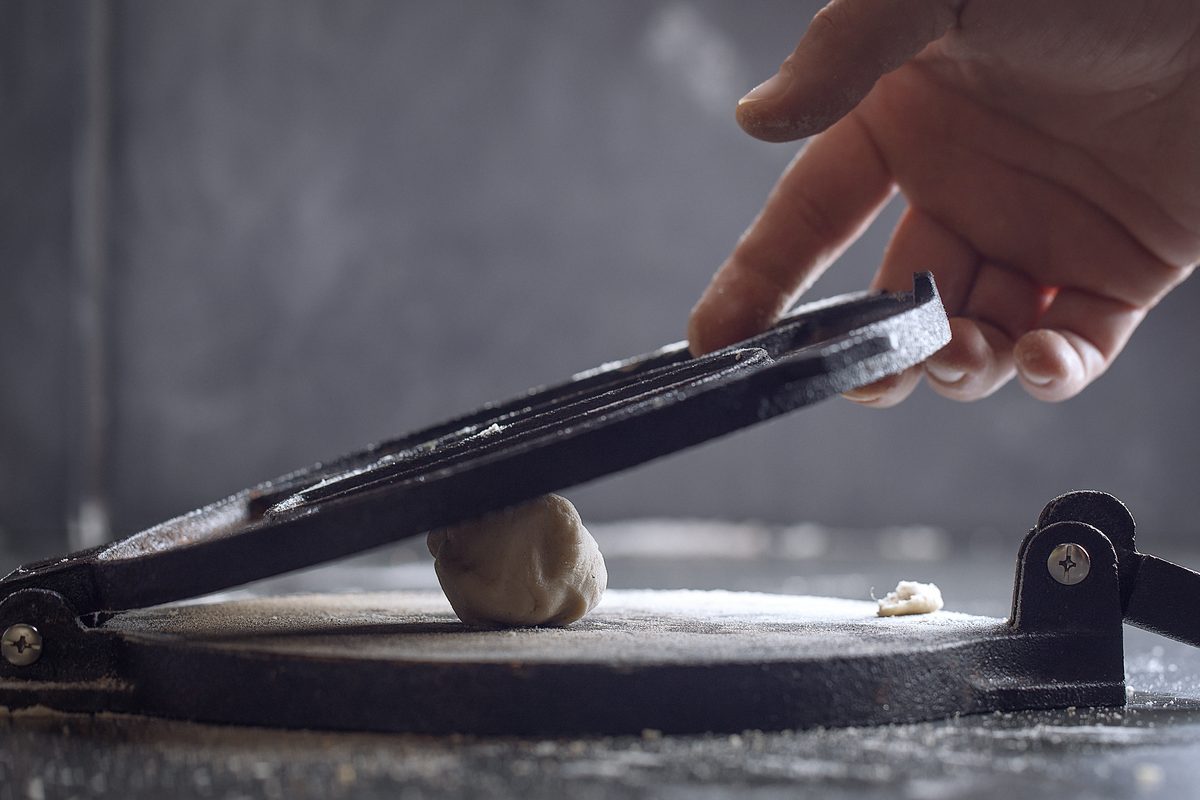
No, but it helps. A tortilla press (prensa) is a hinged pair of plates, usually cast iron or aluminum, that flattens a ball of masa into an even round in one squeeze. A heavy cast-iron press gives the most even tortillas and lasts forever. If you do not have one, a rolling pin, a pie plate pressed down on the dough, or a heavy skillet all work; they are simply slower. For a family that makes tortillas often, a cast-iron tortilla press is the best twenty dollars you will spend in a Mexican kitchen.
The rest of the list you almost certainly own already:
- A comal or heavy skillet. A comal is a flat griddle, traditionally clay and now usually carbon steel or cast iron. Any cast-iron or carbon-steel skillet does the same job. Nonstick works but cannot get as hot, so tortillas puff less.
- Two sheets of plastic. Cut a zip-top freezer bag along the seams to make two squares. Plastic releases masa far better than parchment or wax paper.
- A bowl, a kitchen towel and a spatula. The towel is not optional: tortillas straight off the comal need to steam together for a few minutes to soften.
- A tortilla warmer (tortillero). Cloth, plastic or clay; a towel-lined basket is the traditional version and works exactly as well.
How to Make Corn Tortillas, Step by Step

The full ingredient list and printable card are further down. Read the steps once first; the details, especially about hydration and heat, are what separate a tortilla that puffs from one that cracks.
1. Mix the masa

Put 2 cups of masa harina and 1/2 teaspoon of salt in a wide bowl. Pour in 1 1/2 cups of warm water (about 100°F, warm drinking water is fine) and mix with your hand, squeezing and folding, until no dry flour remains. Now judge the dough: it should feel like soft Play-Doh, smooth and springy, moist but not tacky. Roll a ball and flatten it between your fingers. If the edges crack, add water a tablespoon at a time and knead it in. If it sticks to your hand, dust in a little more masa harina. Different brands and different humidity change the amount, so trust the feel, not the measurement. Most days you will end up using 1 1/2 to 1 3/4 cups.
2. Rest it
Cover the bowl with a damp towel and leave the masa for 15 to 30 minutes. Masa harina is thirsty and keeps absorbing water after mixing; the rest lets it hydrate fully so the tortillas press without cracking at the edges. Check the dough again after resting and add a splash of water if it has tightened up. Meanwhile, put your comal or skillet over medium-high heat so it is thoroughly hot by the time you press the first tortilla.
3. Portion and press

Divide the masa into 16 pieces, roll each into a golf-ball-sized sphere (about 40 grams) and keep them covered so they do not dry out. Line the press with plastic, set a ball slightly off-center toward the hinge, cover with the second sheet and close. Press firmly, open, rotate the tortilla 180 degrees and press again for an even thickness of about 1/16 inch (a bit thinner than a coin), 5 to 6 inches across. Peel off the top sheet, flip the tortilla onto your fingers and peel away the second sheet. Never try to pull the tortilla off the plastic; pull the plastic off the tortilla.
4. Cook in three stages (two flips)

Lay the tortilla on the dry, hot comal with a rolling motion so it lands flat without folds. Cook it in three stages:
- First side, 15 to 20 seconds. Just until the edges begin to dry and lift and the tortilla releases easily. Flip.
- Second side, 40 to 50 seconds. Brown freckles form underneath and the top turns matte. Flip.
- Back to the first side, 20 to 30 seconds. This is when it puffs. Press the center very gently with a fingertip or the spatula to encourage the steam to lift the top layer. Once it puffs (or after 30 seconds if it does not), it is done.
Total time is about 90 seconds. Stack the finished tortillas in a towel-lined basket or tortillero and fold the cloth over. Trapped steam finishes cooking them and turns slightly stiff tortillas soft and flexible in a couple of minutes. Adjust the heat as you go: too hot and the tortillas scorch before they cook through; too cool and they dry out and go leathery. Small brown spots, not black patches, are what you want.
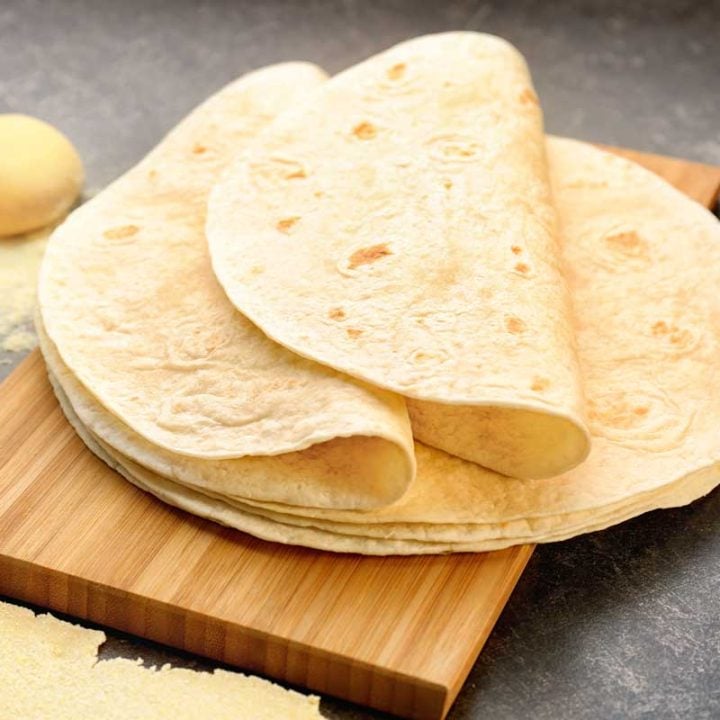
Homemade Corn Tortillas
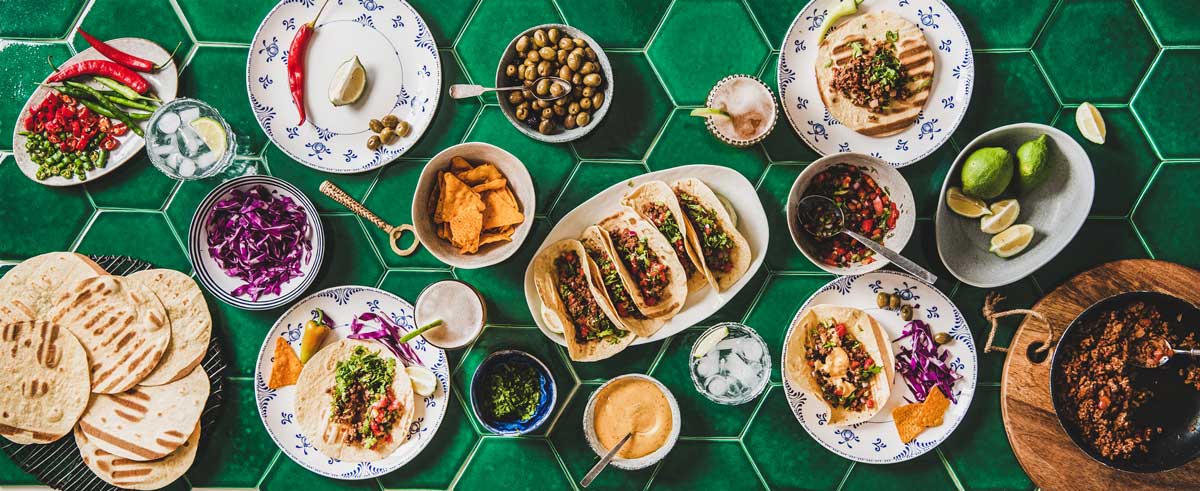
Soft, pliable corn tortillas from masa harina, water and salt. Rest the dough, press it thin, and cook in three stages with two flips on a hot comal. Makes 16 tortillas for tacos, enchiladas or chilaquiles.
Ingredients
- 2 cups (240 g) masa harina, such as Maseca or Bob's Red Mill
- 1 1/2 to 1 3/4 cups (360 to 420 ml) warm water, about 100°F
- 1/2 teaspoon fine salt (optional)
Instructions
- Combine the masa harina and salt in a wide bowl. Pour in 1 1/2 cups of the warm water and mix with your hand, squeezing and folding, until no dry flour remains and a dough forms.
- Test the dough: roll a ball and flatten it between your fingers. If the edges crack, knead in more water a tablespoon at a time; if it sticks to your hand, dust in a little masa harina. It should feel like soft, smooth modeling clay.
- Cover with a damp towel and rest 15 to 30 minutes so the masa hydrates fully. Meanwhile heat a comal or cast-iron skillet over medium-high until thoroughly hot.
- Divide the dough into 16 balls (about 40 g each) and keep them covered. Cut a zip-top bag into two squares of plastic to line the press.
- Set a ball between the plastic sheets in the tortilla press and close firmly. Open, rotate the tortilla 180 degrees and press again for an even round about 1/16 inch thick and 5 to 6 inches across. Peel the plastic away from the tortilla, not the tortilla from the plastic.
- Lay the tortilla on the dry, hot comal. Cook 15 to 20 seconds until the edges lift, flip, cook 40 to 50 seconds until freckled underneath, then flip again and cook 20 to 30 seconds more, pressing the center gently so it puffs.
- Stack the finished tortillas in a towel-lined basket or tortillero and keep them covered; the trapped steam makes them soft and pliable. Repeat with the remaining dough, adjusting the heat so the tortillas freckle without scorching.
- Serve warm. Refrigerate leftovers in a sealed bag up to a week, or freeze with parchment between them up to 3 months, and reheat on a dry skillet.
Notes
Only nixtamalized masa harina (Maseca, Bob's Red Mill, Masienda) works; cornmeal, corn flour and arepa flour will not bind. The exact amount of water changes with the brand and the weather, so trust the feel of the dough. No press? Flatten the balls between plastic with a heavy skillet or pie plate. For street-taco size, use 25 g balls and you will get about 25 tortillas.
Nutrition Information:
Yield: 16 Serving Size: 1 tortillaAmount Per Serving: Calories: 53Total Fat: 1gSaturated Fat: 0gTrans Fat: 0gUnsaturated Fat: 0gCholesterol: 0mgSodium: 84mgCarbohydrates: 10gNet Carbohydrates: 9gFiber: 1gSugar: 0gSugar Alcohols: 0gProtein: 1g
Why Do Tortillas Puff (And Why Yours Might Not)
The puff, called inflar, happens when the moisture inside the tortilla turns to steam faster than it can escape. The first two turns seal both faces with a thin cooked skin; on the third turn the trapped water boils and lifts the top skin like a balloon. A puffed tortilla has a thin, tender top layer and a slightly thicker base, which is exactly the structure you want for a taco. It is a sign of a good tortilla, not a requirement; a tortilla that never puffs is still perfectly good to eat.
When tortillas refuse to puff, the reasons are almost always one of these: the masa is too dry (most common by far), the comal is not hot enough, the tortilla is pressed unevenly so the thin spots leak steam, the first side was left on too long and dried out, or there is a crack or pinhole letting steam escape. Fix the hydration first, then the heat.
Troubleshooting: Cracking, Sticking and Dry Tortillas
| Problem | Cause | Fix |
|---|---|---|
| Edges crack when pressed | Masa is too dry | Knead in water a tablespoon at a time until a pressed ball has smooth edges; rest 15 minutes |
| Tortilla sticks to the plastic | Masa is too wet, or you are peeling the tortilla instead of the plastic | Work in a little masa harina; peel the plastic away from the tortilla, not the reverse |
| Tortillas are stiff and leathery | Cooked too long or over too low a heat; not steamed after cooking | Hotter comal, shorter cooks, and always stack them in a covered towel for a few minutes |
| Tortillas break when folded | Cold or dry; store-bought ones were never reheated properly | Reheat on a hot dry skillet until pliable and steam in a towel (see below) |
| Dough crumbles and will not hold | Wrong flour: cornmeal, corn flour or arepa flour instead of nixtamalized masa harina | Buy a bag labeled masa harina or “instant corn masa flour” |
| Raw, gummy center | Pressed too thick | Press, rotate and press again to about 1/16 inch |
| Bitter or flat flavor | Stale masa harina | Open a fresh bag; freeze what you do not use within a month or two |
How to Warm Store-Bought Corn Tortillas So They Don’t Break

Most complaints about corn tortillas, that they crack, tear and fall apart in a taco, are really complaints about cold tortillas. The starches in a corn tortilla set firm as it cools; heat and a little steam relax them again. Never serve a corn tortilla straight from the bag.
- Dry skillet (best). Heat a comal or cast-iron skillet over medium-high. Lay tortillas on one or two at a time for 20 to 30 seconds per side until they are hot, flexible and lightly toasted. Stack in a towel as you go.
- Open flame (best flavor). Set a tortilla directly on a gas burner over medium flame for 10 to 15 seconds a side, turning with tongs, until it chars in spots. This is how street taquerías do it.
- Microwave (fastest). Wrap a stack of up to 8 in a damp paper towel and microwave 30 to 45 seconds. Eat immediately; microwaved tortillas stiffen again as they cool.
- Oven (for a crowd). Wrap stacks of 10 in foil and warm at 350°F for 10 to 15 minutes.
- For enchiladas. Briefly fry each tortilla in 1/4 inch of hot oil for a few seconds per side before dipping in sauce. The oil seals the surface so the tortillas do not dissolve while baking.
Corn Tortillas vs. Flour Tortillas
| Corn tortilla (6 in, 24 g) | Flour tortilla (8 in, 45 g) | |
|---|---|---|
| Main ingredient | Nixtamalized corn | Wheat flour, fat (lard or oil), baking powder |
| Calories | About 53 | About 140 |
| Fat | Under 1 g | About 3.5 g |
| Sodium | About 10 mg | About 300 mg |
| Fiber | 1.5 g (whole grain) | About 1 g |
| Gluten | None | Yes |
| Texture | Thin, tender, slightly chewy, toasted-corn flavor | Soft, stretchy, neutral, holds heavy fillings |
| Traditional home | Central and southern Mexico, Central America | Northern Mexico (Sonora, Chihuahua), Tex-Mex |
| Best for | Street tacos, enchiladas, chilaquiles, tostadas, tortilla soup, chips | Burritos, quesadillas, fajitas, wraps |
Corn is the healthier tortilla by every ordinary measure: fewer calories, far less sodium and fat, more fiber, and it counts as a whole grain. The one thing flour does better is hold together around a heavy, wet filling, which is why burritos are flour and street tacos are corn. If you want both, Mexico’s north makes tortillas de harina with lard and a lot of skill; the two breads are not competitors so much as cousins from different climates.
Blue Corn Tortillas, Sizes and Other Variations

- Blue corn tortillas. Made from blue or purple heirloom corn, which is higher in anthocyanins and has an earthier, nuttier flavor. Blue masa harina is used exactly like white; the tortillas come out slate-gray to deep indigo. They are traditional in Tlaxcala, Puebla and the State of Mexico and beloved in New Mexico.
- Yellow vs. white. Most of Mexico prefers white corn for its softer, more delicate tortilla. Yellow corn tortillas (common in the United States) are sweeter and a little sturdier.
- Taquería size. Street tacos use 4- to 4 1/2-inch tortillas, often doubled. Portion your masa at about 25 grams for these.
- Tlayudas. Oaxaca’s giant 12-inch tortillas, cooked until leathery, then topped and grilled. See our tlayudas article.
- Thick masa cousins. Press the same masa thicker and you get sopes, gorditas, memelas, huaraches and bean-stuffed tlacoyos. Central America’s pupusas are masa too. Venezuelan and Colombian arepas are the exception: they are made from precooked corn flour that is not nixtamalized.
- Flavored masa. Knead in a spoonful of puréed chipotle, a handful of chopped cilantro, or a little nopal (cactus) purée for green tortillas. Keep additions small so the dough still holds.
What to Make With Corn Tortillas
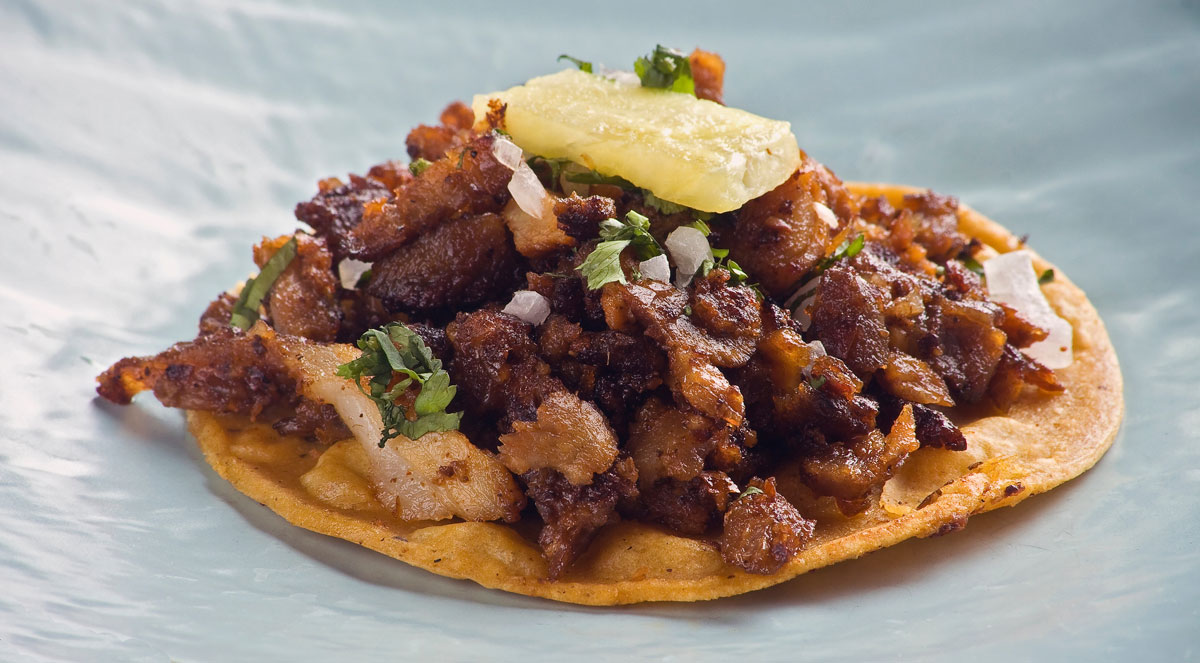
Fresh tortillas are the beginning of most of the Mexican dishes on this site. A few places to start:
- Tacos. Any filling, two warm tortillas, onion, cilantro, salsa and lime. Try tacos al pastor, carnitas, carne asada, birria, barbacoa or Baja fish tacos.
- Enchiladas. Tortillas dipped in chile sauce and rolled around a filling: verdes, rojas, tomato-sauced entomatadas and bean-sauced enfrijoladas.
- Chilaquiles. The best use for day-old tortillas: cut into wedges, fried crisp, then simmered in salsa. Our chilaquiles verdes are a weekend breakfast staple.
- Huevos rancheros. A lightly fried tortilla under fried eggs and ranchero sauce; see all our Mexican breakfast dishes.
- Tostadas and chips. Fry or bake whole tortillas flat for tostadas like tostadas de tinga, or cut into wedges for totopos to serve with guacamole and pico de gallo.
- Sopa de tortilla. Fried tortilla strips are the whole point of Mexico’s most famous soup.
- Rolled and fried. Flautas and taquitos are tortillas rolled around a filling and fried until crisp.
- Yucatán and beyond. Fried tortillas become panuchos and salbutes in the Yucatán.
For the full spread, browse our guides to Mexican street food, the best Mexican dishes, Mexican salsas and Mexican cheeses, or start at our Mexican food hub.
Storing and Freezing Corn Tortillas
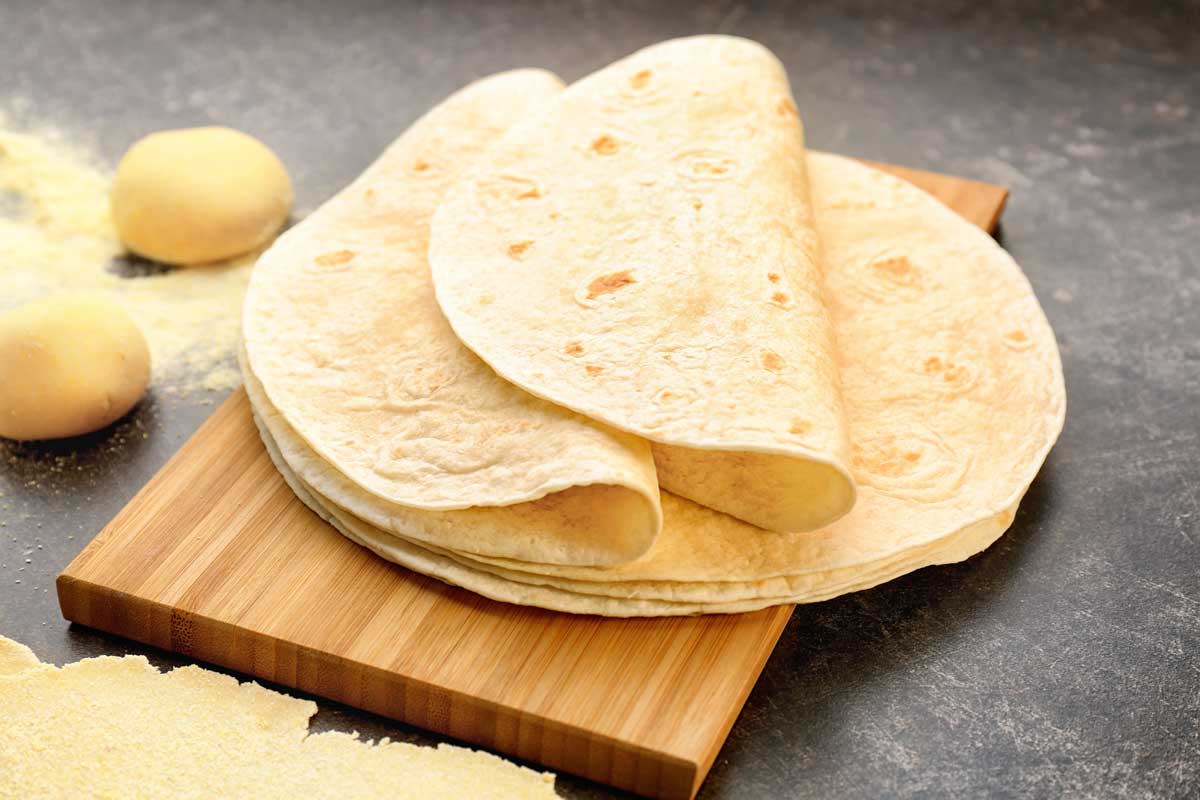
- Uncooked masa. Wrap tightly in plastic and refrigerate up to 2 days. Let it come to room temperature and knead in a little water before pressing; it dries out as it sits.
- Cooked tortillas, room temperature. Wrapped in the towel, they are at their best for 2 to 3 hours.
- Refrigerator. Cool completely, then seal in a zip-top bag with the air pressed out. They keep 5 to 7 days. Always reheat on a dry skillet before eating.
- Freezer. Stack with parchment between every tortilla (or every 4 for a family), bag, and freeze up to 3 months. Reheat straight from frozen on a hot skillet, 30 to 45 seconds per side.
- Stale tortillas are not a loss. They are the correct ingredient for chilaquiles, tortilla soup, migas and homemade chips.
Where to Buy Corn Tortillas and Masa Harina
Every supermarket sells corn tortillas in the refrigerated case or bread aisle, but the quality varies enormously. Look for a short label (corn, water, lime, maybe salt), avoid brands that list wheat flour or gums, and if you have a Mexican market or tortillería nearby, buy there: tortillas made that morning are a different food. Many markets also sell fresh masa by the pound on weekends, which is the shortcut to the best homemade tortillas of all.
For masa harina and gear, Amazon carries everything the local store may not: masa harina in white, yellow and blue, a cast-iron tortilla press, a comal and a tortilla warmer. See our Mexican ingredients page for the rest of the pantry.
Frequently Asked Questions
What are corn tortillas made of?
Just nixtamalized corn dough (masa) and water, with salt optional. Store-bought tortillas usually list corn, water and lime (calcium hydroxide). If you see wheat flour, cellulose gum or preservatives, it is a lower-quality tortilla.
Are corn tortillas gluten-free?
Yes. Corn contains no gluten, so tortillas made from 100% corn masa are naturally gluten-free. If you have celiac disease, choose masa harina or tortillas with a certified gluten-free label, since some facilities also mill wheat, and be aware that “corn and flour blend” tortillas exist.
Are corn tortillas healthy?
For a bread, very. One 6-inch tortilla has about 53 calories, 10 grams of carbohydrate, 1.5 grams of fiber, almost no fat and around 10 milligrams of sodium, and it is a whole grain. Nixtamalization also adds calcium and makes the corn’s niacin available. Flour tortillas have roughly two to three times the calories, fat and sodium.
How many calories are in a corn tortilla?
About 50 to 60 for a standard 6-inch tortilla (24 grams), according to USDA data. Larger 8-inch corn tortillas run 90 to 100 calories.
Why do my corn tortillas fall apart?
Homemade tortillas crack because the masa is too dry: add water until a pressed ball has smooth edges and let it rest 15 minutes. Store-bought tortillas break because they are cold: heat them on a dry skillet until pliable and keep them steaming in a towel. Doubling up two tortillas per taco, the taquería way, also helps.
Can I make corn tortillas without a tortilla press?
Yes. Put the dough ball between two sheets of plastic and press with a heavy skillet, a pie plate or a cutting board, then finish with a rolling pin to even it out. The tortillas will be slightly less uniform but taste identical.
Can I make corn tortillas with cornmeal or corn flour?
No. Cornmeal, corn flour, polenta and precooked arepa flour are not nixtamalized, so the dough will not bind and the tortillas crumble. Only masa harina (or fresh masa) works.
Why don’t my tortillas puff?
Most often the masa is too dry or the pan is not hot enough. The final cooking stage is when the puff happens, so make sure you are flipping twice and pressing the center gently. Uneven pressing and small cracks also let the steam escape. A tortilla that does not puff is still fine to eat.
How do you keep corn tortillas warm for a party?
Wrap stacks of 10 to 12 in a clean towel and put them in a tortilla warmer, an insulated bag or a low oven (200°F) wrapped in foil. They stay soft for an hour or more as long as they are covered so the steam cannot escape.
Can you freeze homemade corn tortillas?
Yes. Cool them completely, layer with parchment, seal in a freezer bag and freeze up to 3 months. Reheat from frozen on a hot dry skillet; do not thaw them on the counter or they turn gummy.
What is the difference between corn tortillas and flour tortillas?
Corn tortillas are made from nixtamalized corn, are smaller and thinner, have more flavor and fiber and far less fat and sodium, and are gluten-free. Flour tortillas are made from wheat flour with fat and leavening, are larger, softer and stretchier, and hold heavy fillings better. Corn is traditional in most of Mexico; flour belongs to the north and to burritos.
Sources
- USDA FoodData Central, “Tortillas, ready-to-bake or -fry, corn” (nutrition per 24 g tortilla).
- Masienda, “How to Make Tortillas with Masa Harina” and “The Anatomy of a Tortilla Puff.”
- Gruma / Maseca corporate history (masa harina introduced 1949).
- Staller, Tykot & Benz (eds.), Histories of Maize (2006), on early nixtamalization in Mesoamerica.
- Diana Kennedy, The Essential Cuisines of Mexico, on comal technique and regional tortilla types.
More Mexican Foods
See all →
Jorge Garcia is the founder of AmigoFoods, where he has spent over 20 years helping readers discover authentic Latin American and Spanish cuisine. Raised in a Cuban-American household, Jorge learned to cook at the hands of his mother and grandmother, carrying forward generations of family recipes. That heritage, backed by his family’s four-generation history in the Latin food industry, inspired him to launch AmigoFoods in 2003. With more than 1,000 published articles on recipes, ingredients, and food culture, Jorge’s mission is simple: make authentic Latin cooking approachable for home cooks everywhere while honoring the traditions behind every dish.