

Asopao de pollo is a thick Puerto Rican chicken and rice stew made with sofrito, tomato and savory broth. The rice cooks directly in the pot, giving the broth body, while olives and fresh cilantro brighten each bowl.
Asopao de Pollo at a Glance
What is asopao de pollo?
Asopao de pollo is chicken and rice cooked together in a generous amount of seasoned liquid. It lands between soup and stew, with rice thickening the broth naturally. You don’t need cream or a flour-based thickener.
Asopao is enjoyed in both Puerto Rico and the Dominican Republic, with ingredients and techniques varying by household. This recipe follows a Puerto Rican approach, using sofrito, adobo, sazón, and green olives. It belongs alongside other comforting Puerto Rican soups and stews.
Asopao vs. arroz con pollo
The main difference is the finished texture. Arroz con pollo is served as seasoned rice with chicken; asopao retains enough broth to eat with a spoon. If your asopao becomes a mound of rice, stir in more hot liquid before serving.
Ingredients that make a difference

Chicken: Bone-in thighs and drumsticks suit a simmered dish. Use similarly sized pieces so they cook evenly. Removing the skin keeps the finished broth less fatty, though you can leave it on if you prefer.
Rice: This version uses regular medium-grain white rice. Measure it before rinsing. Brown rice and instant rice have different cooking requirements and should not be substituted using the same timing.
Sofrito: Use a Puerto Rican-style sofrito or recaito with herbs, peppers, onion, and garlic. Homemade and prepared versions vary in flavor and salt, so taste before adding extra seasoning. You don’t need to add a separate onion and garlic if they are already in your sofrito.
Broth: Low-sodium chicken broth gives you more control over seasoning. Keep additional broth or water hot for adjusting the consistency without stopping the simmer.
Tomato sauce: Plain, unseasoned tomato sauce gives the broth a consistent tomato base. Avoid substituting a seasoned pasta sauce, which changes the flavor.
Adobo and sazón: These seasoning blends differ by brand; our guide to adobo vs. sazón explains what each one does. Sazón with achiote contributes color; adobo commonly includes salt and garlic. Check the labels before adding salt, especially when using prepared sofrito and broth.
Olives and vegetables: Pimento-stuffed olives bring salt and acidity. Dice carrots and bell peppers small so they soften evenly, and add frozen peas near the end so they don’t spend the whole cooking time simmering.
Asopao de pollo ingredients and measurements
Servings: 6
Estimated prep time: 15 minutes
Estimated cook time: 60 minutes
Estimated total time: 75 minutes
Equipment: A heavy pot of at least 6 quarts, a spoon, tongs, and an instant-read thermometer.
- 2 pounds bone-in chicken thighs or drumsticks, skin removed if desired
- 1 teaspoon adobo seasoning
- ¼ teaspoon ground black pepper
- 2 tablespoons olive oil
- ½ cup Puerto Rican-style sofrito
- ⅓ cup finely diced carrot
- ⅓ cup finely diced bell pepper
- 1 cup plain tomato sauce
- 1 packet sazón with achiote, using the package’s standard single packet
- 1 teaspoon dried oregano
- 2 bay leaves
- 6 cups low-sodium chicken broth, plus up to 2 cups additional hot broth or water as needed
- 1½ cups uncooked medium-grain white rice, rinsed and drained
- ½ cup drained pimento-stuffed green olives, sliced
- ⅓ cup frozen peas
- 2 tablespoons chopped fresh cilantro
- Salt, only as needed
- Lime wedges and sliced avocado, optional, for serving
How to make asopao de pollo

- Season and brown the chicken. Pat the chicken dry and season with adobo and black pepper. Heat the oil in your pot over medium-high heat. Brown the chicken for about 8–10 minutes total, turning to color both sides. Work in batches if necessary. Transfer to a plate; the chicken will finish cooking in the broth.
- Cook the sofrito and vegetables. Reduce the heat to medium. Add the sofrito, carrot, and bell pepper. Cook for 3–4 minutes, stirring, until fragrant and beginning to soften. If the bottom looks dry, add a splash of broth and loosen the browned bits with your spoon.
- Build the broth. Stir in the tomato sauce, sazón, and oregano and cook for 1 minute. Pour in 6 cups of broth and add the bay leaves. Return the chicken and any juices on the plate to the pot. Bring to a boil, then lower the heat to a steady simmer.
- Give the chicken a head start. Partially cover and simmer for about 15 minutes before adding the rice. This lets the bone-in pieces cook longer without requiring the rice to simmer for the entire time.
- Cook the rice. Stir in the rinsed rice and bring back to a gentle simmer. Cook partially covered for about 20–25 minutes, checking the rice from 15 minutes onward. Stir occasionally along the bottom to prevent sticking. Add hot broth or water, ½ cup at a time, if the mixture becomes thick before the rice is tender.
- Check doneness and finish. Check that the chicken has reached at least 165°F in its thickest part, avoiding the bone. The rice should be soft with no chalky center. If the chicken needs longer after the rice is ready, finish the chicken in a separate small pot with some broth to avoid overcooking the rice. Stir the olives and frozen peas into the asopao and simmer for 2–3 minutes, until the peas are hot.
- Adjust and serve. Remove the bay leaves. Add more hot liquid as needed: the finished asopao should ladle easily, with broth visible around the rice and chicken. Taste before adding salt. Stir in the cilantro and serve promptly, with lime and avocado if you like.
Recipe notes
The amount of extra liquid depends on your pot, heat, rice, and preferred thickness. Keep the simmer gentle, and use the rice’s texture and the chicken’s temperature to judge doneness rather than relying only on the clock.
If you prefer boneless bowls, remove the fully cooked chicken, pull the meat from the bones, and return the meat to the pot before serving. Discard the bones and any remaining skin.
How to get the right consistency

Asopao should have body without becoming dry or pasty. Lift a spoonful: the rice and broth should slide off together rather than fall as a solid clump.
ASOPAO TROUBLESHOOTING
Get your pot back on track
A quick guide to tender rice and a spoonable broth.
| What you notice | What to do |
|---|---|
| Rice is still firm, but the broth is disappearing | ADD BROTH Add ½ cup hot broth or water, maintain a gentle simmer, and check again in a few minutes. |
| Rice is tender, but the pot looks too thick | LOOSEN & SERVE Add hot liquid a little at a time and serve as soon as the consistency suits you. |
| Broth looks thin while rice is still cooking | LET IT COOK Let the rice finish before adjusting; it will absorb liquid and thicken the broth. |
| Finished asopao is too thin | REST BRIEFLY Let it stand briefly off the heat, then check again. Avoid prolonged cooking once the rice is tender. |
| Rice is breaking down | STOP COOKING Stop cooking. Extra broth can loosen the stew, but it cannot restore overcooked grains. |
| Broth tastes too salty | DILUTE & TASTE Use unsalted hot water for thinning and hold back extra olives or seasoning. Recheck the flavor after adjusting. |
Your texture target: Rice and broth should slide off the spoon together.
Brown the chicken before adding sofrito. This gives the chicken direct contact with the hot pot and helps avoid scorching the sofrito while you try to brown the meat.
What to serve with asopao de pollo
Asopao can be a meal on its own. For something crisp alongside the soft rice, serve tostones. Sliced avocado adds a cool, creamy contrast, while maduros bring sweetness.
Put lime wedges and hot sauce on the table so each person can adjust their bowl. Asopao doesn’t have to be spicy to be flavorful.
Storage, reheating, and making ahead
Divide leftovers into shallow containers and refrigerate within 2 hours, or within 1 hour if the temperature is above 90°F. Keep refrigerated at 40°F or below and use within 3–4 days. Reheat leftovers to 165°F. These limits follow USDA leftover-handling guidance.
For reheating, put a portion in a saucepan with a splash of broth or water. Heat while stirring gently, adding more liquid until it is spoonable again. The rice will be softer than when freshly cooked.
You can freeze asopao, although the rice may soften further after thawing. Freeze in meal-sized containers with room for expansion, thaw in the refrigerator, and reheat thoroughly with extra liquid.
For better texture when making ahead, prepare the chicken and broth through step 4, then finish cooking the chicken to 165°F before cooling and refrigerating promptly. When ready to serve, bring the base back to a boil and continue with the uncooked rice. Adjust the liquid as needed.
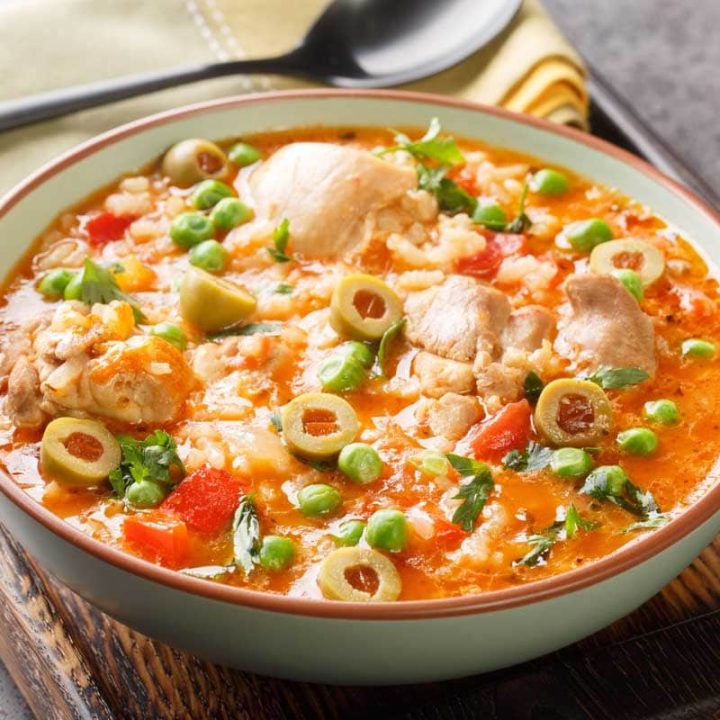
Asopao de Pollo Recipe (Puerto Rican Chicken and Rice Stew)
Asopao de pollo is a Puerto Rican chicken and rice stew with sofrito, tomato, olives, and peas. Keep extra hot broth ready for a thick but spoonable consistency.
Ingredients
- 2 pounds bone-in chicken thighs or drumsticks, skin removed if desired
- 1 teaspoon adobo seasoning
- ¼ teaspoon ground black pepper
- 2 tablespoons olive oil
- ½ cup Puerto Rican-style sofrito
- ⅓ cup finely diced carrot
- ⅓ cup finely diced bell pepper
- 1 cup plain tomato sauce
- 1 packet sazón with achiote, using the package’s standard single packet
- 1 teaspoon dried oregano
- 2 bay leaves
- 6 cups low-sodium chicken broth, plus up to 2 cups additional hot broth or water as needed
- 1½ cups uncooked medium-grain white rice, rinsed and drained
- ½ cup drained pimento-stuffed green olives, sliced
- ⅓ cup frozen peas
- 2 tablespoons chopped fresh cilantro
- Salt, only as needed
- Lime wedges and sliced avocado, optional, for serving
Instructions
- Season and brown the chicken. Pat the chicken dry and season with adobo and black pepper. Heat the oil in your pot over medium-high heat. Brown the chicken for about 8–10 minutes total, turning to color both sides. Work in batches if necessary. Transfer to a plate; the chicken will finish cooking in the broth.
- Cook the sofrito and vegetables. Reduce the heat to medium. Add the sofrito, carrot, and bell pepper. Cook for 3–4 minutes, stirring, until fragrant and beginning to soften. If the bottom looks dry, add a splash of broth and loosen the browned bits with your spoon.
- Build the broth. Stir in the tomato sauce, sazón, and oregano and cook for 1 minute. Pour in 6 cups of broth and add the bay leaves. Return the chicken and any juices on the plate to the pot. Bring to a boil, then lower the heat to a steady simmer.
- Give the chicken a head start. Partially cover and simmer for about 15 minutes before adding the rice. This lets the bone-in pieces cook longer without requiring the rice to simmer for the entire time.
- Cook the rice. Stir in the rinsed rice and bring back to a gentle simmer. Cook partially covered for about 20–25 minutes, checking the rice from 15 minutes onward. Stir occasionally along the bottom to prevent sticking. Add hot broth or water, ½ cup at a time, if the mixture becomes thick before the rice is tender.
- Check doneness and finish. Check that the chicken has reached at least 165°F in its thickest part, avoiding the bone. The rice should be soft with no chalky center. If the chicken needs longer after the rice is ready, finish the chicken in a separate small pot with some broth to avoid overcooking the rice. Stir the olives and frozen peas into the asopao and simmer for 2–3 minutes, until the peas are hot.
- Adjust and serve. Remove the bay leaves. Add more hot liquid as needed: the finished asopao should ladle easily, with broth visible around the rice and chicken. Taste before adding salt. Stir in the cilantro and serve promptly, with lime and avocado if you like.
Notes
Timing is approximate and depends on chicken size, rice, pot, and heat. Use a heavy pot of at least 6 quarts. The amount of extra liquid depends on your preferred thickness. Keep the simmer gentle and use the rice’s texture and chicken’s temperature to judge doneness. For boneless bowls, remove the fully cooked chicken, pull the meat from the bones, and return the meat before serving; discard bones and remaining skin. Refrigerate promptly in shallow containers and use within 3–4 days. Reheat to 165°F with extra broth or water.
Frequently asked questions
Can I use long-grain rice?
Yes. Medium-grain white rice suits this Puerto Rican-style version, but long-grain rice also appears in established asopao recipes, including Clara Gonzalez’s Dominican version. Expect a different texture and potentially a different cooking time. Check tenderness early and adjust the broth as needed; avoid treating all rice varieties as interchangeable.
Is asopao Puerto Rican or Dominican?
Both cuisines have asopao traditions. This is a Puerto Rican-style recipe; Dominican versions have their own household variations. There isn’t one fixed recipe that represents every family in either country.
Is asopao de pollo spicy?
This version uses no hot peppers. Adobo, sofrito, oregano, and sazón create savory flavor, while the olives add a briny note. Check prepared seasonings if you are sensitive to heat, and serve hot sauce separately.
Can I make it without olives?
Yes. Omit the olives and taste the finished broth before adjusting the salt. A squeeze of lime at the table can add brightness without the olive flavor.
Why does the rice absorb all the broth?
Rice continues absorbing liquid after cooking, especially while the pot sits warm. Serve promptly and keep extra hot broth available. For leftovers, expect to add liquid during reheating.
What other kinds of asopao can I try?
Explore asopao de gandules, made with pigeon peas, or versions featuring shrimp and other seafood. Use a recipe written for the chosen protein: shrimp needs much less cooking time than bone-in chicken.
If you make this asopao, leave a comment with the rice you used and whether you prefer a thicker or soupier bowl. Those details help other home cooks.
More Puerto Rican Foods
See all →
Jorge Garcia is the founder of AmigoFoods, where he has spent over 20 years helping readers discover authentic Latin American and Spanish cuisine. Raised in a Cuban-American household, Jorge learned to cook at the hands of his mother and grandmother, carrying forward generations of family recipes. That heritage, backed by his family’s four-generation history in the Latin food industry, inspired him to launch AmigoFoods in 2003. With more than 1,000 published articles on recipes, ingredients, and food culture, Jorge’s mission is simple: make authentic Latin cooking approachable for home cooks everywhere while honoring the traditions behind every dish.