

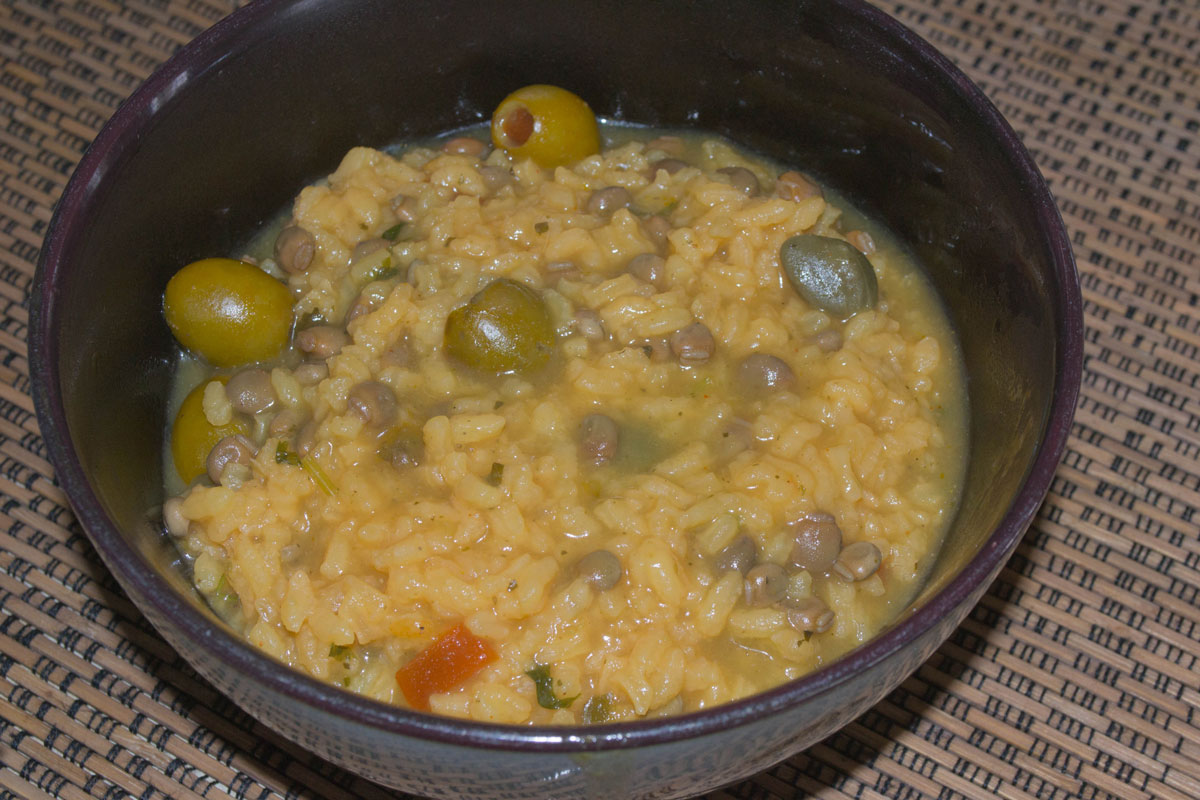
Asopao de gandules is a soupy Puerto Rican stew of green pigeon peas, sofrito, ham and a small amount of rice, usually finished with bolitas de plátano, soft dumplings made from grated green plantain. This version uses canned gandules, feeds six and takes about an hour in one pot. For more soups and sides made with green plantains, browse our favorite plantain dishes.
Asopao de Gandules at a Glance
What Is Asopao de Gandules?
Asopao is Puerto Rico’s soupy rice stew, looser than a pilaf and thicker than a soup. The name is a shortened form of asopado, which means “soupy.” The best-known version is asopao de pollo, made with chicken.
In asopao de gandules, the pigeon peas take the place of the chicken. They are small, round and nutty, and they stay firm through a long simmer. Ham adds smoke, Puerto Rican sofrito builds the flavor, and a small handful of rice thickens the broth.
The bolitas are what most people remember. These are spoonfuls of grated green plantain that firm up in the broth into soft, slightly earthy dumplings. Not every family adds them, but many consider them essential.
Asopao de Gandules vs. Sopa de Gandules and Arroz con Gandules
These names overlap, and Puerto Rican cooks do not always agree on where one dish ends and the next begins. You will also hear this stew called sopón de gandules. Here is how the dishes usually differ.
| Dish | Rice | Texture | Usually served as |
|---|---|---|---|
| Asopao de gandules | A little, cooked in the pot | Thick and soupy | One-pot dinner |
| Sopa de gandules | Usually none | Brothy | Lighter soup |
| Gandules con bolitas | None | Thick bean stew | Stew with dumplings |
| Arroz con gandules | A lot, absorbs all the liquid | Dry and fluffy | Holiday rice with pernil |
| Asopao de pollo | A moderate amount | Thick and soupy | Chicken and rice stew |
Where Asopao de Gandules Comes From
No one has pinned down the first asopao de gandules. It was established enough to appear in Carmen Aboy Valldejuli’s Puerto Rican Cookery, the English edition of the island’s best-known home cookbook. More recently, chef Mia Castro included a pigeon pea and rice soup with plantain dumplings in Cocina Puerto Rico.
The peas themselves traveled a long way. Pigeon peas are traced to India and reached the Caribbean through Africa, carried by enslaved West Africans. They thrived in Puerto Rico’s climate and became a cheap, filling source of protein.
The harvest peaks around December, which is why gandules are tied to Puerto Rican Christmas cooking. Asopao is a common holiday dish too, often served late at night during parrandas. The grated plantain in the bolitas also connects it to the masa in pasteles.
You will often see asopao compared with gumbo and paella. The comparison makes sense on the plate, since all three combine rice with a seasoned stew or broth, but the direct line between them is not well documented.
Asopao de Gandules Ingredients
Most of this comes from the Latin aisle of a regular supermarket. Full amounts are in the recipe card below; these are the choices that change the result.

Which gandules to use
| Form | Amount | How to use them |
|---|---|---|
| Canned | 2 (15-oz) cans | Drain, rinse and add with the broth. |
| Frozen | About 1 lb | Simmer in the broth 20 to 30 minutes before adding the rice. |
| Fresh | About 1 lb shelled | Simmer in the broth 20 to 30 minutes, until tender, before adding the rice. |
| Dried | 1 cup | Soak overnight, then simmer until tender, about 1 hour or more. Use the cooking liquid as part of the broth. |
- Goya canned green pigeon peas (case of 24 cans, useful if you also make arroz con gandules for the holidays)
- Goya sofrito cooking base (case of 24 jars; this one is tomato-based, so taste before adding all the tomato sauce)
- Badia sazón with coriander and annatto
- Goya adobo variety pack
- Pimiento-stuffed olives (large queen olives, so halve or quarter them)
As an Amazon Associate, AmigoFoods earns from qualifying purchases. Links above are paid links.
How to Make Asopao de Gandules
The method is simple: build the sofrito base, add the peas and broth, then cook the rice and bolitas together in the same pot. Exact amounts and timings are in the recipe card.
1. Grate the plantains first
Cut off the ends, score the peel lengthwise and pry it away. Grate the plantains on the fine side of a box grater, or process them until smooth, then stir in the adobo.

2. Brown the ham
Heat the oil in a large, heavy pot over medium heat and cook the ham until golden at the edges, 3 to 4 minutes. Those browned bits flavor the whole pot.
3. Cook down the sofrito
Add the sofrito, olives, sazón and oregano. Stir until the raw onion smell is gone and most of the liquid has cooked off, 3 to 4 minutes. Then cook the tomato sauce for 2 minutes so it loses its canned edge.
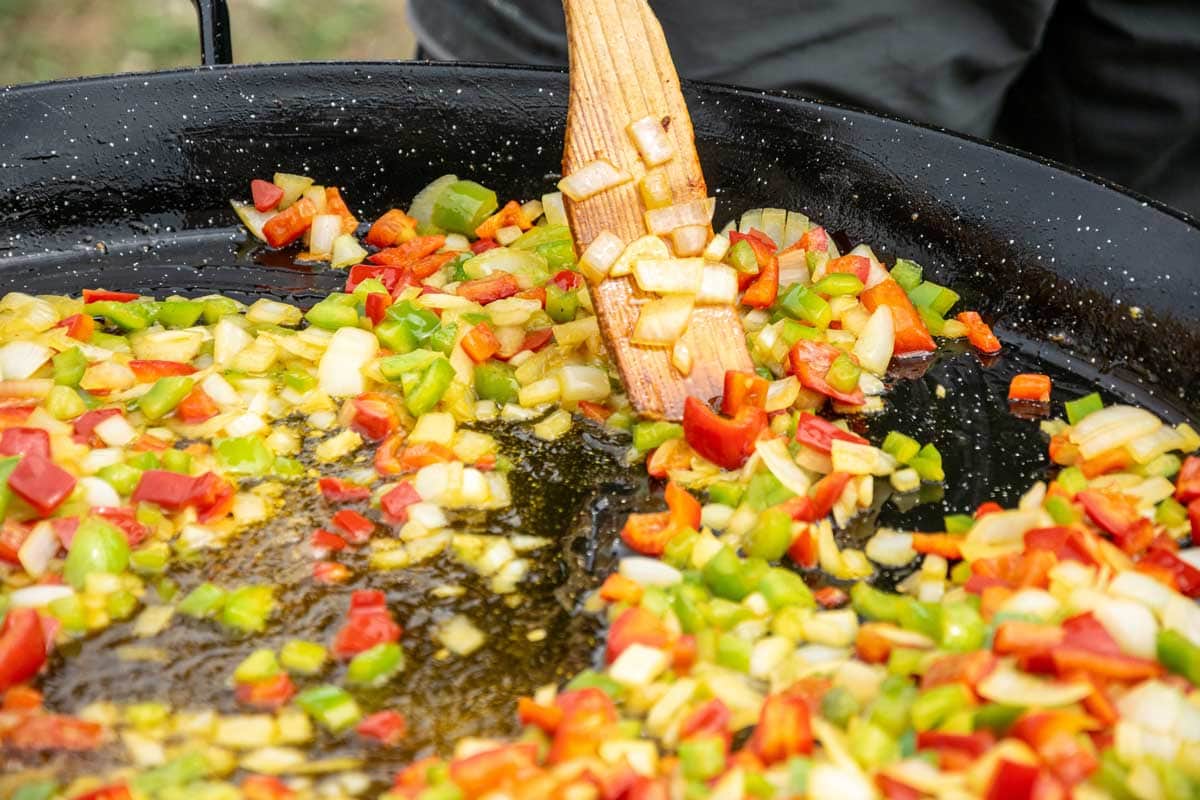
4. Add the gandules and broth
Add the gandules, broth and culantro, then bring everything to a boil. Eight cups can look like too much liquid at this point, but the rice and plantain will absorb a lot of it.
5. Add the rice and drop the bolitas
Stir in the rinsed rice and lower the heat to a gentle simmer. Use two oiled teaspoons to drop small spoonfuls of masa into the pot, working quickly. Leave them alone for 5 minutes so they can set.
6. Simmer, then rest
Partly cover the pot and simmer for 18 to 20 minutes, stirring gently and scraping the bottom now and then. It’s done when the rice is tender and a bolita cut in half is firm all the way through.
Remove the culantro, taste for salt and stir in the cilantro. Let the pot rest 5 minutes, then thin it with hot broth if you like.

How to Get Bolitas de Plátano Right
Plantain dumplings have only a couple of ingredients, so small things matter. Green bananas (guineos) work as well, and some cooks use a mix of both.
| Problem | Likely cause | Fix |
|---|---|---|
| Falling apart | Broth boiling too hard, or stirred too soon | Keep a gentle simmer and wait 5 minutes before stirring. |
| Gummy center | Bolitas too large or undercooked | Use a rounded teaspoon and cut one open to check. |
| Masa too loose | Plantains starting to ripen, or very wet | Stir in a tablespoon of flour, or start with greener plantains. |
| Gray masa | Grated plantain exposed to air | Harmless. Grate just before cooking and press plastic wrap onto the surface. |
Asopao de Gandules Variations
What to Serve with Asopao de Gandules
This is a full meal in a bowl, so the sides should be simple. Sliced avocado is the classic topping because its richness balances the salty broth.
- Something crunchy: tostones are the usual choice, for dipping or eating alongside.
- Bread: a crusty loaf of pan de agua soaks up the broth.
- Heat and acid: a squeeze of lime or a few drops of pique at the table.

Storing and Reheating
Asopao thickens a lot as it cools, because the rice keeps absorbing broth. Expect leftovers to be nearly solid the next day. That’s normal.
- Refrigerator: keep it in a covered container for up to 4 days.
- Freezer: freeze for up to 2 months. The flavor holds, but the rice and bolitas turn softer.
- Reheating: warm it over medium-low heat with a generous splash of broth or water, stirring gently until steaming.
Asopao de Gandules FAQ
What is asopao de gandules made of?
Green pigeon peas, sofrito, tomato sauce, broth and a small amount of rice. Most versions add ham, olives and sazón, and many include plantain dumplings.
Are gandules the same as green peas?
No. Gandules, or pigeon peas, are a separate legume with a firmer bite and a nuttier, earthier flavor. Green peas would turn soft and sweet in this stew, so they aren’t a close substitute.
What is the difference between asopao de gandules and arroz con gandules?
The amount of liquid. Arroz con gandules is a dry rice dish where the grains absorb everything. Asopao uses much less rice and much more broth, so you eat it from a bowl with a spoon.
Is asopao like gumbo?
They look similar, since both are thick stews with rice. Gumbo is usually built on a roux and cooked separately from its rice. Asopao gets its body from rice cooked in the pot, and from plantain if you add bolitas.
Why did my asopao turn into porridge?
There’s usually too much rice, or it sat too long before serving. Stick to ½ cup of rice for 8 cups of broth, serve it soon after it rests, and thin it with hot broth if needed.
Can I make asopao de gandules without bolitas?
Yes. Skip the plantains and simmer the rice until tender, about 15 to 20 minutes. Use a cup less broth, since the bolitas would have absorbed some of it.
Is asopao de gandules gluten-free?
The ingredients are naturally free of gluten as long as you don’t add flour to the bolitas. Check the labels on your broth, ham and seasoning blends to be sure.
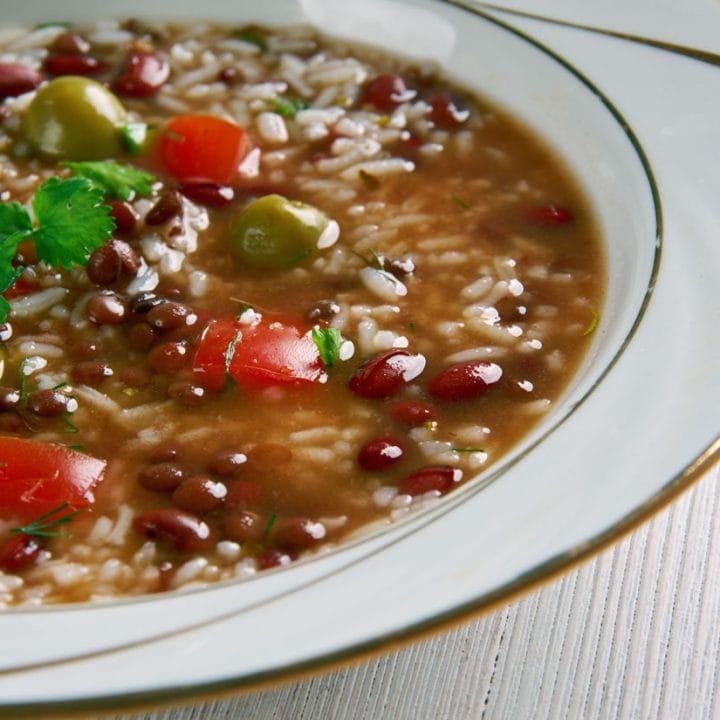
Asopao de Gandules with Bolitas de Plátano
Puerto Rican pigeon pea and rice stew with ham, sofrito and soft green plantain dumplings, made in one pot in about an hour.
Ingredients
For the bolitas de plátano
- 2 large green plantains (about 1¼ pounds)
- 1 teaspoon adobo seasoning
For the asopao
- 2 tablespoons olive oil or annatto oil
- 6 ounces smoked ham steak, diced (about 1 cup)
- ½ cup sofrito
- ¼ cup pimiento-stuffed olives, halved, or alcaparrado
- 1 packet sazón with culantro and achiote (about 1½ teaspoons)
- 1 teaspoon dried oregano
- 1 (8-ounce) can tomato sauce
- 2 (15-ounce) cans green gandules (pigeon peas), drained and rinsed
- 8 cups low-sodium chicken broth
- 2 culantro leaves or 1 bay leaf
- ½ cup medium-grain white rice, rinsed
- 1 cup peeled, diced calabaza (optional)
- ¼ cup chopped cilantro
- Salt, to taste
- 1 avocado, sliced, for serving
Instructions
- Make the bolita masa first. Cut the ends off the plantains, score the peel lengthwise and pry it off. Grate the plantains on the fine side of a box grater, or process them until smooth. Stir in the adobo and set aside.
- Heat the oil in a large, heavy pot over medium heat. Add the ham and cook until golden at the edges, 3 to 4 minutes.
- Add the sofrito, olives, sazón and oregano. Cook, stirring, until the sofrito smells sweet and most of its liquid has cooked off, 3 to 4 minutes. Stir in the tomato sauce and cook 2 minutes more.
- Add the gandules, broth and culantro. Raise the heat and bring to a boil.
- Stir in the rinsed rice and the calabaza, if using, and lower the heat to a gentle simmer.
- Using two oiled teaspoons, drop rounded teaspoons of plantain masa into the simmering pot, working quickly. You should get about 30 bolitas. Do not stir for 5 minutes so they can set.
- Partly cover and simmer, stirring gently now and then, until the rice is tender and a bolita cut in half is firm all the way through, 18 to 20 minutes.
- Take out the culantro leaves. Taste for salt, stir in the cilantro and let the pot rest 5 minutes. Thin with hot broth if needed. Serve with sliced avocado.
Notes
Rice: keep it to 1/2 cup. It keeps absorbing broth, and more rice turns the pot into porridge.
Frozen or fresh gandules: use about 1 pound and simmer them in the broth for 20 to 30 minutes before adding the rice.
Vegetarian: skip the ham and use vegetable broth.
No rice: skip it and use 6 cups of broth for a brothier soup.
Leftovers: refrigerate up to 4 days and loosen with hot broth or water when reheating. It thickens a lot as it sits.
More Puerto Rican Soups and Gandules Recipes
Sources
- Wikipedia: Asopao
- Carmen Aboy Valldejuli, Puerto Rican Cookery: Pigeon Pea Asopao
- Mia Castro, Cocina Puerto Rico: Pigeon pea and rice soup with plantain dumplings
- Familia Kitchen: The History of Arroz con Gandules
- Tasting Table: Puerto Rico’s National Soup Has a Rich History
More Puerto Rican Foods
See all →
Jorge Garcia is the founder of AmigoFoods, where he has spent over 20 years helping readers discover authentic Latin American and Spanish cuisine. Raised in a Cuban-American household, Jorge learned to cook at the hands of his mother and grandmother, carrying forward generations of family recipes. That heritage, backed by his family’s four-generation history in the Latin food industry, inspired him to launch AmigoFoods in 2003. With more than 1,000 published articles on recipes, ingredients, and food culture, Jorge’s mission is simple: make authentic Latin cooking approachable for home cooks everywhere while honoring the traditions behind every dish.