

Caldo de gallina is Peru’s golden hen soup, slow-simmered with ginger and garlic and served with yellow potatoes, noodles and a boiled egg. Scallions, lime and ají finish each generous bowl; use a stewing hen for a rich broth or chicken for a quicker version.
Caldo de Gallina at a Glance
What Is Peruvian Caldo de Gallina?

Caldo de gallina means “hen broth”. In Peru it is a full meal in a bowl rather than a starter. A whole hen is simmered for hours with ginger, garlic and onion until the meat is tender and the broth turns golden from the hen’s fat. Just before serving, yellow potatoes and noodles cook in the same broth, and each bowl gets a piece of hen and a boiled egg.
In Lima, caldo de gallina is sold at small restaurants and street stands that open early in the morning or stay open late at night. It has a reputation as a levantamuertos, a “raise the dead” soup, and it is the classic cure after a night of partying, a cold or a long night shift.
Hen vs. Chicken: Why Gallina Matters
A gallina is an older laying hen, while pollo is a young chicken. A hen has tougher meat, more fat and much more flavor, so it needs a long, slow simmer, but it gives a deeper, more golden broth than chicken. That’s why Peruvians say caldo de gallina and aguadito de pollo, not the other way around.
In the US, look for a stewing hen (also sold as “fowl” or “gallina”) at Latin American and Asian markets or from a poultry farm. If you can’t find one, use bone-in, skin-on chicken thighs and drumsticks plus a few chicken backs or wings for body. The broth will be lighter and it will cook in about an hour instead of three.
How It’s Different from Other Chicken Soups
Many Latin American countries have a hen or chicken soup, and each one has its own character. Peruvian caldo de gallina stands out for its ginger and for being served with noodles, potato and a whole boiled egg rather than a mix of vegetables.
- Mexican caldo de pollo is packed with vegetables like zucchini, carrot and chayote and served with rice and tortillas.
- Colombian sancocho de gallina is a thick stew with yuca, plantain and corn on the cob.
- Peruvian aguadito de pollo is a green chicken and rice soup made with cilantro and ají amarillo.
What You Need
The ingredient list is short, so each one counts.
- A stewing hen, cut into 6 to 8 pieces, or chicken thighs and drumsticks (see above).
- Fresh ginger (kion in Peru), sliced. It’s the signature flavor, so don’t skip it.
- Garlic and onion for the broth, plus a stalk of celery if you like.
- Yellow potatoes. Peruvian papa amarilla is ideal; Yukon Gold is the best substitute.
- Noodles. Thick spaghetti or Peruvian tallarín are traditional; thin fideo works too.
- Eggs, hard-boiled, one per bowl.
- Scallions (cebolla china) for the top.
- Lime and ají on the side. A simple ají amarillo sauce or a little rocoto paste adds heat for those who want it. You can find ají amarillo paste on Amazon.
Plan ahead: the broth tastes even better the next day. Make it the day before, refrigerate it, lift off the excess fat, then add the potatoes and noodles just before serving.
How to Make Caldo de Gallina
The method is simple: bring the hen to a boil and skim the foam, simmer it gently with ginger and aromatics for a few hours, then cook the potatoes and noodles in the finished broth. The full recipe, with quantities, is in the card below.
Tips for the Best Caldo de Gallina
- Start in cold water and skim. Bring the hen up to a boil slowly and skim the gray foam for the first 10 minutes for a clear broth.
- Simmer, don’t boil. A hard boil makes the broth cloudy and the meat stringy. You want small, lazy bubbles.
- Keep some fat. Skim off the excess, but leave a little: the hen’s yellow fat is what makes the broth golden and rich.
- Cook noodles only for what you’ll eat. Noodles soak up broth as they sit. If you’re making it ahead, cook them separately and add them to each bowl.
- Use a pressure cooker to save time. Start with about 45 minutes at high pressure, allow a natural release and check tenderness; an older hen may need longer. Then finish with potatoes and noodles. Pressurizing, release and finishing time are additional.
How to Serve It
Put a piece of hen, a potato and a nest of noodles in each wide bowl, ladle the hot broth over, and add a boiled egg, whole or halved. Top with plenty of sliced scallions. Set out lime wedges, ají and salt so everyone can season their own bowl. A squeeze of lime brightens the broth, and ají adds heat.
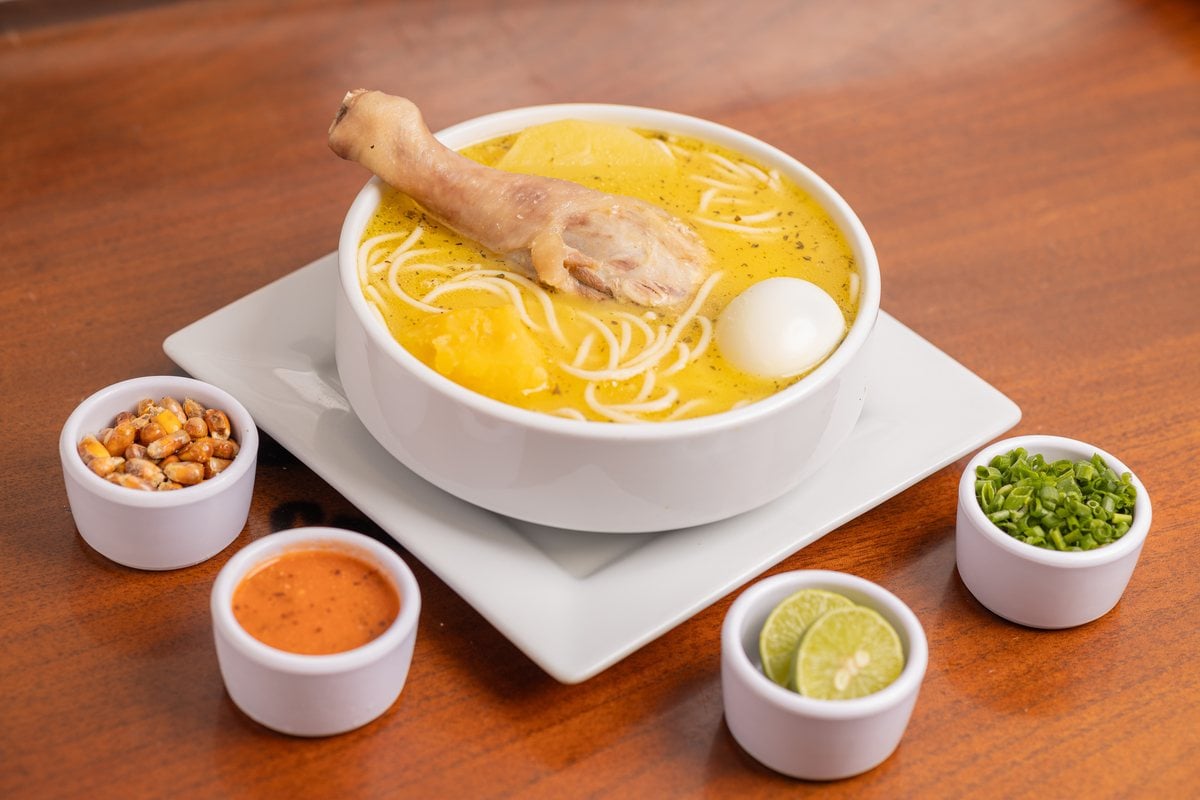
For a full Peruvian meal, start with a ceviche or follow with a glass of chicha morada.
Caldo de Gallina Recipe
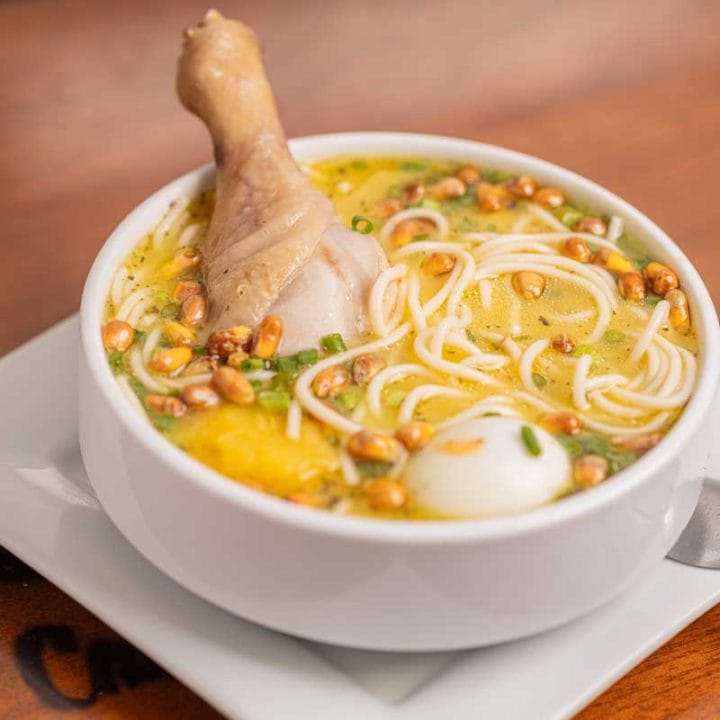
Peruvian Caldo de Gallina (Hen Soup)
Peru’s golden hen soup, simmered for hours with fresh ginger and garlic and served with yellow potatoes, noodles, a boiled egg and scallions, with lime and ají on the side.
Ingredients
- 1 stewing hen (4 to 5 lb), cut into 6 to 8 pieces (or 4 lb bone-in, skin-on chicken thighs and drumsticks)
- 16 cups (4 quarts) cold water
- 3-inch piece fresh ginger, sliced
- 4 garlic cloves, smashed
- 1 white onion, halved
- 1 celery stalk, cut in half (optional)
- 1 teaspoon whole black peppercorns
- 2 teaspoons salt, plus more to taste
- 6 medium yellow potatoes (papa amarilla or Yukon Gold), peeled and halved
- 8 oz thick spaghetti or Peruvian tallarín
- 6 eggs
- 4 scallions, thinly sliced
- Lime wedges, for serving
- Ají amarillo sauce or rocoto paste, for serving
Instructions
- Put the hen pieces in a large pot with the cold water. Bring slowly to a boil over medium heat, skimming off the gray foam for about 10 minutes.
- Add the ginger, garlic, onion, celery, peppercorns and 2 teaspoons salt. Lower the heat so the broth barely simmers, partially cover and cook until the hen is very tender, 2½ to 3 hours (about 1 hour if using chicken).
- Meanwhile, put the eggs in a small pot of cold water, bring to a boil and cook for 10 minutes. Cool in cold water and peel.
- Lift out the hen pieces and set aside. Strain the broth and discard the aromatics. Skim off most of the fat, leaving a little for color and flavor. Return the broth and hen to the pot.
- Add the potatoes and simmer until tender, 15 to 20 minutes. Add the noodles and cook until tender, 8 to 10 minutes. Taste and add salt.
- Divide the hen, potatoes and noodles among wide bowls and ladle the hot broth over. Add an egg to each bowl and top with scallions. Serve with lime wedges and ají on the side.
Notes
Make ahead: refrigerate the broth and hen for up to 3 days and remove the solidified fat. Cook the potatoes and noodles in the broth just before serving.
Pressure cooker: cook the hen with the aromatics at high pressure for about 45 minutes, release naturally and check tenderness; older birds may need more time. Then finish with the potatoes and noodles. Pressurizing, release and finishing time are additional.
Timing: The 3 hour 35 minute total is an estimate for a hen that softens near the shorter end of the simmering range. Allow up to 30 minutes more or longer for a tough bird. With chicken, allow about 2 hours overall, including the potatoes and noodles. Cook the eggs while the broth simmers.
Caldo de Gallina FAQ
What is caldo de gallina in English?
Hen soup or hen broth. Caldo means broth and gallina means hen, an older laying hen rather than a young chicken.
What is in Peruvian caldo de gallina?
A hen simmered with ginger, garlic and onion, served with yellow potatoes, noodles, a boiled egg and scallions, with lime and ají on the side.
How is caldo de gallina different from chicken soup?
It’s made with a hen, which has more fat and flavor than a young chicken and needs a much longer simmer. The Peruvian version is also seasoned with fresh ginger and served with noodles, potato and egg rather than mixed vegetables.
Can I use chicken instead of hen?
Yes. Use bone-in, skin-on thighs and drumsticks plus a few backs or wings, and simmer for about an hour. The broth will be lighter but still delicious.
Is caldo de gallina spicy?
No. The broth itself is mild. Heat comes from the ají served on the side, so each person can add as much as they like.
Why is caldo de gallina a hangover cure?
It’s hot, salty, rich and easy to eat, which is exactly what people want after a long night, so Lima’s caldo de gallina spots are busiest in the early morning hours on weekends.
More Peruvian Soups
Caldo de gallina is one of the classics in our guide to Peruvian soups and stews. Try chupe de camarones, the creamy shrimp chowder of Arequipa, or shambar, the Monday bean soup of Trujillo. For the bigger picture, see our guide to Peruvian food.
More Peruvian Foods
See all →
Jorge Garcia is the founder of AmigoFoods, where he has spent over 20 years helping readers discover authentic Latin American and Spanish cuisine. Raised in a Cuban-American household, Jorge learned to cook at the hands of his mother and grandmother, carrying forward generations of family recipes. That heritage, backed by his family’s four-generation history in the Latin food industry, inspired him to launch AmigoFoods in 2003. With more than 1,000 published articles on recipes, ingredients, and food culture, Jorge’s mission is simple: make authentic Latin cooking approachable for home cooks everywhere while honoring the traditions behind every dish.